
Reviewed · TOKYO FOOD TOURS
Shinjuku: Golden Gai Food Tour
Shinjuku after dark is best understood one small plate and one narrow alley at a time. This three-hour walk takes you from smoky yakitori stalls and local food counters to Golden Gai, where more than 200 tiny pubs, karaoke rooms, and bars are packed into a maze of lanes. I like the way the tour connects food with place, rather than treating dinner as a string of unrelated tastings.
I also like the practical help. Guides such as Alex, Ray, Wes, and Yappy have explained restaurant manners, ordering tricks, shortcuts, and the story behind the streets. The main caution is price: at $170 per person, you pay a sizable premium for the guide, access, and evening structure, since much of the food itself is inexpensive.
In This Review
- Key points at a glance
- Why Shinjuku works so well after dark
- Starting near Shinjuku Station
- Yakitori, small plates, and the first drink
- Omoide Yokocho and postwar Shinjuku
- Ramen with local ordering help
- Kabukicho without the confusion
- Golden Gai, the small-bar finale
- What the guides add to the evening
- Is $170 a fair price?
- Who should book this Shinjuku food tour?
- Final verdict: book for access, guidance, and atmosphere
- FAQ
- How long is the Shinjuku Golden Gai food tour?
- What food is included?
- How many drinks are included?
- Is the tour suitable for people under 20?
- Where is the meeting point?
- What happens if I arrive late?
- Is hotel pickup included?
Key points at a glance
- A first-night introduction to Shinjuku: You see major sights and lesser-known lanes without having to decode the district alone.
- A generous food route: Expect several stops with yakitori, sushi or other local dishes, and ramen, with enough food that you may not want a late dinner afterward.
- Two drinks included: Sake or another drink is part of the experience, while further drinks and food cost extra.
- Golden Gai with a local guide: The final bar visit helps you enter this tiny, sometimes intimidating district with context and confidence.
- Small-group format: The group is limited to eight people, making conversation and questions easier.
- Strict meeting rule: Arrive early at Tajimaya Coffee House near Shinjuku Station. The guide can wait only five minutes.
Why Shinjuku works so well after dark
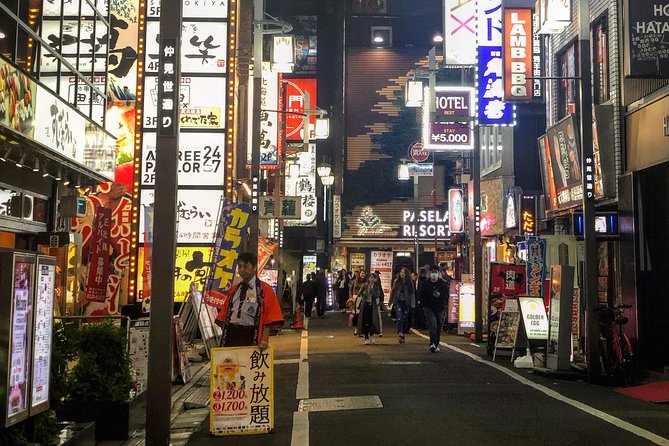
Shinjuku can feel like several cities squeezed together. Neon signs, department stores, office towers, narrow eating lanes, and nightlife streets all sit within a short walk. A first visit can be thrilling, but it can also leave you wondering which doorway is a restaurant, which is a bar, and which is simply not meant for drop-in visitors.
This tour gives the district a useful shape. You walk, stop to eat, hear how the area changed after the war, and then finish among the tiny bars of Golden Gai. I like that rhythm because the history is tied to the streets under your feet. You are not sitting through a long lecture before seeing anything.
The route also gives you a look at the contrast between polished modern Tokyo and older pockets of Shinjuku. You may pass the Godzilla landmark, neon-filled Kabukicho, and narrow food alleys in the same evening. The result is less a checklist of sights than a guided explanation of why this part of Tokyo feels so layered.
More Tokyo food crawls:
- Tokyo: Shinjuku Food Tour (13 Dishes at 4 Local Eateries)
★ 5.0 · 6,603 reviews - Tokyo: Shinjuku Food Tour (15 Dishes and 4 Eateries)
★ 4.9 · 2,033 reviews - Best of Shinjuku: Izakaya Food Tour (4 Stops, 14+ Tastings)
★ 5.0 · 1,863 reviews
Starting near Shinjuku Station
The meeting point is in front of KISSATEN Tajimaya Coffee House at 1 Chome-2-6 Nishishinjuku. From Shinjuku Station, follow signs for the West Gate, then use exit B15.
Give yourself extra time. Shinjuku Station is large, and the five-minute waiting limit is firm. After the tour starts, the guide cannot provide directions or take calls, partly to keep the group moving and partly to avoid disrupting restaurant arrangements. I would arrive at least 15 minutes early, especially if this is your first evening in Tokyo.
The station itself is useful preparation for the night ahead. Once you leave the crowds and signs, the guide can quickly get everyone oriented. The small group, capped at eight, is a real advantage here. You can ask about ingredients, manners, or places to return to later without shouting over a large party.
Yakitori, small plates, and the first drink
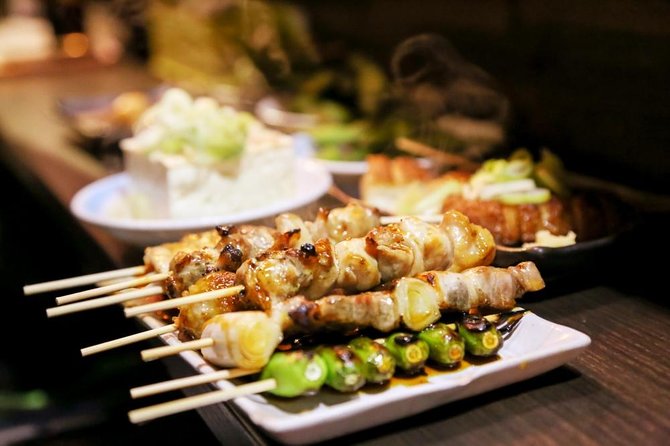
The food portion moves through several local stops rather than relying on one large meal. Yakitori is a natural starting point. These grilled skewers are simple in form, but the smoky smell, quick cooking, and close seating capture the feel of Shinjuku nightlife better than a formal restaurant would.
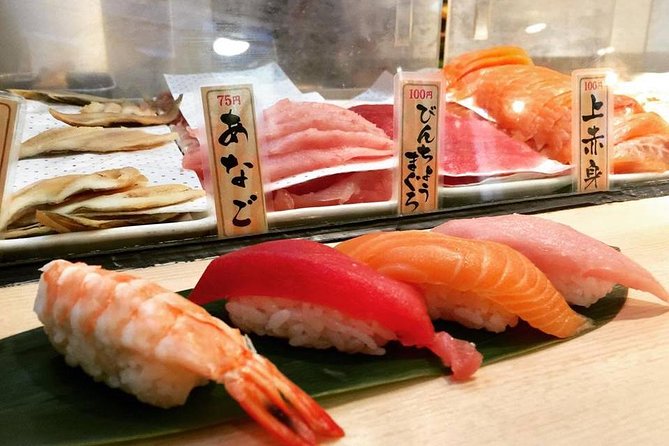
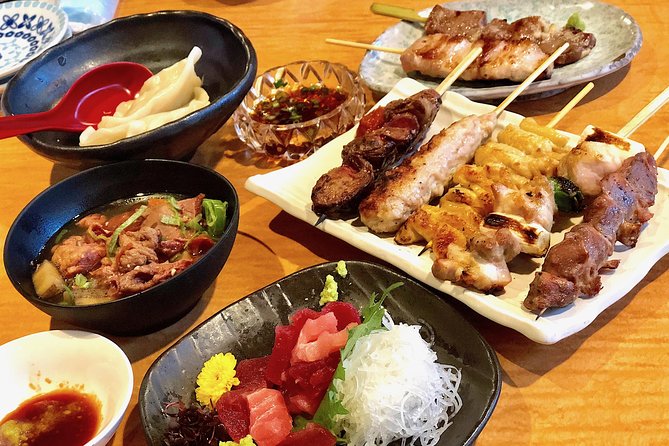
You can expect a variety of dishes at different stops, with portions described as generous. The exact menu can vary, so you should not book this expecting a fixed list of every skewer or sushi item. The supplied experience includes yakitori, local dishes, a ramen stop, and two drinks. Some accounts of the route also include sushi and instruction on how to eat it properly.
This is where the guide adds value. A dish that seems familiar may have a particular dipping method, order, or table custom. Guides have offered practical lessons in Japanese dining etiquette, including how to order and eat certain foods. That help is especially useful if you are new to Japan and do not want to spend the whole meal guessing.
The food quality deserves a fair reading. Several participants considered the choices excellent and appreciated trying dishes they would not have ordered alone. Others found the food merely average and felt the price should have bought better restaurants. That difference makes sense: small, highly regarded local spots may not have room for a group, so a tour must balance access, timing, and seating with taste.
My advice is to view the meal as a broad introduction, not a hunt for Tokyo’s finest single dish. You are paying for several tastes, the explanations, and the chance to move through places that would be harder to approach on your own. If you are a serious food obsessive, you may prefer to spend $170 on a restaurant crawl you design yourself. If you want an easy first evening, the variety is useful.
Omoide Yokocho and postwar Shinjuku
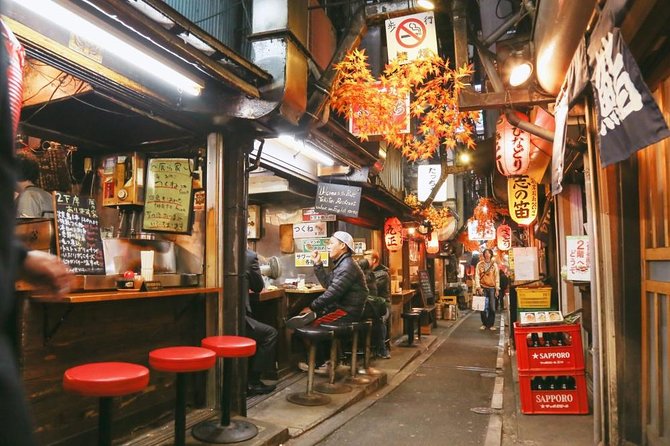
One of the most memorable parts of the route is the old food alley often called Piss Alley, officially Omoide Yokocho. The nickname is blunt, but the place itself is a compact strip of tiny eateries and yakitori counters near the station. You may have a drink and skewers here while the guide explains how Shinjuku grew from a postwar black-market district into one of Tokyo’s major nightlife centers.
The story matters because it changes how you see the narrow lanes. They are not just photogenic backdrops. They reflect a period when informal markets and small food businesses helped people get by after the war. The low ceilings, tight seating, and smoky grills make more sense once you know why this kind of street developed.
The area is also a useful lesson in scale. A large tour would overwhelm some of these places. With no more than eight participants, your group can fit into smaller spaces more easily, though seating and exact stops still depend on the evening. You should be comfortable walking and standing in close quarters.
The route may also pass the giant Godzilla head, one of the district’s easiest landmarks. It gives you a clear point of reference in the neon maze and helps connect the old alleys with modern entertainment Shinjuku.
More Tokyo nights out:
- Tokyo Bar Hopping Tour in Shinjuku (All-You-Can-Drink + Dinner)
★ 5.0 · 3,587 reviews - Tokyo: Shinjuku Local Bar and Izakaya Guided Walking Tour
★ 4.9 · 1,794 reviews - Shibuya Meltdown Nightlife Tour: All-You-Can-Drink Bar Hopping
★ 5.0 · 1,058 reviews - Tokyo: Pub Crawl and Bar Tour
★ 4.5 · 951 reviews
Ramen with local ordering help
A ramen stop gives the evening a warm, filling center. Tokyo ramen shops often use vending machines or compact ordering systems, and a guide can make that process less stressful. One useful tip from the tour is to look toward the top left of the ramen vending machine for a recommended choice.
That kind of advice is small but valuable. You get to spend your attention on the broth, noodles, and room rather than trying to translate every button while a line forms behind you. The guide can also explain what makes the local bowl different from the other dishes you have eaten that night.
Do not expect ramen to be a light final snack. Combined with skewers, sushi, and other dishes, the food adds up. Several participants found the portions generous, and one specifically warned that you may leave very full. I would eat only a small lunch or early meal before this tour.
The ramen stop also shows why a guided food walk can work well on a first Tokyo visit. You are not simply tasting food. You are learning how ordinary places operate, how to order, and how local dining fits into the evening.
Kabukicho without the confusion
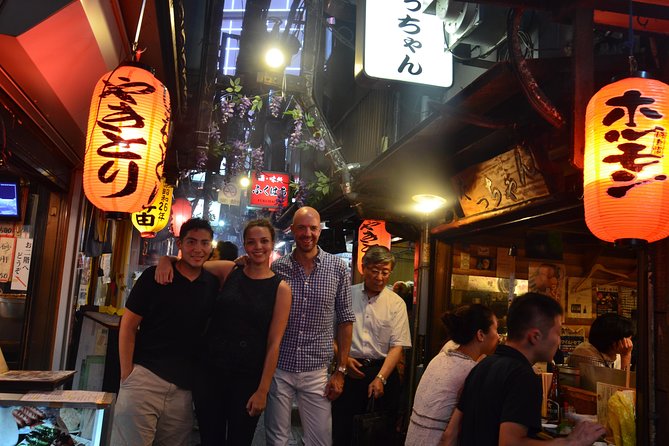
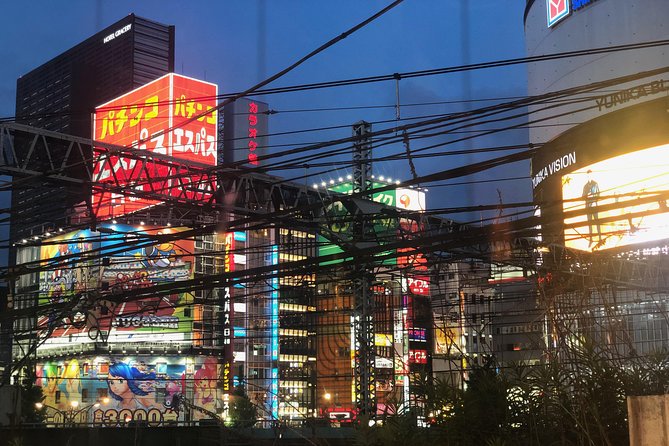
The walk passes through Kabukicho, the district known for nightlife, bars, clubs, and adult entertainment. The area is often described as Asia’s largest and safest red-light district, but you should still treat it as a nightlife zone rather than a theme park. The streets can be loud, crowded, and full of signs competing for your attention.
A local guide helps you read the area with some distance. You can see the neon and energy without feeling pressured to enter every doorway. The tour focuses on food, history, and observation, not on arranging adult entertainment.
This part of the walk is useful for first-time visitors who might otherwise avoid Kabukicho or wander through without understanding it. You get the spectacle, but also a sense of how the district fits into Shinjuku. Keep your group together and follow the guide through the busy lanes.
The experience is adult-only for a practical reason. Many venues do not allow minors, and the evening includes alcohol. Every member of your party must be at least 20 years old. This is not a family activity or a general sightseeing walk for younger visitors.
Golden Gai, the small-bar finale
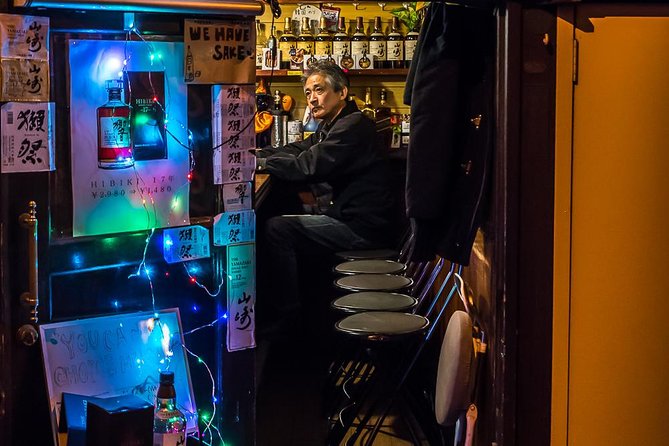
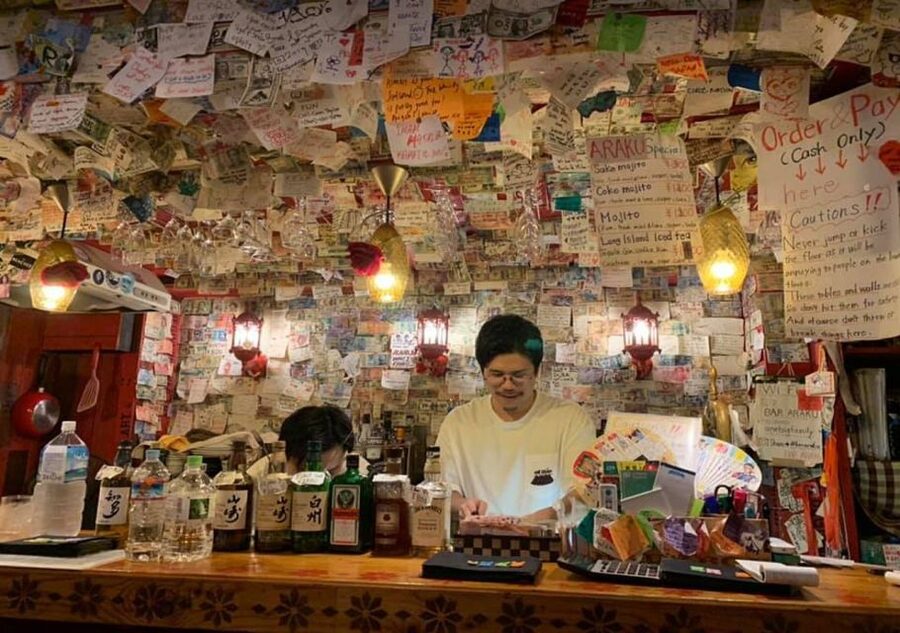
Golden Gai is the evening’s main payoff. More than 200 tiny bars and pubs are packed into a few narrow blocks. Many rooms hold only a handful of people, and some have strong themes, regular customers, karaoke, or a cover charge that is not always obvious to a newcomer.
Walking through the lanes is entertaining on its own, but entering a bar with a guide makes the area easier to understand. You finish with a drink included in the tour, giving you a taste of the close-set, retro atmosphere without having to choose a doorway at random.
The bars’ 1950s-style decor and cramped rooms reflect a different side of Tokyo nightlife. You may find old furniture, faded signs, quirky displays, or a room built around one particular interest. The point is not luxury. Golden Gai is about character, conversation, and the feeling that every doorway has its own rules.
Some evenings have ended with karaoke, which can be a lively way to close the night. That should not be treated as a guaranteed part of every departure, but it shows the sort of social atmosphere the final stop can provide.
The bar is also where the tour’s price needs the clearest explanation. Your included drink is only part of the cost. The real benefit is having someone lead you through an area where tiny venues may feel awkward to enter alone. If you are already comfortable choosing bars and navigating Tokyo nightlife, you may not need that help. If you want to experience Golden Gai but feel unsure about etiquette or access, the guide is worth more.
What the guides add to the evening
The strongest part of this experience is the guide. Alex has been described as warm and entertaining, while Ray has helped explain food customs and table manners. Wes has offered local information and practical Tokyo tips, and Yappy has been praised for navigating shortcuts and explaining what to order.
Names can change with the date, so you should not book on the assumption that one particular guide will lead your group. Still, the repeated strengths are clear: the guide keeps the conversation moving, answers spontaneous questions, and gives the evening a human center.
A good guide matters more here than on a simple sightseeing bus. The food stops are small, the route uses alleys, and the meaning of each area is not obvious from the signs. The guide has to manage timing, ordering, walking, and the different comfort levels of a small group.
You should also expect the possibility of extra time if the group is enjoying itself and the guide can extend the evening. That is not guaranteed, and the scheduled duration is three hours, but one evening ran several hours longer. Treat any extension as a bonus, not part of the contract.
Is $170 a fair price?
At $170 per person, this is not a bargain food tour. The included package covers several food stops, two drinks, the Golden Gai bar visit, and an English-speaking guide. You also get three hours of route planning and the confidence to enter places you might skip alone.
The food alone may not justify the full price. Yakitori, ramen, and other local dishes can be inexpensive when purchased independently. One participant specifically felt the tour was costly for the food provided, while another considered the generous portions and access to local businesses good value.
I would judge the price by your purpose. For a first night in Tokyo, especially if you are traveling alone or prefer not to manage unfamiliar restaurants, the package can make sense. You get orientation, dinner, nightlife, and history in one outing. For repeat visitors who already know Shinjuku, speak some Japanese, or prefer to choose every restaurant, the premium is harder to defend.
The small group helps. Eight people is still enough for a social evening, but far easier to manage than a large coach group. You are more likely to hear the guide and ask questions, and the group is small enough to fit some compact venues.
Who should book this Shinjuku food tour?
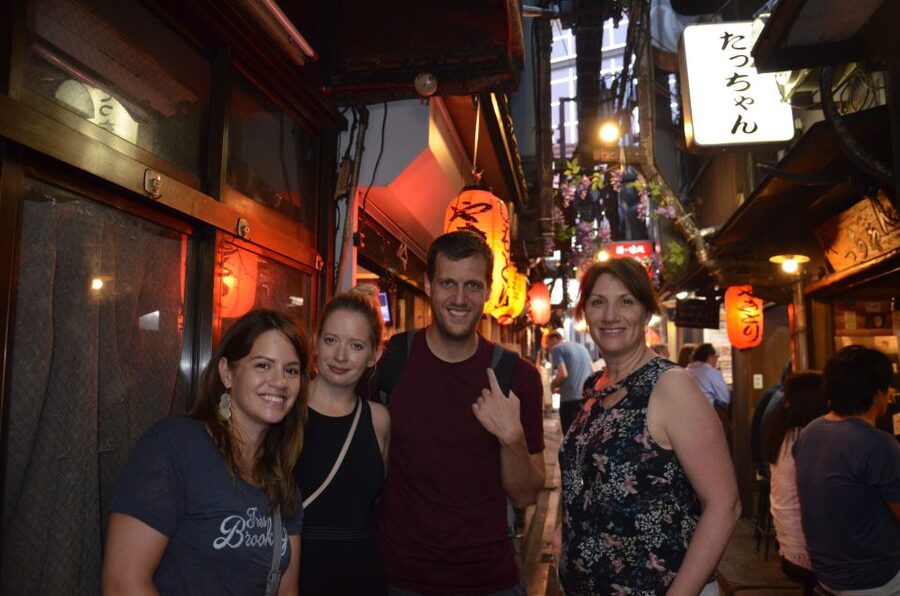
I would recommend it most strongly to first-time visitors to Tokyo who want a structured introduction to Shinjuku at night. It also suits solo travelers, couples, and small groups who enjoy trying several dishes rather than sitting in one restaurant.
You should book if you want:
- A guided first look at Omoide Yokocho, Kabukicho, and Golden Gai
- Help with Japanese dining etiquette and ordering
- Several food stops in one evening
- A small group of no more than eight people
- A social night with two drinks included
- Local history tied directly to the streets you are walking
You may want to skip it if you are under 20, do not drink alcohol, dislike crowded nightlife, or care mainly about finding the best possible food in Tokyo. The meal is generous, but the quality can vary by stop, and the $170 cost includes guidance and access as much as it includes dinner.
Cancellations are free up to 24 hours before the start, and you can reserve now and pay later. Transportation and gratuity are not included, and additional food or drinks are at your own expense.
Final verdict: book for access, guidance, and atmosphere
This is a strong way to get your bearings in Shinjuku after dark. The food gives the night its structure, but the guide gives it meaning. You learn why the old alleys look the way they do, how to handle local ordering customs, and how to approach Golden Gai without treating it like a puzzle.
I would not call it the best value for a dedicated food hunter. At this price, you should expect that some stops may be good rather than exceptional. But for a first Tokyo evening, the mix of yakitori, ramen, drinks, history, neon, and tiny bars is hard to arrange smoothly on your own.
Book it if you want a friendly, practical introduction and are happy to pay for convenience. Skip it if you already know Shinjuku or would rather spend the same money on a carefully chosen meal.
FAQ
How long is the Shinjuku Golden Gai food tour?
The scheduled duration is three hours.
What food is included?
The tour includes a variety of dishes at multiple food stops. The experience highlights yakitori, local dishes, and ramen, and some tour evenings have also included sushi.
How many drinks are included?
Two drinks are included. Additional drinks and food can be purchased at your own expense.
Is the tour suitable for people under 20?
No. Every member of the group must be at least 20 years old because the tour focuses heavily on nightlife and alcohol, and some venues do not allow minors.
Where is the meeting point?
Meet in front of KISSATEN Tajimaya Coffee House at 1 Chome-2-6 Nishishinjuku, Shinjuku City, Tokyo 160-0023. From Shinjuku Station, follow signs for the West Gate and exit through B15.
What happens if I arrive late?
The guide can wait only five additional minutes after the scheduled start. Once the tour departs, the guide cannot provide directions or be contacted by phone.
Is hotel pickup included?
No. Hotel pickup is not included, though it can be arranged for an additional charge. Transportation costs and gratuity are also separate.
More Shinjuku Nights and Walks
- Tokyo Shinjuku Chopsticks Making Class
★ 5.0 · 1,763 reviews - Tokyo Shinjuku Sumo Show & Experience with Photo
★ 5.0 · 1,750 reviews - Tokyo Night Foodie Tour in Shinjuku – Seasonal Sushi, Wagyu Beef
★ 5.0 · 1,161 reviews - Tokyo: Sumo Show and Experience in Shinjuku
★ 4.8 · 1,001 reviews
New on our Tokyo list
- From Tokyo: Mount Fuji & Hakone Full Day Private Tour★ 4.9 · 25 reviews
- Tokyo Spectacular View Day-Cruise in 90 Minutes★ 5.0 · 25 reviews
- Real Tokyo Runner Club : Daikoku Car Meet Night Tour with JDM Car★ 5.0 · 25 reviews
- 2.5 Hour-Guided Cycle Tour in the Central Tokyo★ 5.0 · 25 reviews
- Ramen Making from Scratch +Akihabara Tour –Cooking Class★ 5.0 · 25 reviews
- [Self-Drive] Tokyo & Daikoku Custom Car Driving Tour★ 4.9 · 25 reviews
- Tokyo: 2-Hour Night Bike Tour of the City’s Hidden Gems★ 4.9 · 25 reviews
- Samurai themed Entertainment show in Shinjuku★ 4.5 · 25 reviews
Tokyo Food Tours, compared.
Shinjuku Food Tour (13 Dishes at 4 Local Eateries)
Read our review →
Shinjuku Food Tour (15 Dishes and 4 Eateries)
Read our review →
Best of Shinjuku: Izakaya Food Tour (4 Stops, 14+ Tastings)
Read our review →
Tokyo Night Foodie Tour in Shinjuku – Seasonal Sushi, Wagyu Beef
Read our review →
Eat and Drink Like a Local: Tokyo Ueno Food Tour-Taverns&Ramen
Read our review →
Tsukiji Fish Market: Street Food & Culture Walking Tour
Read our review →Shinjuku Food Tour – 15 Dishes, 3 Drinks, 4 Eateries
Read our review →Browse the lists this tour appears in