
Reviewed · JAPANESE COOKING CLASSES
///Soba Making Experience///Use The BIG Soba-Knife!!
The fun begins with the oversized soba knife, a purpose-built blade that turns noodle making into food theater. At SOBAGIRI RAKUJO in Kappabashi, you roll, stretch, cut, photograph, and eat noodles made from Shinshu buckwheat flour, all in a bright open kitchen.
I like the quick 50-minute format and the chance to try several flavors instead of only standard soy sauce soba. I also like the practical welcome: one drink is included, Japanese snacks are unlimited, and staff use demonstrations and a translation app when simple English is not enough. The main consideration is timing. You need to arrive 10 minutes early, and the short session leaves little room for a late arrival.
In This Review
- Key points at a glance
- Why making soba in Kappabashi feels right
- The 50-minute plan, from hand washing to lunch
- The big soba knife is the main event
- Your noodles go straight from the board to the bowl
- One drink and unlimited Japanese snacks add real value
- Who will enjoy this soba class most
- Pair it with Sensoji and Kappabashi shopping
- Practical details before you book
- Should you book this soba-making experience?
- FAQ
- Where does the soba-making experience take place?
- How long does the activity last?
- How early should I arrive?
- What type of flour is used?
- Do I eat the noodles I cut?
- What flavors of soba are available?
- Is a drink included?
- Are snacks included?
- Is the activity suitable for children?
- Is the experience available in English and wheelchair accessible?
Key points at a glance
- Use a real soba knife: Cut thin, long noodles with a large knife made for the job.
- Make and eat in one visit: Your noodles are boiled by staff right after the cutting session.
- Try more than classic soba: Choices include wagyu sukiyaki, vegan tofu, walnut, tomato salad, and shrimp salt.
- Good for mixed groups: The open ground-floor space can hold up to 25 people and welcomes couples, families, and groups of friends.
- A useful Kappabashi stop: The shop sits near the kitchenware stores, about a 15-minute rickshaw ride from Sensoji Temple.
- Simple booking terms: You can cancel up to 24 hours before the activity for a full refund and reserve now while paying later.
Why making soba in Kappabashi feels right
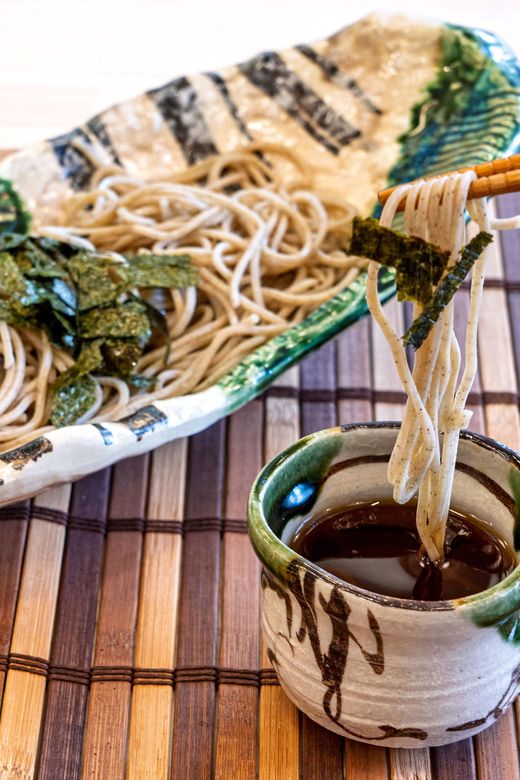
Kappabashi is Asakusa’s kitchen-tool district, packed with shops selling cookware, knives, restaurant supplies, and the plastic food displays seen outside Japanese eateries. This soba class fits the area neatly. You are not being taken to a distant cooking school for a staged meal. You are making one of Japan’s most familiar foods in the middle of a district built around food preparation.
The meeting point is diagonally across from a food-sample specialty store marked by a large beetle object. That detail matters. Kappabashi has many shops and signs, so using the beetle as your visual marker is more useful than relying on a street number alone. Google Maps should also help, and the location has been easy to find for past participants.
The shop is on the ground floor, with a spacious open layout and room for up to 25 people. I see that as a real advantage for families and larger groups. You are less likely to feel squeezed around a tiny counter, and the open kitchen lets you see the work as it happens. It also creates a better setting for photographs, especially during the knife-cutting stage.
More cooking classes in Tokyo:
- Ramen & Gyoza Cooking Class in Tokyo with Local Supermarket Visit
★ 5.0 · 823 reviews - Tokyo: Easy Ramen Cooking Experience in Kabukicho, Shinjuku
★ 4.6 · 321 reviews - Ramen and Sushi Cooking Class with Sake Pairing Set in Tokyo
★ 5.0 · 291 reviews
The 50-minute plan, from hand washing to lunch
You meet 10 minutes before the scheduled start. Use that time to find the entrance, settle your belongings, and wash your hands. This is a hands-on food activity, so arriving early is more than a formality. A late arrival could cause you to miss the short explanation that makes the rest of the session easier.
The opening soba talk takes about five minutes. You learn the basic idea behind the dough and the steps ahead. The flour comes from Shinshu, in Nagano Prefecture, an area known in Japan for high-quality buckwheat. The activity uses soba made without wheat flour, which is important for anyone seeking a wheat-free meal. If you have a medical allergy, you should still confirm preparation details directly before booking, since the supplied information does not describe allergy controls.
Next comes stretching, which takes about 10 minutes. This is where the dough becomes a sheet suitable for cutting. The class uses a smart technique designed to help you produce fine noodles in a short time, so you do not need prior noodle-making skill. The instructor guides each step, and the teaching relies on demonstration as well as spoken explanation.
That demonstration-based approach helps when language is a concern. Japanese and English are offered, and an English audio guide is included. Staff have basic English skills, with a translation app available when showing something alone is not enough. You should not expect a long culinary lecture in fluent English, but the practical instructions appear designed to keep the activity moving.
The big soba knife is the main event
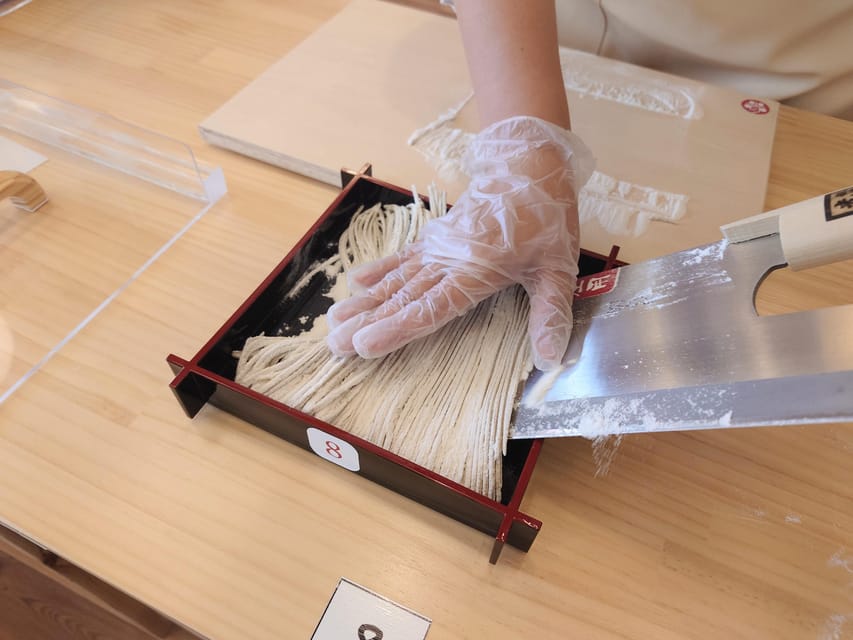
Cutting takes about 10 minutes, and this is the part most people will remember. You use a large knife specially made for soba to turn the stretched dough into thin, long strands. The tool gives the activity a sense of occasion, while the short technique keeps it approachable.
Do not expect every strand to come out perfectly even. That is part of the appeal. You are not watching a noodle master work from behind a counter. You are handling the dough yourself and seeing how much care goes into a food that can look simple in a bowl.
The instructor helps with the first steps and keeps the process manageable. This is useful for children old enough to follow directions, though the activity is not suitable for children under two. Since the knife is large, parents should expect to stay involved with young children even when staff are guiding the group.
There is also time for photographs after cutting. The open kitchen and oversized knife make this a more photogenic activity than a standard sit-down meal. Staff take plenty of pictures, so you can concentrate on the task instead of trying to hold a phone while working. The supplied information does not promise a particular photo delivery method, so ask staff if receiving the pictures matters to you.
Your noodles go straight from the board to the bowl
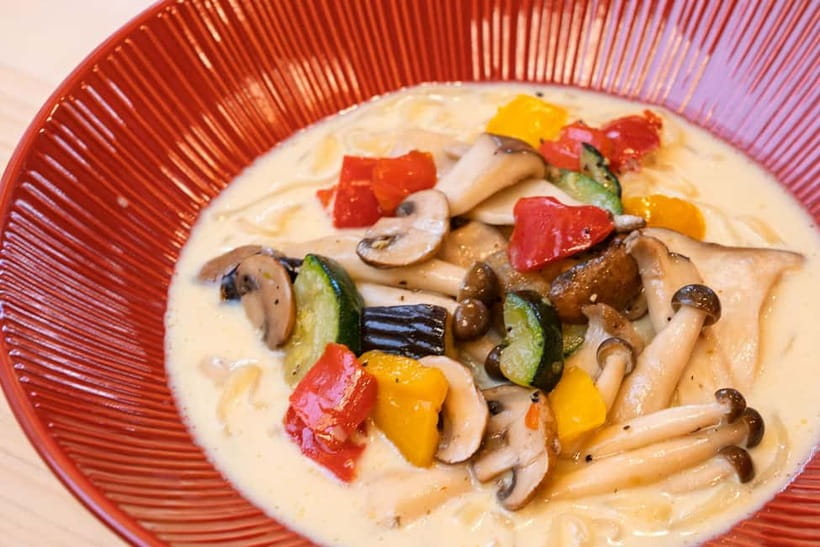
Once the cutting is finished, staff boil the noodles right away. That immediate handoff is one of the strongest parts of the format. You make the food, see it cooked, and then eat it without a long wait between the activity and the meal.
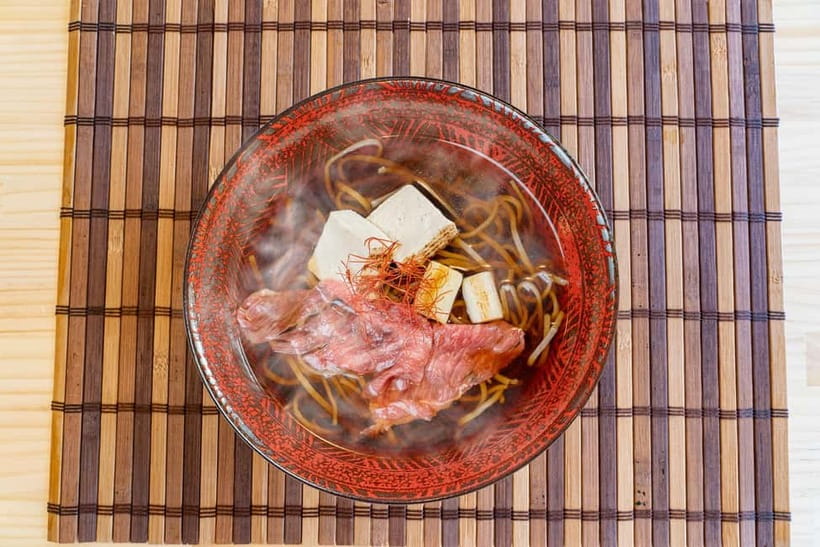
The menu gives the meal a playful twist. The popular choices are wagyu beef sukiyaki soba, vegan tofu soba, and walnut soba, but the full selection offers more variety:
- Wagyu beef sukiyaki soba
- Oyako chicken yonaki soba
- Tofu vegan soba
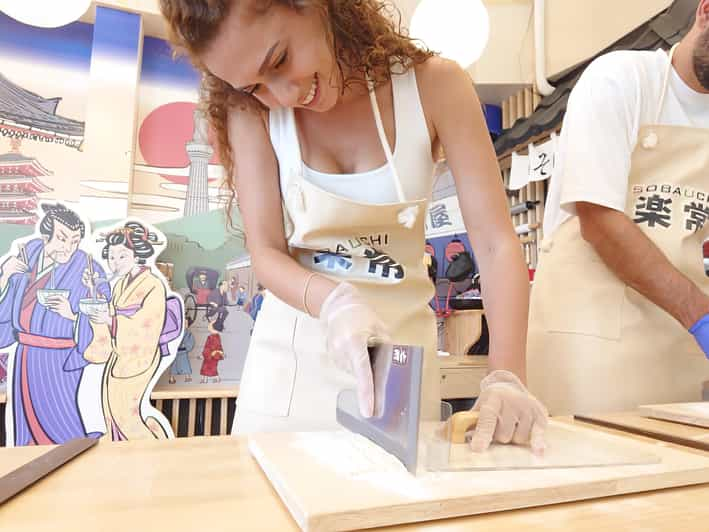
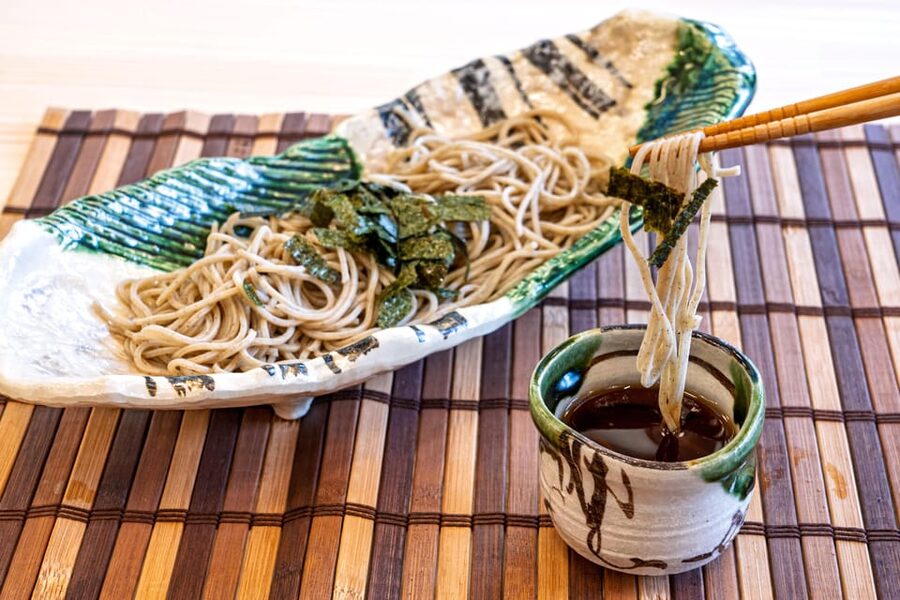
- Cold zaru soba
- Soba with walnut dressing
- Tomato salad soba
- Soba with grated pork shabu
- Shrimp salt soba, served hot or cold
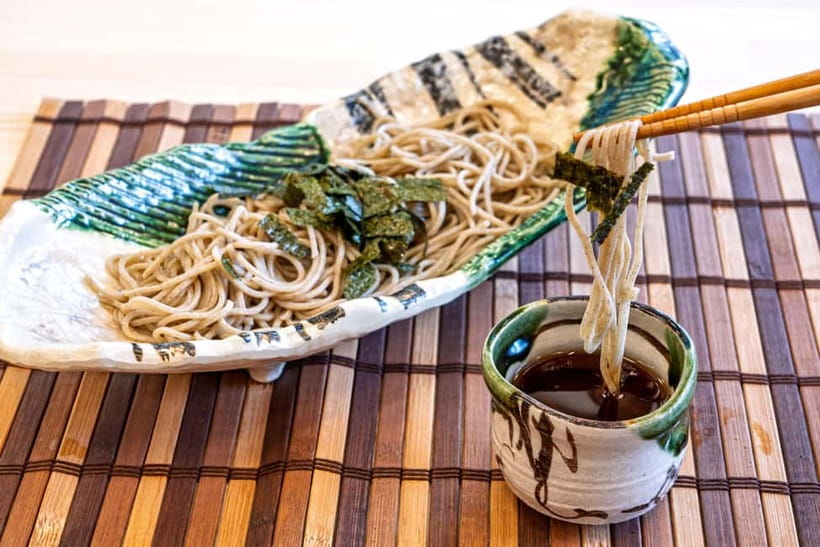
This range makes the class useful for a group with different tastes. You might choose wagyu sukiyaki for a sweet and savory Japanese-style bowl, walnut dressing for a nutty variation, or cold zaru soba if you want a more traditional presentation. The vegan tofu option gives plant-based diners a clear choice rather than a meal assembled as an afterthought.
The menu also gives you a reason to return. A first visit can focus on the wagyu sukiyaki preparation, while another might be built around vegan tofu or cold zaru soba. The activity itself stays the same, but the eating portion can feel different.
One caution: the supplied details do not explain how many menu flavors each person receives or whether every choice is available at every session. If you have a strong preference, confirm it when booking or on arrival. The activity promises soba cut by you and served in various preparations, but the exact serving arrangement is not specified.
A few more Tokyo bookings worth comparing
- Mt Fuji and Hakone 1-Day Bus Tour Return by Bullet Train
★ 5.0 · 26,383 reviews - 1-Day Tokyo Bus Tour
★ 5.0 · 14,250 reviews - Tokyo: TOKYO SKYTREE® Admission ticket
★ 4.5 · 11,192 reviews - Tokyo: teamLab Planets TOKYO Digital Art Museum Entry Ticket
★ 4.6 · 9,779 reviews
One drink and unlimited Japanese snacks add real value
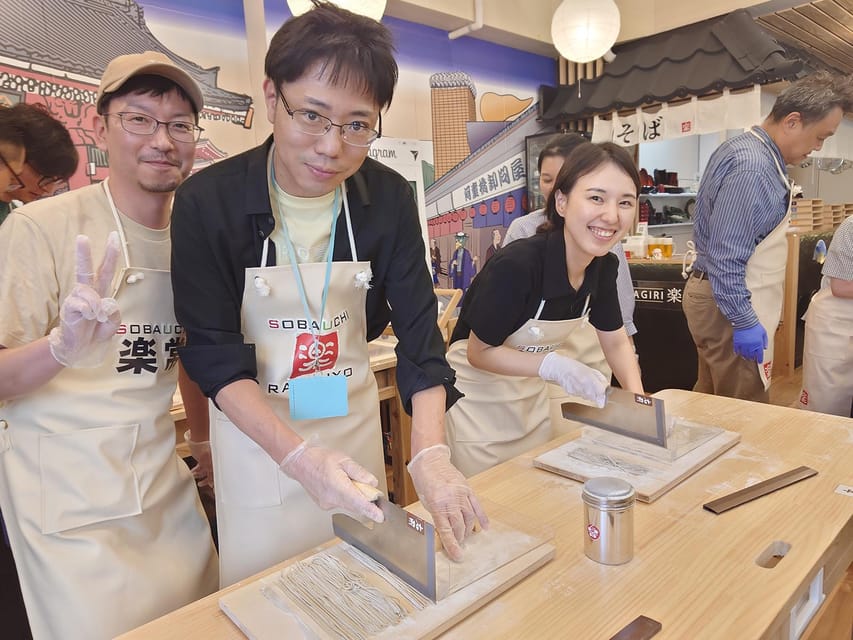
The $57 price is not just for a short noodle lesson. It includes the soba-making session, the meal made from your noodles, one drink, and all-you-can-eat snacks from Japanese manufacturers.
The drink list is broad. You can choose beer, sake, a highball, lemon sour, juice, or non-alcoholic beer. That makes the stop work for different age groups and travel styles. An adult might pair the soba with sake or a highball, while a child can choose juice. The non-alcoholic beer option is useful if you want the look and taste of a beer without alcohol.
The snacks turn the eating area into more than a quick bowl of noodles. You can sample packaged Japanese treats while finishing your drink and meal. I would not book this solely for the snacks, since the details do not specify brands or varieties, but they are a welcome extra at a fixed-price activity.
Value depends on how you use the visit. At $57 per person, this is more expensive than ordering a regular bowl of soba in Asakusa. You are paying for instruction, ingredients, staff help, a photo opportunity, a drink, snacks, and the novelty of cutting the noodles yourself. For a person who only wants lunch, it is not the economical choice. For a couple, family, or group seeking a compact cultural activity with food included, the price is easier to justify.
Who will enjoy this soba class most
Couples are the most common group type listed for this activity, and the format makes sense for them. You get a shared task, photographs, and a meal without giving up half a day. It is also a good fit for friends who want something more active than a restaurant visit but less demanding than a long cooking course.
Families with children can make good use of the spacious floor plan. The session is short enough to hold a child’s attention, and the visual steps are easy to follow. Still, this is a knife-based activity, so very young children need close supervision. Children under two cannot take part.
Groups of four or more should appreciate the capacity. With space for up to 25 participants, the class is set up to handle a larger party without requiring everyone to crowd around one work surface. The quality of the experience may depend partly on the group size at your chosen time, but the venue has been planned for shared participation.
Plant-based diners have a clear advantage here. The tofu vegan soba is listed as a popular flavor, and the activity has been identified as vegan-friendly. If you are managing a stricter diet, ask about the snacks and drink choices, since the information provided does not list their ingredients.
The class also suits people who need English support but do not require a fully English-speaking cooking school. Instruction is available in Japanese and English, with an audio guide and translation app support. You will still learn through watching closely, so keep your attention on the instructor during the short demonstrations.
Pair it with Sensoji and Kappabashi shopping
The soba session is easy to add to an Asakusa day. Sensoji Temple is nearby, and the shop is about a 15-minute rickshaw ride from the temple. You can visit the temple first, take a rickshaw through the area, make soba, then continue along Kappabashi Kitchenware Street.
Kappabashi itself deserves time after lunch. The district is known for specialist kitchen shops, so you can browse knives, pans, restaurant tools, and food samples. The soba activity gives your shopping stop a clear purpose and breaks up the walking.
The short duration is helpful here. The listed activity lasts 50 minutes, with the preparation and eating portions taking roughly half an hour each in the promotional description. The detailed flow lists a five-minute introduction, 10 minutes of stretching, 10 minutes of cutting, photographs, immediate boiling, and eating time. Plan on a compact visit, but allow extra time around it for check-in and the transition to your next stop.
Because the class begins at set times, check availability before building a tight temple and shopping schedule. The activity is not a flexible drop-in meal. Arrive 10 minutes early, and leave a cushion if you are coming from another part of Tokyo.
Practical details before you book
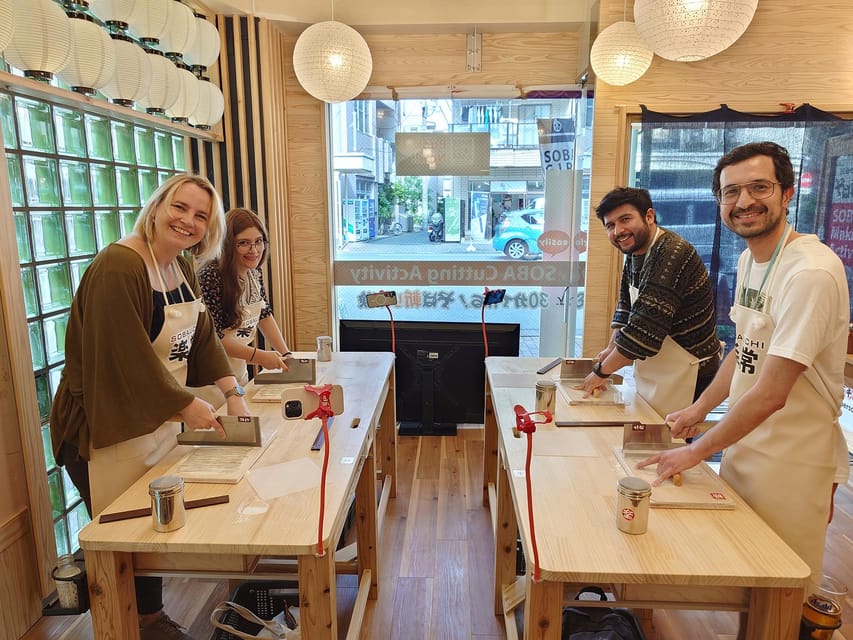
The location is on Honshu, in the Kappabashi area of Asakusa. The venue is wheelchair accessible, which makes the open ground-floor layout useful for visitors who need step-free access.
Japanese and English are the available languages. An English audio guide is included. The staff can use a translation app when needed, and the class depends heavily on visual instruction, so language should not prevent participation for most people.
You can cancel up to 24 hours in advance for a full refund. Reserve-now, pay-later booking is also available, which helps if your Tokyo plans may change. These terms are useful, but they do not remove the need to confirm the starting time and arrive early.
The published rating is 5 out of 5 from seven ratings, with repeated praise for friendly staff, clear help, smooth organization, easy directions, photographs, and tasty soba. One useful detail is that the staff keep the activity simple and hands-on rather than making it feel like a formal culinary examination. You are shown what to do, helped through the first steps, and then allowed to enjoy the result.
Should you book this soba-making experience?
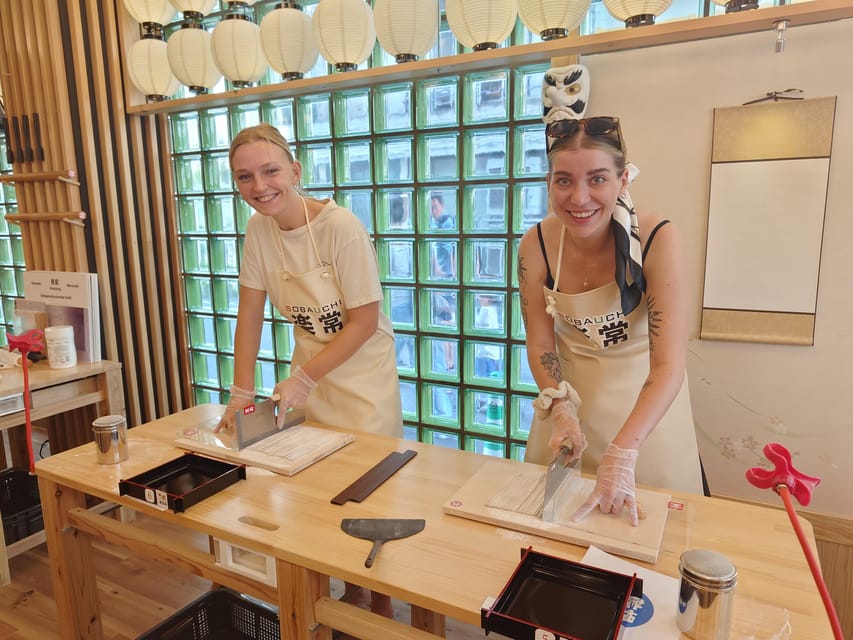
I would book it if you want a short, social food activity that fits neatly into an Asakusa day. The large knife, quick noodle technique, several flavor choices, free drink, and Japanese snacks give the visit more substance than a basic bowl of soba. It is especially well suited to couples, families with older children, and groups of friends.
I would skip it if your main goal is the cheapest possible meal, a long technical cooking lesson, or a quiet traditional restaurant experience. The class moves quickly, the English instruction is practical rather than highly detailed, and the exact serving arrangement for the many flavors is not fully explained.
For most people, the decision comes down to value. You pay $57 for food, instruction, drinks, snacks, and a memorable task in one of Tokyo’s best food-related districts. If that combination sounds more appealing than simply ordering noodles, book it and pair it with Sensoji and Kappabashi shopping.
FAQ
Where does the soba-making experience take place?
It takes place at an open kitchen studio in Kappabashi, Asakusa, on Honshu, Japan. The meeting point is diagonally across from a food-sample specialty store with a large beetle object on Kappabashi Kitchenware Street.
How long does the activity last?
The listed duration is 50 minutes. The activity includes the soba talk, stretching, cutting, photographs, boiling, and eating time.
How early should I arrive?
You should arrive 10 minutes before the scheduled start time for reception and preparation.
What type of flour is used?
The activity uses high-quality buckwheat flour from Shinshu, in Nagano Prefecture. The soba is made without wheat flour.
Do I eat the noodles I cut?
Yes. Staff boil the soba immediately after you cut it, and you dine on the noodles you made.
What flavors of soba are available?
Choices include wagyu beef sukiyaki, oyako chicken, tofu vegan, cold zaru soba, walnut dressing, tomato salad, grated pork shabu, and shrimp salt soba served hot or cold.
Is a drink included?
Yes. One drink is included. Options listed include beer, sake, highball, lemon sour, juice, and non-alcoholic beer.
Are snacks included?
Yes. Japanese snacks from the venue’s selected manufacturers are available on an all-you-can-eat basis in the eating area.
Is the activity suitable for children?
Children under two are not permitted to take part. Older children may participate, but the activity uses a large soba knife and requires attention to the instructor’s directions.
Is the experience available in English and wheelchair accessible?
Yes. Japanese and English support are available, and an English audio guide is included. The venue is wheelchair accessible.
New on our Tokyo list
- Sumi-e Experience in a relaxing green tea shop in Tokyo★ 5.0 · 3 reviews
- Tokyo : Kamikaze Street Drift Ride★ 5.0 · 3 reviews
- Private Zen Meditation in English in Shinjuku, Tokyo★ 5.0 · 3 reviews
- Onsen Spa in Tokyo and Asakusa Bar Hopping with Local Guide★ 5.0 · 3 reviews
- Easy for everyone! Now you can play handmade mini shamisen and show off to everyone! Musical instruments, sweets and live music★ 5.0 · 3 reviews
- Tokyo: Private Tsukiji Street Food & Sake with Local Guide★ 5.0 · 3 reviews
- Mt Fuji Exploration Tour with Free Japanese Kusa Mochi from Tokyo★ 4.5 · 3 reviews
- Tokyo Tsukiji Fish Market Walking and Exploring Hidden Gems Tour★ 5.0 · 3 reviews
Japanese Cooking Classes, compared.
Ramen & Gyoza Cooking Class in Tokyo with Local Supermarket Visit
Read our review →
Easy Ramen Cooking Experience in Kabukicho, Shinjuku
Read our review →
Ramen and Sushi Cooking Class with Sake Pairing Set in Tokyo
Read our review →
Tokyo Washoku 4-hour Cooking Class: From Market to Table
Read our review →
TokyoSumoShow, ChickenHotPot, and Mochi-Pounding by Pro Wrestlers
Read our review →
Professional Ramen & Gyoza with Ramen Chef in a restaurant!
Read our review →
Small-Group Wagyu Beef and 7 Japanese Dishes Tokyo Cooking Class
Read our review →Browse the lists this tour appears in