
Reviewed · SUSHI EXPERIENCES
Taisho Sushi Making Class in Tokyo
The clever part of this Tokyo sushi class comes before the fish: you practice the hand movements on models. That small step gives you a feel for rice pressure, finger placement, and the shape of nigiri before you try to make the real thing. You learn by doing, not by watching a chef work from across the room.
I like the generous amount of sushi included and the chance to eat what you make. I also like the clear focus on technique, especially the lesson on the front and back of the nori for gunkan sushi. The main consideration is timing: although the activity is often described as about an hour, the provider describes the full class as 90 minutes, so I would leave room in your schedule for the longer version.
In This Review
- Key points to know before booking
- Why the model practice matters before real sushi
- Making nigiri with real fish and rice
- Learning the difference between nigiri, maki, and gunkan
- Eating etiquette makes the final meal more useful
- Vegan and vegetarian options in a fish-focused class
- Location, timing, and the practical details
- Is $109.01 a fair price for this Tokyo class?
- Who will enjoy Taisho Sushi Making most?
- Should you book this sushi class?
- FAQ
- Where does the Taisho Sushi Making class meet?
- How long does the sushi-making class last?
- What types of sushi will I learn to make?
- Are vegan and vegetarian options available?
- Is equipment included?
- Can I cancel for a full refund?
Key points to know before booking

- Practice models come first: You repeat the nigiri grip with models before handling real fish and rice.
- Three sushi styles are covered: Expect instruction in nigiri, maki, and gunkan, the seaweed-wrapped sushi shaped like a small warship.
- You eat your own work: The class ends with your creations and guidance on proper sushi-eating etiquette.
- Fish choices vary by season: The exact neta, or sushi topping, is not fixed year-round.
- Non-fish eaters can join: Vegan and vegetarian options are available.
- The meeting point is in Kōjimachi: The class starts and ends at 1-chōme-4-4 Kōjimachi, Chiyoda City.
Why the model practice matters before real sushi
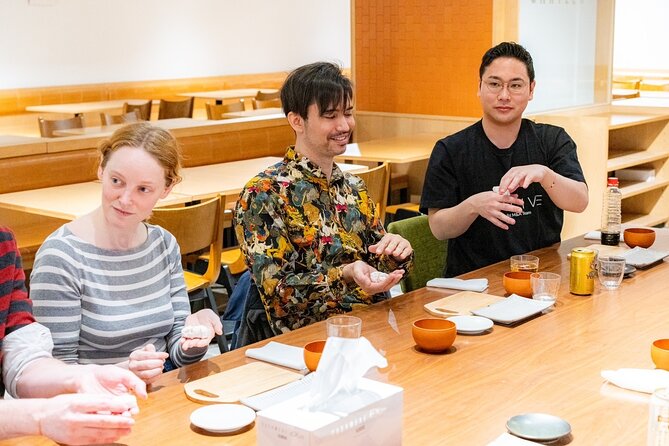
Many short cooking classes rush you straight to the finished dish. Taisho Sushi Making takes a more useful route. You first practice the grip procedure with models, repeating it several times before real fish and rice enter the picture.
That matters because nigiri looks simple but is not. You need enough pressure to hold the rice together, but too much will crush it. The topping must sit correctly, and the finished piece needs to be compact without becoming hard. A model lets you make the common beginner mistakes without wasting food.
I like this teaching choice because it gives you a physical skill you can remember after the class. You may not leave ready to work behind a sushi counter, but you should understand why a neat piece of nigiri takes more control than it appears to require.
The class has an express format, yet the repeated practice keeps it from feeling like a quick demonstration. You are given a chance to build the motion in stages. For families and larger groups, this is also a sensible format because everyone has something practical to do.
More sushi mornings and classes:
- Sushi Making Tokyo Roll and Authentic Japanese Sushi Class
★ 5.0 · 3,971 reviews - Tokyo: Roll and Authentic Sushi Making Class in Asakusa
★ 4.9 · 1,957 reviews - Make Sushi and Create Unforgettable Memories in Tokyo
★ 5.0 · 1,413 reviews
Making nigiri with real fish and rice
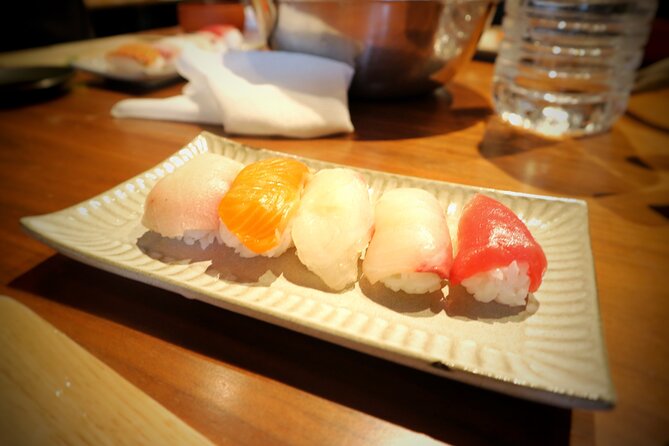
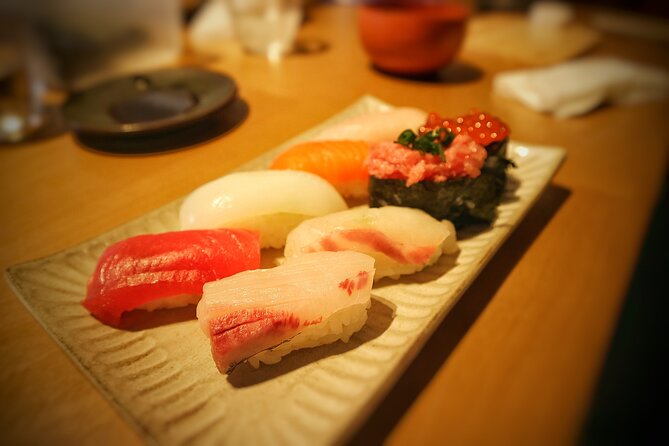
Once the grip practice is complete, you move on to real sushi. The nigiri lesson is the heart of the class. You learn how to combine rice and fish into the familiar oval shape, then prepare enough pieces to eat until you are full.
The selection of fish changes with the season. That means I would not book this expecting a fixed menu with named fish on a particular date. Instead, consider the changing neta part of the Japanese food experience. The exact variety and quantity depend on what is being used at the time, but the class promises a generous spread.
This is where the price begins to make more sense. At $109.01 per person, this is not a cheap snack or a quick market tasting. You are paying for instruction, ingredients, equipment, practice time, and a substantial meal. If you already planned to spend money on a good sushi lunch or dinner in Tokyo, the class can serve as both a meal and a hands-on activity.
You should also come hungry. The point is not to make one perfect piece for a photograph and leave. The class is designed to give you a good amount of sushi, then let you eat your work. That makes it a better fit for someone who wants a practical food activity rather than a lecture about sushi.
The finished pieces may not look like restaurant sushi on your first try. That is part of the value. You get to see how much work goes into a tidy piece, then enjoy it without worrying about restaurant-level perfection.
Learning the difference between nigiri, maki, and gunkan
Nigiri is only one part of the lesson. You also learn maki, the rolled sushi most people recognize from sushi menus. The class covers preparation and rolling, so you get guidance on how the ingredients sit inside the nori and how to form a clean roll.
The gunkan lesson adds another useful skill. Gunkan means warship, a fitting name for the small rice base wrapped in a strip of nori with the sides left open for softer toppings. This is the style used for ingredients such as salmon roe and negitoro.
The nori lesson is especially practical. You learn that nori has a front and back side, and that detail affects how you handle the sheet. Small points like this are easy to miss when you only eat sushi, yet they help explain why different pieces are assembled in different ways.
The class also refers to toppings such as crushed sea urchin. The available ingredients can vary, so you should treat those examples as an indication of the styles covered, not a guaranteed menu. If you have strong food preferences, ask about the current selection when booking or upon arrival.
Eating etiquette makes the final meal more useful
The class does not stop after the shaping and rolling. You also receive instruction in proper sushi-eating etiquette before consuming what you made.
That can be helpful if you are unsure about using chopsticks, dipping nigiri, or handling a piece without making it fall apart. Sushi etiquette is not meant to turn lunch into a test, but a few simple habits make the meal more comfortable. Learning them in a class is less stressful than trying to guess in a quiet sushi restaurant.
I like that the meal is tied directly to the work. You are not simply handed a plate after cooking. You have made the pieces yourself, seen the technique, and then get to taste the result. That gives the final food more meaning without making the class overly formal.
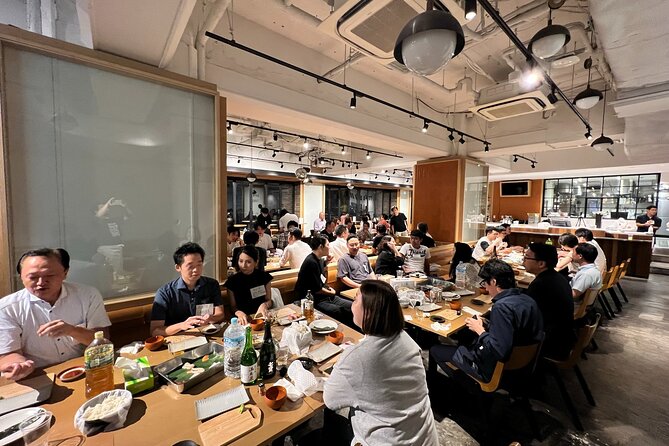
The social side matters, too. The activity is built for people who enjoy food and want to meet others while in Tokyo. The stated maximum is 50 participants, which is a fairly large possible group. If the class fills to capacity, it may feel more like a group workshop than a private lesson. That suits families, couples, and larger parties, but it may not satisfy someone looking for quiet one-on-one coaching.
A few more Tokyo bookings worth comparing
- Tokyo Shinjuku Chopsticks Making Class
★ 5.0 · 1,763 reviews - Tokyo: Sushi Making Class in a Happi Coat near a Famous Spot
★ 4.9 · 1,377 reviews - Chopstick Making Workshop in Ginza
★ 4.8 · 1,366 reviews - Tokyo Sushi Making Class in Tsukiji with Professional Chef
★ 5.0 · 1,177 reviews
Vegan and vegetarian options in a fish-focused class
Sushi classes can be awkward for people who do not eat fish. Taisho Sushi Making provides vegan and vegetarian options, so non-fish eaters can take part in the preparation, rolling, and eating rather than sitting out while others handle the main ingredients.
You should make your dietary preference clear when arranging the activity. The available information confirms that vegan and vegetarian choices exist, but it does not specify the exact ingredients or whether every step is identical to the fish menu.
For mixed groups, this is a real advantage. One person can choose fish while another works with a plant-based option, allowing everyone to share the same activity. I would still treat the class as a sushi-making workshop first, not a specialist vegan cooking lesson.
Location, timing, and the practical details
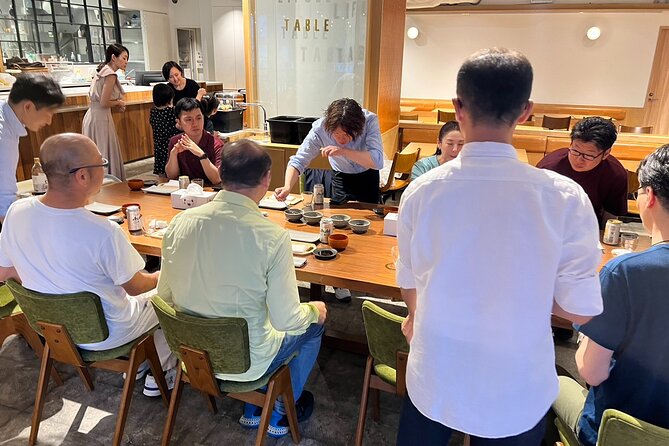
The meeting point is 1-chōme-4-4 Kōjimachi, in Tokyo’s Chiyoda City. The activity is near public transportation, and the class ends back at the same meeting point, so you do not need to arrange a separate return transfer.
The activity is listed as lasting about one hour, while the provider describes the full experience as 90 minutes. In practical terms, I would plan for 90 minutes. That gives you enough time for the model practice, nigiri instruction, gunkan and maki lessons, and the final meal without having to hurry to your next appointment.
A mobile ticket is provided, so you can keep the booking on your phone. Confirmation is sent within 48 hours, subject to availability. You need to book ahead, and the typical booking pattern is about 23 days before the class, a useful hint if your Tokyo dates are fixed.
The stated maximum is 50 people. Service animals are allowed. The activity requires a minimum number of participants, so if that minimum is not reached, you are offered another date or experience, or a full refund.
The cancellation rule is straightforward but worth noting: cancel at least 24 hours before the local start time for a full refund. Cancellations or changes inside that window are not accepted and are not refunded.
Is $109.01 a fair price for this Tokyo class?
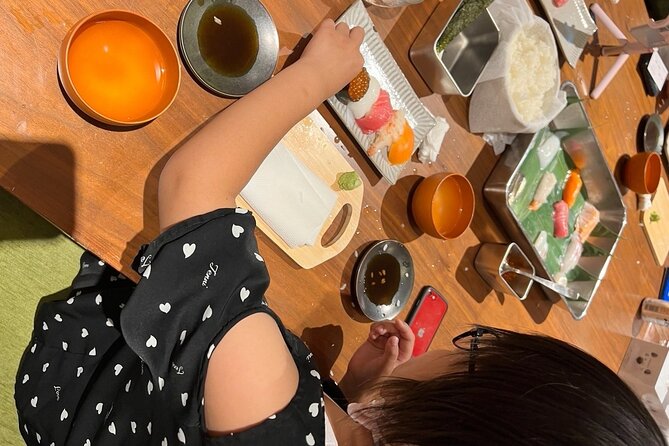
At $109.01 per person, the class costs more than a casual sushi meal. It can still be good value if you count the food, the equipment, the instruction, and the time spent learning a technique you can try again at home.
The strongest value comes from the quantity of sushi and the hands-on format. You are not paying only for a tasting plate. You practice on models, work with real ingredients, learn several sushi forms, and eat the finished food. A positive point for larger groups is that everyone can take part without needing to organize equipment or shop for ingredients.
The value is weaker if you want a small, intimate class or if you are mainly interested in eating top-grade sushi prepared by a professional. This is a learning activity. Your pieces may be uneven, and the fish selection is seasonal rather than fully specified in advance.
I would compare the price with what you already plan to do in Tokyo. If you would spend around the same amount on a special sushi meal, this class adds a skill and a social activity. If your priority is the finest possible sushi served with no effort, spend the money at a respected sushi counter instead.
Who will enjoy Taisho Sushi Making most?
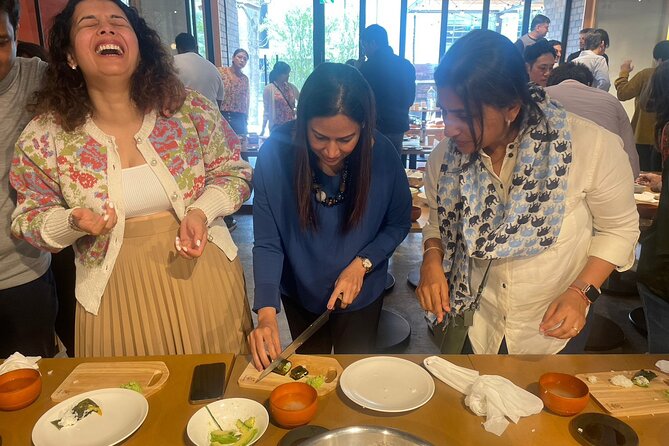
I would recommend this class to first-time sushi makers, food-focused visitors, families, and groups of friends. The model practice gives beginners a clear start, while the different sushi forms keep the session active.
It also works well for a short Tokyo visit. The class is compact enough to fit into a busy day, and the food doubles as lunch or an early dinner. Just avoid placing an important timed reservation immediately afterward because the advertised length can reach 90 minutes.
Non-fish eaters can join because vegan and vegetarian options are offered. The class is also a good choice for anyone who wants to understand the mechanics behind a food they already enjoy.
I would be more cautious if you dislike group activities, need a fully private lesson, or want a detailed menu confirmed far in advance. The possible 50-person maximum is large, and the seasonal fish list means the exact tasting lineup is not fixed.
Should you book this sushi class?
Book it if you want to make sushi, eat a generous amount of it, and learn the small hand skills that restaurants usually keep behind the counter. The model practice, nigiri grip work, gunkan lesson, and eating etiquette give the class more substance than a simple roll-and-eat session.
Skip it if you only want a quiet meal, a private chef, or a guaranteed list of premium fish. For most food-focused visitors, especially families and larger groups, Taisho Sushi Making offers a practical way to turn a familiar Tokyo dish into an activity you can remember and repeat at home.
The 4.9 out of 5 rating from 89 reviews, along with a 100 percent recommendation rate, supports the class’s strongest points: the amount of fish and time provided, and its suitability for larger groups and families. I would book ahead, plan around 90 minutes, arrive ready to eat, and treat the class as both a meal and a useful introduction to sushi technique.
FAQ
Where does the Taisho Sushi Making class meet?
The class starts at 1-chōme-4-4 Kōjimachi, Chiyoda City, Tokyo 102-0083, Japan. The activity ends back at the same meeting point.
How long does the sushi-making class last?
The activity is listed as approximately one hour, while the provider describes the full experience as 90 minutes. Plan for about 90 minutes to allow time for all lessons and the meal.
What types of sushi will I learn to make?
The class includes nigiri, maki, and gunkan sushi. You practice nigiri grip procedures on models before working with real fish and rice, then learn gunkan techniques and tips about the front and back of the nori.
Are vegan and vegetarian options available?
Yes. Vegan and vegetarian options are available for people who do not eat fish.
Is equipment included?
Yes. All equipment and materials are provided, so you can arrive empty-handed.
Can I cancel for a full refund?
Yes, if you cancel at least 24 hours before the experience start time. Cancellations or changes made less than 24 hours before the start time are not accepted or refunded.
New on our Tokyo list
- From Tokyo: Mount Fuji & Hakone Full Day Private Tour★ 4.9 · 25 reviews
- Tokyo Spectacular View Day-Cruise in 90 Minutes★ 5.0 · 25 reviews
- 2.5 Hour-Guided Cycle Tour in the Central Tokyo★ 5.0 · 25 reviews
- Real Tokyo Runner Club : Daikoku Car Meet Night Tour with JDM Car★ 5.0 · 25 reviews
- Ramen Making from Scratch +Akihabara Tour –Cooking Class★ 5.0 · 25 reviews
- [Self-Drive] Tokyo & Daikoku Custom Car Driving Tour★ 4.9 · 25 reviews
- Tokyo: 2-Hour Night Bike Tour of the City’s Hidden Gems★ 4.9 · 25 reviews
- Samurai themed Entertainment show in Shinjuku★ 4.5 · 25 reviews
Sushi Experiences, compared.
Sushi Making Tokyo Roll and Authentic Japanese Sushi Class
Read our review →
Roll and Authentic Sushi Making Class in Asakusa
Read our review →
Make Sushi and Create Unforgettable Memories in Tokyo
Read our review →
Sushi Making Class in a Happi Coat near a Famous Spot
Read our review →
Tokyo Sushi Making Class in Tsukiji with Professional Chef
Read our review →
Tokyo Night Foodie Tour in Shinjuku – Seasonal Sushi, Wagyu Beef
Read our review →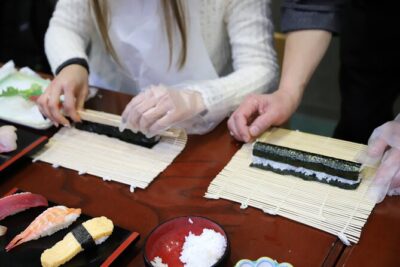
Tsukiji Fish Market Guided Tour and Sushi Making with Pro Chef
Read our review →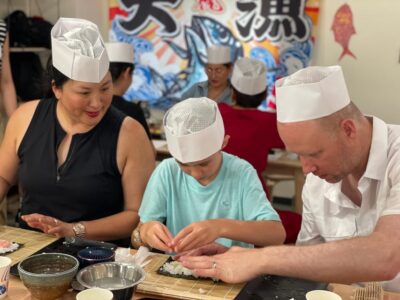
Tsukiji Fish Market Sushi Making Class with Pro Chef
Read our review →Browse the lists this tour appears in