
Reviewed · HISTORICAL TOURS
Tokyo: 2-Hour Asakusa Food Hunt & Cultural Tour
Asakusa is famous for Sensoji Temple and the Kaminarimon Gate, but this 150-minute food walk takes you past the main sights and into family-run places many visitors would miss. You eat a full lunch in several stops, from a fish dealer’s standing sushi shop to handmade rice crackers and local sweets.
I like the small group, limited to six people, because it gives you room to ask questions and makes tiny restaurants easier to manage. I also like the mix of food and culture: you learn how sushi was once treated as fast food, practice local eating manners, and visit Sensoji with a guide who can explain what you are seeing.
The main consideration is timing. This is a substantial lunch and a walking tour packed into 11:30 to 14:00, so it may feel brisk, especially in hot weather or if you need frequent breaks. Comfortable shoes and an appetite matter.
In This Review
- Key Points at a Glance
- Why This Asakusa Food Tour Feels Different
- Starting With Sushi at a Fish Dealer’s Counter
- Soba and Gyoza in a Family Restaurant
- Handmade Rice Crackers and Old Shop Traditions
- A Local Snack With a Tokyo Story
- Sensoji Temple After the Food Stops
- The Guides Make the Small Group Work
- Is $76 a Fair Price?
- Timing, Walking, and Comfort
- Who Should Book This Food Walk?
- Should You Book the Asakusa Food Hunt?
- FAQ
- How long is the Asakusa food and cultural tour?
- Where does the tour meet?
- How much walking is involved?
- What food is included?
- Does the tour visit Sensoji Temple?
- Is the tour conducted in English?
- How large is the group?
- Can I cancel for a full refund?
Key Points at a Glance
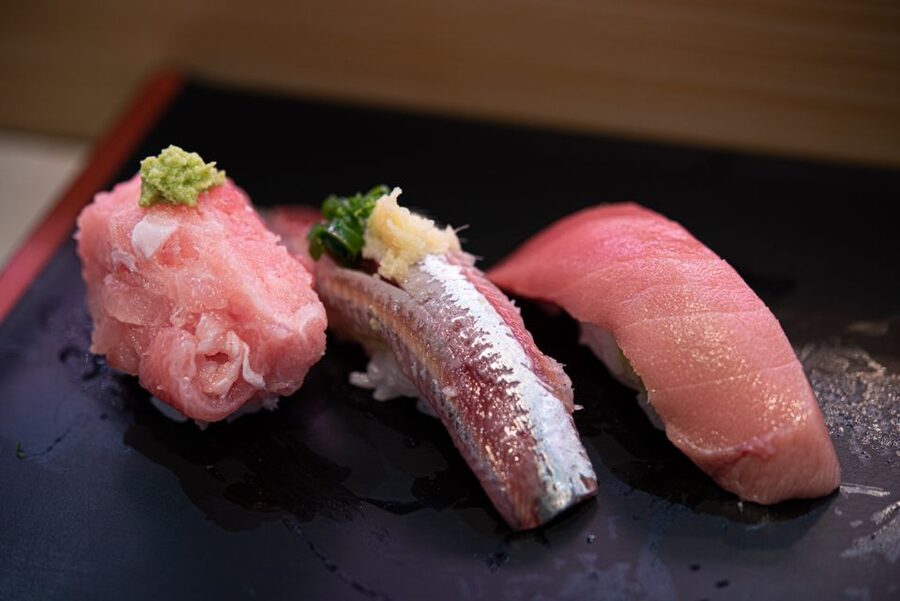
- A full lunch in four or more stops: Expect sushi, soba, gyoza, rice crackers, and Japanese snacks rather than one small tasting.
- A standing sushi restaurant run by a fish dealer: Learn how sushi is eaten and try seafood you may not have ordered alone.
- Family-owned businesses with long roots: The route includes a rice-cracker shop with more than 100 years of history and snack traditions dating back about 50 years.
- A quieter side of Asakusa: You walk 1 to 2 kilometers through local streets beyond the standard temple approach.
- A guide-led look at Sensoji: The temple visit adds context about Japanese culture and Asakusa’s past.
- A genuinely small group: With no more than six participants, guides such as Max, Shino, Chi, and Leigh can give personal attention.
Why This Asakusa Food Tour Feels Different
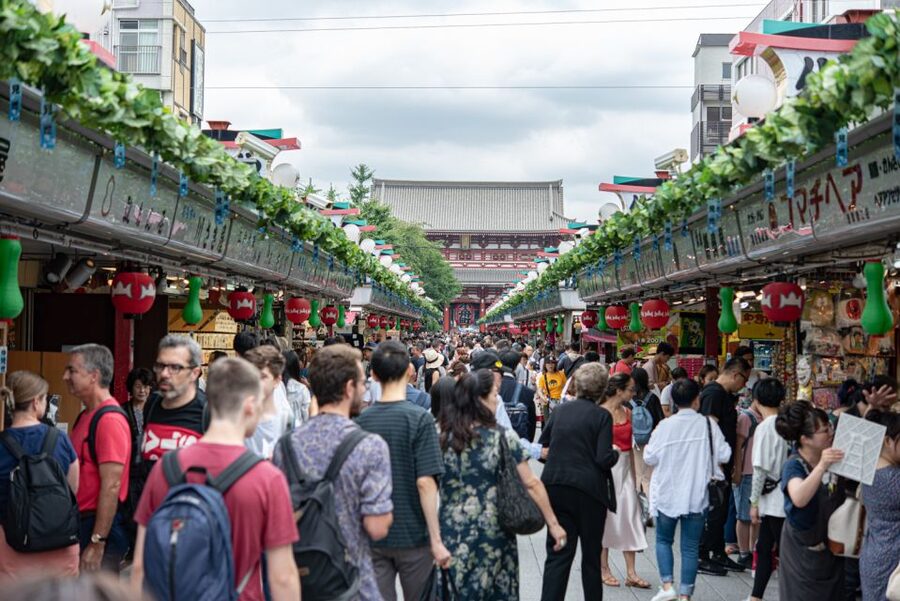
Many first visits to Asakusa follow a familiar path: Kaminarimon Gate, Nakamise shopping street, and Sensoji Temple. Those sights deserve your time, but they show only one slice of the neighborhood. This tour uses food to lead you farther out, where local shops and small restaurants become the focus.
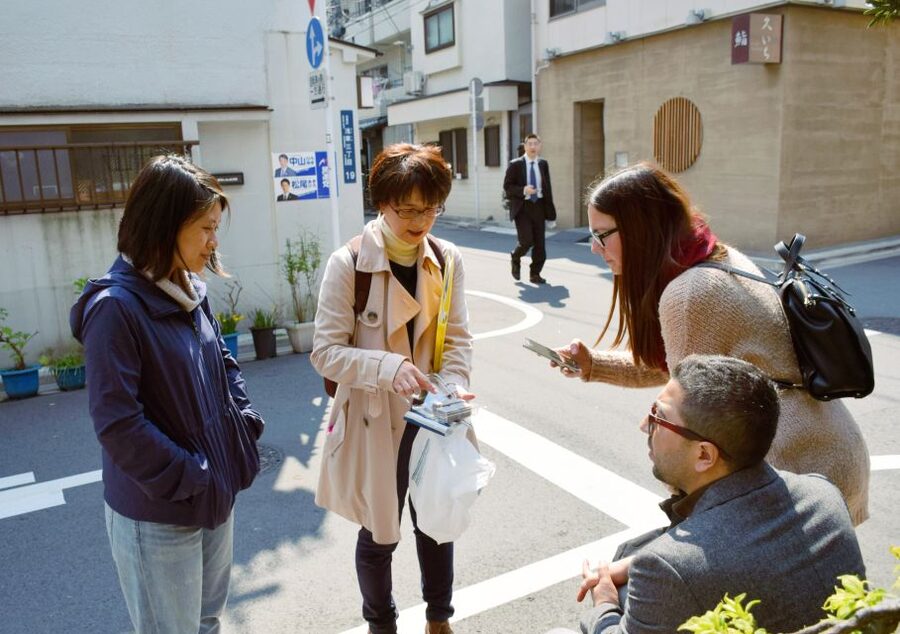
You will walk about 1 to 2 kilometers, meeting your guide at Hinatomaru Kaminarimon, at 1 Chome-20-3 Asakusa. The route is not a bus tour, and transportation is not included. That is useful to know from the start: the walking is part of the experience, not simply a way to move between food stops.
I like this format because Asakusa’s character is easier to understand when you see how people eat in ordinary places. A standing sushi counter, a family soba restaurant, and a shop making rice crackers each tell you something different about the area. You are not only checking off dishes. You are learning how food fits into daily life.
The small group is another real advantage. Six people is a manageable number for a narrow restaurant or a quick explanation beside a temple gate. It also gives you a better chance to ask about ingredients, manners, and Japanese food customs without losing the guide in a crowd.
More Asakusa visits:
- Tokyo: Japanese Dance Cabaret Theater Asakusa-Kaguwa Ticket
★ 4.8 · 2,270 reviews - Tokyo: Meiji Shrine, Asakusa, Skytree Bus Tour and Cruise
★ 4.7 · 1,986 reviews - Tokyo: Roll and Authentic Sushi Making Class in Asakusa
★ 4.9 · 1,957 reviews
Starting With Sushi at a Fish Dealer’s Counter
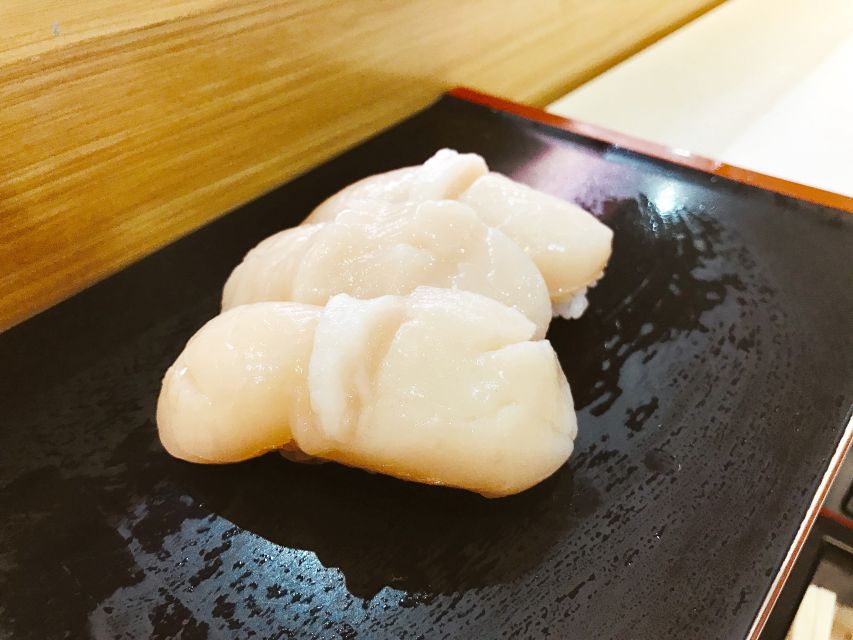
The first food stop is a standing sushi restaurant owned by a fish dealer. This is a useful introduction because sushi in Japan is not always a formal, expensive meal. It once served as quick food, and the standing format keeps that practical spirit alive.
Your guide explains how to eat sushi properly, which is more helpful than it sounds. You will learn the basic customs around handling and eating each piece, then try fresh seafood that may be unfamiliar to you. That makes this stop especially useful if you usually order only familiar sushi.
The sushi was singled out as one of the best meals of the trip by one participant, which fits the purpose of the stop: you get the chance to try fish in a local setting instead of relying on a restaurant menu written for tourists. Guides also translate and explain as you go, so you can ask what you are eating rather than guessing.
There is one practical point to keep in mind. A standing restaurant may not suit everyone for long, especially if you have trouble standing or want a slow, formal lunch. The tour later includes a seated restaurant, but the first stop is built around speed and local custom.
Soba and Gyoza in a Family Restaurant
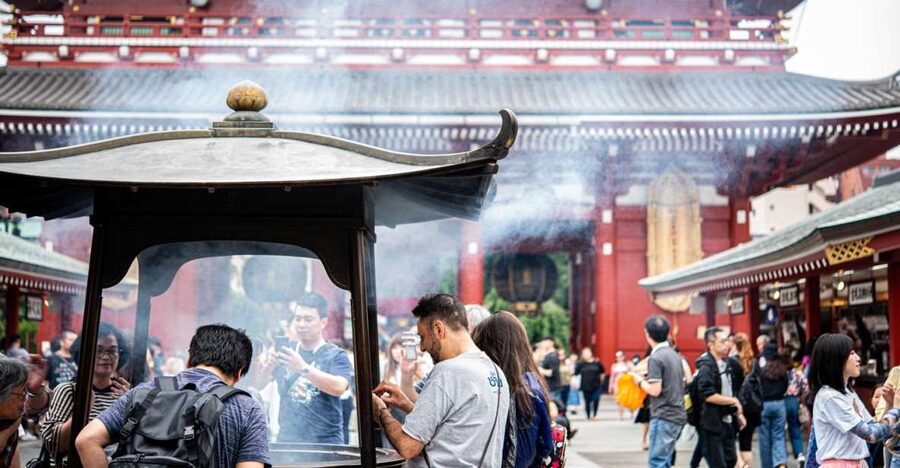
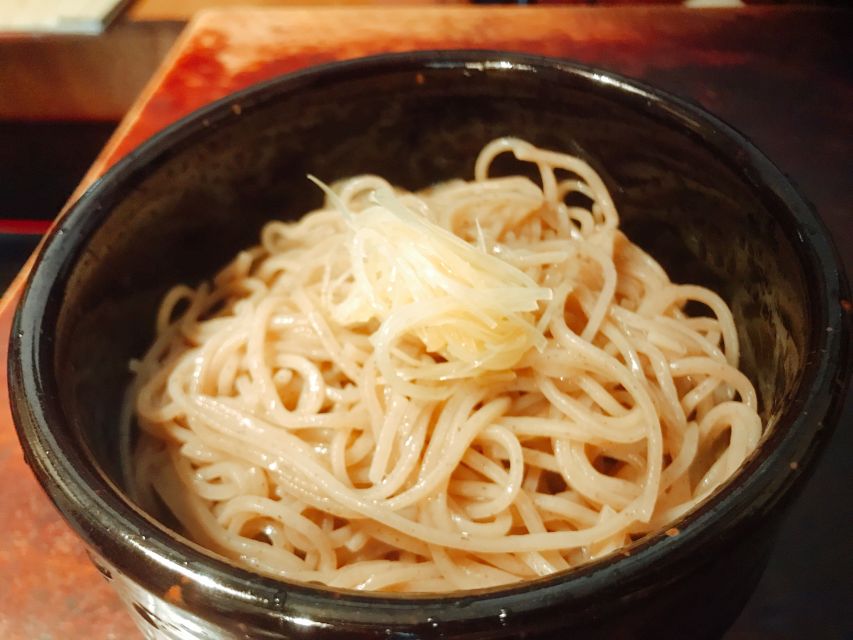
The next major stop is a family-owned soba restaurant where you eat fresh soba and gyoza. This is described as a local place that primarily serves people from the neighborhood, which gives the meal a different feel from the polished restaurants near the biggest sights.
Soba is a good dish for learning how Japanese food balances texture and simplicity. The noodles are the main event, while gyoza adds a savory contrast. Your guide can help you understand how the dishes fit together and answer questions about Japanese dining customs.
The food portions are intended to add up to a full lunch, not a string of tiny bites. That matters at $76 per person. You are paying for several dishes, a live English-speaking guide, local explanations, and access to places you might not comfortably enter on your own. The value is strongest if you would otherwise spend time finding restaurants, translating menus, and waiting in the wrong line.
Several people found the itinerary well ordered, with the food stops arranged in a sensible sequence. That helps the tour feel like lunch rather than random snacking. You move from one style of eating to another, with enough walking between stops to keep the meal from becoming overwhelming.
Handmade Rice Crackers and Old Shop Traditions
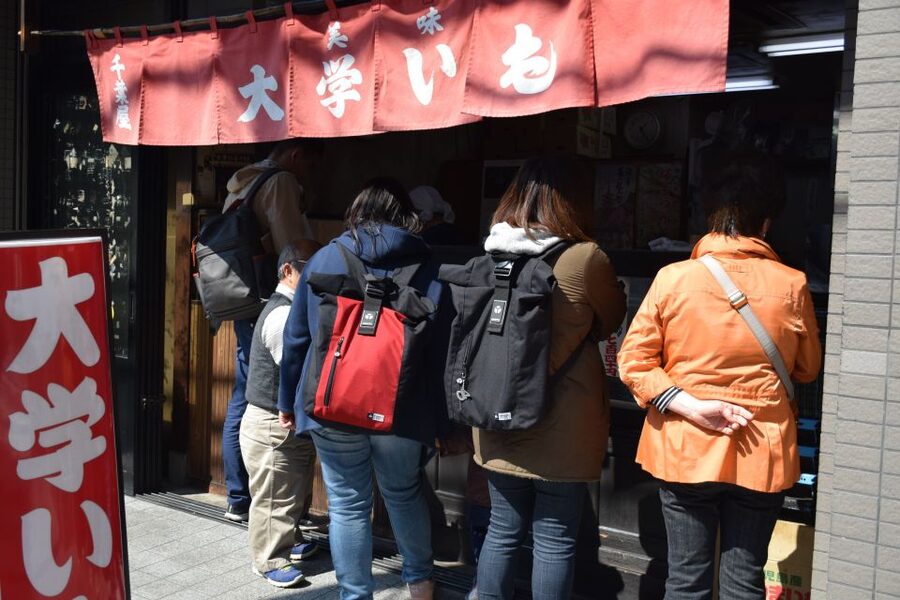
The rice-cracker stop adds a welcome change of pace. You visit a local store with more than 100 years of history and taste handmade rice crackers. This is the kind of place that can be easy to pass without understanding what makes it special.
Rice crackers are simple food, but the shop gives your guide a chance to explain a long-running Japanese snack tradition. You also get to see how a small family business can remain part of neighborhood life across generations. It is a more grounded experience than buying a packaged souvenir in a large department store.
I especially like this stop for people who want edible souvenirs. The tour does not promise shopping time or specific products to take home, so treat the visit mainly as a tasting and cultural lesson. If the shop has items available for purchase, your guide may be able to help, but that should not be assumed as a formal part of the tour.
A few more Tokyo bookings worth comparing
- Tokyo: Imperial Palace and Shogun Historical Walking Tour
★ 5.0 · 2,251 reviews - Tokyo: Imperial Palace Japanese History Walking Tour
★ 4.9 · 987 reviews - Tokyo: Shinjuku Historical Walking Tour & Secret Backstreets
★ 5.0 · 530 reviews - Yanaka Walking Tour: Historic and Traditional District of Tokyo
★ 5.0 · 530 reviews
A Local Snack With a Tokyo Story
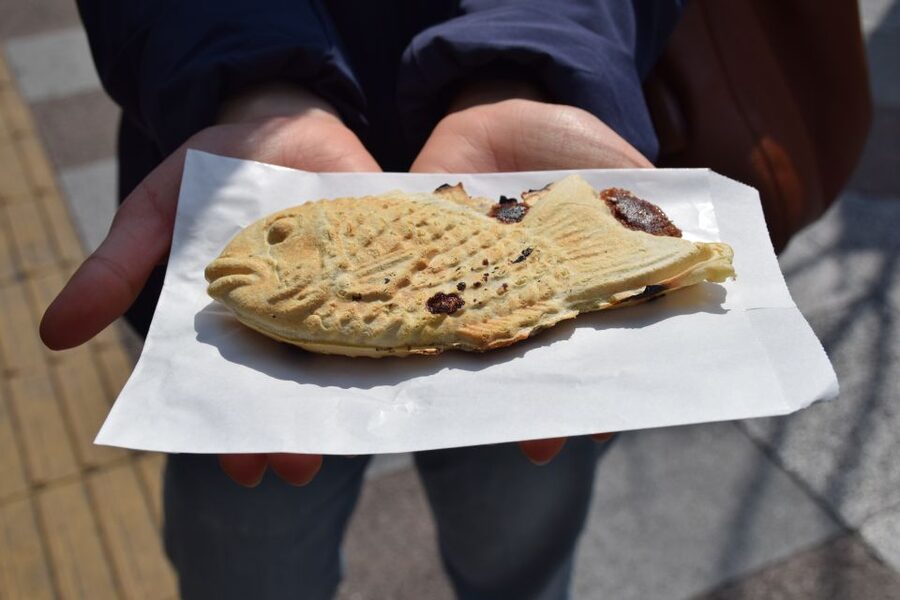
Another tasting focuses on Japanese snacks connected to a food stand that began in Tokyo about 50 years ago. The description does not specify the exact snack, so you should expect a surprise rather than arrive with a fixed idea of what you will eat.
That uncertainty is part of the fun, but it is also worth noting if you have strict dietary needs or strong dislikes. Ask the guide before eating if you need ingredient information. The tour is built around trying foods you might not select by yourself, and one participant specifically appreciated having their taste stretched by new dishes.
This stop also shows how the tour handles Asakusa beyond old temples. Not every local food tradition is ancient. Some began in the postwar period or more recently, then became part of the city’s food culture. That broader view makes the neighborhood feel lived-in rather than frozen in the past.
Sensoji Temple After the Food Stops
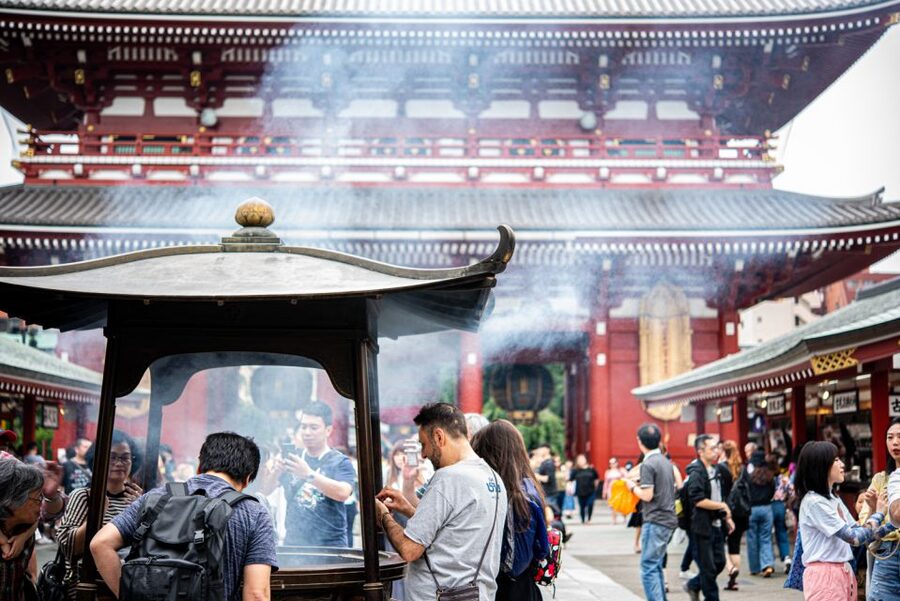
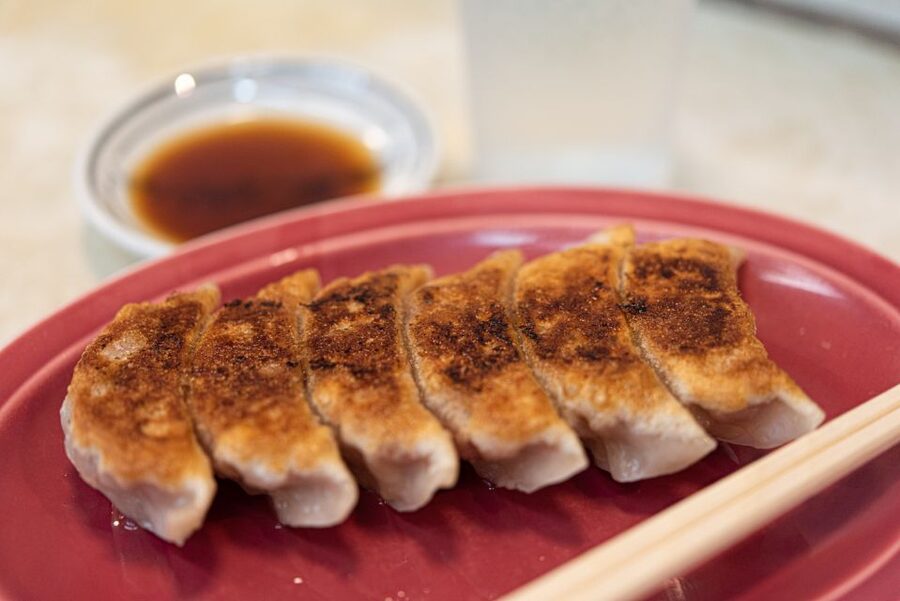
Sensoji is one of Tokyo’s largest temples and one of Asakusa’s essential sights. Including it in the route gives the food stops a wider cultural setting. Instead of simply walking through the temple grounds for photographs, you can ask your guide about Japanese customs, the temple’s role, and the history of the area.
The temple visit is not presented as a separate long sightseeing tour. It is one part of a compact food and culture route, so you should not expect an hour-by-hour temple lecture. The advantage is balance: you see the major landmark, then spend much of the tour in streets and businesses outside the guidebook route.
If this is your first time in Asakusa, the temple stop helps you get your bearings. If you have already seen Sensoji, the food route still gives you a reason to return. Either way, the contrast between the famous temple and the quieter side streets is one of the tour’s strongest features.
The Guides Make the Small Group Work
The tour is conducted in English, and the guide is central to its value. Guides named Max, Shino, Chi, and Leigh have led sessions, and the feedback about their communication, patience, and cultural explanations is consistently strong.
Max was praised for bringing the group to two sit-down restaurants and two other food stops, while also adjusting to both older adults and children. On a very hot day, he made sure the group had shade, rests, and fluids. That is a small but important sign of good guiding, especially in Tokyo’s summer heat.
Shino was described as friendly and attentive, making sure everyone felt comfortable and involved. Chi handled questions about Japanese food culture and explained the proper way to eat sushi, even for people who had eaten sushi for years. Leigh was praised for clear English, smooth organization, and an itinerary that fit the available time.
Guide quality can vary from one departure to another, so those names should not be treated as a guarantee that a particular person will lead your tour. Still, the repeated pattern is encouraging. The guide is not simply walking you from restaurant to restaurant. You are paying for translation, context, pacing, and a local point of view.
Is $76 a Fair Price?
At $76 per person, this is not the cheapest way to eat lunch in Asakusa. You could buy individual dishes for less if you already know where to go and feel comfortable ordering in Japanese.
The price becomes easier to justify when you count what is included: full lunch-size local tastings, four or more food stops, an English-speaking guide, cultural explanations, and a small group limited to six. You also save the time and uncertainty involved in finding family-run restaurants that may not be obvious from English-language guidebooks.
I would call it good value for a first visit, food-focused trip, or short Tokyo stay. It is less compelling for someone who has spent several days in Asakusa, speaks Japanese, and already has a carefully planned list of restaurants.
Do not expect a luxury meal or a private tour. The experience is about local food in ordinary settings, with a guide helping you understand what is in front of you. That is where the value lies.
Timing, Walking, and Comfort
The tour runs from 11:30 to 14:00, so it occupies the heart of your lunch period. Avoid booking another major meal immediately afterward. The tastings are intended to form a full lunch, and the mix of sushi, noodles, dumplings, crackers, and snacks is likely to leave you satisfied.
You will walk about 1 to 2 kilometers. That is not a major distance for most people, but Tokyo sidewalks, standing food stops, summer heat, and busy streets can make a short route feel longer. Wear comfortable shoes and bring water, especially in warm weather.
The schedule is compact. Some groups felt the pacing was comfortable and never rushed, while the format still requires you to keep moving between stops. If you want long conversations at every restaurant or plenty of time for photographs, this may feel quick.
The small group helps. A group of six can move through the neighborhood more easily than a large coach party, and the guide can pause when the weather or a participant’s needs call for it.
Free cancellation is available up to 24 hours before the tour for a full refund. You can also reserve now and pay later, which helps if your Tokyo plans are still changing.
Who Should Book This Food Walk?
I would recommend it most strongly to:
- First-time visitors who want more than Sensoji and Nakamise Street
- People who enjoy trying unfamiliar foods with help from a guide
- Families who want food, walking, and culture in one short outing
- Older adults who prefer a guide who can manage pacing and rest breaks
- Solo visitors or couples who want access to small local restaurants
- Anyone curious about Japanese eating manners and everyday food customs
It may be less suitable if you need a fully seated meal from start to finish, have serious food allergies that require detailed advance confirmation, or prefer to choose every dish yourself. The route is designed to introduce you to foods you may not have tried before.
Should You Book the Asakusa Food Hunt?
Book it if you want a practical introduction to Asakusa that combines lunch with local context. The strongest reasons are the small group, the variety of stops, the chance to eat at family-run businesses, and the guide’s help with Japanese food customs.
I would especially choose it early in a Tokyo visit. You will get a better feel for Asakusa, learn how to approach sushi and other dishes, and finish with ideas for where to return. At $76, it asks more than a self-guided lunch, but it gives you structure, translation, and access that can be hard to arrange on your own.
Skip it if you are looking for a slow gourmet meal or a long temple tour. Choose it if you want to eat well, walk a manageable local route, and see the Asakusa that begins after the main photograph spots.
FAQ
How long is the Asakusa food and cultural tour?
The activity lasts 150 minutes, or two and a half hours. It runs from 11:30 to 14:00.
Where does the tour meet?
You meet the guide at Hinatomaru Kaminarimon, located at 1 Chome-20-3 Asakusa, Taito City, Tokyo.
How much walking is involved?
The route includes about 1 to 2 kilometers of walking. Comfortable shoes are recommended.
What food is included?
The lunch-size tastings include sushi, fresh soba, gyoza, handmade rice crackers, and Japanese snacks. The tour visits more than four local food vendors.
Does the tour visit Sensoji Temple?
Yes. Sensoji Temple is included as part of the cultural and historical portion of the route.
Is the tour conducted in English?
Yes. The tour has a live English-speaking guide.
How large is the group?
The tour is limited to six participants, making it a small-group experience.
Can I cancel for a full refund?
Yes. You can cancel up to 24 hours in advance for a full refund. You can also reserve now and pay later.
More 2-Hour Experiences in Tokyo
- Ninja Samurai 2-hour hands-on lesson by Japanese master in Tokyo
★ 5.0 · 194 reviews - Tokyo 2-Hour Genuine Samurai Experience: Kendo in Japan
★ 5.0 · 112 reviews - Tokyo: Flagship 2-Hour Street Go-Kart Tour by Street Kart
★ 4.9 · 94 reviews - Tokyo: Shinjuku Izakaya and Golden Gai Bar Hopping Tour (2h)
★ 4.9 · 67 reviews
New on our Tokyo list
- Tokyo : Kamikaze Street Drift Ride★ 5.0 · 3 reviews
- Private Zen Meditation in English in Shinjuku, Tokyo★ 5.0 · 3 reviews
- Sumi-e Experience in a relaxing green tea shop in Tokyo★ 5.0 · 3 reviews
- Onsen Spa in Tokyo and Asakusa Bar Hopping with Local Guide★ 5.0 · 3 reviews
- Easy for everyone! Now you can play handmade mini shamisen and show off to everyone! Musical instruments, sweets and live music★ 5.0 · 3 reviews
- Tokyo: Private Tsukiji Street Food & Sake with Local Guide★ 5.0 · 3 reviews
- Mt Fuji Exploration Tour with Free Japanese Kusa Mochi from Tokyo★ 4.5 · 3 reviews
- Tokyo Tsukiji Fish Market Walking and Exploring Hidden Gems Tour★ 5.0 · 3 reviews
Historical Tours, compared.

Imperial Palace and Shogun Historical Walking Tour
Read our review →
Yanaka Walking Tour: Historic and Traditional District of Tokyo
Read our review →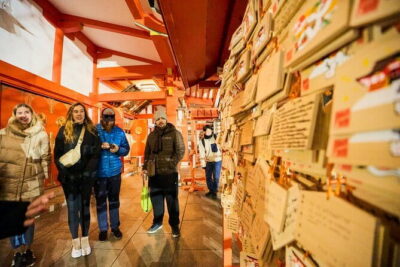
Shinjuku Historical Walking Tour & Secret Backstreets
Read our review →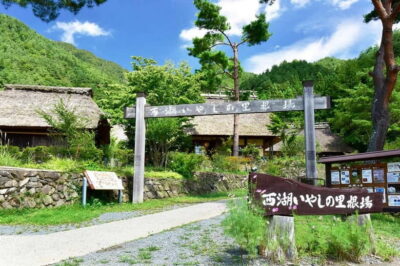
Mt. Fuji Heritage Tour: Traditional Villages, Lakes & Shrine
Read our review →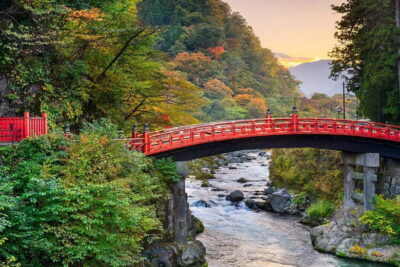
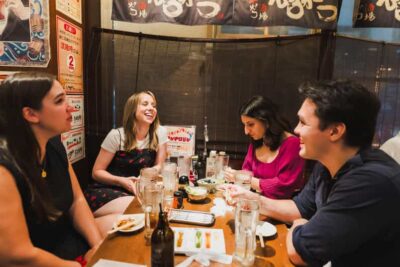
The Best of Izakaya in Shinjuku Food & Cultural Tour
Read our review →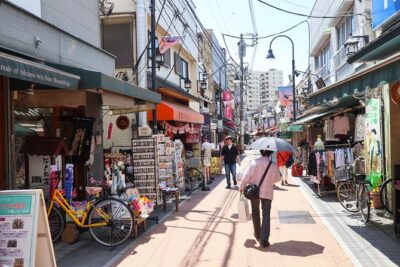
Yanaka Historical Walking Tour in Tokyo’s Old Town
Read our review →Browse the lists this tour appears in