
Reviewed · WALKING TOURS
Tokyo Asakusa Half Day Walking Tour with Local Guide
Asakusa gives you old Tokyo in a compact, walkable package. In about two and a half hours, this small-group outing takes you from the red Kaminarimon Gate to Senso-ji, then through Nakamise Street and the old Shitamachi quarter, with a local guide explaining what you are seeing along the way. The small group, limited to five people, is a real strength. It leaves room for questions and personal requests.
I like the flexible route and the chance to try classic snacks such as age-manju, kibidango, ningyo-yaki, matcha, and Kaminari Okoshi. I also like that the walk includes both the major sights and everyday Asakusa spots such as Kamiya Bar and Hoppy Street. The main drawback is that lunch, snacks, drinks, transport, and any extra activities are not included in the $61.78 price.
In This Review
- Key points to know before booking
- Why this 2.5-hour Asakusa walk works well
- Starting beneath Kaminarimon Gate
- Nakamise Street for snacks and traditional goods
- Senso-ji and the practical side of worship
- Shitamachi streets, Kamiya Bar, and Hoppy Street
- How flexible is the route?
- What the $61.78 price really covers
- Who will get the most from this walk?
- Weather, group size, and booking details
- Should you book this Asakusa walking tour?
- FAQ
- Where does the Asakusa walking tour begin?
- What time does the tour start?
- How long does the experience last?
- Where does the tour finish?
- What is included in the price?
- How many people can join?
Key points to know before booking
- Kaminarimon starts the story: Meet beneath Asakusa’s famous Thunder Gate, the visual entrance to Senso-ji.
- A five-person maximum: The intimate format makes it easier to ask questions and request changes to the route.
- Traditional snacks are part of the walk: Nakamise Street offers age-manju, kibidango, ningyo-yaki, matcha, and Kaminari Okoshi.
- Senso-ji includes cultural guidance: Your guide explains how to worship, draw a fortune, and make a prayer.
- Old Asakusa continues beyond the temple: The route includes Shitamachi streets, Kamiya Bar, Hoppy Street, and Asakusa.
- Lunch is your responsibility: Monja-yaki is suggested as a local meal, but food and drinks cost extra.
Why this 2.5-hour Asakusa walk works well
Asakusa is easy to reach but not always easy to understand. Senso-ji, Nakamise Street, Kaminarimon, side lanes, food shops, and old drinking streets all sit close together. That sounds simple, but the area can feel like a jumble when you first arrive.
A guide gives the district a clear order. You begin at the Asakusa Culture Tourist Information Center, walk to Kaminarimon, continue down Nakamise Shopping Street, visit Senso-ji, and then see more of the Shitamachi quarter. You finish where you started, which is useful if you want to continue exploring on your own.
The timing matters. A 9:30 a.m. start lets you see the principal sights early in the day and leaves much of the afternoon open. You will not spend an entire day on the tour, yet you get enough time for explanations, questions, photos, shopping, and a few food stops.
This is not a long museum-style tour. It is a quick orientation with local context. If you have only a short stay in Tokyo, that can be valuable. If you already know Asakusa well, the flexible format may still help you focus on particular shops, customs, or streets.
More Asakusa visits:
- Tokyo: Japanese Dance Cabaret Theater Asakusa-Kaguwa Ticket
★ 4.8 · 2,270 reviews - Tokyo: Meiji Shrine, Asakusa, Skytree Bus Tour and Cruise
★ 4.7 · 1,986 reviews - Tokyo: Roll and Authentic Sushi Making Class in Asakusa
★ 4.9 · 1,957 reviews
Starting beneath Kaminarimon Gate
The meeting point is the Asakusa Culture Tourist Information Center at 2-chome-18-9 Kaminarimon. The tour then begins at Kaminarimon Gate, the large entrance associated with Senso-ji.
Kaminarimon is more than a convenient meeting landmark. It is the gateway image most people associate with Asakusa, and it sets up the religious and cultural story of the district. Your guide can explain the significance of the gate before you move into the busy approach toward the temple.
This is also a sensible place to begin because it is close to public transportation. You do not need to find a small shop or a difficult side street. Still, allow enough time to reach the information center. A 9:30 a.m. departure means you should arrive ready to walk, not just arriving in the neighborhood at that hour.
The tour starts and ends at the same location. That simple arrangement is helpful if you have luggage plans, a restaurant reservation, or another Tokyo sight scheduled later.
Nakamise Street for snacks and traditional goods
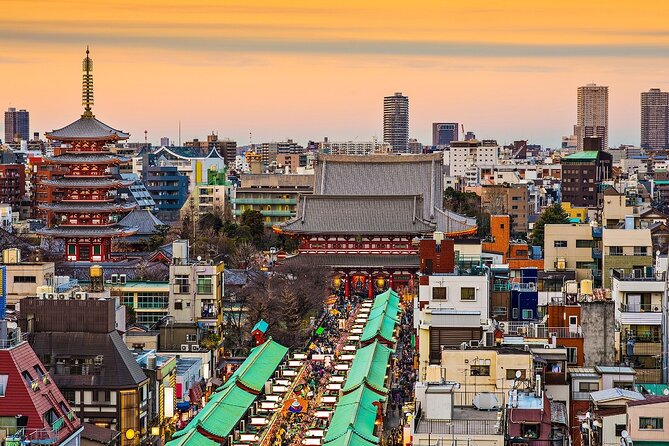
From Kaminarimon, you continue along Nakamise Shopping Street. This is the commercial approach to Senso-ji, lined with specialty shops aimed largely at people visiting the temple.
The best part of this stop is the mix of food and craft shopping. You might sample age-manju, a deep-fried sweet bun, or kibidango, small millet dumplings. Ningyo-yaki are doll-shaped waffles, while matcha and Kaminari Okoshi offer other familiar Japanese flavors and textures.
The guide can help you understand what you are looking at instead of leaving you to guess from a shop window. That is especially useful when you want to try something traditional but are unsure how it is served or what it contains. Food purchases are not included, so carry some extra money if you want to sample several items.
The craft shops add another layer. Bunsen-do sells folding fans, and Bunkoya-Ozeki deals in leather items. These are more useful souvenirs than generic Tokyo trinkets, particularly if you want something small that connects to Japanese daily life and craft traditions.
Nakamise can be crowded, and the shops are tourist-oriented. That is not a flaw, but it is worth understanding the character of the street. You are not visiting a quiet artisan lane. You are walking through a historic temple approach that has become one of Asakusa’s main shopping corridors.
The advantage of having a guide here is focus. Instead of stopping at every display, you can ask which items are worth your time, taste a few snacks, and keep moving toward the temple.
Senso-ji and the practical side of worship
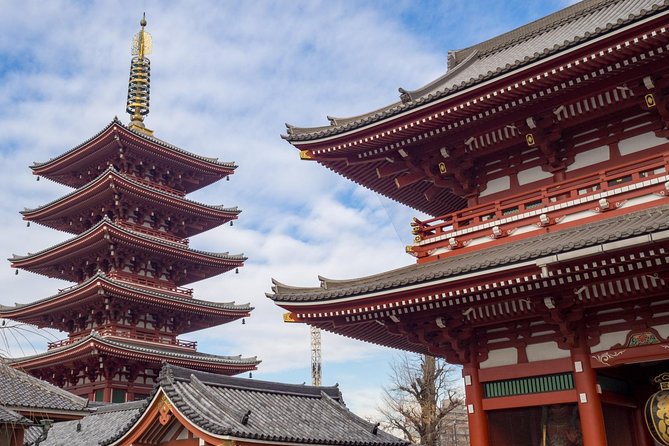
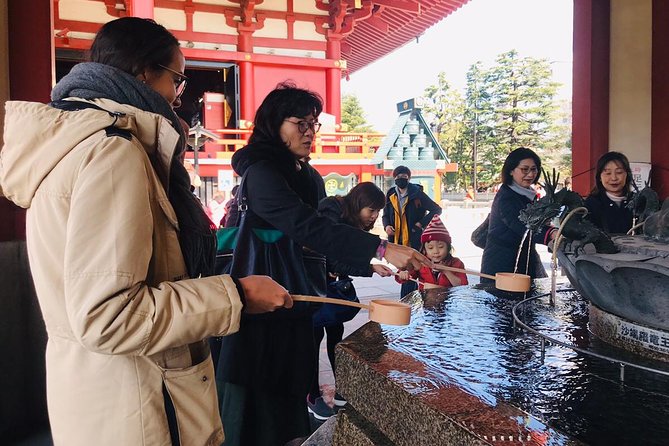
Senso-ji is the central sight on the walk and one of Tokyo’s oldest temples. The visit is not limited to taking a photo outside. Your guide explains how to worship before you approach the temple, then gives you the chance to draw a fortune and make a prayer.
That instruction matters. Japanese temples and shrines have customs that can seem confusing if you have never seen them before. A short explanation helps you take part respectfully rather than copying the nearest person and hoping for the best.
Drawing a fortune adds a personal moment to the visit. It is a small activity, but it gives you something to do beyond looking at the architecture. If the result is unfortunate, you can follow the custom of leaving it behind at the temple rather than carrying the bad luck with you. The supplied details confirm that fortune drawing is part of the experience, but any related fee is not listed as included, so ask your guide about the cost before participating.
The temple stop is also where the guide’s historical explanations can make the biggest difference. You will see a major religious site, but the value comes from learning how the site functions and why the rituals matter. Guides Hana, Shino, and Kurumi have each been specifically praised for clear explanations, patience, warmth, and attention to the people in their groups.
Do not expect a long, quiet temple visit. This is one of Asakusa’s main attractions, and the tour has a fixed length. The guide needs to balance Senso-ji with the shopping street and Shitamachi walk. If temple architecture is your main interest, you should use the customization option to ask for more time or more emphasis on the temple.
More walking routes in Tokyo:
- Tokyo Tsukiji Fish Market Food and Culture Walking Tour
★ 5.0 · 3,184 reviews - Tokyo: Imperial Palace and Shogun Historical Walking Tour
★ 5.0 · 2,251 reviews - Tokyo: Shinjuku Local Bar and Izakaya Guided Walking Tour
★ 4.9 · 1,794 reviews - Tokyo: Tsukiji Fish Market Food and Walking tour
★ 5.0 · 1,724 reviews
Shitamachi streets, Kamiya Bar, and Hoppy Street
After Senso-ji, the tour moves into Asakusa’s Shitamachi area. The word refers to old low-town districts associated with ordinary working life, shops, restaurants, and entertainment rather than the grand political centers of Tokyo.
This part helps keep the outing from becoming only a temple-and-shopping visit. You see another side of Asakusa, with streets linked to food, drink, and local neighborhood culture. The route names the oldest Kamiya Bar and Hoppy Street among its points of interest.
Kamiya Bar gives the walk a direct connection to Asakusa’s long-running drinking culture. Hoppy Street is known for casual eateries and drinks, and it offers a different mood from the formal temple grounds. The tour does not include food or drinks, so you should treat these places as cultural stops unless you choose to buy something.
A suggested Monja-yaki pancake lunch can add a distinctly local meal after the sightseeing portion. Monja-yaki is a savory Tokyo specialty cooked on a hot plate, with a soft texture that differs from the firmer savory pancakes many people expect. Lunch is at your own expense, and the provided information does not name a specific restaurant or guarantee that lunch is included in the two-and-a-half-hour route.
This is one point to clarify with your guide at the start. If you want to eat Monja-yaki, ask how much time is available and where the meal fits. A full lunch could make the schedule feel tight, while a quick food stop may fit comfortably.
How flexible is the route?
The advertised route is an example rather than a fixed script. You can request places you want to see, and the guide will arrange the route around your interests.
That flexibility is one of the strongest reasons to choose this experience over a large scheduled group walk. You can ask for more time with temple customs, more snack sampling, more traditional shopping, or a closer look at Shitamachi. The guide decides what can fit into the available time, so your requests should be realistic.
The small-group cap makes this arrangement practical. With no more than five participants, the guide can hear individual questions and adjust the pace more easily than on a busier outing. The exact guide is not guaranteed in the supplied details, but Hana, Shino, and Kurumi are named guides associated with positive feedback about the experience. Their reported strengths include patience, a pleasant manner, and strong explanations of local history and culture.
You should share your priorities early. A request made at the meeting point gives the guide a chance to shape the walk. Waiting until the final 20 minutes to mention that you wanted more shopping or temple time will limit what can be changed.
What the $61.78 price really covers
At $61.78 per person, this is not a bargain-priced stroll, but the value depends on how much you want from the guide.
The fee covers the guide service. It does not cover lunch, snacks, drinks, other experience fees, or transport. That means your final cost depends on how much you eat and buy along Nakamise Street, plus any extra activities you choose.
For a person who would otherwise wander Asakusa alone, the price pays for structure, cultural explanations, and a route that covers several major points in a short period. You also avoid spending time figuring out where to go next. The benefit is greatest on a first visit, especially if you want to understand temple customs and local food rather than simply photograph the main gate.
The value is less clear if you only want to see Kaminarimon, Nakamise, and Senso-ji from the outside. Those sights can be visited independently. You are paying for interpretation and personal attention, not admission to a paid attraction.
The maximum of five makes the price easier to justify for couples, families, and small groups who want an adjustable walk. Solo participants may find it worthwhile if local context matters to them, but should compare the cost with their own sightseeing priorities.
Who will get the most from this walk?
I would choose this tour for a first-time visitor to Tokyo who wants a clear introduction to Asakusa without giving up an entire day. It also suits anyone curious about Japanese worship customs, traditional snacks, and old neighborhood culture.
Families may like the short length and the variety. There is a temple, food, shopping, fortune drawing, and streets with a different feel. The guide can also answer questions as they come up, which is often easier than trying to explain unfamiliar customs to children on your own.
It works for visitors who prefer people-centered sightseeing. You are not just ticking off buildings. You are learning how to approach a temple, what to taste, and how the area’s older entertainment streets fit into Asakusa.
I would be more cautious if you dislike shopping streets, do not want to buy food separately, or prefer a slow and detailed temple tour. Nakamise is a major part of the experience, and the 2.5-hour limit means the walk must keep moving.
Most people can participate, and the route is near public transportation. The supplied information does not give a detailed accessibility description, so anyone with mobility concerns should ask the provider about walking distances, surfaces, and pacing before booking.
Weather, group size, and booking details
The activity requires good weather. If poor weather causes cancellation, you are offered another date or a full refund. It can also be canceled if the minimum number of participants is not reached, with the choice of another date or experience or a full refund.
Outside those situations, the booking is non-refundable and cannot be changed for any reason. This is important because the experience takes place outdoors and the price cannot be recovered if your plans change.
Confirmation is provided within 48 hours of booking, subject to availability. The tour uses a mobile ticket, and the meeting point is fixed at the Asakusa Culture Tourist Information Center.
Should you book this Asakusa walking tour?
Book it if you want a friendly, compact introduction to Asakusa with room for questions and personal requests. The strongest features are the five-person limit, practical temple guidance, traditional snack stops, and the move from Senso-ji into Shitamachi streets.
At $61.78, it makes the most sense when you value a local guide’s explanation and want to use a short morning well. Plan extra money for food, drinks, souvenirs, and any optional activities. If you prefer independent sightseeing or want a longer, more specialized temple visit, you may be better off exploring at your own pace.
For a first morning in Tokyo, though, this gives you a useful map of Asakusa, a few cultural basics, and enough time afterward to keep discovering the neighborhood on your own.
FAQ
Where does the Asakusa walking tour begin?
It begins at the Asakusa Culture Tourist Information Center, located at 2-chome-18-9 Kaminarimon, Taito City, Tokyo 111-0034, Japan.
What time does the tour start?
The scheduled start time is 9:30 a.m.
How long does the experience last?
The walk lasts approximately 2 hours and 30 minutes.
Where does the tour finish?
It finishes back at the meeting point in Asakusa.
What is included in the price?
The guide fee is included. Lunch, food and drinks, experience fees, and transportation are not included.
How many people can join?
The activity has a maximum of five participants.
New on our Tokyo list
- Sumi-e Experience in a relaxing green tea shop in Tokyo★ 5.0 · 3 reviews
- Tokyo : Kamikaze Street Drift Ride★ 5.0 · 3 reviews
- Private Zen Meditation in English in Shinjuku, Tokyo★ 5.0 · 3 reviews
- Onsen Spa in Tokyo and Asakusa Bar Hopping with Local Guide★ 5.0 · 3 reviews
- Easy for everyone! Now you can play handmade mini shamisen and show off to everyone! Musical instruments, sweets and live music★ 5.0 · 3 reviews
- Tokyo: Private Tsukiji Street Food & Sake with Local Guide★ 5.0 · 3 reviews
- Mt Fuji Exploration Tour with Free Japanese Kusa Mochi from Tokyo★ 4.5 · 3 reviews
- Tokyo Tsukiji Fish Market Walking and Exploring Hidden Gems Tour★ 5.0 · 3 reviews
Walking Tours, compared.
Tokyo Tsukiji Fish Market Food and Culture Walking Tour
Read our review →
Imperial Palace and Shogun Historical Walking Tour
Read our review →
Shinjuku Local Bar and Izakaya Guided Walking Tour
Read our review →
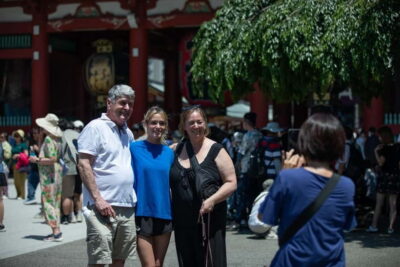
Asakusa Walking Tour with Sensoji Temple Visit
Read our review →
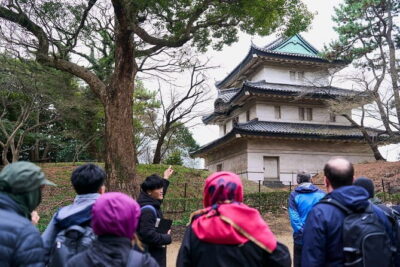
Tokyo Castle & Imperial PalaceーShogun Walking Tour
Read our review →
Browse the lists this tour appears in