
Reviewed · TEMPLE & SHRINE TOURS
Tokyo: Asakusa & Senso-ji Temple 1.5-Hour Guided Tour
Senso-ji is not simply an old temple stop. It is a working place of faith with a 1,400-year story, hidden Buddha image, incense smoke, pagodas, and a steady flow of people coming to pray. This 90-minute walking tour gives you a clear path through Asakusa instead of leaving you to guess what each ritual means.
I like two things here. First, the guide explains how to purify yourself with water and incense, so you take part rather than just snap photos. Second, the tour includes the omikuji fortune and the fee for it, along with incense, which keeps small costs from piling up. Guide Yohei earned especially warm praise for being friendly and informative.
The main consideration is time. Ninety minutes is enough for an introduction, not a slow temple study or a long shopping visit. Nakamise Street gets only 15 minutes, and the tour does not include food or drinks, so you may want to return on your own afterward.
In This Review
- Key points to know
- Starting at the Asakusa Culture and Tourism Center
- Kaminarimon introduces Asakusa in 20 minutes
- Senso-ji turns temple etiquette into a real experience
- Drawing an omikuji fortune at Senso-ji
- Nakamise Shopping Street in a focused 15 minutes
- What $27 buys you in Asakusa
- How the 90-minute pace feels
- Who will get the most from this tour
- Booking details that affect your decision
- Should you book the Asakusa and Senso-ji tour?
- FAQ
- How long is the Asakusa and Senso-ji tour?
- Where does the tour start?
- Where does the tour finish?
- What language is the tour offered in?
- Is incense included in the price?
- Is the omikuji fortune included?
- Are food and drinks included?
- Can I cancel for a full refund?
Key points to know
- Kaminarimon sets the scene: Begin at Asakusa’s famous gate before walking toward the temple grounds.
- Temple rituals are part of the tour: Your guide shows you how to use the water fountain and incense before prayer.
- Senso-ji carries 1,400 years of faith: Learn about the hidden Buddha image and the temple’s role in the Kanto region.
- Omikuji is included: Draw a fortune without paying an extra fee on the spot.
- Nakamise offers a quick shopping taste: Browse traditional snacks and souvenirs during a 15-minute visit.
- Small groups and private tours are available: The format can suit travelers who prefer more direct help from a guide.
Starting at the Asakusa Culture and Tourism Center
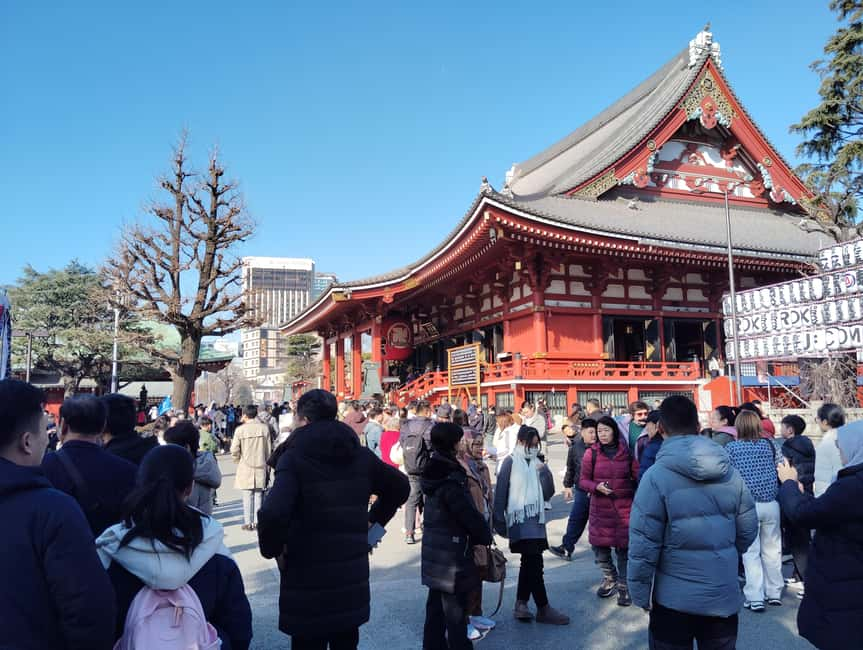
Your meeting point is inside the Asakusa Culture and Tourism Center on the second floor. Look for the guide holding a yellow sign. This detail matters in busy Asakusa, where a clear indoor meeting place is easier than trying to find someone beside a crowded station or temple gate.
The tour is conducted in English, and private or small-group arrangements are available. That gives you a better chance to ask about customs as they come up. The exact starting times depend on availability, so check the schedule that appears for your date before booking.
Because this is a walking tour, wear shoes you can use comfortably for 90 minutes. The route includes Kaminarimon, the temple grounds, and Nakamise Shopping Street. Wheelchair access is listed, though the pace and crowd conditions may still affect how easy each section feels.
More temples and shrines near Tokyo:
- Tokyo: Meiji Shrine, Asakusa, Skytree Bus Tour and Cruise
★ 4.7 · 1,986 reviews - Tokyo: Asakusa Walking Tour with Sensoji Temple Visit
★ 4.8 · 1,583 reviews - Nikko: Kegon Falls, Lake Chuzenji & Toshogu Temple
★ 4.6 · 1,577 reviews
Kaminarimon introduces Asakusa in 20 minutes
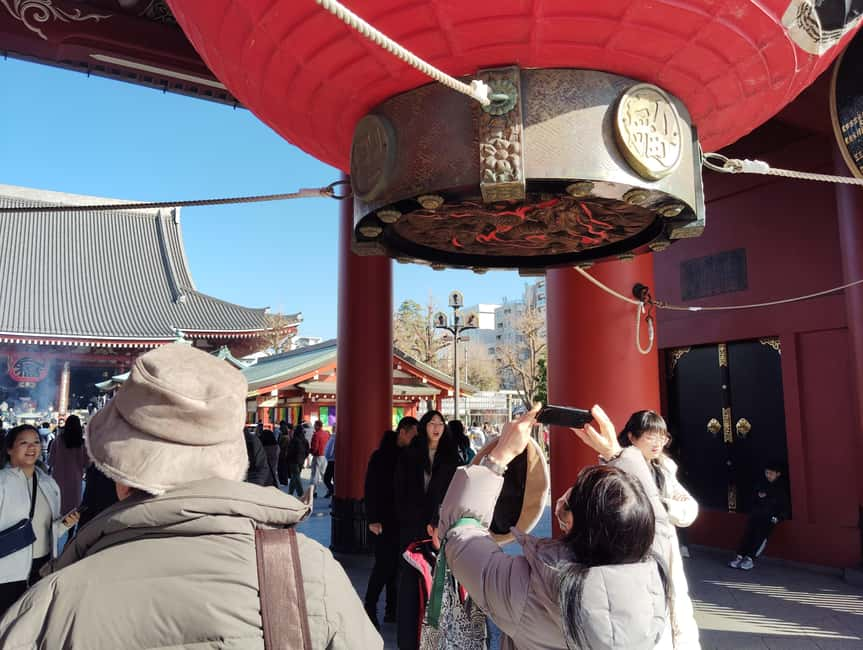
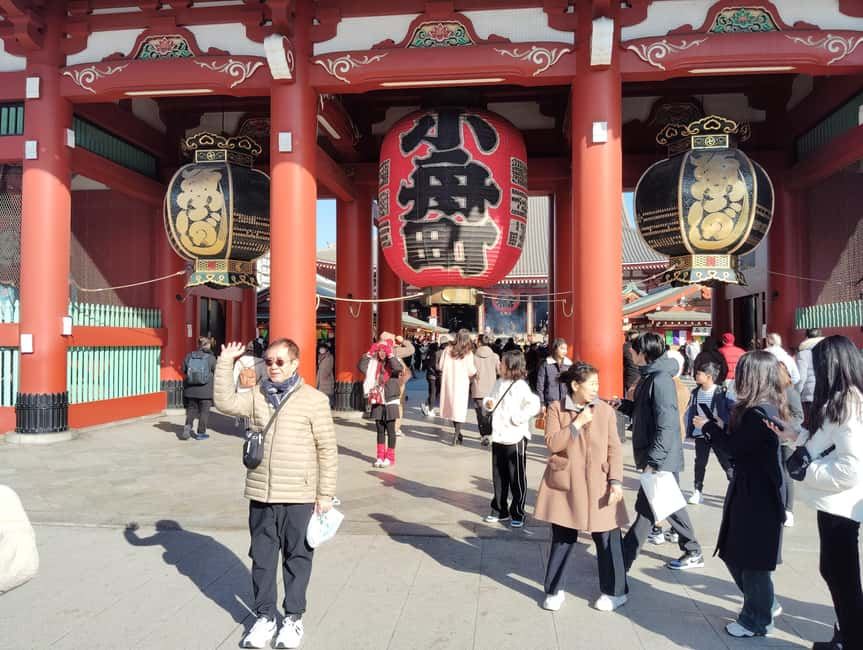
The first sightseeing stop is Kaminarimon, the Thunder Gate. This is the grand entrance that gives Asakusa much of its visual character, and it provides a natural introduction to the Senso-ji approach.
You spend about 20 minutes here with the guide. Rather than rushing directly to the main hall, you get time to look around and understand how the gate connects the modern district with the temple grounds beyond it.
This opening section should suit you if you want context before taking photos. A guide can explain what you are seeing and help set up the etiquette lesson that follows. Still, 20 minutes is a modest amount of time. If you want extensive photography or a detailed account of every feature around the gate, plan to return later.
The route then leads toward Senso-ji through the traditional shopping street. That gradual approach is useful. The temple does not appear as an isolated monument. It is tied to the daily movement of people, shops, offerings, and prayer that make Asakusa feel like a living district.
Senso-ji turns temple etiquette into a real experience
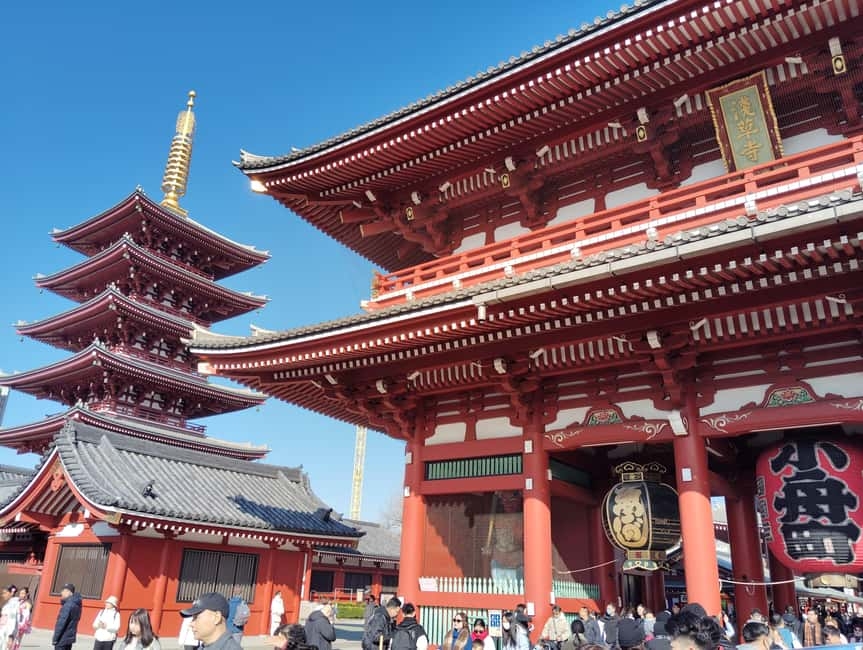
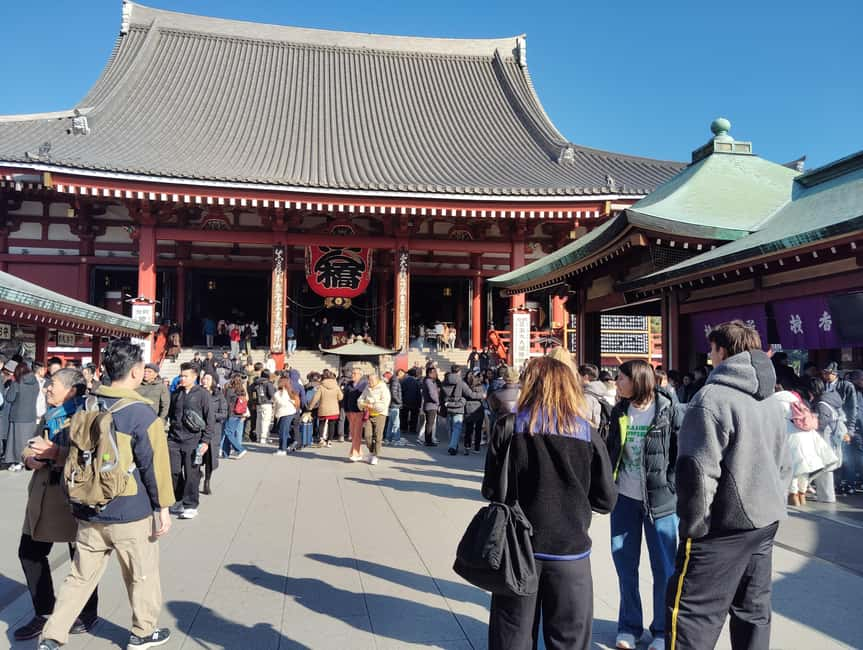
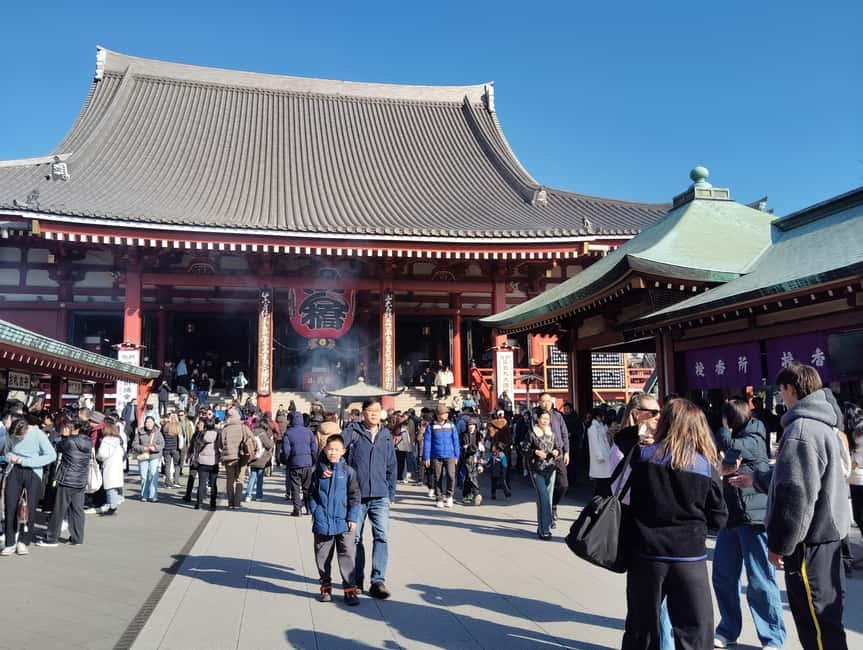
The central part of the tour lasts about 50 minutes at Senso-ji Temple. This is where the tour earns its price. You are not only shown the main hall and pagodas. You are guided through the basic steps of a temple visit.
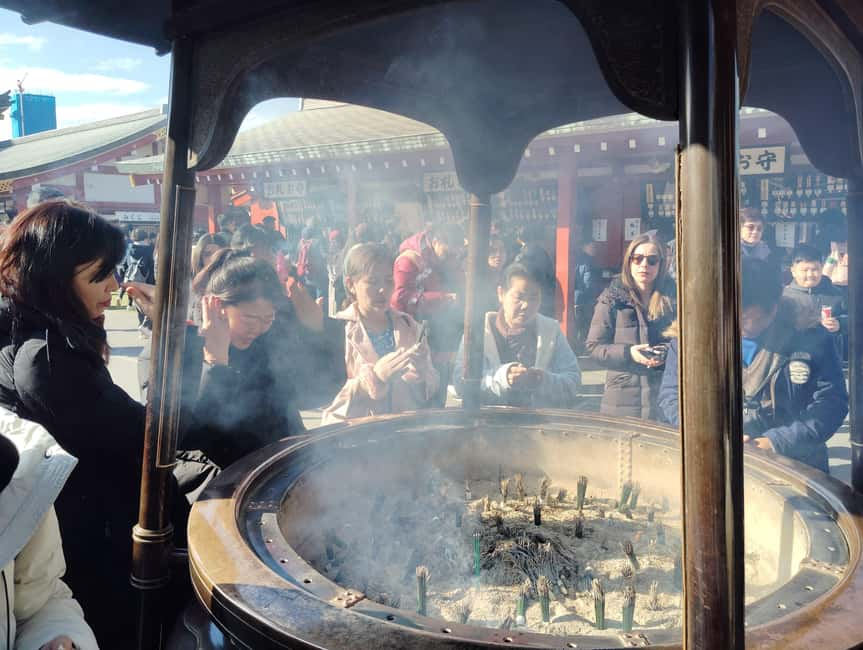
You begin with purification using water. Your guide explains the process for cleansing before approaching the sacred areas, helping you avoid the awkward feeling of copying other people without knowing why. You also offer incense, using the ritual as a way to prepare your body and mind for the visit.
Incense is included in the $27 price, so you can take part without handling another small payment. That may sound minor, but it makes the visit feel more complete. A temple stop can otherwise become a quick walk, a few pictures, and a departure. Here, the actions give the place more meaning.
Senso-ji is described as Tokyo’s oldest temple, with a history reaching back about 1,400 years. The main image in the main hall is a hidden Buddha image believed to save many people. You will not be viewing that image directly, but the idea helps explain why the temple remains important to worshippers and not just to sightseers.
The grounds include numerous halls and five-story pagodas. Senso-ji is also presented as a representative temple of the Kanto region, so the guide can place this one site within the wider religious and cultural setting of eastern Japan.
You should expect explanation rather than a long scholarly lecture. The tour has to fit Kaminarimon, the main temple visit, and Nakamise Street into 90 minutes. Its strength is showing you how to behave and what the key features mean in a short, practical format.
Drawing an omikuji fortune at Senso-ji
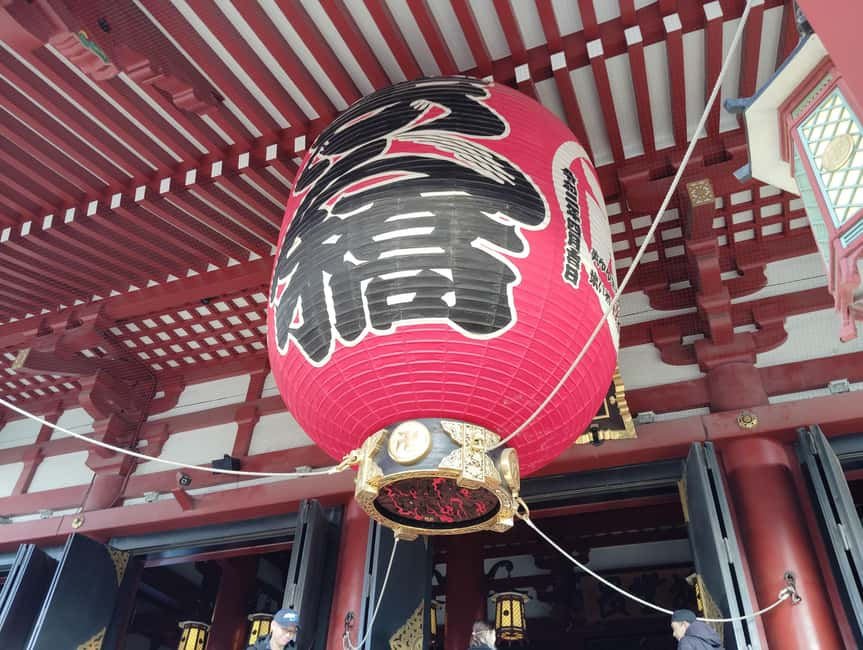
The omikuji fortune is one of the more memorable parts of this visit. You draw a written fortune, known for sometimes producing surprising results, and the fee is included.
For you, this adds a little uncertainty and fun to the temple stop. It is also a useful way to see how a traditional practice can sit alongside sightseeing. You are not simply reading about custom. You are given a chance to participate.
The tour does not promise a particular type of fortune, and that is part of the appeal. If the result is favorable, you have a cheerful souvenir of the visit. If it is not, the experience still gives you something to talk about and a reason to pay closer attention to the temple’s customs.
Your guide can help explain how the fortune fits into the visit. That help is valuable because small religious practices can be confusing when you encounter them alone. The omikuji charge is covered, so you do not have to wonder if this part requires extra cash.
More Asakusa visits:
- Tokyo: Japanese Dance Cabaret Theater Asakusa-Kaguwa Ticket
★ 4.8 · 2,270 reviews - Tokyo: Roll and Authentic Sushi Making Class in Asakusa
★ 4.9 · 1,957 reviews - Tokyo Asakusa Rickshaw Tour
★ 5.0 · 1,375 reviews - Tokyo Panoramic 1 Day: Meiji Shrine, Asakusa, Odaiba and SKYTREE®
★ 4.5 · 1,222 reviews
Nakamise Shopping Street in a focused 15 minutes
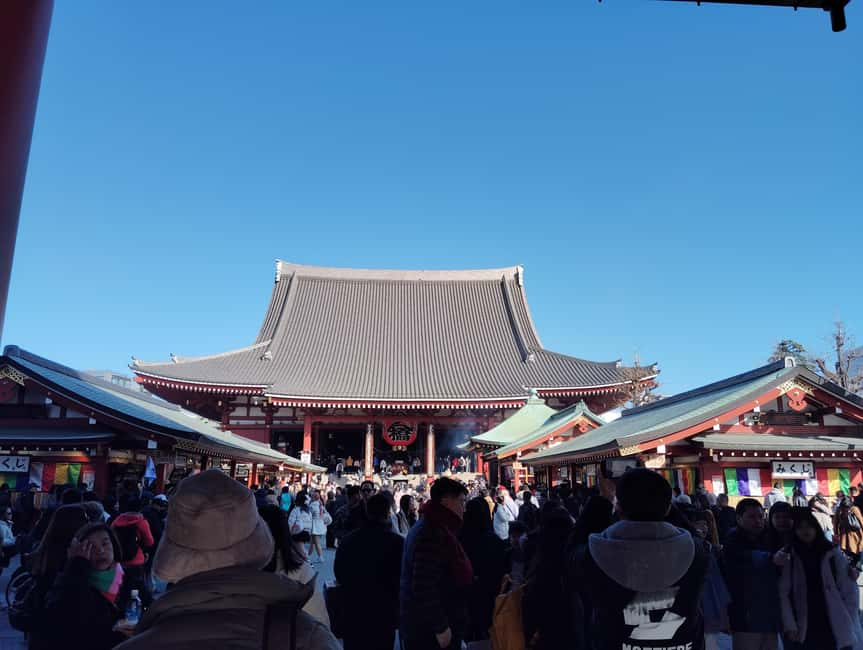
The final stop is Nakamise Shopping Street, which stretches toward Senso-ji. You have about 15 minutes to browse traditional snacks and souvenirs.
This is a quick look, not a dedicated shopping tour. I like that it gives you a taste of the street without letting purchases take over the temple visit. You can see the link between the approach to Senso-ji and the commercial life that surrounds it.
The short time also creates a clear tradeoff. You may spot snacks or souvenirs you want to examine more closely, but the group needs to keep moving. If shopping matters to you, note the finishing point at Senso-ji’s Kaminarimon and return after the tour for a slower look.
Food and drinks are not included. That is easy to manage because the tour ends in an area known for traditional snacks, but you should budget separately if you want to eat. The supplied price covers the guide, incense, and omikuji, not purchases along the street.
What $27 buys you in Asakusa
At $27 per person, this is a modestly priced guided introduction to one of Tokyo’s best-known temple districts. The value is not in admission to a major attraction, since the experience is built around walking through public temple and shopping areas. The value comes from clear explanations and guided participation.
You receive an English-speaking guide, incense, and the omikuji fee. You also get a set route that connects three important pieces of Asakusa: the Thunder Gate, Senso-ji, and Nakamise Street.
For a first visit, that can be worthwhile. You avoid spending your limited time wondering where to begin or how to handle the purification rituals. You also get a local explanation of the temple’s 1,400-year story and the hidden Buddha image.
The price is less compelling if you already know Senso-ji well or prefer to wander alone. You can explore the area independently and spend as long as you like at the shops. This tour is best value when you want cultural context, practical etiquette, and a compact route.
The strong feedback attached to the experience centers on guide Yohei. Two verified comments from October 2025 specifically praised his friendly approach, ability to teach, and skill at making the group’s time enjoyable. That is useful information because the guide is the main part of what you are paying for.
How the 90-minute pace feels
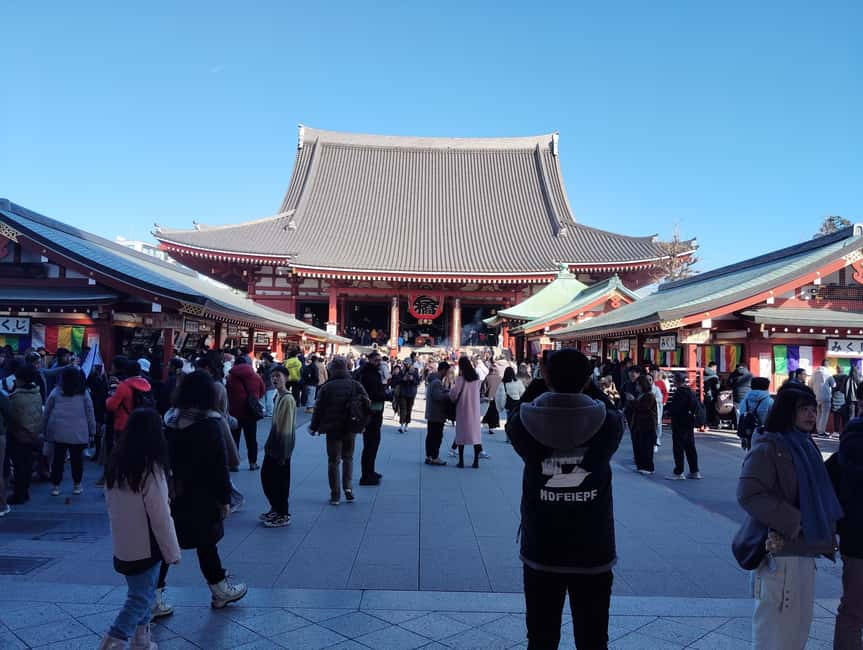
The timing is divided into roughly 20 minutes at Kaminarimon, 50 minutes at Senso-ji, and 15 minutes at Nakamise Shopping Street. The remaining time is used for walking between sections and keeping the route together.
That balance makes sense. Senso-ji receives the largest share because it contains the rituals, main hall, halls, pagodas, and historical explanation. Kaminarimon gets enough time to frame the visit, while Nakamise receives a brief shopping stop.
You should arrive ready to keep moving. This is not a tour with a long seated talk or an open-ended exploration period. The guide’s job is to help you see the main points in a short window.
The compact length can be an advantage on a busy Tokyo day. You can fit it around other plans and still receive a useful introduction to Asakusa. Families, first-time visitors, and anyone with only part of a day may appreciate that efficiency.
At the same time, the short schedule means you should not expect a detailed visit to every hall or a leisurely meal. If you want quiet time for prayer, extended photos, or careful souvenir shopping, return independently after the tour.
Who will get the most from this tour
I would choose this experience for a first-time visitor to Asakusa who wants a little help with temple customs. The water purification, incense offering, and omikuji fortune become much easier when someone explains the steps in English.
It also suits you if you like history in small portions. You hear about Senso-ji’s 1,400-year religious story and the hidden Buddha image without committing to a long museum-style lecture.
A private or small-group option may work well if you want to ask questions or need a little more direct support. The tour is also listed as wheelchair accessible, which makes it worth considering for travelers who need an accessible format. The information does not provide detailed route conditions, so confirm any specific mobility needs before booking.
You may want a different format if you prefer complete freedom. Independent visitors can linger at Kaminarimon, spend much longer on Nakamise Street, and explore Senso-ji at their own speed. This guided visit trades that freedom for structure and explanation.
Booking details that affect your decision
The tour offers free cancellation up to 24 hours before the activity for a full refund. You can also reserve now and pay later, which helps if your Tokyo schedule is still changing.
The meeting point is specific: inside the Asakusa Culture and Tourism Center, second floor, with the guide holding a yellow sign. The activity is in English, and starting times vary by availability.
Food and drinks are not included. Incense and omikuji are included, so those two parts do not add surprise charges. Traditional snacks and souvenirs on Nakamise Street are your own expense.
The experience is provided by DeepExperience, Inc. The available rating is 5 from three reviews, with the most recent comments giving particular credit to Yohei’s friendly and informative guiding. That is a small sample, so I would treat it as encouraging rather than a guarantee that every guide will be the same.
Should you book the Asakusa and Senso-ji tour?
Book it if you want a short, guided introduction to temple customs and the main sights of Asakusa. For $27, the included incense and omikuji, plus an English-speaking guide, make the experience a reasonable choice for first-time visitors.
Skip it if you already know Senso-ji, dislike fixed walking schedules, or want to spend most of your time shopping. The 15-minute Nakamise stop is only a preview.
For many people, the best plan is to take the tour early in your Asakusa visit, then return to Senso-ji or Nakamise Street afterward. You get the explanations and rituals first, then have the freedom to explore at your own pace.
FAQ
How long is the Asakusa and Senso-ji tour?
The tour lasts 90 minutes.
Where does the tour start?
It starts inside the Asakusa Culture and Tourism Center on the second floor. The guide will be holding a yellow sign.
Where does the tour finish?
The tour finishes at Senso-ji’s Kaminarimon.
What language is the tour offered in?
The tour is offered in English with a live English-speaking guide.
Is incense included in the price?
Yes. The incense fee is included.
Is the omikuji fortune included?
Yes. The omikuji fee is included.
Are food and drinks included?
No. Food and drinks are not included.
Can I cancel for a full refund?
Yes. You can cancel up to 24 hours in advance for a full refund.
New on our Tokyo list
- Sumi-e Experience in a relaxing green tea shop in Tokyo★ 5.0 · 3 reviews
- Tokyo : Kamikaze Street Drift Ride★ 5.0 · 3 reviews
- Private Zen Meditation in English in Shinjuku, Tokyo★ 5.0 · 3 reviews
- Onsen Spa in Tokyo and Asakusa Bar Hopping with Local Guide★ 5.0 · 3 reviews
- Easy for everyone! Now you can play handmade mini shamisen and show off to everyone! Musical instruments, sweets and live music★ 5.0 · 3 reviews
- Tokyo: Private Tsukiji Street Food & Sake with Local Guide★ 5.0 · 3 reviews
- Mt Fuji Exploration Tour with Free Japanese Kusa Mochi from Tokyo★ 4.5 · 3 reviews
- Tokyo Tsukiji Fish Market Walking and Exploring Hidden Gems Tour★ 5.0 · 3 reviews
Temple & Shrine Tours, compared.
Meiji Shrine, Asakusa, Skytree Bus Tour and Cruise
Read our review →
Asakusa Walking Tour with Sensoji Temple Visit
Read our review →
Kamakura & Enoshima Day Trip including Temple Tickets
Read our review →
Nikko Toshogu Shrine and Kegon Waterfall Tour
Read our review →
Tokyo Panoramic 1 Day: Meiji Shrine, Asakusa, Odaiba and SKYTREE®
Read our review →
Mt. Fuji Heritage Tour: Traditional Villages, Lakes & Shrine
Read our review →Browse the lists this tour appears in