
Reviewed · HISTORICAL TOURS
Tokyo Asakusa sightseeing and history walking tour
Asakusa is where Tokyo’s old downtown character is easiest to find, and this 90-minute private walk gives you more than a quick look at the big red gate and temple. Guide Hirose-san, also referred to as Hiroshi, grew up near Senso-ji and takes you through the classic sights, side lanes, food stops, and stories that can be missed when you explore alone.
I like the personal scale of the tour and the useful local advice about soba, sushi, tempura, eel, sukiyaki, yakiniku, snacks, souvenirs, and traditional cosmetics. I also like the clear look at the difference between Senso-ji and Asakusa Shrine, plus the background to the Sanja Festival. The main caution is language: English and Japanese communication may be strong, but one German-language booking received much less German than expected.
In This Review
- Key points to know before booking
- Why Asakusa makes a good first Tokyo walk
- Meeting beneath Kaminarimon Gate
- Nakamise Street, where shopping meets temple tradition
- Senso-ji, with the stories behind the rituals
- Asakusa Shrine and the meaning of Sanja Matsuri
- Asakusa Kingyo and the pleasure of a less standard stop
- The whaling ship display and Asakusa’s changing cityscape
- Food, souvenirs, and advice you can use afterward
- Is $19 a fair price for 90 minutes?
- Who will get the most from this walk?
- Should you book the Asakusa walking tour?
- FAQ
- Where does the tour begin?
- How long does the walking tour last?
- Which languages are available?
- Is this a private tour?
- What is included in the price?
- Can children join the tour?
Key points to know before booking
- A private Asakusa walk: Your group gets a guide rather than joining a large crowd.
- Local knowledge near Senso-ji: Hirose-san grew up behind the temple and can add personal background to the neighborhood.
- More than the standard route: The walk includes Nakamise Street and the major temples, then adds Asakusa Kingyo and a whaling ship display.
- Religion and festival stories: You learn how Buddhist Senso-ji differs from Shinto Asakusa Shrine and how the Sanja Festival began.
- Food and shopping advice: Expect practical suggestions for Japanese dishes, snacks, souvenir shops, and unusual local products.
- A short, good-value introduction: At $19 per person, the tour is inexpensive, but its value depends on the guide’s language ability and the depth of explanation you receive.
Why Asakusa makes a good first Tokyo walk
Asakusa gives you a compact introduction to several sides of Tokyo. You have an active shopping street, one of the city’s best-known temples, a Shinto shrine, old downtown streets, traditional food, small craft shops, and reminders of how the neighborhood changed over time.
The area is not frozen in the past. It is a working part of Tokyo with crowds, shops, photo stops, and modern businesses mixed into the old setting. That combination is useful for first-time visitors because you can see the famous postcard sights while also getting a sense of shitamachi, Tokyo’s traditional downtown culture.
I would not choose this walk as a substitute for a full-day Asakusa visit. Ninety minutes goes by quickly, especially if you stop for photos and explanations. I would use it as an orientation tour near the start of your stay, then return later for shopping, lunch, or a slower visit to the temple grounds.
The private format matters here. Asakusa can be crowded, and a guide can help you understand what you are looking at instead of leaving you to read signs while trying to keep up with foot traffic. A private group also makes it easier to ask about food, customs, and places you want to see after the walk.
More Asakusa visits:
- Tokyo: Japanese Dance Cabaret Theater Asakusa-Kaguwa Ticket
★ 4.8 · 2,270 reviews - Tokyo: Meiji Shrine, Asakusa, Skytree Bus Tour and Cruise
★ 4.7 · 1,986 reviews - Tokyo: Roll and Authentic Sushi Making Class in Asakusa
★ 4.9 · 1,957 reviews
Meeting beneath Kaminarimon Gate
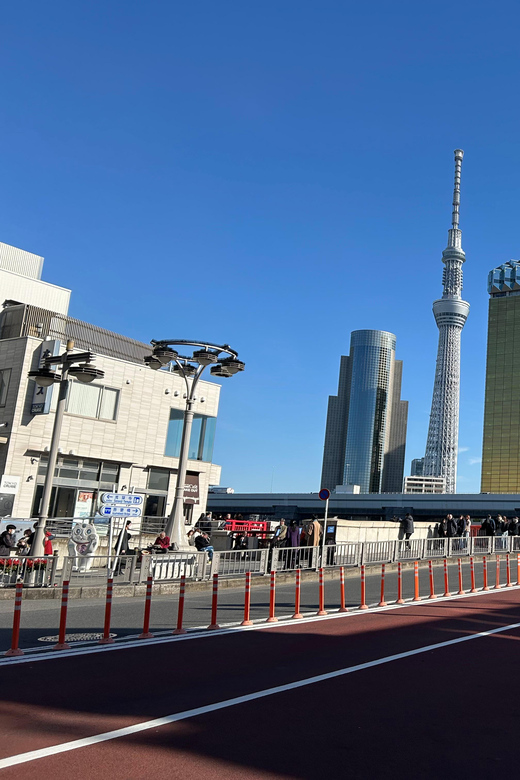
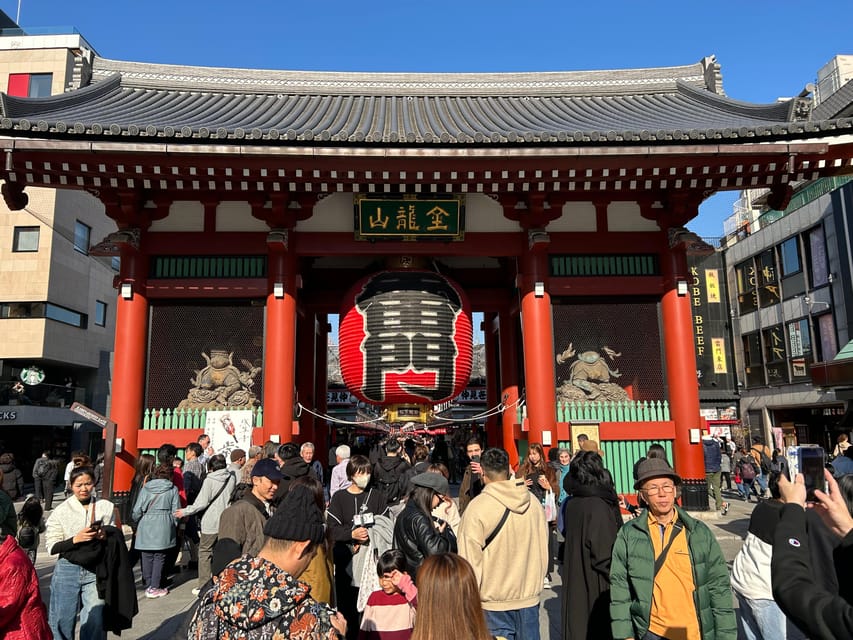
The tour begins at Kaminarimon, the Thunder Gate that announces the approach to Senso-ji. Meet on the left side of the gate, where the guide waits with a GetYourGuide sign. The meeting coordinates are 35.7111163, 139.7963656.
This is a sensible starting point. Kaminarimon is easy to recognize, but it is also a busy meeting place. Arrive with a little time to spare so you can find the correct side of the gate and avoid beginning the tour flustered.
The opening guided portion lasts about 10 minutes. Expect a photo stop and an introduction to the area before moving along Nakamise Street. This first explanation helps set up the rest of the walk, since Kaminarimon is not just a decorative entrance. It marks the approach to one of Tokyo’s major religious sites and the shopping street that leads toward it.
Bring water and wear comfortable shoes. The route is short, but you will be on your feet the whole time, and temple approaches can become tiring if you are traveling with young children or carrying shopping bags.
Nakamise Street, where shopping meets temple tradition
Nakamise Shopping Street takes about 15 minutes on the tour. It is the busy retail path between Kaminarimon and Senso-ji, lined with souvenir shops, food stalls, and traditional-style goods.
The useful part of visiting with a local guide is not simply being shown the street. You can ask which items are worth your time, where to look for gifts, and which foods are typical of the area. The tour includes information about souvenir shops and local snacks, so this is a good moment to note places you may want to revisit after the guided walk.
Do not expect a long shopping session here. Fifteen minutes is enough for an introduction and a few photos, not for browsing every storefront. If you already know you want to buy sweets, crafts, cosmetics, or other souvenirs, write down the recommendations and return later when you are not watching the clock.
One especially unusual local detail is a century-old cosmetics shop associated with sake-based beauty products. That kind of stop gives the street more character than a simple parade of souvenir stands. Ask the guide about it if the shop is part of the day’s route.
Senso-ji, with the stories behind the rituals
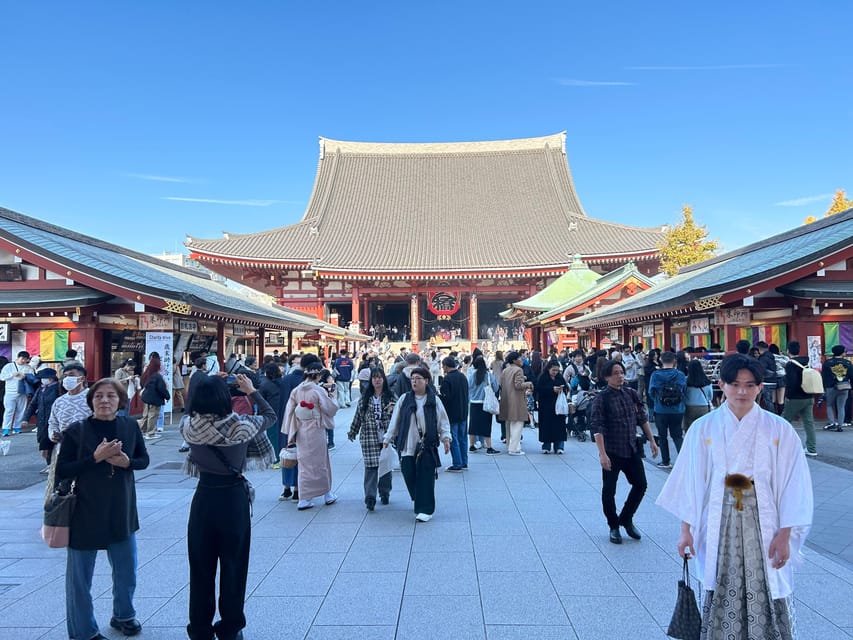
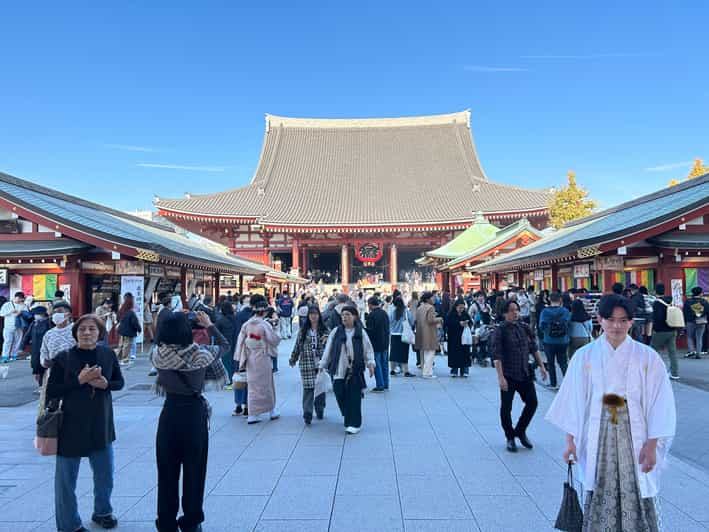
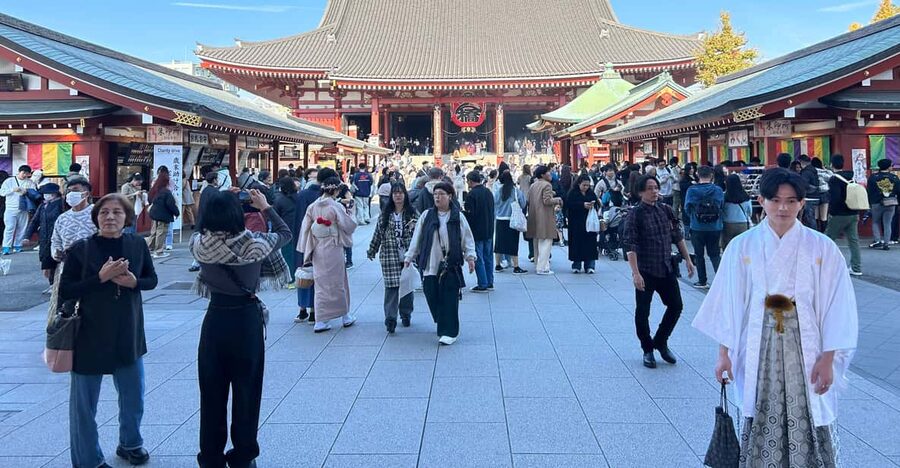
The tour spends about 20 minutes at Senso-ji Temple, including a break, photographs, guided explanation, and free time. This is the main Buddhist site in the walk and the place where many visitors first encounter Asakusa’s religious traditions.
A strong feature of the tour is the attention to what you are supposed to do at a temple. One guide has been praised for showing visitors how to bow and clap at the appropriate places, which is especially useful if Japanese religious customs are new to you. You do not need to master every rule, but a little guidance helps you behave respectfully and feel less uncertain.
The guide also explains the origin story connected to Senso-ji. Two fishermen are said to have pulled a Kannon statue from the river with their nets. That story connects directly to the founding traditions of Senso-ji and to the nearby Asakusa Shrine.
The temple stop is also where the tour’s promise of history beyond a guidebook can either succeed or fall short. Hirose-san’s personal connection to the area gives the stop potential for local detail, but the quality of the explanation depends on the language used and how much time is available. If you book in German, confirm that the guide can provide the level of German your group needs. One family found the German communication too limited for their children, with much of the explanation shifting into imperfect English.
A few more Tokyo bookings worth comparing
- Tokyo: Imperial Palace and Shogun Historical Walking Tour
★ 5.0 · 2,251 reviews - Tokyo: Imperial Palace Japanese History Walking Tour
★ 4.9 · 987 reviews - Tokyo: Shinjuku Historical Walking Tour & Secret Backstreets
★ 5.0 · 530 reviews - Yanaka Walking Tour: Historic and Traditional District of Tokyo
★ 5.0 · 530 reviews
Asakusa Shrine and the meaning of Sanja Matsuri
Asakusa Shrine receives roughly 20 minutes, again with a break and photo time. It sits close to Senso-ji but represents a different religious tradition. Senso-ji is Buddhist, while Asakusa Shrine is Shinto.
That distinction is one of the best reasons to take this walk. The sites are physically close, so it is easy to treat them as one attraction. The guide explains why they are separate, how their traditions differ, and how they became linked through local history.
You also learn about Sanja Matsuri, one of Japan’s three major festivals. Its origin is tied to the two fishermen who found the Kannon image and to the person associated with the statue’s discovery and worship. The tour connects those early stories with the shrine’s role today.
If your visit happens near the festival, the local guide can be particularly useful. One family visiting during Sanja Matsuri received instructions that helped them notice parts of the event they might otherwise have missed. Festival dates can change the feel of the neighborhood, so expect more activity and less control over the pace during major celebrations.
Twenty minutes is enough for a clear introduction, but not an exhaustive study of either religion. Think of this stop as a practical foundation. It gives you the basic terms and customs you need to look at the rest of your Japan trip with better context.
Asakusa Kingyo and the pleasure of a less standard stop
The itinerary then moves to Asakusa Kingyo for about 15 minutes. This is a more distinctive stop than the usual temple circuit and helps show the neighborhood’s connection to traditional crafts and local amusements.
The tour description links Asakusa with food, crafts, and old downtown culture, and this stop fits that wider theme. You get a photo opportunity and a guided explanation rather than a long shopping period. If you see something you like, purchases are your responsibility and are not included in the tour price.
This is also the kind of place where a local guide can make a difference. Without context, a small specialty shop may seem like a quick photo stop. With an explanation, you have a better sense of why it belongs in an Asakusa walk and what makes it different from a standard souvenir store.
The timing is short, so do not build your plans around buying a large number of items here. Treat it as a taste of the neighborhood’s craft and shop culture, then return on your own if you want a closer look.
The whaling ship display and Asakusa’s changing cityscape
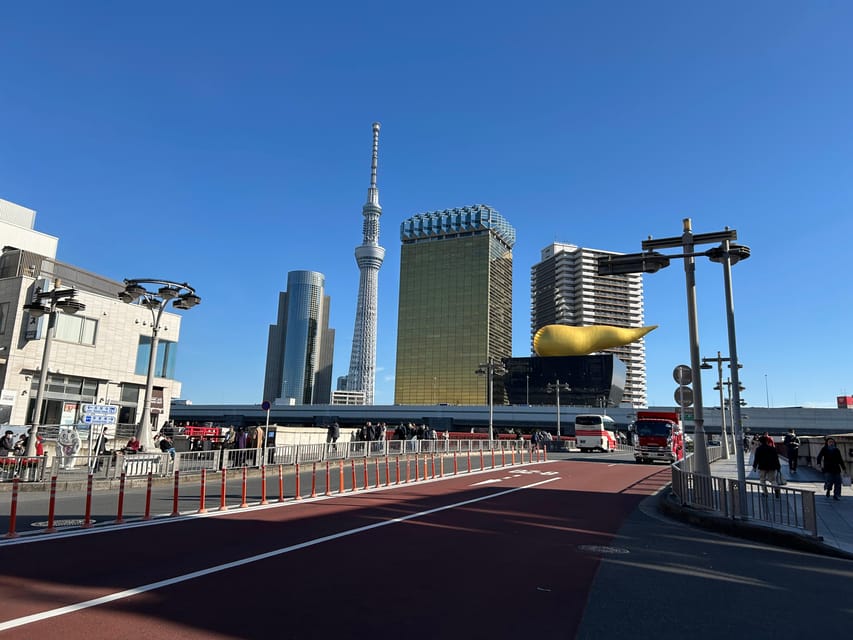
The final listed stop is Hogei-sen, the whaling ship display, with about 10 minutes for photos, explanation, and free time. It is an unexpected finish after the temple and shrine, and that is part of its appeal.
This stop helps widen the story of Asakusa. The district is not only about religious buildings and old snacks. Its public spaces, displays, architecture, and street patterns reflect changes in Tokyo over time. The tour addresses how Asakusa’s buildings and cityscape have changed, giving you a better way to read the streets as you walk.
Ten minutes will not provide a full museum visit or a detailed study of whaling history. It is a brief local point of interest. The value comes from the guide explaining why it is here and how it fits into the neighborhood rather than leaving you to wonder what you are seeing.
The walk ends after this stop. Since the tour includes food and restaurant advice, use the final minutes to ask where to eat next. Suggested dishes include soba, sukiyaki, yakiniku, sushi, tempura, and eel. That is practical help in an area with many choices and plenty of places aimed at passing shoppers.
Food, souvenirs, and advice you can use afterward
Food guidance is one of the strongest practical features of this experience. You are not promised a meal or a tasting, and the cost of food is not included. Instead, the guide points you toward Japanese dishes and restaurants in Asakusa.
That can be worth more than a fixed tasting menu if you are staying in the area. A recommendation for miso don katsu, for example, helped one family find a meal they enjoyed. You can ask which dishes suit children, which places offer a traditional meal, or where to find a quick snack rather than a formal dinner.
The guide also provides information about souvenir shops. One visitor particularly valued advice about back streets, local snacks, and sake-based cosmetics. Those details can help you avoid spending your limited Tokyo time in shops that look similar and instead focus on products with a clearer connection to Asakusa.
Photography is included at no extra charge. Several people valued the guide’s patience and ability to take good pictures, and one guide was also praised for making fans. That is a pleasant extra for couples, families, and solo visitors who want more than hurried phone snapshots.
Still, photography should not replace explanation. One dissatisfied participant felt that too many group photos filled time that should have gone to historical stories. If you prefer a serious history walk, tell the guide early that you want explanations first and photographs second.
Is $19 a fair price for 90 minutes?
At $19 per person, this is an inexpensive way to get oriented in Asakusa. The price includes a guide, walking route, photos, major sights, shop information, and food recommendations. You pay separately for shopping, meals, and transportation.
The value is strongest for a first visit, a family that wants help with temple customs, or anyone who would rather ask questions than read signs alone. The private group format adds value because the guide can adjust the pace and respond to your interests.
The price is less important than the language match. English, German, and Japanese are offered, but the experience may not be equally strong in every language. If a child or older family member needs fluent German, confirm that point before booking.
You also need realistic expectations. This is not a full historical seminar, a food tour with included tastings, or an all-day neighborhood exploration. It is a short introduction with local guidance. At that price, it works well when you use it as a starting point and continue exploring independently afterward.
Free cancellation up to 24 hours before the tour and the option to reserve now and pay later make it easier to fit into a changing Tokyo schedule. Children under three can join free, and children aged three to twelve receive a 50 percent discount.
Who will get the most from this walk?
I would recommend it most strongly to first-time Tokyo visitors who want a clear introduction to Asakusa without committing half a day. Families can benefit from the private setting and the ability to slow down when a child is tired. One guide was specifically praised for being patient with an 11-year-old.
It also suits visitors who care about food and shopping but do not know where to begin. The list of recommended dishes is broad enough to cover quick local meals and more traditional choices.
The tour is a good match for anyone interested in religious customs, local festivals, and the way Asakusa has changed. It is less suitable if you want extended time inside each site, a long food tasting, or guaranteed fluent German interpretation without checking first.
Should you book the Asakusa walking tour?
Book it if you want a short private introduction led by someone with a personal connection to the area. The best parts are the Senso-ji and Asakusa Shrine explanations, the Sanja Festival story, the practical food advice, and the chance to see more than the main tourist path.
I would schedule it early in your Tokyo visit, preferably when you still need help getting your bearings in Asakusa. Wear good shoes, bring water, and keep your afternoon open for a meal or shopping stop based on the guide’s recommendations.
Skip it if you already know Asakusa well or want a long, academic history tour. Also take the language warning seriously. For English and Japanese speakers, the tour offers very good value at $19. For German speakers, confirm the guide’s fluency before paying, especially if children need to understand every explanation.
FAQ
Where does the tour begin?
The meeting point is on the left side of Kaminarimon Gate in Asakusa. The guide waits with a GetYourGuide sign. The listed coordinates are 35.7111163, 139.7963656.
How long does the walking tour last?
The tour lasts 90 minutes. The route includes Kaminarimon, Nakamise Shopping Street, Senso-ji Temple, Asakusa Shrine, Asakusa Kingyo, and the Hogei-sen whaling ship display.
Which languages are available?
The listed tour languages are English, German, and Japanese.
Is this a private tour?
Yes. The activity is offered for a private group.
What is included in the price?
The price includes the tour guide, walking tour, free photos, the main sightseeing stops, souvenir shop information, and restaurant guidance. Shopping, meals, and transportation expenses are not included.
Can children join the tour?
Children under three years old can join free of charge. Children from three to twelve years old receive a 50 percent discount. Comfortable shoes, water, and clothing suited to the weather are recommended.
More Walking Tours in Tokyo
- Tokyo Tsukiji Fish Market Food and Culture Walking Tour
★ 5.0 · 3,184 reviews - Tokyo: Shinjuku Local Bar and Izakaya Guided Walking Tour
★ 4.9 · 1,794 reviews - Tokyo: Tsukiji Fish Market Food and Walking tour
★ 5.0 · 1,724 reviews - Tokyo: Asakusa Walking Tour with Sensoji Temple Visit
★ 4.8 · 1,583 reviews
New on our Tokyo list
- Sumi-e Experience in a relaxing green tea shop in Tokyo★ 5.0 · 3 reviews
- Tokyo : Kamikaze Street Drift Ride★ 5.0 · 3 reviews
- Private Zen Meditation in English in Shinjuku, Tokyo★ 5.0 · 3 reviews
- Easy for everyone! Now you can play handmade mini shamisen and show off to everyone! Musical instruments, sweets and live music★ 5.0 · 3 reviews
- Onsen Spa in Tokyo and Asakusa Bar Hopping with Local Guide★ 5.0 · 3 reviews
- Tokyo: Private Tsukiji Street Food & Sake with Local Guide★ 5.0 · 3 reviews
- Mt Fuji Exploration Tour with Free Japanese Kusa Mochi from Tokyo★ 4.5 · 3 reviews
- Tokyo Tsukiji Fish Market Walking and Exploring Hidden Gems Tour★ 5.0 · 3 reviews
Historical Tours, compared.

Imperial Palace and Shogun Historical Walking Tour
Read our review →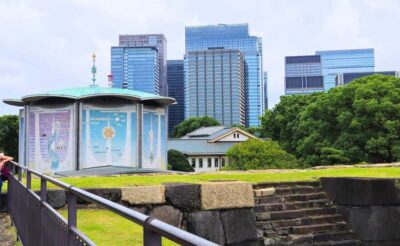
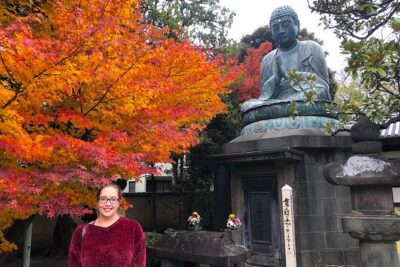
Yanaka Walking Tour: Historic and Traditional District of Tokyo
Read our review →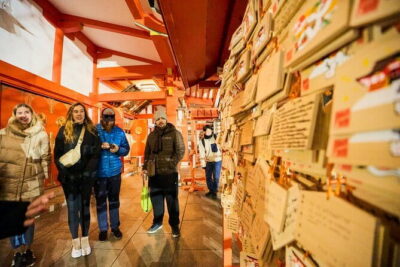
Shinjuku Historical Walking Tour & Secret Backstreets
Read our review →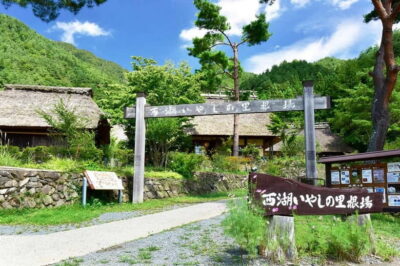
Mt. Fuji Heritage Tour: Traditional Villages, Lakes & Shrine
Read our review →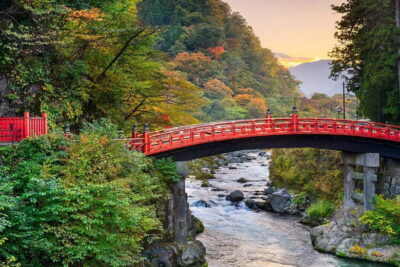
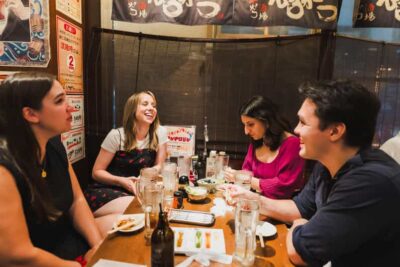
The Best of Izakaya in Shinjuku Food & Cultural Tour
Read our review →
Yanaka Historical Walking Tour in Tokyo’s Old Town
Read our review →Browse the lists this tour appears in