
Reviewed · WALKING TOURS
Tokyo: Asakusa Walking Tour with Japanese Comedian
Asakusa makes a fine introduction to old Tokyo, and this tour gives the district a personal guide: Ryo, a Japanese comedian who spent six years driving rickshaws here. He mixes temple stories and local customs with humor drawn from his life performing standup comedy in English. I like the free view of Asakusa from a nearby building, and I like the way the walk explains why a Buddhist temple and a Shinto shrine sit side by side.
The main consideration is pace. At 90 minutes, you get a useful orientation rather than a slow, detailed study of every building. One booking lasted about two hours, but you should plan around the stated 90 minutes and remember that shopping and food stops are not part of the route.
In This Review
- Key points to know before you book
- Why this Asakusa walk is more than a temple photo stop
- Meeting at Tokyo Cruise beside the Sumida River
- Sumida Park and the first look at modern Tokyo
- Kaminarimon Gate and the symbols of Asakusa
- Nakamise Shopping Street without a shopping detour
- Asakusa Shrine and the Buddhist-Shinto connection
- Senso-ji Temple, statues, and stories that give the site meaning
- Ryo’s local angle and English comedy
- Is $31 a fair price for 90 minutes?
- Who should take this tour?
- Practical details that affect your day
- Should you book the Asakusa comedian walking tour?
- FAQ
- Where does the Asakusa walking tour meet?
- How long is the walking tour?
- Who is the guide?
- What languages are available?
- What sights are included?
- Does the tour include food or shopping stops?
- Can I cancel or pay later?
Key points to know before you book
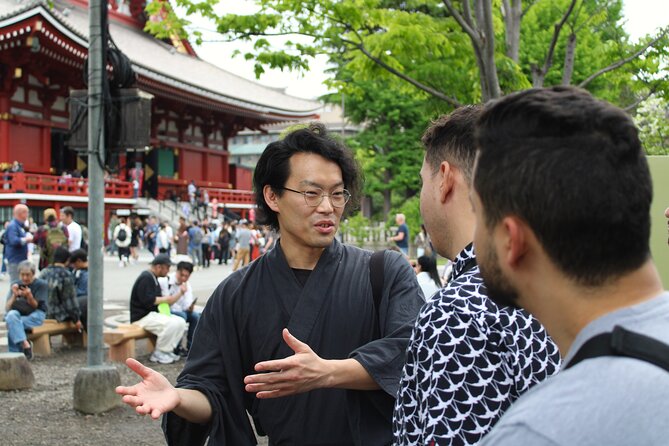
- Ryo brings two jobs to the walk: He has worked as an Asakusa rickshaw driver and also performs English-language standup comedy.
- The tour starts with city views: You see Tokyo Skytree and the Asahi Beer Company before reaching Senso-ji.
- Religious customs get proper context: Ryo explains the difference between Buddhist and Shinto practice in an area where both appear together.
- Small groups keep questions manageable: The maximum group size is eight people.
- The route covers Asakusa’s main sights: Sumida Park, Kaminarimon Gate, Nakamise Shopping Street, Asakusa Shrine, and Senso-ji.
- Bring five extra minutes, not five fewer: The group meets at Tokyo Cruise and leaves on time.
Why this Asakusa walk is more than a temple photo stop
Many first visits to Asakusa follow the same pattern: walk through Kaminarimon Gate, photograph the lantern, stroll along Nakamise Shopping Street, and enter Senso-ji. That route is easy to do alone, but the symbols and customs can be hard to read without help.
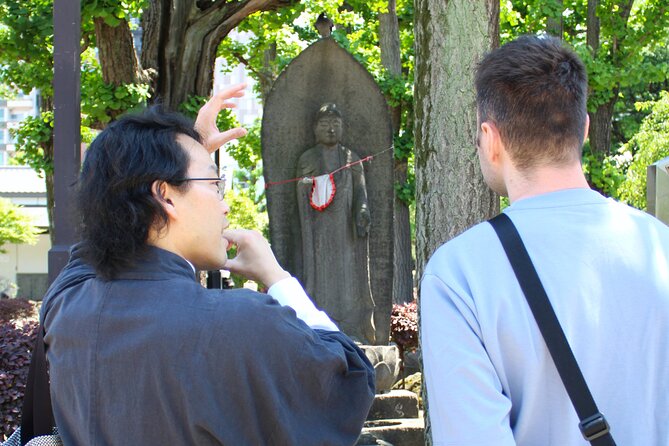
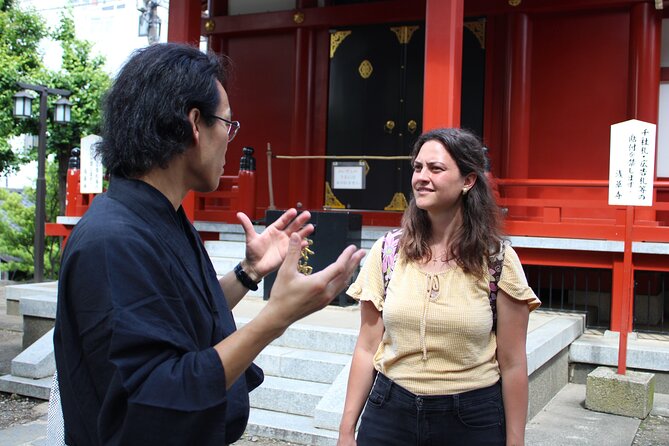
Ryo’s role is to add the meaning behind what you see. He explains the area’s religious traditions, points out smaller temples and shrines, and introduces the Buddhist figures found around the district. This matters because Asakusa is not simply a historic backdrop. It is a place where worship, local identity, tourism, and old stories all share the same streets.
The comedy angle is unusual, but it is not the whole point of the outing. You should expect light humor woven into the explanations, not a dedicated comedy show. The strongest part of the experience is the combination of local perspective and cultural interpretation.
More Asakusa visits:
- Tokyo: Japanese Dance Cabaret Theater Asakusa-Kaguwa Ticket
★ 4.8 · 2,270 reviews - Tokyo: Meiji Shrine, Asakusa, Skytree Bus Tour and Cruise
★ 4.7 · 1,986 reviews - Tokyo: Roll and Authentic Sushi Making Class in Asakusa
★ 4.9 · 1,957 reviews
Meeting at Tokyo Cruise beside the Sumida River
The walk begins in front of Tokyo Cruise, the water-bus station about one or two minutes from Asakusa Station on the Tokyo Metro Ginza Line. This is a practical meeting point, but you should identify the building before the start time rather than arrive at the last second.
Arrive five minutes early. The guide cannot collect you from your hotel or another location, and the group will not wait for late arrivals. After the walk, you part ways at the main hall of Senso-ji, so you should not count on being escorted back to the station.
The location near the Sumida River gives the opening of the tour a pleasant sense of place. Asakusa developed beside the river, and the water helps explain why this part of Tokyo became an important point of movement and trade. The tour does not turn into a river cruise, but the starting point connects the district to its wider setting.
Sumida Park and the first look at modern Tokyo
One of the first stops is Sumida Park. Here, Ryo points out landmarks including Tokyo Skytree and the Asahi Beer Company. The contrast is useful: Asakusa is known for temples and old streets, but it also sits in a very modern city filled with towers, offices, and commercial buildings.
You also get a view of Asakusa from the top of a nearby building at no extra charge. That small stop adds value to the $31 price because it gives you a broader sense of the district before you enter the temple complex. From ground level, the area can feel like a series of gates, shops, and courtyards. From above, you can better understand how the streets and river fit together.
This is also a good reason to take the walk near the start of your Tokyo stay. The view and orientation can help you recognize the main parts of Asakusa when you return on your own. Several people found the tour useful as a way to get their bearings, which is exactly how I would use it.
Kaminarimon Gate and the symbols of Asakusa
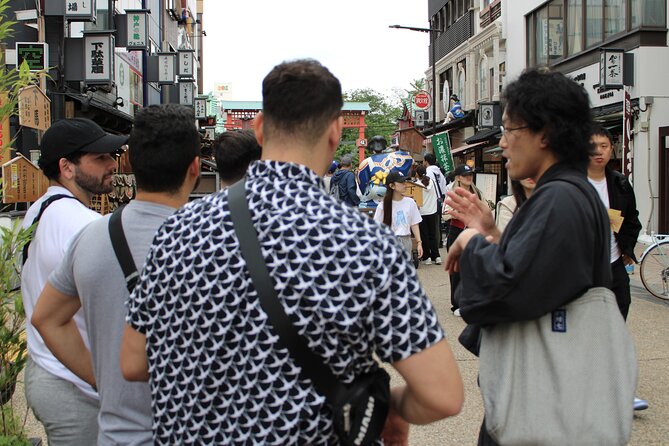
Kaminarimon Gate is the district’s great visual entrance. Its large lantern and guardian figures make it one of the easiest places in Tokyo to recognize, but the sight becomes more interesting when you know what the gate represents and how it leads toward Senso-ji.
Ryo stops here for photographs and explanation rather than rushing straight through. You will have a chance to ask questions, which is especially helpful if you are unsure how to behave at a temple or shrine. The value of a guide here is not just naming the gate. It is helping you notice the figures, signs, and rituals that might otherwise blend into the scenery.
Expect other people in this part of Asakusa. The tour is designed around major sights, so it does not avoid the district’s busiest areas. That is not a flaw, but you should choose a quieter time of day if crowds affect your enjoyment.
More walking routes in Tokyo:
- Tokyo Tsukiji Fish Market Food and Culture Walking Tour
★ 5.0 · 3,184 reviews - Tokyo: Imperial Palace and Shogun Historical Walking Tour
★ 5.0 · 2,251 reviews - Tokyo: Shinjuku Local Bar and Izakaya Guided Walking Tour
★ 4.9 · 1,794 reviews - Tokyo: Tsukiji Fish Market Food and Walking tour
★ 5.0 · 1,724 reviews
Nakamise Shopping Street without a shopping detour
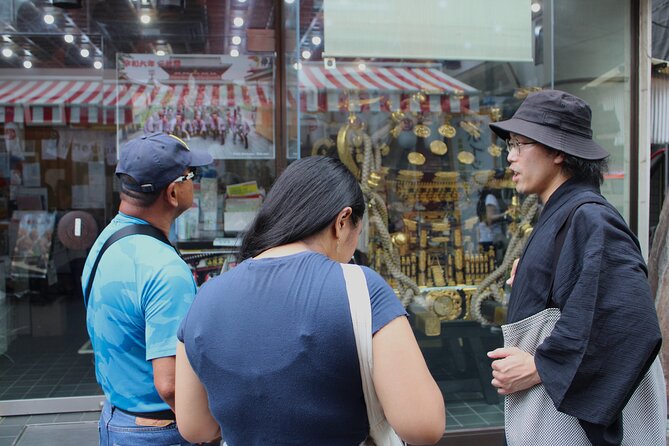
Nakamise Shopping Street runs toward Senso-ji and is lined with shops selling souvenirs, snacks, and traditional goods. During the tour, Ryo explains the street and the origin of Senso-ji while using illustrations to make the story easier to follow.
The tour does not stop for food or shopping. This is worth knowing before you book. You will see the shops and can receive recommendations from Ryo, but purchases are for after the walk. One person used a recommendation to buy a melon pan and described it as one of the best they had eaten, so you may want to leave time afterward to explore on your own.
This arrangement keeps the group moving and protects the 90-minute schedule. It also means the experience suits you better if you want cultural guidance first and shopping later. If sampling snacks is your main goal, a food-focused walk would be a better match.
Asakusa Shrine and the Buddhist-Shinto connection
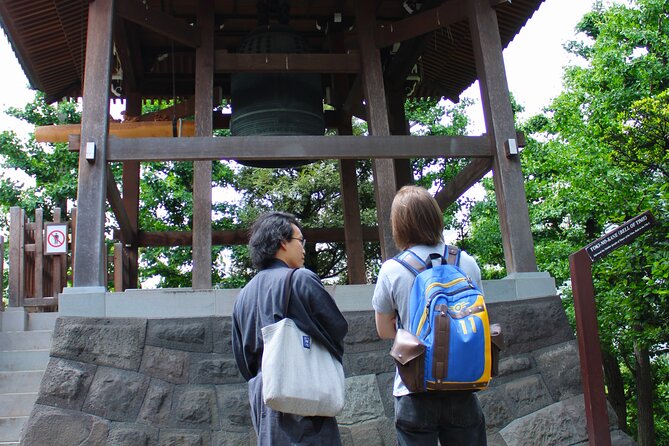
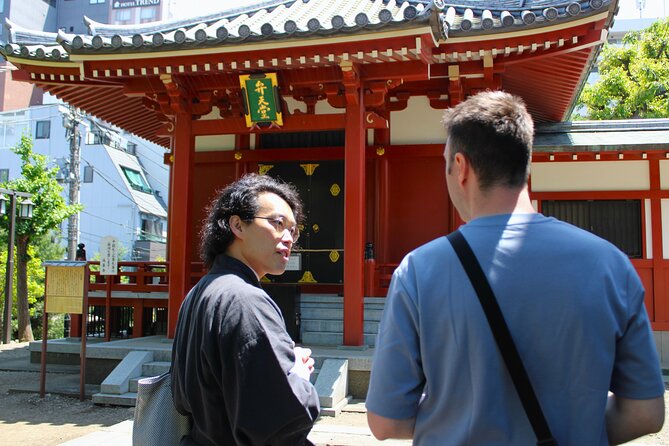
Asakusa Shrine sits beside Senso-ji, and this pairing is one of the most useful teaching points of the tour. Ryo explains how Shinto and Buddhism are viewed in Japan and why it is normal to encounter both traditions in the same district.
For many visitors, the distinction between a shrine and a temple is easy to miss. The buildings may look similar at a glance, yet the customs, symbols, and religious roles differ. Ryo’s explanation gives you a practical framework for recognizing those differences elsewhere in Japan.
The shrine stop also shows why a guided walk can be more useful than a list of famous sights. You are not just collecting photographs. You are learning how Japanese religious life can include different traditions without treating them as competing attractions.
Senso-ji Temple, statues, and stories that give the site meaning
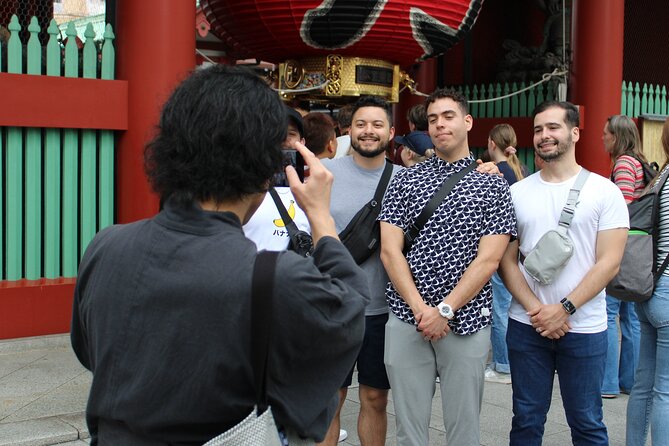
Senso-ji is the main attraction, and the final part of the tour focuses on the temple grounds and the main hall. Ryo discusses the temple’s origin and explains how it received support from people across different periods, including powerful generals and local residents.
He also points out smaller temples, shrines, and Buddhist statues around Asakusa. These details are easy to miss when you are walking toward the main hall with your camera out. The statues represent different Buddhist deities, and learning their significance turns a decorative corner into part of the religious setting.
You should not expect a private or silent temple visit. Senso-ji is a major Tokyo sight, and the walk takes place in an active public area. The benefit is that Ryo helps you find meaning in a place that can otherwise feel like a quick stop between shopping and photographs.
The tour finishes at the main hall. That gives you a sensible starting point for a second visit, a quiet look around, or an independent trip back through Nakamise Street.
Ryo’s local angle and English comedy
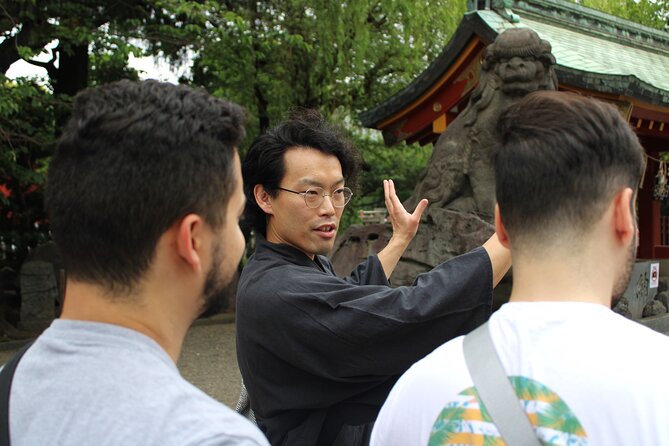
Ryo brings useful experience to the route. His six years as an Asakusa rickshaw driver mean he has spent a long time showing this neighborhood to people from outside Japan. He is also a local Japanese comedian who performs in English, so his explanations may include jokes and observations that a standard history guide would not use.
The comedy is best seen as an added layer, not a guarantee of constant entertainment. One person especially enjoyed his humor, while another found him pleasant but not especially energetic as a guide. That difference is important. If you need a high-energy performer every minute, this may feel restrained. If you prefer a calm guide who can answer questions and add occasional humor, the style may suit you well.
The strongest praise for Ryo centers on his cultural explanations, local details, and willingness to answer questions. You should book this walk for the insight first, with comedy as a bonus.
Is $31 a fair price for 90 minutes?
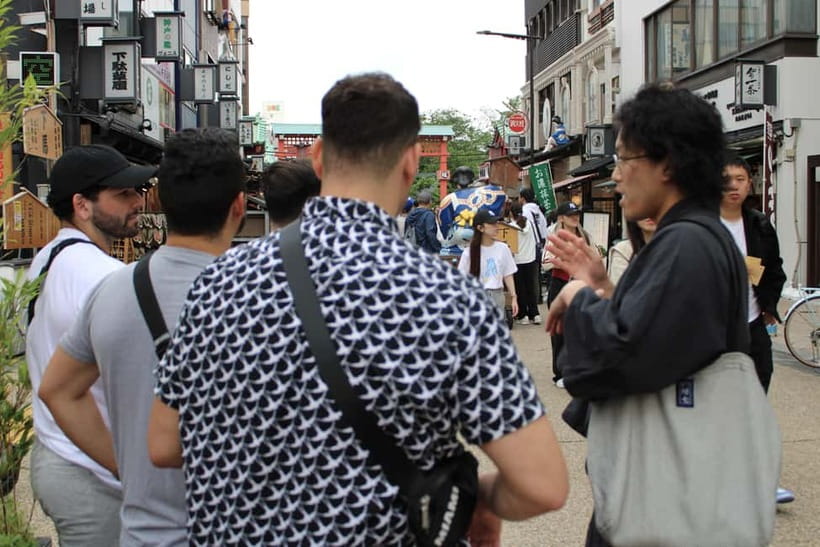
At $31 per person, the price is reasonable for a small-group guided walk in central Tokyo, especially with a maximum of eight participants and a live guide in English or Japanese. You are paying for structure, interpretation, and access to local context rather than entrance tickets or meals.
The free view from a nearby building improves the value. So does the chance to ask questions about customs that can be confusing when you explore alone. If you already know Asakusa well and plan to visit every listed sight independently, the tour will offer less for you. One person felt that much of the route covered places already on their personal plan.
For a first visit, I think the price works best when you schedule the walk early in your stay. You can learn the layout, hear shopping suggestions, and return later for food, souvenirs, or photographs without a guide setting the pace.
Who should take this tour?
This walk suits first-time visitors who want a clear introduction to Asakusa without committing to a half-day activity. It is also a good fit if you enjoy asking questions about local culture and want more than a photo checklist.
Families and mixed-age groups may appreciate the short duration and humor. The group is wheelchair accessible, though the route includes streets, temple grounds, and shopping areas, so you may still want to confirm the exact accessibility needs before booking.
The tour is less suitable if you want a food crawl, a dedicated shopping tour, or a long religious lecture. It also may not satisfy you if you prefer to explore at your own speed. The route is fixed, and the guide cannot add a hotel pickup or station escort.
Practical details that affect your day
The advertised duration is 90 minutes, with starting times checked at booking. One booking took about two hours, so I would avoid placing a train reservation or another timed activity immediately afterward.
The tour includes the walking tour and comedian guide. It does not include food or shopping purchases. You can ask Ryo for recommendations, then return to Nakamise Street after the group finishes.
Free cancellation is available up to 24 hours before the start for a full refund, and you can reserve now and pay later. The tour is offered in English and Japanese. Since the group is capped at eight people, booking ahead is sensible if you want the small-group format.
Should you book the Asakusa comedian walking tour?
Book it if you want cultural context, local stories, and a quick orientation to Asakusa. Ryo’s background as a rickshaw driver gives him a strong connection to the district, and his comedy can make the explanations more personal and relaxed. The best parts are the temple and shrine context, the smaller religious sites, and the free view that puts the neighborhood in perspective.
Skip it if you already have a detailed Asakusa plan and mainly want to shop or eat. You will see many of the area’s major sights, but the guide’s value comes from explaining them, not taking you somewhere far from the usual route. At $31, it is a sensible first-day introduction, particularly for visitors who want to understand what they are seeing before exploring Senso-ji on their own.
FAQ
Where does the Asakusa walking tour meet?
The group meets in front of Tokyo Cruise, the water-bus station about one or two minutes from Asakusa Station on the Tokyo Metro Ginza Line.
How long is the walking tour?
The stated duration is 90 minutes. One booking lasted about two hours, so allow some flexibility after the scheduled finish.
Who is the guide?
The guide is Ryo, a Japanese comedian with six years of experience working in Asakusa as a rickshaw driver.
What languages are available?
The live tour is available in English and Japanese.
What sights are included?
The route includes Sumida Park, Kaminarimon Gate, Nakamise Shopping Street, Asakusa Shrine, and Senso-ji Temple. It finishes at the main hall.
Does the tour include food or shopping stops?
No. The itinerary does not stop for food or souvenirs, though Ryo can give recommendations for shopping after the tour.
Can I cancel or pay later?
You can cancel up to 24 hours before the tour for a full refund. Reserve now and pay later is also available.
New on our Tokyo list
- Sumi-e Experience in a relaxing green tea shop in Tokyo★ 5.0 · 3 reviews
- Tokyo : Kamikaze Street Drift Ride★ 5.0 · 3 reviews
- Private Zen Meditation in English in Shinjuku, Tokyo★ 5.0 · 3 reviews
- Easy for everyone! Now you can play handmade mini shamisen and show off to everyone! Musical instruments, sweets and live music★ 5.0 · 3 reviews
- Onsen Spa in Tokyo and Asakusa Bar Hopping with Local Guide★ 5.0 · 3 reviews
- Tokyo: Private Tsukiji Street Food & Sake with Local Guide★ 5.0 · 3 reviews
- Mt Fuji Exploration Tour with Free Japanese Kusa Mochi from Tokyo★ 4.5 · 3 reviews
- Tokyo Tsukiji Fish Market Walking and Exploring Hidden Gems Tour★ 5.0 · 3 reviews
Walking Tours, compared.
Tokyo Tsukiji Fish Market Food and Culture Walking Tour
Read our review →
Imperial Palace and Shogun Historical Walking Tour
Read our review →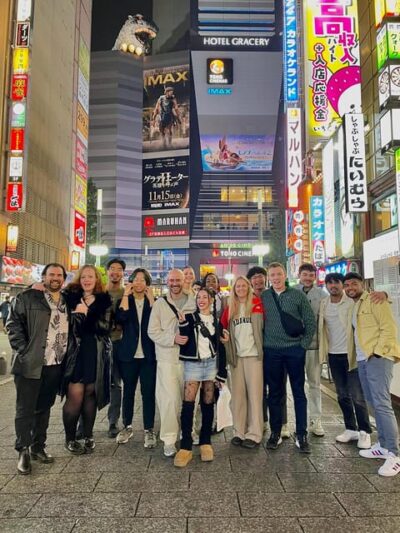
Shinjuku Local Bar and Izakaya Guided Walking Tour
Read our review →
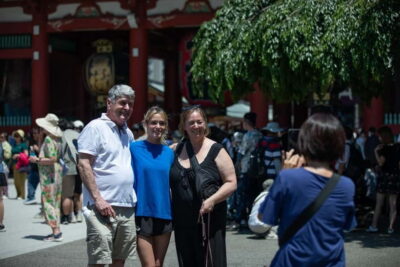
Asakusa Walking Tour with Sensoji Temple Visit
Read our review →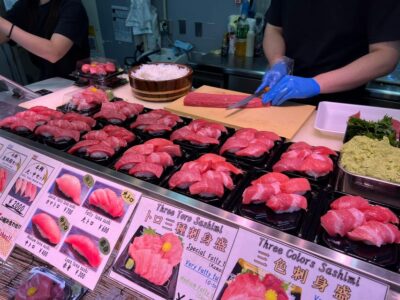
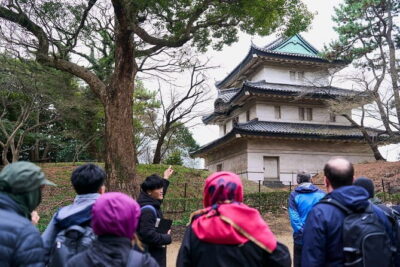
Tokyo Castle & Imperial PalaceーShogun Walking Tour
Read our review →
Browse the lists this tour appears in