
Reviewed · CITY TOURS
Tokyo City Attractive One Day Tour
Tokyo’s size can make a first visit feel like a game of train-station pinball. This private day tour solves that problem with a car, a driver-guide, and a route linking old Asakusa, modern Shibuya, and two famous towers. You get a fast but useful look at several sides of the city without planning every transfer yourself.
I like the small private group, which means up to five people can share one vehicle and ask for attention along the way. I also like the range of stops: Sensoji’s incense and temple gates, Tsukiji’s food stalls, Meiji Jingu’s wooded shrine grounds, and Shibuya’s famous crossing each show a different Tokyo.
The catch is pace. Nine hours sounds generous, but the route covers a lot of ground, and some stops receive only 30 minutes. You also pay separately for Tokyo Skytree and Tokyo Tower, and the driver is the guide, so you should not expect a separate specialist guide walking beside you at every site.
In This Review
- Key points to know before booking
- Why this route works for a first look at Tokyo
- Sensoji and Nakamise: Tokyo’s traditional opening act
- Tokyo Skytree at 634 meters
- Tokyo Tower and the symbol of postwar Japan
- Tsukiji Outer Market: a useful place to eat
- Shinjuku Gyoen: one quiet hour in a huge city
- Meiji Jingu: a forested shrine with a modern story
- Harajuku and Takeshita Street: Tokyo’s youth culture
- Shibuya Crossing and Hachiko in 60 minutes
- What $500 means for your group
- The guide question you should settle early
- Who should book this Tokyo day tour?
- FAQ
- How long does the Tokyo City Attractive One Day Tour last?
- How many people can join the private tour?
- Where does the tour start?
- Where does the tour end?
- Is hotel pickup included?
- Are Tokyo Skytree and Tokyo Tower admission tickets included?
- Are meals included?
- Is this a shared tour?
- Can I cancel for a full refund?
Key points to know before booking
- Nine hours by private vehicle: Air conditioning, private transportation, and pickup and return at The Tokyo Station Hotel make a wide city route easier.
- Two tower choices: Tokyo Skytree and Tokyo Tower are both included as exterior stops, but their observation decks cost extra.
- A strong first-day mix: Temples, shrines, food, gardens, youth fashion, city views, and famous streets all appear in one outing.
- Up to five people for $500: The rate makes more sense for a full group than for one or two people.
- The driver also guides: Hiroyuki Sato is named in the tour correspondence, and the operator confirms that the driver provides the guiding.
- The schedule is ambitious: Shibuya’s crossing and Hachiko receive 30 minutes each, while most other stops receive about an hour.
Why this route works for a first look at Tokyo
The best feature here is not any single attraction. It is the contrast. You begin near Tokyo Station and can reach Asakusa, where Tokyo’s story is framed by temple gates and traditional shops. Later, you move through high-rise districts, modern towers, a food market, a garden, and Harajuku’s youth culture.
That spread matters because Tokyo is not one tidy sightseeing district. Its major sights are scattered across a huge metropolitan area. On public transportation, you can reach all of them, but each transfer takes time and requires you to manage directions, crowds, and station exits. The private vehicle removes much of that work.
I would treat this as an orientation day, not a slow cultural tour. You will see many important places, learn the basic story behind them, and discover which districts deserve a longer return visit. If you want to linger over temple details, shop for an hour at Tsukiji, or spend a full afternoon in Harajuku, the schedule will feel tight.
More day trips out of Tokyo:
- Mt Fuji and Hakone 1-Day Bus Tour Return by Bullet Train
★ 5.0 · 26,383 reviews - 1-Day Tokyo Bus Tour
★ 5.0 · 14,250 reviews - Mt Fuji & Hakone Cruise, Drum Show Bullet Train 1 Day from Tokyo
★ 4.0 · 7,413 reviews
Sensoji and Nakamise: Tokyo’s traditional opening act
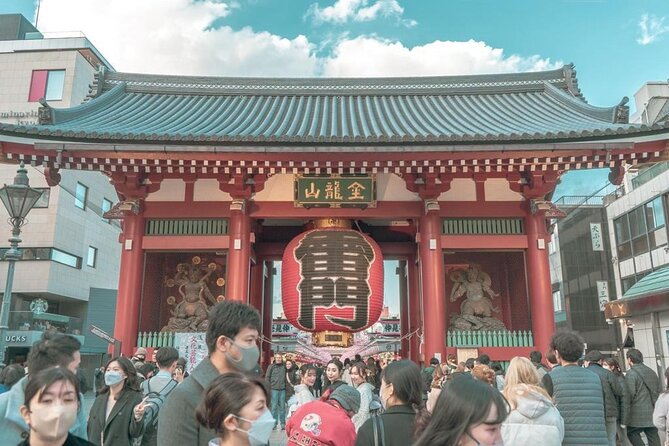
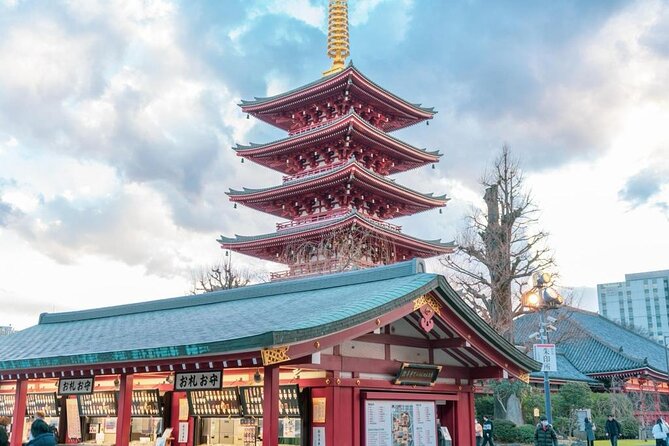
Asakusa Shrine is used as the label for the first stop, but the description centers on Sensoji, the Buddhist temple also called Asakusa Kannon Temple. It is one of Tokyo’s most colorful and popular religious sites, and the legend behind it gives the visit a memorable starting point.
In 628, two brothers reportedly pulled a statue of Kannon, the goddess of mercy, from the Sumida River. They returned it to the water, but it kept coming back. Sensoji was later built nearby, and the temple was completed in 645, making it Tokyo’s oldest temple.
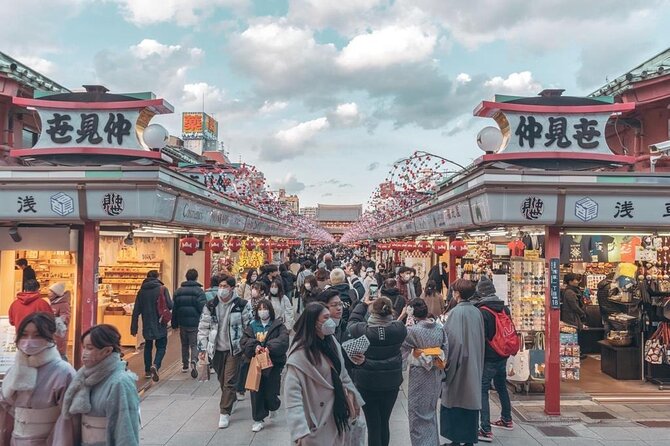
You enter through the outer gate and follow Nakamise, a shopping street stretching more than 200 meters toward the Hozomon gate. The shops sell Japanese souvenirs and traditional goods, so this is a useful place to get your first look at the visual language of a temple district.
The allotted hour should be enough for a first visit, a walk along Nakamise, and a look at the main temple area. It will not be enough for an unhurried exploration of every lane around Asakusa. Admission is free, which helps keep the basic tour price reasonable.
Tokyo Skytree at 634 meters
Skytree changes the scale of the day. At 634 meters, it is the world’s highest free-standing broadcast tower, with observation decks at 350 and 450 meters. The lower deck also has a restaurant, cafe, and souvenir shop.
The tower is part of Tokyo Skytree Town, which includes the Solamachi shopping complex. The complex has 312 shops and restaurants, along with places such as Sumida Aquarium, the Postal Museum, a local crafts center, and an exhibition space focused on robot technology.
The tour allows about an hour here, but admission is not included. The listed cost is $12 per person for Skytree, though you should confirm the current amount when booking. One practical point comes from a previous full-day experience: lines at Skytree can be long, and knowing the visit time in advance would help you reserve a timed ticket.
That is important because a private vehicle does not automatically solve a tower’s queue. Ask the operator before the day begins when Skytree is planned, and ask if an advance ticket is sensible. If you prefer not to pay for the observation deck, you can use the hour around Skytree Town, but the main attraction is the view.
Tokyo Tower and the symbol of postwar Japan
Tokyo Tower gives you a second view of the city and a different piece of its story. The 333-meter steel tower was completed in 1958, three meters taller than the Eiffel Tower, and served as Japan’s tallest structure until Skytree surpassed it in 2012.
The tower became a symbol of Japan’s postwar recovery and economic growth. It still works as a broadcast antenna, but for visitors it is mainly a city viewpoint and a familiar landmark in central Tokyo.
You receive about an hour here, with admission extra. The listed price is $7 per person, subject to change. Seeing both towers can feel repetitive if you pay to go up both, so I would decide what kind of view you want. Skytree gives you height and a broad look across the metropolis. Tokyo Tower gives you a closer connection to central Tokyo and the tower’s postwar identity.
The route does not say that either observation deck is guaranteed as part of the schedule. Treat both as tower stops, then confirm the admission and timing details before you commit to tickets.
A few more Tokyo bookings worth comparing
- Tokyo: TOKYO SKYTREE® Admission ticket
★ 4.5 · 11,192 reviews - Tokyo: teamLab Planets TOKYO Digital Art Museum Entry Ticket
★ 4.6 · 9,779 reviews - Tokyo: Sumo Show Experience with Chicken Hot Pot and a Photo
★ 4.8 · 6,678 reviews - Tokyo: Shinjuku Food Tour (13 Dishes at 4 Local Eateries)
★ 5.0 · 6,603 reviews
Tsukiji Outer Market: a useful place to eat
Tsukiji Outer Market is described as Japan’s Food Town, and it is one of the day’s most practical stops. Streets are lined with wholesale and retail shops, restaurants, and stores selling traditional Japanese foods.
The market once served mainly professional buyers, which explains why some products were sold in sizes too large for a household. Parts of the market now cater more directly to individual shoppers and sightseers. You may find smaller sushi portions, ready-to-eat food, and even a bite-sized egg roll for a quick sample.
An hour is a reasonable introduction, especially if you want to look around and buy a snack. Lunch is not included, so Tsukiji is the obvious place to arrange your own meal. The exact food plan is not set, and you should tell the driver-guide if eating at the market is a priority.
This stop works best when you arrive hungry but not rushed. A private tour gives you a chance to ask what to try, yet the guide’s food advice may depend on the individual driver. If you want a serious market meal, make that clear early in the day.
Shinjuku Gyoen: one quiet hour in a huge city
Shinjuku Gyoen offers a needed pause. The park is one of Tokyo’s largest and most popular, with open lawns, walking paths, and calm scenery only a short walk from Shinjuku Station.
It is especially well known for cherry blossoms in spring. During blossom season, the garden can be one of the most rewarding stops on this route, since the open space gives you a break from streets and towers. Outside spring, the hour still provides a chance to slow down.
I like its position in the schedule because Tokyo sightseeing can become a procession of concrete, signs, and traffic. The drawback is that one hour goes quickly in a large garden. You will need to choose between a relaxed walk and seeing a broad part of the grounds.
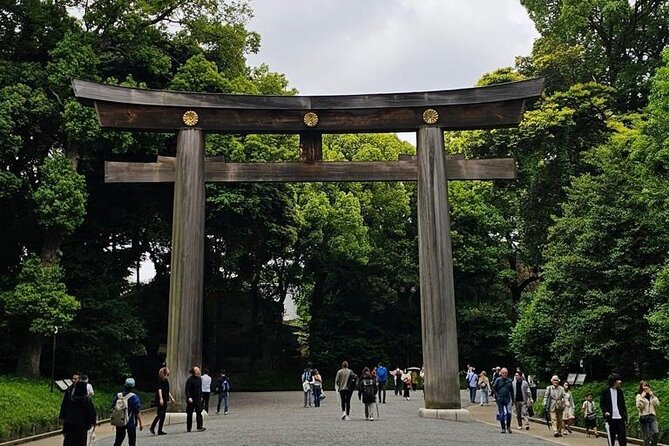
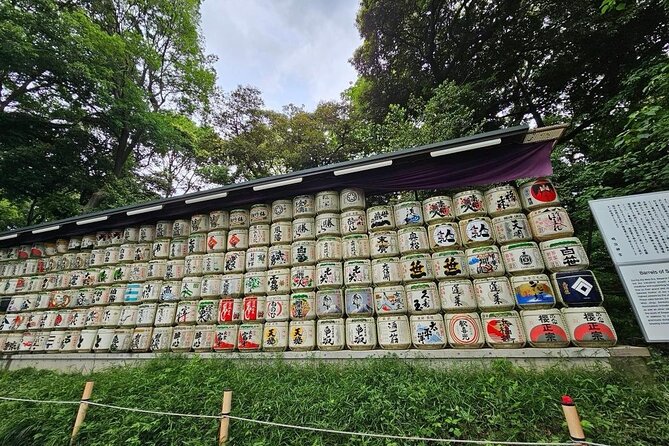
Meiji Jingu: a forested shrine with a modern story
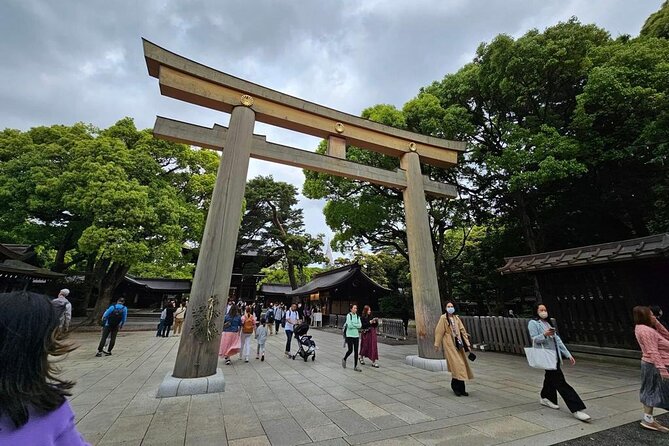
Meiji Jingu is dedicated to Emperor Meiji and Empress Shoken. It was completed in 1920, eight years after the emperor’s death and six years after the empress’s death. The shrine was destroyed during the war and rebuilt soon afterward.
Emperor Meiji was born in 1852 and became emperor in 1867, when the Meiji Restoration ended Japan’s feudal era and returned political power to the emperor. Under his rule, Japan modernized rapidly and joined the major powers of the period.
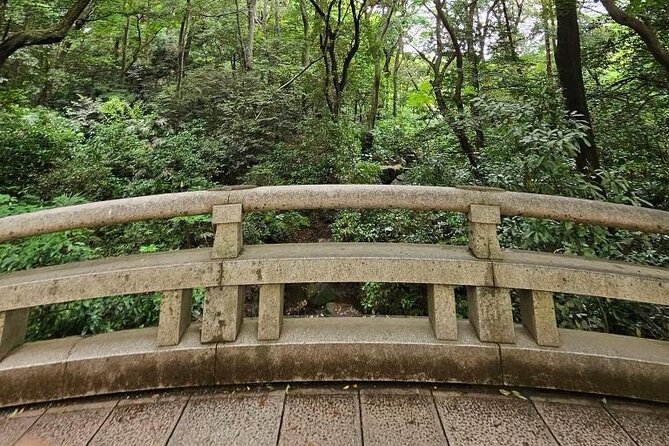
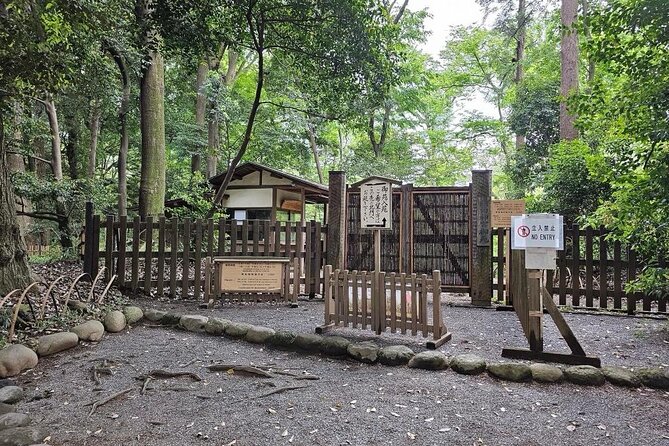
That background makes Meiji Jingu more than a pretty shrine stop. It connects the quiet religious setting with the national changes that shaped modern Japan. The walk through the grounds also contrasts nicely with the nearby fashion streets of Harajuku.
Allow about an hour. Free admission makes this another stop where the tour gives you a meaningful place without adding a ticket cost. As with Shinjuku Gyoen, you should expect an introduction rather than a detailed study of every shrine building and ritual.
Harajuku and Takeshita Street: Tokyo’s youth culture
Harajuku is the most youth-focused part of the route. Takeshita Street is lined with clothing stores, cafes, dessert shops, accessories, and unusual souvenirs. The area is known for bold fashion and Japanese youth culture, with especially large crowds on weekends and holidays.
The street begins near Harajuku Station and sits at the top of a hill. That small detail matters because the entrance can feel crowded, and the first stretch may take longer than expected if you stop to browse.
You have about an hour here. That is enough to walk part of Takeshita Street and look at the shops, but not enough for a serious shopping session. Prices and styles vary widely, so think of this as a cultural snapshot. If your group includes teenagers or shoppers, you may want to ask for flexibility here. If you dislike crowded retail streets, this is likely to be the least relaxing stop.
Shibuya Crossing and Hachiko in 60 minutes
Shibuya’s Scramble is Tokyo’s famous controlled chaos. Ten traffic lanes and five major crosswalks meet between tall buildings and bright signs, creating one of the clearest images of modern Tokyo.
The tour gives the crossing 30 minutes, followed by another 30 minutes for Hachiko. That split is sensible for a first look. You can watch the crossing, take in the surrounding streets, and then visit the statue of the dog whose story became part of Japanese popular culture.
Hachiko was born in Odate, in Akita Prefecture, in 1923. He was adopted by University of Tokyo professor Hidesaburo Ueno and waited at Shibuya Station for his owner’s return even after Ueno died in 1925. Hachiko died in 1935, and the story later inspired the 2009 film Hachi: A Dog’s Tale, starring Richard Gere.
The two Shibuya stops are free, but time is limited. If you want an extensive visit to the area or a long look at the crossing from above, this itinerary will not provide it. Think of the stop as a quick, memorable finish to the city’s modern side.
What $500 means for your group
The price is $500 per group of up to five people. For five, that works out to $100 per person before tower tickets and meals. For two people, it becomes $250 each, and for one person it is the full $500.
That makes this most appealing to families or friends who want a private vehicle and a fixed day of sightseeing. Shared tours can cost less, but they usually give you less control over the group and less direct access to the driver-guide.
The price includes an air-conditioned vehicle, private transportation, hotel transfers, and an onboard hotspot. Lunch, dinner, Skytree admission, and Tokyo Tower admission are not included. If all five people pay for both listed tower tickets, the extra cost would be about $95 total, using the supplied prices, before food.
The tour begins and ends at The Tokyo Station Hotel in Marunouchi. Pickup is not described as available from every hotel, so confirm the meeting point if you are staying elsewhere. The listed duration is about nine hours, while the scheduled stops total roughly seven and a half hours. The remaining time is useful for driving, traffic, pickup arrangements, and movement between districts.
The guide question you should settle early
This is a private tour, but the driver is also the guide. The operator has clarified that drivers explain the places along the route, rather than handing you over to a separate licensed guide at each attraction.
That arrangement can work well if you want practical help, transport, and basic historical context in one person. It may disappoint you if you expect a specialist guide to lead a detailed walking tour inside every site. A previous guest also felt the route had the right attractions but not the best order, especially during cherry blossom season.
I would send your priorities before the day: tower views, food at Tsukiji, cherry blossoms, shopping, or shrine time. The itinerary is private, so there is room to discuss adjustments, but the number of stops means every extra request affects something else.
Who should book this Tokyo day tour?
Book it if you are visiting Tokyo for the first time, have only one full day, or want to avoid managing a large network of train routes. It is also a good match for a group of up to five, since the shared cost becomes much more reasonable.
I would also consider it for families, older relatives, or anyone who values air conditioning and door-to-door transport. The private format gives you more comfort than a large bus tour and more structure than exploring alone.
Skip it if your main goal is slow food tasting, serious shopping, or long visits inside temples and gardens. Independent visitors who enjoy Tokyo’s trains may prefer to choose two or three districts and spend more time in each. The advertised rating is 4.9 from 13 reviews, with 92 percent recommending it, but the mixed experience described above is worth taking seriously: the day succeeds best when you accept its quick pace and clarify the guide role and tower timing in advance.
FAQ
How long does the Tokyo City Attractive One Day Tour last?
The tour lasts approximately nine hours.
How many people can join the private tour?
The price covers one private group of up to five people.
Where does the tour start?
The tour starts at The Tokyo Station Hotel in Marunouchi, Tokyo, at 1-chome 9-1, Chiyoda City.
Where does the tour end?
The activity ends back at the same meeting point, The Tokyo Station Hotel.
Is hotel pickup included?
Round-trip hotel transfers are included, with pickup offered. The stated meeting point is The Tokyo Station Hotel, so confirm the exact pickup arrangement if you are staying at another property.
Are Tokyo Skytree and Tokyo Tower admission tickets included?
No. Admission tickets are separate. The supplied prices list Skytree at $12 and Tokyo Tower at $7 per person.
Are meals included?
No. Lunch and dinner are not included.
Is this a shared tour?
No. It is a private activity, and only your group participates.
Can I cancel for a full refund?
Yes, if you cancel at least 24 hours before the experience start time. Cancellations made less than 24 hours in advance are not refunded, and changes within that period are not accepted.
New on our Tokyo list
- Tokyo : Kamikaze Street Drift Ride★ 5.0 · 3 reviews
- Private Zen Meditation in English in Shinjuku, Tokyo★ 5.0 · 3 reviews
- Sumi-e Experience in a relaxing green tea shop in Tokyo★ 5.0 · 3 reviews
- Onsen Spa in Tokyo and Asakusa Bar Hopping with Local Guide★ 5.0 · 3 reviews
- Easy for everyone! Now you can play handmade mini shamisen and show off to everyone! Musical instruments, sweets and live music★ 5.0 · 3 reviews
- Tokyo: Private Tsukiji Street Food & Sake with Local Guide★ 5.0 · 3 reviews
- Mt Fuji Exploration Tour with Free Japanese Kusa Mochi from Tokyo★ 4.5 · 3 reviews
- Tokyo Tsukiji Fish Market Walking and Exploring Hidden Gems Tour★ 5.0 · 3 reviews
City Tours, compared.

Private City Highlights Tour with Local Guide
Read our review →
Asakusa, Skytree & Akhihabara Go-Kart City Experience
Read our review →
3-hour Guided E-Bike Tour of the City’s Hidden Gems
Read our review →
3-Hour Bike/E-Bike Tour of the City’s Highlights
Read our review →
Small Town in the Big City: Tasting Tokyo’s Kichijoji
Read our review →Browse the lists this tour appears in