
Reviewed · CITY TOURS
Tokyo: City Tour B
Tokyo: City Tour B takes you through six very different sides of Tokyo in one day. You begin beneath the great wooden torii at Meiji Shrine, browse Harajuku fashion, move on to Akihabara’s pop-culture streets, pass through polished Ginza, reach Tokyo Bay in Odaiba, and finish at Shibuya Scramble Crossing.
I like the route for two reasons: the Spanish-speaking guide gives you a useful overview of Tokyo, and the tour uses public transport, so you get a feel for how the city works rather than seeing it only through a vehicle window. I also like the mix of old shrine traditions and bright modern districts. The main drawback is its ambitious schedule. Six major stops in eight hours means some visits are introductions rather than slow explorations.
In This Review
- Key points to know
- A full day that explains Tokyo by contrast
- Meiji Shrine begins the day with quiet and ceremony
- Takeshita Street shows Harajuku at its most youthful
- Akihabara gets the longest neighborhood visit
- Ginza offers a polished change of pace
- Odaiba brings the tour to Tokyo Bay
- Shibuya finishes at the famous crossing
- What the Spanish guide adds
- Timing, transport, and physical demands
- Who should choose Tokyo: City Tour B?
- Is this eight-hour Tokyo tour worth booking?
- FAQ
- Is the tour conducted in Spanish?
- How long does Tokyo: City Tour B last?
- Where does the tour meet?
- Is hotel pickup available?
- Are transport and lunch included?
- Is the tour wheelchair accessible?
Key points to know
- Six Tokyo districts in one day: Meiji Shrine, Harajuku, Akihabara, Ginza, Odaiba, and Shibuya.
- Spanish-speaking guidance: The tour is led by NIPONEANDO, with guide Ismael specifically praised for being friendly, enthusiastic, and helpful.
- Public transport is part of the experience: Expect trains and walking, with transport costing about ¥1,160 in addition to the tour price.
- A strong first-time overview: The route shows Tokyo’s traditional, youth-oriented, technology-focused, luxury, waterfront, and nightlife sides.
- Lunch is flexible: A 70-minute break is planned in Akihabara, but food and drinks are not included.
- Private and hotel pickup options: Private tours are available, and pickup can be added or selected, with public transport still used.
A full day that explains Tokyo by contrast
The clever idea behind this tour is contrast. Tokyo can feel hard to grasp at first because its districts are so different from one another. One moment you are walking through a shrine forest, and later you are surrounded by electronics, anime culture, luxury shops, waterfront buildings, and giant video screens.
This route gives you a quick framework. You will not master each neighborhood in a single visit, but you can decide where to return later. That makes the experience especially useful at the start of a Tokyo stay.
The tour costs $96 per person for eight hours. That is not the cheapest way to move around Tokyo, especially since public transport and meals cost extra. Still, the value comes from having a Spanish-speaking guide organize a complicated day, explain the districts, and offer tips for the rest of your trip.
The pace matters. You should arrive ready to walk, transfer between trains, and keep moving. If you prefer long museum visits or extended shopping time, this will feel rushed. If you want a broad first look at Tokyo, the packed schedule is the point.
A few more Tokyo bookings worth comparing
- Mt Fuji and Hakone 1-Day Bus Tour Return by Bullet Train
★ 5.0 · 26,383 reviews - 1-Day Tokyo Bus Tour
★ 5.0 · 14,250 reviews - Tokyo: TOKYO SKYTREE® Admission ticket
★ 4.5 · 11,192 reviews
Meiji Shrine begins the day with quiet and ceremony
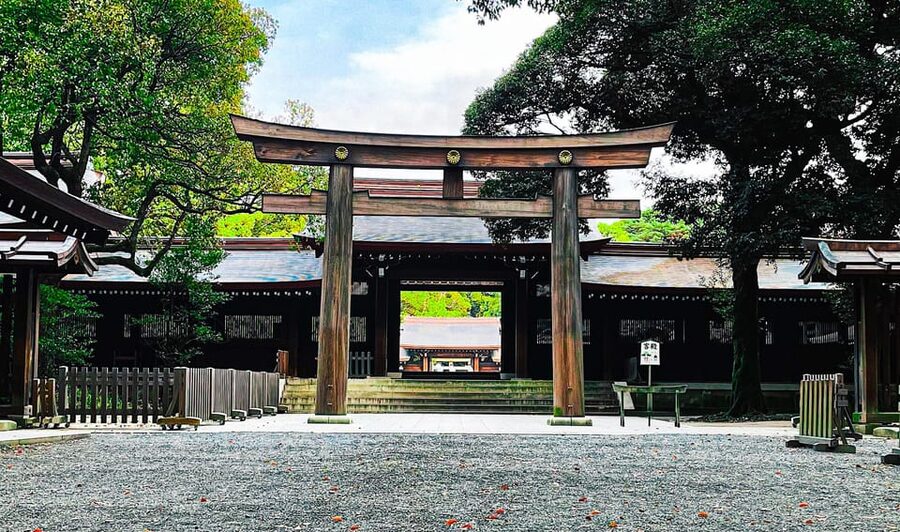
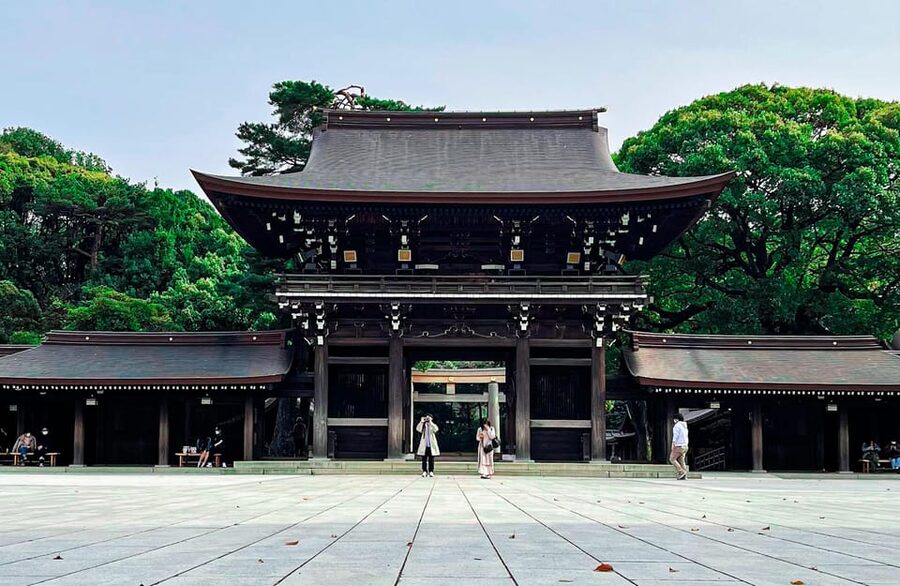
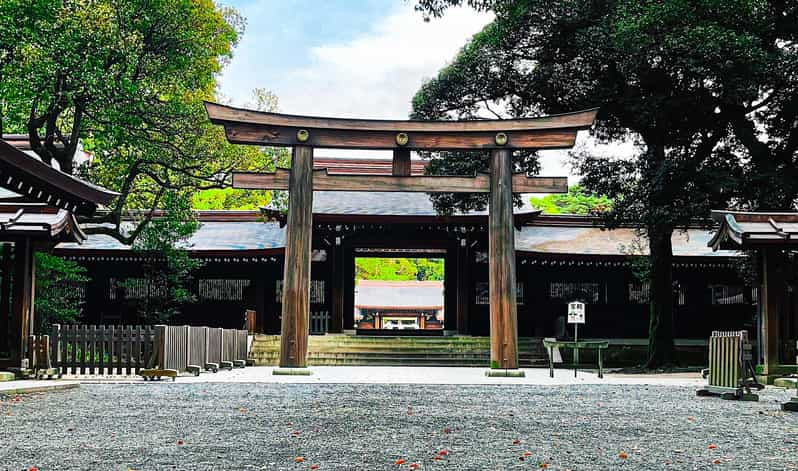
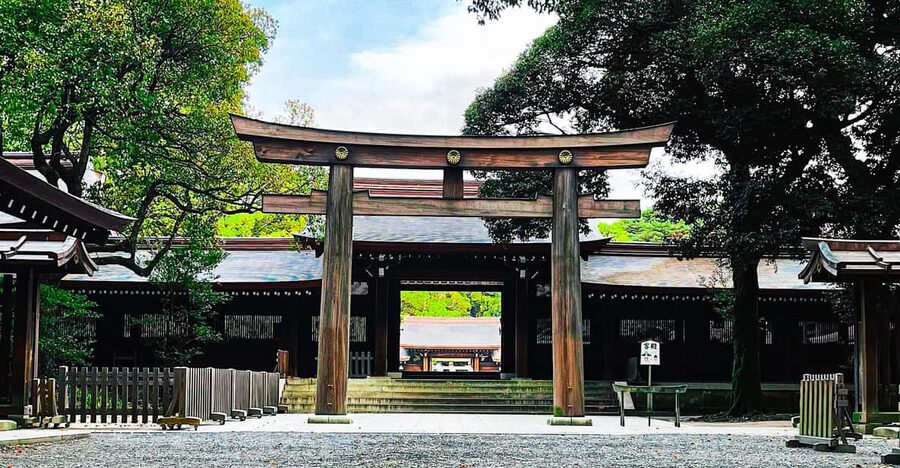
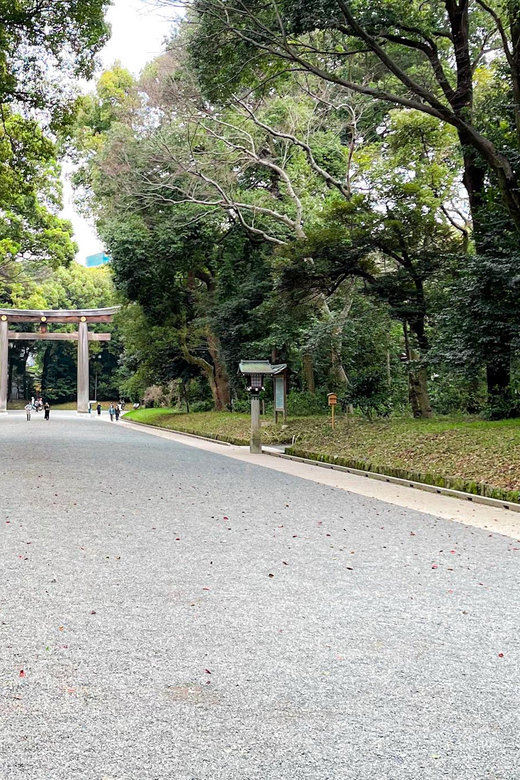
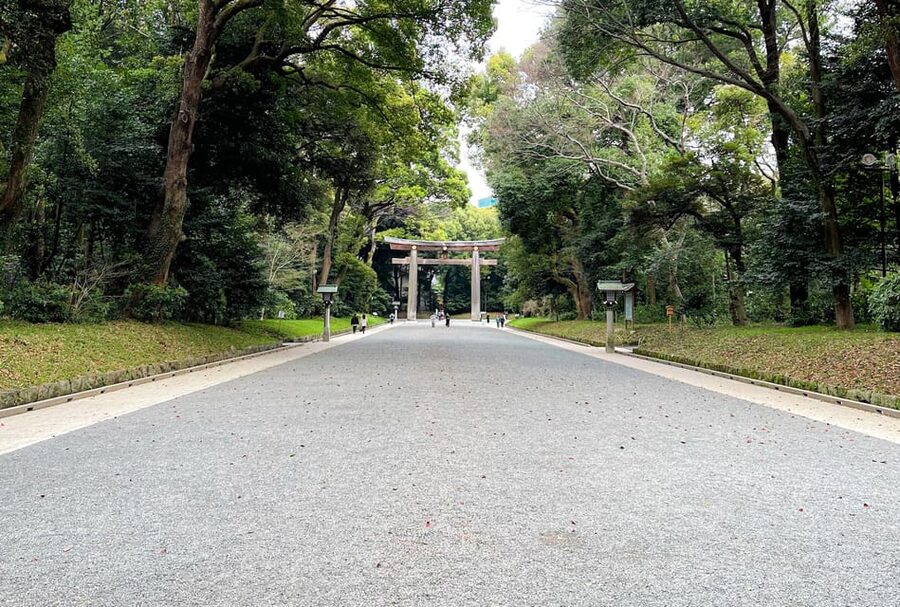
The meeting point is easy to identify: the large wooden torii at the West Exit of Harajuku Station, at the entrance to Yoyogi Park. Look for the guide wearing an identification badge and a name tag marked NIPONEANDO. Arrive five minutes early, since the group then begins its walk into the park.
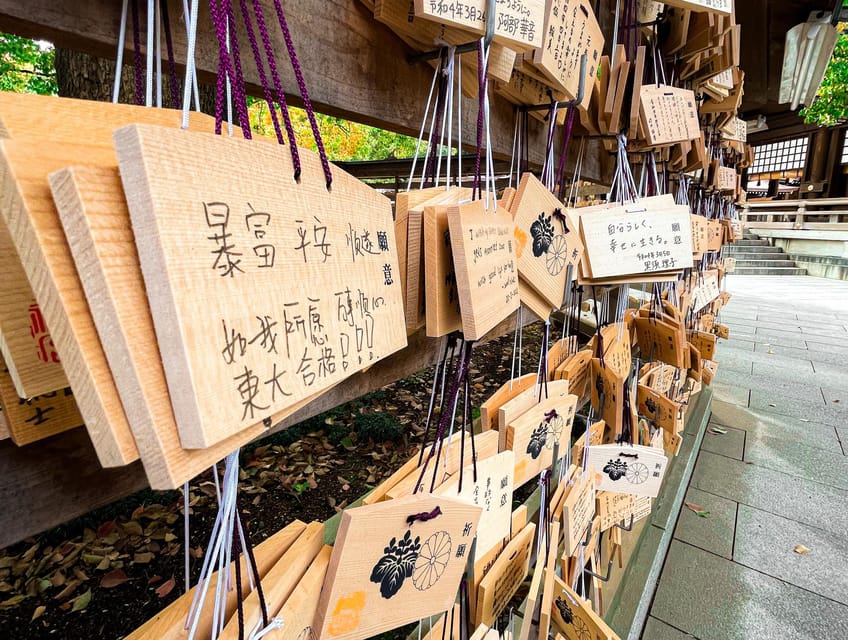
Meiji Shrine is dedicated to Emperor Meiji, the ruler associated with Japan’s move away from feudal rule and toward a modern state. The shrine gives the tour a calm opening. Its setting in Yoyogi Park feels far removed from the traffic and neon of central Tokyo, even though Harajuku Station is close by.
The guided visit lasts about 90 minutes, making this the longest formal stop of the morning. That is a good choice. You have time to understand the shrine’s role, notice its traditional details, and get an introduction to Japanese customs before the day turns toward shopping and pop culture.
I would wear comfortable shoes from the start. The tour does not leave much room for changing pace, and the full day includes several train rides and walks. Large bags and luggage are not allowed, so arrive with only what you need for the day.
Takeshita Street shows Harajuku at its most youthful
From Meiji Shrine, the group walks for about 10 minutes to Takeshita Street. The visit lasts roughly 40 minutes, which is enough to see why Harajuku became one of Tokyo’s best-known trend districts, but not enough for a leisurely shopping session.
Takeshita Street is associated with youth fashion, novelty shops, and changing trends. It is the sharpest possible contrast with the shrine you have just left. That change is one of the tour’s strengths: you do not need a long explanation to understand how Tokyo places old and new side by side.
Use this stop to look, not to plan a major purchase. Forty minutes can disappear quickly, especially if the street is crowded or a shop catches your eye. The guide’s advice is useful here because you can ask what deserves a second visit later.
After Harajuku, the group takes a train for about 25 minutes to Akihabara. Transport is not included in the tour price, and the total public transport cost is listed as approximately ¥1,160. You should keep some money ready for fares and avoid bringing bulky luggage onto the trains.
Akihabara gets the longest neighborhood visit
Akihabara receives about 80 minutes of guided sightseeing, followed by a 70-minute lunch break. Together, this is the largest block of free neighborhood time on the tour, and it gives you a better chance to understand the area than the shorter Ginza and Shibuya stops.
Akihabara is known as Tokyo’s technology and geek pop-culture district. The focus here is not traditional Japan. Instead, you get a look at the city’s electronic, gaming, anime, and modern entertainment side. The tour description keeps the emphasis broad, so you should think of this as an orientation walk rather than a dedicated shopping tour.
The lunch break is a practical feature. Food and drinks are not included, but 70 minutes gives you time to choose and pay for your own meal. It also offers a needed pause before the second half of the day.
I like the placement of lunch in Akihabara because it breaks up the constant movement. The possible downside is that a fixed group schedule may limit how far you can wander. If you already know you want to spend hours shopping in Akihabara, you will probably want to return independently.
One particularly useful aspect of a Spanish-language tour is the chance to ask direct questions during this stop. The guide can help you place Akihabara within the larger Tokyo picture, rather than leaving you to sort out every unfamiliar sign and district on your own.
Same corner of Tokyo, a completely different plan:
- Tokyo: teamLab Planets TOKYO Digital Art Museum Entry Ticket
★ 4.6 · 9,779 reviews - Mt Fuji & Hakone Cruise, Drum Show Bullet Train 1 Day from Tokyo
★ 4.0 · 7,413 reviews - Tokyo: Sumo Show Experience with Chicken Hot Pot and a Photo
★ 4.8 · 6,678 reviews - Tokyo: Shinjuku Food Tour (13 Dishes at 4 Local Eateries)
★ 5.0 · 6,603 reviews
Ginza offers a polished change of pace
After lunch, a 10-minute train ride takes you toward Ginza. The guided visit here lasts about 40 minutes. Ginza is Tokyo’s luxury district, known for its refined shopping streets and high-end atmosphere.
This is another deliberate contrast. Harajuku is youthful and trend-driven. Akihabara is focused on technology and pop culture. Ginza feels more formal and polished. Even if luxury shopping is not on your budget, the district is worth seeing as part of the city’s economic and cultural range.
The short visit is enough to walk through the area and take in its character. It is not designed for browsing every department store or making a serious shopping expedition. If you want to shop, note the location and return after the tour.
From Ginza, the group takes another train, this time for about 15 minutes, to Odaiba. The repeated train transfers may sound simple on paper, but they are a real part of the day. You should expect the tour to feel like a moving survey of Tokyo rather than a series of long, settled visits.
Odaiba brings the tour to Tokyo Bay
Odaiba receives about an hour of guided sightseeing. This waterfront district gives you a different view of the city, away from shrine grounds and dense shopping streets. The stop is meant to show Tokyo Bay and the city’s modern waterfront side.
The route’s inclusion of Odaiba helps prevent the day from becoming only a tour of central neighborhoods. You see Tokyo from another angle and get a break from the tighter streets of Harajuku, Akihabara, and Ginza.
The supplied details do not promise a particular attraction, museum, or landmark inside Odaiba, so you should treat this as a guided area visit rather than a ticketed attraction. The guide will lead the visit, but food, drinks, and separate admission charges are not included.
After Odaiba, the group takes about 20 minutes by train to Shibuya. This is the final transfer of the tour, and it brings you back into one of Tokyo’s most recognizable districts.
Shibuya finishes at the famous crossing
The final stop is Shibuya, with about 20 minutes of guided sightseeing. The tour ends at Shibuya Scramble Crossing, described as the busiest crossing in the world. You will also see the famous statue of Hachiko, the loyal dog remembered near Shibuya Station.
Twenty minutes is a short visit, but the ending works well. Shibuya is instantly recognizable and gives you a memorable final image of present-day Tokyo. The guide can point out the crossing and Hachiko statue, then leave you in a district with plenty of options for continuing your evening.
Since the tour ends at the crossing rather than returning you to your hotel, plan your next move before the final stop. This is useful if you want to stay in Shibuya for dinner or explore on your own. It is less convenient if you expected a ride back to your accommodation.
Shibuya also sums up the tour’s central idea. The day began with a shrine connected to Japan’s imperial past and ends amid one of the city’s most famous modern scenes. The contrast is not forced. It is simply how Tokyo works.
What the Spanish guide adds
The tour is conducted in Spanish, which is its main advantage over a standard self-guided day. You are not only being shown places. You can ask questions as the city changes around you, and the guide can offer recommendations for the rest of your stay.
NIPONEANDO presents the tour as close and friendly, and guide Ismael is specifically described as muy majo, enthusiastic, and helpful. Those qualities matter on a long public-transport day. A guide who keeps the group comfortable and makes transfers easier can save you time and stress.
The guide’s role is most valuable during the transitions. Meiji Shrine, Takeshita Street, Akihabara, Ginza, Odaiba, and Shibuya are easy to name, but they can feel like disconnected stops without context. The tour links them as parts of one city.
The Spanish language also makes this a strong choice for people who want explanations and recommendations in their first language. The tour is not suitable for hearing-impaired people, according to the activity details, so this is an important consideration before booking.
Timing, transport, and physical demands
The eight-hour schedule includes:
- 90 minutes at Meiji Shrine
- 10 minutes walking to Takeshita Street
- 40 minutes at Takeshita Street
- 25 minutes by train to Akihabara
- 80 minutes of sightseeing in Akihabara
- 70 minutes for lunch
- 10 minutes by train
- 40 minutes in Ginza
- 15 minutes by train
- 60 minutes in Odaiba
- 20 minutes by train
- 20 minutes in Shibuya
That adds up to a full day with little spare time. The schedule is ambitious, and one direct comment about the experience calls the number of places slightly ambitious while still rating it highly. I agree with that assessment. You get excellent range, but you give up depth.
Public transport costs about ¥1,160 and is not included. Food and drinks are also extra. Hotel pickup is included only if you select the private tour option or add the pickup supplement. Even with pickup, the tour uses public transport, so pickup does not turn the day into a private vehicle tour.
The activity is listed as wheelchair accessible, but the route includes walking and several train journeys. If you use a wheelchair, confirm the practical arrangements before booking, since the published information does not explain station access or transfer assistance.
Who should choose Tokyo: City Tour B?
I would recommend this tour most strongly to a Spanish-speaking visitor on a first Tokyo visit who wants an organized overview in one day. It suits you if you like moving through several districts, learning the basic character of each, and receiving ideas for later exploration.
It is also a good fit if Tokyo’s train system feels intimidating. You will still need to ride public transport, but you will have a guide to lead the group through the day. That gives you a useful first lesson in getting around.
You may want a different plan if your priority is shopping. Takeshita Street, Akihabara, and Ginza each deserve more time than this schedule allows. The same is true if you prefer quiet, slow sightseeing, long meals, or detailed visits to individual attractions.
Private tours are available, which may help if you want a more personal pace. The private option still uses public transport, and pickup is by public transport as well. It gives you a smaller setting, not a chauffeur-driven day.
Cancellation is free up to 24 hours before the start, and you can reserve now and pay later. That flexibility is useful when your Tokyo plans are still changing.
Is this eight-hour Tokyo tour worth booking?
Book it if you want breadth, Spanish-language guidance, and a clear first-day introduction to Tokyo. The route is unusually varied, and the contrast between Meiji Shrine and Shibuya gives you a memorable sense of the city.
At $96 per person, it offers fair value when you consider the guide, the eight-hour structure, and the planning involved in linking six districts. Add about ¥1,160 for transport and budget separately for lunch.
Skip it if you want to explore one or two neighborhoods slowly. The schedule moves fast, but that is also its purpose. For the right person, Tokyo: City Tour B is a practical way to get your bearings, meet a friendly Spanish-speaking guide such as Ismael, and leave with a sensible list of places to revisit.
FAQ
Is the tour conducted in Spanish?
Yes. The tour includes a live Spanish-speaking guide, and the activity is conducted in Spanish.
How long does Tokyo: City Tour B last?
The tour lasts eight hours. Starting times depend on availability when you book.
Where does the tour meet?
The meeting point is in front of the large wooden torii at the entrance to Yoyogi Park, near the West Exit of Harajuku Station. Look for the NIPONEANDO name tag and arrive five minutes early.
Is hotel pickup available?
Yes, but only if you select the private tour option or add the hotel pickup supplement. For the private option, the guide meets you at your hotel or accommodation and travels by public transport with you.
Are transport and lunch included?
No. Public transport costs about ¥1,160, and food and drinks are not included. A 70-minute lunch break is scheduled in Akihabara.
Is the tour wheelchair accessible?
The activity is listed as wheelchair accessible. However, it is not suitable for hearing-impaired people, and the route includes walking and several train rides.
New on our Tokyo list
- Sumi-e Experience in a relaxing green tea shop in Tokyo★ 5.0 · 3 reviews
- Tokyo : Kamikaze Street Drift Ride★ 5.0 · 3 reviews
- Private Zen Meditation in English in Shinjuku, Tokyo★ 5.0 · 3 reviews
- Onsen Spa in Tokyo and Asakusa Bar Hopping with Local Guide★ 5.0 · 3 reviews
- Easy for everyone! Now you can play handmade mini shamisen and show off to everyone! Musical instruments, sweets and live music★ 5.0 · 3 reviews
- Tokyo: Private Tsukiji Street Food & Sake with Local Guide★ 5.0 · 3 reviews
- Mt Fuji Exploration Tour with Free Japanese Kusa Mochi from Tokyo★ 4.5 · 3 reviews
- Tokyo Tsukiji Fish Market Walking and Exploring Hidden Gems Tour★ 5.0 · 3 reviews
City Tours, compared.

Private City Highlights Tour with Local Guide
Read our review →
Asakusa, Skytree & Akhihabara Go-Kart City Experience
Read our review →

3-hour Guided E-Bike Tour of the City’s Hidden Gems
Read our review →
3-Hour Bike/E-Bike Tour of the City’s Highlights
Read our review →
Small Town in the Big City: Tasting Tokyo’s Kichijoji
Read our review →Browse the lists this tour appears in