
Reviewed · MARTIAL ARTS EXPERIENCES
Tokyo: Karate Experience with Former All-Japan Champion
The unusual appeal here is that you learn karate from Ryo, a former All-Japan champion with 20 years of experience, rather than simply watching a demonstration. In 90 minutes, you bow, breathe, stretch, practice basic attacks and defenses, and finish with safe, non-contact sparring drills.
I like the small maximum group of eight, which gives Ryo room to adjust the lesson. I also like that a uniform and protective pads are included, so you can take part without packing martial-arts gear. The main consideration is physical: kicks and stances require some flexibility, and the class is best for people with moderate fitness.
In This Review
- Key points at a glance
- Why this Tokyo karate class feels different
- Arriving at Azumabashi Hall in Sumida City
- Starting with the bow and calm breathing
- Learning the basic karate stance
- Practicing punches, blocks, and kicks
- Standing Zen Training and the mental side
- Finishing with non-contact kumite drills
- Ryo’s teaching style and communication
- What the $66.99 price includes
- Who should book this experience
- Timing, clothing, and practical planning
- My verdict: a worthwhile active introduction to karate
- FAQ
- Where does the karate experience take place?
- How long does the class last?
- Who teaches the class?
- Is the class suitable for beginners?
- What will I learn?
- Is sparring full contact?
- Are a karate uniform and pads provided?
- How many people can join the class?
- How fit do I need to be?
- What is the cancellation policy?
Key points at a glance
- Former All-Japan champion Ryo leads the class: You learn from an instructor with two decades of karate experience.
- The class begins and ends with a bow: This gives the workout a clear connection to karate’s discipline and etiquette.
- You practice Standing Zen Training and belly breathing: These exercises focus your posture, breathing, and calm.
- Punches, blocks, and kicks are taught step by step: Each movement is broken into smaller parts for easier learning.
- Sparring is non-contact: You practice defending against punches and kicks without taking hits.
- The group is capped at eight people: Morning and afternoon times make it easier to fit into a Tokyo day.
Why this Tokyo karate class feels different
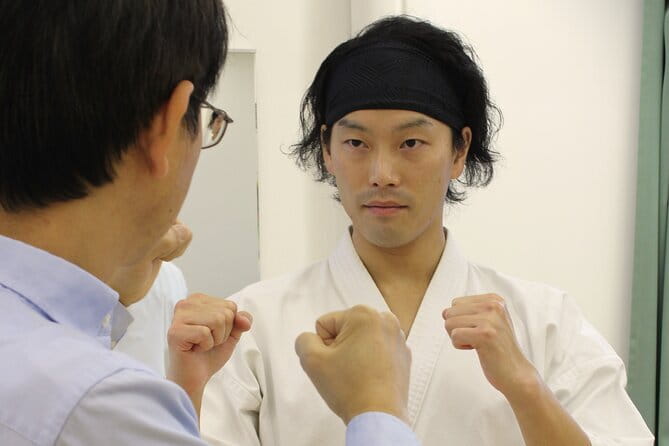
Many Tokyo activities let you look at Japanese traditions from the outside. This one asks you to take part. You do not need a black belt or previous martial-arts training. You simply need to listen, move carefully, and accept that your first kick may look less polished than the instructor’s.
Ryo teaches the basic ideas behind karate rather than rushing through a string of flashy moves. You learn how stance, breathing, posture, and timing work together. That makes the class useful even if you never plan to train again. You leave with a better sense of what karate asks from the body and the mind.
The class is also flexible enough for mixed ability levels. If you are new to martial arts, Ryo breaks movements into manageable steps. If you have trained in another karate style, boxing, or a related discipline, he can adjust the lesson and discuss differences in technique. One participant with prior karate training found the session useful for improving posture, abdominal power, and sparring skills.
More dojo sessions:
- Tokyo: Samurai Sword & Archery Class from Samurai Descendant
★ 5.0 · 603 reviews - Tokyo:Samurai sword and archery class from a samurai descendant
★ 5.0 · 121 reviews - Tokyo 2-Hour Genuine Samurai Experience: Kendo in Japan
★ 5.0 · 112 reviews
Arriving at Azumabashi Hall in Sumida City
The meeting point is Azumabashi Hall at 1-chōme-23-27 Azumabashi, Sumida City, Tokyo 130-0001. The location is near public transportation, which matters in a city where a centrally placed activity can save you a good deal of time and walking.
You meet at the hall, and the class returns to that same point when it ends. Since the activity lasts about an hour and a half, you can place it into a morning or afternoon plan without giving up an entire day of sightseeing.
I would allow enough time to reach the address without hurrying. The booking confirmation is sent at the time of booking, and the mobile ticket makes it practical to keep the details on your phone. Check the meeting instructions before leaving your hotel, especially if you are fitting the class between train journeys.
Starting with the bow and calm breathing
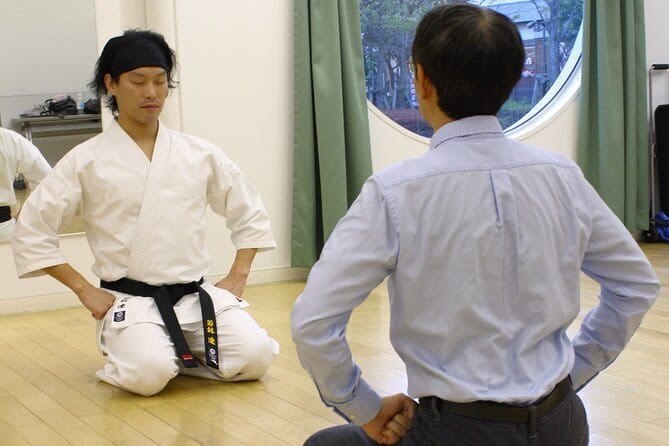
The first lesson is not a punch or kick. It is the bow. Karate follows the idea of starting with a bow and ending with a bow, so etiquette comes before exercise. This small ritual helps set the tone and shows that karate is not simply a collection of fighting moves.
Ryo also introduces deep breathing from the belly. The aim is better focus and a calmer mind, not just more air in your lungs. For a beginner, this is a useful reminder that power in karate comes from coordinated movement and control rather than wild effort.
You then work through stretches for the major parts of the body. The session includes the legs, hip joints, shoulder blades, and chest. These areas matter because karate asks you to move from a stable base while turning the hips and keeping the upper body controlled.
The stretching is also where you should judge your own limits. One participant found that limited mobility made some kicks difficult. Ryo adjusts the level, but you should not force a range of motion just to match the instructor. Careful form is more valuable than height.
Learning the basic karate stance
After warming up, you learn how to position your feet and body before throwing a technique. The stance is the foundation for the punches, blocks, and kicks that follow. Ryo teaches each technique as a series of smaller moves, allowing you to think about foot position, balance, hand placement, and direction one step at a time.
That method works well for first-timers. You are not expected to remember a long sequence after seeing it once. Ryo demonstrates the movement, explains it clearly, and gives you a chance to repeat it.
The stance work can look simple, but it is where much of the physical effort lies. Holding a stable position uses the legs, hips, and core. You may feel the workout more than you expect, even though there is no full-contact fighting.
If you already know another martial art, you may notice familiar ideas in the guard, balance, and defensive movement. The precise details can differ by style. The class offers room to ask about those differences, and Ryo has used the session to give experienced participants a fresh view of their own training.
A few more Tokyo bookings worth comparing
- Mt Fuji and Hakone 1-Day Bus Tour Return by Bullet Train
★ 5.0 · 26,383 reviews - 1-Day Tokyo Bus Tour
★ 5.0 · 14,250 reviews - Tokyo: TOKYO SKYTREE® Admission ticket
★ 4.5 · 11,192 reviews - Tokyo: teamLab Planets TOKYO Digital Art Museum Entry Ticket
★ 4.6 · 9,779 reviews
Practicing punches, blocks, and kicks
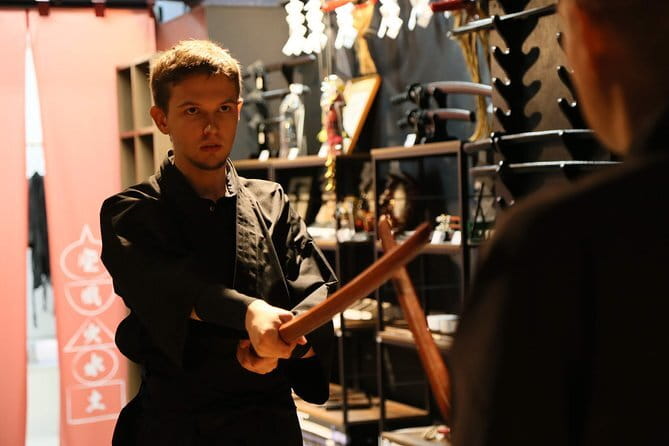
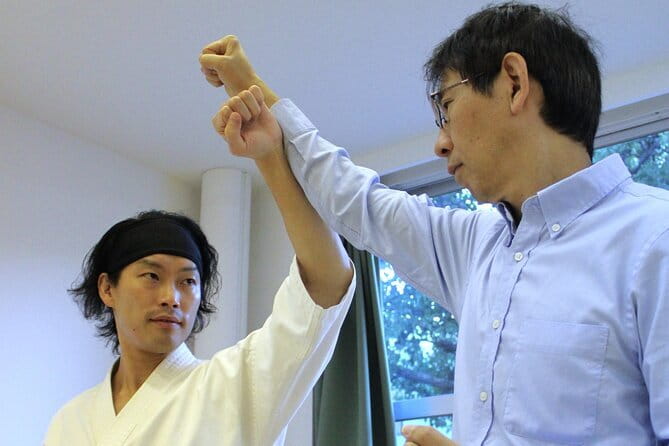
The main technical section covers the three movements most beginners expect: punches, blocks, and kicks. The focus is on proper stance and controlled execution rather than striking a person.
Punches give you a chance to work on alignment and precision. Blocks teach you to protect yourself while staying balanced. Kicks demand more from the hips and legs, so they can be the most challenging part for anyone with tight mobility.
Ryo’s teaching style is direct and practical. He demonstrates the movement, divides it into parts, and builds it back into a usable technique. That approach makes the class active without making it chaotic.
You should expect a workout, but not an extreme one. The session is described as intense enough to feel worthwhile without becoming excessive. Still, the level depends partly on your own effort and physical condition. Come prepared to move, sweat, and concentrate, rather than treating this as a passive cultural lesson.
Standing Zen Training and the mental side
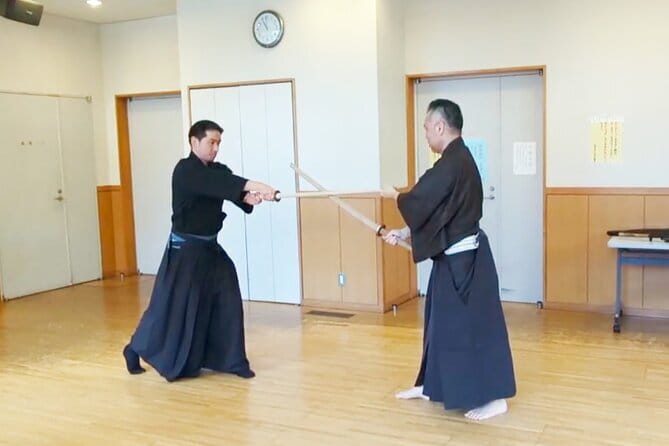
Standing Zen Training adds a quieter element to the class. Instead of constant movement, you work on standing position, breathing, and awareness. It offers a useful contrast to the punches and kicks.
For many people, this may be the part that makes the activity feel distinctly different from an ordinary fitness class. Karate is presented as a practice of attention and self-control as well as physical defense. You learn to settle your breathing, hold your posture, and remain focused.
The exercise may not feel dramatic, but it gives context to the rest of the session. A strong technique depends on control. The calm position helps you understand why the class begins with breathing and why every movement is tied to stance.
Finishing with non-contact kumite drills
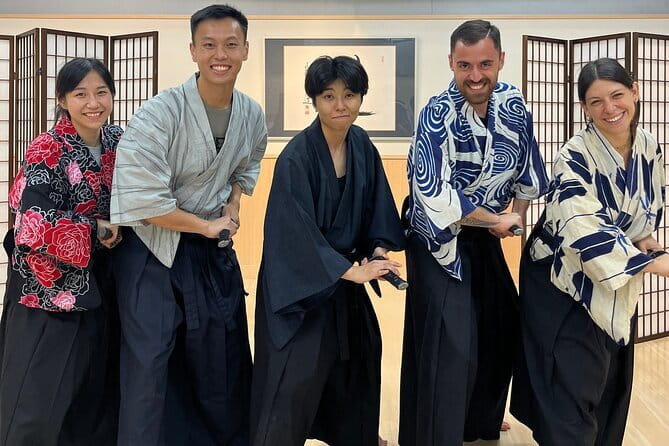
The final stage introduces the essence of kumite, or sparring, without physical contact. You practice responses to attacks such as punches, front kicks, and low kicks. Ryo explains how to defend with greater precision and efficiency while keeping the exercise safe.
This is not a full fight. You do not need to worry about being hit, and the format allows beginners to focus on distance, timing, and body position. It also lets participants with previous experience work on technique without turning the class into a contest.
The non-contact format is one of the strongest practical features of the experience. It gives you a taste of sparring while keeping the session suitable for a mixed group. You still have to react and remember the correct movement, but you can learn without the risk that comes with hard contact.
If you have done karate before, this part may be where you get the most personal value. Ryo can adjust the lesson to your level and offer corrections rather than putting everyone through the exact same routine.
Ryo’s teaching style and communication
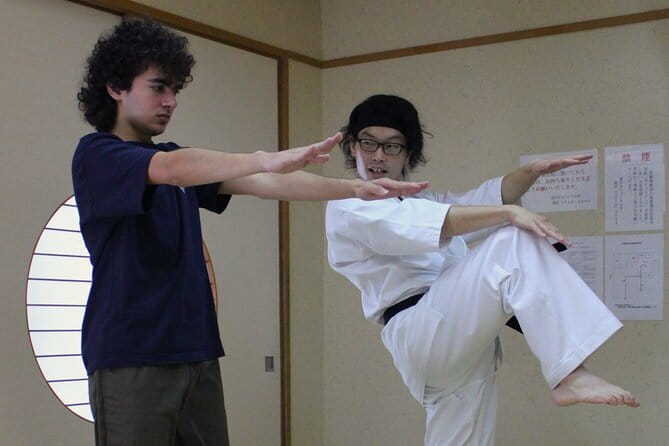
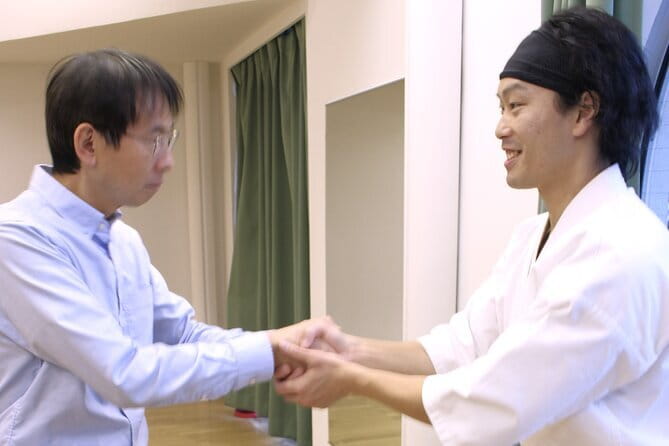
Ryo is the central reason this class works for such a wide range of ability levels. He explains techniques clearly, demonstrates them, and keeps the atmosphere friendly. His English is described as fluent, which is important when a small change in posture or foot position can affect the entire movement.
The teaching is not limited to commands and repetition. There is also room for conversation about karate styles and cultural differences. Participants with experience in French training and other martial arts backgrounds have used that time to compare methods with Ryo.
That flexibility is valuable. A rigid beginner class can frustrate experienced students, while an advanced class can leave newcomers behind. Here, the stated design includes both complete beginners and people who have practiced karate before.
You should still be willing to speak up if a movement feels unclear or uncomfortable. The group is small, but the session is active, and asking for a correction is the best way to use the instructor’s attention.
What the $66.99 price includes
At $66.99 per person, this is not the cheapest way to spend 90 minutes in Tokyo. Its value depends on what you want from the activity. You are paying for a hands-on lesson with a former All-Japan champion, a small group capped at eight, and equipment supplied for the class.
The included karate uniform and pads are useful. You do not need to buy or bring specialist clothing, and you can take part fully rather than standing at the edge in street clothes. The gear also makes the activity easier to add to a trip planned with limited luggage.
The price makes the most sense if you value personal instruction and an active cultural experience. It is less compelling if you only want a quick photo opportunity or a short martial-arts show. This class asks you to work, listen, and practice.
Group discounts may help if you are booking with companions. The class suits couples, friends, and families with older children who can manage the physical demands, though the available information does not specify a minimum age. I would check that point before booking for a child.
Who should book this experience
I would recommend this class to you if you want something more active than a standard sightseeing stop. It works especially well for:
- First-time martial-arts students who want clear instruction
- People with prior karate or boxing experience who want another perspective
- Couples looking for a shared activity
- Visitors who enjoy Japanese culture through practice rather than observation
- Anyone with moderate fitness who is comfortable stretching and repeating movements
You do not need to arrive with martial-arts knowledge. You do need enough mobility for basic kicks and enough fitness to remain active for 90 minutes.
This may not suit you if you have an injury, very limited mobility, or no interest in physical exercise. The class is gentle compared with a hard-contact fight, but it is still a workout. It is also not a substitute for a longer formal karate course. You get a focused introduction, not months of progressive training.
Timing, clothing, and practical planning
Morning and afternoon classes give you useful control over your day. You can schedule the activity before sightseeing or use it as a break from temples, museums, and shopping. Since the class ends at the same place where it begins, planning the next stop is straightforward.
A uniform and pads are included. The activity advises a moderate level of physical fitness, so wear or bring clothing that allows comfortable movement before changing into the provided uniform.
The class is booked an average of 29 days ahead, which suggests that popular dates may fill before your trip. Confirmation arrives when you book, and the mobile ticket is convenient for a phone-based itinerary.
Free cancellation is available if you cancel at least 24 hours before the local start time. Changes or cancellations made inside that window are not accepted for a refund, so check your Tokyo schedule before committing.
My verdict: a worthwhile active introduction to karate
I would book this experience if you want a personal, physical connection to Japan during your Tokyo visit. Ryo’s background, clear explanations, small group, and non-contact sparring give the class more substance than a simple tourist demonstration.
The strongest value comes from the balance. You get a workout, cultural etiquette, basic technique, and a safe taste of kumite in one 90-minute session. The main limit is your own mobility and fitness, especially during kicks and lower-body work.
Book it if you are ready to participate. Skip it if you would rather watch than practice, or if stretching and repeated drills are not a good fit. For everyone else, this is a memorable way to spend part of a Tokyo morning or afternoon, with enough instruction to make the experience feel real and enough flexibility to welcome beginners.
FAQ
Where does the karate experience take place?
The meeting point is Azumabashi Hall at 1-chōme-23-27 Azumabashi, Sumida City, Tokyo 130-0001, Japan.
How long does the class last?
The karate class lasts approximately 1 hour and 30 minutes.
Who teaches the class?
The instructor is Ryo, a former All-Japan champion with 20 years of karate experience.
Is the class suitable for beginners?
Yes. The lesson is designed for beginners as well as people who have practiced karate before. Techniques are explained and demonstrated step by step.
What will I learn?
You will learn bowing, deep breathing, stretching, basic stances, punches, blocks, kicks, Standing Zen Training, and non-contact kumite drills.
Is sparring full contact?
No. The kumite portion is non-contact. You practice defending against punches, front kicks, and low kicks without physical contact.
Are a karate uniform and pads provided?
Yes. A karate uniform and pads are included.
How many people can join the class?
The activity has a maximum of eight participants.
How fit do I need to be?
You should have a moderate level of physical fitness. The class includes stretching, stances, punches, blocks, kicks, and active drills.
What is the cancellation policy?
You can cancel at least 24 hours before the local start time for a full refund. Cancellations or changes made less than 24 hours before the start time are not accepted for a refund.
New on our Tokyo list
- Tokyo : Kamikaze Street Drift Ride★ 5.0 · 3 reviews
- Private Zen Meditation in English in Shinjuku, Tokyo★ 5.0 · 3 reviews
- Sumi-e Experience in a relaxing green tea shop in Tokyo★ 5.0 · 3 reviews
- Onsen Spa in Tokyo and Asakusa Bar Hopping with Local Guide★ 5.0 · 3 reviews
- Easy for everyone! Now you can play handmade mini shamisen and show off to everyone! Musical instruments, sweets and live music★ 5.0 · 3 reviews
- Tokyo: Private Tsukiji Street Food & Sake with Local Guide★ 5.0 · 3 reviews
- Mt Fuji Exploration Tour with Free Japanese Kusa Mochi from Tokyo★ 4.5 · 3 reviews
- Tokyo Tsukiji Fish Market Walking and Exploring Hidden Gems Tour★ 5.0 · 3 reviews
Martial Arts Experiences, compared.

Samurai Sword & Archery Class from Samurai Descendant
Read our review →
Samurai sword and archery class from a samurai descendant
Read our review →
Tokyo 2-Hour Genuine Samurai Experience: Kendo in Japan
Read our review →
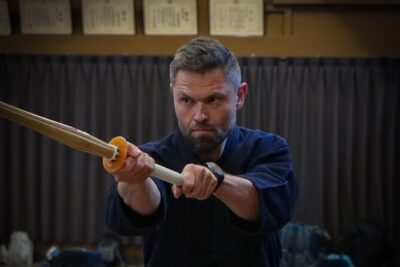
Samurai Experience – Learn Bushido through Kendo, in Tokyo
Read our review →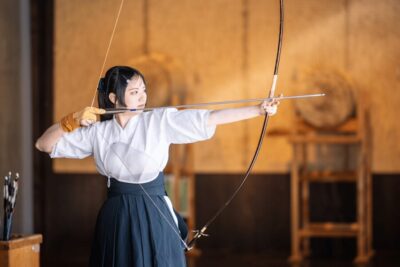
Samurai Experience – Learn Bushido through Kendo, in Tokyo
Read our review →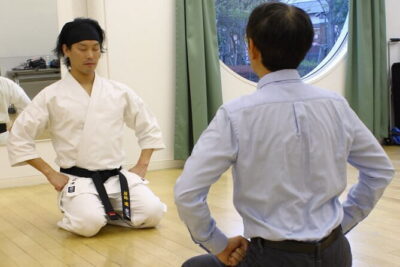
Karate Experience with Former All-Japan Champion
Read our review →Browse the lists this tour appears in