
Reviewed · SUMO EXPERIENCES
Tokyo: Not a show- a professional sumo practice with experts
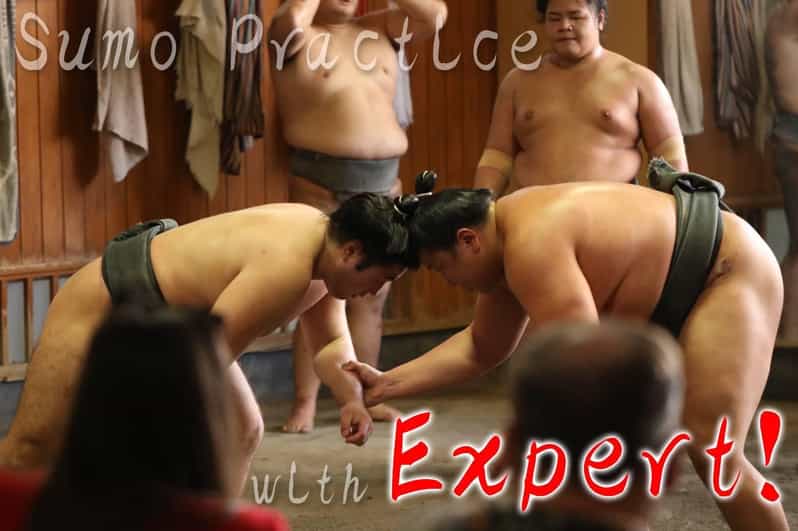
Professional wrestlers train only a few feet away at Takasago-beya, and you watch the session as it really happens, not as a staged tourist show. I like the close view of the warm-ups, drills, and hard sparring, and I like having Shinya, a former national newspaper sumo journalist, explain the customs and people behind the sport. The floor seating is the main catch, especially if your knees or hips dislike sitting low for more than an hour.
This is also a smart choice if you could not get tournament tickets. You get a photo with a wrestler and time for questions, but you must treat the stable as a working place: stay quiet, turn off your phone, and accept that the training itself is not narrated continuously.
In This Review
- Key points before you book
- Why a real stable beats a sumo show
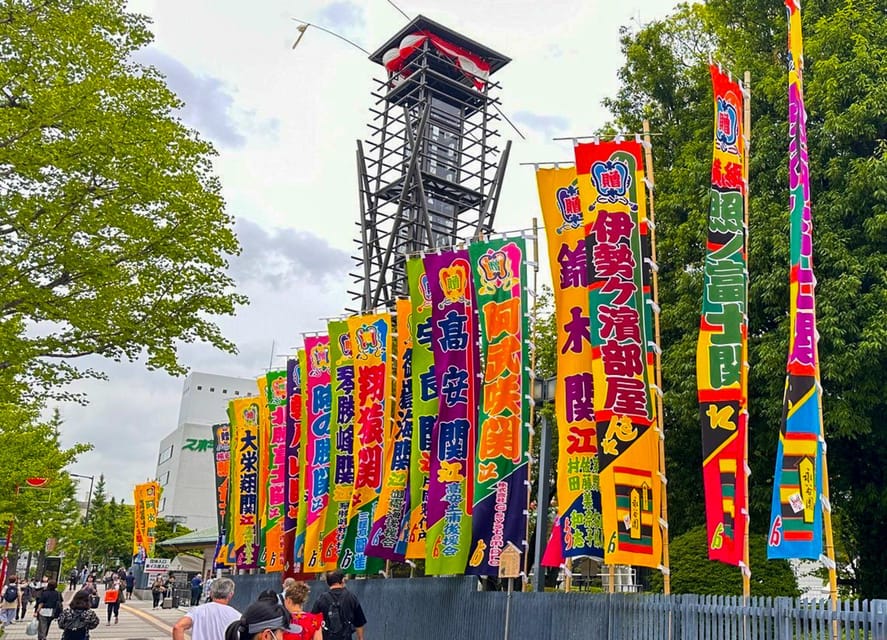
- Meeting in Ryogoku, Tokyo’s sumo district
- Inside Takasago-beya: quiet, close, and intense
- Meeting the wrestlers and asking the questions you actually have
- Ryogoku Kokugikan in 15 minutes
- Ryogoku Edo Noren and the final half hour
- Is $103 a fair price?
- Who will enjoy this most?
- Practical tips for getting more from the morning
- Should you book this sumo experience?
- FAQ
- Where does the tour meet?
- How long does the experience last?
- How long do you spend at the sumo stable?
- Is the sumo practice a staged show?
- Can I take a photo with a sumo wrestler?
- Is there a question-and-answer session?
- What languages are available?
- How large is the group?
- Do I sit on chairs during the practice?
- Are children allowed to join?
- Are food and drinks included?
- Can I cancel the booking?
Key points before you book
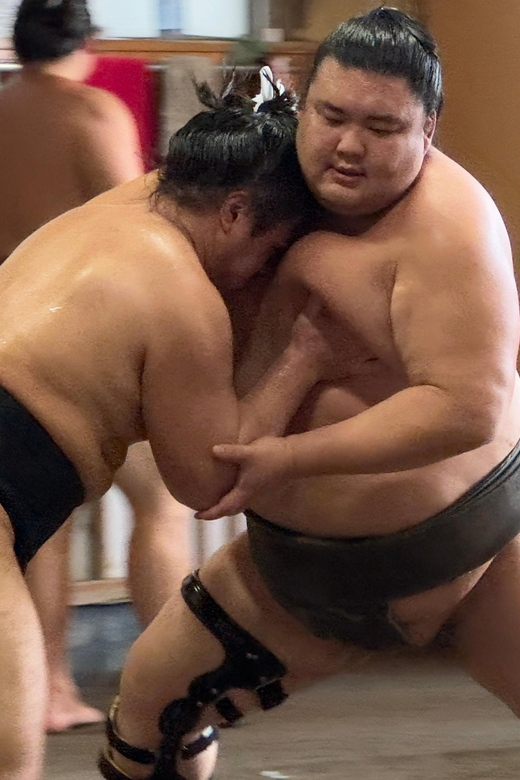
- Real morning practice at Takasago-beya: Watch wrestlers train inside an active sumo stable with special permission.
- Shinya’s ringside insight: Your guide is a former sumo reporter and photographer who can explain rituals, rankings, customs, and tournament life.
- Close-up access: The viewing position can put you only a few inches from the wrestlers, followed by a commemorative photo.
- Small group of up to 10: A compact group makes it easier to hear explanations and ask personal questions.
- Ryogoku’s sumo landmarks: The outing continues to Ryogoku Kokugikan and Ryogoku Edo Noren before ending at Ryogoku Station.
- Authenticity over entertainment: You watch serious training, not a comic demonstration or staged bout.
Why a real stable beats a sumo show
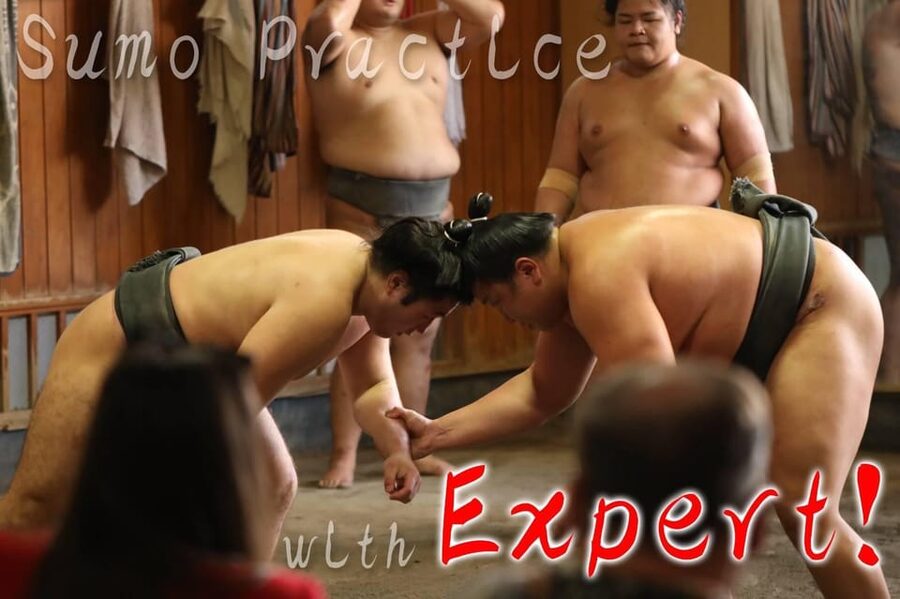
Tokyo offers plenty of ways to see sumo presented for tourists. Some are playful, loud, and easy for families to understand. This experience takes the opposite route. You enter a genuine training stable and watch the wrestlers work through their morning routine with no performance built around your visit.
That difference matters. A show gives you a neat beginning, middle, and end. A practice session asks you to pay attention to small things: the quiet preparation, repeated footwork, the force of a bout, and the way senior wrestlers work with younger men. You are seeing a workplace, not a theater.
The stable has granted special permission for the visit, which makes access unusual even by Tokyo standards. Sumo stables are not ordinary sightseeing stops, and you should approach the visit with respect. The wrestlers are training, not posing for an audience.
The experience is especially useful if you already know a little about sumo and want answers beyond basic rules. Shinya has covered the sport as a journalist and photographer, and his experience gives the discussion a practical edge. You can ask about rituals, wrestlers, tournaments, belts, training, and the customs that can be hard to understand from a seat in the arena.
More sumo mornings:
- Tokyo: Sumo Show Experience with Chicken Hot Pot and a Photo
★ 4.8 · 6,678 reviews - Tokyo: Sumo Show and Dining Experience
★ 4.8 · 2,742 reviews - the SUMO show
★ 5.0 · 1,960 reviews
Meeting in Ryogoku, Tokyo’s sumo district
You meet near the Toei Oedo Line’s Ryogoku Station, Exit A2, at ground level. The starting point is also about a five-minute walk from the east exit of JR Ryogoku Station, so check which train line suits your route before leaving your hotel.
The operator sends further details before the date, but you should still allow time to find the correct exit. Ryogoku has several station connections, and a rushed arrival is a poor way to begin an early morning tour. One late arrival was helped by the guide, but do not count on a rescue. Get there early.
From the meeting point, the group walks about five minutes to Takasago-beya. One person found the pace a little brisk at crossings, so keep up and take care at traffic lights. It is a short walk, but the group may not move at the same speed.
The group is limited to 10 people. That size feels right for a stable visit. It is small enough for the guide to answer questions, yet large enough to create a shared sense of occasion without turning the stable into a crowd.
Inside Takasago-beya: quiet, close, and intense
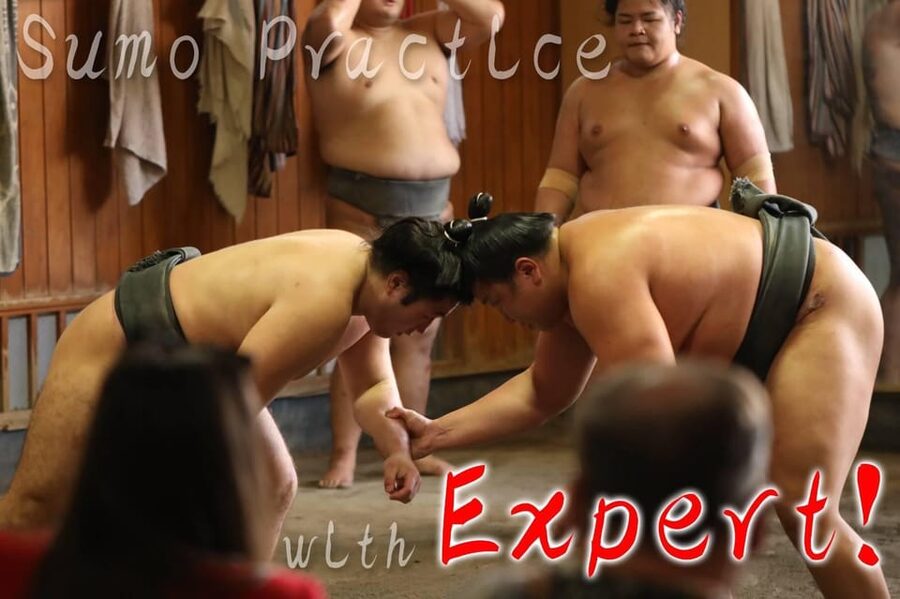
The stable visit takes about two hours within the three-hour outing. The exact rhythm of the morning can vary because you are watching actual training, not a timed performance.
Expect to sit on the floor, with a cushion provided. This puts you at an excellent viewing height, but it is not comfortable for everyone. One participant found that sitting on the floor and using small stools became difficult after more than 90 minutes. If you are tall, heavy, stiff, or simply unused to low Japanese seating, this deserves serious thought.
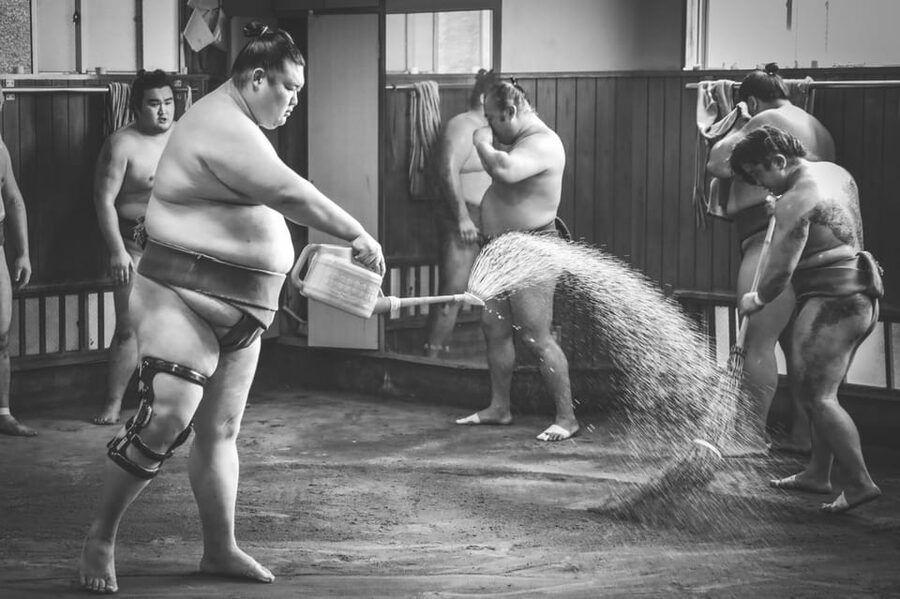
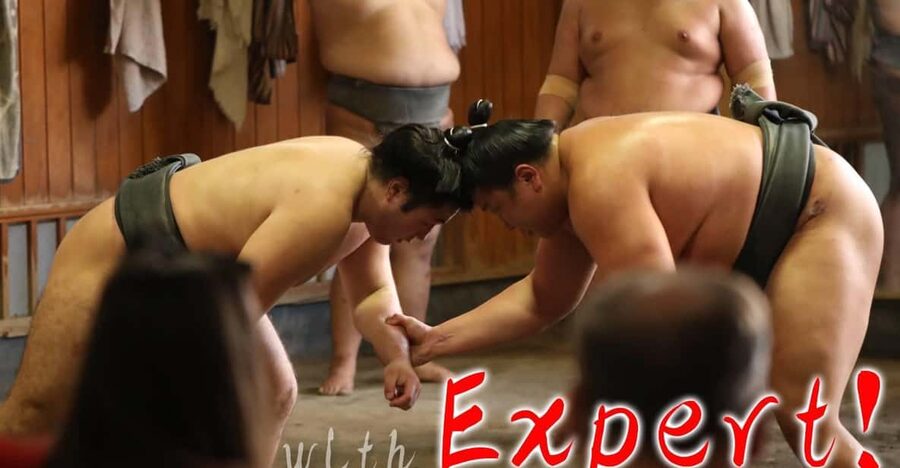
The payoff is proximity. Some viewing positions put you around five inches from the wrestlers. You can see the warm-up, practice bouts, and cool-down from close range, and you can feel how much force goes into each collision. This is far more immediate than watching from the stands at a tournament.
You may also notice the difference between training partners. Older wrestlers help guide younger members, and the stable’s daily work shows that sumo is built on repetition, discipline, and group life. The best part is often not one spectacular bout, but watching the whole training pattern develop.
Keep your phone off and remain quiet during the practice. This is not the moment to call out, ask questions, or use a flash. The wrestlers must concentrate, and the stable has opened its doors on the understanding that visitors will respect the setting.
There is one limitation. The practice does not appear to have running commentary throughout. One participant wished for explanations of rituals and belt colors during the session itself. Shinya covers plenty before or after the training, but if you want constant narration, this may feel quiet or incomplete.
I see that quiet as part of the trade-off, though it will not suit everyone. You are watching something real. The guide cannot interrupt every bout to speak over the wrestlers. It helps to read a little about sumo before you go, then save your detailed questions for the discussion.
Meeting the wrestlers and asking the questions you actually have
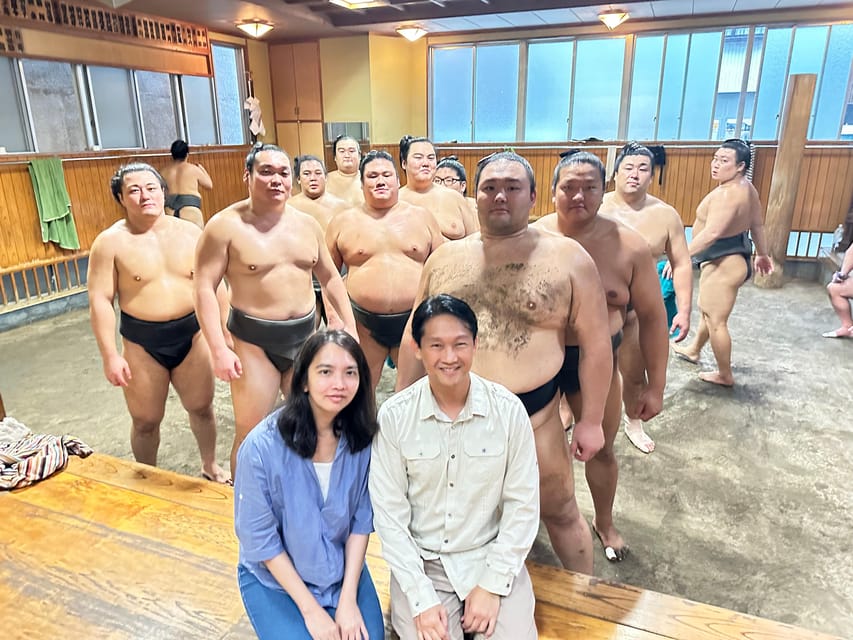
A photo with a sumo wrestler is included. This is more meaningful after you have watched the training, because you have seen the athletes at work rather than meeting performers in costume.
The photo opportunity is still subject to the stable’s routine and instructions. Follow the guide’s directions, keep the moment brief, and remember that the wrestlers have a working day ahead. The best souvenir here is the combination of the photograph and the memory of seeing the training up close.
The question-and-answer period is one of the strongest reasons to choose this tour. Shinya is not simply reciting a few facts about the sport. His former newspaper work gives him access to stories and context about tournaments and wrestlers, including details that are difficult to find in standard guidebooks.
You can use this time well by preparing questions. Ask about the rituals you saw, the meaning of training exercises, how wrestlers are mentored, or the customs surrounding competition. If you already follow sumo, bring more specific questions. The format can reward both beginners and serious fans.
The timing of the questions may not always be as tidy as you expect. The group later moves through the surrounding area, and one person felt there was not enough time to ask everything. If questions matter most to you, ask them as opportunities arise rather than saving every question for the final minutes.
A few more Tokyo bookings worth comparing
- Mt Fuji & Hakone Cruise, Drum Show Bullet Train 1 Day from Tokyo
★ 4.0 · 7,413 reviews - Tokyo Shinjuku Sumo Show & Experience with Photo
★ 5.0 · 1,750 reviews - Mt Fuji & Hakone Cruise, Drum Show Bus 1 Day from Tokyo
★ 4.0 · 1,287 reviews - Tokyo: Sumo Show and Experience in Shinjuku
★ 4.8 · 1,001 reviews
Ryogoku Kokugikan in 15 minutes
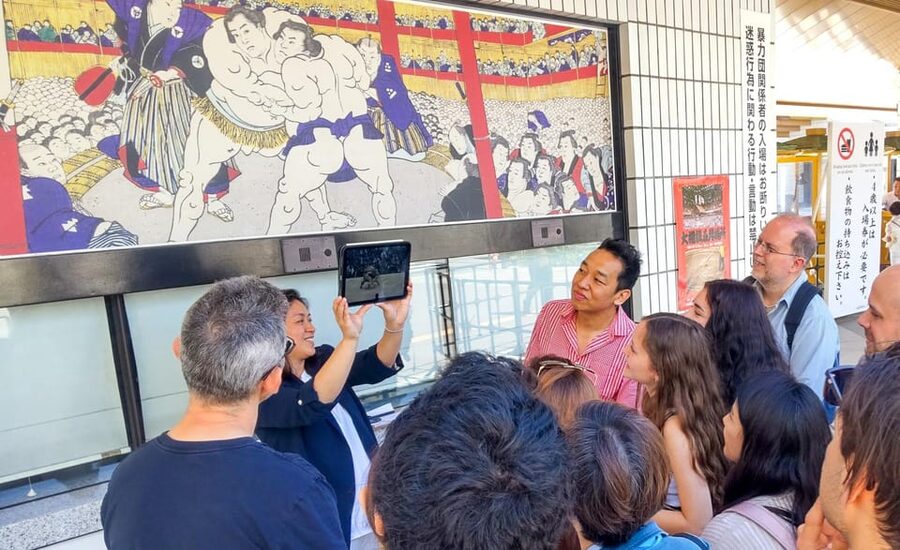
After the stable, the tour walks to Ryogoku Kokugikan, Tokyo’s main sumo arena, for a guided visit of about 15 minutes. This stop gives the morning practice a wider setting. You have just seen the sport at its workplace, and now you see the building associated with major bouts.
Fifteen minutes is brief, so think of this as an orientation rather than a full museum visit. Your guide adds stories and explanations, helping you connect the stable’s daily routine with the tournament world.
The arena stop works best for people who want context without spending half a day on sumo. If you want a long museum visit or an extended look at tournament exhibits, you will need additional time on your own. The tour keeps moving, and that is useful if your Tokyo schedule is tight.
Ryogoku Edo Noren and the final half hour
The final stop is Ryogoku Edo Noren, a food and shopping complex near the station. You receive a short guided look lasting about 15 minutes, followed by around 30 minutes for shopping and sightseeing.
This is a practical ending. After sitting quietly through training and listening closely, you have a chance to stretch, browse, and take in another piece of the neighborhood. You finish at Ryogoku Station, making it easy to continue elsewhere in Tokyo.
Do not expect the final stop to match the stable for drama. Its value is convenience and local setting. You can use the free time for a drink or food, both of which are not included in the tour price. If you want breakfast afterward, this is the natural point to arrange it.
The entire experience lasts three hours. The schedule is compact, but the two-hour stable visit takes up most of the morning for good reason. The practice is the main event, and the arena and Edo Noren stops add context rather than competing with it.
Is $103 a fair price?
At $103 per person, this is not a cheap way to fill a morning. You pay for access that is difficult to arrange independently, a small group, an English-speaking guide, the wrestler photo, and specialist answers from Shinya.
The value depends on what you want from sumo. If you only need a quick photo or a general introduction, a less expensive attraction may be enough. If you want an actual stable, close viewing, and serious explanations, the price is easier to justify.
I consider the cost reasonable for a once-in-a-trip experience, especially for someone who could not secure tournament tickets. You are not paying for a polished stage show. You are paying for a rare invitation into a working environment, plus the guide’s access and experience.
Food, drinks, and tips are not included. Plan for those separately. The tour offers reserve-now, pay-later booking and full cancellation up to 24 hours before the start time, which gives you some flexibility if your Tokyo plans are still moving.
Who will enjoy this most?
This tour suits adults and older children who can sit quietly and follow instructions. Children under five are not permitted. A family with three children enjoyed the experience, but the floor seating remains the deciding factor. Young children who cannot stay still may find the stable visit hard.
It is also a strong match for:
- Sumo fans who want access beyond a tournament seat
- First-time visitors seeking a traditional Japanese experience without a staged show
- People who enjoy sports training and behind-the-scenes settings
- Visitors who want a compact morning activity in central Tokyo
- Anyone who likes asking detailed questions rather than simply taking photographs
It may not suit you if you need padded chairs, want constant narration, dislike early starts, or expect wrestlers to perform for the group. The training can be intense and fascinating, but it follows the stable’s needs, not a tourist timetable.
Practical tips for getting more from the morning
Wear clothes that let you sit comfortably on the floor. A cushion is supplied, but it cannot solve every problem caused by tight clothing or stiff knees. If low seating is a concern, contact the operator before booking and ask what arrangements are possible.
Turn your phone off before entering. Quiet behavior is not a minor etiquette point here. It is the basic condition that lets the stable continue its routine while visitors watch.
Read a little about sumo in advance. Learn the broad outline of a bout, the role of rituals, and a few basic terms. You will understand more of what you see, and you can use Shinya’s question time for the things that remain unclear.
Bring your best questions in writing if sumo is a major interest. The practice itself may not include commentary, and the schedule can move quickly after the stable. Ask during natural pauses instead of waiting for a perfect final session.
Give yourself time to find the meeting point. Use either Toei Oedo Line Ryogoku Station, Exit A2, or the east exit of JR Ryogoku Station, then allow for the five-minute walk. The group may leave promptly.
Should you book this sumo experience?
I would book it if you want authentic access rather than a staged performance. The close view, serious training, wrestler photo, and Shinya’s first-hand reporting background make this one of Tokyo’s stronger sumo options.
I would pause if floor seating will be painful or if you need a fully narrated event. You should also understand that the wrestlers are not there to entertain you. That is precisely why the experience feels special, but it also demands patience and respect.
For sumo fans, the choice is easy. For curious first-time visitors, it is worth the $103 if you value cultural access and expert explanation more than a low price. Book it, arrive early, sit quietly, and let the stable’s routine set the pace.
FAQ
Where does the tour meet?
It meets at Toei Oedo Line Ryogoku Station, Exit A2, at ground level. The meeting point is about a five-minute walk from the east exit of JR Ryogoku Station.
How long does the experience last?
The experience lasts three hours.
How long do you spend at the sumo stable?
The visit to Takasago-beya is scheduled for about two hours.
Is the sumo practice a staged show?
No. You watch professional wrestlers during a real morning practice at a working sumo stable.
Can I take a photo with a sumo wrestler?
Yes. A photo with a sumo wrestler is included.
Is there a question-and-answer session?
Yes. The tour includes questions and answers with a long-time sumo expert. The guide, Shinya, is also a former national newspaper sumo journalist.
What languages are available?
The live guide is available in English and Japanese.
How large is the group?
The group is limited to 10 participants.
Do I sit on chairs during the practice?
You sit on the floor to watch the sumo practice, and a floor cushion is available. Some participants may find the seating difficult after an extended period.
Are children allowed to join?
Children under five are not permitted to join the experience.
Are food and drinks included?
No. Food and drinks are not included, and tips are also separate.
Can I cancel the booking?
You can cancel up to 24 hours in advance for a full refund. The activity also offers reserve-now, pay-later booking.
New on our Tokyo list
- From Tokyo: Mount Fuji & Hakone Full Day Private Tour★ 4.9 · 25 reviews
- Tokyo Spectacular View Day-Cruise in 90 Minutes★ 5.0 · 25 reviews
- Real Tokyo Runner Club : Daikoku Car Meet Night Tour with JDM Car★ 5.0 · 25 reviews
- 2.5 Hour-Guided Cycle Tour in the Central Tokyo★ 5.0 · 25 reviews
- Ramen Making from Scratch +Akihabara Tour –Cooking Class★ 5.0 · 25 reviews
- [Self-Drive] Tokyo & Daikoku Custom Car Driving Tour★ 4.9 · 25 reviews
- Tokyo: 2-Hour Night Bike Tour of the City’s Hidden Gems★ 4.9 · 25 reviews
- Buddha, Bamboo & Zen – Bespoke Kamakura Private Walking Tours★ 5.0 · 25 reviews
Sumo Experiences, compared.
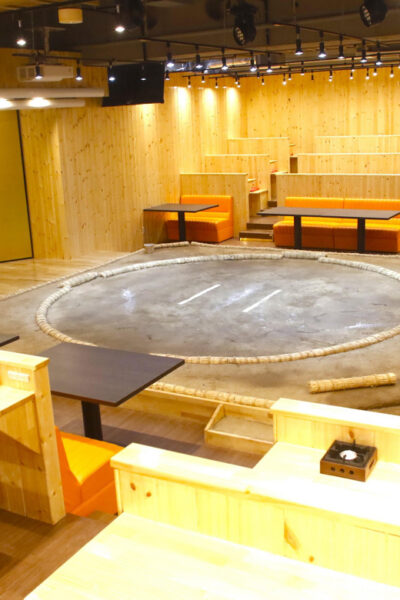
Sumo Show Experience with Chicken Hot Pot and a Photo
Read our review →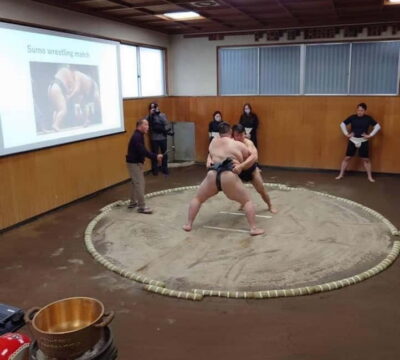
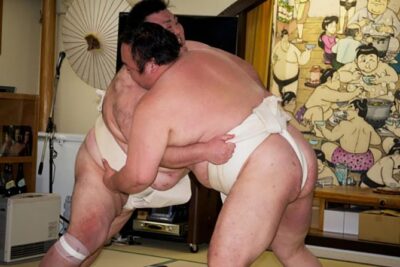
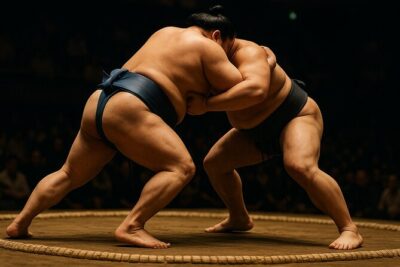
Tokyo Shinjuku Sumo Show & Experience with Photo
Read our review →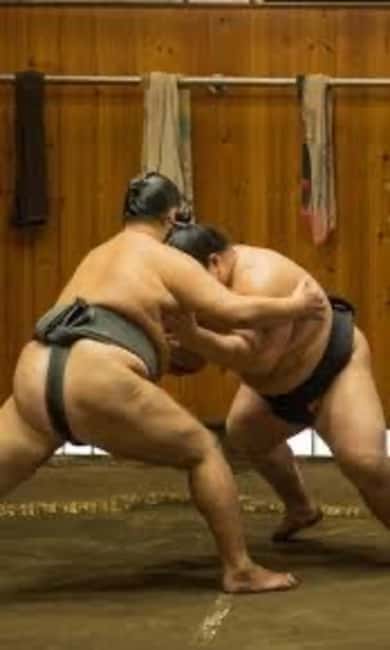

Authentic Sumo Experience in Tokyo: Enter the Sanctuary
Read our review →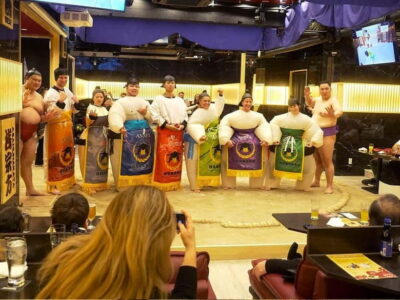
Luxury Sumo Show Experience & Japanese cuisine & Drink
Read our review →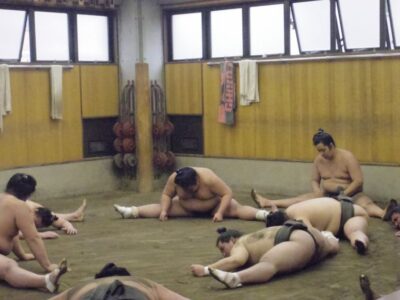
Browse the lists this tour appears in