
Reviewed · WALKING TOURS
Tokyo Old Town Discovery Walk. Lunch Included
Tokyo’s old neighborhoods reveal far more than the neon city most first-time visitors expect. This seven-hour walk from Asakusa to Ueno links temples, shrines, food streets, kitchen shops, and an Edo-period landmark in one well-planned day.
I like the contrast between Senso-ji’s grand religious setting and Kappabashi’s playful food replicas, and I like that lunch is built into the day rather than left to chance. The main consideration is the meal: dietary alternatives require at least 24 hours’ notice, and one menu may not suit every palate.
In This Review
- Key points
- From Asakusa’s skyline to Tokyo’s old streets
- Senso-ji, Tokyo’s essential first stop
- Asakusa Shrine and the Buddhist-Shinto connection
- Lunch as a lesson in Japanese food customs
- Kappabashi Street, where Tokyo gets its kitchen tools
- Matsuzakaya Ueno and the Japanese department-store food floor
- Ueno Park’s temples, museums, and seasonal changes
- Toshogu Shrine, a quiet Edo-period finish
- What the $90 price really covers
- Pace, walking, and practical planning
- Who should book this Asakusa-to-Ueno walk
- Should you book it?
- FAQ
- How long does the Tokyo Old Town Discovery Walk last?
- Where does the walk start?
- Where does the tour end?
- Is lunch included?
- Can dietary restrictions be accommodated?
- How many people can join the tour?
Key points
- Senso-ji and Asakusa Shrine together: Learn how Buddhist and Shinto traditions share the same neighborhood.
- A Japanese course lunch is included: The guide explains what to eat, how to order, and basic dining customs.
- Kappabashi is practical and quirky: Browse professional knives, kitchen goods, and lifelike food samples.
- The route ends among Ueno’s historic shrines: Toshogu offers a quieter finish than the busy temple streets.
- Small-group format: The maximum is 12 people, which allows room for questions and a more personal pace.
- Good value for a full day: The $90 price covers the guided walk and lunch, with no separate admission fees listed.
From Asakusa’s skyline to Tokyo’s old streets
The tour begins at 9 a.m. near 1-chome-1-3 Asakusa, a convenient starting point for exploring Tokyo’s older side. You first get your bearings around Asakusa, with views of the skyline and a walk along the approach to Senso-ji.
This opening section is useful because the street is not simply a path to a temple. It is part shopping lane, part religious approach, and part lesson in Japanese symbols. Small stalls and shops sell snacks, souvenirs, traditional goods, and religious items. Your guide helps separate the meaningful from the merely decorative.
You can expect about 30 minutes here before moving into Senso-ji itself. That is enough time for an introduction, but not enough for a slow, independent look at every shop. If browsing is your main goal, save a little energy for the return after the tour, since the area offers plenty to explore on your own.
A few more Tokyo bookings worth comparing
- Tokyo: Mt.Fuji & Lake Kawaguchiko 1-Day Bus Tour w/Optional Lunch
★ 4.5 · 839 reviews - Tokyo: Sumo Experience and Chanko Nabe Lunch
★ 4.8 · 257 reviews - Tokyo: Tsukiji Fish Market Tour with 6 Stops & Seafood Lunch
★ 4.5 · 165 reviews
Senso-ji, Tokyo’s essential first stop
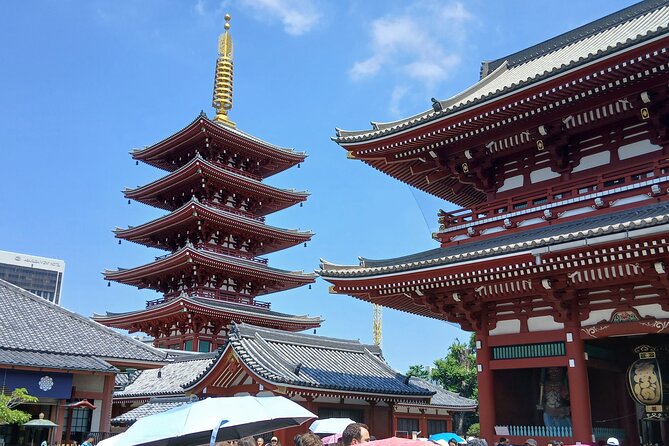
Senso-ji receives about an hour of the morning. It is the most recognizable stop on the route and the place where the tour’s focus on religion, custom, and daily life comes together.
The temple visit includes the surrounding traditional shopping streets, Japanese treats, and an explanation of omiyage, the custom of bringing gifts home from a trip. This is a helpful detail for first-time visitors. It explains why Japanese souvenir shops often feel less like tourist traps and more like part of an established social custom.
You will also learn about the objects sold near the temple and the difference between something used for devotion and something made mainly as a keepsake. That context adds value to what might otherwise be a quick photo stop.
Senso-ji can be crowded, especially around the approach and main temple grounds. The guide’s role here is less about rushing you through the major view and more about helping you understand what you are seeing. The schedule gives you time to pause, taste something, and ask questions.
Asakusa Shrine and the Buddhist-Shinto connection
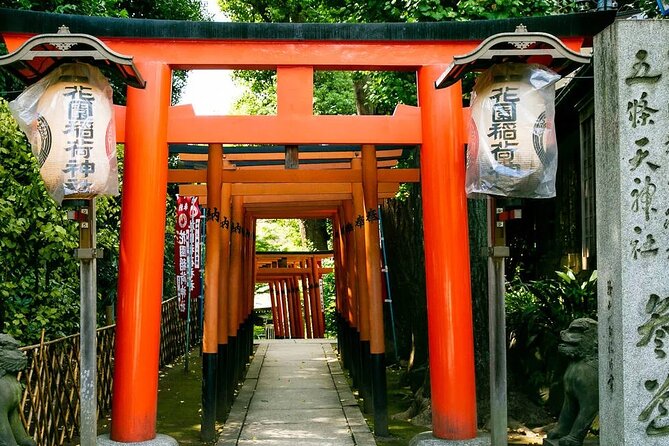
Next door, Asakusa Shrine provides a useful counterpoint to Senso-ji. The stop lasts about 30 minutes and focuses on the difference between Buddhism and Shinto in Japan.
For many visitors, this is one of the most useful parts of the morning. Japanese religious life does not always fit the categories many people bring from home. Seeing a Buddhist temple and Shinto shrine side by side makes that overlap easier to grasp.
The shrine is also a calmer setting after the energy of Senso-ji’s approach. You can pay attention to architectural details and ritual customs without needing to cover a large site. The guide can explain the symbols and practices in plain terms, which helps you avoid treating the shrine as just another picturesque backdrop.
The experience includes free admission at these stops, so the cost is not increased by entrance tickets. That matters when comparing this walk with tours that charge separately for major attractions.
Lunch as a lesson in Japanese food customs
Lunch takes about two hours, including the walk through older and renewed market streets around Asakusa. A quality Japanese course meal is included in the $90 price, and the guide introduces local food customs, etiquette, and ways to choose what to eat.
I like this structure. Food is not treated as a quick break between sights. It becomes part of the cultural lesson. You get a chance to ask how a dish is meant to be eaten, what certain customs mean, and how to approach a meal that may be unfamiliar.
The exact menu is not specified, so you should not book this expecting a particular dish. That uncertainty is the main weakness of the lunch portion. One person specifically found the meal difficult to enjoy, and the provider acknowledged that not every set menu suits every palate.
Dietary needs require planning. Tell the provider at least 24 hours before the 9 a.m. start so an alternative can be arranged. If you opt out after giving advance notice, the meal portion is refunded in cash on location. Without that advance notice, you should not assume a replacement or refund will be available.
The long lunch period also affects the pace of the day. This is not a quick checklist tour. You spend a substantial part of the morning and early afternoon eating, talking, and learning. That suits you if food and social customs matter as much as monuments. It may feel slow if you want to maximize the number of major sights.
More walking routes in Tokyo:
- Tokyo Tsukiji Fish Market Food and Culture Walking Tour
★ 5.0 · 3,184 reviews - Tokyo: Imperial Palace and Shogun Historical Walking Tour
★ 5.0 · 2,251 reviews - Tokyo: Shinjuku Local Bar and Izakaya Guided Walking Tour
★ 4.9 · 1,794 reviews - Tokyo: Tsukiji Fish Market Food and Walking tour
★ 5.0 · 1,724 reviews
Kappabashi Street, where Tokyo gets its kitchen tools
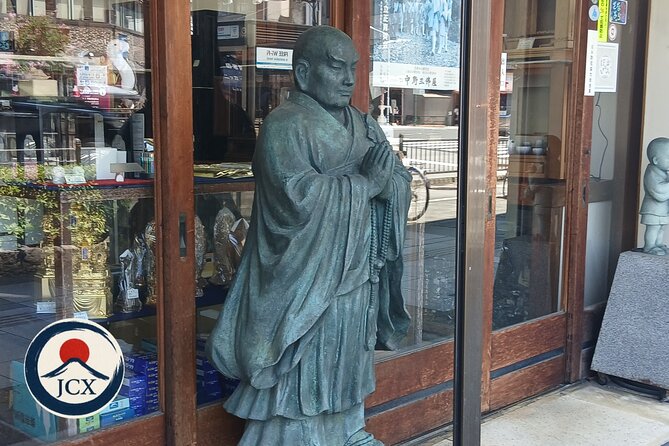
After lunch, the walk heads to Kappabashi Street, also called Kappabashi Dogugai. This one-hour stop shifts the subject from worship and old neighborhoods to Japan’s working food culture.
Kappabashi is known for professional kitchen equipment, Japanese knives, restaurant supplies, and highly realistic plastic food replicas. The food displays are especially fun because they show how restaurants communicate their menus visually. You can browse for a practical kitchen item, a knife, or a small souvenir that feels more connected to Japanese daily life than a standard temple trinket.
The guide helps you understand what the shops are selling, but the stop also leaves room to browse. A hands-on activity making your own food replica can be booked separately, so do not assume that it is included in the $90 price.
Kappabashi is one of the route’s strongest choices for repeat visitors. If you have already seen Senso-ji, this street gives you a new reason to return to Asakusa. It also helps explain the machinery behind Tokyo’s restaurant culture, from cooking tools to the objects displayed in front windows.
Matsuzakaya Ueno and the Japanese department-store food floor
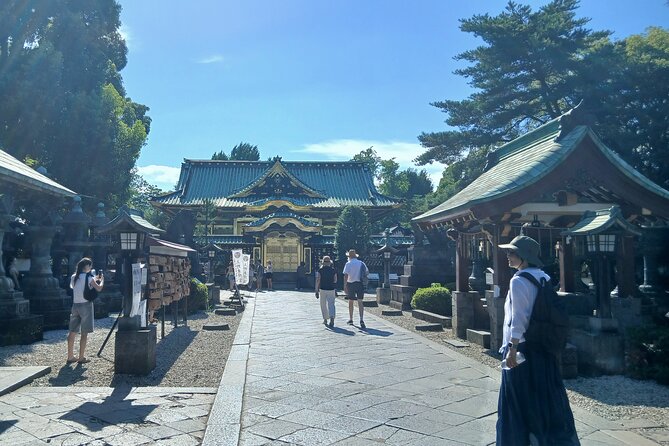
The next stop is Matsuzakaya Ueno, with about 30 minutes to see or shop in its higher-end food court. This is a short stop, but it adds another layer to the day.
A Japanese department-store food floor can be an excellent place to notice the care given to packaging, presentation, sweets, prepared dishes, and gift food. It connects with the morning discussion of omiyage, but in a more polished commercial setting.
The schedule does not promise a major shopping session, so think of this as an introduction rather than a dedicated retail visit. If you see something worth buying, you may need to make a quick choice. The group then continues toward Ueno Park.
Ueno Park’s temples, museums, and seasonal changes
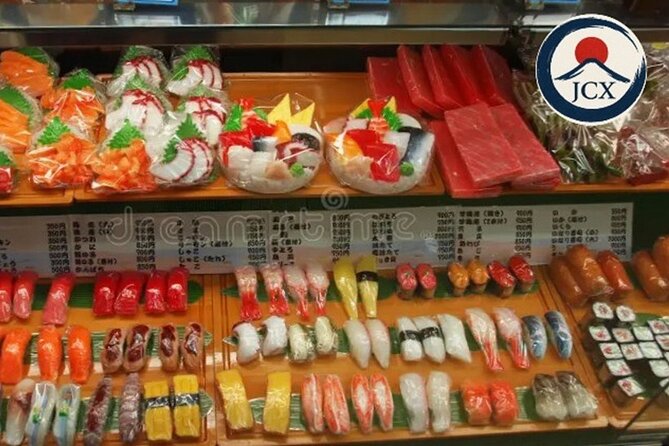
Ueno Park receives about 30 minutes. It is a large cultural area with museums, the Ueno Zoo, shrines, and temples. The tour does not attempt to cover the entire park, and that is sensible. You get a short orientation before reaching the final major site.
The park changes with the season. Cherry blossoms, lotus flowers, wind chimes, and festivals can shape what you see. None of these seasonal features is guaranteed, but they can make the walk feel different at different times of year.
This section may feel brief if you want museum time or a full park walk. It works better as a bridge between the commercial streets and the quieter Toshogu Shrine. If you plan to visit a Ueno museum, zoo, or another temple, use the tour’s end as a starting point for a separate visit.
Toshogu Shrine, a quiet Edo-period finish
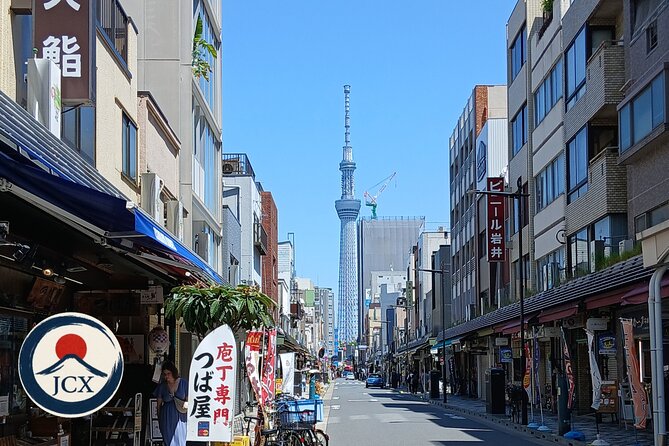
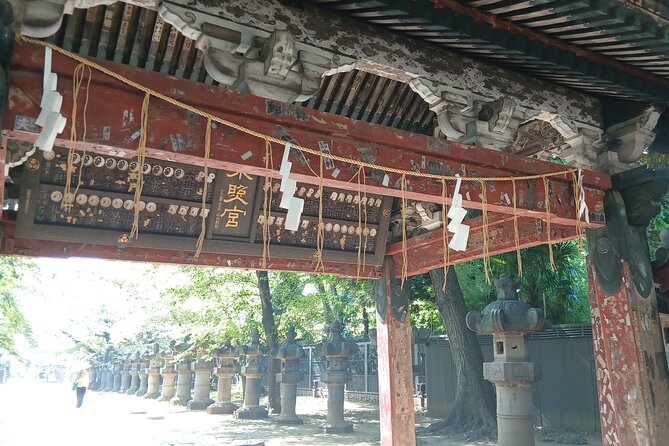
The final stop lasts about an hour at Ueno Toshogu Shrine. This is an Edo-period architectural and historic site set along peaceful walkways inside Ueno Park.
I like ending here. The route begins with one of Tokyo’s busiest and most famous temple areas, then gradually moves through food and shopping streets before finishing in a more restful setting. Toshogu gives you time to look closely at the site instead of ending beside a station after a rushed final explanation.
The shrine’s historical setting also rounds out the day. You have already discussed Buddhism and Shinto, seen traditional objects for sale, and learned about food customs. Here, architecture and quiet surroundings give those ideas a physical setting.
The stop ends near JR Ueno Station’s park gate. That makes the location practical for your next activity, even though the exact end point may take a little attention to identify: it is outside the park-side ticket gate near the Babycal rental stroller station.
What the $90 price really covers
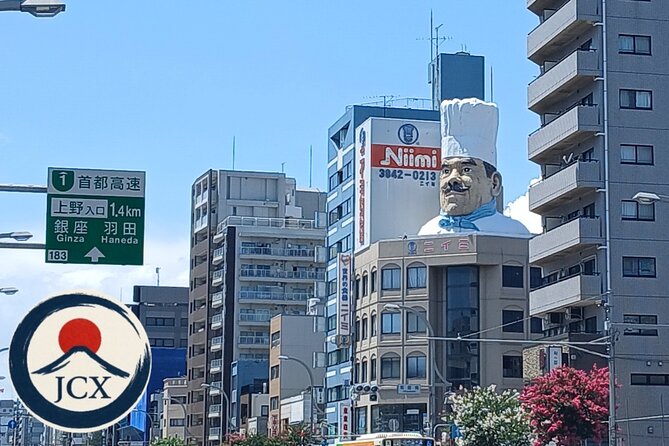
At $90 per person, this is not the cheapest way to see Asakusa and Ueno. You can visit the temples and parks independently for little or no admission cost. The value comes from combining explanation, route planning, a small group, and lunch in one seven-hour experience.
The maximum group size is 12. That is small enough to make questions possible and to avoid the feel of a large coach excursion. The six published ratings average 4.8, with praise centered on the guide’s friendly manner, the clear cultural explanations, the food, and the range of places covered.
The value is strongest for a first visit. You do not need to work out how Senso-ji, Asakusa Shrine, Kappabashi, and Ueno connect. You also get help with customs that can be easy to miss when walking alone.
For a return visit, the value depends on your interests. If you have already toured Senso-ji, the guide’s broader route still adds Kappabashi, Matsuzakaya, and Ueno Toshogu. One repeat visitor found the pace easy and the coverage more varied than a previous Senso-ji visit.
Pace, walking, and practical planning
Seven hours on foot is a full day, even though the schedule includes lunch and several short stops. Wear comfortable shoes and expect the experience to feel active rather than leisurely.
The start time is 9 a.m., so arrange your morning around reaching Asakusa on time. The route finishes in Ueno, not where it began. That is efficient for seeing two districts, but you should remember that returning to Asakusa afterward takes extra time.
The experience is near public transportation, uses a mobile ticket, and is listed as suitable for most people. Specific accessibility details are not provided, so anyone with mobility concerns should confirm the walking conditions with Japan CoreXperience before booking.
The tour requires good weather. If poor weather cancels it, you are offered another date or a full refund. Free cancellation is available until 24 hours before the start time. Changes or cancellations inside that window are not accepted, and the minimum group requirement can also affect whether the walk operates.
Who should book this Asakusa-to-Ueno walk
I would choose this experience for a first-time visitor who wants Tokyo explained through ordinary streets, not just landmark photos. It is also a good fit if you enjoy food, architecture, religious customs, and small shopping discoveries in equal measure.
Families and mixed-age groups may appreciate the varied stops, especially Kappabashi’s food replicas and the open spaces around Ueno. The seven-hour length still requires stamina, and the tour should not be treated as a short family outing.
Repeat visitors should book it when they want a more detailed look at old Tokyo beyond the main temple. The best reasons are Kappabashi Street, the food-floor stop, and Toshogu Shrine.
You may want to skip it if you prefer a short, flexible sightseeing day, have strict dietary requirements that are difficult to explain in advance, or want a menu with a guaranteed dish. The lunch is a central part of the day, so its fit matters.
Should you book it?
Book this walk if you want context as well as sightseeing, especially on a first Tokyo visit. The route gives you a useful progression from temple traditions to food customs, kitchen culture, department-store shopping, and Edo-period architecture.
At $90, the lunch and small-group guidance make the price reasonable for a full day. Just plan for steady walking, give advance notice about dietary restrictions, and treat the meal as part of the cultural experience rather than a guaranteed personal favorite.
FAQ
How long does the Tokyo Old Town Discovery Walk last?
The experience lasts approximately seven hours and begins at 9 a.m.
Where does the walk start?
It starts at 1-chome-1-3 Asakusa, Taito City, Tokyo 111-0034, Japan.
Where does the tour end?
It ends near the park-side gate of JR Ueno Station, outside the ticket gate near the Babycal rental stroller station.
Is lunch included?
Yes. A Japanese course lunch is included, along with an introduction to food customs and etiquette.
Can dietary restrictions be accommodated?
You must inform the provider at least 24 hours before the start time and arrange a meal alternative in advance. If you opt out with advance notice, the meal portion is refunded in cash on location.
How many people can join the tour?
The maximum group size is 12 people.
New on our Tokyo list
- Sumi-e Experience in a relaxing green tea shop in Tokyo★ 5.0 · 3 reviews
- Tokyo : Kamikaze Street Drift Ride★ 5.0 · 3 reviews
- Private Zen Meditation in English in Shinjuku, Tokyo★ 5.0 · 3 reviews
- Onsen Spa in Tokyo and Asakusa Bar Hopping with Local Guide★ 5.0 · 3 reviews
- Easy for everyone! Now you can play handmade mini shamisen and show off to everyone! Musical instruments, sweets and live music★ 5.0 · 3 reviews
- Tokyo: Private Tsukiji Street Food & Sake with Local Guide★ 5.0 · 3 reviews
- Mt Fuji Exploration Tour with Free Japanese Kusa Mochi from Tokyo★ 4.5 · 3 reviews
- Tokyo Tsukiji Fish Market Walking and Exploring Hidden Gems Tour★ 5.0 · 3 reviews
Walking Tours, compared.
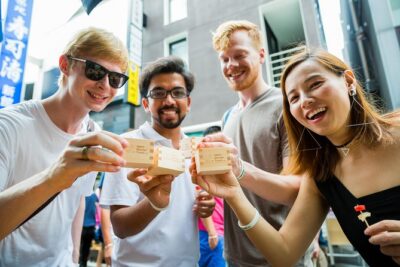
Tokyo Tsukiji Fish Market Food and Culture Walking Tour
Read our review →
Imperial Palace and Shogun Historical Walking Tour
Read our review →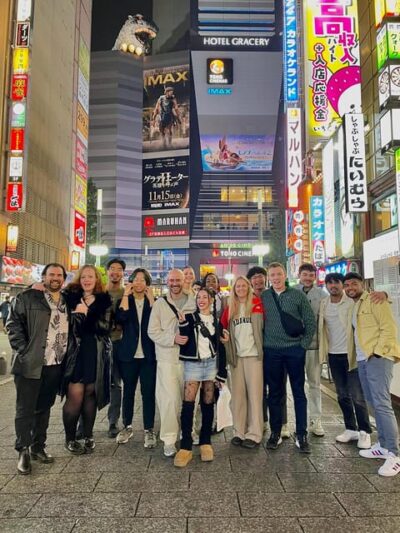
Shinjuku Local Bar and Izakaya Guided Walking Tour
Read our review →

Asakusa Walking Tour with Sensoji Temple Visit
Read our review →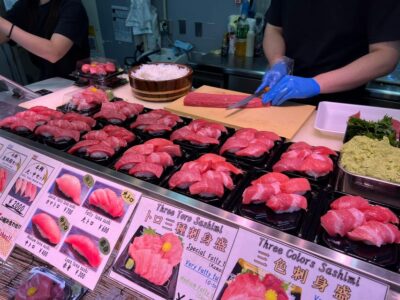
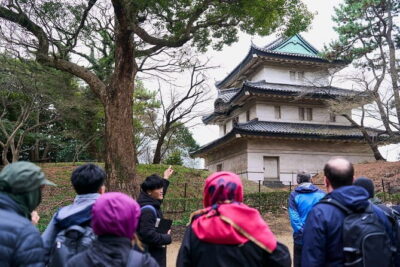
Tokyo Castle & Imperial PalaceーShogun Walking Tour
Read our review →
Browse the lists this tour appears in