
Reviewed · CITY TOURS
Tokyo: Private City Highlights Tour
Tokyo can feel like several cities stitched together: old temple lanes, forest shrines, neon districts, grand gardens, and food markets all compete for your attention. This private tour gives you a car, a local driver-guide, and eight hours to connect those far-flung sights without figuring out every train transfer.
I especially like the custom itinerary, since you can ask to spend more time on history, shopping, photography, or technology. I also like the practical help from guides such as Ahmad, who has adjusted routes for bad weather, walking difficulties, and specific requests. The main drawback is the pace: eleven listed stops in eight hours means some visits will be brief, and entrance fees and lunch cost extra.
In This Review
- Key points
- One car, many sides of Tokyo
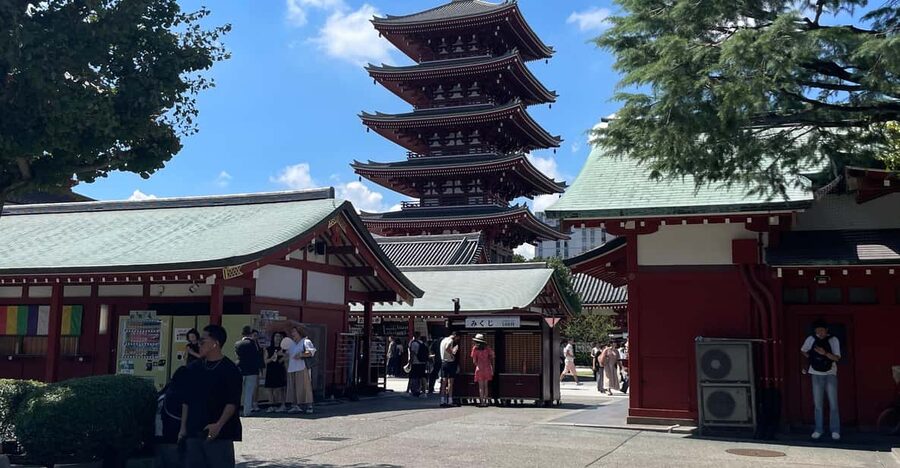
- Asakusa and Senso-ji: Tokyo’s old front door
- Meiji Shrine and the quiet side of Tokyo
- Tokyo Skytree and Tokyo Tower: two very different views
- The Imperial Palace and East Gardens
- Shinjuku Gyoen: a garden break in the middle of the city
- Tsukiji Outer Market and the case for a flexible lunch
- Harajuku and Takeshita Street
- Shibuya Crossing: Tokyo in one moving picture
- Taito City and the route between stops
- What the $319 group price really buys
- Who should book this Tokyo day
- Should you book the Tokyo Private City Highlights Tour?
- FAQ
- How long is the Tokyo Private City Highlights Tour?
- How much does the tour cost?
- Is hotel pickup included?
- Which languages are available?
- Are entrance fees and lunch included?
- Can the itinerary be changed?
- Is the tour wheelchair accessible?
- What should I bring?
Key points
- Private car and hotel pickup: You avoid building a full Tokyo route around train changes and crowded platforms.
- Flexible sightseeing: The guide can adjust the order and focus based on your interests, weather, and mobility needs.
- A broad Tokyo sampler: The route joins Asakusa, Meiji Shrine, Skytree, palace gardens, Tokyo Tower, Shinjuku, Tsukiji, Harajuku, and Shibuya.
- Ahmad is noted by name: He is described as punctual, patient, flexible, and comfortable explaining Tokyo in English.
- Extra costs matter: Admission tickets, food, and personal spending are not included in the $319 group price.
- Best for first-time visitors: You get a useful overview, but this is not a slow, single-neighborhood walking tour.
One car, many sides of Tokyo
The strongest feature here is not one particular monument. It is the way the tour links places that are spread across Tokyo. You can move from the incense and red gates of Asakusa to the wooded paths of Meiji Shrine, then on to skyscraper views, palace grounds, a fish market, Harajuku fashion, and the famous Shibuya scramble.
That variety makes the tour useful on a first visit, especially if you have only one full day for major sights. You can also use it as a planning day. After seeing several districts with a guide, you will have a better sense of where to return on your own.
The private format changes the mood. You are not waiting for a large group to finish shopping or keeping to a fixed commentary schedule. If you want more time at a shrine, a quicker photo stop at a tower, or a change because of rain, the route can be adjusted.
There is a limit, though. The plan covers a lot of ground. You should think of it as a well-organized introduction, not a leisurely study of every site. If your priority is detailed temple architecture, a long market lunch, or several hours of shopping, you will need to trim the route.
A few more Tokyo bookings worth comparing
- Mt Fuji and Hakone 1-Day Bus Tour Return by Bullet Train
★ 5.0 · 26,383 reviews - 1-Day Tokyo Bus Tour
★ 5.0 · 14,250 reviews - Tokyo: TOKYO SKYTREE® Admission ticket
★ 4.5 · 11,192 reviews
Asakusa and Senso-ji: Tokyo’s old front door
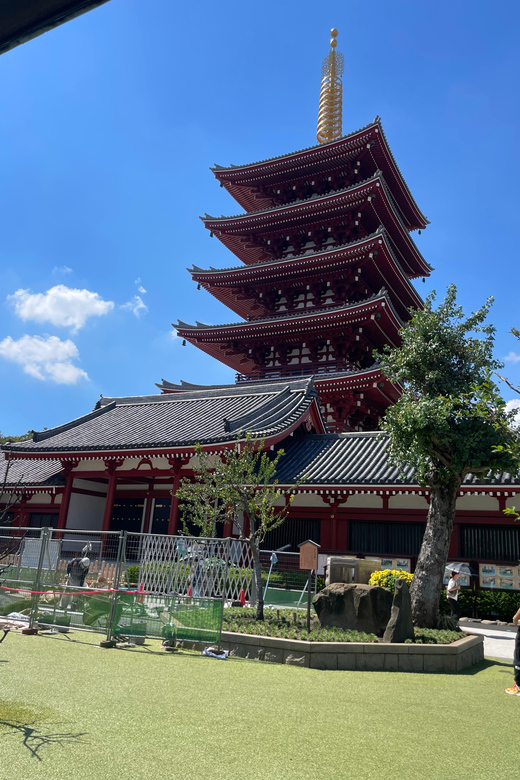
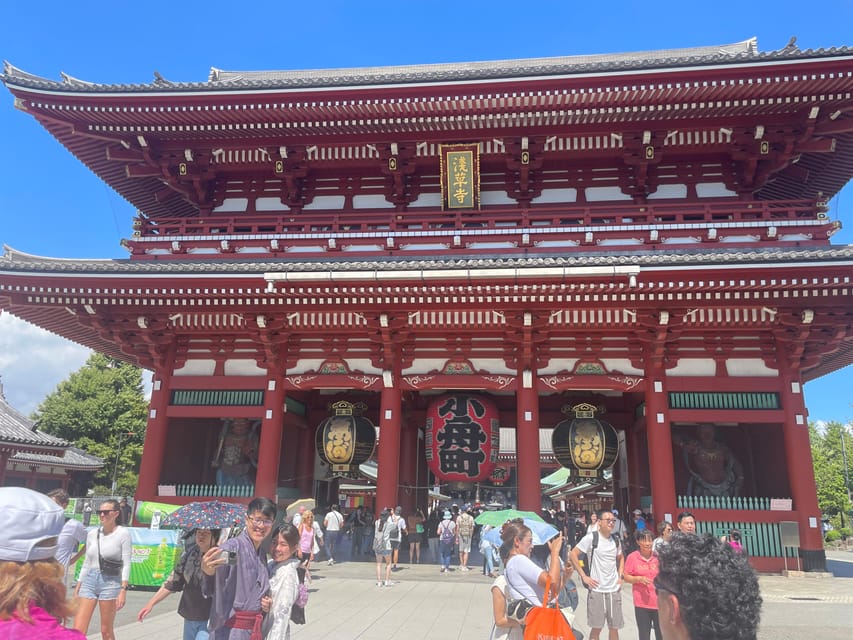
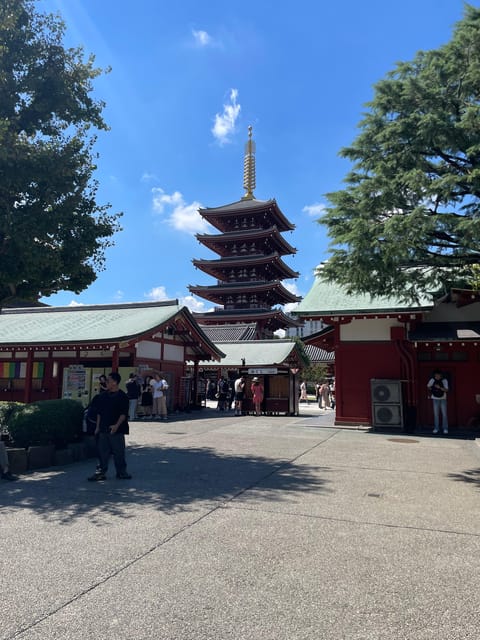
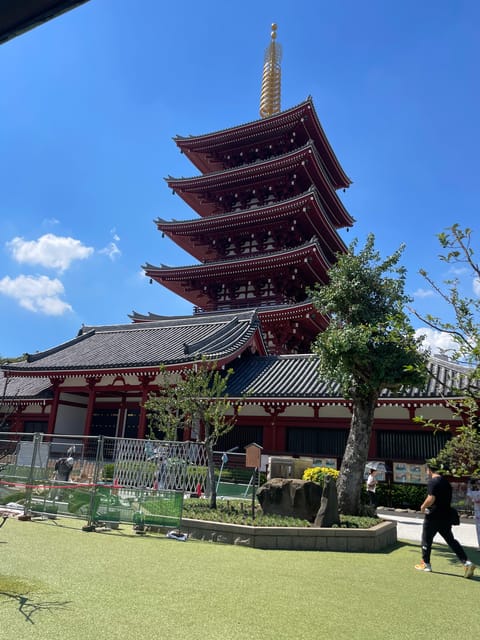
The day begins in the Asakusa area, with a visit to Asakusa Shrine and the nearby Senso-ji temple complex. Senso-ji is Tokyo’s oldest and best-known Buddhist temple, with a founding date traditionally linked to 628 AD.
The approach starts at Kaminarimon Gate, recognized by its huge lantern. From there, Nakamise Street leads toward the main temple, lined with traditional shops and snack stalls. This is one of the clearest places to see Tokyo’s older commercial and religious character in one compact area.
You have about an hour here. That is enough to pass through the gate, walk Nakamise, see the temple buildings, and look around Asakusa Shrine. It is not enough for a slow shopping session, a full meal, and detailed exploration of every side street.
This is one of the stops where your guide adds real value. A private guide can explain the difference between the Buddhist temple and Shinto shrine in the same area, then help you decide how much time to give the shops. Wear shoes you can walk in, since even a vehicle-based tour includes repeated walks on hard city surfaces.
Meiji Shrine and the quiet side of Tokyo
Meiji Shrine offers a sharp change of scene. The shrine honors Emperor Meiji and Empress Shoken and sits in a large wooded setting near Harajuku. After the traffic and signs of central Tokyo, the broad paths and trees make the place feel calm.
You get about an hour for a visit and walk. The approach itself matters, so do not treat this as a quick stop at a building. The route through the trees is part of the experience, and the contrast with nearby Harajuku is one of the day’s best pairings.
This is also a useful place to ask your guide about Shinto customs. You can take in the shrine grounds without turning the visit into a lecture, then continue to Harajuku for a very different view of the city.
People with limited mobility should discuss their needs before booking. The vehicle can reduce the distance between stops, and a guide has accommodated a visitor with walking difficulties by dropping them close to sights. Still, a shrine visit involves some walking, and the provider asks you to mention special requirements such as mobility needs or car seats in advance.
Tokyo Skytree and Tokyo Tower: two very different views
Tokyo Skytree reaches 634 meters and is Japan’s tallest structure. Its observation decks offer wide views across the city, with possible glimpses of Mount Fuji on a clear day.
The scheduled visit lasts about an hour. That time works well for seeing the tower and taking in the view, but it may not leave much room for a long meal or extensive shopping in the surrounding complex. Entrance fees are not included, so check the current ticket cost when comparing the total price.
Tokyo Tower is also included as a roughly one-hour stop. It is shorter than Skytree and has a different appeal. Skytree gives you a high, broad look at Tokyo. Tokyo Tower is a familiar city symbol and gives you the pleasure of seeing the tower itself as part of the city scene.
Doing both in one day can be worthwhile if you enjoy city views and landmarks. It can also feel repetitive if your main interest is temples, food, or local neighborhoods. This is a good place to use the private format: ask the guide to favor one tower and shorten the other if your group would rather spend time at Tsukiji or Harajuku.
Cloud and rain matter here. On a poor-weather day, the views may be limited. One useful detail from the tour’s operation is that Ahmad has changed plans when weather was especially bad, rather than forcing the original schedule.
Same corner of Tokyo, a completely different plan:
- Tokyo: teamLab Planets TOKYO Digital Art Museum Entry Ticket
★ 4.6 · 9,779 reviews - Mt Fuji & Hakone Cruise, Drum Show Bullet Train 1 Day from Tokyo
★ 4.0 · 7,413 reviews - Tokyo: Sumo Show Experience with Chicken Hot Pot and a Photo
★ 4.8 · 6,678 reviews - Tokyo: Shinjuku Food Tour (13 Dishes at 4 Local Eateries)
★ 5.0 · 6,603 reviews
The Imperial Palace and East Gardens
The Imperial Palace is the Emperor’s residence, surrounded by gates, walls, and gardens in central Tokyo. The East Gardens are open to the public and provide a chance to walk through formal grounds and see remains connected with the palace’s earlier fortifications.
The planned stop is about 45 minutes, making it one of the shorter visits. You should view it as a central Tokyo orientation stop rather than a full palace tour. Public access is limited in parts of the palace area, and the East Gardens are the main place for a general visit.
The palace grounds give the day a useful historical pause between high-rise districts. They are also a reminder that Tokyo is not only about bright signs and crowded crossings. If gardens and history matter most to you, ask for enough time here and consider reducing one of the tower visits.
Shinjuku Gyoen: a garden break in the middle of the city
Shinjuku Gyoen National Garden receives about an hour. That is enough to take a meaningful walk and enjoy a slower stretch of the day after several major landmarks.
The garden is especially useful in a packed itinerary because it changes the pace. You are no longer moving from one famous building to another. You can breathe, look at the plantings, and get a different sense of Tokyo’s open spaces.
The drawback is simple: an hour goes quickly. If you arrive late because of traffic, the garden may become little more than a short walk. Tokyo’s roads can be slow, and drivers may arrive up to 30 minutes late in heavy highway traffic. Build some patience into your expectations, especially when several districts are planned for one day.
Tsukiji Outer Market and the case for a flexible lunch
The main wholesale fish market moved to Toyosu, but Tsukiji Outer Market remains a lively food area. Its stalls and small restaurants offer seafood, sushi, sashimi, and snacks such as tamagoyaki, the sweet Japanese omelet.
The stop has no fixed visit length in the schedule, which is helpful. Tsukiji is one of the places where you may want to make a choice: browse, eat, or do both at a quick pace. Lunch is not included, so this is the natural point to buy food at your own expense.
I would discuss Tsukiji with the guide early in the day. If your group cares about Japanese food, you may want to protect time here. If you have dietary restrictions or allergies, tell the provider before the tour. The vehicle rules also prohibit food and drinks inside the car, so plan to eat at the market rather than during transfers.
Harajuku and Takeshita Street
Takeshita Street is the short, concentrated Harajuku stop, scheduled for about 30 minutes. It is known for youth fashion, trend-driven shops, colorful displays, and people-watching.
Half an hour lets you see the character of the street, but it is not enough for serious shopping. If you want to browse several stores or look for fashion and small gifts, ask to extend this stop. The private route makes that possible, but you will need to give up time elsewhere.
The pairing of Meiji Shrine and Harajuku works well because they show two nearby but very different sides of Tokyo. One is quiet and religious. The other is youthful and commercial. You get a memorable contrast without crossing the whole city again.
Shibuya Crossing: Tokyo in one moving picture
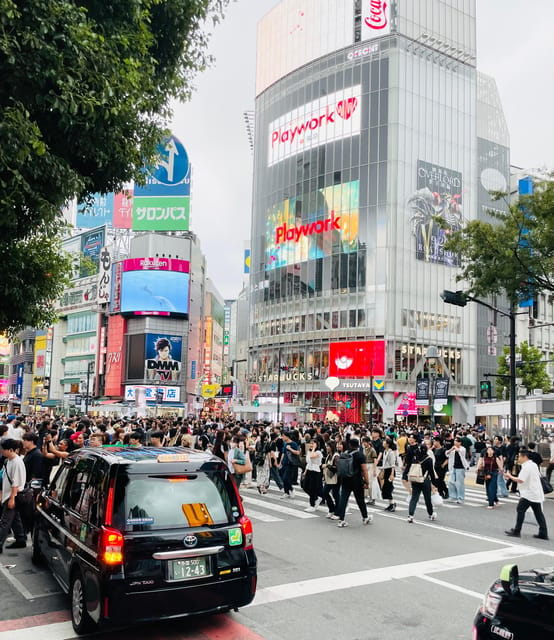
Shibuya Crossing is the famous pedestrian scramble where several streams of people cross at once. The planned visit is about 45 minutes, enough to watch the crossing, take photographs, and look around the surrounding streets.
The crossing itself is free, but the real enjoyment comes from choosing a good viewing angle and watching how the intersection functions. Your guide can help you understand the area and adjust the timing around your interests.
This is a strong final major stop because it leaves you with a clear image of modern Tokyo. It is also a place where a short visit works. You do not need half a day to understand the spectacle, though you may want longer if shopping or city photography is important to you.
Taito City and the route between stops
Taito City receives a 30-minute visit in the schedule. Since Asakusa is also part of Taito, this portion may serve as extra neighborhood time or a short stop connected with the older eastern side of Tokyo.
The value of the car becomes clearest between these locations. Tokyo’s rail system is excellent, but a first-time visitor can spend energy changing lines, finding exits, and walking between stations and sights. Private transport does not remove traffic, but it simplifies the day and keeps your group together.
The driver-guide is central to that benefit. Ahmad is described as punctual, patient, respectful, and willing to change the route. Another spelling, Ahmed, appears in the booking information, so confirm the guide’s name and meeting details when you reserve.
What the $319 group price really buys
The price is $319 for a private group of up to five people. For five people, that works out to about $64 per person before entrance fees, food, and personal expenses. For two people, the per-person cost is much higher, but you are still paying for a private vehicle, hotel pickup and drop-off, fuel, highway tolls, and the ability to shape the day around your group.
That is a fair value if convenience is important. It is less attractive if you are comfortable using Tokyo’s trains and prefer to explore one area slowly. Public transport can cost far less, but it requires more planning and will not give you the same door-to-door arrangement.
WiFi is available onboard when service permits. The tour is private, and pickup is offered from hotels, hostels, apartments, or other Tokyo addresses. Pickup is not available from airports, ports, or stations, so this matters if you are arriving in Tokyo the same day.
You can cancel up to 24 hours ahead for a full refund, and the reserve-now, pay-later option keeps your plans flexible. English and Japanese are offered. The tour is wheelchair accessible, but tell the provider about access needs before the day rather than relying on last-minute changes.
Who should book this Tokyo day
I would choose this tour for a first visit, a family group, or a small party that wants to see many headline sights without managing Tokyo’s transport system. It also suits anyone who values a guide who listens and can change the route when weather or mobility becomes an issue.
It is a particularly good fit if your group has mixed interests. One person can focus on temples, another on food, and another on towers or fashion. A private vehicle gives you a better chance of balancing those wishes than a fixed group excursion.
I would hesitate if you want a slow, local day. Eleven stops can feel like a checklist, especially when traffic cuts into sightseeing time. You should also budget for admission tickets and lunch, and remember that the route’s flexibility depends on what you remove when you add time somewhere else.
Should you book the Tokyo Private City Highlights Tour?
Book it if your goal is a broad, comfortable introduction to Tokyo and you want a guide who can adapt the day. The combination of hotel pickup, private transport, and stops across Asakusa, central Tokyo, Shinjuku, Harajuku, Tsukiji, and Shibuya is hard to organize efficiently on your own in one day.
Before booking, decide on your top three priorities. Tell the guide if those are Senso-ji, food at Tsukiji, the Skytree view, or time in Harajuku. That small bit of planning will help prevent the eight-hour schedule from becoming a race between landmarks.
With a 4.9 rating from 13 bookings and repeated praise for Ahmad’s flexibility, punctuality, patience, and care with walking needs, this is a strong choice for convenience. Just keep your expectations realistic: you will sample Tokyo’s major faces, not fully explore every one of them.
FAQ
How long is the Tokyo Private City Highlights Tour?
The tour lasts eight hours, including pickup and return to your Tokyo location.
How much does the tour cost?
The price is $319 for a private group of up to five people.
Is hotel pickup included?
Yes. Pickup and drop-off are included from hotels, hostels, apartments, or other addresses in Tokyo. Pickup is not available from airports, ports, or stations.
Which languages are available?
The host or greeter service is available in English and Japanese.
Are entrance fees and lunch included?
No. Entrance fees, lunch, personal expenses, and other costs are not included.
Can the itinerary be changed?
Yes. The tour is customizable, so you can ask to focus more on history, shopping, technology, or particular sights. The guide can also adjust the plan for weather or specific needs.
Is the tour wheelchair accessible?
Yes, the activity is listed as wheelchair accessible. You should tell the provider about accessibility needs and any other requirements before the tour.
What should I bring?
Bring comfortable shoes. You should also inform the provider in advance about extra requirements such as car seats or allergies.
New on our Tokyo list
- Sumi-e Experience in a relaxing green tea shop in Tokyo★ 5.0 · 3 reviews
- Tokyo : Kamikaze Street Drift Ride★ 5.0 · 3 reviews
- Private Zen Meditation in English in Shinjuku, Tokyo★ 5.0 · 3 reviews
- Onsen Spa in Tokyo and Asakusa Bar Hopping with Local Guide★ 5.0 · 3 reviews
- Easy for everyone! Now you can play handmade mini shamisen and show off to everyone! Musical instruments, sweets and live music★ 5.0 · 3 reviews
- Mt Fuji Exploration Tour with Free Japanese Kusa Mochi from Tokyo★ 4.5 · 3 reviews
- Tokyo Tsukiji Fish Market Walking and Exploring Hidden Gems Tour★ 5.0 · 3 reviews
- Tokyo: Private Tsukiji Street Food & Sake with Local Guide★ 5.0 · 3 reviews
City Tours, compared.

Private City Highlights Tour with Local Guide
Read our review →
Asakusa, Skytree & Akhihabara Go-Kart City Experience
Read our review →
3-hour Guided E-Bike Tour of the City’s Hidden Gems
Read our review →
3-Hour Bike/E-Bike Tour of the City’s Highlights
Read our review →
Small Town in the Big City: Tasting Tokyo’s Kichijoji
Read our review →Browse the lists this tour appears in