
Reviewed · TSUKIJI & TOYOSU MARKET TOURS
Tokyo: Tsukiji Fish Market Foodie and Educational Tour
Tsukiji is best understood with your appetite and your curiosity switched on. This two-hour walk links Namiyoke Shrine, a tuna tasting, the Tsukiji Uogashi Mall, and the famous Outer Market, so you get more than a quick look at seafood stalls. Guide Chinami has been praised for clear English, local advice, and steering guests away from tourist traps.
I like the small group, limited to six people, because narrow market lanes are easier to handle with a few companions. I also like the included tasting: freshly cut tuna, fresh wasabi, a small bento box, sake, and water give the tour a solid food base. The main catch is simple: extra snacks, drinks, and shopping cost more, and this tour is not suitable for vegetarians.
In This Review
- Key points to know before you book
- Why Tsukiji works best with a guide
- Namiyoke Shrine and the meaning of a market guardian
- Tuna, fresh wasabi, and a small taste of sake
- Tsukiji Uogashi Mall, a useful stop beyond the main lanes
- Exploring the Outer Market without rushing past it
- Ending at Lawson, where ordinary food gets interesting
- What the $70 price really covers
- Who will enjoy this Tsukiji walk most
- Practical tips for a better morning or afternoon
- Should you book the Tsukiji Foodie and Educational Tour?
- FAQ
- Where does the Tsukiji tour meet?
- How long does the tour last?
- What food and drinks are included?
- Are extra market snacks and drinks included?
- Is the tour suitable for vegetarians?
- Can children join the tour?
- Is the tour offered in English?
Key points to know before you book
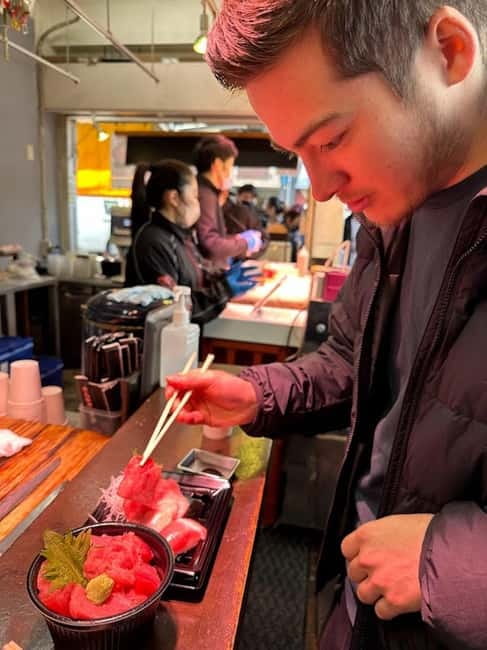
- Fresh tuna and wasabi are included: The tasting gives you a focused introduction to Japanese seafood rather than leaving all food purchases to chance.
- Namiyoke Shrine adds context: You learn how locals pray for protection from misfortune and why this small shrine matters to the market community.
- The group is limited to six: That is useful in crowded lanes and makes it easier to ask questions.
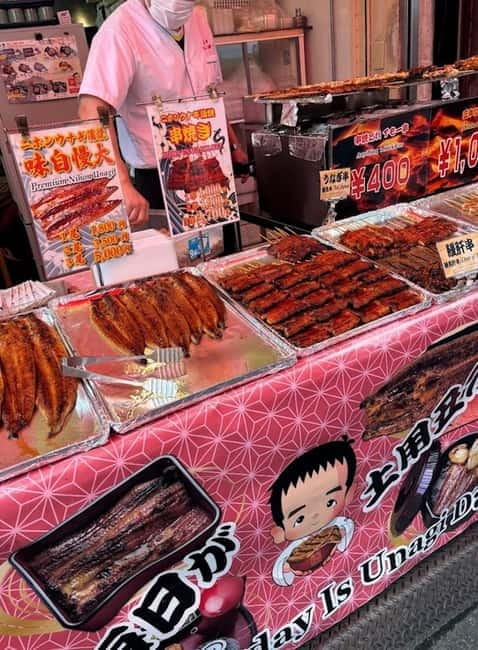
- The Outer Market is more than fish: You can browse ingredients, knives, utensils, souvenirs, fruit, vegetables, restaurants, and street food.
- Lawson finishes the tour: You get advice on Japanese convenience-store snacks and drinks, with purchases paid for separately.
- The tour runs for two hours: It is a compact introduction, not a full-day food crawl.
Why Tsukiji works best with a guide
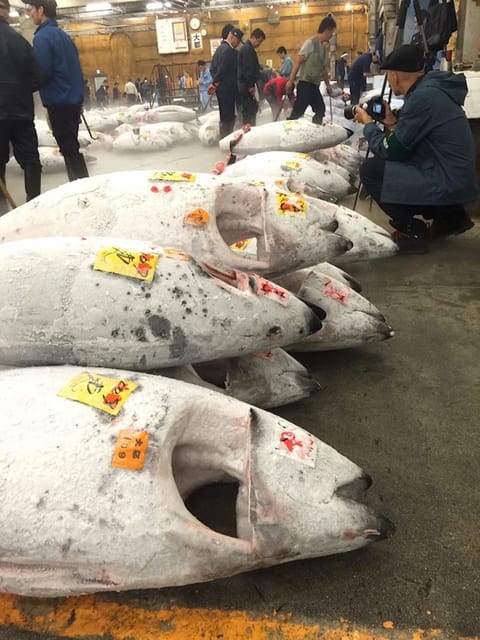
Tsukiji Outer Market can look simple at first: narrow lanes, shop signs, seafood counters, and people carrying purchases. In practice, it is easier to enjoy when someone explains what you are seeing and helps you choose where to stop.
This tour begins outside Lawson at the Tsukiji 4 chome intersection. That meeting point is practical, but do not gather directly around the store entrance. You are asked to wait outside with the guide’s notice board, leaving room for customers to enter.
The walk then connects four different parts of the neighborhood. You begin with a local shrine, move into a market setting for a prepared tasting, explore the Outer Market, and finish with a convenience store stop. That mix gives you a better sense of Tsukiji as a working food district and local community, not just a place to buy sushi.
The limited group size matters here. Six people is small enough for a guide to answer questions and keep everyone together while moving through tight spaces. It also makes the food tasting feel more personal than a large group stopping at a counter.
More market mornings in Tokyo:
- Tokyo Tsukiji Fish Market Food and Culture Walking Tour
★ 5.0 · 3,184 reviews - Tokyo: Tsukiji Fish Market Food and Walking tour
★ 5.0 · 1,724 reviews - Tokyo: Tsukiji Fish Market Guided Walking Tour
★ 4.9 · 1,397 reviews
Namiyoke Shrine and the meaning of a market guardian
The first proper stop is Namiyoke Inari Jinja, reached after about ten minutes on foot. You spend around fifteen minutes there with a guided explanation of the shrine’s role and the reasons people worship there.
The focus is practical and local. You learn why the shrine is highly respected by people in the area, how to pray, and how visitors ask for protection from bad luck, misfortune, and turmoil. This is a useful start because Japanese shrines can be easy to treat as photo stops. Here, the visit gives you a little guidance on what the place means and how to behave respectfully.
The shrine also helps explain the connection between food and community in Tsukiji. The market is not only a collection of stalls. It is tied to people who work with seafood, ingredients, cooking, and trade. A local place of worship adds another layer to that setting.
You should expect a short visit rather than a long religious lecture. Fifteen minutes is enough to learn the basics, see the site, and ask a few questions before returning to the food-focused part of the walk. If you want detailed temple architecture or a long spiritual discussion, this tour is probably too brief for that purpose.
Tuna, fresh wasabi, and a small taste of sake
After the shrine, you walk about five minutes to the next food stop. This part lasts around thirty-five minutes and includes the tour’s main tasting: a small bento box with freshly cut tuna, fresh wasabi, and a small amount of Japanese sake.
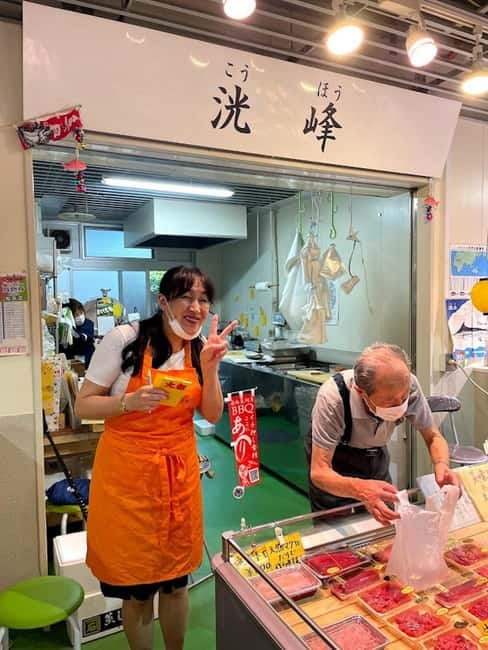
The tuna comes through a local wholesaler, Tsukiji KohHoh, whose friends are experts in blue marlin and work at Toyosu Market. That link matters. You are not simply buying a random market snack. The tasting is meant to explain Japanese seafood and the care involved in presenting it.
The fresh wasabi is another useful detail. You can compare it with the familiar green paste often served outside Japan, which may be sharper or more uniform in taste. The tour gives you a chance to consider how the wasabi changes the tuna and how small differences in ingredients affect sushi and sashimi.
The bento is described as small, so do not treat it as a full lunch for a hungry afternoon. It is a guided tasting and an introduction to Japanese food culture. The included sake is also a small serving, enough to sample rather than settle in for a drinking session. A bottle of water is included as well.
This is the strongest value point in the $70 price. If you bought every item independently, you might spend less or more depending on your choices, but the price also covers the guide, explanations, organization, and the chance to taste selected seafood without guessing at a stall. For a first visit to Tokyo, that can be worth paying for.
Vegetarians should skip this tour. The included food centers on tuna, and the experience is built around seafood. Children may be accommodated if you share their ages and food preferences in advance, but you should not assume the standard bento will suit them.
Tsukiji Uogashi Mall, a useful stop beyond the main lanes
The tour also shows you Tsukiji Uogashi Mall. This is a good counterpoint to the outdoor lanes because it gives you another place to look for food products, vegetables, fruit, and prepared meals.
You can also see a food court with restaurants. That makes the stop useful if you want to return later for a more substantial meal or need a broader choice than the included tasting provides. The tour does not cover additional purchases, so bring your own spending plan if you expect to buy ingredients or eat more.
I like this part because it helps you think beyond sushi. Tsukiji is associated with fish, but the market area also supports home cooks and food lovers looking for produce, pantry items, cooking tools, and regional products. The guide can point out options that are easy to miss if you simply follow the busiest lane.
More Tokyo food crawls:
- Tokyo: Shinjuku Food Tour (13 Dishes at 4 Local Eateries)
★ 5.0 · 6,603 reviews - Tokyo: Shinjuku Food Tour (15 Dishes and 4 Eateries)
★ 4.9 · 2,033 reviews - Best of Shinjuku: Izakaya Food Tour (4 Stops, 14+ Tastings)
★ 5.0 · 1,863 reviews - Tokyo Night Foodie Tour in Shinjuku – Seasonal Sushi, Wagyu Beef
★ 5.0 · 1,161 reviews
Exploring the Outer Market without rushing past it
The longest stop is Tsukiji Outer Market, where you spend about forty-five minutes. This is the part most people picture when they hear Tsukiji, but it is also where a guide can save you time and confusion.
You can search for street food, drinks, desserts, and other local snacks. Those purchases are not included, so ask about prices before ordering if you are trying to keep costs under control. You can choose to sample more, or simply watch the market and save your money for a later meal.
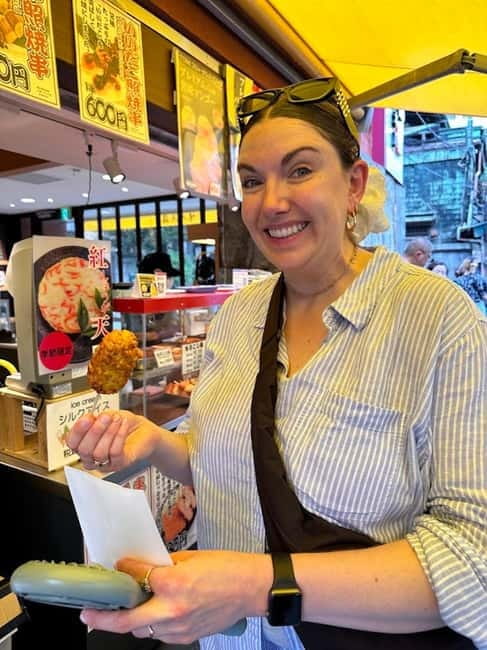
The food choices extend beyond fish. You might find stalls selling Japanese ingredients, fruit, vegetables, sweets, cooking knives, utensils, souvenirs, and other culinary goods. The guide’s role is especially useful here because the experience is not limited to one famous product.
Simone from the United Kingdom specifically praised Chinami’s local advice and help with avoiding tourist traps. That is the kind of guidance you want in a place where the busiest stall is not always the most interesting one. Chinami was also praised for excellent English and for offering useful suggestions for the rest of a Tokyo and Kyoto trip.
The market is likely to feel active and crowded, especially in its narrow alleys. Keep your group together, watch where you step, and avoid blocking shop entrances while you browse. Since the tour takes place on foot, comfortable shoes are a sensible choice.
The forty-five-minute visit gives you a useful first look, but it does not allow time to inspect every lane or shop. If you are serious about buying a knife, cookware, or specialty ingredients, you may want to return on your own later. Use the tour to learn where to focus.
Ending at Lawson, where ordinary food gets interesting
After the Outer Market, the group walks about ten minutes back to the Lawson at the Tsukiji 4 chome intersection. The final stop is snack hunting inside the convenience store.
This may sound less special than tuna at a market, but it is one of the more practical ideas in the tour. Japanese convenience stores are useful for quick meals, drinks, sweets, and packaged snacks. The guide gives you recommendations on what to buy and how to enjoy it, so you can continue trying Japanese food after the tour ends.
Nothing at Lawson is included. You pay for your own snacks and drinks, just as you do for extra purchases in the market. Still, the stop can help you avoid buying familiar-looking items at random. If you have a train ride, early morning, or late-night snack ahead, the advice may prove useful.
Ending back at the starting point also simplifies your day. You do not need to work out where the tour finishes or arrange a pickup from another part of Tokyo.
What the $70 price really covers
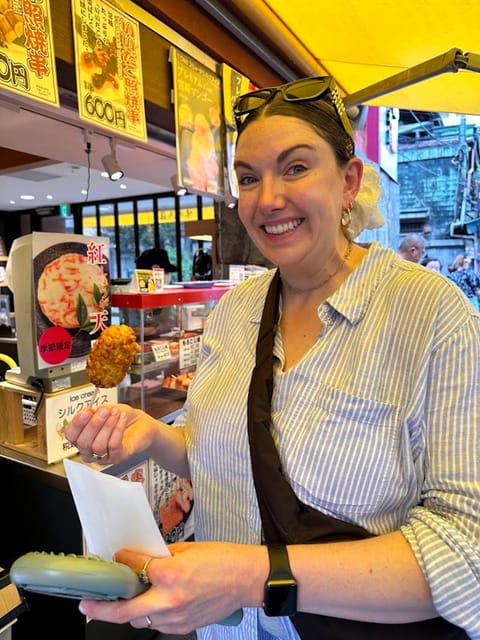
At $70 per person, this is not the cheapest way to stroll around Tsukiji. You can enter the market on your own without paying an admission fee, and independent visitors can choose exactly how much to eat.
The value comes from the combination. You receive a two-hour English-guided walk, historical background, a visit to Namiyoke Shrine, photos taken during the tour, a small bento with tuna and fresh wasabi, a small amount of sake, and a bottle of water. You also get help understanding a market that can otherwise feel like a blur of signs and seafood counters.
The small group makes the cost easier to justify. With no more than six participants, the guide has a realistic chance to answer personal questions and offer individual food advice. The strongest reports about the experience focus on the guide, especially Chinami’s English, local knowledge, and practical tips.
The price is less attractive if you mainly want to eat a large meal. The included bento is small, and every extra dish, drink, souvenir, knife, ingredient, and Lawson snack costs more. Budget another amount for the market if you want to sample freely.
You can reserve now and pay later, and cancellation is free up to 24 hours before the start for a full refund. Those terms are useful if your Tokyo schedule is still shifting.
Who will enjoy this Tsukiji walk most
I would recommend this tour to a first-time Tokyo visitor who wants food, context, and a manageable introduction to Tsukiji. It also suits anyone who enjoys asking questions and learning how a place works instead of simply collecting food photos.
It is a good match if you want:
- A short activity that fits into a busy Tokyo schedule
- English guidance from a local expert
- A small group rather than a large food tour
- A seafood tasting included in the price
- Advice on market shopping and convenience-store food
- A gentle introduction to shrine customs
You should think twice if you are vegetarian, want a long sit-down meal, dislike walking, or prefer to explore completely alone. The tour includes several walks, market crowds, seafood, and extra spending if you want to try more food.
Families can ask in advance about children’s ages and food preferences. The provider says it will try to accommodate them, but you should give that information before the tour rather than arriving with an unplanned dietary request.
Practical tips for a better morning or afternoon
Arrive at the Lawson meeting point with enough time to find the Tsukiji 4 chome intersection. Wait outside the store and do not crowd the entrance. Look for the guide’s notice board.
Wear shoes suited to two hours on foot. Keep your belongings close in the market lanes, and leave room for other people to pass. A small bag is easier than bulky luggage.
If you plan to shop, decide in advance how much you want to spend. The included tasting gives you a starting point, but the Outer Market and Lawson can quickly tempt you into buying more.
Ask questions during the shrine visit and tuna tasting. These are the parts where the guide’s explanation adds the most value. At the Outer Market, use the guide to identify options, then decide which purchases are worth your money.
The tour is offered in English and lasts two hours. Starting times vary, so check availability when booking. Since there are only four published ratings, the perfect five-star score is encouraging but not a large statistical sample. I would place more weight on the repeated praise for the guide’s English and local advice than on the number alone.
Should you book the Tsukiji Foodie and Educational Tour?
Book it if you want a compact, well-organized introduction to Tsukiji with a real seafood tasting and a guide who can explain local customs. The tuna, fresh wasabi, sake, shrine visit, market walk, and Lawson advice create a useful mix of special and ordinary Tokyo.
Skip it if you are vegetarian, want a large lunch, or already know Tsukiji well. For most first-time visitors who enjoy Japanese food and prefer a small group, $70 is a fair price for the structure and included tasting. Just budget separately for anything else you eat or buy.
FAQ
Where does the Tsukiji tour meet?
It meets outside Lawson at the Tsukiji 4 chome intersection. Do not gather around the entrance, since you may block people entering the store. The guide will have a notice board.
How long does the tour last?
The tour lasts two hours and returns to the Lawson meeting point.
What food and drinks are included?
You receive a small bento box with freshly cut tuna and fresh wasabi, a small amount of Japanese sake, and a bottle of water.
Are extra market snacks and drinks included?
No. Street food, drinks, desserts, other market purchases, and Lawson items are paid for separately by each participant.
Is the tour suitable for vegetarians?
No. The tour is not suitable for vegetarians because the included tasting centers on tuna and seafood.
Can children join the tour?
Children may be accommodated if you provide their ages and food preferences in advance. The provider will try to adjust the tour where possible.
Is the tour offered in English?
Yes. The tour has a live English-speaking guide and is limited to six participants.
More Shopping Tours in Tokyo
- Tokyo: Tsukiji Fish Market Sushi Making Class with Pro Chef
★ 4.9 · 506 reviews - Tokyo Food Tour Taste Fresh Delights at Tsukiji Market
★ 5.0 · 429 reviews - Tokyo Tsukiji Fish Market Tour and Sushi Making Lesson
★ 5.0 · 390 reviews - Tsukiji Fish Market: Street Food & Culture Walking Tour
★ 4.8 · 259 reviews
More Markets in Tokyo
- Tsukiji Fish Market Guided Tour and Sushi Making with Pro Chef
★ 5.0 · 775 reviews - Tokyo: Tsukiji Fish Market Food and Culture Walking Tour
★ 4.7 · 757 reviews - Tsukiji Fish Market: Street Food & Culture Walking Tour
★ 5.0 · 669 reviews - Tsukiji Fish Market Small-Group Food Walking Tour
★ 5.0 · 621 reviews
New on our Tokyo list
- Sumi-e Experience in a relaxing green tea shop in Tokyo★ 5.0 · 3 reviews
- Tokyo : Kamikaze Street Drift Ride★ 5.0 · 3 reviews
- Private Zen Meditation in English in Shinjuku, Tokyo★ 5.0 · 3 reviews
- Onsen Spa in Tokyo and Asakusa Bar Hopping with Local Guide★ 5.0 · 3 reviews
- Easy for everyone! Now you can play handmade mini shamisen and show off to everyone! Musical instruments, sweets and live music★ 5.0 · 3 reviews
- Mt Fuji Exploration Tour with Free Japanese Kusa Mochi from Tokyo★ 4.5 · 3 reviews
- Tokyo Tsukiji Fish Market Walking and Exploring Hidden Gems Tour★ 5.0 · 3 reviews
- Tokyo: Private Tsukiji Street Food & Sake with Local Guide★ 5.0 · 3 reviews
Tsukiji & Toyosu Market Tours, compared.
Tokyo Tsukiji Fish Market Food and Culture Walking Tour
Read our review →

Tokyo Sushi Making Class in Tsukiji with Professional Chef
Read our review →
Tsukiji Fish Market Guided Tour and Sushi Making with Pro Chef
Read our review →Tsukiji Fish Market Food and Culture Walking Tour
Read our review →
Tsukiji Fish Market: Street Food & Culture Walking Tour
Read our review →
Tsukiji Fish Market Small-Group Food Walking Tour
Read our review →Browse the lists this tour appears in