
Reviewed · TEMPLE & SHRINE TOURS
Trip to Kamakura & Enoshima: Shrines, Seaside, Temples &Tea
Kamakura gives you a satisfying change of pace from Tokyo: bamboo, temples, seaside rail travel, and a giant bronze Buddha all fit into one long day. I especially like the matcha served beside Hokokuji’s bamboo grove and the short Enoden ride, where city streets and the coast pass close to the train windows.
I also like the free time for Kamakura street food and the chance to feed koi at Shirahata Shrine. The tradeoff is simple: this is a full, active day with several hours on foot, public transport, and a return to Shinjuku that may not happen until evening.
In This Review
- Key points at a glance
- Why Kamakura makes a good break from Tokyo
- The train ride from Shinjuku to Kamakura
- Hokokuji Temple and the bamboo grove
- Matcha and wasanbon in the temple tea house
- Shirahata Shrine and the koi pond
- Kamakura’s shopping streets and lunch break
- The Great Buddha at Kōtoku-in
- Enoden to Enoshima and the coastal walk
- Enoshima Shrine and the observatory
- What $150 includes, and what it does not
- Who should book this day trip
- Should you book the Kamakura and Enoshima tour?
- FAQ
- Where does the tour begin?
- How long is the tour?
- Is transport included?
- Is lunch included?
- What tea experience is included?
- Can I enter the Great Buddha?
- Is the Enoshima observatory included?
- How much walking is involved?
Key points at a glance
- Matcha beside a bamboo grove: Visit Hokokuji Temple and enjoy matcha with a traditional wasanbon sweet in its tea house.
- The Enoden is part of the attraction: Ride the old-style local train from Kamakura toward Enoshima, passing through narrow streets and along the seashore.
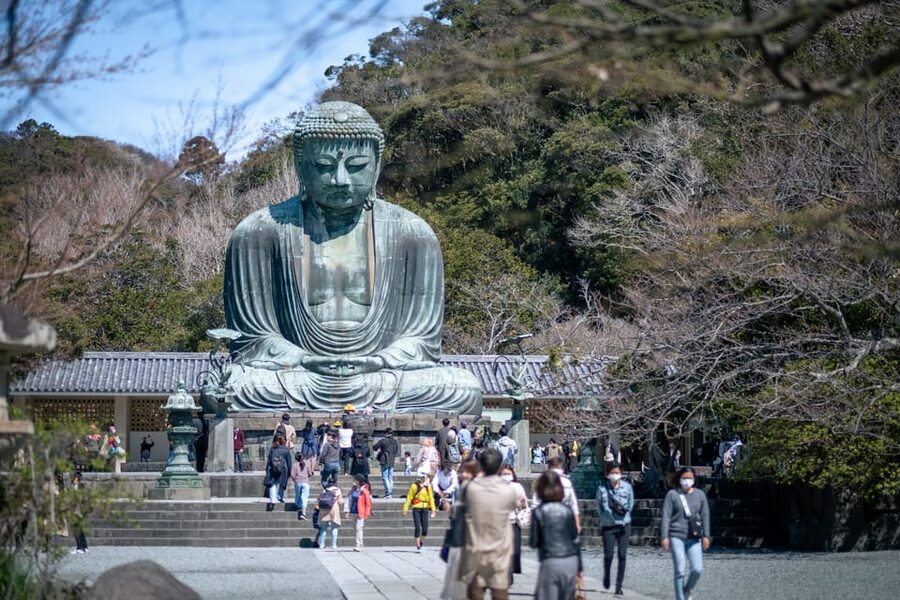
- You can enter the Great Buddha: Kōtoku-in admission includes access inside the famous bronze statue.
- Koi feeding adds a hands-on moment: At Shirahata Shrine, you learn about the shrine and feed fish in its pond.
- Enoshima finishes the day with wide views: Use the island escalators and visit the observatory for views over the coast, with Mount Fuji possible in very clear weather.
- Plan for a long day: The tour costs $150 per person and includes major admissions, tea, koi food, the transport pass, and an English speaking guide, but not meals or travel to and from Shinjuku.
Why Kamakura makes a good break from Tokyo
Kamakura was once a political center, and today it feels far removed from the scale and speed of Tokyo. You get temple grounds, traditional houses, shrine gates, wooded paths, shopping streets, and a coastal railway in a single outing.
That variety is the main reason I would choose this tour over a simple temple visit. You are not spending the whole day looking at similar buildings. The route keeps changing, from a bamboo garden to a shrine pond, from street food to a huge Buddha, then from a local train to an island lookout.
The schedule begins at 8:00am outside the South Gate of Shinjuku Station, by the Green Window ticket office. Look for the guide holding a Snow Monkey Resorts sign. This is an important detail because Shinjuku Station is large and confusing, especially during the morning rush.
The train journey to Fujisawa takes about 60 minutes in the basic description, while the full transport schedule allows closer to 85 minutes. Public transport can run slower on crowded days, so keep your morning open and do not plan a tight appointment after returning to Tokyo.
More Temple & Shrine Tours in Kamakura
- Tokyo: Kamakura & Enoshima Day Trip including Temple Tickets
★ 4.5 · 1,375 reviews - Kamakura Historical Walking Tour with the Great Buddha
★ 5.0 · 129 reviews - Kamakura Private Tour: Temples, Nature, and the Great Buddha
★ 5.0 · 121 reviews
The train ride from Shinjuku to Kamakura
Your guide escorts the group onto the train at Shinjuku and handles the day’s transport plan. The included Enoshima Kamakura Freepass covers the tour’s planned transport, while your own journeys before meeting the group and after the tour are separate.
At Fujisawa, you change to the Enoden, short for Enoshima Electric Railway. This is not just a way to get from one stop to another. The small local train passes through ordinary neighborhoods, narrow streets, and coastal areas, giving you a useful look at how Kamakura and Enoshima fit together.
The Enoden can also be busy. You may not get a perfect window seat, and the journey is short enough that you should simply enjoy the changing views rather than treat it like a sightseeing cruise. The ride to the Kamakura area is one of the day’s most distinctive details, though, and much more memorable than taking a standard suburban train all the way.
Hokokuji Temple and the bamboo grove
From Kamakura Station, you walk for about 30 minutes toward Hokokuji Temple. The route follows a river and passes traditional homes, so the walk itself helps you shift from station-town Kamakura into a quieter setting.
Wear shoes that you can walk in comfortably. This is one of several walking sections, and the day includes outdoor paths, shrine grounds, shopping streets, the Great Buddha area, the Enoshima coast, and a climb or extended walk around the island.
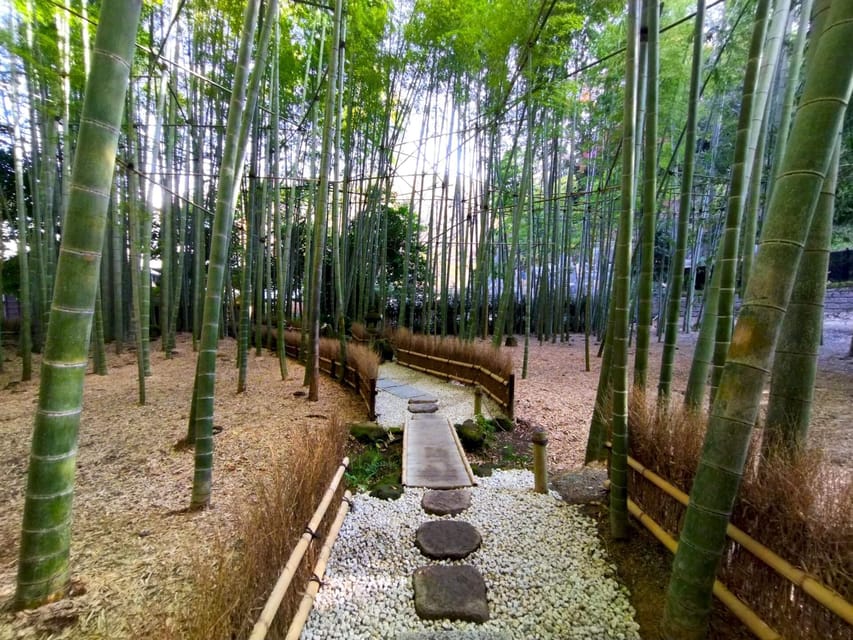
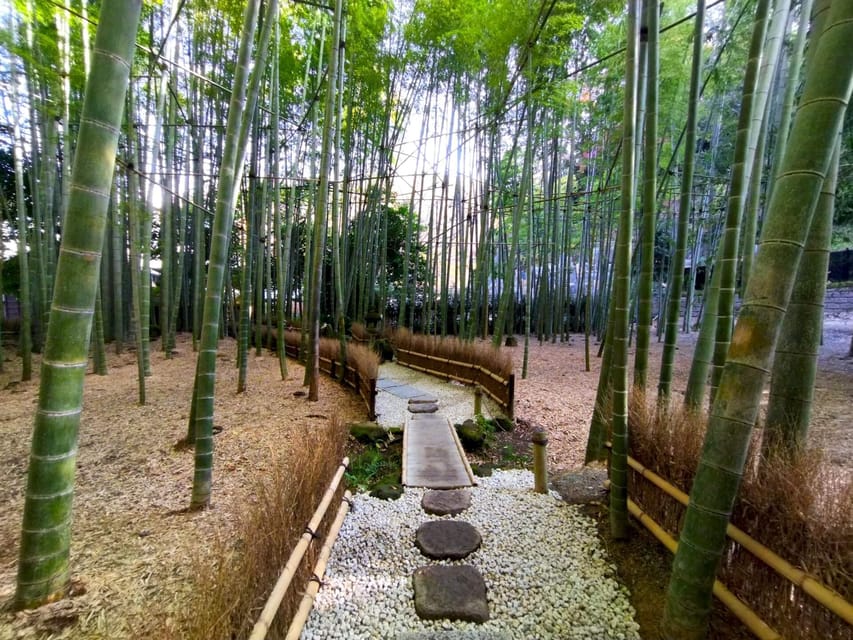
Hokokuji is best known for its bamboo grove. Tall bamboo creates a cool, shaded setting, but the grove is not enormous. That is not a criticism. Its appeal comes from the way the bamboo, statues, temple buildings, and tea house work together in a compact space.
Your guide explains the temple’s role and points out details you might pass without context. This is where the English speaking guide adds real value. Names such as Naoto, Jade, Beth, and Jeff have led this experience, and the strongest part of the guiding is the chance to ask questions about customs, temple practice, and Japanese tea culture as you go.
Matcha and wasanbon in the temple tea house
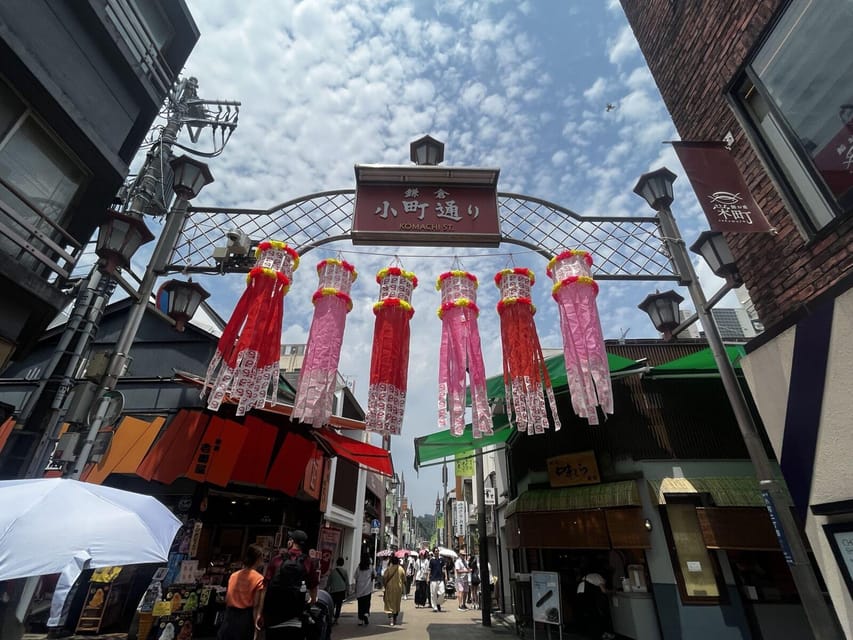
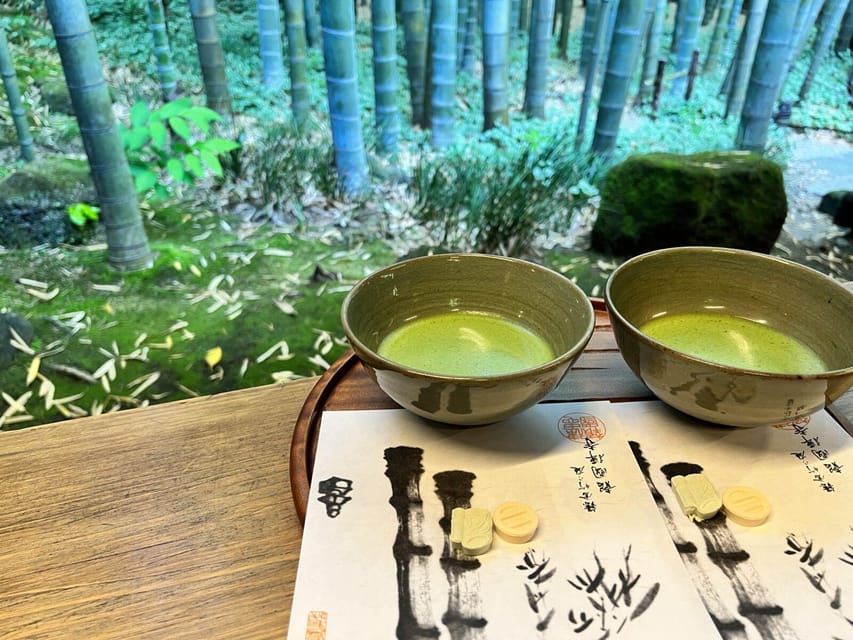
The tea stop is one of the best reasons to book this particular day trip. You sit in the temple tea house overlooking the bamboo grove and receive matcha with wasanbon, a traditional Japanese sugar sweet.
This is not presented as a long formal tea ceremony, so set your expectations correctly. It is a focused introduction to tea culture in a beautiful setting, with your guide explaining why tea matters in Japan and how the ceremony reflects attention, hospitality, and ritual.
The setting does much of the work. After walking from the station, the quiet tea house gives you time to pause before the busier parts of Kamakura. You also get something tangible from the visit: a taste of matcha culture rather than only a quick photograph of a temple gate.
If you dislike bitter drinks, the wasanbon helps balance the matcha. The tea experience and bamboo grove together take about an hour in the published schedule, though the full temple and tea portion is described as closer to two hours. Expect the guide to adjust the pace according to the group and transport conditions.
More temples and shrines near Kamakura:
- From Tokyo Kamakura, Hachimangu Shrine and Enoshima Full Day Tour
★ 4.5 · 36 reviews - Day Trip to Kamakura & Enoshima: Shrines, Seaside, Temples & Tea
★ 5.0 · 32 reviews - Kamakura Temples Private Guided Tour from Tokyo
★ 4.8 · 21 reviews - Kamakura Bamboo Forest and Great Buddha Private Tour
★ 5.0 · 12 reviews
Shirahata Shrine and the koi pond
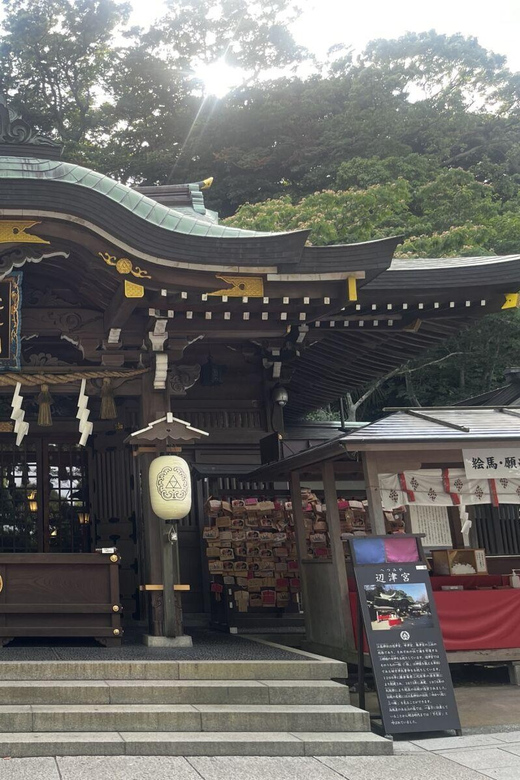
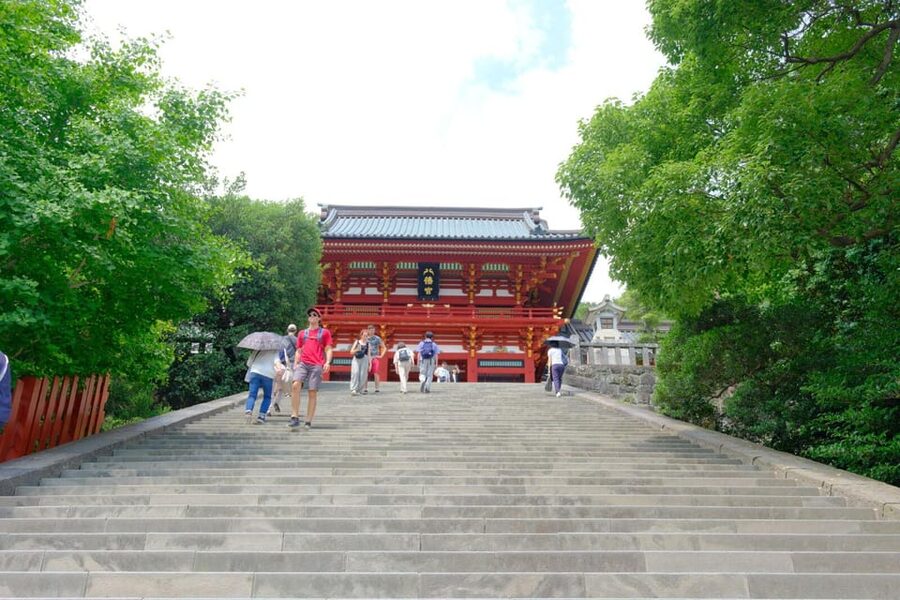
The walk back toward central Kamakura takes around 20 minutes. Your next stop is Shirahata Shrine, reached through a large red torii gate and across attractive bridges.
This visit is shorter, about 30 minutes, but it adds a welcome change of mood. Instead of only listening to temple explanations, you have a simple activity: feeding the resident koi in the shrine pond.
Koi feeding is a small detail, yet it helps you notice the pond and garden as living places rather than photo backgrounds. Your guide also explains the shrine’s story and significance, giving the stop more shape than a quick walk through the grounds.
The schedule can feel brisk here. Thirty minutes is enough for the shrine introduction and fish feeding, but not enough for a slow, independent exploration of every corner. If you want long periods alone at each site, a self-guided day may suit you better. If you want several well-chosen stops with context, this pace works well.
Kamakura’s shopping streets and lunch break
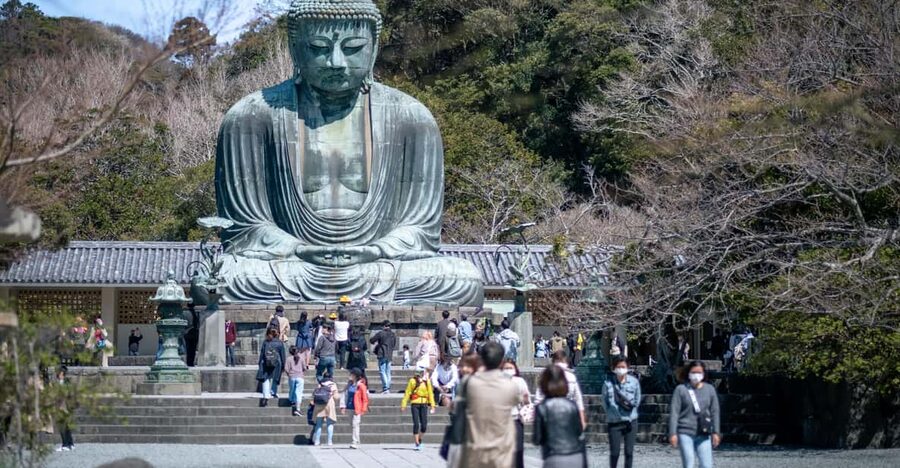
After Shirahata Shrine, you walk about five minutes to the main shopping and eating area. This is your one-hour lunch break and free time, so you can choose what to eat rather than being sent to a fixed restaurant.
Your guide gives an introduction to the area and points out local foods to try. That matters in Kamakura, where street snacks and small food purchases are part of the experience. One particularly useful feature is the chance to pick up food as you walk and save time, rather than spending the entire break seated for a formal meal.
Lunch is not included. Set aside extra money for food, drinks, and souvenirs, and remember that the tour price does not cover additional refreshments. The break also gives you the best chance to shop at your own pace, but you must return to the agreed meeting point on time.
This is a good moment to tell your guide what you enjoy eating. Previous guides have made lunch suggestions that helped people choose, but the exact recommendations depend on the guide and what is open that day.
The Great Buddha at Kōtoku-in
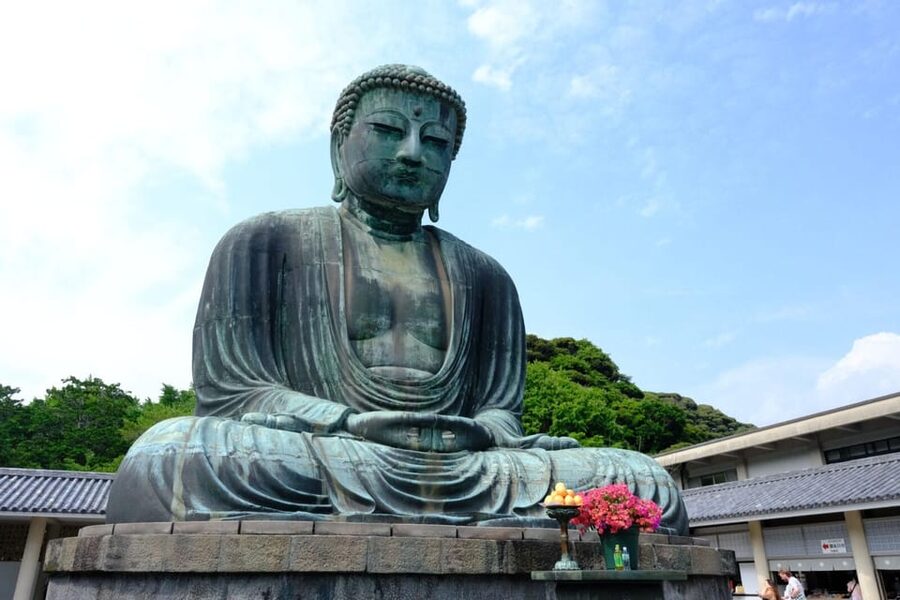
The afternoon visit to Kōtoku-in brings you to Kamakura’s most famous sight: the Great Buddha. The bronze figure sits at the center of the temple grounds, and its size is difficult to understand from photographs alone.
The tour includes temple admission and the separate fee to go inside the statue. That interior visit is brief, but it changes your sense of scale. You are not simply standing in front of a monument. You can look at how the statue was made and feel the thickness and structure of the bronze from within.
Your guide explains the Buddha and the temple grounds, making this more useful for a first visit than arriving alone, taking a few pictures, and leaving. The planned visit lasts about 30 minutes, so the focus is the statue rather than a long exploration of the wider area.
Kōtoku-in can be one of the busiest parts of the day. The statue draws many people, and the space around it may feel less calm than Hokokuji. Still, this is a stop I would not cut. It gives the day a clear centerpiece and is one of the few places where the scale of Kamakura’s religious art becomes immediately physical.
Enoden to Enoshima and the coastal walk
From Kōtoku-in, it is about a five-minute walk to Hase Station. You board the Enoden again for the roughly 23-minute trip to Enoshima.
The second Enoden ride is especially enjoyable because the route moves toward the coast. The train threads through built-up areas before opening toward the sea, and its small scale makes the journey feel local rather than staged for sightseeing.
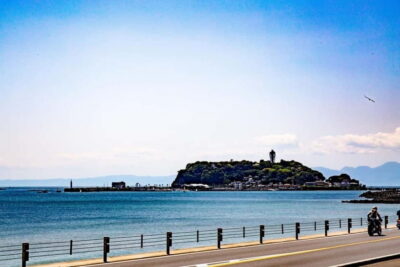
At Enoshima, you walk along the coastline before heading up the island. This part of the day offers a different kind of view from the temples. You see the island from shore, watch the sea, and get a sense of why Enoshima is popular with residents as well as people visiting Japan.
On very clear days, Mount Fuji may be visible. Treat that as a weather bonus, not a promise. Clouds, haze, and changing light can hide it, but the coastal walk still gives you a pleasant break after the town streets and temple grounds.
Enoshima Shrine and the observatory
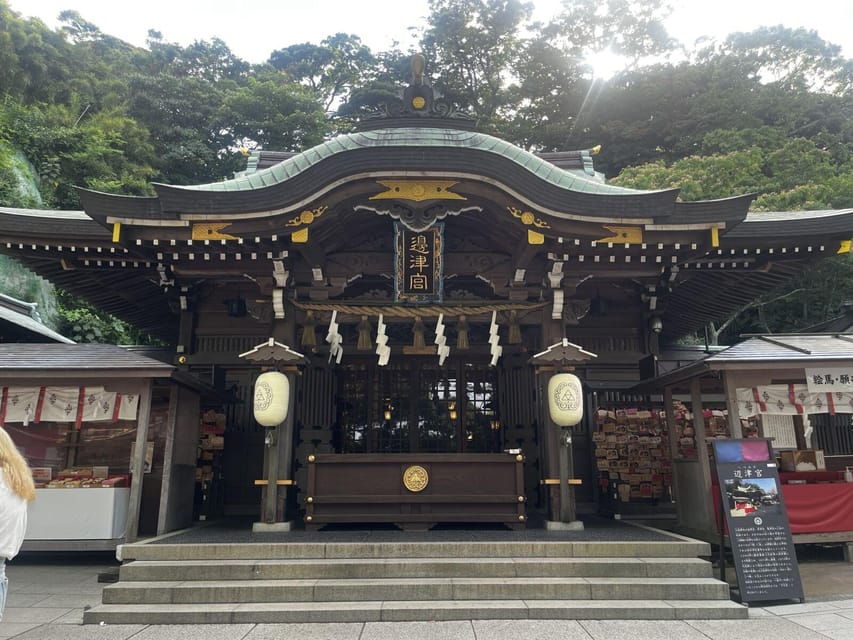
The route continues to Enoshima Shrine and the island’s higher points. The Enoshima escalators are included, as is admission to the observatory, which is a useful saving because the island involves uphill walking.
The escalators do not remove every physical demand. You will still walk on the island and spend about an hour and a half at Enoshima, including the shrine, views, and coastal areas. Take water and wear shoes with a firm grip.
The observatory is the payoff. From the top, you get broad views over the island, the sea, and the surrounding coast. After a day of close temple gardens and narrow streets, the open view helps the route finish on a larger scale.
Depending on the season and the day’s pace, you might see sunset as you leave Enoshima. Again, this is not guaranteed, but the timing can work in your favor. You return to Katase Enoshima Station, ride back to Fujisawa, and then take the train to Shinjuku.
What $150 includes, and what it does not
At $150 per person, this is not the cheapest way to reach Kamakura. You could arrange the trains and visit some sites independently for less. The real question is what you value.
The price includes:
- The planned transport pass for the tour
- Hokokuji admission
- Matcha and wasanbon
- Koi feeding
- Kōtoku-in admission
- Entry inside the Great Buddha
- Enoshima escalators
- Enoshima observatory admission
- An English speaking guide
Those admissions add up, and the guided route saves you from working out the sequence between Kamakura and Enoshima. The guide also gives the day a clear rhythm, explains customs, and helps with food suggestions during the free hour.
You still pay for your own lunch, extra food and drinks, and transport to Shinjuku before the meeting point or after the return. The tour also relies on public trains, so delays or crowded conditions can affect the schedule.
Who should book this day trip
I would choose this tour if you are staying in Tokyo and want to see Kamakura and Enoshima without planning several train changes and temple visits yourself. It is especially useful for a first visit, when a guide can explain what you are seeing and keep the day moving.
It suits people who enjoy variety: tea, gardens, shrine customs, a major statue, street food, a local train, and sea views. Families can also appreciate the koi feeding and the chance to enter the Great Buddha, though parents should be ready for the amount of walking.
It is less suitable if you want a slow day with long meals or extended time at one temple. It is also a poor match if walking for several hours is difficult. Check the weather before leaving Shinjuku, and bring an umbrella or raincoat if needed.
The tour has a 5.0 rating from 11 listed reviews, with repeated praise for the guides. Naoto is noted for taking time with questions, while Beth is remembered for a small-group feel and strong lunch suggestions. Jade and Jeff are also named positively. Guide assignments can change, but the pattern is clear: the human side of the tour matters as much as the sights.
Should you book the Kamakura and Enoshima tour?
Book it if you want an efficient, guided introduction to the area and like the idea of fitting several very different experiences into one day. The matcha setting, Great Buddha interior, Enoden rides, and Enoshima observatory give the route enough variety to justify the long outing.
Skip it if you prefer to travel slowly, control every train and meal, or spend a whole day at just one temple district. For most first-time visitors based in Tokyo, though, the $150 covers enough transport, admissions, and special stops to make the convenience worthwhile. Free cancellation up to 24 hours before departure and reserve-now, pay-later booking also make it easier to fit into a changing Japan itinerary.
FAQ
Where does the tour begin?
The meeting point is outside the South Gate of Shinjuku Station, beside the Green Window ticket office, also called midori no madoguchi. Meet at 8:00am and look for a guide holding a Snow Monkey Resorts sign.
How long is the tour?
It is a one-day tour. The planned route includes train travel, walking, temple visits, lunch free time, Enoshima, and the return journey to Shinjuku.
Is transport included?
The Enoshima Kamakura Freepass covers the planned transport used during the tour. Trains and transport before the meeting point and after the tour are not included.
Is lunch included?
No. You receive free time for lunch in Kamakura, but you pay for your own food and drinks.
What tea experience is included?
At Hokokuji Temple, you receive matcha and a wasanbon traditional Japanese sweet in the temple tea house overlooking the bamboo grove.
Can I enter the Great Buddha?
Yes. The tour includes Kōtoku-in admission and the entrance fee to go inside the Great Buddha statue.
Is the Enoshima observatory included?
Yes. Admission to the Enoshima observatory and use of the island escalators are included.
How much walking is involved?
The tour includes several hours of outdoor walking, including routes between Kamakura Station, Hokokuji, Shirahata Shrine, the shopping district, Kōtoku-in, Hase Station, and Enoshima. Wear sensible shoes and clothing suited to walking.
New on our Kamakura list
- 1-Day trip: Kamakura City (Enoshima/Shonan/Beach)★ 4.7 · 3 reviews
- Kamakura Zen: Great Buddha, Nature, Bamboo & Samurai Culture★ 5.0 · 3 reviews
- Kamakura Half Day Walking Tour with Local Experience★ 3.4 · 4 reviews
- Hiking Tour in Enoshima with a Local Guide★ 5.0 · 4 reviews
- Kamakura Tour with Pro Photographer: Anime Train & Fuji Sunset★ 5.0 · 4 reviews
- Kamakura Private Custom Tour★ 5.0 · 4 reviews
- Kamakura Historical and Cultural Day Trip with Local Cuisine★ 5.0 · 4 reviews
- Kamakura Full-Day Private Tour★ 5.0 · 4 reviews
Temple & Shrine Tours, compared.
Meiji Shrine, Asakusa, Skytree Bus Tour and Cruise
Read our review →
Asakusa Walking Tour with Sensoji Temple Visit
Read our review →
Kamakura & Enoshima Day Trip including Temple Tickets
Read our review →
Nikko Toshogu Shrine and Kegon Waterfall Tour
Read our review →
Tokyo Panoramic 1 Day: Meiji Shrine, Asakusa, Odaiba and SKYTREE®
Read our review →
Mt. Fuji Heritage Tour: Traditional Villages, Lakes & Shrine
Read our review →Browse the lists this tour appears in