
Reviewed · JAPANESE CULTURE WORKSHOPS
Tsugaru shamisen performance over traditional dinner
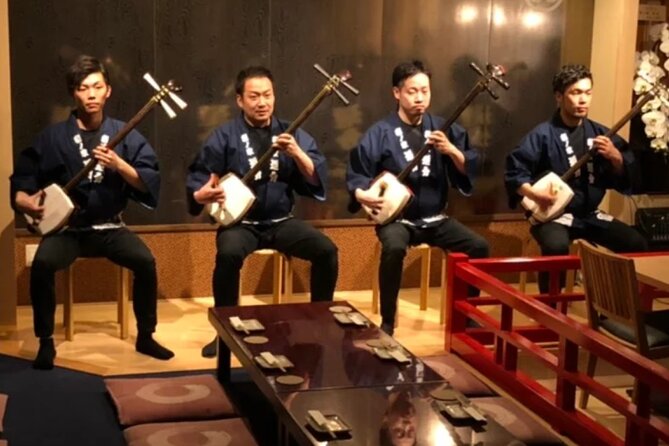
The best part of this Asakusa evening comes after the temple walk: you sit close to award-winning musicians for a 40-minute Tsugaru-shamisen concert, then meet them over a traditional Japanese dinner. This is a small, personal setting rather than a large stage show.
I like two things here. First, guides such as Akiko and Yoko give the famous Senso-ji area some historical context instead of sending you straight to a photo stop. Second, the dinner and welcome drink are included, and the restaurant can handle vegetarian needs with advance notice. The main drawback is the price, $218.91 per person, which makes this a special-night purchase rather than a casual sightseeing add-on.
In This Review
- Key points to know before booking
- Why this Asakusa evening works
- Starting above the streets at Asakusa Culture Tourist Information Center
- Walking through Kaminarimon and Nakamise
- Seeing Hozomon and Tokyo’s oldest temple
- The walk to dinner covers about a mile
- A close-up Tsugaru-shamisen concert
- Dinner with one welcome drink included
- Is $218.91 good value?
- Who should book this experience?
- My booking advice
- FAQ
- Where does the Tsugaru-shamisen experience begin?
- What time does the tour start?
- How long does the experience last?
- How many people can join the tour?
- Is dinner included?
- How long is the live concert?
- Does the tour include hotel pickup and drop-off?
- Can I cancel for a full refund?
Key points to know before booking
- The evening combines three experiences: an Asakusa history walk, a shamisen concert, and a Japanese dinner.
- The group is limited to eight people, useful in Asakusa, where the major sights can feel crowded.
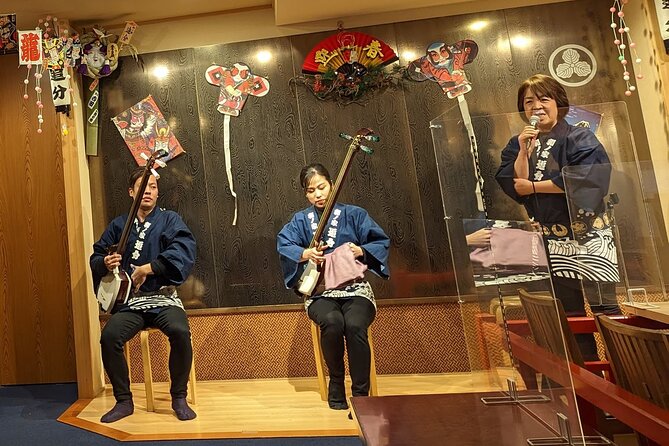
- The concert takes place in a small restaurant, so you sit close to the musicians rather than watching from a distant auditorium.
- The walk covers about a mile, give or take, from the tourist information center to the restaurant.
- One welcome drink and dinner are included, while additional drinks cost extra.
- The tour begins at 5:30 pm and ends at the restaurant, with no hotel pickup or drop-off.
Why this Asakusa evening works
Asakusa is one of Tokyo’s best areas for seeing the city’s older character. Senso-ji draws huge numbers of people, but the district also has small streets, traditional shops, and a strong connection to performing arts. This experience uses that setting well.
You begin with a short guided walk before the dinner show. That matters because the temple complex can otherwise become a blur of red gates, incense, souvenir stalls, and smartphone cameras. A guide can point out how the gates and temple fit together, then give you enough context to appreciate what you are seeing.
The evening’s second half changes the mood. Instead of another sightseeing stop, you move to a compact Japanese restaurant for food and music. The small group size of eight keeps the outing from feeling like a parade, and it makes the meeting with the musicians more natural.
I would see this as a cultural evening with sightseeing attached, not simply a temple tour with dinner added. The walk is fairly short, while the concert and meal take up most of the time. If traditional music is your main reason for booking, this balance should suit you.
More craft workshops in Tokyo:
- Tokyo Shinjuku Chopsticks Making Class
★ 5.0 · 1,763 reviews - Kintsugi Experience: Art of Golden Joinery in Tokyo
★ 5.0 · 467 reviews - Authentic Pure Gold Kintsugi Workshop with Master Taku in Tokyo
★ 5.0 · 217 reviews
Starting above the streets at Asakusa Culture Tourist Information Center
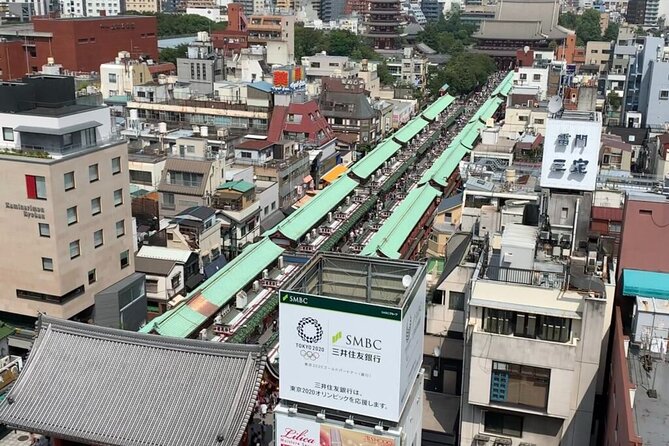
Meet at the Asakusa Culture Tourist Information Center at 5:30 pm. The building has an open terrace observation deck on its top floor, where you can get a panoramic view of the district.
This is a smart starting point. Before walking at street level, you get a quick sense of how Asakusa fits together. You can see the busy roads, temple grounds, and surrounding Tokyo buildings from above. The stop lasts about 15 minutes, so it is an orientation rather than a long sightseeing session.
Do not expect a full city observatory visit. The value here is simple: you get your bearings fast, then move on to the landmarks. The admission cost is included, and the meeting point is near public transportation.
Be precise when finding the group. The center is at 2-chome 18-9 Kaminarimon in Taito City. Since the experience starts at a fixed time, arriving early is wise, especially if you are still learning Tokyo’s station exits.
Walking through Kaminarimon and Nakamise
The first landmark is Kaminarimon, or Thunder Gate, the famous entrance marked by its giant red lantern. It is one of Tokyo’s most recognizable sights, but the guide’s explanation gives it more meaning than a quick photograph.
From the gate, you walk along Nakamise Shopping Street toward Senso-ji. The street is lined with shops selling snacks, souvenirs, and traditional-style goods. It can feel cheerful and commercial, which may surprise you if you expect the approach to a major Buddhist temple to be quiet and solemn.
The stop is listed as about five minutes, but the walk itself carries you farther into the complex. The short formal stops mean you should not expect long shopping time or detailed browsing. Your focus is the route and the story of the district.
I like this part because it shows how religion and everyday commerce sit side by side in Asakusa. You are not being taken to an isolated monument. You are seeing a working part of Tokyo where temple visitors, shoppers, and local businesses share the same approach.
Seeing Hozomon and Tokyo’s oldest temple
Next comes Hozomon, the inner gate leading toward Senso-ji. Its second story holds Buddhist treasures, and its large two-level form gives the entrance a different feel from the outer Thunder Gate.
The tour then reaches Senso-ji, identified as Tokyo’s oldest temple and one of its most important. A five-story pagoda stands nearby. The temple complex is the sightseeing heart of the outing, but the scheduled stop is short, around five minutes.
That timing is worth understanding. You will see the key gates, the temple, and the pagoda, but this is not an extended temple study. If you want time for prayer, shopping, photographs, or a close look at every detail, you may need to return to Asakusa on your own.
The guide-led approach is most useful here. Akiko and Yoko are named guides associated with the experience, and the walk is designed to explain the district’s development and cultural importance. You get a compact introduction rather than a long lecture.
Asakusa can be crowded, even later in the day. The small group helps, but it cannot remove the crowds from a major Tokyo landmark. The benefit is less about having the temple to yourself and more about moving through it with a clear plan.
A few more Tokyo bookings worth comparing
- Tokyo Bar Hopping Tour in Shinjuku (All-You-Can-Drink + Dinner)
★ 5.0 · 3,587 reviews - Tokyo: Sumo Show and Dining Experience
★ 4.8 · 2,742 reviews - Sumida River: Japanese Traditional Yakatabune Dinner Cruise
★ 4.6 · 779 reviews - Tokyo Bay Yakatabune Dinner/Day Cruise with Japan Show and Drinks
★ 4.5 · 473 reviews
The walk to dinner covers about a mile
From the tourist center and temple area, you continue on foot to the restaurant at 5-chome 37-7 Asakusa. The total walk is roughly a mile, give or take.
That distance is manageable for most people, but you should treat this as a walking tour followed by dinner, not a taxi-based outing. Comfortable shoes will help. The route is part of the experience, though the details of every street are not specified, so do not book it expecting a long neighborhood walk beyond the main Asakusa sights.
The restaurant has limited seating, which explains the group cap and the close-up concert format. It also means the booking depends on availability. Confirmation is sent within 48 hours of booking, subject to that availability.
The tour does not include hotel pickup or drop-off. You make your own way to the starting point, and the outing ends at the restaurant. That ending can work well if you plan to eat nearby or continue exploring Asakusa, but you should organize your return route before dinner begins.
A close-up Tsugaru-shamisen concert
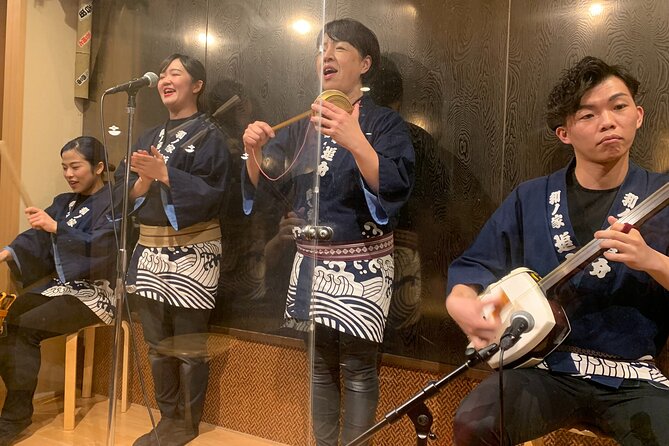
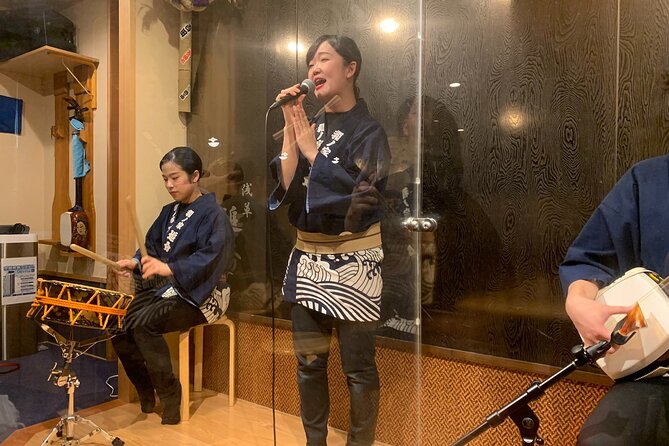
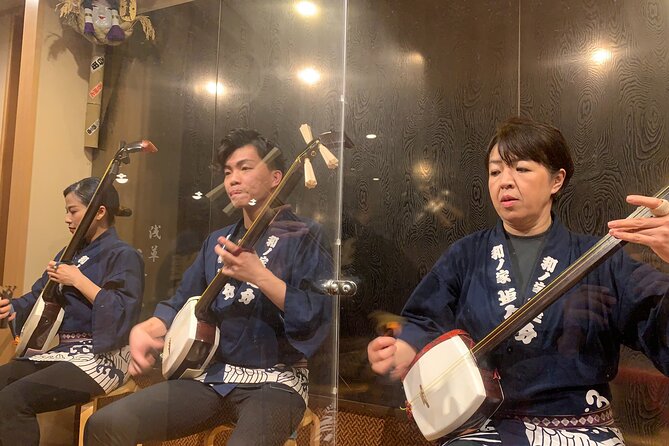
The concert is the emotional center of the evening. Tsugaru shamisen is a Japanese string-music tradition known for its strong, rhythmic sound and expressive playing. Here, the performance lasts about 40 minutes and features traditional instruments, including shamisen.
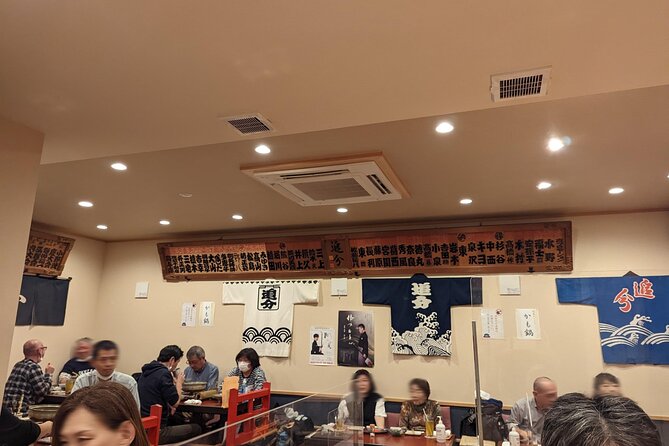
The setting matters. You are not watching from the back of a formal concert hall. The performance takes place inside a small restaurant with limited seats, putting you close to the musicians. That intimacy makes the music easier to follow visually, especially if this is your first live shamisen performance.
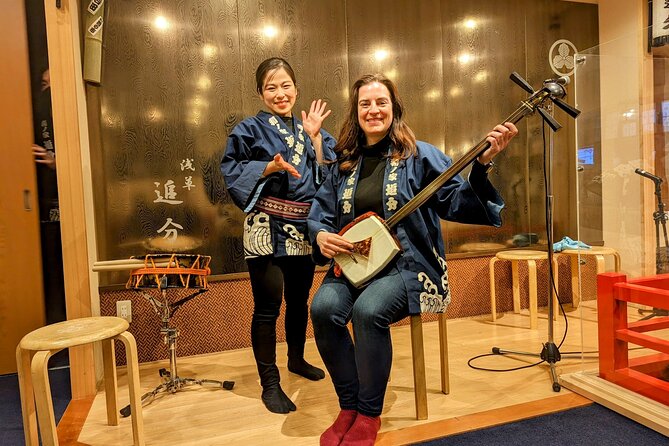
The musicians are award-winning performers, and you have a chance to meet them afterward. That personal contact is something you would not usually get from a standard stage concert or a general sightseeing pass.
The show is not presented as a full evening of music. It is a 40-minute concert within a four-hour experience, with dinner and the Asakusa walk around it. If you want a longer specialist concert, this may feel brief. If you want a first taste of the instrument without committing to a full music program, the length is practical.
I also like the order of the evening. You first see the temples and streets connected with older Tokyo, then hear a traditional instrument in a relaxed local setting. The music becomes part of the neighborhood experience instead of an unrelated show added to a dinner reservation.
Dinner with one welcome drink included
Dinner is included, along with one welcome drink. Additional drinks are available to order, but they are not part of the tour price.
The meal is described as a traditional Japanese dinner with a variety of familiar Japanese staples. The exact menu is not provided, so you should not book this expecting a named specialty or a fixed list of courses. The appeal is the chance to share a meal in the same small setting as the performance.
Vegetarians should contact the operator before booking. One vegetarian diner received special attention and enough food to feel fully looked after. That is useful information, but it is still wise to state your needs in advance rather than assume the standard meal will be vegetarian.
Dinner and music together take roughly two hours at the restaurant. This is where the tour earns part of its price. You are paying not only for food, but also for a reserved cultural program, a small group, and access to musicians after the show.
Still, the meal is not an unlimited drinks package. If you want sake, beer, or other drinks beyond the welcome beverage, set aside extra money. The included drink keeps the arrangement simple, but it does not cover every possible dining choice.
Is $218.91 good value?
At $218.91 per person, this is expensive compared with a basic Asakusa walking tour or an ordinary Japanese dinner. You can visit Senso-ji without paying an entry fee, and the main temple sights are freely accessible.
The value comes from combining several bookings into one evening. You receive a guided walk, a panoramic observation stop, a reserved dinner, one welcome drink, a 40-minute concert by award-winning performers, and a meeting with the musicians. You also avoid arranging the restaurant and music separately.
For a first visit to Tokyo, that convenience can be worth paying for. You get a fixed plan, a small group, and a guide who helps connect the sights. It is especially useful if you want an evening with cultural content but do not want to navigate a Japanese restaurant and concert venue on your own.
The price is harder to justify if your main goal is simply seeing Senso-ji. It is also less appealing if you already have a strong Tokyo food plan or prefer choosing your own restaurant. Think of the cost as paying for a packaged cultural evening, not just dinner.
The experience is commonly booked about 26 days ahead, so planning early is sensible. The group maximum is eight, and the restaurant has limited seating. Confirmation arrives within 48 hours, subject to availability.
Who should book this experience?
I would recommend it to first-time Tokyo visitors who want a manageable introduction to Asakusa and a traditional music experience in one outing. It also fits couples, families with older children, and small groups who value a planned evening over independent restaurant research.
It is a particularly good match if you have never heard shamisen music live. The short concert gives you a clear introduction, and meeting the performers adds a human touch.
Vegetarians can also consider it, provided they communicate their needs ahead of time. The food arrangement has been adapted successfully, but dietary planning should never be left until the evening itself.
You may want to skip it if you dislike group schedules, want a long temple visit, or prefer a quiet dinner without a performance. The meal and concert happen in a small restaurant, so this is a social cultural outing rather than a private dining experience.
Most people can participate, and the meeting point is near public transportation. The walk is about a mile, so anyone concerned about extended walking should keep that in mind. The tour also requires good weather and a minimum number of participants. If poor weather or low enrollment cancels it, you are offered another date, another experience, or a full refund.
My booking advice
Book this tour if you want music, food, and Asakusa context in one carefully timed evening. The strongest reasons are the close-up shamisen performance, the eight-person limit, and the chance to meet the musicians after the show.
I would not book it only for Senso-ji. You can see the temple on your own, and the formal sightseeing stops are brief. Book it for the complete evening, especially if the concert is the part you are most curious about.
The cancellation policy is fair: cancel at least 24 hours before the 5:30 pm start for a full refund. Last-minute changes are not accepted, so keep your schedule firm once you commit.
FAQ
Where does the Tsugaru-shamisen experience begin?
It begins at the Asakusa Culture Tourist Information Center, at 2-chome 18-9 Kaminarimon in Taito City, Tokyo.
What time does the tour start?
The tour starts at 5:30 pm.
How long does the experience last?
The experience lasts approximately four hours.
How many people can join the tour?
The group has a maximum of eight participants.
Is dinner included?
Yes. Dinner and one welcome drink are included. Additional drinks can be ordered separately and are not included in the tour price.
How long is the live concert?
The live concert lasts 40 minutes and features traditional Japanese instruments performed by award-winning musicians.
Does the tour include hotel pickup and drop-off?
No. Hotel pickup and drop-off are not included. The tour ends at the restaurant in Asakusa.
Can I cancel for a full refund?
Yes. You can cancel at least 24 hours before the experience start time for a full refund. Poor weather or failure to reach the minimum number of participants may also lead to a different date, another experience, or a full refund.
More Dining Experiences in Tokyo
- Tokyo: Shinjuku Bar Hopping with All-You-Can-Drink & Dinner
★ 4.9 · 440 reviews - Tokyo Dinner Cruise & Tradition Show & Drinks & Tokyo Tower
★ 4.7 · 315 reviews - Tokyo Bay: Traditional Japanese Yakatabune Dinner Cruise
★ 4.7 · 243 reviews - Professional Ramen & Gyoza with Ramen Chef in a restaurant!
★ 5.0 · 223 reviews
New on our Tokyo list
- Sumi-e Experience in a relaxing green tea shop in Tokyo★ 5.0 · 3 reviews
- Tokyo : Kamikaze Street Drift Ride★ 5.0 · 3 reviews
- Private Zen Meditation in English in Shinjuku, Tokyo★ 5.0 · 3 reviews
- Onsen Spa in Tokyo and Asakusa Bar Hopping with Local Guide★ 5.0 · 3 reviews
- Easy for everyone! Now you can play handmade mini shamisen and show off to everyone! Musical instruments, sweets and live music★ 5.0 · 3 reviews
- Tokyo: Private Tsukiji Street Food & Sake with Local Guide★ 5.0 · 3 reviews
- Mt Fuji Exploration Tour with Free Japanese Kusa Mochi from Tokyo★ 4.5 · 3 reviews
- Tokyo Tsukiji Fish Market Walking and Exploring Hidden Gems Tour★ 5.0 · 3 reviews
Japanese Culture Workshops, compared.
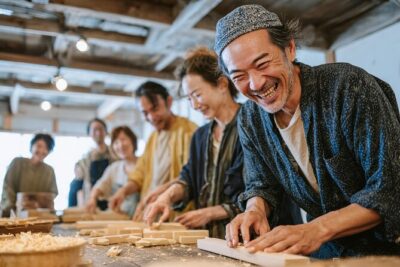
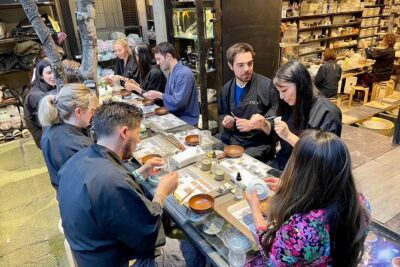
Kintsugi Experience: Art of Golden Joinery in Tokyo
Read our review →
Authentic Pure Gold Kintsugi Workshop with Master Taku in Tokyo
Read our review →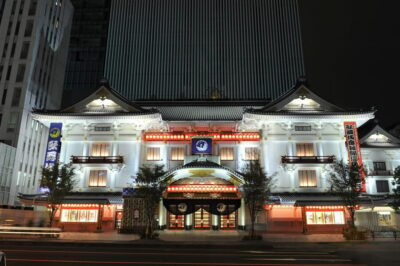
KABUKI Show at Kabukiza Theatre Admission Ticket
Read our review →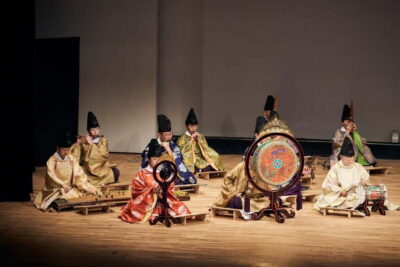
KABUKI, BUNRAKU, etc. presented by National Theatre
Read our review →
Kintsugi Workshop Class in Shibuya, Tokyo with mon cadeau
Read our review →
Browse the lists this tour appears in