
Reviewed · TEA CEREMONIES
【NEW】Matcha Making Experience and Matcha Comparison in Tokyo
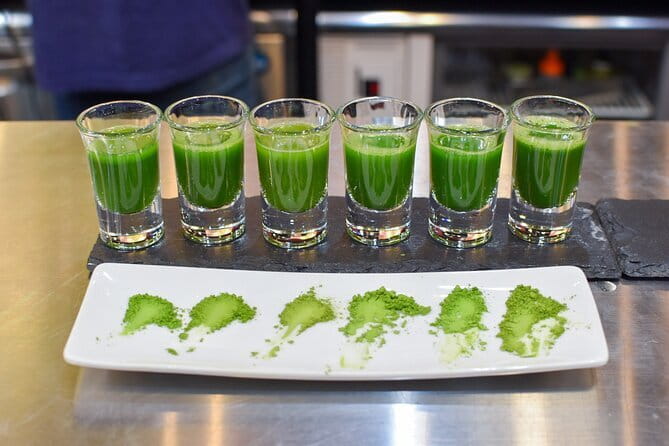
Tokyo is a fine place to sort out the real thing from the green powder sold as matcha around the world. In 90 minutes, you taste teas from five Japanese growing regions, learn how soil and cultivation affect flavor, then whisk your own bowl.
I like the focused group size, capped at five, and the chance to compare ten matchas rather than sip one anonymous cup. I also like the instructors: Chisei worked as a Kyoto tea farmer for six years, while Rina brings a pharmacy background to the health side of tea.
The main drawback is that this is a tasting lesson, not a formal tea ceremony. If you want robes, ritual, or a grand historic setting, this compact tea bar experience may feel too casual. It is also an early 9:30 a.m. start.
In This Review
- Key points
- Why this Tokyo matcha tasting is different
- Meeting Chisei and Rina in Taito City
- Starting with a welcome drink and a short lesson
- Comparing Kyoto, Shizuoka, Aichi, Fukuoka, and Kagoshima
- Understanding ceremonial grade and matcha sold under the name
- Whisking your favorite into usucha
- Ending with a matcha latte and sweets
- Is $62.12 a fair price?
- Who will enjoy this matcha experience most?
- The practical verdict
- FAQ
- Where does the matcha experience meet?
- What time does the activity start?
- How long does the matcha experience last?
- Where does the activity end?
- How many people can join the experience?
- Which Japanese tea regions are included?
- How many matchas will I taste?
- Is cancellation free?
Key points
- Five tea-growing regions: Compare matcha from Kyoto, Shizuoka, Aichi, Fukuoka, and Kagoshima.
- Ten matchas in small portions: The tasting lets you notice differences that disappear when you drink only one cup.
- Former Kyoto tea farmer as guide: Chisei can explain cultivation, processing, and soil from direct experience.
- Hands-on whisking: Choose a favorite and make your own usucha with a bamboo tea whisk.
- A useful reality check: Eight samples are served in the comparison, including six ceremonial-grade matchas and two products sold as matcha despite not meeting the definition.
- Small and easy to reach: The maximum group size is five, and the meeting point is near public transportation in Taito City.
Why this Tokyo matcha tasting is different
Many visitors encounter matcha as a sweet latte, soft-serve topping, or bright green souvenir powder. Those forms can be enjoyable, but they tell you little about the drink itself.
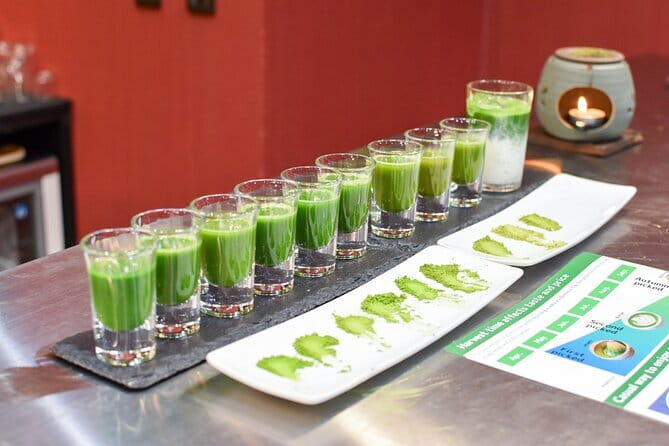
This experience takes a more useful route. You look at the color, smell the powder after it is prepared, taste several cups, and compare the differences between regions and grades. That makes matcha less of a vague Japanese symbol and more of an agricultural product with clear traits.
The session also tackles a common source of confusion: not everything sold internationally as matcha fits the traditional definition. The formal comparison includes eight types. Six are ceremonial-grade matchas, while two are products that are marketed as matcha but are not technically defined as matcha.
The full experience is described as including ten kinds of matcha. The extra servings are connected to the welcome drink, the matcha you prepare yourself, and the original blend used for the latte. Since the tasting section itself focuses on eight, you should think of this as a broad sampling rather than ten identical side-by-side cups.
More tea rooms worth booking:
- Matcha Making Class in Tokyo with Authentic Japanese Sweets Set
★ 5.0 · 744 reviews - Tokyo: Traditional Tea Ceremony with a Tea Master
★ 5.0 · 528 reviews - Tokyo: Matcha Making Experience with Mochi Sweets in Asakusa
★ 4.9 · 388 reviews
Meeting Chisei and Rina in Taito City
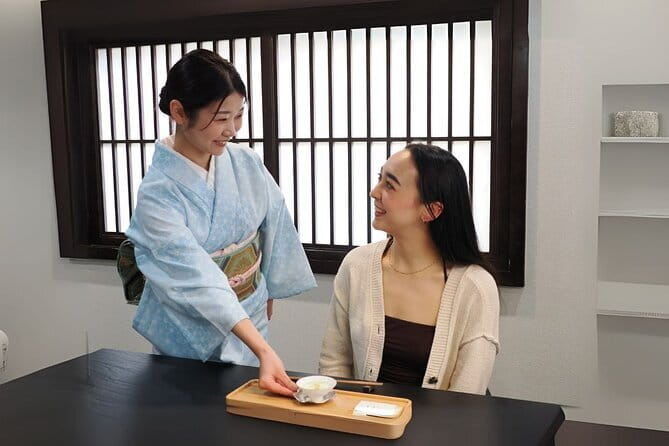
You meet at matcha tripJapan, inside Henn Na Hotel at 3-chome 198 Kotobuki in Tokyo’s Taito City. The activity takes place on the second floor at Sports Bar Leaf, an unusual but practical setting for a tea lesson.
Do not expect a secluded tea house or a temple garden. This is a small urban venue where the instructors can keep the group close and give each cup attention. For a hands-on tasting, that may be more useful than a grand setting. You can hear the explanations, ask questions, and watch the preparation without being lost in a crowd.
Chisei is the main instructor. He holds a bachelor’s degree in agricultural science and spent six years growing tea in Kyoto, working across the process from cultivation to processing. His particular interest is soil science, which gives the lesson a firm link between what happens underground and what ends up in your cup.
Rina, the assistant, has a bachelor’s degree in pharmacy and works as a pharmacist. That combination should appeal to anyone interested in the health claims often attached to matcha. The experience is not presented as a medical consultation, but her background adds another angle to a drink frequently marketed as a wellness product.
The group limit of five matters here. You are not being moved through a large demonstration. The setting allows room for questions, and Chisei has a reputation for letting tea talk run longer when people are curious. The stated duration is about 1 hour and 30 minutes, so keep an eye on the clock if you have a tightly packed morning.
Starting with a welcome drink and a short lesson
The session opens with a welcome drink. While you sip, the instructors explain the history of matcha and the production methods behind the samples you will taste.
This opening gives you a framework before the cups arrive. You learn what matcha is supposed to be, how it is cultivated, and why growing conditions and processing methods affect the result. Chisei’s farming background is especially useful here because the discussion is not limited to ceremony or tradition.
The agricultural focus is one of the best reasons to book this activity. It helps explain why two powders with the same bright color can taste quite different. It also gives you a better basis for shopping later, when packaging can make every green tea product look equally convincing.
The lesson is designed for people who want to ask questions. One past exchange even wandered into Indian tea, which suggests the discussion can become broader when your interests take it there. If you arrive ready to compare tea cultures, leave enough mental space for conversation rather than treating the session as a tightly scripted show.
Comparing Kyoto, Shizuoka, Aichi, Fukuoka, and Kagoshima
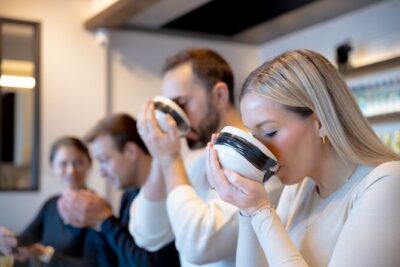
The central portion is the comparison tasting. The samples come from five representative tea-producing areas: Kyoto, Shizuoka, Aichi, Fukuoka, and Kagoshima.
You first look at the color. Then the tea is prepared and served so you can assess the fragrance and taste. This order is important because it slows you down. Instead of swallowing a sweetened latte, you pay attention to the powder’s appearance, the aroma, and the flavor on its own.
The small portions are a practical choice. Ten full cups would be too much, especially in the morning. Small servings let you sample widely without turning the activity into a caffeine endurance contest.
The regional spread also gives the tasting a useful range. Kyoto is one of Japan’s best-known tea areas, while Shizuoka, Aichi, Fukuoka, and Kagoshima bring other growing traditions into the same room. The point is not to declare one region the winner. It is to find the flavor you prefer.
You might notice differences in bitterness, sweetness, aroma, texture, or aftertaste. The provided details do not assign specific flavor notes to each region, so the instructors will be your guide on the day. Your own palate is the final judge, and that is part of the fun.
A key practical tip: do not decide based only on color. A vivid green powder may catch your eye, but fragrance and taste tell you more. Give each sample a fair chance, and take mental notes before the cups start to blur together.
A few more Tokyo bookings worth comparing
- Mt Fuji and Hakone 1-Day Bus Tour Return by Bullet Train
★ 5.0 · 26,383 reviews - 1-Day Tokyo Bus Tour
★ 5.0 · 14,250 reviews - Tokyo: TOKYO SKYTREE® Admission ticket
★ 4.5 · 11,192 reviews - Tokyo: teamLab Planets TOKYO Digital Art Museum Entry Ticket
★ 4.6 · 9,779 reviews
Understanding ceremonial grade and matcha sold under the name
The comparison includes six ceremonial-grade matchas and two products that are sold as matcha in markets around the world but do not meet the definition of matcha.
This is valuable because it turns a fuzzy label into a clear lesson. You get to compare products that may look similar in a package but differ in what they actually are. The exercise can make you a more careful buyer when you shop in Tokyo or back home.
The phrase ceremonial grade is not a universal legal standard with one fixed meaning everywhere. Still, within this experience, it marks six samples set against two products that do not technically qualify as matcha. The instructors can explain the distinction in the context of cultivation, processing, and preparation.
Do not expect every sample to be sweet and gentle. Matcha has a broad range, and plain tea can show bitterness or astringency more clearly than a sugared drink. That is not a flaw. It is exactly why comparison works better than a single tasting.
For anyone who usually orders matcha with milk and sugar, this section may be the biggest eye-opener. It separates the flavor of the tea from the flavor of the recipe built around it.
Whisking your favorite into usucha
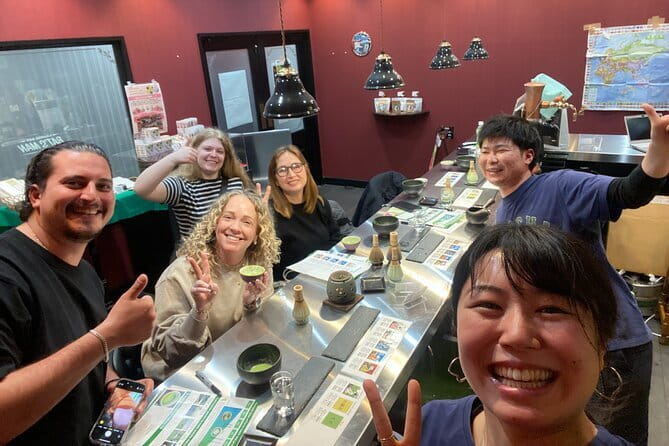
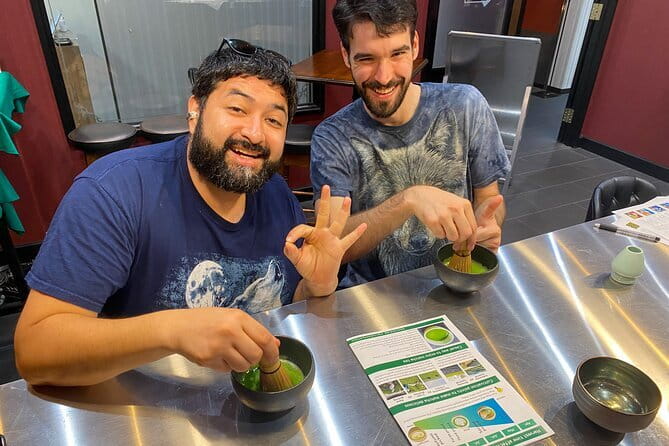
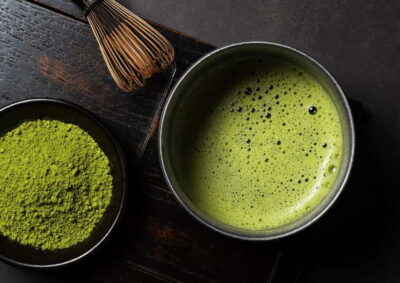
After the comparison, you choose the matcha you liked best and prepare it yourself. The final drink is usucha, the thinner style of matcha commonly associated with everyday preparation.
You use a bamboo tea whisk, learning a skill you can repeat at home. This is the part that turns the activity from a tasting into a practical souvenir. You leave with more than a flavor memory. You also know how it feels to handle the whisk and make the drink yourself.
The emphasis is on participation, not performance. You do not need prior tea experience, and the point is not to create a flawless bowl on the first attempt. You are learning the basic movement and seeing how the powder becomes a smooth drink.
This also helps you understand why matcha preparation matters. Water, whisking, and proportion affect the final cup. Once you have made one yourself, the process feels less mysterious and you can make a more informed choice about buying matcha and a whisk later.
The choice of favorite tea is personal. One person may prefer a softer cup, another may like more intensity. Because you taste several samples first, the decision has some evidence behind it rather than being based on a label or attractive tin.
Ending with a matcha latte and sweets
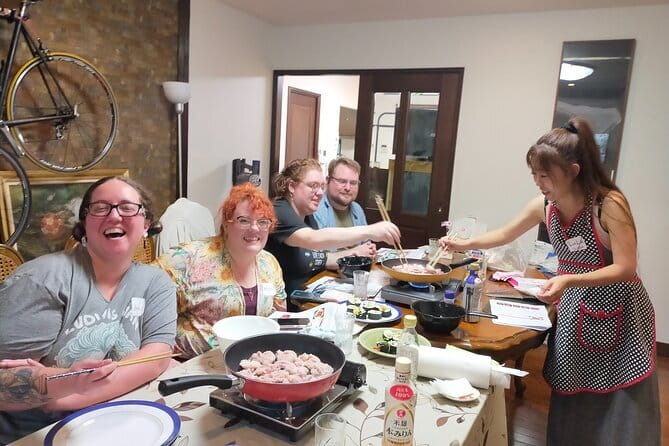
The final tasting shifts from plain matcha to an original blend made to work with milk and sugar. You enjoy it as a matcha latte, along with matcha sweets.
This is a smart finish. Plain matcha shows the tea’s character, while a latte shows how well a blend handles other ingredients. A powder that is subtle and elegant on its own may disappear in milk, while a stronger blend may make a better café-style drink.
The latte and sweets also give the session a relaxed ending after the more focused comparison. If you are new to unsweetened matcha, this final step keeps the experience approachable. You can enjoy the familiar café flavor without confusing it with the taste of straight matcha.
The blend is original to the experience and designed to pair with milk and sugar. The supplied details do not specify the exact sweets or ingredients, so anyone with dietary concerns should ask the provider before booking.
The activity finishes back at the meeting point. At about 90 minutes, it fits neatly into a morning plan in Taito City, provided you allow time to find the hotel and reach the second floor.
Is $62.12 a fair price?
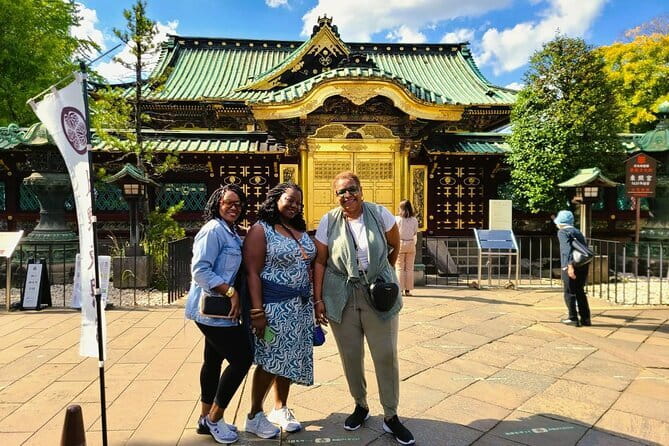
At $62.12 per person, this is not the cheapest cup of tea you will buy in Tokyo. You are paying for instruction, multiple samples, a hands-on preparation, a latte, sweets, and a very small group.
The value depends on how much you want to learn. If you simply want a quick matcha drink, a café will cost less and take less time. If you want to understand what you are tasting, compare products from five regions, and learn a skill you can use at home, the price is easier to justify.
The former tea farmer is an important part of the calculation. Chisei’s experience covers cultivation and processing, not just serving tea. Add Rina’s pharmacy background and the limited group size, and the session offers more substance than a basic demonstration.
The experience is booked about 20 days ahead on average, so it is sensible to reserve early if your Tokyo schedule is fixed. Mobile ticketing keeps the booking simple, and confirmation arrives at booking.
Free cancellation is available if you cancel at least 24 hours before the 9:30 a.m. start. Changes or cancellations made inside that window are not accepted for a refund, and tips are not included.
Who will enjoy this matcha experience most?
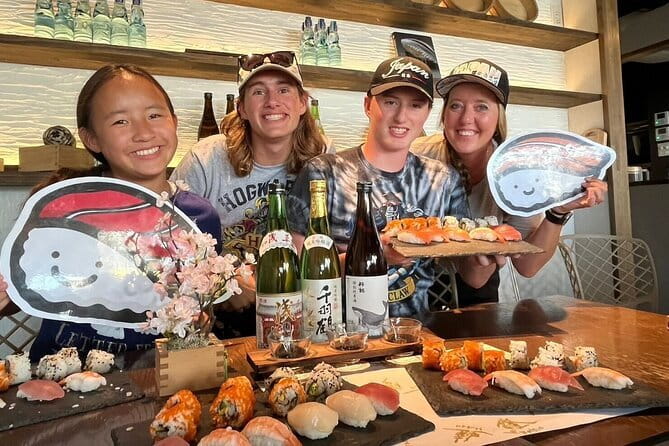
I would recommend this to you if you are curious about Japanese food beyond the usual restaurant stops. It suits tea drinkers, café fans, people interested in agriculture, and visitors who want a small-group activity with direct contact with local specialists.
It is also a good choice if you have tried matcha abroad and want to understand why Japanese examples can taste so different. The comparison with products sold as matcha gives you a useful reference point, especially if you plan to buy tea during your trip.
Families and mixed-age groups may find the hands-on whisking appealing, although the provided information does not specify a minimum age. Service animals are allowed, and the venue is near public transportation.
I would skip it if you dislike powdered tea, caffeine, or structured tasting sessions. It may also disappoint if your main goal is a formal tea ceremony with traditional dress, ceremonial movements, or an old Japanese building.
The 9:30 a.m. start is another consideration. It can work well before sightseeing, but you need to be ready for a morning tasting rather than a late-afternoon tea break.
The practical verdict
Book this experience if you want to compare matcha carefully, ask questions, and leave with a preparation skill. Its strongest features are the five-region tasting, the six-year Kyoto farming experience of Chisei, the tiny group size, and the chance to test both plain matcha and a milk-friendly blend.
Skip it if you only want a sweet latte or a formal ceremony. For everyone in between, $62.12 buys a focused lesson that makes the rest of Tokyo’s matcha offerings easier to understand.
FAQ
Where does the matcha experience meet?
It meets at matcha tripJapan, 111-0042 Tokyo, Taito City, Kotobuki, 3-chome 198, inside Henn Na Hotel on the second floor at Sports Bar Leaf.
What time does the activity start?
The activity starts at 9:30 a.m.
How long does the matcha experience last?
The experience lasts approximately 1 hour and 30 minutes.
Where does the activity end?
The activity ends back at the meeting point.
How many people can join the experience?
The activity has a maximum of five participants.
Which Japanese tea regions are included?
The matchas come from Kyoto, Shizuoka, Aichi, Fukuoka, and Kagoshima.
How many matchas will I taste?
The experience includes ten kinds of matcha overall. The formal comparison section serves eight, including six ceremonial-grade matchas and two products that are sold as matcha but are not defined as matcha.
Is cancellation free?
Yes. You can cancel at least 24 hours before the local start time for a full refund. Cancellations or changes made less than 24 hours before the start are not accepted for a refund.
New on our Tokyo list
- Sumi-e Experience in a relaxing green tea shop in Tokyo★ 5.0 · 3 reviews
- Tokyo : Kamikaze Street Drift Ride★ 5.0 · 3 reviews
- Private Zen Meditation in English in Shinjuku, Tokyo★ 5.0 · 3 reviews
- Onsen Spa in Tokyo and Asakusa Bar Hopping with Local Guide★ 5.0 · 3 reviews
- Easy for everyone! Now you can play handmade mini shamisen and show off to everyone! Musical instruments, sweets and live music★ 5.0 · 3 reviews
- Tokyo: Private Tsukiji Street Food & Sake with Local Guide★ 5.0 · 3 reviews
- Mt Fuji Exploration Tour with Free Japanese Kusa Mochi from Tokyo★ 4.5 · 3 reviews
- Tokyo Tsukiji Fish Market Walking and Exploring Hidden Gems Tour★ 5.0 · 3 reviews
Tea Ceremonies, compared.
Matcha Making Class in Tokyo with Authentic Japanese Sweets Set
Read our review →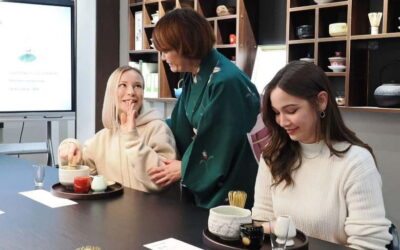
Matcha Making Experience with Mochi Sweets in Asakusa
Read our review →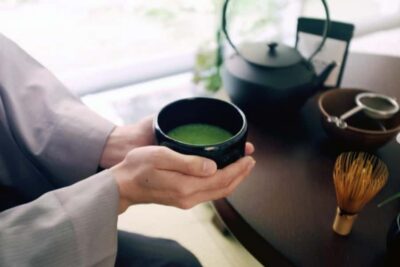
Tea Ceremony Workshop in Tokyo by the Experienced Instrucor
Read our review →

Make Traditional Nerikiri Sweets & Matcha experience in Shibuya
Read our review →Browse the lists this tour appears in