
Reviewed · WALKING TOURS
Asakusa Night Evening Walking Tour with English-Speaking Guide
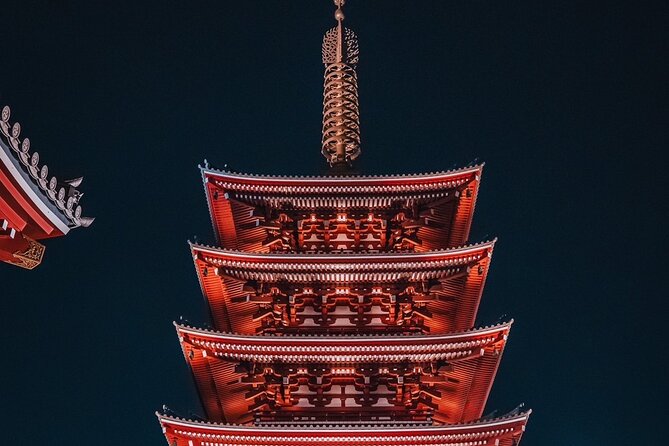
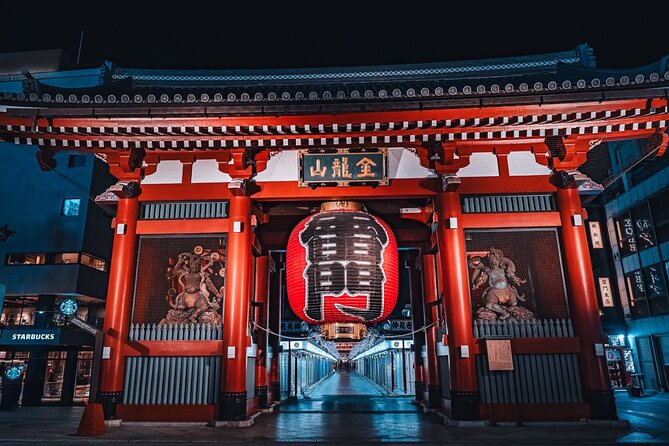
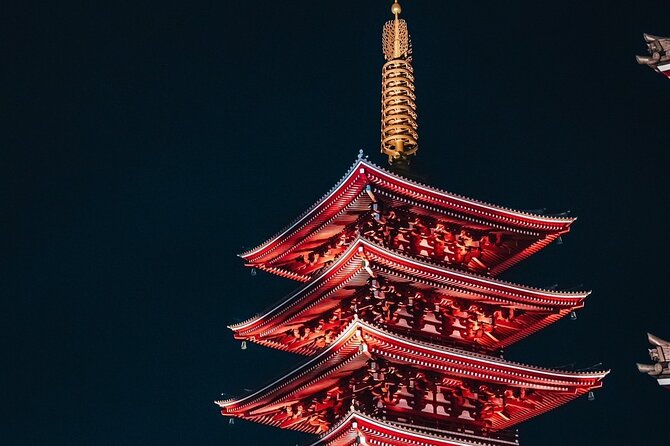
Asakusa changes character after sunset. The crowds thin, the great red lantern at Kaminarimon Gate glows against the dark, and Sensō-ji feels calmer than it does by day. This short walking tour gives you the stories and bearings you need before dinner, without taking up a whole evening.
I like the small maximum group of eight, which should make it easier to hear the guide and ask questions. I also like the finish at Hoppy Street, where you can continue the night with food and drinks on your own. The main drawback is the tight one-hour schedule: each of six stops gets roughly 10 minutes, and Sensō-ji’s main hall closes at 6 PM.
In This Review
- Key points to know before booking
- Why Asakusa works especially well at night
- Starting beneath the Thunder Gate
- Walking up Nakamise with the crowds gone
- Sensō-ji after the main hall closes
- The quieter story of Asakusa Shrine
- Hanayashikidori and Asakusa’s old entertainment side
- Ending on Hoppy Street before dinner
- What $34.29 buys you
- Who will get the most from this walk
- Practical ways to make the hour count
- Should you book the Asakusa night walk?
- FAQ
- How long does the Asakusa night walking tour last?
- What sights are included?
- Is the tour conducted in English?
- Where does the tour start?
- Where does the tour end?
- Are food and drinks included?
- Can I enter Sensō-ji’s main hall during the evening tour?
- How many people can join the tour?
- Can I cancel for a full refund?
Key points to know before booking
- Kaminarimon after dark: Begin beneath Asakusa’s famous giant lantern, with the wind and thunder gods flanking the gate.
- Six compact stops: The route covers Kaminarimon, Nakamise, Sensō-ji, Asakusa Shrine, Hanayashikidori, and Hoppy Street.
- A useful evening introduction: The walk is designed to finish before dinner, not replace a long temple visit or food tour.
- Guides with a personal touch: Takumi and Mio are among the guides named in the tour’s feedback, with praise for clear explanations and an upbeat manner.
- Hoppy Street finish: You end beside Asakusa’s izakayas, making it easy to continue your evening independently.
- Straightforward value: At $34.29 per person, you are paying for local explanation and orientation rather than admissions, meals, or lengthy sightseeing.
Why Asakusa works especially well at night
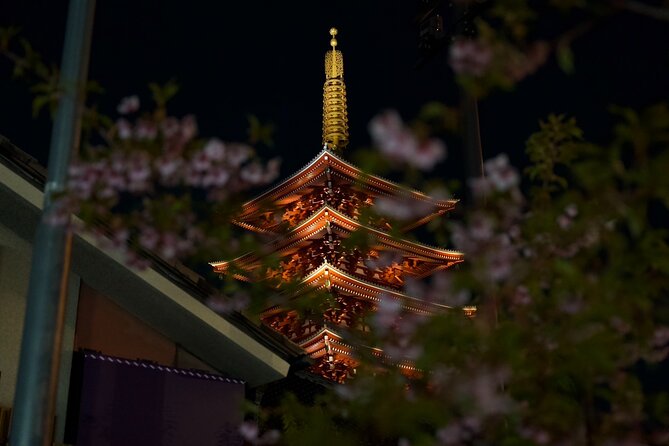
Asakusa is one of Tokyo’s best areas for a short orientation walk because its major sights sit close together. In a single hour, you move from a famous temple gate to a shopping street, a Buddhist temple, a Shinto shrine, old amusement-park surroundings, and a row of traditional pubs.
That range gives you more than a collection of photo stops. Your guide can explain how the religious sites, neighborhood streets, and evening dining scene fit together. If you visited Asakusa during the day without much context, this is a practical way to make sense of what you saw.
The evening timing is the real point. Sensō-ji is a major Tokyo attraction, so daytime can feel busy. After dark, the setting becomes quieter and more atmospheric, though you should understand the tradeoff: the main hall closes at 6 PM, so this experience is not aimed at interior temple access.
The tour lasts about one hour. That makes it a good first activity on an evening when you want dinner afterward, but it also means the guide cannot linger at every sight. Think of this as a well-paced introduction, not a slow architectural study.
More Asakusa visits:
- Tokyo: Japanese Dance Cabaret Theater Asakusa-Kaguwa Ticket
★ 4.8 · 2,270 reviews - Tokyo: Meiji Shrine, Asakusa, Skytree Bus Tour and Cruise
★ 4.7 · 1,986 reviews - Tokyo: Roll and Authentic Sushi Making Class in Asakusa
★ 4.9 · 1,957 reviews
Starting beneath the Thunder Gate
The meeting point is Burger King Asakusa Azumabashi, at Kaminarimon 2-chōme in Taito City. From there, the walk begins near Kaminarimon, the Thunder Gate and the main visual entrance to Sensō-ji.
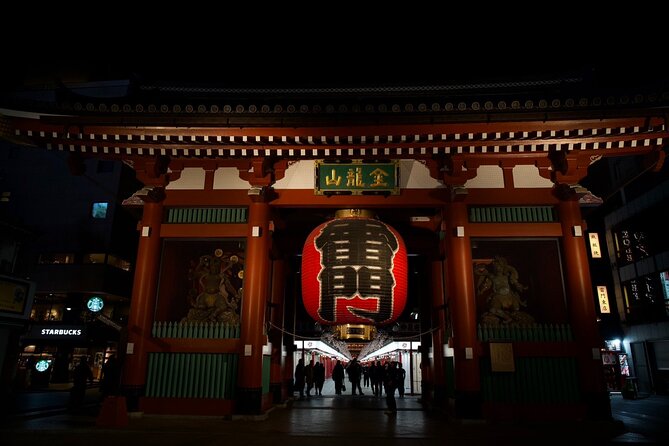
The gate is marked by its enormous red lantern. On either side are statues of Fujin, the god of wind, and Raijin, the god of thunder. These details can be easy to miss when you are focused on taking a picture, so an English-speaking guide adds real value here by pointing out what you are seeing and explaining the gate’s role.
You receive about 10 minutes at this first stop. That is enough for an introduction and photographs, but not for a long discussion. Have your camera ready and arrive at the stated meeting point with a little time to spare. The tour uses a mobile ticket, and confirmation is provided when you book.
Walking up Nakamise with the crowds gone
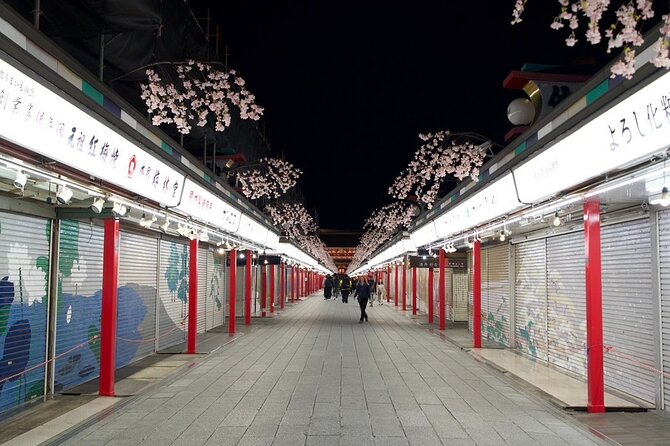
From Kaminarimon, you continue along Nakamise Shopping Street. This is the approach to Sensō-ji, lined with shops selling traditional snacks, souvenirs, and handcrafted goods.
During the day, Nakamise is a shopping stop as much as a temple approach. In the evening, the atmosphere may be more subdued, and the focus shifts toward the street itself, its connection to the temple, and the kinds of goods associated with Asakusa.
The scheduled visit is again about 10 minutes. You should not expect a long shopping break or time to browse every store. If you want souvenirs, return later with more time. On the tour, listen for the guide’s explanation of how this commercial street serves the temple approach and helps introduce Asakusa’s older character.
This is also where the compact format becomes clear. You are moving steadily, so comfortable shoes are sensible even though the walking distance is modest.
Sensō-ji after the main hall closes
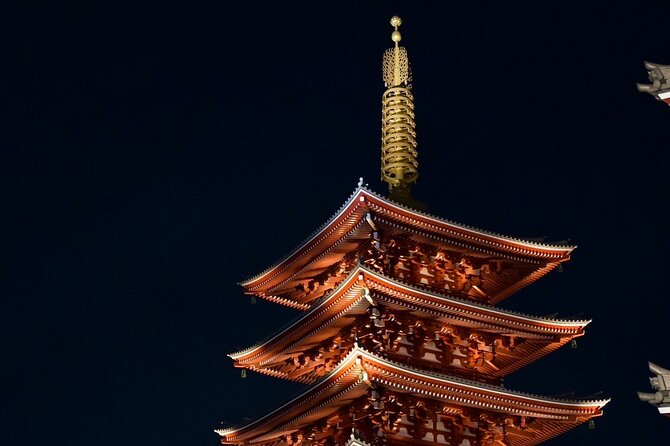
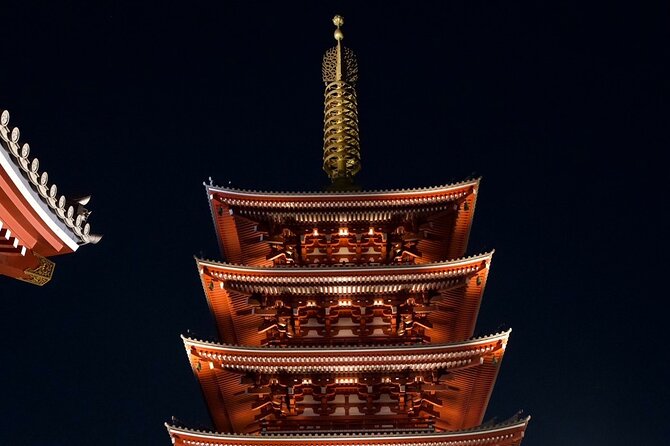
Sensō-ji is one of Tokyo’s oldest and best-known temples, dedicated to Kannon, the goddess of mercy. Its connection with Kaminarimon makes it the central sight of the route, and the temple grounds are especially appealing when the daytime rush has eased.
The tour allows around 10 minutes here. That is enough to take in the exterior, hear the basic story, and appreciate the setting, but you should not book this walk expecting an extended temple visit. The main hall closes at 6 PM, so evening participants may not be able to enter it.
That limitation is important, but it does not make the stop pointless. A temple can be meaningful from its approaches, gates, grounds, and surrounding streets. The guide’s role is to give you the context that turns a quick look into a more informed visit.
I would use this tour as a first introduction, then return to Sensō-ji during daylight if you want more time for details. The evening walk and a separate daytime visit serve different purposes.
More walking routes in Tokyo:
- Tokyo Tsukiji Fish Market Food and Culture Walking Tour
★ 5.0 · 3,184 reviews - Tokyo: Imperial Palace and Shogun Historical Walking Tour
★ 5.0 · 2,251 reviews - Tokyo: Shinjuku Local Bar and Izakaya Guided Walking Tour
★ 4.9 · 1,794 reviews - Tokyo: Tsukiji Fish Market Food and Walking tour
★ 5.0 · 1,724 reviews
The quieter story of Asakusa Shrine
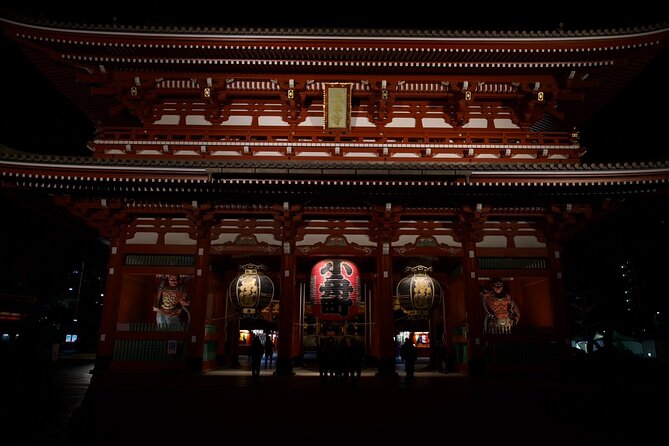
Next door to Sensō-ji is Asakusa Shrine, a historic Shinto shrine dedicated to the three men who founded Sensō-ji. Built in the 17th century, it survived World War II and remains an important symbol of harmony between the two religious traditions.
This stop helps you see that Asakusa is not only about one giant temple. Buddhist Sensō-ji and Shinto Asakusa Shrine sit side by side, yet they represent different traditions and histories. A guide can explain that relationship in plain language, which is useful if Japanese religious sites are unfamiliar to you.
The schedule gives this shrine about 10 minutes. Expect a focused explanation and time to look around rather than a ceremony, extended worship visit, or private access. The value is in the connection between the sites and the local stories.
The feedback attached to this experience gives particular attention to guides such as Takumi and Mio. Takumi is described as making the evening informative and enjoyable, while Mio is praised for being lively, well informed, and fun. Guide assignments can vary, but those comments point to the style you should hope for: conversation and explanation rather than a memorized list of dates.
Hanayashikidori and Asakusa’s old entertainment side
Hanayashikidori is near Sensō-ji and takes its name from Hanayashiki, Japan’s oldest amusement park. The street has shops, restaurants, and cafés, giving the route a different feel from the temple grounds.
This is a useful change of pace. You have just seen religious landmarks, and now the walk shows you the neighborhood’s entertainment and everyday side. The tour does not include amusement-park admission, food, or drinks, so the stop remains a street-level look rather than a separate attraction visit.
Again, allow roughly 10 minutes. You might find this part most useful if you want to understand Asakusa as a neighborhood rather than simply photograph its temple. It also gives you a chance to notice the transition from formal temple approaches to smaller local streets.
Because the route is short, do not expect extensive free time at cafés or restaurants. Make a note of anything that catches your eye and return after the tour if you want to investigate it properly.
Ending on Hoppy Street before dinner
The final stop is Hoppy Street, an alley lined with izakayas, or Japanese pubs. The street is known for Hoppy, a popular local drink, and for traditional food and casual dining.
Ending here is one of the smartest features of the route. You finish with a clear plan for the rest of the evening instead of being left at an isolated landmark. The guide can point out the character of the area, and you can then choose a restaurant or izakaya without having to navigate back across Tokyo.
Food and drinks are not included. That keeps the price simple, but you should budget separately for dinner. The tour is also not a guided tasting experience, so order what interests you on your own after the walk.
Hoppy Street can be a good fit if you want an informal meal in Asakusa. If you prefer a quiet restaurant or need a specific dining reservation, use the tour as an orientation and make your own plans in advance.
What $34.29 buys you
The price is $34.29 per person. Since admission to the listed stops is free and food and drinks are excluded, the fee mainly covers the English-speaking guide, route planning, local background, and the convenience of a small group.
That can be fair value if you are new to Tokyo or if you already walked through Asakusa but left without understanding what you saw. One of the most useful points from the experience is its ability to add context to a daytime visit. A guide can connect the gate, shopping street, temple, shrine, and dining district in a way that a quick self-guided stroll may not.
The value is weaker if you only want photographs or are comfortable researching the sights yourself. You are paying for interpretation, not skip-the-line access, included meals, or a long visit inside a monument.
The 50-day average advance booking suggests that you should not leave this until the last moment if your schedule is fixed. The group is limited to eight, and that small size is more useful than it might sound on a one-hour walk. It should help keep the group together and allow direct questions.
Who will get the most from this walk
I would recommend this tour to a first-time Tokyo visitor who wants a gentle introduction to Asakusa before dinner. It also suits anyone who saw the district by day but wants a second look with better context and a calmer evening mood.
It is a good match for:
- You want a short activity rather than a half-day commitment.
- You prefer walking and conversation to a large bus tour.
- You want an English-speaking guide to explain temples, shrines, streets, and local customs.
- You like finishing near restaurants so you can make your own dinner plans.
- You are comfortable seeing Sensō-ji mainly from the outside after the main hall closes.
I would think twice if your priority is entering the main hall, shopping at length, eating a full meal with the group, or spending a long time at each landmark. The six-stop schedule is efficient, but it is not leisurely.
The tour is near public transportation, and most people can participate. No special mobility details are provided, so anyone with particular access needs should confirm suitability before booking.
Practical ways to make the hour count
Meet at Burger King Asakusa Azumabashi and keep the mobile ticket easy to access. The tour ends at Hoppy Street, not back at the starting point, so plan your onward route from there.
Wear shoes suited to a short city walk and arrive ready to keep moving. With about 10 minutes at each stop, long pauses can make the group fall behind. If there is a temple detail, shop, or street you want to explore at length, mark it for a return visit.
You can also treat the walk as a dinner primer. Since the final stop is Hoppy Street and meals are not included, decide in advance whether you want to eat nearby afterward. This gives the tour a natural rhythm: landmarks first, dinner second.
Free cancellation is available if you cancel at least 24 hours before the local start time. Cancellations or changes made inside that window are not refunded or accepted, so check your evening plans before the deadline.
Should you book the Asakusa night walk?
Book it if you want a short, guided introduction to Asakusa with a useful dinner finish. The strongest reasons are the small group, the evening setting, and the way the route connects major sights with ordinary streets and izakaya culture.
At $34.29, it is a reasonable spend for clear explanations and local orientation, especially if you are not sure how to read the area on your own. Guides such as Takumi and Mio have been singled out for making the walk clear, friendly, and enjoyable, though the guide for your date may be different.
Skip it if you want a slow temple visit, included food, or substantial time inside Sensō-ji. For everyone else, this is a neat way to begin an Asakusa evening, learn what you are looking at, and finish with Tokyo’s dinner choices right at hand.
FAQ
How long does the Asakusa night walking tour last?
The tour lasts approximately one hour.
What sights are included?
The route includes Kaminarimon Gate, Nakamise Shopping Street, Sensō-ji Temple, Asakusa Shrine, Hanayashikidori, and Hoppy Street.
Is the tour conducted in English?
Yes. An English-speaking guide is included.
Where does the tour start?
The meeting point is Burger King Asakusa Azumabashi, Kaminarimon 2-chōme, Taito City, Tokyo 111-0034.
Where does the tour end?
The tour ends at Hoppy Street in Asakusa, at 2-chōme-8 Asakusa, Taito City, Tokyo 111-0032.
Are food and drinks included?
No. Food and drinks are not included in the tour price.
Can I enter Sensō-ji’s main hall during the evening tour?
The main hall closes at 6 PM, so entry may not be possible during the evening experience.
How many people can join the tour?
The maximum group size is eight people.
Can I cancel for a full refund?
Yes, if you cancel at least 24 hours before the experience’s start time. Cancellations and changes made less than 24 hours before the start are not refunded or accepted.
More Evening Experiences in Tokyo
- Tokyo Night Foodie Tour in Shinjuku – Seasonal Sushi, Wagyu Beef
★ 5.0 · 1,161 reviews - Tokyo: Daikoku JDM Car Meet & Night Car Culture Tour
★ 4.8 · 626 reviews - Tokyo After 5: Authentic Japanese Food & Drink Night Tour
★ 4.5 · 560 reviews - EVO, WRX, Skyline – JDM Night Run to Daikoku Car Meet
★ 4.9 · 478 reviews
New on our Tokyo list
- Sumi-e Experience in a relaxing green tea shop in Tokyo★ 5.0 · 3 reviews
- Tokyo : Kamikaze Street Drift Ride★ 5.0 · 3 reviews
- Private Zen Meditation in English in Shinjuku, Tokyo★ 5.0 · 3 reviews
- Onsen Spa in Tokyo and Asakusa Bar Hopping with Local Guide★ 5.0 · 3 reviews
- Easy for everyone! Now you can play handmade mini shamisen and show off to everyone! Musical instruments, sweets and live music★ 5.0 · 3 reviews
- Tokyo: Private Tsukiji Street Food & Sake with Local Guide★ 5.0 · 3 reviews
- Mt Fuji Exploration Tour with Free Japanese Kusa Mochi from Tokyo★ 4.5 · 3 reviews
- Tokyo Tsukiji Fish Market Walking and Exploring Hidden Gems Tour★ 5.0 · 3 reviews
Walking Tours, compared.
Tokyo Tsukiji Fish Market Food and Culture Walking Tour
Read our review →
Imperial Palace and Shogun Historical Walking Tour
Read our review →
Shinjuku Local Bar and Izakaya Guided Walking Tour
Read our review →
Asakusa Walking Tour with Sensoji Temple Visit
Read our review →
Tokyo Castle & Imperial PalaceーShogun Walking Tour
Read our review →
Browse the lists this tour appears in