
Reviewed · SUMO EXPERIENCES
Complete Sumo Experience in Tokyo
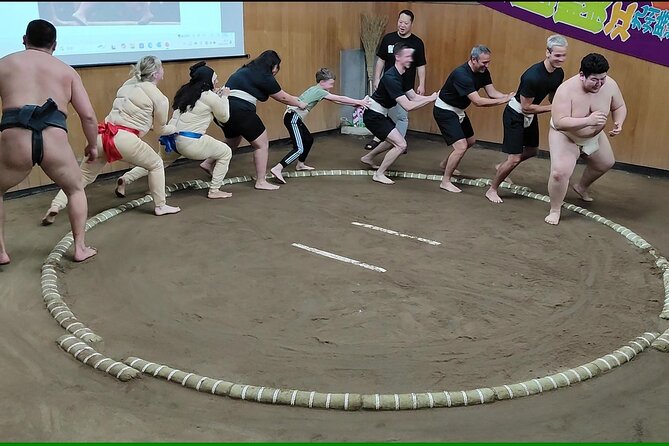
The best part of this Tokyo sumo experience is the distance between you and the action. Instead of watching from the far side of a tournament arena, you sit close to the practice space, see wrestlers train, watch matches, and may even face one yourself. The visit also explains sumo customs and its long development in Japan.
I like the close-up access and the chance to ask wrestlers questions after the demonstrations. I also like the chanko-nabe option, since the meal connects the show to the daily life of a sumo stable and gives the evening a tasty local touch.
The main drawback is the audience participation. It adds humor and energy, but it can run longer than some people want. At $138.52 per person, this is not a cheap two-hour outing, so you should book it for the personal contact and hands-on format, not simply for a short wrestling show.
In This Review
- Key points before you book
- Why this is different from watching a Tokyo sumo tournament
- Entering the stable in Kiyosumi
- The opening sumo lesson
- Watching training up close
- Matches, rules, and the wrestler challenge
- Chanko-nabe and the three start times
- The questions and photo session
- Is $138.52 a fair price?
- Who should choose this sumo experience?
- Cancellation and practical planning
- Should you book it?
- FAQ
- How long does the Complete Sumo Experience last?
- Where does the activity start and end?
- Which start times include chanko-nabe?
- Is hotel pickup included?
- What is included in the experience?
- How many people can join, and can I cancel?
Key points before you book
- Watch training and matches from close range: You see sumo activity in a stable setting rather than from arena seats.
- Choose your meal and start time: The 11 AM and 7 PM options include chanko-nabe, while the 3 PM option does not.
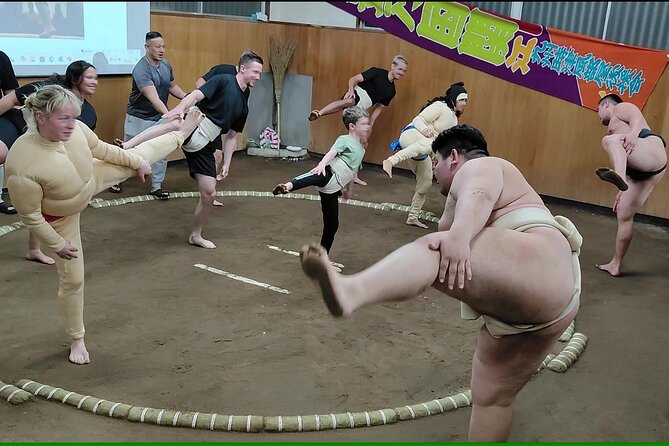
- Take part in a wrestler challenge: The session includes audience participation, with a playful chance to test yourself against a sumo wrestler.
- Ask questions directly: A sumo expert explains the sport, followed by a Q&A with the wrestlers.
- Keep the group size in mind: A maximum of 30 people allows for a more personal setting, though the exact seat you get may matter.
- Arrive early for a better seat: The experience takes place close to the action, and seating position can affect your view.
Why this is different from watching a Tokyo sumo tournament
A grand sumo tournament gives you the full spectacle: a large arena, formal bouts, a packed schedule, and the thrill of seeing top-level competition. This experience offers something else. It brings you into a traditional stable environment and puts the teaching, training, and personal contact first.
That difference matters. If your goal is to follow the official tournament system and watch many bouts in one day, this is not a substitute for arena tickets. If your goal is to understand the sport and see how sumo works at close range, the stable visit may be more useful.
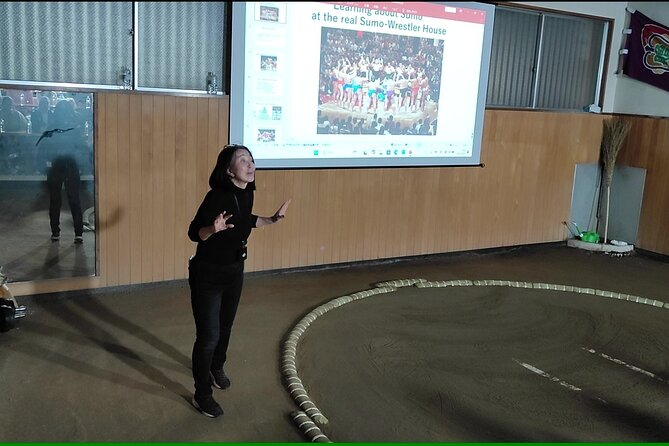
You are not simply sitting through matches. The session begins with a crash course in sumo, including its origins, history, and culture. That introduction gives the demonstrations more meaning. You learn why the wrestlers train in particular ways and gain a better sense of the customs behind the sport.
The setting also changes how the wrestlers appear. In an arena, they can feel distant and larger than life. Here, the Q&A and photo session make the sport feel more personal. The mood is designed to be friendly, with humor built into the audience challenge.
More sumo mornings:
- Tokyo: Sumo Show Experience with Chicken Hot Pot and a Photo
★ 4.8 · 6,678 reviews - Tokyo: Sumo Show and Dining Experience
★ 4.8 · 2,742 reviews - the SUMO show
★ 5.0 · 1,960 reviews
Entering the stable in Kiyosumi
The meeting point is listed at 北の湖部屋 in Kiyosumi, Koto City, Tokyo 135-0024. The experience ends at the same place, and the site is near public transportation. There is no hotel pickup or drop-off, so you need to make your own way there.
That is a small but important planning point. Tokyo is easy to cross by train, but a stable visit has a fixed start time. Give yourself enough time to find the building and settle in. The address includes Kiyosumi 2-chome, so check the meeting details carefully before leaving your hotel.
The stable itself is part of the appeal. You see the sort of place where wrestlers train rather than entering a generic theater or restaurant. Details about the building and its daily routine are not specified, so I would not book this expecting a full tour of every room or a behind-the-scenes look at private areas. The promise is a close viewing experience, an explanation of sumo, and contact with the wrestlers.
A maximum of 30 people keeps the group from becoming huge. That does not guarantee a front-row seat, however. One useful piece of advice is to arrive early if you care about your view. The action takes place close by, so a good position can make the demonstrations easier to follow.
The opening sumo lesson
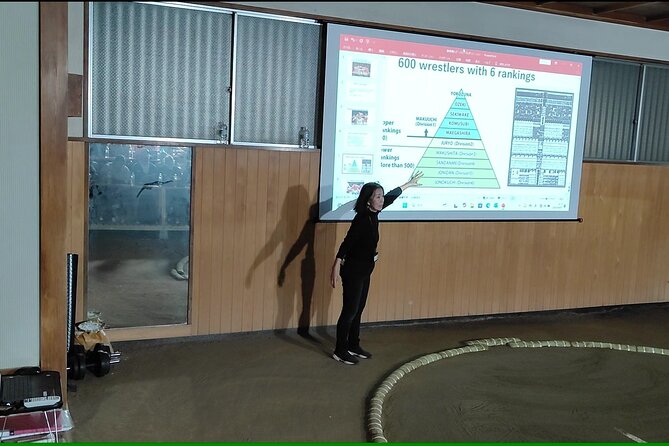
The first part is a crash course led by a sumo expert. This is more than a quick introduction for people who know nothing about the sport. It provides the basic vocabulary and context you need before the training and matches begin.
You can expect an explanation of sumo’s origin, history, and culture, along with the techniques used in combat. That background helps you watch with more understanding. Instead of seeing two large men push and grapple, you can pay attention to balance, footwork, timing, and the way a bout ends.
The lesson should suit first-time visitors especially well. Sumo has rules and rituals that are not always obvious if you only catch a few minutes on television. The teaching portion gives families and international visitors a clear entry point without requiring prior knowledge.
It is also useful for people who have already seen a tournament but want more context. A major event can move quickly, and the arena format does not always explain what is happening. Here, the instruction is built into the visit.
Watching training up close
After the introduction, you observe sumo wrestlers training. This is one of the strongest reasons to choose the experience. You are not only seeing polished competition. You are watching the work that leads to it.
The exact training routine is not specified, so you should keep expectations sensible. The experience promises training and matches by sumo wrestlers, not a guaranteed view of every part of a wrestler’s day. Still, the stable setting gives the session a more direct connection to sumo life than a standard performance would.
Close viewing lets you notice the physical side of the sport. Sumo is often reduced to size and force, but the lesson and demonstrations explain the techniques behind the contests. The setting also gives you a chance to see the wrestlers as athletes at work, not just as performers appearing for a crowd.
This part may be quieter and more focused than the later audience participation. If you enjoy learning by watching real practice, it may be your favorite section. If you want constant action from the first minute, the introductory lesson and training period may feel slower.
A few more Tokyo bookings worth comparing
- Mt Fuji and Hakone 1-Day Bus Tour Return by Bullet Train
★ 5.0 · 26,383 reviews - 1-Day Tokyo Bus Tour
★ 5.0 · 14,250 reviews - Tokyo: TOKYO SKYTREE® Admission ticket
★ 4.5 · 11,192 reviews - Tokyo: teamLab Planets TOKYO Digital Art Museum Entry Ticket
★ 4.6 · 9,779 reviews
Matches, rules, and the wrestler challenge
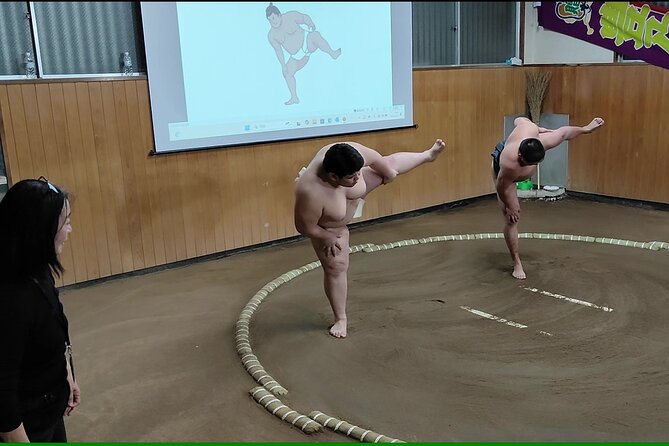
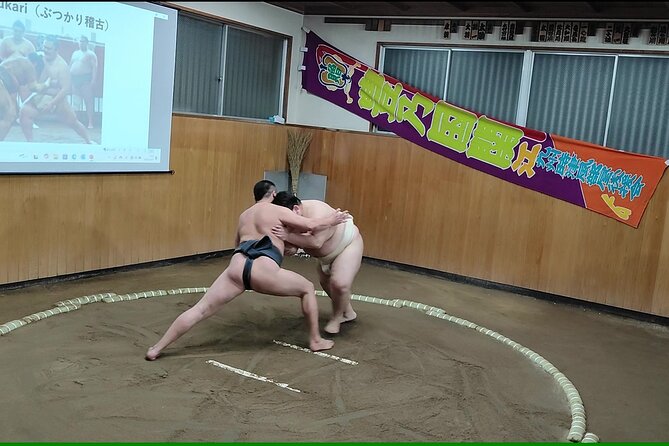
The experience then moves into actual matches. The matches give you a clear payoff after the opening explanation. You have learned some of the basic ideas, and now you can watch them applied.
The program also includes explanations of combat technique. That makes the bouts easier to read, especially if you are new to sumo. You can follow the attempts to force an opponent out of the ring or break balance, rather than treating the action as a single burst of pushing.
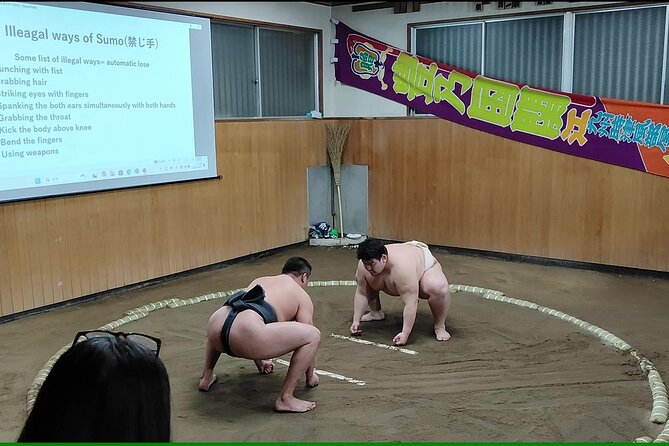
The unusual feature is the chance to challenge the wrestlers. Audience participation is part of the show, and two sumo wrestlers take part in creating a light, humorous atmosphere. This is not presented as a serious sporting contest. Think of it as a playful demonstration that lets you feel the scale and strength of the wrestlers at close range.
This section will appeal to outgoing visitors and families with older children. It may be less comfortable for anyone who dislikes being called on in front of a group. You can enjoy the rest of the session without wanting to take part, but the audience challenge is a visible part of the format.
One practical warning is that the participation can last a little too long. The humor works best when it keeps moving. If the challenge stretches on, you may find yourself wishing for another match or more explanation instead. That is the clearest weakness in an otherwise well-shaped two-hour program.
Chanko-nabe and the three start times
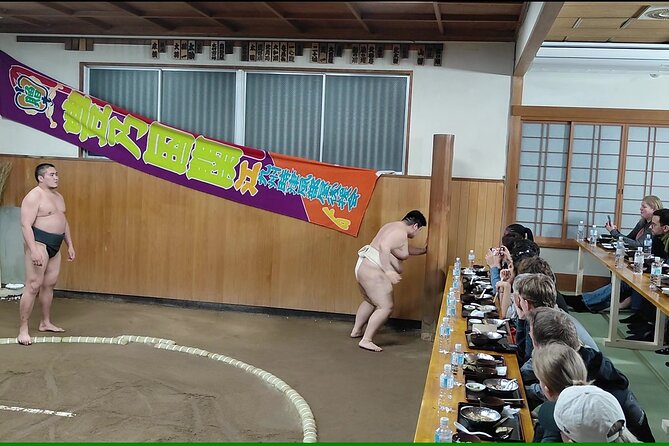
The meal option gives the experience a useful cultural link. Chanko-nabe is the hearty hot-pot meal associated with sumo wrestlers, who eat it to help build their bodies. Eating it while watching the program connects the food to the subject in a way a standard restaurant meal would not.
The 11 AM and 7 PM start times include the chanko-nabe option. The 3 PM start time is the no-meal version. Check the exact option you select, since the price and inclusions may depend on your chosen time.
The food receives strong praise in the available feedback, and it seems to be an important part of the evening format. Still, I would not choose the tour only for lunch or dinner. The main value is the combination of stable access, teaching, matches, and wrestler interaction. The meal adds to that package.
The no-meal session may suit you if you want a shorter-feeling cultural activity between other Tokyo plans. It also avoids arranging your day around a full meal. The meal option makes more sense if you want the visit to feel like a complete evening outing.
The questions and photo session
The Q&A is one of the most useful parts for curious visitors. After seeing the training and matches, you can ask the wrestlers questions directly. That gives you a chance to focus on points that the opening lesson may not cover.
The supplied details do not list the wrestlers’ names or promise answers to particular subjects. You should think of this as a general question period rather than a scheduled interview with a named champion. Even so, direct questions can help turn a short demonstration into a better understanding of sumo life and technique.
The photo session follows the same personal approach. You can take photos with the wrestlers, which gives you a lasting reminder of the visit and makes the experience work well for families or small groups. Be mindful that the group size can affect how much individual time you receive.
The friendly tone is part of the design. The wrestlers are expected to interact with the audience, not simply perform and leave. That warmth, along with the humor in the challenge, helps explain why the experience earns high marks for being entertaining as well as educational.
Is $138.52 a fair price?
At $138.52 per person, this sits in the premium range for a two-hour Tokyo activity. You are paying for more than a seat: the price covers a sumo lesson, training, matches, a Q&A, and photos. The chanko-nabe option adds food to the 11 AM and 7 PM sessions.
The value depends on what you want from sumo. If you only need to see a few bouts, the cost may feel high. A tournament ticket gives you much more wrestling time, depending on the event and seat, and offers the official competition atmosphere.
If you want close access and a guided explanation, the calculation changes. The chance to watch in a stable, speak with wrestlers, and possibly challenge one is hard to reproduce through ordinary sightseeing. For a visitor who has limited time in Tokyo and wants one focused sumo activity, the personal format can justify the price.
The two-hour length also makes it easy to fit into a larger day. You do not lose an entire afternoon or evening, though you should include extra time for getting to Kiyosumi and finding the meeting point.
Who should choose this sumo experience?
I would recommend it most to first-time sumo visitors who want context as well as action. The introductory lesson removes much of the guesswork, while the matches and challenge keep the program lively.
It is also a good fit for families, provided everyone is comfortable with audience participation. The photos and direct questions give children a way to connect with the sport, while the meal option adds a simple cultural talking point.
Fans of Japanese culture may prefer this over a basic performance because the stable setting feels tied to the sport itself. You see the training environment, learn how sumo works, and meet wrestlers rather than watching only from a public arena.
I would hesitate if you dislike structured group activities or do not want any chance of being invited into the action. I would also choose a tournament instead if your main goal is to watch a long series of official bouts with the crowd and ceremony of a major event.
The group limit of 30 is reasonable, but it is not an intimate private lesson. For the best chance at a clear view, arrive early. The experience uses a mobile ticket, and booking confirmation is provided at the time of booking.
Cancellation and practical planning
You can cancel for a full refund up to 24 hours before the experience begins. Cancellations or changes made less than 24 hours before the start time are not accepted for a refund, and the cut-off uses Tokyo local time.
Most people can take part, and the activity is near public transportation. Specific accessibility details are not provided, so contact the provider if you need information beyond the general participation guidance.
The experience is operated by Arumachi. Since there is no hotel transfer, plan the route yourself and allow time to reach the listed Kiyosumi meeting point. A little extra time is worthwhile, especially if you want a good seat.
Should you book it?
Book this if you want close contact with sumo, a clear introduction to the sport, and a playful chance to interact with wrestlers. The training, matches, Q&A, photos, and optional chanko-nabe make it a fuller experience than simply watching a short demonstration.
Skip it if you are seeking a full tournament day, a private tour, or the lowest-cost way to see sumo. For everyone else, especially first-time visitors with room in the budget, this is a practical and memorable way to understand the sport in Tokyo.
FAQ
How long does the Complete Sumo Experience last?
The experience lasts about two hours.
Where does the activity start and end?
It starts at 北の湖部屋 in Kiyosumi, Koto City, Tokyo 135-0024, and ends back at the same meeting point.
Which start times include chanko-nabe?
The 11 AM and 7 PM options include chanko-nabe. The 3 PM option is offered without the meal.
Is hotel pickup included?
No. Hotel pickup and drop-off are not included, so you need to travel to and from the meeting point yourself.
What is included in the experience?
The experience includes a sumo crash course, training and matches by sumo wrestlers, a Q&A session, and photo sessions with the wrestlers.
How many people can join, and can I cancel?
The activity allows a maximum of 30 participants. You can cancel up to 24 hours before the start time for a full refund. Changes or cancellations made less than 24 hours before the start time are not accepted for a refund.
New on our Tokyo list
- Sumi-e Experience in a relaxing green tea shop in Tokyo★ 5.0 · 3 reviews
- Tokyo : Kamikaze Street Drift Ride★ 5.0 · 3 reviews
- Private Zen Meditation in English in Shinjuku, Tokyo★ 5.0 · 3 reviews
- Easy for everyone! Now you can play handmade mini shamisen and show off to everyone! Musical instruments, sweets and live music★ 5.0 · 3 reviews
- Onsen Spa in Tokyo and Asakusa Bar Hopping with Local Guide★ 5.0 · 3 reviews
- Tokyo: Private Tsukiji Street Food & Sake with Local Guide★ 5.0 · 3 reviews
- Mt Fuji Exploration Tour with Free Japanese Kusa Mochi from Tokyo★ 4.5 · 3 reviews
- Tokyo Tsukiji Fish Market Walking and Exploring Hidden Gems Tour★ 5.0 · 3 reviews
Sumo Experiences, compared.
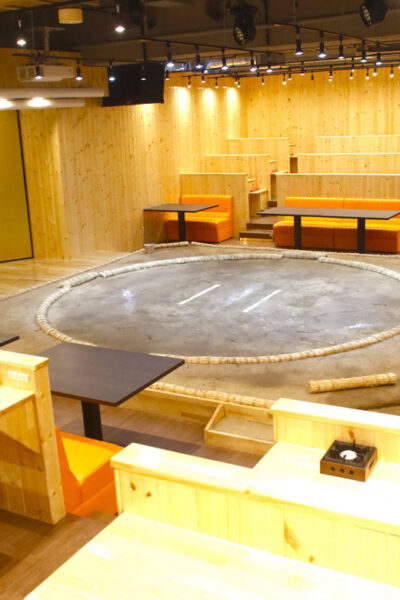
Sumo Show Experience with Chicken Hot Pot and a Photo
Read our review →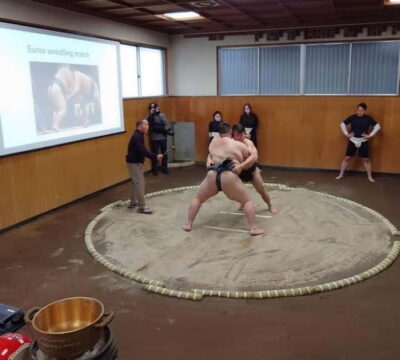
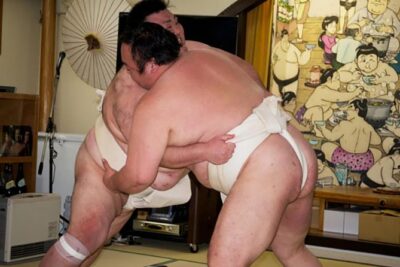
Tokyo Shinjuku Sumo Show & Experience with Photo
Read our review →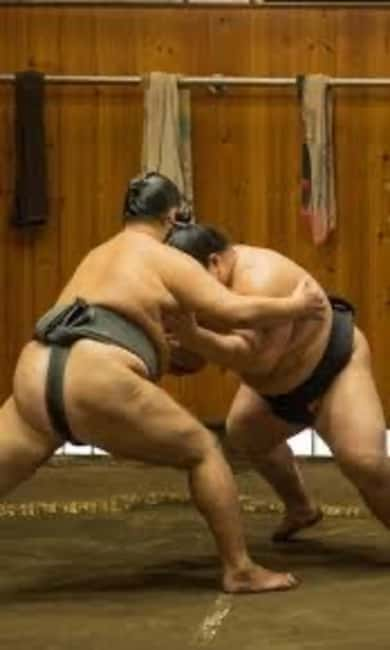

Authentic Sumo Experience in Tokyo: Enter the Sanctuary
Read our review →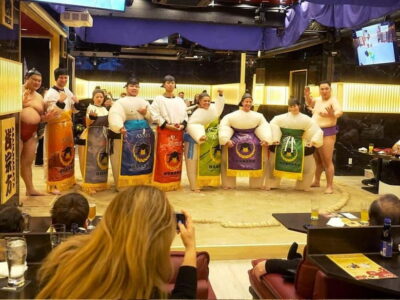
Luxury Sumo Show Experience & Japanese cuisine & Drink
Read our review →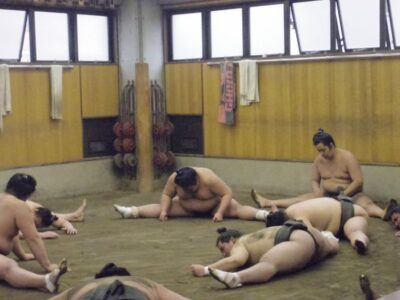
Browse the lists this tour appears in