
Reviewed · SUMO EXPERIENCES
Grand Sumo Tournament Tour w/an English Guide ,Tokyo January 2026
The best part of this experience is that you do not have to figure out sumo on your own. Your guide escorts you to a reserved S seat at the Kokugikan and explains the rules, rituals, rankings, and colorful characters while the tournament unfolds in front of you.
I like the small group, capped at 10 people, and the way the tour connects the action in the ring with the Sumo Museum and the arena’s traditional design. I also like the practical timing: a 2:15 pm start gives you nearly four hours to watch the tournament without rushing.
The main drawback is price. At $124.26 per person, this costs more than a bare admission ticket would, if you can obtain one. You are paying for the best available chair seating, a guide, and help making sense of a sport that can seem mysterious at first.
In This Review
- Key points to know before booking
- Why watching sumo with a guide helps
- Meeting at Ryogoku Station at 2:15 pm
- Entering the Kokugikan and settling into your S seat
- Learning the sumo ranking system
- Watching rituals, clothing, and ring technique
- The Sumo Museum and the Kokugikan’s design
- How the $124.26 price measures up
- What the small group adds
- Timing, transport, and practical concerns
- Who should book this sumo experience
- Should you book the January 2026 tour?
- FAQ
- Where does the tour begin?
- What time should I meet the guide?
- Where does the tour end?
- How long does the experience last?
- What type of seat is included?
- How many people can join the tour?
- Is the tour suitable for most people?
- Are children required to pay admission?
- Can I cancel for a full refund?
Key points to know before booking
- Reserved S seating: You receive the best chair seating available for this tour, though the exact section is not provided.
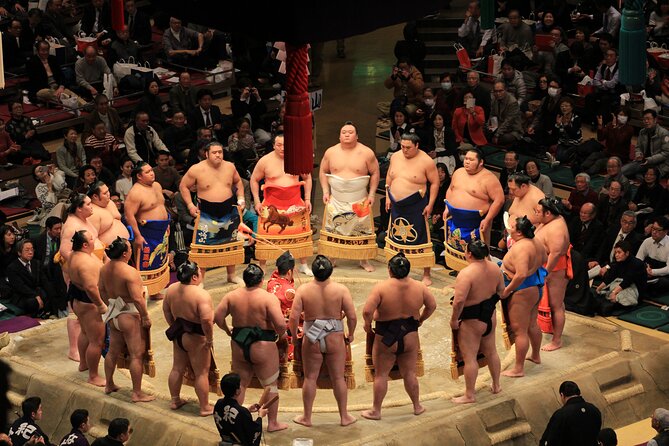
- A guide makes the difference: You’ll learn about gyoji referees, yobidashi announcers, kimarite winning techniques, and the sumo ranking system as you watch.
- Small group size: The tour accepts a maximum of 10 people, making questions and personal help more realistic.
- Kokugikan and Sumo Museum: The experience covers more than the matches, with attention to architecture, clothing, ceremony, and etiquette.
- Afternoon schedule: Meet at Ryogoku Station at 2:15 pm for an activity lasting about 3 hours and 45 minutes.
- Guide names to note: Jeff and Yuki have led past tours, but the guide for your January 2026 date is not guaranteed.
Why watching sumo with a guide helps
Sumo is easy to watch and surprisingly hard to read. Two wrestlers crouch, slap the ring, and collide with great force. A bout may last only seconds, yet the outcome depends on balance, footwork, grip, timing, and a precise winning move.
Without context, you may notice the impact but miss the strategy. With a guide beside you, you can learn why a wrestler wins by pushing an opponent out, forcing a knee down, or using a throw. You’ll also hear what the different divisions mean and why a match between highly ranked wrestlers carries more weight than an early bout.
The guide’s explanations are designed to run through the visit, not just at a formal lecture. That matters because sumo has many details to absorb: the order of matches, the wrestler rankings, the purpose of the ring rituals, and the roles of the people who keep the contest moving.
I particularly like the focus on the gyoji and yobidashi. The referee is not simply there to announce a winner. The referee’s clothing, gestures, and position in the ring are part of the formal structure of sumo. The yobidashi calls wrestlers into the ring and has a role tied to the tournament’s rhythm. Once you know who does what, the arena becomes easier to follow.
More sumo mornings:
- Tokyo: Sumo Show Experience with Chicken Hot Pot and a Photo
★ 4.8 · 6,678 reviews - Tokyo: Sumo Show and Dining Experience
★ 4.8 · 2,742 reviews - the SUMO show
★ 5.0 · 1,960 reviews
Meeting at Ryogoku Station at 2:15 pm
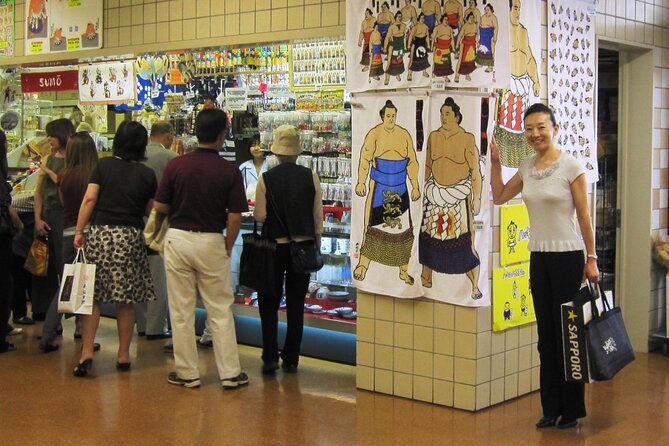
The meeting point is at Ryogoku Station, at 1-chōme-3-20 Yokoami in Sumida City. This is the right part of Tokyo for sumo, since the Kokugikan is located in the Ryogoku area.
You should allow enough time to reach the station and find the meeting point without arriving at the last minute. The provided start time is 2:15 pm, and the activity returns to the same meeting point at the end. Exact directions beyond the station meeting point are not supplied, so check the booking confirmation carefully after the operator confirms your place.
The tour uses a mobile ticket, which is convenient, but you should have your phone charged and ready. Confirmation arrives within 48 hours of booking, subject to availability. That point matters during tournament season, when demand for seats can be high.
The group limit of 10 is one of the stronger features here. A large guided group can make arena explanations hard to hear and questions awkward. With a small group, you have a better chance of getting a clear answer about a ranking, a ritual, or a match technique.
Entering the Kokugikan and settling into your S seat
Your guide escorts you to your reserved chair. The tour describes this as the best available S chair seating, but it does not provide a precise section, row, or view. That is worth keeping in mind if you are comparing this experience with a ticket-only purchase.
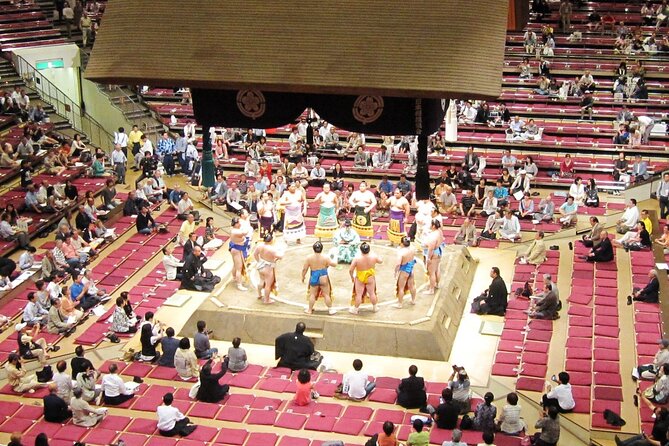
The Sumo Tournament is not simply a series of athletic contests. The Kokugikan setting gives the event much of its force. Traditional clothing, symbolic decorations, ceremonial movement, and strict etiquette all help create a formal atmosphere that feels very different from a modern sporting event.
You can expect the guide to explain what you are seeing as the arena activity builds. Early matches help you learn the pattern of the day. Wrestlers enter, rituals take place, the bout begins, and the ring is quickly cleared for the next contest. As the higher divisions appear, the skill and tension increase.
One useful point for first-time spectators is that the tournament is structured by divisions. The early bouts are not the same level as the top-ranked contests, and the names attached to rankings have specific meaning. The guide explains the difference between yokozuna, ozeki, other sanyaku ranks, and makuuchi competitors.
This makes the afternoon feel like a story with a clear rise in importance. You start by learning the basic shape of professional sumo. Later, you can watch the top competitors with a better sense of what is at stake.
Learning the sumo ranking system
Sumo rankings can look like a wall of unfamiliar Japanese terms. This tour gives you a framework for reading them.
Yokozuna is the highest rank. Ozeki is another top rank, while sanyaku refers to the group of elite ranks near the top of the banzuke ranking system. Makuuchi is the top division, where the most famous names compete.
You will not become a sumo expert in one afternoon, but you should leave knowing why a wrestler’s rank matters. A bout between lower-division wrestlers has a different place in the tournament than one involving a yokozuna or ozeki. The rankings also help you recognize why some matches receive more attention from the crowd.
The tour’s value comes from giving you this information at the right time. If you hear a name and immediately learn the wrestler’s rank, you can place that match in the larger tournament picture. That is much more useful than memorizing a list of terms before you arrive.
A few more Tokyo bookings worth comparing
- Mt Fuji and Hakone 1-Day Bus Tour Return by Bullet Train
★ 5.0 · 26,383 reviews - 1-Day Tokyo Bus Tour
★ 5.0 · 14,250 reviews - Tokyo: TOKYO SKYTREE® Admission ticket
★ 4.5 · 11,192 reviews - Tokyo: teamLab Planets TOKYO Digital Art Museum Entry Ticket
★ 4.6 · 9,779 reviews
Watching rituals, clothing, and ring technique
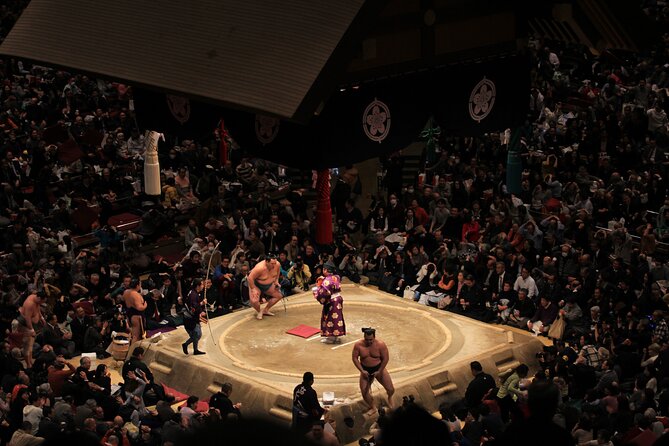
Sumo’s ceremony is not decoration added around the sport. It is part of the sport. The clothing worn by wrestlers, referees, and announcers communicates rank, role, and tradition.
The guide explains the meaning behind traditional attire, along with the etiquette and movements that may puzzle a first-time viewer. You’ll also learn about the preparation before a bout, including the gestures and pauses that build tension before the wrestlers finally meet.
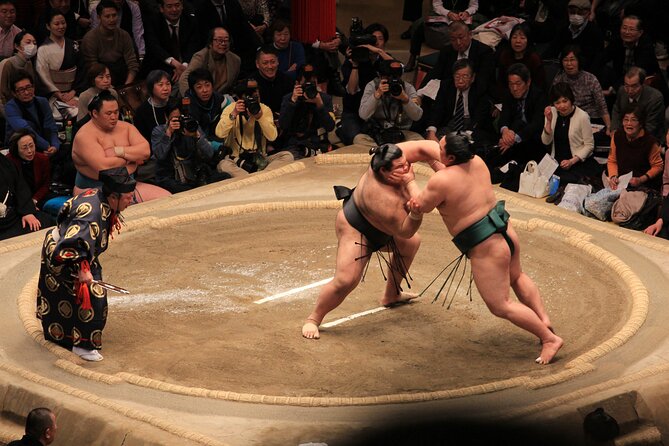
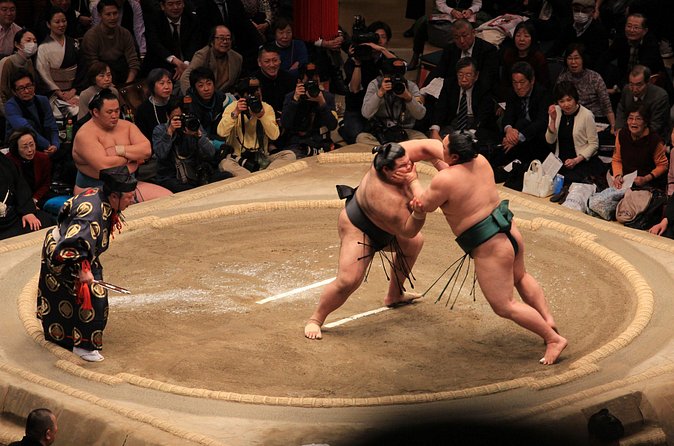
The action itself is often brief. That makes the guide’s explanation of kimarite, or winning techniques, especially useful. A wrestler may win through a push, a force-out, a throw, or another recognized method. These techniques have names and distinctions, and the guide can point out what happened rather than leaving you with the vague impression that one wrestler was simply stronger.
The sport has a wonderful contrast. The wrestlers look enormous, but the result can depend on a small shift in weight or a clever grip. A bout can end before you have settled into your seat. The ceremony slows the pace, then the clash arrives all at once.
The Sumo Museum and the Kokugikan’s design
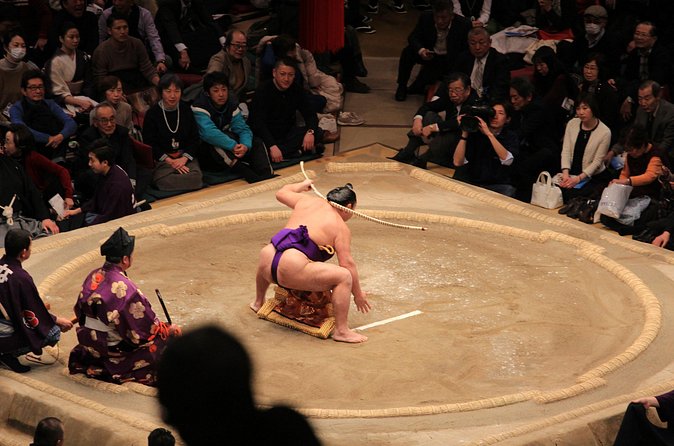
The experience includes a tour of the Kokugikan and the Sumo Museum. This is important because it gives you time to look beyond the live bouts.
The arena’s architecture and decorations help explain why sumo is treated as a major cultural tradition rather than only a competitive sport. You’ll learn about the visual symbols around the venue, the role of traditional clothing, and the etiquette that shapes the event.
The Sumo Museum adds another layer. The supplied details do not specify which displays will be open or how long you will spend inside, so you should not expect a fixed exhibition list. Still, the museum visit gives the guide a place to explain sumo outside the noise and speed of the arena.
I like this balance. The live tournament supplies the excitement, while the museum and arena tour give you the background needed to understand what you are seeing. If your interest is only in the loudest matches, the museum may feel like a pause. If you want a cultural experience rather than a sports ticket, it is a useful part of the afternoon.
How the $124.26 price measures up
The cost is $124.26 per person. That is not a bargain admission price, and one past participant felt the experience was somewhat expensive compared with the cost of a standard tournament ticket.
The fair comparison, though, is not only ticket against ticket. You are also paying for a reserved S chair, a guide who escorts you inside, explanations during the event, a small group, and the Kokugikan and Sumo Museum visit. If you manage to secure a suitable ticket independently and already understand sumo, the tour may not be the best value for you.
For a first-time visitor, the calculation is different. Sumo tickets can be difficult to obtain during a popular tournament, and the arena’s customs are not always clear from the seat. Paying extra for a reserved place and an English explanation can be worthwhile if it turns a confusing afternoon into a meaningful one.
The details do not state that food is included. Chanko, the hearty food associated with sumo wrestlers, is mentioned in connection with the experience, but you should confirm whether any meal is part of your specific booking. Do not assume the $124.26 price includes lunch or dinner.
What the small group adds
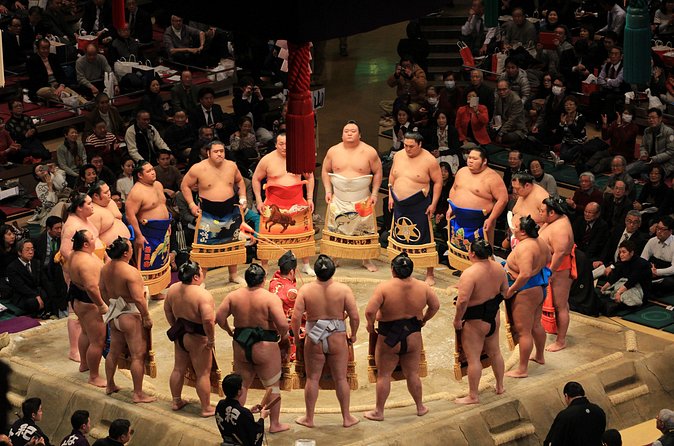
The maximum group size is 10 people. That is small enough to keep the meeting process manageable and make direct questions possible.
A small group also suits the nature of sumo. The guide may need to explain a fast match, identify a rank, or point out a winning technique. In a group of 10, you are more likely to hear the explanation and keep up with the action than you would in a large tour.
Guide quality will still matter. Jeff has been praised for friendly explanations of sumo rules and history, while Yuki prepared an additional information sheet about the wrestlers for one earlier group. Those are useful signs of the kind of guidance available, but they do not guarantee that either person will lead your January date.
The tour is described as multilingual, while the title specifically identifies an English guide. If you need English commentary, confirm that your selected departure is assigned an English-speaking guide.
Timing, transport, and practical concerns
The activity lasts about 3 hours and 45 minutes. That is long enough to cover the arena, museum, explanations, and a substantial portion of the tournament without turning the outing into an all-day commitment.
You meet and finish at the same location near Ryogoku Station. The experience is near public transportation, and most people can participate. No special fitness requirement is stated, but the tour does involve moving through the venue and sitting for an extended period.
Admission applies to children aged 4 and above. The supplied information does not give a child discount or a separate child ticket price, so budget the full stated admission amount for anyone aged 4 or older unless your booking page says otherwise.
The cancellation policy allows a full refund if you cancel at least 24 hours before the start time. Changes or cancellations made inside that window are not accepted for a refund. The activity can also be canceled if poor weather affects operations or if the minimum number of participants is not reached. In those cases, you are offered another date or experience, or a full refund.
The weather condition is worth noting because the main event takes place indoors. The operator still lists weather as a cancellation factor, so keep some flexibility in your Tokyo schedule.
Who should book this sumo experience
I would recommend this tour most strongly if you are seeing a professional sumo tournament for the first time. You get the drama of the live event, but also enough explanation to understand the ranks, rituals, officials, clothing, and winning techniques.
It is also a good choice if you value a reserved seat and do not want to handle the ticket process alone. The small group should appeal to you if you prefer personal guidance rather than a large crowd following a flag.
You may want to skip it if you already know sumo well, speak Japanese comfortably, or can obtain your preferred seat independently. In that case, the added guide fee may not deliver enough extra value.
Families can consider it, but remember that admission applies from age 4. Anyone expecting a short show should also know that the tour lasts nearly four hours and includes explanation and museum time, not only the biggest matches.
Should you book the January 2026 tour?
Book it if you want more than a seat in the Kokugikan. The strongest reasons are the reserved S chair, the small group, and the guide’s running explanation of a sport that is simple to watch but layered with rank, ceremony, and technique.
At $124.26, this is a convenience and interpretation purchase, not the cheapest way to attend sumo. I would choose it for a first visit, especially if you have limited time in Tokyo and want an organized afternoon in Ryogoku.
Check the final seat details before paying. The January 2026 S and A schedules are listed as still to be released, while B seating is shown for January 11, 13, 15, 21, 22, and 23. If your preferred date or seat type matters, confirm availability within the 48-hour booking window.
FAQ
Where does the tour begin?
It begins at Ryogoku Station, at 1-chōme-3-20 Yokoami, Sumida City, Tokyo 130-0015, Japan.
What time should I meet the guide?
The stated start time is 2:15 pm.
Where does the tour end?
The activity ends back at the meeting point.
How long does the experience last?
The tour lasts approximately 3 hours and 45 minutes.
What type of seat is included?
The tour includes an S seat, described as the best chair seating available. The exact section and row are not provided.
How many people can join the tour?
The maximum group size is 10 people.
Is the tour suitable for most people?
Yes. The information states that most people can participate and that the meeting point is near public transportation.
Are children required to pay admission?
Admission applies to anyone aged 4 and above. No child discount is specified.
Can I cancel for a full refund?
Yes, if you cancel at least 24 hours before the experience start time. Cancellations or changes made less than 24 hours before the start are not refunded or accepted.
New on our Tokyo list
- Sumi-e Experience in a relaxing green tea shop in Tokyo★ 5.0 · 3 reviews
- Tokyo : Kamikaze Street Drift Ride★ 5.0 · 3 reviews
- Private Zen Meditation in English in Shinjuku, Tokyo★ 5.0 · 3 reviews
- Onsen Spa in Tokyo and Asakusa Bar Hopping with Local Guide★ 5.0 · 3 reviews
- Easy for everyone! Now you can play handmade mini shamisen and show off to everyone! Musical instruments, sweets and live music★ 5.0 · 3 reviews
- Tokyo: Private Tsukiji Street Food & Sake with Local Guide★ 5.0 · 3 reviews
- Mt Fuji Exploration Tour with Free Japanese Kusa Mochi from Tokyo★ 4.5 · 3 reviews
- Tokyo Tsukiji Fish Market Walking and Exploring Hidden Gems Tour★ 5.0 · 3 reviews
Sumo Experiences, compared.
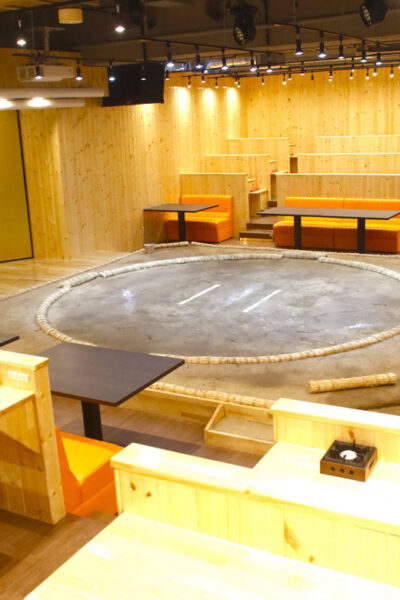
Sumo Show Experience with Chicken Hot Pot and a Photo
Read our review →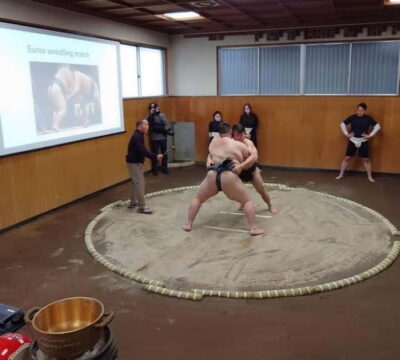
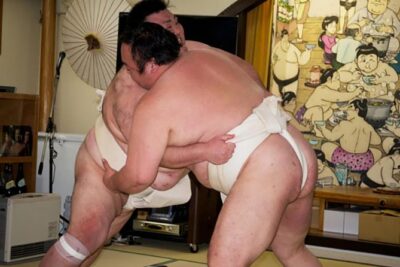
Tokyo Shinjuku Sumo Show & Experience with Photo
Read our review →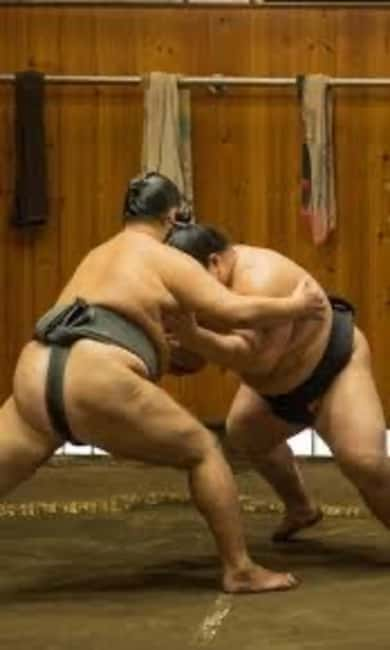

Authentic Sumo Experience in Tokyo: Enter the Sanctuary
Read our review →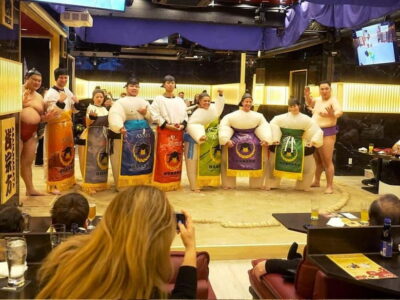
Luxury Sumo Show Experience & Japanese cuisine & Drink
Read our review →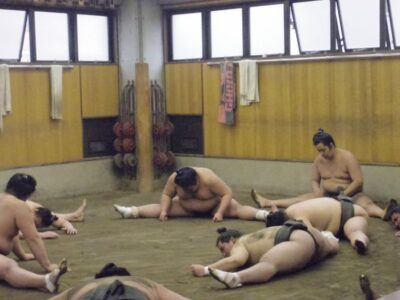
Browse the lists this tour appears in