
Reviewed · WORKSHOPS
Handmade Japanese Glass Art Sandblasting Workshop in Tokyo
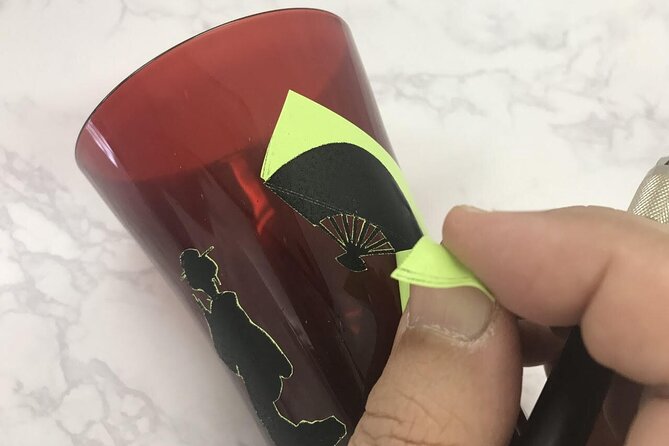
The best part of this Tokyo experience is that you do not just buy a souvenir, you make one yourself. In a small workshop in Asakusabashi, you choose Japanese images such as Mount Fuji, geisha, kimono patterns, or samurai, then use a sandblasting machine to turn your design into a finished glass.
I like the maximum of four participants, which gives you real one-on-one help, and I like that Aki San teaches the process with patience. The main consideration is time: 90 minutes is enough for one glass project, but not for a long, leisurely art course or a full tour of the neighborhood.
In This Review
- Key points to know before booking
- Turning a plain glass into a Tokyo souvenir
- Aki San’s patient, step-by-step instruction
- What happens during the 90-minute class
- Why the small group makes a difference
- Choosing a design with Japanese character
- The value of a $53.43 handmade keepsake
- Getting to Asakusabashi and planning your day
- Who will enjoy this most
- Packing and carrying your finished glass home
- Booking timing and cancellation terms
- Should you book this Tokyo glass workshop?
- FAQ
- How long does the Japanese glass sandblasting workshop last?
- Where does the activity start and end?
- How many people can join the class?
- Is the workshop suitable for beginners?
- What Japanese designs can you use?
- What is included in the price?
- Can I cancel for a full refund?
Key points to know before booking
- A four-person class keeps the instruction personal, with the workshop owner guiding each participant step by step.
- You decorate a usable glass, not just a flat piece of craft material, so your souvenir has a practical purpose.
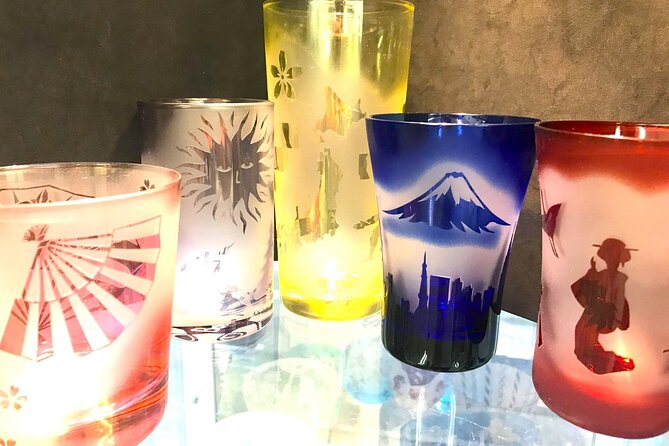
- Japanese motifs are ready to choose, including Mount Fuji, geisha, kimono designs, and samurai.
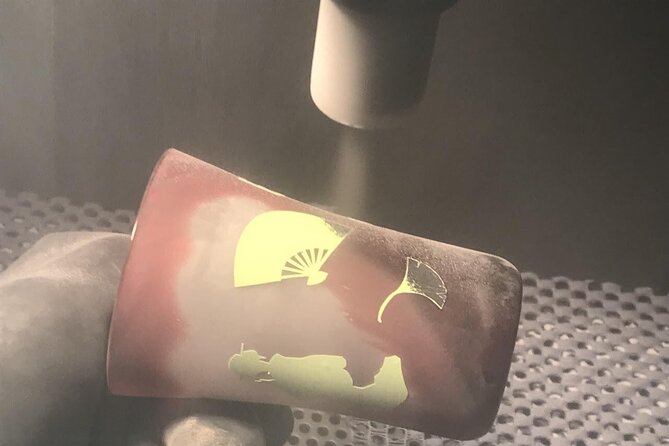
- The sandblasting machine creates the final artwork, giving the class a satisfying hands-on finish.
- All materials, tools, lesson fees, and consumption tax are included in the $53.43 price.
- The 90-minute activity works well for families and beginners, though children should be able to follow careful instructions.
Turning a plain glass into a Tokyo souvenir
This is a quiet change of pace from Tokyo’s crowded streets. You arrive at the workshop, settle in with your glass, and begin by choosing an image or pattern for the design. The available examples include familiar Japanese subjects such as Mount Fuji, geisha, kimono motifs, and samurai.
That choice matters more than it may sound. A shop-bought souvenir gives you a fixed image chosen by someone else. Here, you decide what goes on your glass and how you arrange it. The finished piece becomes a small record of your own time in Japan, rather than another identical item from a department store.
The class is built for beginners. You do not need a background in drawing or glasswork, and the tools and materials are supplied. The workshop owner explains the process in stages, so you can concentrate on the design instead of trying to guess what to do next.
The strongest feature is the small group size. With no more than four people, the instructor can look at your work, answer questions, and help when your design needs a careful adjustment. A larger class could turn this into a craft demonstration. This format keeps it personal.
A few more Tokyo bookings worth comparing
- Sushi Making Tokyo Roll and Authentic Japanese Sushi Class
★ 5.0 · 3,971 reviews - Tokyo: Roll and Authentic Sushi Making Class in Asakusa
★ 4.9 · 1,957 reviews - Tokyo Shinjuku Chopsticks Making Class
★ 5.0 · 1,763 reviews
Aki San’s patient, step-by-step instruction
Aki San is the teacher named in the experience details, and the class is led by the workshop owner. The teaching style is suited to people who want help without having every creative decision made for them.
You receive a selection of pictures to use as design ideas. You can follow one of the Japanese motifs or combine elements to create something more personal. The process gives you enough structure to get started, while still leaving room for your own choices.
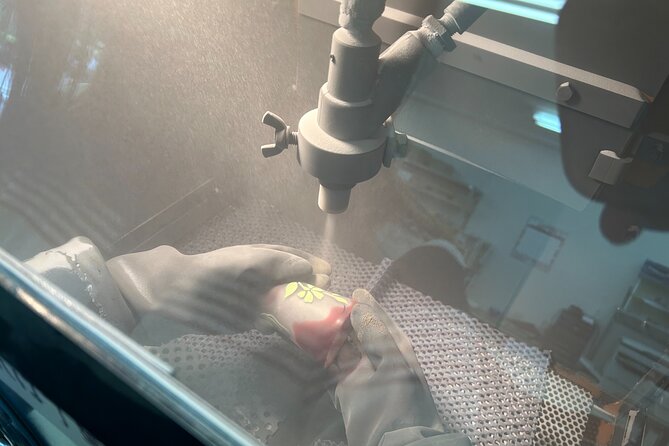
The instruction is especially useful when you reach the technical part. Sandblasting is not the same as simply drawing on glass with a pen. The machine changes the surface of the glass, and the finished image depends on how the design is prepared and handled.
Aki San’s patient approach is a good fit for families. Adults can take their time with detail, while children can enjoy the direct result of using the tools. The activity is not described as requiring advanced skill, but younger children will need to follow directions carefully around workshop equipment.
One particularly thoughtful touch is the personal welcome at the entrance. An easel with a participant’s name was waiting outside in one account of the experience, and an early arrival was invited inside before the scheduled start. That suggests a small, owner-run setting rather than a large commercial studio.
What happens during the 90-minute class
The exact timing of each stage is not broken down, but the class lasts about an hour and a half. You can expect the session to move through a clear sequence:
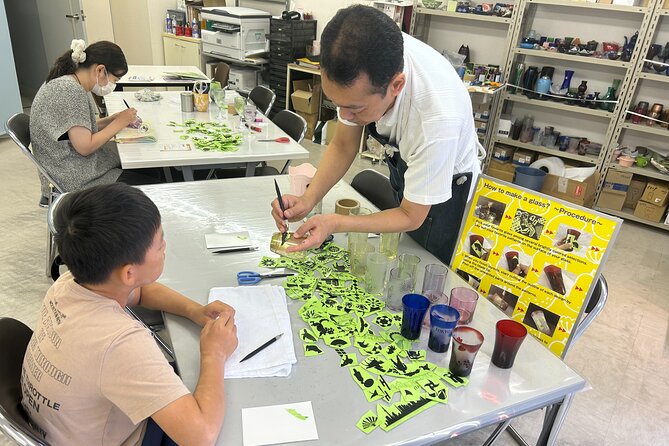
- Choose your design. You look through the supplied images and select Japanese symbols, figures, or patterns for your glass.
- Prepare the artwork. The instructor explains how to place and work with the design before the glass reaches the sandblasting stage.
- Use the tools. With guidance, you complete the hands-on part of the project.
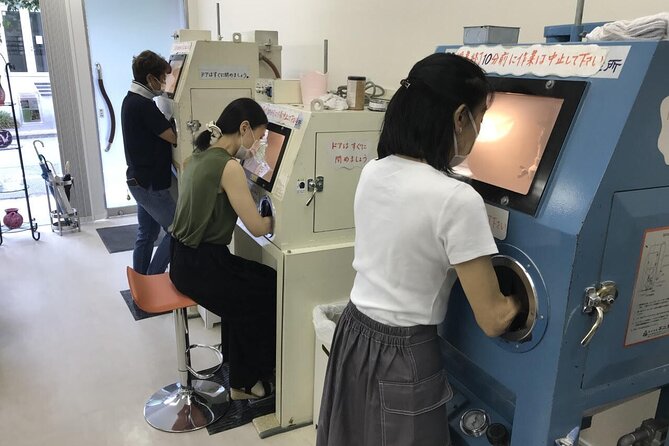
- Sandblast the glass. The machine brings your design onto the glass surface.
- Finish your keepsake. You leave with a personalized glass artwork to take home.
The appeal is the change from flat idea to physical object. At the start, you are looking at a plain glass and a set of possible images. By the end, the surface has been altered into a finished design that you made with your own hands.
The class also has a calming rhythm. One person described it as relaxing and unique, and that fits the format. You are seated, focused on a small creative task, and away from the noise and hurry of sightseeing. It is a good way to give your day some breathing room.
Do not expect a full lesson in the history of Japanese glassmaking or a long museum-style presentation. The purpose is practical: learn the basics of this sandblasting method and complete a personal piece in 90 minutes.
Why the small group makes a difference
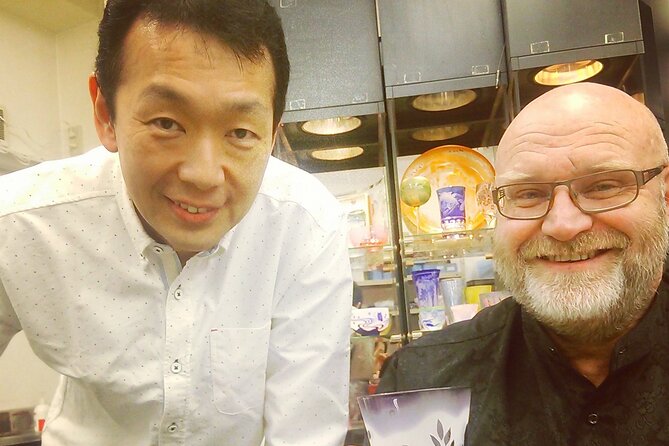
Four people is the maximum, and the class may be smaller. In one case, a participant had the workshop to themselves. That kind of setting can make a major difference if you are nervous about using unfamiliar tools.
A small class also lets you work at your own pace within the fixed session. You can ask how to adjust a motif, check a detail, or get help before moving on. The benefit is not just comfort. Careful guidance gives your final glass a better chance of looking the way you intended.
There is a tradeoff. A small workshop with personal teaching does not offer the energy of a big group activity. If you enjoy noisy social events and meeting a large number of people, this may feel subdued. I see that as part of its value, though. Tokyo offers plenty of fast-moving experiences. This one gives you a quieter hour and a half.
Same corner of Tokyo, a completely different plan:
- Mt Fuji and Hakone 1-Day Bus Tour Return by Bullet Train
★ 5.0 · 26,383 reviews - 1-Day Tokyo Bus Tour
★ 5.0 · 14,250 reviews - Tokyo: TOKYO SKYTREE® Admission ticket
★ 4.5 · 11,192 reviews - Tokyo: teamLab Planets TOKYO Digital Art Museum Entry Ticket
★ 4.6 · 9,779 reviews
Choosing a design with Japanese character
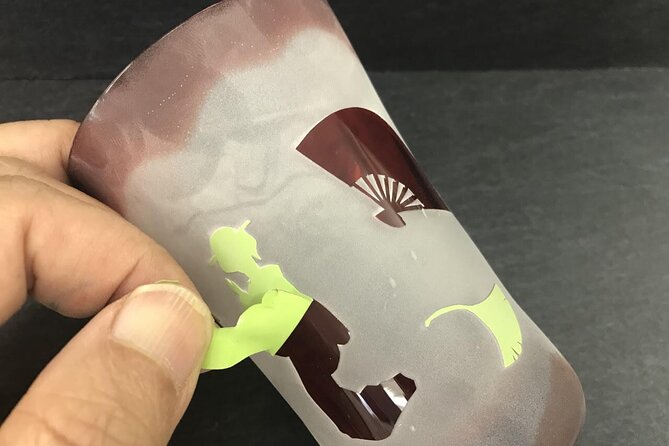
The supplied images make it easier to begin, especially if you are not confident about drawing. Mount Fuji is an obvious choice, but the range also includes geisha, kimono patterns, samurai, and other Japanese motifs.
Think about the type of souvenir you want before you arrive. A simple Mount Fuji image may give you a clean, recognizable design. A kimono pattern can create a more decorative look. A geisha or samurai motif may feel more figurative and dramatic. The workshop allows you to decorate the glass according to your own preference.
You should also consider how much detail you can complete comfortably in the session. The class is only 90 minutes, so a complicated design may require more concentration than a simple pattern. The instructor can help you work through the available choices, but the information provided does not promise a custom design service or an unlimited range of images.
The finished item is described as colorful, though the precise colors and final appearance can depend on the design you choose. That is another reason to ask for guidance before starting if you have a particular look in mind.
The value of a $53.43 handmade keepsake
At $53.43 per person, this is not the cheapest souvenir activity in Tokyo. The price makes more sense when you count what it includes: the lesson, materials, tools, consumption tax, and a finished glass artwork to take home.
You are paying for instruction as well as the object. A souvenir bought in a shop may cost less, but it will not come with the memory of selecting the motif, learning the technique, and completing the piece. For me, that makes this a fair choice for someone who values an activity with a lasting result.
The small group also supports the price. Personal attention is harder to provide in a large class, and the four-person limit gives the session a more workshop-like feel. If you are comparing this with a short demonstration, remember that you are actively making something here.
The value is weaker if you are mainly looking for a quick gift and do not enjoy crafts. The class takes 90 minutes, and the finished glass may need to be packed carefully for the journey home. You should choose it because you want the making process, not only because you need another souvenir.
Getting to Asakusabashi and planning your day
The meeting point is 1-chōme-26-12 Asakusabashi, Taito City, Tokyo 111-0053, Japan, and the activity ends at the same location. The workshop is near public transportation, but no exact station or walking time is provided, so check the route carefully before leaving for the class.
Asakusabashi is a useful base for fitting this into a Tokyo itinerary because the class does not take up a full morning or afternoon. Allow extra time to find the address, especially if you are arriving for the first time. Since the experience begins at a specific meeting point, arriving early is sensible.
The early-arrival detail is worth noting. One participant found an easel outside displaying their name and was invited in ahead of schedule. That is not a promise that early entry will always be possible, but arriving a little ahead of time may make the start less rushed.
There is no hotel pickup or drop-off. You arrange your own transport to and from the workshop. The mobile ticket makes it easy to keep the booking on your phone, but you still need to manage your route through Tokyo yourself.
Who will enjoy this most
I would recommend this class to several kinds of people:
- First-time crafters who want clear instruction and a finished result.
- Families looking for an activity that both children and adults can share.
- Couples and friends who want a personal souvenir rather than another shopping stop.
- Art lovers who enjoy working with images, patterns, and hand tools.
- Repeat visitors to Tokyo who have already seen the major sights and want a slower local activity.
It is also a smart option for a rainy day. The experience takes place indoors and gives you a defined activity without depending on the weather.
The class may not suit someone who wants a broad cultural lecture, a long studio visit, or a choice of many different objects to make. The information provided focuses on decorating one glass in a 90-minute session. You should book with that clear expectation.
Most people can participate, according to the activity information, and the class is intended for beginners. Still, the details do not specify wheelchair access, age limits, or special arrangements for individual mobility needs. If those points matter to you, ask the provider before booking.
Packing and carrying your finished glass home
Your finished artwork is meant to be taken home and treasured, but it is still a glass item. Pack space and protection into your travel plans. The available information does not state whether the workshop provides a special box or packing materials.
If you are flying soon after the class, think about how you will carry it. A glass souvenir is more fragile than a printed cloth or small wooden item. The advantage is that the object has a clear use as a drinking glass, along with a personal design that connects it to Japan.
That practical quality is one of the activity’s strongest points. You are not making something that must sit in a drawer. Each time you use it, the design can recall your Tokyo visit.
Booking timing and cancellation terms
This experience is booked, on average, 88 days in advance, so it is wise to reserve early if it is an important part of your plans. Confirmation is sent within 48 hours of booking, subject to availability.
The cancellation policy is friendly if your plans change with notice. You can receive a full refund if you cancel at least 24 hours before the local start time. Cancellations or changes made within 24 hours are not refunded or accepted.
That 24-hour cut-off matters in Tokyo, where weather, train delays, and changing plans can affect a busy itinerary. Keep the start time in your schedule and avoid leaving this booking until the day before if you are not sure you can attend.
Should you book this Tokyo glass workshop?
Book it if you want a small, hands-on activity with a souvenir you actually create. The four-person limit, patient instruction from Aki San, Japanese design choices, and included materials make this a strong pick for families, beginners, and anyone who prefers making something to simply buying it.
Skip it if your schedule is packed, you dislike craft projects, or you want a detailed cultural tour rather than a practical class. At $53.43, the price is fair for personal teaching and a finished glass, but only if the creative process matters to you.
For the right visitor, this is a memorable pause in Tokyo: 90 minutes, one plain glass, a few Japanese motifs, and a keepsake with your own fingerprints on the idea.
FAQ
How long does the Japanese glass sandblasting workshop last?
The workshop lasts approximately 1 hour and 30 minutes.
Where does the activity start and end?
It starts at 1-chōme-26-12 Asakusabashi, Taito City, Tokyo 111-0053, Japan, and ends back at the same meeting point.
How many people can join the class?
The maximum group size is four participants.
Is the workshop suitable for beginners?
Yes. The activity is suitable for beginners and art lovers, and the workshop owner provides step-by-step instruction.
What Japanese designs can you use?
Design choices include motifs such as Mount Fuji, geisha, kimono patterns, samurai, and other Japanese images.
What is included in the price?
The price includes the material fee, lesson fee, and consumption tax.
Can I cancel for a full refund?
Yes, if you cancel at least 24 hours before the experience start time. Cancellations and changes made within 24 hours are not refunded or accepted.
New on our Tokyo list
- Sumi-e Experience in a relaxing green tea shop in Tokyo★ 5.0 · 3 reviews
- Tokyo : Kamikaze Street Drift Ride★ 5.0 · 3 reviews
- Private Zen Meditation in English in Shinjuku, Tokyo★ 5.0 · 3 reviews
- Onsen Spa in Tokyo and Asakusa Bar Hopping with Local Guide★ 5.0 · 3 reviews
- Easy for everyone! Now you can play handmade mini shamisen and show off to everyone! Musical instruments, sweets and live music★ 5.0 · 3 reviews
- Tokyo Tsukiji Fish Market Walking and Exploring Hidden Gems Tour★ 5.0 · 3 reviews
- Tokyo: Private Tsukiji Street Food & Sake with Local Guide★ 5.0 · 3 reviews
- Mt Fuji Exploration Tour with Free Japanese Kusa Mochi from Tokyo★ 4.5 · 3 reviews
Workshops, compared.
Sushi Making Tokyo Roll and Authentic Japanese Sushi Class
Read our review →
Roll and Authentic Sushi Making Class in Asakusa
Read our review →
Sushi Making Class in a Happi Coat near a Famous Spot
Read our review →
Tokyo Sushi Making Class in Tsukiji with Professional Chef
Read our review →
Ramen & Gyoza Cooking Class in Tokyo with Local Supermarket Visit
Read our review →
Matcha Making Class in Tokyo with Authentic Japanese Sweets Set
Read our review →Browse the lists this tour appears in