
Reviewed · WORKSHOPS
Japanese Fan Painting Workshop ~ in a Tokyo Flower Shop
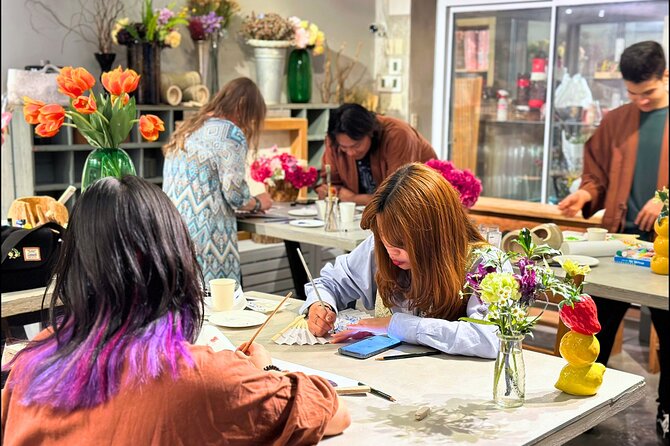
The best thing about this Tokyo workshop is its setting: you paint inside a flower-filled shop, not a crowded sightseeing venue. Ruby and her team guide you through fan painting, Japanese motifs, and basic techniques while you make something you can actually take home and use.
I like the patient instruction, especially for beginners, and I like the chance to choose your own fan shape, size, and color before you start. The main drawback is that two hours may feel short if you enjoy careful painting, and one past participant felt the cost was high for the amount of finished artwork.
In This Review
- Key points at a glance
- Why this fan workshop is different from Tokyo sightseeing
- Arriving at The Park House Chiyoda Kojimachi
- Choosing a fan that suits your design
- Learning fan painting with Ruby and her team
- Traditional motifs and the freedom to do your own thing
- What two hours actually feels like
- The flower shop setting and the social side
- Is the $60 price good value?
- Who should book this experience?
- Practical advice for making a better fan
- Booking, cancellation, and basic access
- Should you book the Japanese Fan Painting Workshop?
- FAQ
- Where does the Japanese Fan Painting Workshop begin?
- Where does the activity end?
- How long does the workshop last?
- How much does the workshop cost?
- What is included in the painting session?
- Do I need previous painting experience?
- How many people can join the workshop?
- Can I cancel for a full refund?
Key points at a glance
- Paint inside a Tokyo flower shop: The calm, flower-filled room gives the workshop a softer pace than a standard city attraction.
- Ruby leads a friendly creative session: Her patient help is useful if you are not confident with a brush.
- Choose your own fan: Different shapes, sizes, and colors let you begin with a piece that fits your taste.
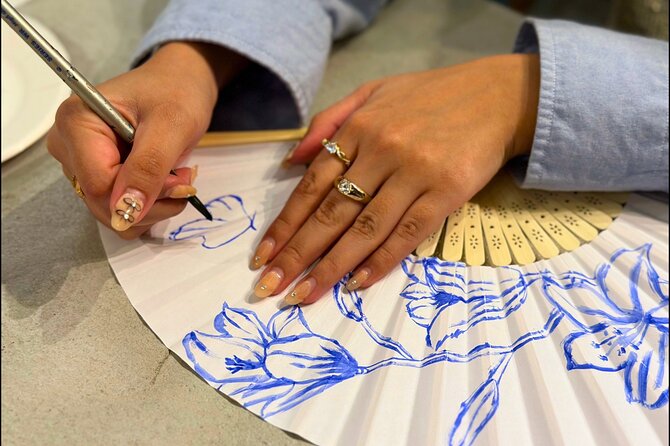
- Learn Japanese motifs: Cherry blossoms, koi fish, and scenic views provide ideas, but you can create your own design.
- Take home a practical souvenir: Your painted fan is decorative, functional, and easy to pack.
- Plan for a two-hour activity: It works well as a quiet afternoon break, though serious artists may want more time.
Why this fan workshop is different from Tokyo sightseeing
Tokyo offers endless temples, towers, shopping streets, and food stops. Those are worthwhile, but they can also leave you moving from one busy place to the next. This workshop gives you a reason to sit down, focus your hands, and slow the day.
You do not simply watch a demonstration. You make a Japanese fan from the start, with paint, brushes, and a choice of fan styles supplied for you. That gives the experience a personal result. Instead of another small purchase from a shop, you leave with an object connected to your own time in Tokyo.
The flower shop matters, too. The setting adds color and fragrance without turning the session into a formal museum lesson. You can look around, take photos at the end, and work in a room designed to feel calm.
I see this as a good choice for a pair of friends, couples, solo visitors who enjoy meeting creative people, and parents with older children who can take part in a two-hour art activity. The group can hold up to 20 people, so the mood may be social rather than private.
A few more Tokyo bookings worth comparing
- Sushi Making Tokyo Roll and Authentic Japanese Sushi Class
★ 5.0 · 3,971 reviews - Tokyo: Roll and Authentic Sushi Making Class in Asakusa
★ 4.9 · 1,957 reviews - Tokyo Shinjuku Chopsticks Making Class
★ 5.0 · 1,763 reviews
Arriving at The Park House Chiyoda Kojimachi
The meeting point is The Park House Chiyoda Kojimachi, at 6-chōme 46 Kōjimachi, Chiyoda City, Tokyo 102-0083. The activity begins and ends at this point, so you will not need to arrange a separate return transfer.
The location is near public transportation, which helps when you are fitting the workshop between other Tokyo plans. Still, give yourself enough time to find the exact building and meeting spot. A creative session is much more pleasant when you arrive without rushing.
On arrival, you enter the flower-filled space and meet the instructor. The room sets the tone right away: this is not a loud, fast-moving class. You have time to settle in before choosing your materials.
A mobile ticket makes entry simple. Confirmation is provided at booking, so keep the ticket available on your phone. Service animals are allowed, and most people can participate.
Choosing a fan that suits your design
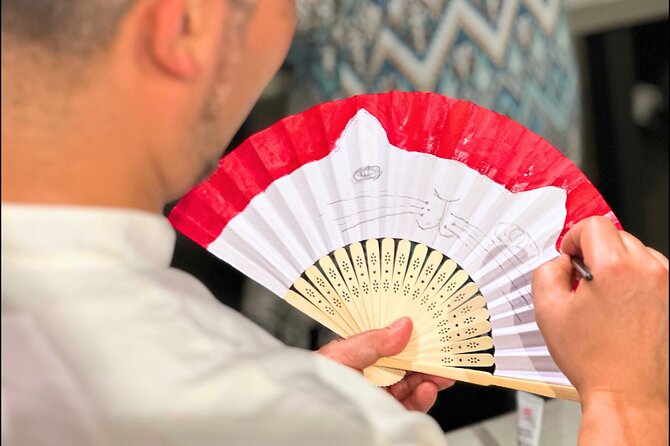
Your first practical decision is the fan itself. You can choose from several shapes, sizes, and colors, so the blank surface already gives your project a little character before you paint.
The size affects how much detail you can add. A smaller fan gives you less room for a busy design, while a larger surface may suit broad shapes or a scenic scene. If you are new to painting, I would consider choosing a simple fan and leaving room around the main image.
Color matters as well. A pale base may make darker brushwork easy to see. A stronger base can become part of the design, but it may require more thought when you add paint. You are not locked into one traditional look, so take a moment to decide what kind of souvenir you want.
The fan is both a canvas and a useful object for warm weather. That makes it more interesting than a flat art card. You can display it, use it for cooling, or keep it as a reminder of your time in Tokyo.
Learning fan painting with Ruby and her team
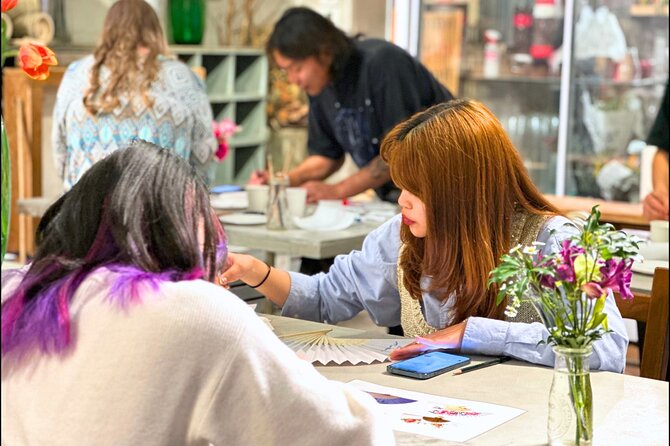
Ruby and her team provide the instruction. The strongest point here is their approach with beginners. You do not need formal art training, and you are not expected to arrive with a finished idea.
Ruby has been praised for being welcoming, thoughtful, and patient. That matters because painting on an irregular fan surface is different from painting on a flat sheet of paper. The curve, folds, and shape can affect how your brush moves.
You receive advice on using acrylic and water-based paints. This is a useful detail for anyone who wants to understand the materials rather than simply copy a sample. You can learn how much paint to use, how to handle the uneven surface, and how to keep your design from becoming too heavy.
The instructor also explains the history and cultural role of fans in Japan. The lesson is not just about decoration. You get context for an object that has served both a practical purpose and a place in Japanese art and customs.
The class appears designed to support different skill levels. You can follow traditional ideas, ask for help with a particular shape, or create your own design. That freedom keeps the class from feeling like a paint-by-numbers exercise.
Same corner of Tokyo, a completely different plan:
- Mt Fuji and Hakone 1-Day Bus Tour Return by Bullet Train
★ 5.0 · 26,383 reviews - 1-Day Tokyo Bus Tour
★ 5.0 · 14,250 reviews - Tokyo: TOKYO SKYTREE® Admission ticket
★ 4.5 · 11,192 reviews - Tokyo: teamLab Planets TOKYO Digital Art Museum Entry Ticket
★ 4.6 · 9,779 reviews
Traditional motifs and the freedom to do your own thing
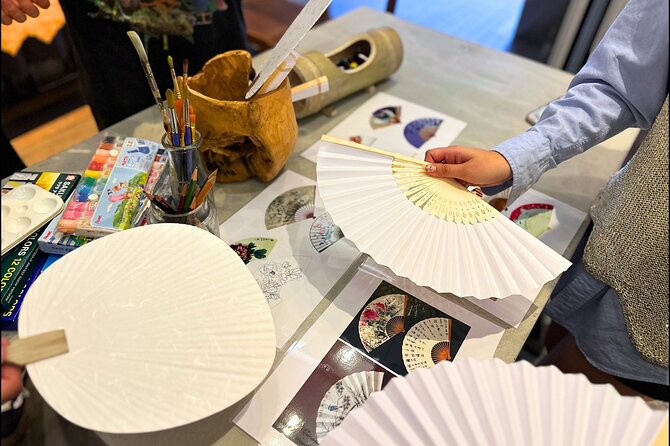
You can use familiar Japanese subjects such as cherry blossoms, koi fish, and scenic views. These motifs make a useful starting point when you want your fan to look connected to Japan but do not know what to paint.
Cherry blossoms can work as a simple pattern around the fan. Koi provide a stronger central subject. Scenic designs give you a chance to use the fan’s shape as part of the composition, though they may take more planning.
You are also free to ignore these ideas. If you have a personal symbol, a favorite color scheme, or a design that suits your trip, you can follow that instead. The workshop encourages imagination rather than demanding one correct result.
I like this balance. A fully open art class can be intimidating, while a strict copy exercise can feel narrow. Here, traditional motifs give you a safe first step, and personal design choices let the final fan feel like yours.
Do not expect every part of your fan to look perfect. One useful lesson from the experience is that irregular surfaces are part of the challenge. The goal is a handmade object, not factory-level symmetry.
What two hours actually feels like
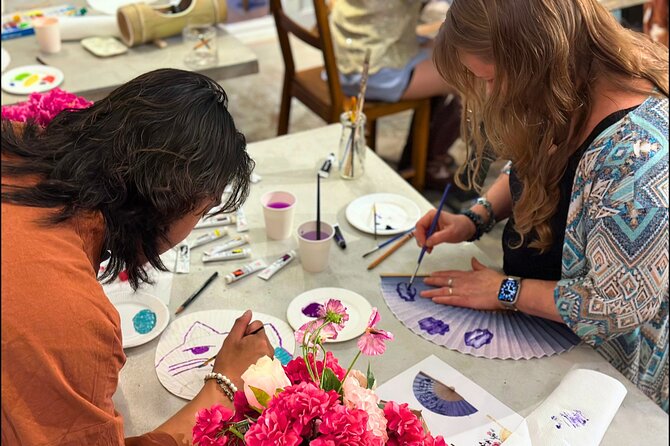
The activity lasts about two hours. That gives you enough time to choose a fan, hear the introduction, paint, ask for advice, and take photos at the end.
The pace sounds relaxed rather than hurried. You can work quietly, talk with people around you, and make changes as the design develops. That makes the workshop a good reset after a morning of Tokyo sightseeing.
The time limit does have a tradeoff. If you enjoy detailed art, you may want more time to refine small areas. A participant who had completed several art projects felt the session was pleasant but questioned the price and amount of work produced. Keep that in mind if you already paint often or expect a long studio class.
For a beginner, though, two hours is a reasonable length. You get a clear activity with a finished object instead of a full-day commitment. The workshop can fit neatly into a larger Chiyoda itinerary.
The flower shop setting and the social side
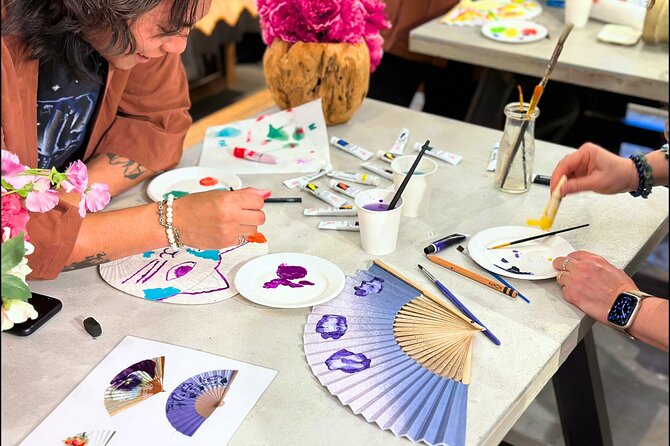
The shop creates one of the most appealing parts of the experience. Flowers surround the session, giving you a visual backdrop while you work. You are still in central Tokyo, but the class gives you a pause from the city’s noise and movement.
This is also a natural way to meet other artsy people. A group of up to 20 participants is large enough for a social atmosphere, but the activity gives everyone something to focus on. You do not need to force conversation. You can chat while choosing colors or compare designs at the end.
If you prefer complete silence and individual attention, the group size may be a consideration. Instruction is shared across the room, so you may need to ask directly when you want help. The available feedback suggests that Ruby and her team make an effort to assist, especially when a beginner feels unsure.
Photos at the end add a small but worthwhile finish. You can record the completed fan and the flower-filled setting before leaving. Since the activity returns to the meeting point, there is no awkward final transfer or change of venue.
Is the $60 price good value?
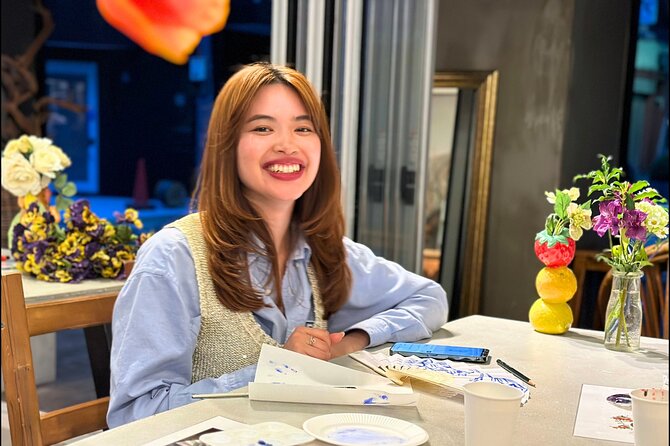
At $60 per person, this is not the cheapest way to spend two hours in Tokyo. You are paying for more than paint and a fan, though. The fee includes instruction, materials, the guided cultural background, and use of a calm creative space.
The value depends on what you want from an activity. If you want a low-cost craft session with lots of output, the price may feel high. If you value a guided experience, a personal souvenir, and a break from sightseeing, the cost is easier to justify.
The included supplies are important. You do not need to pack paints or brushes, and you do not need to buy a blank fan separately. The instructor’s advice on acrylic and water-based paints also adds value if you want to learn a technique you can repeat later.
I would compare this price with other short hands-on activities in Tokyo, not with a simple souvenir purchase. A shop-bought fan may cost less, but it will not carry your own design or the memory of making it.
The booking pattern suggests that people often reserve this experience well ahead, with an average booking time of 47 days before the date. If the class fits a fixed Tokyo schedule, booking early is sensible. The group limit is 20, and a popular time could fill before your arrival.
Who should book this experience?
You should consider booking if you want:
- A calm indoor activity during a busy Tokyo trip
- A handmade souvenir rather than a standard purchase
- A guided introduction to Japanese fan painting
- A creative session that welcomes beginners
- A chance to meet other visitors with similar interests
- A two-hour activity near public transportation
This workshop is especially suited to people who enjoy making things. You do not need to be a skilled painter. The instruction is intended to help you get started, and the fan’s irregular surface gives you a manageable challenge.
Couples can create matching or contrasting fans. Friends can treat the session as a shared afternoon activity. Solo visitors may appreciate the easy social setting, since the class gives you an immediate common interest.
You might choose something else if you want a major cultural site, a long formal art lesson, or a private class with no other participants. The group can reach 20 people, and the workshop focuses on a small finished object rather than a large body of work.
Practical advice for making a better fan
Start with a clear main idea. A simple cherry blossom pattern or one koi may look more effective than trying to cover every inch with detail.
Ask for help early, especially if you have never painted on an irregular surface. The instructor can offer useful guidance before a small mistake becomes part of the whole design.
Think about the fan as an object you may use. Keep the folds and moving parts in mind as you paint. A design that looks good when open should still suit the fan when it is handled.
Use the traditional motifs as prompts, not rules. Japanese subjects can give your souvenir a clear sense of place, but a personal design may mean more to you years later.
Leave time for photos and drying or final checks as directed. The session ends back at the starting point, so you can plan the next part of your day from there.
Booking, cancellation, and basic access
You receive confirmation at the time of booking, and the mobile ticket can be used for the activity. The meeting point is near public transportation, but the supplied details do not specify a particular station or route, so check your map before setting out.
Most people can participate, and service animals are allowed. The maximum group size is 20. The experience lasts about two hours and ends where it begins.
Free cancellation is available if you cancel at least 24 hours before the start time. Cancellations or changes made less than 24 hours before the start time are not accepted for a refund, and cut-off times follow Tokyo local time.
Should you book the Japanese Fan Painting Workshop?
Book it if you want a personal, hands-on souvenir and a quiet change of pace. The flower shop setting, patient help from Ruby and her team, and freedom to use traditional motifs or your own ideas make this more than a basic craft demonstration.
At $60, you should not book it simply because it is cheap. You are paying for the setting, guidance, materials, and the chance to make something yourself. If you already do a lot of art and want several hours of detailed work, the short session may feel limited.
For beginners, couples, friends, and solo visitors who like creative activities, I think the workshop earns a place on a Tokyo plan. It gives you a useful fan, a cultural introduction, and two slower hours in a city that rarely stops moving.
FAQ
Where does the Japanese Fan Painting Workshop begin?
The workshop begins at The Park House Chiyoda Kojimachi, 6-chōme 46 Kōjimachi, Chiyoda City, Tokyo 102-0083, Japan.
Where does the activity end?
The activity ends back at the meeting point at The Park House Chiyoda Kojimachi.
How long does the workshop last?
The workshop lasts approximately two hours.
How much does the workshop cost?
The listed price is $60 per person.
What is included in the painting session?
The workshop supplies the fans, paints, and brushes needed for the activity.
Do I need previous painting experience?
No specific experience is required. The instructor provides guidance, and most people can participate.
How many people can join the workshop?
The activity has a maximum group size of 20 participants.
Can I cancel for a full refund?
Yes. You can cancel for a full refund at least 24 hours before the experience start time. Cancellations made less than 24 hours before the start time are not refunded.
New on our Tokyo list
- Sumi-e Experience in a relaxing green tea shop in Tokyo★ 5.0 · 3 reviews
- Tokyo : Kamikaze Street Drift Ride★ 5.0 · 3 reviews
- Private Zen Meditation in English in Shinjuku, Tokyo★ 5.0 · 3 reviews
- Onsen Spa in Tokyo and Asakusa Bar Hopping with Local Guide★ 5.0 · 3 reviews
- Easy for everyone! Now you can play handmade mini shamisen and show off to everyone! Musical instruments, sweets and live music★ 5.0 · 3 reviews
- Tokyo: Private Tsukiji Street Food & Sake with Local Guide★ 5.0 · 3 reviews
- Mt Fuji Exploration Tour with Free Japanese Kusa Mochi from Tokyo★ 4.5 · 3 reviews
- Tokyo Tsukiji Fish Market Walking and Exploring Hidden Gems Tour★ 5.0 · 3 reviews
Workshops, compared.
Sushi Making Tokyo Roll and Authentic Japanese Sushi Class
Read our review →
Roll and Authentic Sushi Making Class in Asakusa
Read our review →
Sushi Making Class in a Happi Coat near a Famous Spot
Read our review →
Tokyo Sushi Making Class in Tsukiji with Professional Chef
Read our review →
Ramen & Gyoza Cooking Class in Tokyo with Local Supermarket Visit
Read our review →
Matcha Making Class in Tokyo with Authentic Japanese Sweets Set
Read our review →Browse the lists this tour appears in