
Reviewed · WORKSHOPS
Kaisendon and Sashimi Cutting Workshop
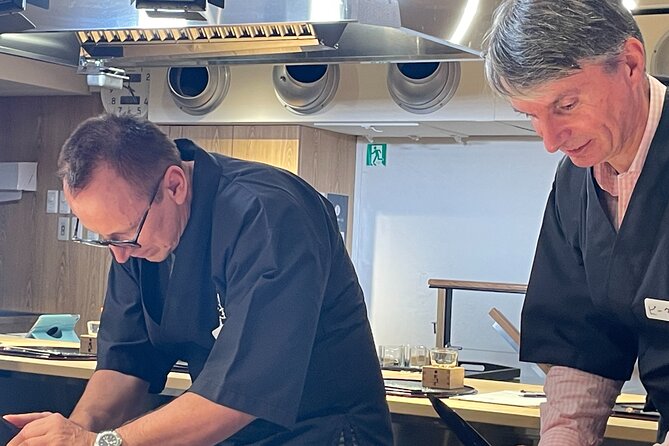
The best part of this Tokyo class is that you do not just watch Japanese food being made. You handle a sashimi knife, practice its movement, cut your own piece of fish, and arrange it over vinegared rice in a Kaisendon seafood bowl. Instructor Naoya Kumagai leads the knife demonstration, then guides each participant through the hands-on work.
I like the very small group size, capped at four people, and the way the class ends with a complete meal rather than a sample bite. You also get clear English guidance from the team, a certificate, and 10% off purchases at the first-floor shop that day. The main consideration is scope: this is a short sashimi-cutting workshop, not a full Japanese knife-maintenance course.
In This Review
- Key points at a glance
- What this Tokyo food class is really about
- The opening knife demonstration with Naoya Kumagai
- Flour dumplings first, sashimi second
- Building your own Kaisendon bowl
- Miso soup, sake, and a proper finish
- Why the four-person limit matters
- Price and practical value at $160
- Location, timing, and getting there
- Who will enjoy this most
- Booking and cancellation details
- Final verdict: book it for the skill, not only the bowl
- FAQ
- Where does the Kaisendon and Sashimi Cutting Workshop take place?
- What time does the workshop start?
- How long does the experience last?
- What will I make during the class?
- Is lunch included?
- Is sake included?
- What happens if I cancel?
Key points at a glance
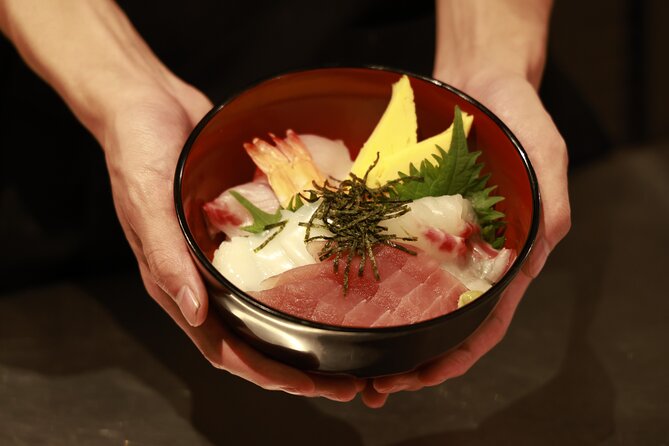
- Naoya Kumagai’s knife demonstration: Watch a professional show how a Japanese sashimi knife is used before you try it yourself.
- Practice before handling fish: Begin with flour dumplings, then move on to cutting sashimi with individual guidance.
- Your own Kaisendon lunch: Place the sashimi you cut on vinegared rice and eat it with miso soup.
- Optional sake tasting: Alcoholic beverages are included, and sake tasting is available during the meal.
- Small class, personal instruction: The group maximum is four participants, which matters when you are learning a precise knife technique.
- Useful extra value: Receive a participation certificate and 10% off items in the first-floor shop on the same day.
What this Tokyo food class is really about
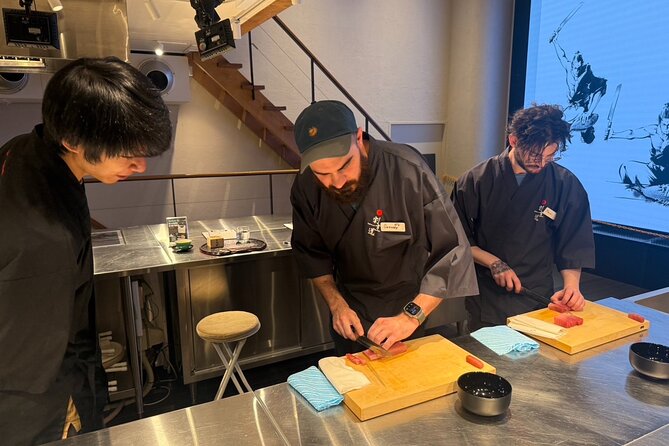
A Kaisendon is a seafood bowl built around rice and sashimi. It looks simple when served, but the cutting technique matters. The angle of the knife, the direction of the cut, and the way the blade moves through the fish all affect the final texture.
This class keeps the focus on that process. You receive a short explanation of Japanese knife techniques, watch Naoya Kumagai work, and then repeat the movements under instruction. That makes the class more practical than a standard cooking demonstration. You are not only learning what the finished bowl should look like. You are learning one of the key steps that gets it there.
The session lasts about 90 minutes. That is long enough for a structured lesson and a meal, but short enough to fit into a busy Tokyo day. I would treat it as a focused food activity rather than a broad introduction to Japanese cooking.
The team also includes English support. That is important here, since knife technique depends on small instructions that can be hard to follow through gestures alone. Previous class feedback specifically praises the helpful teaching, the interpreter, and the friendly atmosphere. You should still expect a compact lesson, not a long lecture on culinary history.
A few more Tokyo bookings worth comparing
- Sushi Making Tokyo Roll and Authentic Japanese Sushi Class
★ 5.0 · 3,971 reviews - Tokyo: Roll and Authentic Sushi Making Class in Asakusa
★ 4.9 · 1,957 reviews - Tokyo Shinjuku Chopsticks Making Class
★ 5.0 · 1,763 reviews
The opening knife demonstration with Naoya Kumagai
The class begins with a greeting and introduction, followed by a lecture on sashimi knives. Naoya then demonstrates how Japanese knives are used. This is the part to watch closely, even if you have used kitchen knives before.
A sashimi knife is not simply a sharper version of a Western chef’s knife. The class explains what makes the knife special and how its cutting action differs. The practical value is clear: you get to see the correct movement before trying to copy it, rather than guessing from a recipe or a quick online video.
The demonstration also gives you a chance to notice how the knife is held and guided. Since the class is small, the instruction can stay close to the actual work. If you are interested in buying a Japanese knife in Tokyo, this introduction may help you understand what you are looking at before spending money.
That said, do not book this session expecting an extensive study of Japanese blades. The information provided describes a brief explanation of knife techniques. A separate Tokyo Keen Japanese Knife and Sashimi Workshop is suggested for people who want more about Japanese knives or sharpening. This class is better for learning the basic handling needed to cut sashimi and make the bowl.
Flour dumplings first, sashimi second
Before cutting fish, you practice with flour dumplings. This is a smart part of the lesson because it lets you work on the movement without beginning with the main ingredient.
The practice gives you a feel for the knife and the cutting action. You can concentrate on the angle and motion, then make adjustments before moving to sashimi. For a first-time user, that short rehearsal should make the transition less intimidating.
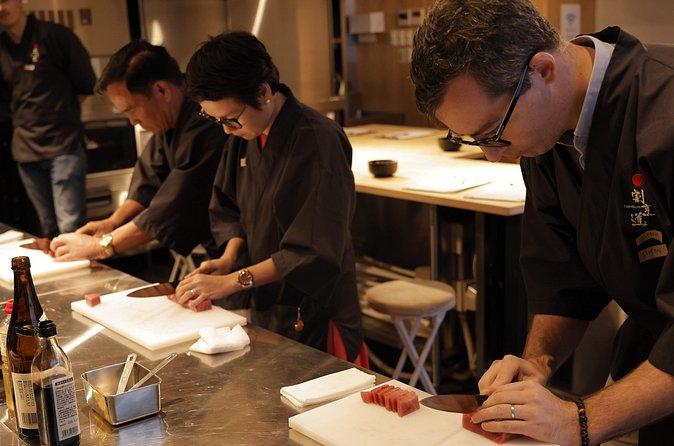
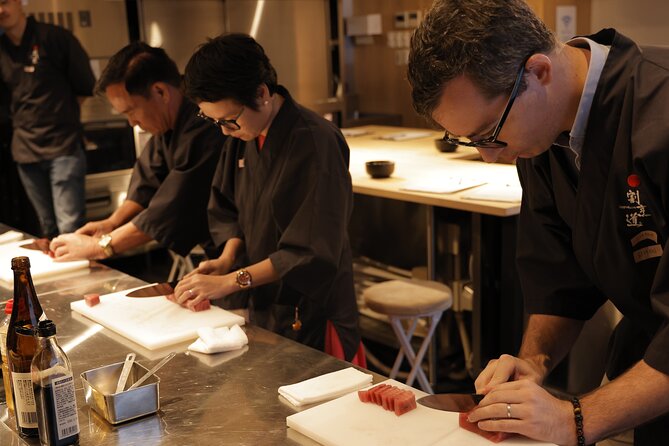
After the flour-dumpling exercise, each participant practices cutting sashimi with a sashimi knife. This is the heart of the workshop. You are not sharing one demonstration piece while watching someone else work. Each participant gets a chance to make the cut and then use the result in the final bowl.
The instruction is hands-on, but the class is not described as an advanced professional course. I would recommend it to curious home cooks, food-focused visitors, and anyone who wants a practical introduction to a Japanese knife. If you already have serious fish-cutting experience, you may find the lesson basic, though the personal guidance and meal still give it appeal.
Building your own Kaisendon bowl
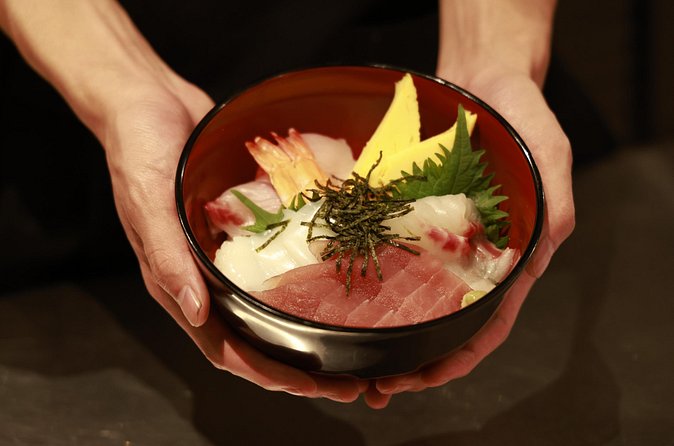
Once the cutting practice is finished, you make the seafood bowl. The sashimi goes over vinegared rice, creating the Kaisendon you will eat for lunch.
This step gives the class a satisfying purpose. Your knife work leads directly to a meal, and the finished dish connects technique with everyday Japanese food culture. The bowl is not just a decoration at the end of the lesson. It is the edible result of the work you have done.
You should also enjoy the contrast between the precise cutting practice and the relaxed meal that follows. The class moves from watching, to practicing, to assembling, to eating. That clear sequence makes the 90-minute schedule easy to understand.
The food component is a strong part of the value at $160. You are paying for instruction, the use of all tools, guidance, a seafood-bowl lunch, miso soup, and alcoholic beverages. The meal alone is not the point, but it makes the experience feel more complete than a short class that ends after the demonstration.
Same corner of Tokyo, a completely different plan:
- Mt Fuji and Hakone 1-Day Bus Tour Return by Bullet Train
★ 5.0 · 26,383 reviews - 1-Day Tokyo Bus Tour
★ 5.0 · 14,250 reviews - Tokyo: TOKYO SKYTREE® Admission ticket
★ 4.5 · 11,192 reviews - Tokyo: teamLab Planets TOKYO Digital Art Museum Entry Ticket
★ 4.6 · 9,779 reviews
Miso soup, sake, and a proper finish
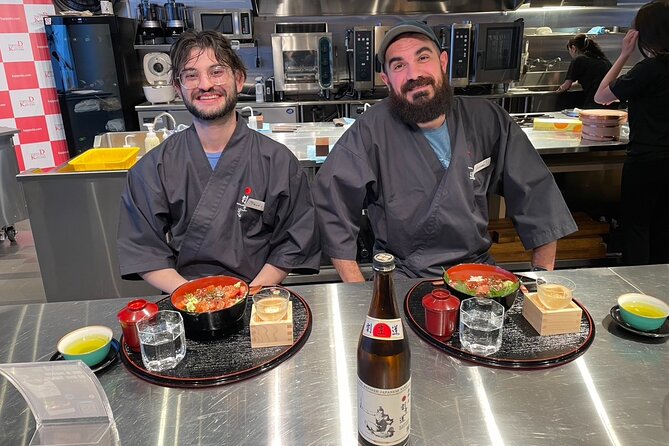
Tasting time follows the bowl-making session. You eat the Kaisendon you prepared, with miso soup included. Sake tasting is also available, and alcoholic beverages are listed among the inclusions.
This creates a more rounded Japanese food experience without making the class much longer. I like that the tasting comes after the practical work. You have something connected to the lesson in front of you, rather than a separate snack chosen only for convenience.
Sake may not be the main reason to book, and the available information does not specify a particular variety or amount. Think of it as an added part of the meal, not a dedicated sake course. If you do not drink alcohol, the essential part of the experience remains the knife lesson and seafood bowl.
The class has also been praised for leaving participants full and happy, which fits the format. You learn, prepare food, and sit down to eat within one compact session. For a morning or early afternoon activity, that can serve as both a cultural experience and lunch.
Why the four-person limit matters
The class accepts a maximum of four participants. That is one of the most important details for judging the experience.
Knife instruction works better in a small group. You have more room to watch the demonstration, ask questions, and receive correction while using the sashimi knife. A large class could turn the practical section into a wait-and-watch exercise. The four-person limit makes the hands-on part more central.
The small group also supports the warm tone repeatedly associated with the teaching. The team is described as friendly, helpful, and able to provide good English support. That matters in a lesson where you may need to ask for help with a grip, angle, or cutting motion.
There is a trade-off. A private class is not offered as a listed feature, so you should not assume you will be alone or receive a custom lesson plan. The group can include up to four people. Still, that is a small enough number for the class to feel personal rather than crowded.
Price and practical value at $160
At $160, this is not a bargain lunch. The price makes the most sense if you value instruction and a small-group activity, not just the seafood bowl.
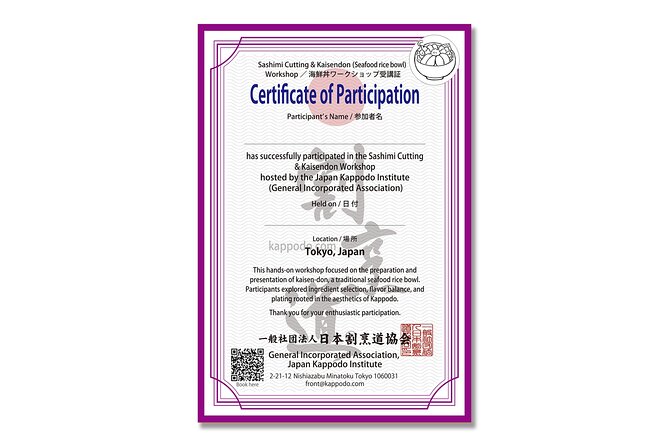
Your fee covers the lesson, all tools, a tour guide, alcoholic beverages, lunch, miso soup, and a participation certificate. You also receive 10% off items at the first-floor shop on the day of your workshop. If you are already considering a Japanese knife purchase, that shop discount may improve the value, though the information does not specify the shop’s prices or which items qualify.
I would compare the cost with other Tokyo food classes by asking one question: do you want to learn a physical skill, or do you mainly want to eat seafood? If you want a bowl of sashimi with little instruction, $160 is hard to justify. If you want to understand the knife, practice the technique, and prepare your own meal in a group of no more than four, the price is easier to defend.
The certificate is a pleasant souvenir, but it is not the main reason to book. The real value lies in the access to the tools, the demonstration by Naoya, the chance to cut sashimi yourself, and the personal help during the process.
Location, timing, and getting there
The workshop takes place at Kappodo H.Q., Tokyo D Kitchen Studio, at DK Building, 2 Chome 21 12, Nishiazabu, Minato City, Tokyo 106-0031. The meeting point and end point are the same, so you return to the studio after the meal.
The activity is near public transportation, but no specific station or route is provided. You should check the exact map location and allow time to find the building, especially since the class involves a fixed start. A mobile ticket is available, and booking confirmation is received at the time of reservation.
The listed start time is 1:00 pm. The schedule also shows registration at 10:45 or 12:45 and class times beginning at 11:00 or 1:00, suggesting that different sessions may be offered. Confirm the time on your booking rather than relying only on the general schedule.
The written timing breaks down roughly like this:
- Registration and greeting begin first.
- A short introduction and knife lecture follow.
- Naoya demonstrates Japanese knife use.
- You practice with flour dumplings and then sashimi.
- You assemble the Kaisendon.
- You sit down for tasting and the meal.
The activity ends back at the meeting point. Private transportation is not included, so you make your own way to and from Nishiazabu.
Who will enjoy this most
I would recommend this class to you if you enjoy food activities that involve doing, not just watching. It is especially suitable for home cooks, people curious about Japanese knives, and visitors who want a small cultural activity with a meal built in.
It also works well for someone who has never used a sashimi knife. The flour-dumpling practice gives you a gentler starting point, and the group maximum keeps the instruction focused.
The class may suit you if you are thinking about purchasing a Japanese knife during your Tokyo visit. You will get an introduction to what makes the knife different and how it should be handled. The 10% shop discount is another useful reason to combine the workshop with a purchase, though you should decide on the knife based on your needs rather than buying simply because you are there.
I would hesitate to recommend it to someone seeking a long culinary course. You will not learn every part of Japanese seafood preparation, and the provided description specifically keeps the focus on sashimi cutting. People wanting detailed sharpening instruction should choose the longer or more specialized knife workshop instead.
Families with young children should also check suitability directly before booking. The activity involves sashimi knives, and the available information does not state a child age policy or special arrangements.
Booking and cancellation details
You can cancel up to 24 hours before the local start time for a full refund. Changes or cancellations made within 24 hours are not accepted for a refund.
The activity requires a minimum number of participants. If the provider cancels because that minimum is not met, you are offered another date or experience, or a full refund. Since the group limit is four, it is worth checking the confirmed status of your chosen session when planning around other Tokyo bookings.
Final verdict: book it for the skill, not only the bowl
You should book the Kaisendon and Sashimi Cutting Workshop if you want a compact, personal lesson with a meal at the end. The four-person limit, English guidance, and Naoya Kumagai’s demonstration give the class a practical edge over a simple seafood tasting.
The $160 price is reasonable for a small-group experience that includes tools, instruction, lunch, miso soup, sake, a certificate, and a shop discount. It is less attractive if your only goal is to eat Kaisendon or if you want a serious course in sharpening and knife care.
My advice is simple: choose this class when you want to learn the basic sashimi-cutting process and enjoy the result immediately. Choose the more advanced Japanese knife workshop if blade care and sharpening matter more to you. For a first hands-on introduction in Tokyo, this is a focused and memorable use of 90 minutes.
FAQ
Where does the Kaisendon and Sashimi Cutting Workshop take place?
It takes place at Kappodo H.Q., Tokyo D Kitchen Studio, DK Building, 2 Chome 21 12, Nishiazabu, Minato City, Tokyo 106-0031.
What time does the workshop start?
The listed start time is 1:00 pm. The schedule also shows registration and sessions at other times, so check your booking confirmation for the exact session.
How long does the experience last?
The workshop lasts approximately 1 hour and 30 minutes.
What will I make during the class?
You will cut sashimi with a sashimi knife and place it on vinegared rice to make a Kaisendon seafood bowl.
Is lunch included?
Yes. The seafood bowl you make is included as lunch, along with miso soup.
Is sake included?
Alcoholic beverages are included, and sake tasting is available during the tasting portion of the experience.
What happens if I cancel?
You receive a full refund if you cancel at least 24 hours before the local start time. Cancellations or changes made within 24 hours are not refunded or accepted.
New on our Tokyo list
- Tokyo : Kamikaze Street Drift Ride★ 5.0 · 3 reviews
- Private Zen Meditation in English in Shinjuku, Tokyo★ 5.0 · 3 reviews
- Sumi-e Experience in a relaxing green tea shop in Tokyo★ 5.0 · 3 reviews
- Onsen Spa in Tokyo and Asakusa Bar Hopping with Local Guide★ 5.0 · 3 reviews
- Easy for everyone! Now you can play handmade mini shamisen and show off to everyone! Musical instruments, sweets and live music★ 5.0 · 3 reviews
- Tokyo: Private Tsukiji Street Food & Sake with Local Guide★ 5.0 · 3 reviews
- Mt Fuji Exploration Tour with Free Japanese Kusa Mochi from Tokyo★ 4.5 · 3 reviews
- Tokyo Tsukiji Fish Market Walking and Exploring Hidden Gems Tour★ 5.0 · 3 reviews
Workshops, compared.
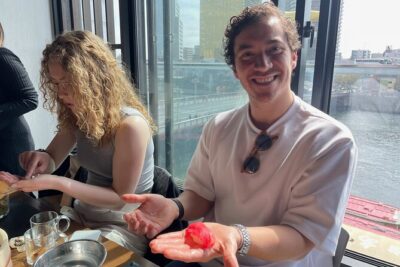
Sushi Making Tokyo Roll and Authentic Japanese Sushi Class
Read our review →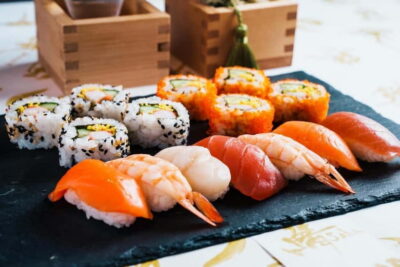
Roll and Authentic Sushi Making Class in Asakusa
Read our review →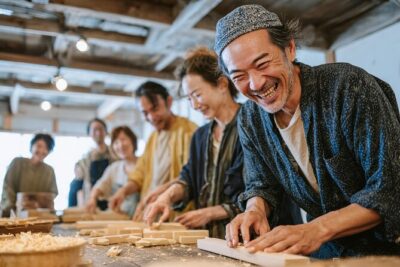
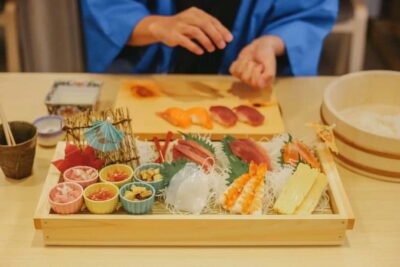
Sushi Making Class in a Happi Coat near a Famous Spot
Read our review →
Tokyo Sushi Making Class in Tsukiji with Professional Chef
Read our review →
Ramen & Gyoza Cooking Class in Tokyo with Local Supermarket Visit
Read our review →
Matcha Making Class in Tokyo with Authentic Japanese Sweets Set
Read our review →Browse the lists this tour appears in