
Reviewed · KAMAKURA TOURS
Kamakura Private & Customized Half-Day Tour with Local Guide
Kamakura is easy to visit from Tokyo, but its temples, shrines, back streets, and seaside corners are spread across town. This private custom tour helps you fit the places you care about into one well-paced outing, with a local guide to explain what you are seeing. You might visit a Zen temple, wash coins at a cave shrine, sample Japanese food, or finish at the beach.
I like the freedom to shape the day around your interests, and I like the human touch of a Kamakura-born guide such as Takumi Ikeda. His help has included vegetarian meals, gluten-free suggestions, local shops, Setsubun customs, and onward plans for Enoshima. The main consideration is cost: at $85 per person, you still pay separately for trains, meals, and temple admission.
In This Review
- At a glance
- Why a private Kamakura tour can make sense
- Starting at Kamakura Station and Komachi Street
- Tsurugaoka Hachimangu and Kamakura’s samurai past
- A short train ride to the Great Buddha
- Hase-dera, gardens, and a longer temple visit
- Choosing the northern temple route
- Bamboo, caves, beaches, and Enoshima
- Japanese lunch with room for dietary needs
- Local craft and small practical discoveries
- What $85 per person really buys
- Timing, walking, and how to plan your day
- Who should book this Kamakura experience
- Should you book it?
- FAQ
- Where does the Kamakura tour meet?
- How long does the tour last?
- Is the itinerary private and customizable?
- Which languages are available?
- Are transportation and entrance fees included?
- Can I choose a vegan or vegetarian lunch?
- What should I bring, and can I cancel?
At a glance
- A Kamakura-born guide: Ask for local stories, customs, food advice, and quieter corners beyond the standard route.
- A private group: You set the pace and can adjust the plan around temples, shopping, food, the sea, or seasonal scenery.
- Several strong route choices: Combine Tsurugaoka Hachimangu and the Great Buddha with Hase-dera, Engaku-ji, Hokokuji, or Enoshima.
- Lunch that fits your diet: Choose a vegan bento, a local Japanese restaurant, or no lunch at all.
- Useful cultural context: Learn about Zen practice, samurai-era Kamakura, Japanese cuisine, shrines, and local traditions.
- A practical half-day: The usual visit lasts about four hours, but the booking window allows roughly three to six hours.
Why a private Kamakura tour can make sense
Kamakura rewards a little planning. The town has major sights, but they are not all in one compact cluster. A private guide can help you choose between the northern temple district, central Kamakura, the Hase area, the coast, or even Enoshima.
I especially like this arrangement for a first visit. You can see famous places without spending the day merely following a fixed procession. If you have already seen the Great Buddha, your guide can spend more time on shrines, local food, craft, or a quieter temple.
The experience is also useful for solo visitors. Takumi Ikeda has helped a solo guest prepare for the weather, decide what to bring, and shape the route around personal interests. That kind of help can save time and remove the small friction that comes with navigating an unfamiliar Japanese town alone.
Still, this is not a bargain-priced sightseeing bus. The $85 fee buys privacy, planning, and local attention, not a bundle of admissions or transport. For two people or a small group, the price may feel reasonable. If you are traveling alone on a tight budget, compare it with visiting a few Kamakura sights independently.
More Private Tours in Kamakura
- Kamakura Private Tour: Temples, Nature, and the Great Buddha
★ 5.0 · 121 reviews - Kamakura 8 hr Private Walking Tour with Licensed Guide from Tokyo
★ 5.0 · 80 reviews - Kamakura: Private Guided Walking Tour with Local Guide
★ 4.8 · 60 reviews
Starting at Kamakura Station and Komachi Street
The meeting point is the East Exit of Kamakura Station, a practical place to begin because it puts you close to the town center. Confirm the exact meeting details through the booking messages before you go, and arrive with comfortable shoes.
Komachi Dori is usually the first stop on the standard route. Allow about 30 minutes for a gentle walk, browsing, and small food purchases. The street leads toward Tsurugaoka Hachimangu and gives you an immediate sense of Kamakura as a place where historic sites and everyday shopping sit side by side.
This is a useful warm-up rather than a major historical stop. You might find snack shops, gifts, and small stores, but the street can be busy. Your guide can help you avoid wasting time on random browsing and point out food or shops that fit your interests.
If shopping is not your priority, tell your guide early. That half hour might be better spent at a temple, shrine, beach, or craft shop. The private format is most valuable when you use it to skip what does not appeal to you.
Tsurugaoka Hachimangu and Kamakura’s samurai past
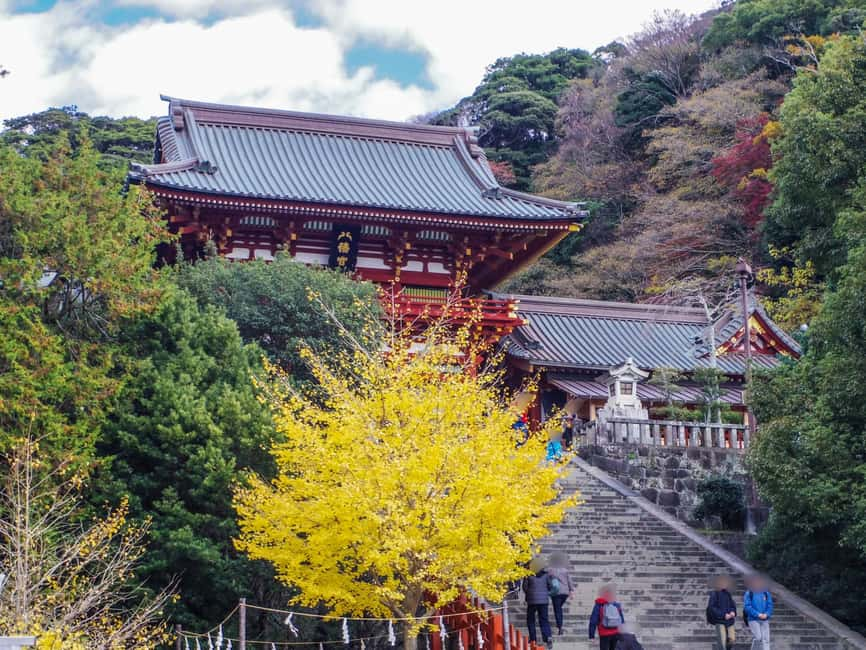
From Komachi Dori, the route continues to Tsurugaoka Hachimangu Shrine, usually with about 45 minutes of guided time. Founded in 1063, the shrine is closely tied to Kamakura’s samurai-era story and remains one of the city’s central religious and cultural sites.
This is the place where clear explanation matters. A shrine can look impressive while its customs remain mysterious, especially if you do not know how Shinto worship works. Your guide can explain what you are seeing, how the site connects to Kamakura, and how religious practice fits into Japanese life.
The shrine is also a good contrast to the Zen temples. You move from temple quiet and Buddhist ritual into a more ceremonial Shinto setting. That contrast helps you understand that Kamakura is not just a collection of old buildings. It is a living town with several layers of faith and history.
The timing is sensible, but 45 minutes is not enough for every corner. If you want long photo stops, a detailed look at every building, or time for nearby shopping, ask for a slower plan. Private tours let you trade breadth for depth.
A short train ride to the Great Buddha
The standard route includes a train ride of about 10 minutes before reaching Kotoku-in, home of Kamakura’s Great Buddha. Transportation is not included, so you should budget separately for the train fare and any other local rides used during your chosen route.
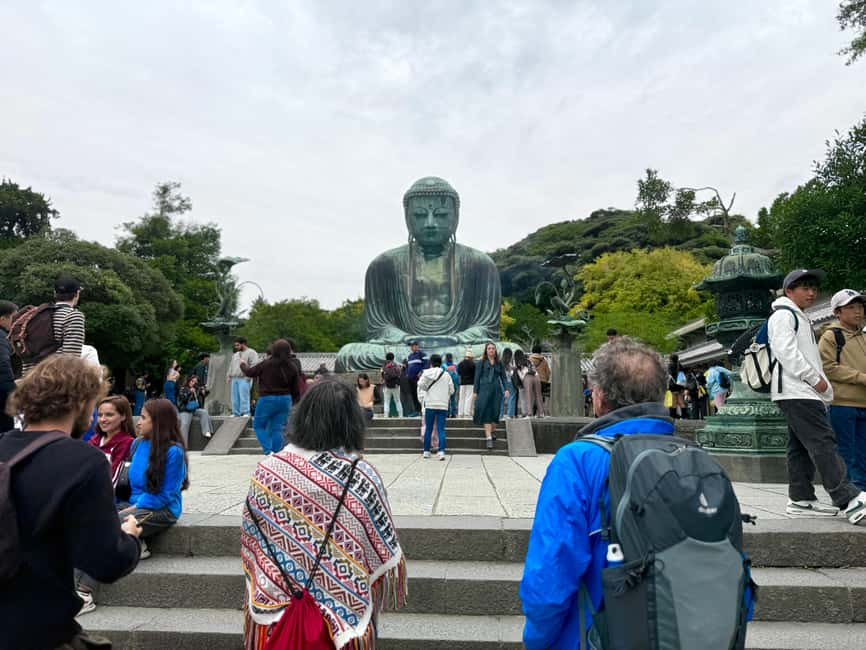
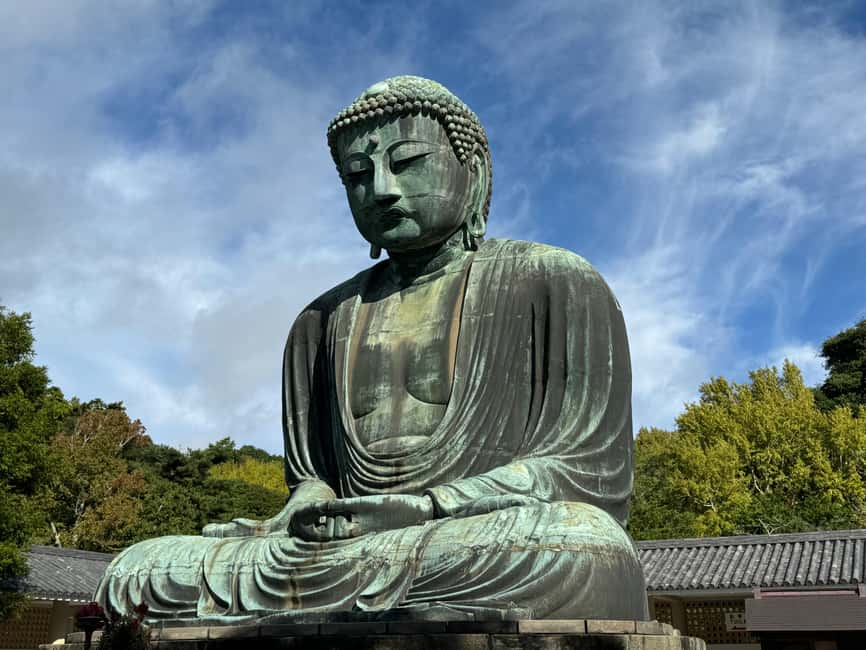
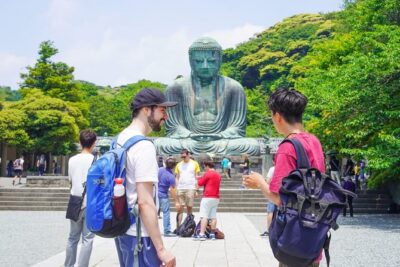
Kotoku-in is one of Kamakura’s most recognizable sights. The large outdoor Buddha gives the tour a strong visual center, but the value of the stop increases when you understand its place in the city’s religious tradition. Your guide can supply context instead of leaving you with a quick photograph and a name.
The guided visit is listed at about 35 minutes. That works well if you want the main sight without lingering too long. It may feel brief if you want to study details, take many pictures, or visit every available area. Tell your guide if this is a must-see priority.
The Great Buddha is also a useful anchor for your route. Once you have seen it, you can use the remaining time for Hase-dera, the coast, a food stop, or a quieter shrine. A fixed tour might keep pushing you along, while this one can adjust around your energy.
More Kamakura and Enoshima days:
- Tokyo: Kamakura & Enoshima Day Trip including Temple Tickets
★ 4.5 · 1,375 reviews - Tokyo: Mt. Fuji, Kamakura, Big Buddha, & Lake Ashi Day Trip
★ 4.5 · 867 reviews - From Tokyo: Kamakura & Enoshima 1-Day Bus Tour
★ 4.5 · 189 reviews - Kamakura Historical Walking Tour with the Great Buddha
★ 5.0 · 129 reviews
Hase-dera, gardens, and a longer temple visit
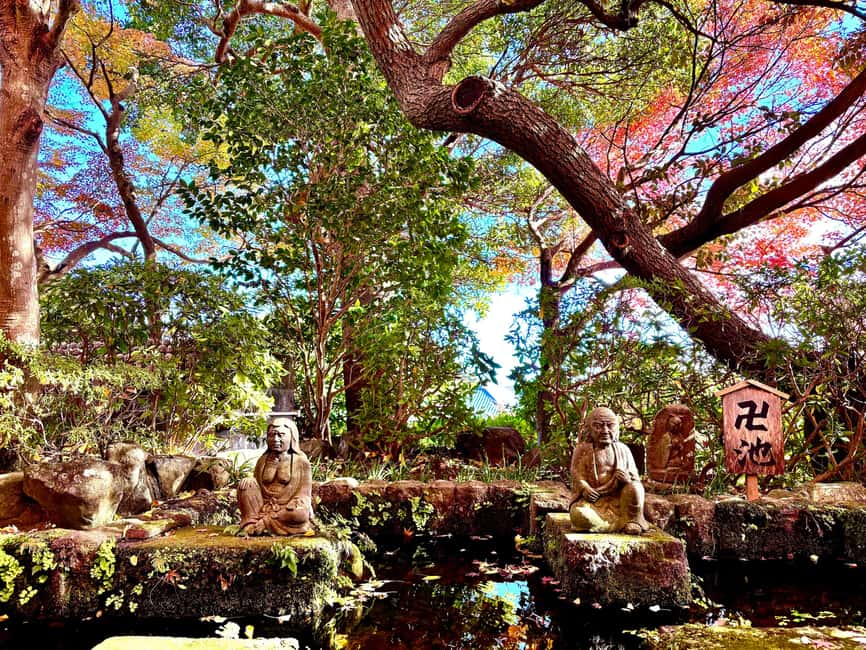
Hase-dera receives about 50 minutes in the standard schedule, making it the longest guided temple stop on that route. It is a good pairing with the Great Buddha because both are in the Hase area, reducing unnecessary backtracking.
Expect a temple visit with time for explanation, walking, and views. The supplied details do not promise a particular seasonal display or garden condition, so treat the famous autumn foliage option as seasonal rather than guaranteed. In fall, ask your guide which parts of Kamakura have the best color on that day.
Hase-dera can be more satisfying than a quick stop because it offers different kinds of interest: religious art, gardens, and scenic viewpoints. Even if you are not devoted to temple architecture, the guide’s explanation can help you notice how the site is arranged and why visitors move through it in a certain way.
The terrain and walking make comfortable shoes essential. Kamakura sightseeing includes station walks, temple paths, and possible slopes or steps. This is not a difficult expedition, but it is not a sit-down tour either.
Choosing the northern temple route
The standard route is not your only option. If you prefer a quieter start, ask about beginning at Kitakamakura Station with Engaku-ji.
Engaku-ji is one of Japan’s important Zen temples and gives the morning a calm, reflective mood. The guide can explain Buddhist customs and rituals as you move through the grounds. That makes the temple more than a pretty collection of wooden buildings and trees.
Kencho-ji is another strong choice. It is described as the oldest Zen temple in Kamakura and includes peaceful gardens plus a hillside path with a view. Choose this area if you care more about temple atmosphere and walking than about fitting in every famous landmark.
The northern route may suit repeat visitors especially well. It can also be a smart choice during crowded periods, although no route can promise empty grounds. Ask your guide to balance major sights with less hurried stops.
Bamboo, caves, beaches, and Enoshima
The flexible choices give you several ways to change the character of the day.
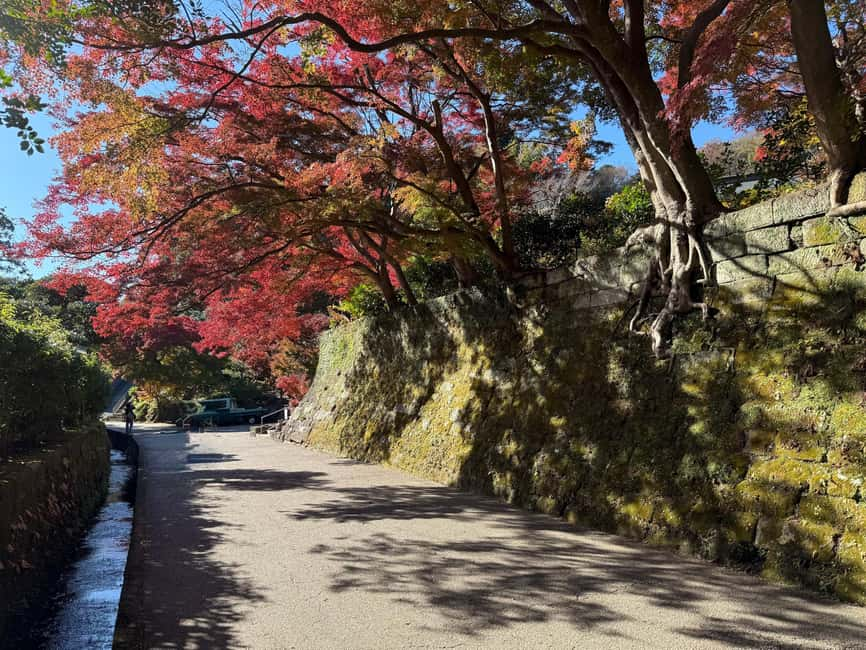
Hokokuji Bamboo Forest offers a quiet walk and the option of matcha tea. It is a natural pick for anyone who wants scenery and a peaceful temple setting. The grove is a focused stop, so it may work better as part of a route than as the only major sight.
Sasuke Inari has rows of red torii gates and fox statues. It feels more tucked away than Tsurugaoka Hachimangu and gives you a chance to ask about Inari shrine traditions and the meaning of the fox figures.
Zeniarai Benzaiten Shrine is known for its cave setting and spring water where you wash money for luck and prosperity. It is a memorable cultural stop, but the ritual is best enjoyed with a short explanation rather than treated as a tourist stunt.
Yuigahama Beach changes the day from temple-hopping to seaside wandering. Choose it when you want ocean air and a less formal side of Kamakura. It is also a sensible choice if your group needs a break from gates, steps, and historic buildings.
Enoshima can be added as a way to extend the day. The island offers a shrine, viewpoints, and seafood, but it may require more time and transport than a central Kamakura route. Ask about it before the day begins so the plan does not become too rushed.
Japanese lunch with room for dietary needs
Lunch is optional, which is a real advantage. You can choose a vegan bento, eat at a local restaurant, or skip the meal and use the time for sightseeing. Food and drinks are not included in the $85 price.
The example meal includes miso soup made with dashi stock and freshly prepared shrimp shinjō. You might instead choose soba, pork cutlet, or another restaurant suited to your preferences. The guide can also explain parts of Japanese cuisine, which turns lunch into a cultural stop rather than a simple fuel break.
Dietary communication matters. A vegetarian guest received help finding a satisfying meal, and another guest received advice on gluten-free choices. Send your needs clearly before the tour. Do not wait until you are standing outside a restaurant.
Skipping lunch works for a shorter three-hour visit or for anyone determined to see more sights. On a four-hour outing, though, a meal can provide a useful pause and a chance to ask questions while seated.
Local craft and small practical discoveries
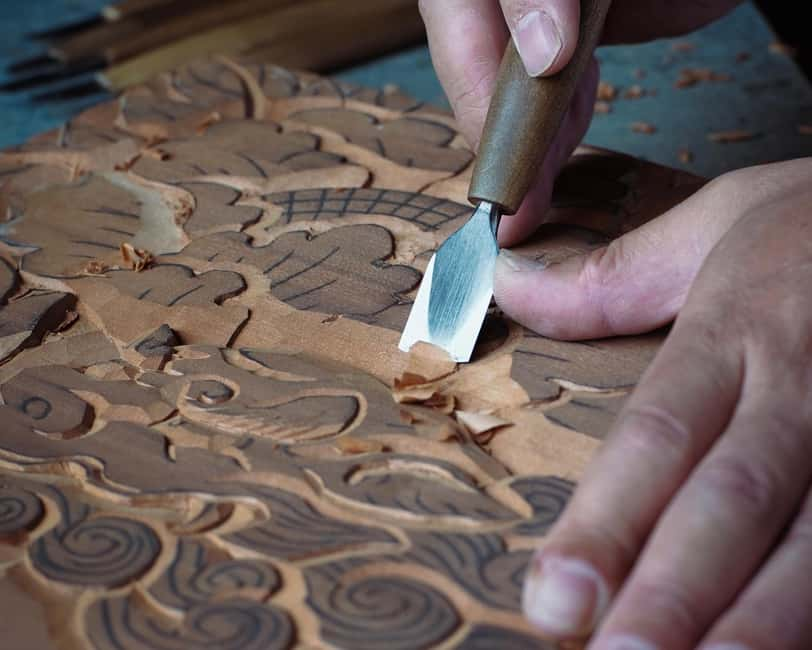
The tour can include an artisan shop or a swordsmith’s workshop with a 22-generation legacy. This is one of the experience’s more distinctive possibilities because it connects Kamakura’s past with working craftsmanship today.
A workshop visit is best for you if objects, tools, and traditional skills interest you. It is less important if your priority is checking off temples. Make your preference clear when the guide contacts you.
The local attention can also be practical in smaller ways. Takumi has helped with everyday shopping, including finding utility items, and introduced one group to roasted ginkgo seeds. Those details may sound minor, but they are exactly the sort of local help that a standard sightseeing route cannot provide.
The guide can also take photos in some arrangements. One booking included the guide’s boss, who took pictures at well-known sites. Do not assume that extra photography support is part of every departure, but you can ask if having group photos matters to you.
What $85 per person really buys
At $85 per person, the value rests on customization. You are paying for a private guide, local planning, interpretation, and the ability to adjust the day. You are not paying for admission tickets, meals, drinks, trains, or personal purchases.
For a couple, family, or small private group, the price can be justified if you want a relaxed plan and help with cultural details. It is especially useful when dietary needs, limited time, or a strong interest in Japanese history would make a generic route less useful.
The value is weaker if you only want to walk to the Great Buddha, take a photo, and leave. Kamakura’s main sights can be visited independently, and the extra costs add up. Count train fares, temple fees, and lunch before comparing the total with a self-guided day.
The five-star score from 11 verified bookings suggests a strong early record, with repeated praise for Takumi’s patience, preparation, flexibility, and local advice. That is encouraging, but the sample is still small. I would book for the personal service, not simply for the number.
Timing, walking, and how to plan your day
The experience is advertised for three to six hours, with the usual visit taking about four hours. Starting times vary, so check availability and think about what you want to do before and after the tour.
Bring comfortable shoes. You may walk along Komachi Dori, through shrine and temple grounds, up paths, and between stations. If you add Enoshima, the day can become longer and more transport-heavy.
Message your preferences in advance. Mention your must-see sites, food restrictions, interest in shopping or crafts, desired pace, and whether you want lunch. WhatsApp is optional, while the booking message system is used to confirm plans.
The tour is offered in English or Japanese and is for a private group. Free cancellation is available up to 24 hours before the start, and the reserve-now, pay-later option helps if your Japan schedule is still shifting. Alcohol and drugs are not allowed.
Who should book this Kamakura experience
I would recommend it to first-time visitors who want context rather than a checklist. It also fits solo visitors, couples, families, and small groups with different priorities.
Choose it if you want:
- A guide who can explain Japanese customs in plain English
- A route built around temples, shrines, food, beaches, or shopping
- Help with vegetarian, vegan, or gluten-free meal planning
- A quieter alternative to a rigid sightseeing schedule
- Local suggestions for Enoshima or the next part of your Japan trip
- A personal introduction to Kamakura from someone born there
I would think twice if your budget is tight or you already have a detailed route and are comfortable using trains and paying temple fees yourself. The tour cannot remove every crowd, and the standard four-hour window cannot cover every option listed.
Should you book it?
Book this tour if you want Kamakura to feel personal rather than programmed. The strongest reasons are the private format, the guide’s local connection, and the freedom to swap a major sight for bamboo, a cave shrine, a beach, lunch, or a craft workshop.
Before booking, decide what matters most. If the Great Buddha and Hase-dera are essential, say so. If you prefer Engaku-ji and Kencho-ji, ask for the northern route. If food is central, request lunch planning early.
At $85 per person plus admission, transport, and food, it is not the cheapest way to see Kamakura. It may be one of the better values for a short visit when you want clear explanations, thoughtful pacing, and help making the city fit your interests.
FAQ
Where does the Kamakura tour meet?
Meet at the East Exit of Kamakura Station.
How long does the tour last?
The experience is offered for approximately three to six hours, with the usual tour lasting about four hours.
Is the itinerary private and customizable?
Yes. The tour is for a private group, and the itinerary can be adjusted around your interests, schedule, and preferred pace.
Which languages are available?
The tour is available in English and Japanese.
Are transportation and entrance fees included?
No. Train and other transportation costs, temple and shrine admission fees, meals, drinks, and personal expenses are separate.
Can I choose a vegan or vegetarian lunch?
Yes. Lunch options include a vegan bento, a local Japanese restaurant, or skipping lunch. Dietary preferences should be shared through the booking messages in advance.
What should I bring, and can I cancel?
Bring comfortable shoes. You can cancel up to 24 hours before the tour for a full refund, and the reserve-now, pay-later option is available.
More Half-Day in Kamakura
- Half-day Tokyo Afternoon Tour by Hato Bus
★ 4.0 · 269 reviews - Tokyo: A Half-Day Trip Bus Tour in the Morning
★ 4.6 · 236 reviews - Half-day Tokyo Morning Tour by Hato Bus
★ 4.0 · 220 reviews - Tokyo Private Half-Day Tour with a Local – Secrets & Highlights
★ 5.0 · 53 reviews
New on our Kamakura list
- 1-Day trip: Kamakura City (Enoshima/Shonan/Beach)★ 4.7 · 3 reviews
- Kamakura Zen: Great Buddha, Nature, Bamboo & Samurai Culture★ 5.0 · 3 reviews
- Kamakura Half Day Walking Tour with Local Experience★ 3.4 · 4 reviews
- Hiking Tour in Enoshima with a Local Guide★ 5.0 · 4 reviews
- Kamakura Tour with Pro Photographer: Anime Train & Fuji Sunset★ 5.0 · 4 reviews
- Kamakura Private Custom Tour★ 5.0 · 4 reviews
- Kamakura Historical and Cultural Day Trip with Local Cuisine★ 5.0 · 4 reviews
- Kamakura Full-Day Private Tour★ 5.0 · 4 reviews
Kamakura Tours, compared.
Kamakura & Enoshima Day Trip including Temple Tickets
Read our review →
Mt. Fuji, Kamakura, Big Buddha, & Lake Ashi Day Trip
Read our review →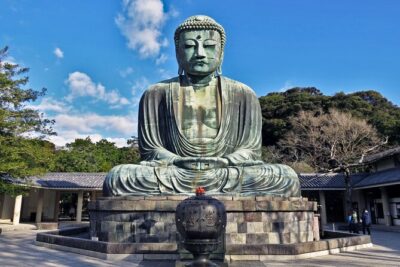
Kamakura Historical Walking Tour with the Great Buddha
Read our review →
Kamakura Private Tour: Temples, Nature, and the Great Buddha
Read our review →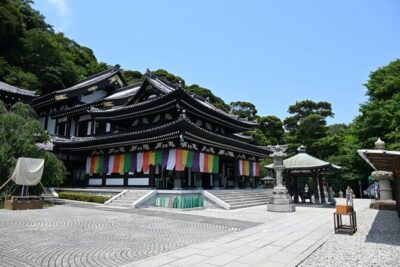
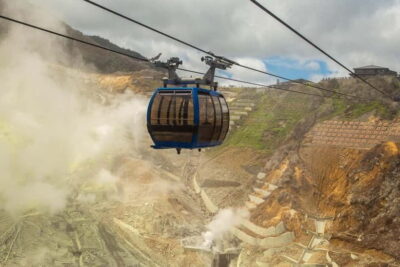
Sea of Mount Fuji, Hakone Ropeway, Ōwakudani, Enoshima
Read our review →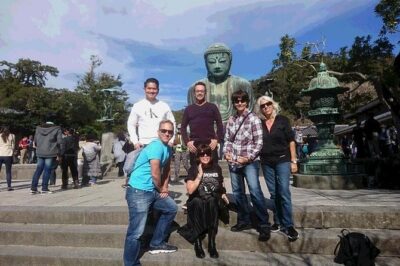
Kamakura 8 hr Private Walking Tour with Licensed Guide from Tokyo
Read our review →Browse the lists this tour appears in