
Reviewed · KIMONO EXPERIENCES
Kimono Art Workshop in Tokyo
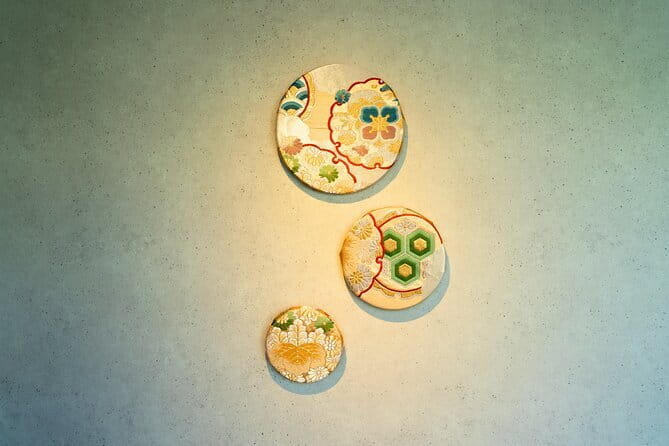
The best part of this Tokyo workshop is that you do not simply look at a kimono behind glass. You learn what its patterns mean, handle authentic vintage cloth, and turn one carefully chosen piece into wall art. Yuki and her team guide you through the process in a small class, with clear English instruction and plenty of help.
I like two things right away: the fabric choice feels personal, and the project gives you a useful souvenir rather than another trinket. You may choose Okinawan Bingata, Amami Oshima Tsumugi, Kaga Yuzen from Kanazawa, or Kyo Yuzen from Kyoto. The only drawback is that 90 minutes passes quickly, so this is a focused craft class, not a full kimono dressing or sewing lesson.
In This Review
- Key Points Before You Book
- What You Actually Make in 90 Minutes
- Why the Regional Fabrics Matter
- Choosing a Pattern With Meaning
- Learning From Yuki and the Workshop Team
- The Eco-Friendly Side of the Project
- Is $58.79 a Fair Price?
- Who Will Enjoy This Tokyo Workshop?
- Getting to Hatchobori and Planning Your Day
- Timing, Cancellation, and Small Practical Details
- The Best Way to Fit It Into a Tokyo Itinerary
- Should You Book the Kimono Art Workshop?
- FAQ
- Where does the Kimono Art Workshop take place?
- How long does the workshop last?
- What will I make during the class?
- Which fabrics can I choose from?
- Is instruction provided in English?
- Is this workshop suitable for beginners?
- How many people can join the workshop?
- What is included in the price?
- Can I cancel for a full refund?
Key Points Before You Book
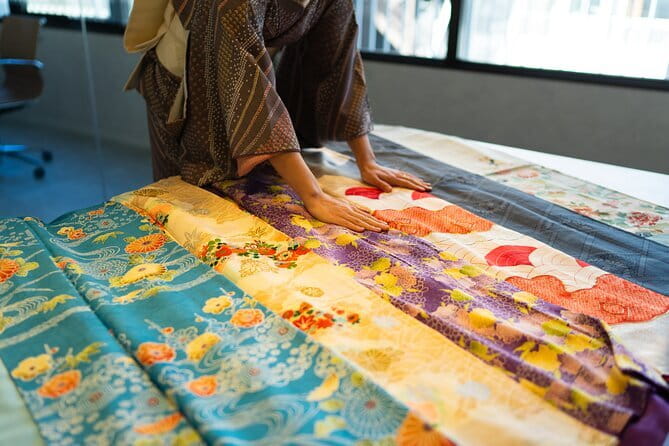
- Vintage kimono cloth becomes finished wall art, giving old textiles a new purpose.
- Four regional textile traditions are introduced: Bingata, Oshima Tsumugi, Kaga Yuzen, and Kyo Yuzen.
- Yuki and her colleagues teach in English, with simple instructions suited to beginners.
- The class is capped at six people, making it a calmer choice than a large group activity.
- The workshop lasts about 90 minutes and starts and finishes at Hatchobori in central Tokyo.
- The price is $58.79 per person, including instruction and all materials, with free cancellation up to 24 hours before the start time.
What You Actually Make in 90 Minutes
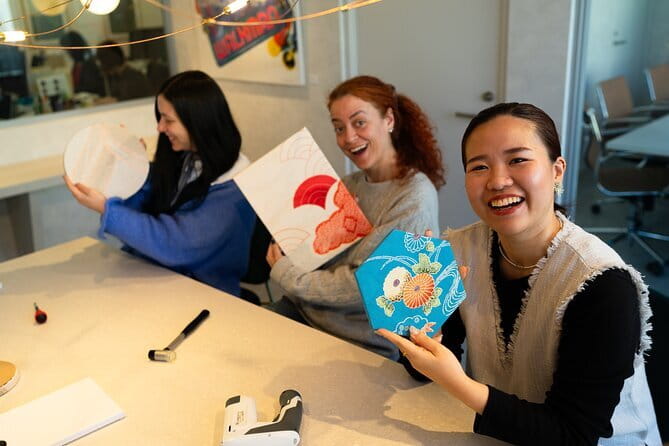
This is a compact art class with a clear beginning, middle, and end. You arrive at the Hatchobori meeting point, at 3-chōme-14-4 Hatchōbori, Chuo City, and settle in for a short introduction to kimono culture. The class takes place near public transportation, but the supplied details do not name a specific station or give walking directions, so check the exact route before you leave.
The first portion is a talk about kimono styles and the way regional designs differ. You learn that a kimono is not simply a robe with a pretty pattern. Cloth, dye method, motif, and place of origin all help tell its story.
Then comes the most enjoyable decision: choosing your fabric. The available pieces include cloth associated with four well-known traditions:
- Bingata from Okinawa, known for strong color and detailed dyed patterns.
- Oshima Tsumugi from Amami, a woven textile with earthy tones and a refined texture.
- Kaga Yuzen from Kanazawa, valued for graceful painted decoration.
- Kyo Yuzen from Kyoto, associated with polished, elegant design.
The exact selection available on your class date may vary. That is part of the appeal, but it also means you should expect to choose from what is on hand rather than request one specific pattern.
Once you have selected a piece, the instructor shows you how to arrange and secure it as an art panel. The process is designed for beginners. You do not need prior craft training, sewing experience, or detailed knowledge of Japanese textiles. The instructions are clear, and the instructors stay nearby to help with the practical steps.
The result is a finished panel that you can take home. It is a modest piece of art, but it carries more meaning than a mass-produced souvenir. You chose the cloth yourself, learned where its style came from, and helped give an old textile another useful life.
More kimono fittings and strolls:
- Let’s make kimono !(Kimono is a gift for you
★ 5.0 · 252 reviews - Tokyo: Matcha and Kimono Experience
★ 4.7 · 219 reviews - Tokyo: Asakusa Kimono Dressing and Matcha Experience
★ 4.9 · 173 reviews
Why the Regional Fabrics Matter
A good kimono lesson should help you see more than color and pattern. This one gives you a starting point for understanding how Japanese textile traditions vary by place.
Okinawa’s Bingata brings a very different feel from Kyoto’s Kyo Yuzen. Bingata is associated with bold dyed designs and the distinct cultural traditions of the Ryukyu Islands. Kyo Yuzen has a more formal Kyoto character, with carefully painted decoration and a polished look.
Oshima Tsumugi offers another contrast. Its appeal is often quieter, with a woven surface and natural-looking shades rather than a loud printed design. Kaga Yuzen, linked with Kanazawa, adds another style based on refined decoration.
You will not become a textile specialist in an hour and a half. That is not the point. The lesson gives you enough background to make a thoughtful choice and to recognize that kimono covers many regional forms, techniques, and design ideas.
I especially like this approach for visitors who have seen kimono in museums, shop windows, or photographs but have not had a chance to study the fabric close up. Handling the material makes the subject easier to understand. You begin to notice weave, weight, color, and pattern instead of seeing only an attractive costume.
Choosing a Pattern With Meaning
The fabric selection is not just a quick pick from a stack. The instructor explains the beauty and cultural meaning behind kimono designs, helping you understand what you are looking at before you make your panel.
The supplied information does not name every motif or promise a particular symbol, so do not arrive expecting to choose a specific flower, animal, or seasonal image. Instead, treat the choice as a guided art decision. You select the piece that catches your eye, then learn more about its regional style and visual character.
This is useful if you want a souvenir tied to your own taste. One person may prefer a restrained woven textile, while another may want a more decorative dyed pattern. Since the finished panel is intended for display, think about where you will put it at home and what colors will work in that space.
The class also makes a thoughtful gift. The completed art can be given to family or friends, and it has a clear connection to Japan. It is small enough to be more practical than carrying home a full garment, while still feeling more special than a standard shop purchase.
Learning From Yuki and the Workshop Team
Yuki is identified as one of the instructors, and the teaching style is a major strength of this activity. She and her colleagues explain kimono history, design, and current use in a friendly way. English instruction is available, and the feedback describes the staff as clear, helpful, and easy to follow.
That matters in a craft class. If instructions are rushed or vague, the project becomes frustrating. Here, the teaching is described as intuitive, with comfortable seating and straightforward guidance. You still make the choices yourself, but you are not left to guess what to do next.
The class has earned a listed 5 out of 5 rating from 11 reviews, with 100 percent recommendation at the time of the supplied information. That is a small sample, so I would not treat it as proof that every class will be perfect. Still, the praise is consistent in several useful areas: friendly instruction, clear English, an interesting cultural lesson, and satisfaction with the finished art.
One particularly useful point is that this class works well after a busy day of sightseeing. The pace is described as relaxed rather than hectic. You sit, listen, choose, and create. For a Tokyo itinerary full of trains, crowds, and long walks, that slower rhythm can be welcome.
A few more Tokyo bookings worth comparing
- Sushi Making Tokyo Roll and Authentic Japanese Sushi Class
★ 5.0 · 3,971 reviews - Tokyo: Roll and Authentic Sushi Making Class in Asakusa
★ 4.9 · 1,957 reviews - Tokyo Shinjuku Chopsticks Making Class
★ 5.0 · 1,763 reviews - Tokyo: Sushi Making Class in a Happi Coat near a Famous Spot
★ 4.9 · 1,377 reviews
The Eco-Friendly Side of the Project
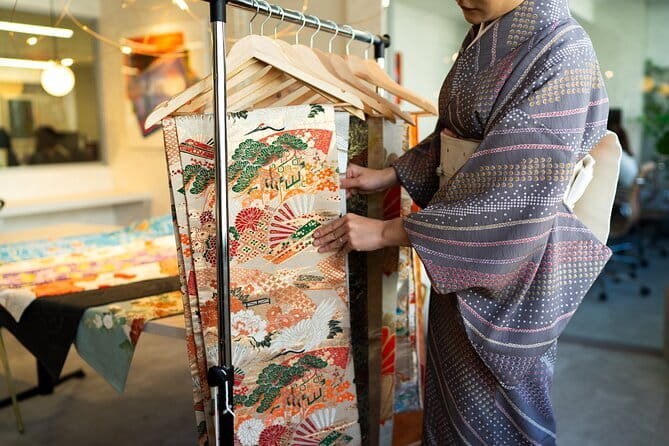
The workshop repurposes authentic vintage kimono fabrics. That gives the art project an environmental angle, but the bigger value is cultural: a textile that no longer serves its original purpose remains visible and useful.
Kimono fabric can carry considerable visual and cultural information. When it is made into a panel, you preserve part of that story in a form that fits modern homes. You are not buying a new imitation kimono just to take a photograph. You are using a piece of older material in a new way.
The activity is not presented as a lesson in textile conservation, and you should not expect a detailed discussion of the previous owner or exact age of each cloth. Its sustainable value comes from reuse and appreciation. The workshop shows how traditional materials can continue to matter outside their original setting.
I also like that the project avoids the pressure to produce a perfect handmade object. The instructions are simple enough for beginners, and the design does not require advanced stitching or complex construction. You leave with something you made, not something that needed professional skill before you touched it.
Is $58.79 a Fair Price?
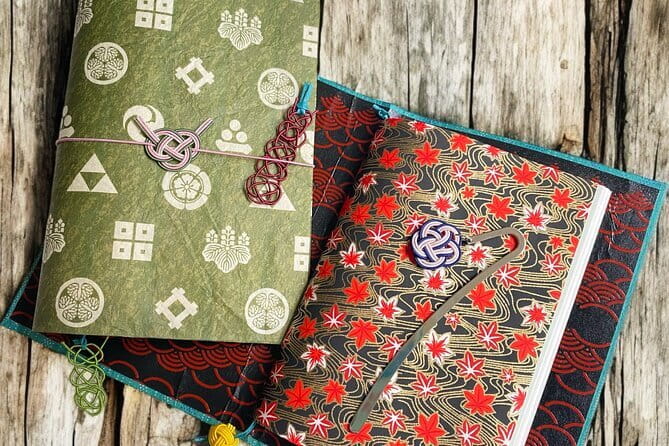
At $58.79 per person, this is not the cheapest short activity in Tokyo. It is also more than you might pay for a quick souvenir or a casual museum visit. The price makes better sense when you count what is included: a 90-minute class, an expert-led cultural lesson, your chosen vintage fabric, all craft materials, and a finished art panel.
You are paying for time with an instructor as much as for the object. A small class of no more than six people allows for personal help, and the workshop provides materials you would not easily source on your own. You also avoid the uncertainty of buying a textile without understanding its regional style or background.
The value is strongest if you want three things at once: a cultural introduction, a hands-on activity, and a take-home keepsake. If you only want to see traditional clothing, a museum or cultural exhibition may cost less. If you want to make something and learn while doing it, the price is easier to justify.
The finished piece is also part of the calculation. You do not leave empty-handed, but the exact size and presentation of the panel are not specified. If luggage space matters, keep in mind that you are taking home a wall-art piece rather than a flat fabric sample.
Who Will Enjoy This Tokyo Workshop?
I would recommend this activity to several kinds of visitors.
First-time Japan visitors get a gentle introduction to a subject that can seem complicated. You learn enough to understand regional differences without sitting through a long academic lecture.
Repeat visitors may appreciate the quieter pace and the chance to engage with Japanese culture in a less familiar way. If you have already visited major temples and shopping districts, making a textile artwork offers a different kind of afternoon.
Families and mixed-age groups may find the craft format approachable, although the supplied information does not state a minimum age. Most participants can take part, but confirm age details if you are booking for young children.
Solo visitors can also fit comfortably into the small group. The workshop does not depend on having a partner, and the instructors provide the practical help needed to complete the project.
It is less suitable if you want a full kimono experience. There is no listed dressing session, tea ceremony, photo shoot, garment fitting, or extended sewing lesson. The focus is kimono education and the creation of one art panel.
Getting to Hatchobori and Planning Your Day
The meeting point is in Hatchobori, Chuo City, Tokyo, at 3-chōme-14-4 Hatchōbori, postal code 104-0032. The activity ends at the same place, so you can plan another stop before or after it without arranging a separate return transfer.
Hotel pickup and drop-off are not included. Food and drinks are also not included, though the class lasts only about 90 minutes. You can eat before or after, but allow enough time to reach the meeting point without arriving flustered.
A mobile ticket is provided, and confirmation is received when you book. Keep the ticket accessible on your phone. Since the exact start time is important for a short class, arrive with time to find the address.
The workshop is near public transportation, but no specific train or subway station is supplied. I would use a map app and check the route from your hotel on the same day. Hatchobori is a practical central Tokyo location, but Tokyo addresses can still take longer to find than expected, especially if you are watching the clock.
Service animals are allowed. Most people can participate, and the group limit is six. Those details make the experience fairly accessible for many visitors, though the supplied information does not give further mobility or seating specifications beyond noting that seats are comfortable.
Timing, Cancellation, and Small Practical Details
You can cancel for a full refund up to 24 hours before the experience begins. Cancellations or changes made less than 24 hours before the start time are not accepted for a refund, and the cut-off follows local Tokyo time.
The activity is often booked well ahead, with an average booking lead time of 47 days. That does not guarantee that every date sells out, but it suggests that you should reserve early if this class is important to your itinerary.
Because the workshop is limited to six people, your experience may be especially quiet if the group is small. One class had only two participants, which allowed plenty of personal attention. A larger class can still be manageable, but the small capacity is one reason not to leave booking until the last minute.
The Best Way to Fit It Into a Tokyo Itinerary
This works well as a break between major sightseeing blocks. Schedule it on a day when you want a seated activity rather than another long walk. The relaxed format can also be useful near the end of a trip, when you are ready to slow down but still want a meaningful final memory.
Do not pack the hour and a half too tightly. The official duration is approximate, and you may want a few extra minutes to finish, collect your artwork, and leave without rushing to the next reservation.
I would also avoid booking it immediately before a timed attraction on the other side of Tokyo. Hatchobori is central, but Tokyo transit and navigation can still eat into your plans. Give yourself a comfortable buffer.
Should You Book the Kimono Art Workshop?
Book this if you want a small, calm, hands-on cultural activity with a souvenir you make yourself. The combination of regional textile teaching, vintage fabric, English guidance, and a finished art panel gives the experience more substance than a basic craft class.
The strongest reasons to go are Yuki’s friendly instruction, the chance to choose from distinctive regional fabrics, and the sustainable reuse of authentic kimono material. The main caution is scope: this is a 90-minute art workshop, not a complete study of kimono or a traditional dressing experience.
At $58.79, it offers fair value for visitors who care about the story behind what they bring home. If you prefer fast sightseeing, shopping, or a larger performance-style activity, spend your budget elsewhere. If you want to sit down, learn something specific about Japan, and leave with a personal piece of art, this is an easy choice.
FAQ
Where does the Kimono Art Workshop take place?
The workshop starts at 3-chōme-14-4 Hatchōbori, Chuo City, Tokyo 104-0032, Japan, in the Hatchobori area.
How long does the workshop last?
The activity lasts approximately 1 hour and 30 minutes.
What will I make during the class?
You will use selected vintage kimono fabric to create a decorative kimono art panel that you can take home.
Which fabrics can I choose from?
The workshop offers a selection that may include Bingata from Okinawa, Oshima Tsumugi from Amami, Kaga Yuzen from Kanazawa, and Kyo Yuzen from Kyoto.
Is instruction provided in English?
The instructors, including Yuki, can teach in English. The class includes explanations of kimono culture and guidance through the art-making process.
Is this workshop suitable for beginners?
Yes. The activity uses simple techniques, and the instructor provides guidance. Most participants can take part.
How many people can join the workshop?
The maximum group size is six people.
What is included in the price?
The workshop fee, instruction by a kimono expert, and all materials needed to create the art panel are included.
Can I cancel for a full refund?
Yes. You can cancel at least 24 hours before the local start time for a full refund. Cancellations or changes made less than 24 hours before the start time are not accepted for a refund.
New on our Tokyo list
- Sumi-e Experience in a relaxing green tea shop in Tokyo★ 5.0 · 3 reviews
- Tokyo : Kamikaze Street Drift Ride★ 5.0 · 3 reviews
- Private Zen Meditation in English in Shinjuku, Tokyo★ 5.0 · 3 reviews
- Easy for everyone! Now you can play handmade mini shamisen and show off to everyone! Musical instruments, sweets and live music★ 5.0 · 3 reviews
- Onsen Spa in Tokyo and Asakusa Bar Hopping with Local Guide★ 5.0 · 3 reviews
- Tokyo: Private Tsukiji Street Food & Sake with Local Guide★ 5.0 · 3 reviews
- Mt Fuji Exploration Tour with Free Japanese Kusa Mochi from Tokyo★ 4.5 · 3 reviews
- Tokyo Tsukiji Fish Market Walking and Exploring Hidden Gems Tour★ 5.0 · 3 reviews
Kimono Experiences, compared.



Tokyo Asakusa: Traditional Kimono Rental Experience at Wargo
Read our review →
Tokyo Asakusa: Miu Kimono Rental and Optional Photoshoot
Read our review →
Tokyo Authentic Kimono Rental in Asakusa with Photography Option
Read our review →Browse the lists this tour appears in