
Reviewed · TEA CEREMONIES
Matcha Making Experience in Shinjuku
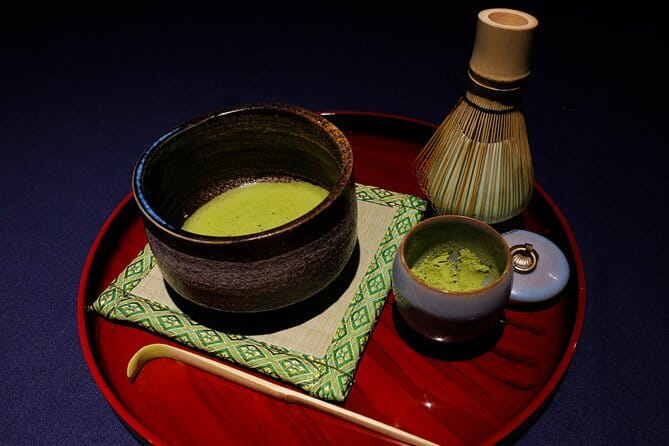
Learning to make matcha is a hands-on way to meet Japan’s tea customs without committing to a long formal ceremony. In about an hour, you’ll learn to handle the bamboo whisk, prepare your own cup, and enjoy it with sweets. I like the small time commitment and the fact that everything is provided.
The instructor may wear a kimono, which adds a traditional touch, and the class includes explanations of matcha’s history and rituals rather than just a quick recipe. The main caution is that the published stop list also names Senso-ji, Tokyo Tower, and Yokohama Landmark Tower Sky Garden, which do not fit neatly with a one-hour Shinjuku class. Confirm the exact program before booking.
In This Review
- Key points at a glance
- What this Shinjuku matcha class really offers
- Arriving at the flower-decorated house in Shinjuku
- How the matcha preparation unfolds
- Why the tea lesson is worth an hour
- A note about Senso-ji, Tokyo Tower, and Yokohama
- Who will enjoy this activity most
- Timing, group size, and practical planning
- Is $32.66 good value?
- Should you book this matcha experience?
- FAQ
- How long does the matcha making experience last?
- Where does the activity begin?
- Where does the activity end?
- Is equipment provided?
- Are tea and sweets included?
- How many people can join the activity?
- Can I cancel for a full refund?
Key points at a glance
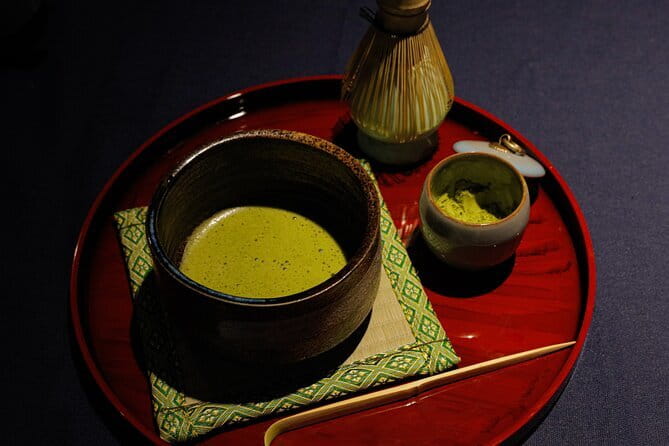
- One-hour tea lesson: You learn to prepare matcha with a bamboo whisk, known as a chasen.
- Tea and sweets included: Your prepared matcha is served with traditional sweets.
- Traditional presentation: The instructor may teach in a kimono, giving the lesson a more formal Japanese feel.
- Simple preparation: Equipment and ingredients are supplied, so you only need to arrive at the meeting point.
- Central Shinjuku setting: The class begins and ends at a flower-decorated house near public transportation.
- Clear cancellation window: Cancel at least 24 hours before the start for a full refund.
What this Shinjuku matcha class really offers
Matcha is not simply green tea in powdered form. You prepare it by whisking the powder into water, and the method has its own tools, pace, and customs. This class gives you a short, practical introduction rather than asking you to learn by watching a video or guessing your way through a tea shop order.
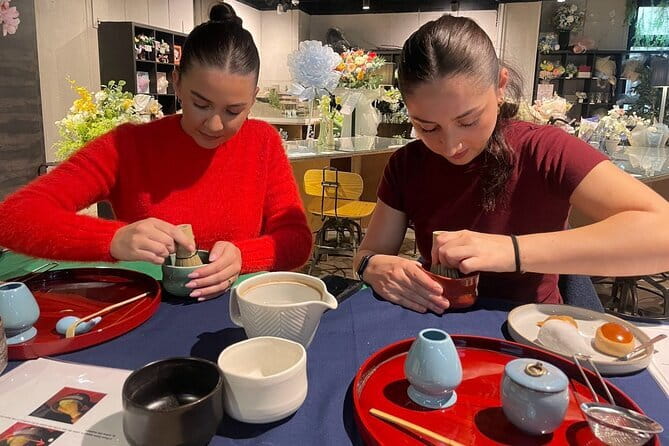
I like that the lesson combines doing and listening. You do not just sit through a talk about Japanese tea. You handle the equipment, follow the preparation steps, whisk the drink yourself, and then taste the result. That makes the hour useful even if you have no previous experience with matcha.
The activity also gives you a small window into the traditional tea ceremony. The class is not described as a full, formal ceremony, so you should book it for instruction and cultural context, not for a lengthy ceremonial performance. That distinction matters. You will likely leave with a better sense of why the movements and tools matter, but the main focus is learning to make and drink the tea.
The instructor’s kimono can add to the atmosphere. No instructor name is provided, so you should not book this expecting a particular teacher. Still, the traditional clothing, the bamboo whisk, and the explanation of tea customs give the session more character than a casual beverage workshop.
More tea rooms worth booking:
- Matcha Making Class in Tokyo with Authentic Japanese Sweets Set
★ 5.0 · 744 reviews - Tokyo: Traditional Tea Ceremony with a Tea Master
★ 5.0 · 528 reviews - Tokyo: Matcha Making Experience with Mochi Sweets in Asakusa
★ 4.9 · 388 reviews
Arriving at the flower-decorated house in Shinjuku
The meeting point is listed as a house with flowers at Japan, 160-0022 Tokyo, Shinjuku City, Shinjuku, 3-chōme 6-7, 第6三和ビル, 4階. The activity starts and ends there, which keeps the logistics simple once you find the building.
The address is near public transportation, but the information supplied does not name a specific station or give walking directions. I would allow extra time to locate the entrance, especially since the meeting point is described as a house with flowers rather than a large attraction with a clearly marked ticket hall. A mobile ticket is provided, so keep the booking confirmation easy to reach on your phone.
This is not a sightseeing tour that carries you around Tokyo. You arrive, take part in the lesson, and return to the same meeting point. That makes it easy to place before lunch, after shopping in Shinjuku, or between other plans.
The maximum group size is 20 people. That is not a private lesson, and the class could feel fairly social at full capacity. The group limit does keep the activity from becoming a huge demonstration, but you should not assume one-to-one attention throughout the hour.
How the matcha preparation unfolds
The usual flow begins with an introduction to matcha and the traditional Japanese tea ceremony. You learn where matcha fits into Japanese culture and why the preparation has established steps. This background helps you understand the tools instead of treating the whisk as a novelty prop.
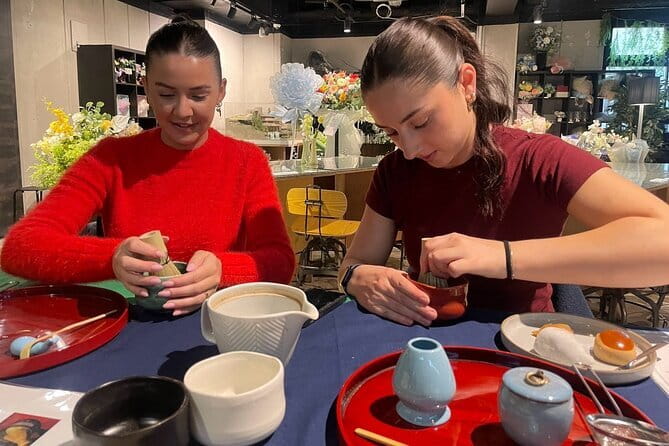
Next comes the practical part. You use a bamboo whisk, or chasen, to prepare the tea. The lesson is designed for beginners, so you do not need to bring special equipment or know the correct technique in advance. Your instructor guides you through the process and explains the movements and rituals as you work.
The whisking is the part that turns the class into a real activity. You are not merely handed a cup. You make the drink yourself, which gives you a better feel for the texture and effort involved in traditional preparation. If your first cup is not perfectly smooth, that is part of learning. The point is to understand the method, not to pass a tea-making exam.
After preparation, you drink the matcha and enjoy sweets. The sweets are an important part of the experience because traditional tea is often paired with something sweet. They also give you a pleasant contrast to matcha’s strong, earthy taste.
The supplied information does not specify the type of sweets, the number of cups, or the exact menu. If you have allergies or dietary needs, ask the provider before booking rather than assuming substitutions are available.
Why the tea lesson is worth an hour
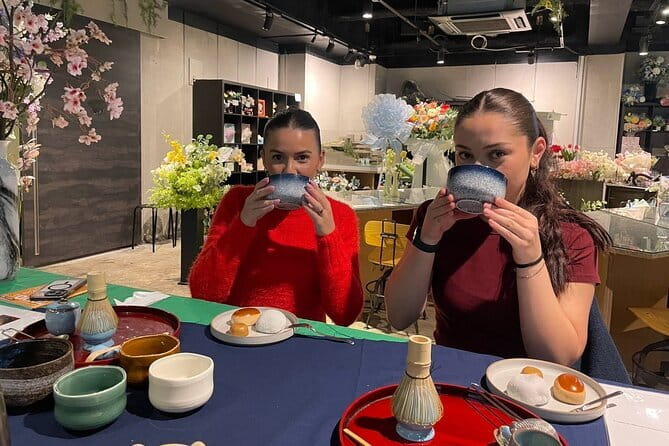
A one-hour class works well for visitors who want a cultural activity but do not want to give up half a day. Tokyo offers endless sights, and a short class lets you add something participatory to a packed schedule. You gain a skill, hear the basic story behind it, and taste the finished drink without spending an entire morning in a formal ceremony.
I also see value in the low equipment burden. You do not need to buy a whisk, carry tea powder, or learn the process before arriving. The price of $32.66 per person includes all fees and taxes, plus the matcha and sweets used in the activity. You are paying for instruction, supplies, and a guided cultural experience, not simply for a cup of tea.
That price is reasonable if you value the teaching. It is less compelling if you only want to taste matcha, since tea shops can offer a drink for less. The class earns its cost through the explanation, the guided preparation, and the chance to use traditional tools yourself.
The strong overall rating of 4.7 from 12 reviews, with 92 percent recommending the activity, supports the idea that the lesson works well for its intended purpose. The most specific praise centers on learning the tea process, understanding its traditions and techniques, and having a friendly instructor in a kimono. Those details point to a class that succeeds through atmosphere and personal instruction rather than grand production.
More Shinjuku nights and walks:
- Tokyo: Shinjuku Food Tour (13 Dishes at 4 Local Eateries)
★ 5.0 · 6,603 reviews - Tokyo Bar Hopping Tour in Shinjuku (All-You-Can-Drink + Dinner)
★ 5.0 · 3,587 reviews - Tokyo: Shinjuku Food Tour (15 Dishes and 4 Eateries)
★ 4.9 · 2,033 reviews - Best of Shinjuku: Izakaya Food Tour (4 Stops, 14+ Tastings)
★ 5.0 · 1,863 reviews
A note about Senso-ji, Tokyo Tower, and Yokohama
There is a notable inconsistency in the supplied tour details. The stop list names three places: Senso-ji Temple, Tokyo Tower, and Yokohama Landmark Tower Sky Garden. Those are major sightseeing locations in different parts of the Tokyo area, while the experience itself is described as a one-hour matcha lesson in Shinjuku that begins and ends at the same address.
No private transportation is included, and the activity is not described as a sightseeing transfer. For that reason, do not assume the tea class includes visits to those attractions. A one-hour class cannot reasonably include a hands-on tea lesson plus three distant sightseeing stops, particularly without transport.
Treat the matcha lesson and those attractions as separate plans unless Bancre Inc. confirms otherwise. Senso-ji, Tokyo Tower, and the Yokohama observation deck can each require their own travel time and admission arrangements. The tea class itself includes all fees and taxes, but the supplied details do not state that admission to those sightseeing sites is included.
This is the one detail I would clarify before paying. It may simply be an error in the activity information, but it is too important to ignore. Ask the provider what the actual one-hour schedule includes and whether the stop list applies to this experience.
Who will enjoy this activity most
I would choose this class if you want a short cultural experience with a clear activity at its center. It suits first-time visitors who are curious about Japanese tea, couples looking for something different from another observation deck, and families or friends who enjoy learning by doing.
It can also work well for solo visitors. The group setting gives you a shared activity without requiring a full-day tour. Since the group can reach 20 people, solo participants should expect a class environment rather than a private conversation with the instructor.
The experience is also a good fit if you have already seen several temples and shopping streets and want a quieter change of pace. Matcha preparation gives you a closer look at an everyday cultural tradition through tools, taste, and movement.
I would think twice if you dislike powdered green tea or strongly prefer fast-paced sightseeing. The experience revolves around making and tasting matcha, so the drink is not a side feature. Likewise, if you are looking for a full tea ceremony with extended formality, ask for more details before booking. The description promises instruction in the rituals and history, but it does not promise a complete ceremonial performance.
Timing, group size, and practical planning
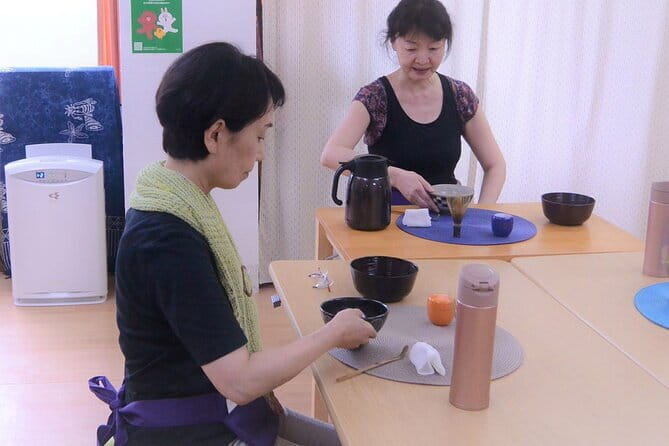
The activity lasts approximately one hour. That makes it easy to fit into a morning or afternoon, but you should leave room around it for finding the building and getting to your next stop. The booking data shows that it is typically reserved about seven days in advance, so I would not wait until the last moment if your Tokyo schedule is fixed.
A mobile ticket is convenient, especially if you are moving around the city with only your phone. You do not need to bring ingredients or equipment. Still, bring a charged phone and keep the meeting address available offline in case your connection is weak.
The activity is near public transportation, but private transportation is not included. You are responsible for reaching Shinjuku and for any travel after the class. Additional meals and drinks are also not included, apart from the tea and sweets provided as part of the lesson.
The experience requires a minimum number of participants. If that minimum is not reached, the provider may offer another date or experience, or give you a full refund. It also requires good weather, and poor weather can lead to a date change or full refund. Since this is an indoor tea activity as described, that weather condition is worth clarifying with the provider.
You can cancel for a full refund up to 24 hours before the start time. Changes or cancellations inside that window are not accepted for a refund. The cut-off follows local Tokyo time, so calculate carefully if you are booking from another time zone.
Is $32.66 good value?
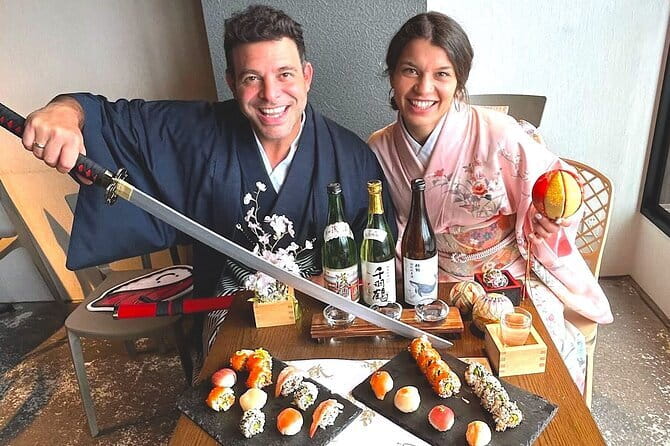
At $32.66, the class sits in the affordable range for a guided cultural activity in central Tokyo. The value is strongest when you want more than a drink. Your payment covers the instructor, the lesson, the tools, the ingredients, sweets, and all listed fees and taxes.
The class is less useful for someone who already knows how to prepare matcha. You may still enjoy the setting and cultural explanation, but the main practical benefit is aimed at beginners. The activity also does not include private transport, extra food, or a wider Tokyo tour, so budget separately for getting to Shinjuku and for the rest of your day.
I would call it good value for a first introduction. You get a manageable lesson, a taste of Japanese tea culture, and a skill you can remember after leaving Tokyo. The short duration also limits the risk of spending too much time on an activity that may not suit your taste.
Should you book this matcha experience?
Book it if you want a beginner-friendly lesson, traditional presentation, and a cup of matcha you prepare yourself. The kimono-clad instruction, bamboo whisk, sweets, and cultural background give the hour a clear purpose, and the $32.66 price includes the necessary supplies.
Before booking, confirm the actual schedule because the references to Senso-ji, Tokyo Tower, and Yokohama Landmark Tower Sky Garden do not match the stated Shinjuku tea class. Once that point is clear, this is a sensible choice for a short, hands-on cultural break in Tokyo.
FAQ
How long does the matcha making experience last?
The experience lasts approximately one hour.
Where does the activity begin?
It begins at a house with flowers at Japan, 160-0022 Tokyo, Shinjuku City, Shinjuku, 3-chōme 6-7, 第6三和ビル, 4階.
Where does the activity end?
The activity ends back at the meeting point.
Is equipment provided?
Yes. The equipment and ingredients needed for the matcha lesson are provided.
Are tea and sweets included?
Yes. You prepare and enjoy a cup of matcha, and traditional sweets are included.
How many people can join the activity?
The activity has a maximum group size of 20 people.
Can I cancel for a full refund?
Yes. You can cancel at least 24 hours before the start time for a full refund. Cancellations made less than 24 hours before the start are not refunded.
New on our Tokyo list
- Tokyo : Kamikaze Street Drift Ride★ 5.0 · 3 reviews
- Private Zen Meditation in English in Shinjuku, Tokyo★ 5.0 · 3 reviews
- Sumi-e Experience in a relaxing green tea shop in Tokyo★ 5.0 · 3 reviews
- Onsen Spa in Tokyo and Asakusa Bar Hopping with Local Guide★ 5.0 · 3 reviews
- Easy for everyone! Now you can play handmade mini shamisen and show off to everyone! Musical instruments, sweets and live music★ 5.0 · 3 reviews
- Tokyo: Private Tsukiji Street Food & Sake with Local Guide★ 5.0 · 3 reviews
- Mt Fuji Exploration Tour with Free Japanese Kusa Mochi from Tokyo★ 4.5 · 3 reviews
- Tokyo Tsukiji Fish Market Walking and Exploring Hidden Gems Tour★ 5.0 · 3 reviews
Tea Ceremonies, compared.
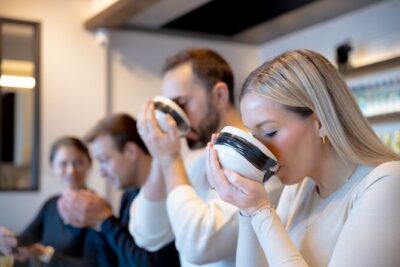
Matcha Making Class in Tokyo with Authentic Japanese Sweets Set
Read our review →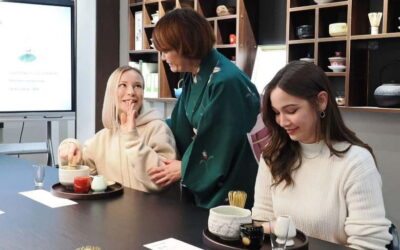
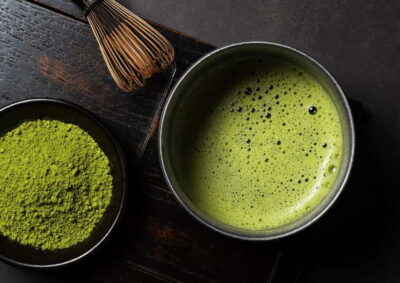
Matcha Making Experience with Mochi Sweets in Asakusa
Read our review →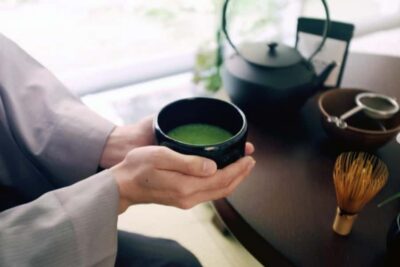
Tea Ceremony Workshop in Tokyo by the Experienced Instrucor
Read our review →

Make Traditional Nerikiri Sweets & Matcha experience in Shibuya
Read our review →Browse the lists this tour appears in