
Reviewed · SAMURAI & NINJA EXPERIENCES
Ninja Lesson in Tokyo – 1 Hour Hands-On with Japanese Master
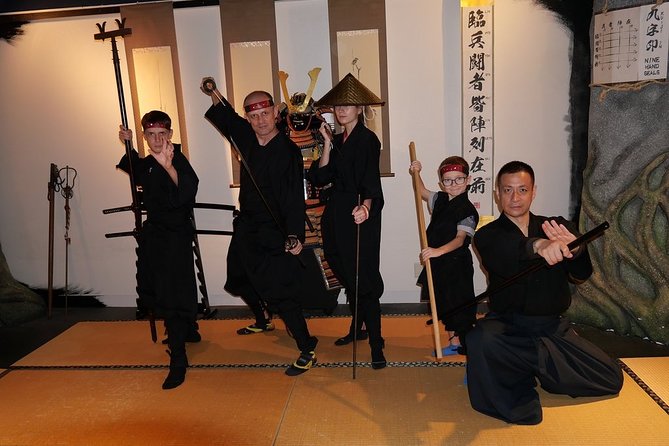
Tokyo’s one-hour ninja lesson packs a surprising amount into a small class. You dress in ninja clothing, learn Kuji-In meditation, watch weapon demonstrations, and practice with shuriken and a blowgun under the direction of a Japanese sensei. It is part martial-arts class, part cultural introduction, and part very good photo opportunity.
I like the small limit of six people, which gives you room to ask questions and get help with technique. I also like the hands-on format: you are not just posing in a costume, you actually try several ninja tools and learn why control and body position matter. The main catch is time. One hour goes quickly, and sword practice may not be included in that shorter session, so confirm what your booking covers if sword training is important to you.
In This Review
- Key points before you book
- What this Tokyo ninja class really feels like
- Wearing the ninja outfit at NINJA SAMURAI TOKYO
- Kuji-In meditation and the mental side of ninja training
- Ninja tools, trick-house details, and demonstrations
- Shuriken practice: more skill than spectacle
- Blowgun practice and the surprise of distance
- Sword training and the one-hour time limit
- Why the group limit of six matters
- The sensei and English instruction
- Location, timing, and planning your afternoon
- Is $82.56 a fair price for one hour?
- Who will enjoy this activity most?
- Practical advice for a smoother lesson
- Should you book the Tokyo ninja lesson?
- FAQ
- Where does the ninja lesson take place?
- What time does the class begin?
- How long does the experience last?
- How many people can join the class?
- Is the lesson taught in English?
- Is ninja clothing included?
- Which ninja skills are included?
- Do I need to bring water?
- Can I cancel for a full refund?
Key points before you book
- Train in a real ninja-style uniform: Clothing rental is included, and you can take photos during the lesson.
- Practice several skills: The class covers meditation, ninja tools, shuriken, and blowgun use, with sword training depending on the session.
- Small groups work in your favor: A maximum of six people means more personal help from the sensei.
- English instruction is provided: The lesson is designed for international visitors, though the level of English may vary by instructor.
- The class begins at 4:00 pm: Plan your route to Shiomi carefully, since the lesson ends back at the same dojo.
- Bring active clothing and a drink: Wear comfortable clothes under the ninja outfit. Bottled water is not included.
What this Tokyo ninja class really feels like
This is not a long theatrical show where you sit and watch professionals perform. It is a short, active lesson where you put on ninja clothes and take part in the training yourself.
The experience begins with an introduction to traditional ninja practice. You learn about ninja weapons and tools, then watch demonstrations before trying the movements yourself. The sensei leads you through each exercise, encouraging you and correcting your technique where needed.
That teaching style matters. A shuriken may look simple, but throwing one safely and accurately requires focus, stance, and a controlled motion. The blowgun has a similar surprise. You have to line up carefully and control your breathing before sending the dart toward the target.
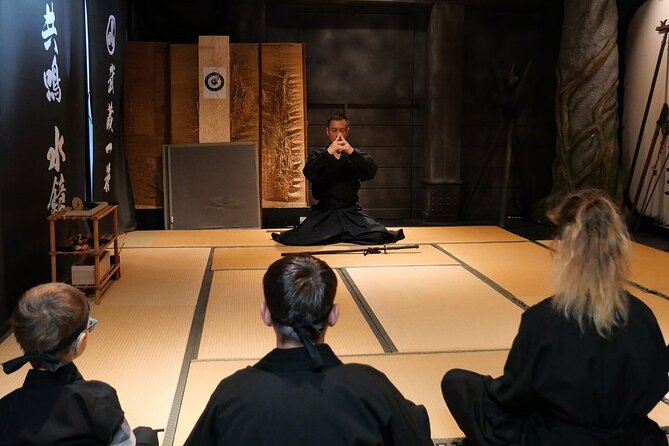
The class also includes Kuji-In, a form of ninja meditation. This gives the experience a little more substance than dressing up and throwing plastic stars. You get a brief look at the mental side of training, where stillness and concentration matter as much as speed.
More samurai and ninja sessions:
- Tokyo: Samurai Ninja Museum Guided tour and Experience
★ 4.6 · 1,010 reviews - Tokyo: Samurai Sword & Archery Class from Samurai Descendant
★ 5.0 · 603 reviews - Best Samurai Experience in Tokyo
★ 5.0 · 458 reviews
Wearing the ninja outfit at NINJA SAMURAI TOKYO
The clothing rental is included in the price, so you do not need to arrange a costume separately. You will learn how to put on the ninja attire, then use it during the lesson.
For many people, this is one of the most enjoyable parts. The outfit changes the mood right away, especially for children. It also makes the photos more fun and gives you a keepsake from the activity without needing to pay for a separate photo package.
Wear workout clothes underneath. One class participant specifically found this useful, and it is sensible advice for any activity involving movement. You will be bending, standing, aiming, and handling training equipment, so restrictive clothing will make the hour less comfortable.
The outfit is part of the experience, but it is not the whole point. The better reason to book is that the costume comes with instruction and practice. You are not simply being dressed up for a picture.
Kuji-In meditation and the mental side of ninja training
The meditation section offers a welcome change of pace. Rather than rushing from one weapon to the next, the sensei introduces Kuji-In and shows how concentration fits into ninja practice.
You should not expect a long meditation retreat. This is a short lesson, and the class also needs time for demonstrations and weapons. Still, the exercise helps explain why the training is not only about fighting. Calm attention, posture, and control are important parts of the session.
I find this section especially useful for families. It gives children something different to do before the more exciting target work, and it adds a cultural element for adults who want more than a costume photo. The meditation also helps create a clear rhythm: prepare, focus, practice.
Ninja tools, trick-house details, and demonstrations
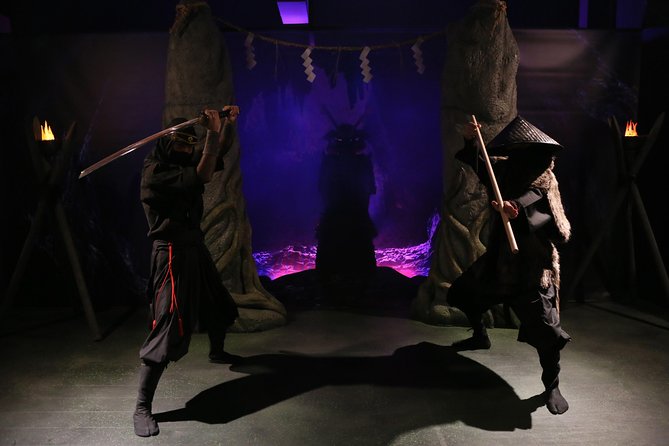
The instructor introduces ninja weapons and tools before you practice. You also receive an introduction to a ninja trick house, which adds a playful look at the devices and ideas associated with ninja movement and concealment.
The available information does not give a full room-by-room description of the trick house, so you should think of it as a brief part of the lesson rather than a separate attraction. Its value is in showing that ninja training involved tools, misdirection, and problem-solving, not only sword fighting.
The demonstrations are important because they show the correct technique before you try it. The sensei then guides you through the movements. English instruction is included, and the class is intended for non-Japanese speakers. English ability can vary, but the experience has been workable for many international participants, with the instructor using demonstrations and patient guidance to keep the lesson moving.
If you need detailed explanations of every historical point, this may feel light. If you want clear instruction followed by immediate practice, the format works well.
A few more Tokyo bookings worth comparing
- Sushi Making Tokyo Roll and Authentic Japanese Sushi Class
★ 5.0 · 3,971 reviews - Tokyo: Roll and Authentic Sushi Making Class in Asakusa
★ 4.9 · 1,957 reviews - Tokyo Shinjuku Chopsticks Making Class
★ 5.0 · 1,763 reviews - Tokyo: Sushi Making Class in a Happi Coat near a Famous Spot
★ 4.9 · 1,377 reviews
Shuriken practice: more skill than spectacle
Shuriken, often called ninja stars, are one of the most appealing parts of the lesson. You receive an introduction to their use and then practice aiming at a target.
This is not something you should treat casually. The sensei teaches control and safe handling, and you will need to pay attention to where you stand and how you release the weapon. The fun comes from trying to improve, not from simply throwing as hard as possible.
The small class size is a real advantage here. With no more than six people, the instructor has a better chance to watch your form and offer corrections. That personal attention is harder to provide in a large group, especially when several people are handling equipment at once.
You may be surprised by how satisfying a good throw feels. You may also find that the first attempt is less accurate than expected. That is part of the appeal. The activity gives you a clear target and a quick way to see whether your technique is working.
Blowgun practice and the surprise of distance
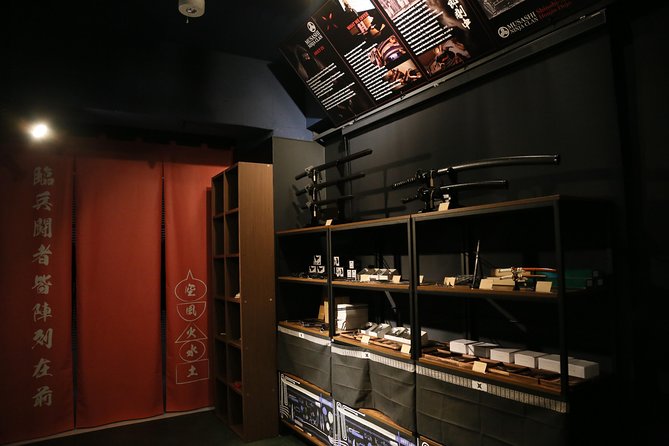
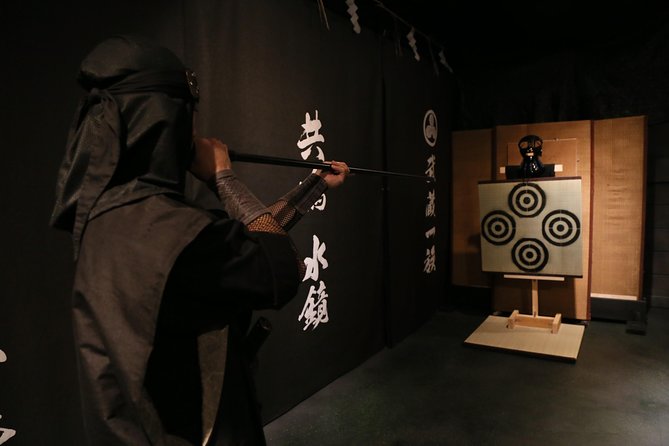
The ninja blowgun, or blow dart, session is another highlight. You line up with the target and practice sending the dart forward with controlled breath.
This activity looks easy until you try it. Distance, aim, and breathing all matter. The lesson gives you a chance to see how small changes in your position affect the result.
The blowgun tends to work well for mixed-age groups because it is unusual, easy to understand, and does not require athletic strength. Children can take part, but they still need to follow the sensei’s safety instructions closely.
The class is active, but it is not described as physically demanding. You should be ready to move around and concentrate, not prepare for a strenuous workout. That makes it a practical choice for a family day in Tokyo or for a couple looking for something different from temples, shopping, and food stops.
Sword training and the one-hour time limit
The experience includes a demonstration and training for the ninja sword in its stated program. But the one-hour format creates an important limitation: sword practice may not fit into every short session.
This point deserves attention if swords are the main reason you want to book. A family who took a last-minute one-hour class found that it did not include sword training and wished they had booked two hours. The lesson may cover several skills, and the exact balance can depend on timing and the group.
You can still expect an introduction to ninja weapons and a varied class, but do not assume that every listed activity will receive equal practice time in a single hour. If you want a fuller session with more time for sword work, ask about a longer option before paying.
For most people, the one-hour class is a good sampler. It gives you a taste of meditation, weapons, clothing, and instruction without taking half a day. For children who become absorbed in the activity, or for adults who want repeated practice, one hour may feel short.
Why the group limit of six matters
A maximum of six people keeps the lesson personal. You have more opportunity to ask questions, repeat a movement, and receive help from the sensei.
This also makes a difference for families. Children can lose interest when they spend most of an activity waiting. In this class, the small group size should reduce that problem, although the amount of individual attention will still depend on the pace of the session.
Couples and solo visitors benefit too. You do not need to bring a large group to make the activity worthwhile. The class is set up for groups, couples, children, and people arriving alone.
The small size can also make the experience feel less anonymous. You are sharing the hour with a handful of people, not sitting in a crowded demonstration. If you prefer quiet, private touring, remember that this is still a group class, not a fully private lesson.
The sensei and English instruction
The lesson is taught in English by a Japanese sensei. The instructor is described as patient, friendly, encouraging, and attentive to technique. These qualities matter more here than a long lecture because most of the hour involves watching, copying, and practicing.
English is generally good enough to explain the movements and safety points, but the level may vary. One participant found the instructor’s English only passable, while others found the explanations easy to follow. You should be comfortable with simple spoken instruction, visual demonstrations, and asking for clarification if needed.
The teaching approach appears especially suitable for beginners. You do not need previous martial-arts experience. The sensei guides you through the clothing, tools, and movements step by step.
If you are hoping for a formal academic lecture on ninja history, this is not the right format. If you want a practical introduction led by someone who can show you what to do, it is a better match.
Location, timing, and planning your afternoon
The class starts at 4:00 pm at NINJA SAMURAI TOKYO, located at Bayfrere Shiomi, East 4th floor, 2-chome 3-9, Shiomi, Koto City, Tokyo 135-0052. It ends at the same meeting point.
The dojo is near public transportation, but you should still allow enough time to find the building and reach the correct floor. Shiomi is not the area most first-time visitors picture when they think of central Tokyo, so do not leave the route planning until the last minute.
A 4:00 pm start can fit neatly after a morning of sightseeing. You could spend the earlier part of the day in another Tokyo neighborhood, then head to Shiomi for the lesson. Because the class ends where it begins, you do not need to arrange a pickup or work out a second meeting point.
The activity is listed as requiring good weather. Even though the lesson takes place at a dojo, the stated policy allows the operator to cancel for poor weather and offer another date or a full refund. The same applies if the minimum number of participants is not reached.
Is $82.56 a fair price for one hour?
At $82.56 per person, this is not a cheap hour of entertainment. The price includes the English-language lesson, admission, and ninja clothing rental, but not bottled water or private transportation.
The value depends on what you want. If you only want a costume photo, you can likely find cheaper ways to dress up in Tokyo. Here, you are paying for instruction, access to the dojo, guided practice with several tools, and a small group capped at six people.
That makes the price easier to justify for families and couples who want a structured activity. The instructor’s attention is part of the value, especially when you are learning safe handling and technique rather than simply posing.
The one-hour limit is the main concern. At this price, you may feel rushed if the class tries to cover every element. I would see the one-hour booking as an introduction, not a full martial-arts course. If sword training or repeated practice matters to you, ask about a longer lesson before booking.
Who will enjoy this activity most?
This class suits people who want an active cultural experience with a playful side. Children are a strong match, particularly those who enjoy costumes, targets, and trying unusual skills. Families should remember that the class may leave children wanting more, especially if the one-hour session moves quickly.
Couples can use it as a break from standard sightseeing. It offers shared activity, funny photos, and enough structure that neither person needs prior knowledge. Solo visitors should also feel comfortable joining because the class is small and instructor-led.
You will likely enjoy it if you:
- Want hands-on practice rather than a performance
- Like martial arts, Japanese culture, or unusual Tokyo activities
- Are happy with beginner-level instruction
- Want photos in traditional ninja clothing
- Prefer a small class to a large attraction
- Can manage a one-hour session that may not include every weapon in equal detail
You may want another activity if you dislike costumes, handling training weapons, or following physical demonstrations. You should also reconsider the short booking if sword training is your top priority.
Practical advice for a smoother lesson
Arrive ready to move. Comfortable workout clothes under the ninja outfit will make the session easier, especially when you are practicing stances and handling equipment.
Bring water. Bottled water is not included, and the class takes place in clothing that may feel warm while you are active. A supermarket is located directly beside the site, according to one participant, so getting a drink nearby may be possible, but bringing one is simpler.
Keep your expectations realistic. The class covers many subjects: meditation, tools, a trick house, sword instruction, shuriken, and blowgun practice. In one hour, some sections may be introductions rather than long practice periods.
If your children are excited by the idea, consider asking about a two-hour option. The longer format should give the instructor more time to cover the weapons properly, though the exact program should be confirmed before booking.
The activity is available with a mobile ticket, and confirmation is received at booking. Free cancellation is offered up to 24 hours before the 4:00 pm start time. Cancellations or changes made within 24 hours are not refunded or accepted.
Should you book the Tokyo ninja lesson?
I would book this if you want a small, playful, hands-on class and are willing to treat the hour as an introduction. The strongest reasons are the patient sensei, the English instruction, the included clothing, and the chance to practice unusual skills rather than only watch a show.
I would choose a longer session if your family wants sword training, your children are likely to want more practice, or you prefer a slower lesson. Before booking, confirm which weapons will be covered in your chosen duration.
At 4.9 out of 5 from 52 ratings, with 98 percent recommending it, the experience has a strong record. The sensible way to read that is not that every class will be perfect, but that the basic formula works: dress up, learn a few real techniques, handle ninja tools safely, and leave with a memorable story and photos.
FAQ
Where does the ninja lesson take place?
The lesson starts at NINJA SAMURAI TOKYO, Bayfrere Shiomi, East 4th floor, 2-chome 3-9, Shiomi, Koto City, Tokyo 135-0052.
What time does the class begin?
The scheduled start time is 4:00 pm.
How long does the experience last?
The lesson lasts approximately one hour.
How many people can join the class?
The activity has a maximum of six participants.
Is the lesson taught in English?
Yes. The experience provides instruction in English from a Japanese sensei.
Is ninja clothing included?
Yes. Ninja clothes are rented for use during the training.
Which ninja skills are included?
The program includes Kuji-In meditation, an introduction to ninja weapons and tools, an introduction to a ninja trick house, shuriken training, and blowgun training. Sword training is listed, but a one-hour session may not always include sword practice.
Do I need to bring water?
Bottled water is not included, so you should bring your own drink.
Can I cancel for a full refund?
Yes, if you cancel at least 24 hours before the experience start time. Cancellations made less than 24 hours before the start are not refunded. If the operator cancels because of poor weather or insufficient bookings, you will be offered another date or a full refund.
New on our Tokyo list
- From Tokyo: Mount Fuji & Hakone Full Day Private Tour★ 4.9 · 25 reviews
- Tokyo Spectacular View Day-Cruise in 90 Minutes★ 5.0 · 25 reviews
- Real Tokyo Runner Club : Daikoku Car Meet Night Tour with JDM Car★ 5.0 · 25 reviews
- 2.5 Hour-Guided Cycle Tour in the Central Tokyo★ 5.0 · 25 reviews
- Ramen Making from Scratch +Akihabara Tour –Cooking Class★ 5.0 · 25 reviews
- [Self-Drive] Tokyo & Daikoku Custom Car Driving Tour★ 4.9 · 25 reviews
- Tokyo: 2-Hour Night Bike Tour of the City’s Hidden Gems★ 4.9 · 25 reviews
- Tokyo: Mt. Fuji, Owakudani, Hakone Shrine, & Open-Air Museum★ 4.7 · 25 reviews
Samurai & Ninja Experiences, compared.
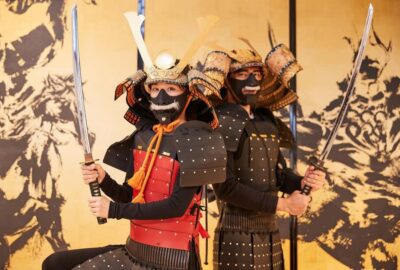
Samurai Ninja Museum Guided tour and Experience
Read our review →
Samurai Sword & Archery Class from Samurai Descendant
Read our review →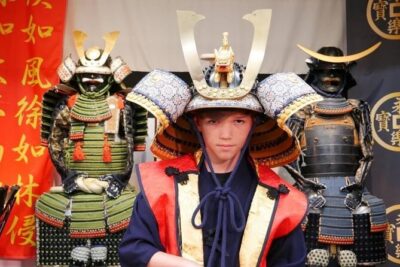
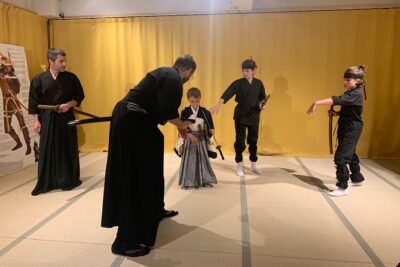
Ninja Experience (Family Friendly) at Samurai Ninja Museum TOKYO
Read our review →
Samurai Entertainment Night Show in Kanda Shrine
Read our review →
Tokyo Sword Experience – includes Museum Ticket/Ninja Experience
Read our review →
Samurai Ninja Museum Asakusa: Samurai Sword Lesson & Tour
Read our review →
Ninja Samurai 2-hour hands-on lesson by Japanese master in Tokyo
Read our review →Browse the lists this tour appears in