
Reviewed · WORKSHOPS
Private Workshop for Making Paper Last 1,000 years in Ueno
Japanese paper is not just stationery here. In this private Ueno workshop, you handle the tree fibers, beat them by hand, and form your own sheets of Washi from start to finish. The paper is made with methods designed for remarkable durability, giving the class its memorable thousand-year theme.
I especially like the four finished pieces you take home and the chance to try both Hyouhitor, peeling the outer bark, and Dakai, beating the fibers. The Kozo-leaf tea, local sweets, and workshop cat Kami-chan add warmth to what could otherwise be a very technical craft lesson.
The main consideration is finding the workshop. One visitor had trouble after a Metro line problem affected the nearest station, so allow extra time and check your route before setting out. The room is small, which suits a private class but may feel close if you prefer a larger studio.
In This Review
- Key points at a glance
- Why this Washi class feels different from a craft souvenir stop
- Starting with the tree: Hyouhitor and Dakai
- Forming your first sheets in the mold and deckle
- Four pieces to take home, not just a demonstration
- Kozo-leaf tea and local sweets while the paper dries
- A small studio with Kami-chan the cat
- What the private format means for your visit
- Finding the workshop near Ueno
- Who will enjoy this workshop most
- Booking value and cancellation flexibility
- Should you book the Washi paper workshop?
- FAQ
- How long does the Washi paper workshop last?
- What will I make during the class?
- Is the workshop private?
- Is instruction available in English?
- Are materials and refreshments included?
- Is there a cat at the workshop?
Key points at a glance
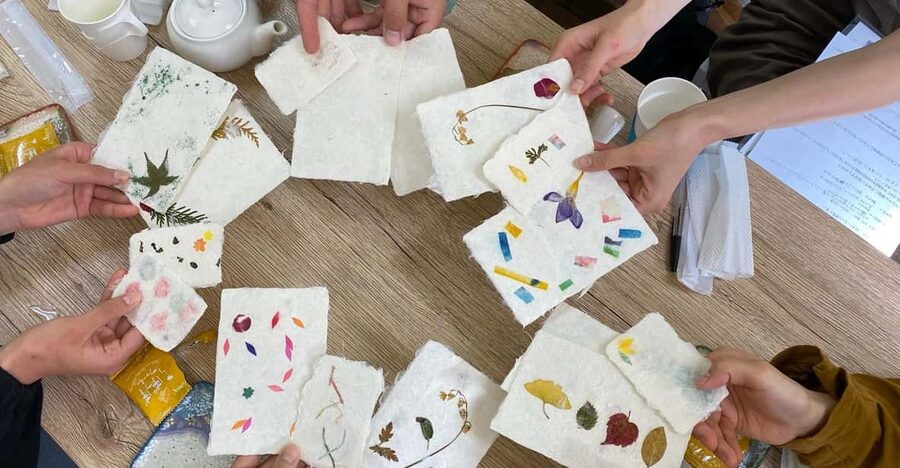
- Make four paper pieces: Create two postcard designs, one Rakusui paper, and one A5 sheet.
- Handle the plant fibers yourself: Try Hyouhitor bark peeling and Dakai, the traditional beating process.
- Private instruction: Your group receives focused help in Japanese and English.
- A thoughtful pause while paper dries: Drink original Kozo-leaf tea with sweets from a beloved local shop.
- A cozy studio character: Kami-chan, the resident cat, may be part of the atmosphere.
- Plan your arrival carefully: The workshop can be hard to locate if public transport is disrupted.
Why this Washi class feels different from a craft souvenir stop
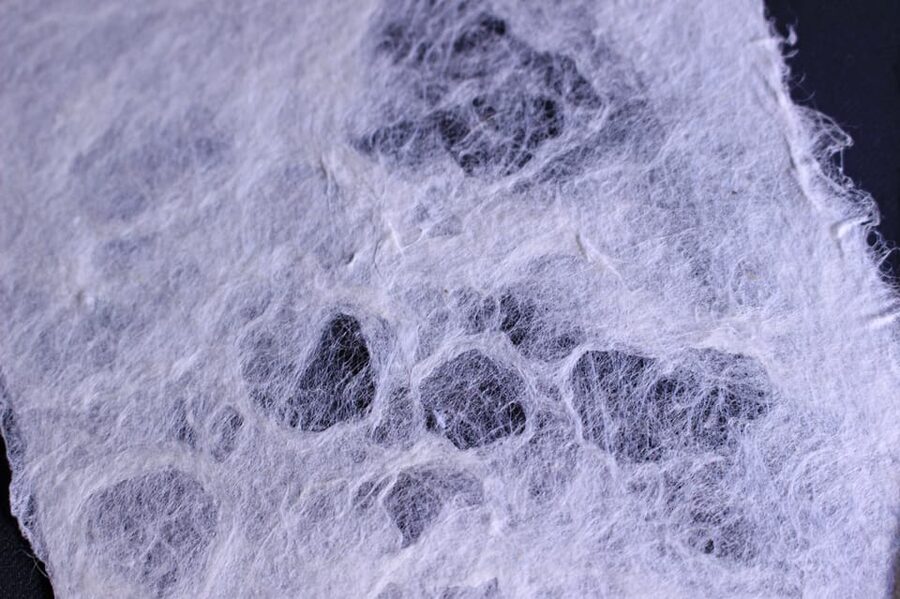
Many craft classes give you a prepared object and ask you to decorate it. This one takes you closer to the source. You work with material that begins as part of a tree, then follow the basic steps that turn plant fiber into a flat sheet.
That difference matters. You do not simply leave with a pretty card. You learn why Washi requires patience, water, pressure, and a good eye for an even layer. The process gives the finished paper some meaning, especially when you remember that you helped make the fibers workable and formed the sheet yourself.
The workshop lasts 150 minutes, or two and a half hours. That is long enough for real instruction and several finished pieces, but still manageable as part of a day in Ueno. You will have plenty to do, so this is not a quick demonstration with a short hands-on finale.
The setting is a private group workshop at Washi labo TOKYO. Past bookings have included a one-person session, which shows how much attention you may receive when your group is small. The class is organized around your work rather than a large audience watching an instructor from the back of a room.
A few more Tokyo bookings worth comparing
- Sushi Making Tokyo Roll and Authentic Japanese Sushi Class
★ 5.0 · 3,971 reviews - Tokyo: Roll and Authentic Sushi Making Class in Asakusa
★ 4.9 · 1,957 reviews - Tokyo Shinjuku Chopsticks Making Class
★ 5.0 · 1,763 reviews
Starting with the tree: Hyouhitor and Dakai
The opening explanation sets up the craft before you begin making anything. You learn how traditional paper starts with plant material and how the fibers must be prepared before they can become a sheet.
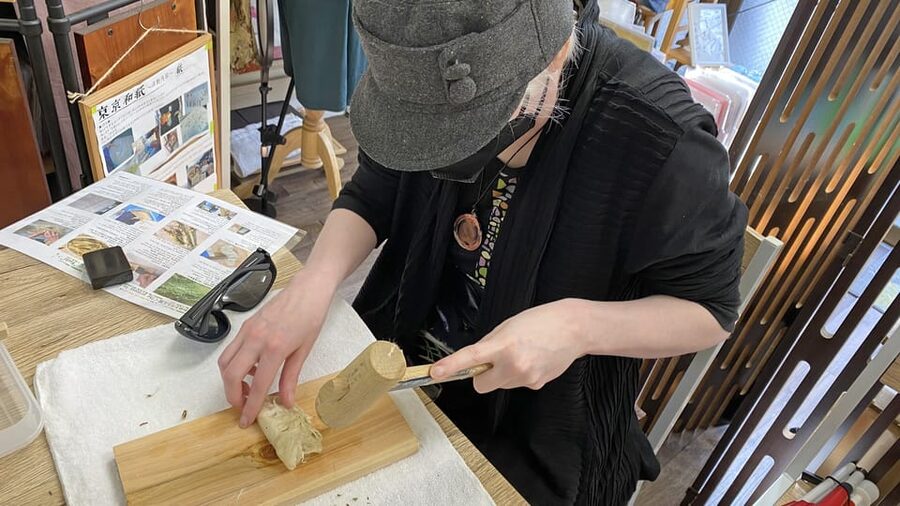
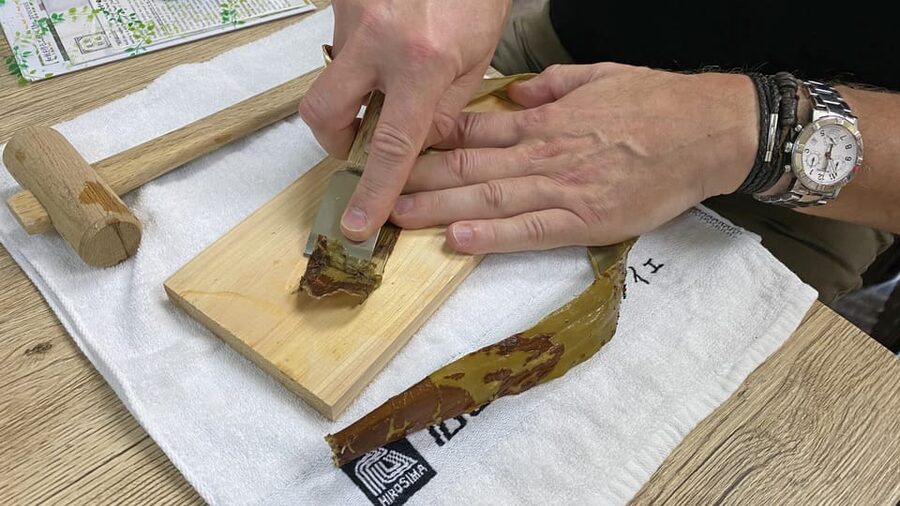
The first hands-on stage is Hyouhitor, peeling off the outer bark. This is a useful step because it makes the material feel less abstract. You are not working with an anonymous packet of craft pulp. You are handling a raw material that has to be cleaned and prepared.
Next comes Dakai, the beating of the tree fibers. This helps separate and soften the fibers so they can spread through water. It is physical work, but the class is designed as an experience rather than a test of strength. Your instructor demonstrates the method and guides you through it.
I like these stages because they reveal the effort behind a sheet of handmade paper. A postcard looks simple when you buy one in a shop. After Hyouhitor and Dakai, you understand that even a small piece involves several careful steps.
The instructor speaks Japanese and English. Demonstration is also an important part of the teaching, which helps if you do not follow every spoken explanation. You can watch the hand movements, then copy them under guidance.
Forming your first sheets in the mold and deckle
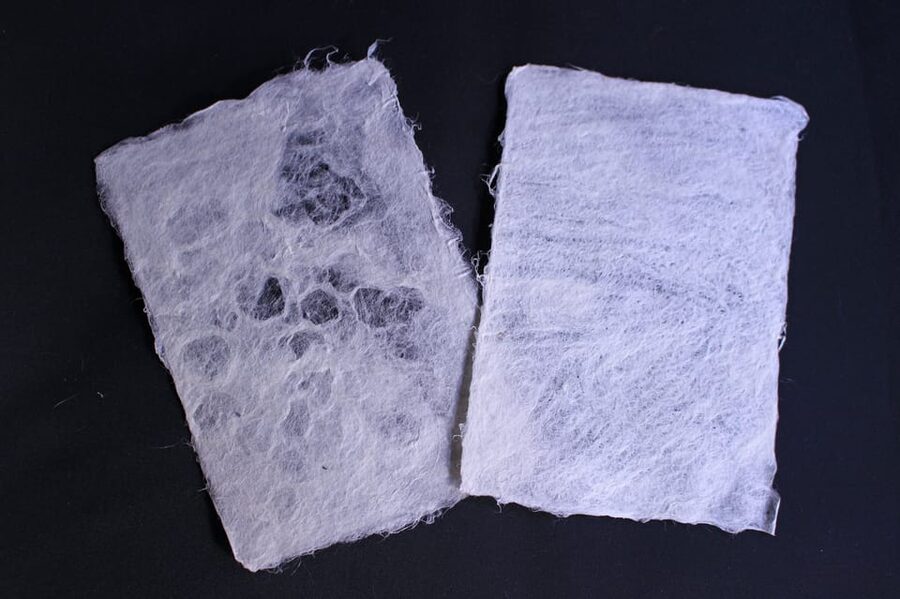
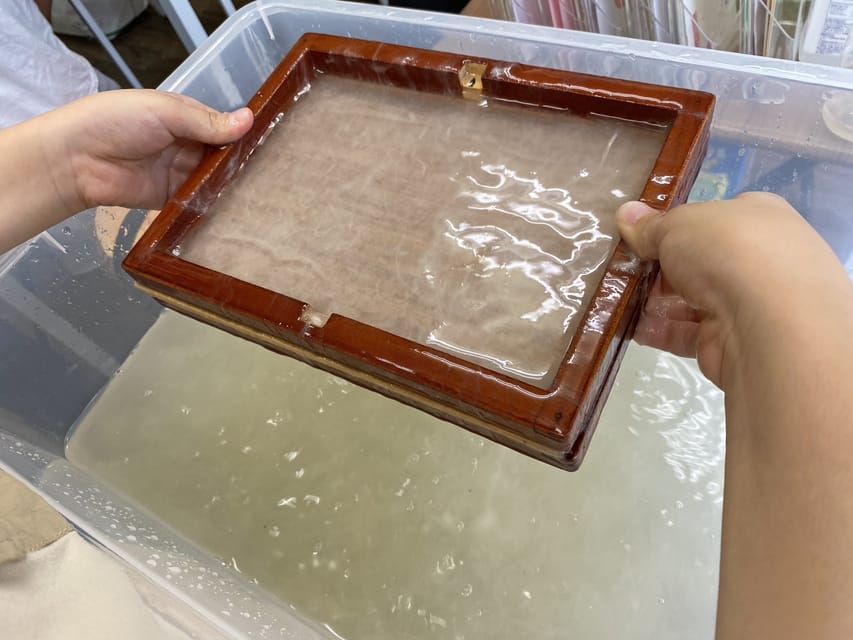
Once the raw material is ready, you pour it into a papermaking mold and deckle. This is the moment when loose fibers begin to take a recognizable form.
You sift the solution so the fibers spread into an even, flat layer. That sounds simple, but an even sheet depends on how you move the mold, how much material you use, and how steadily you work. Your first attempt may not look perfectly uniform, and that is part of the appeal.
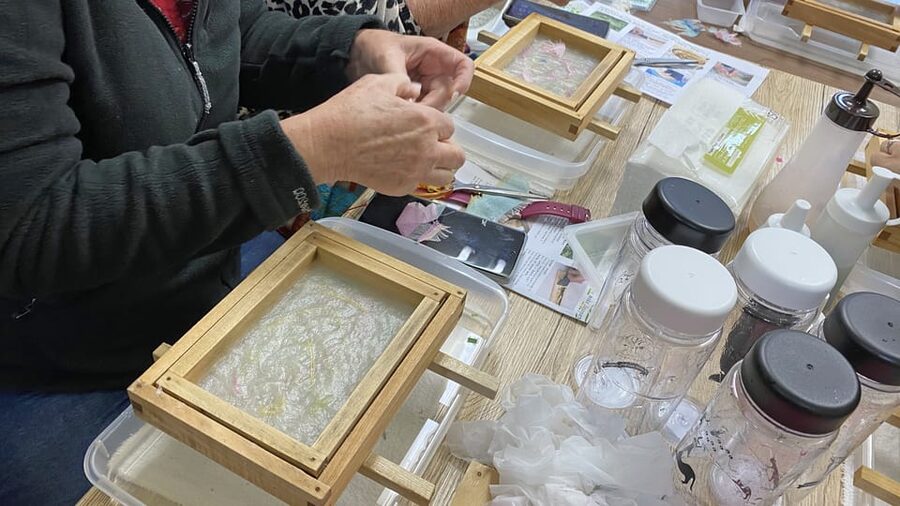
The class gives you more than one chance to practice. You make two postcard designs, followed by Rakusui paper and an A5 sheet. Each piece gives you another opportunity to understand the motion and adjust your technique.
The two postcards are especially useful for people who want a small souvenir that can actually be used. The Rakusui paper gives you a different format to take home, while the A5 sheet feels more like a full piece of handmade Washi.
The activity is practical but not rushed. The instructor is there to help you get a good result, and one previous participant described being very pleased with the finished work after roughly two hours. The final 30 minutes allow time for the paper to dry and for the class to slow down.
Four pieces to take home, not just a demonstration
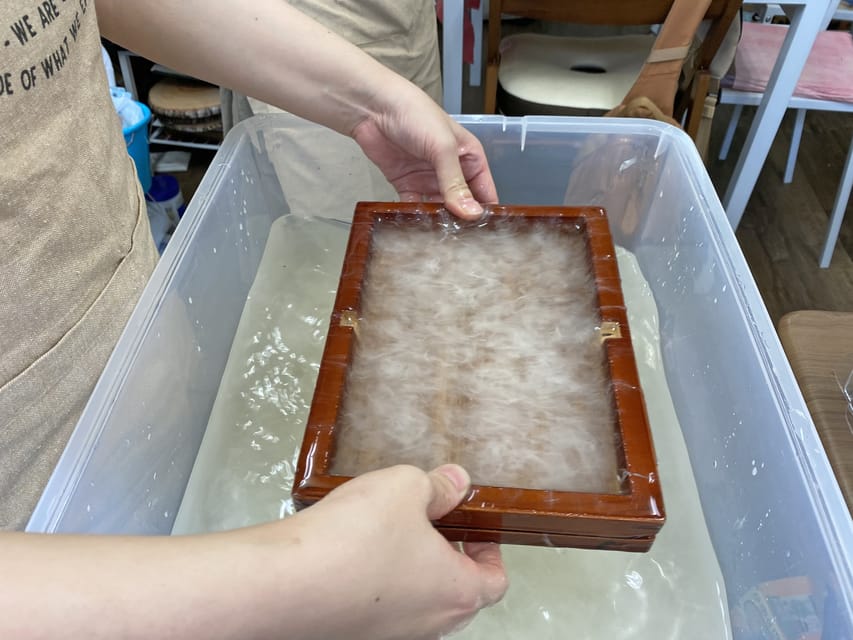
The strongest value here is the amount you produce. You finish with two postcards, Rakusui paper, and an A5 sheet, each tied to your own work during the class.
That makes the $130 per-person price easier to assess. It is not a budget craft activity, especially if you are comparing it with a short souvenir-making session. You are paying for a private 150-minute lesson, all required materials, an English-speaking option, work clothes, refreshments, and four handmade paper products.
The value improves for a couple or small group that wants personal instruction. A larger public class might cost less, but it would not necessarily give you the same level of attention. Here, the instructor can watch your technique and help you form a better sheet rather than simply explaining from a distance.
It is also a good choice if you value process over a quick photo opportunity. The paper itself becomes a record of what you learned. You can see your designs and remember the stages that produced them.
Still, I would not book this solely for inexpensive gifts. The price reflects the private format and the traditional work involved. If you want a low-cost activity or a very short introduction, this class may feel like more time and money than you need.
Same corner of Tokyo, a completely different plan:
- Mt Fuji and Hakone 1-Day Bus Tour Return by Bullet Train
★ 5.0 · 26,383 reviews - 1-Day Tokyo Bus Tour
★ 5.0 · 14,250 reviews - Tokyo: TOKYO SKYTREE® Admission ticket
★ 4.5 · 11,192 reviews - Tokyo: teamLab Planets TOKYO Digital Art Museum Entry Ticket
★ 4.6 · 9,779 reviews
Kozo-leaf tea and local sweets while the paper dries
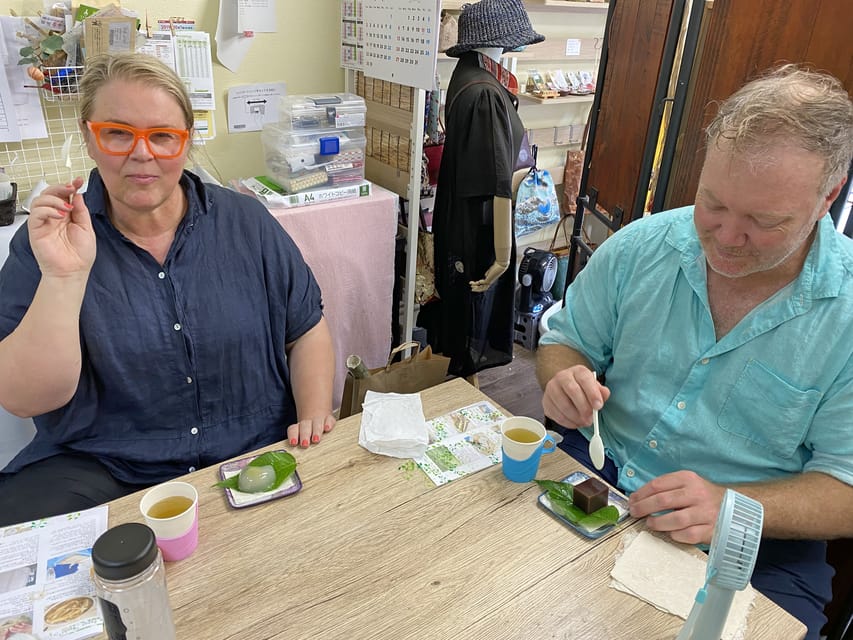
The drying period is handled thoughtfully. While your paper sets, you are offered the workshop’s original Japanese paper tea, made from Kozo leaves, the same plant material connected to the paper-making process.
That detail gives the break a clear purpose. It is not just a generic drink added to the booking. You are tasting a tea linked to the craft you have been learning, which helps connect the material, the method, and the finished object.
Local Japanese sweets are served with the tea. They come from a well-loved local shop, adding another small connection to the neighborhood. Coffee or tea is included, so you can expect a refreshment during the workshop rather than needing to arrange one separately.
This pause also gives your hands a rest. The class includes peeling, beating, pouring, and sifting, so a quiet interval is welcome. You can look at your paper, ask questions, and enjoy the studio atmosphere before the final pieces are ready.
A small studio with Kami-chan the cat
The workshop includes a cat named Kami-chan. One visitor found the cat well behaved and felt it added to the cozy mood of the room.
That will appeal to many people, especially if you enjoy a home-like setting rather than a formal classroom. The cat is part of the character of the place, not a listed craft step, so you should think of it as an incidental feature rather than a guaranteed part of the instruction.
You need to disclose allergies before booking. The activity information specifically warns that a cat is present. If you have a cat allergy, this is not a minor detail to overlook.
The compact space is another factor to weigh. It helps create a personal class and makes it easier to speak with the instructor. On the other hand, anyone who prefers a large, airy studio may find the room close.
What the private format means for your visit
Private group teaching changes the pace. You are not waiting for a dozen people to finish before moving to the next step. The instructor can focus on your mold, your fiber mixture, and your paper design.
This suits beginners who want reassurance. Handmade paper has several stages, and it is useful to have someone correct your movement before you repeat a mistake across four pieces.
The class also works well for people who do not speak Japanese. Instruction is available in Japanese and English, and the process is shown as well as explained. You should still pay attention to demonstrations, since the physical movements matter as much as the spoken directions.
The private format can be less social than a large group class. If you want to meet many other people, this is not the best match. The appeal is focused time with the instructor and your own work.
Finding the workshop near Ueno
The experience is in Ueno, but the supplied details do not name a specific station or give a full walking route. You should check the exact meeting point carefully before leaving and allow extra time to find the entrance.
One person had difficulty reaching the workshop because of a Metro line problem affecting the nearest station. That was a transport disruption rather than a problem with the class, but it is a useful warning. Have the address ready, check service updates, and avoid planning your arrival down to the last minute.
Because the workshop is private and compact, arriving late could matter more than it would at a large attraction with frequent entry times. The 150-minute session has several connected stages, so missing the opening explanation or bark preparation would reduce the value.
The activity includes required materials and work clothes. That makes packing simple and helps protect your own clothes during the wet paper-making process. You should still follow the provider’s arrival instructions closely, since the workshop details do not specify every meeting procedure.
Who will enjoy this workshop most
I would recommend this class to you if you enjoy making things with your hands and want a souvenir with a story behind it. It is also a good fit for couples, families with suitable children, and small private groups who prefer a calm activity to a crowded attraction.
It suits anyone interested in Japanese craft traditions but unsure about a full-day cultural program. In two and a half hours, you get an introduction, practical work, a break with tea and sweets, and four pieces to take home.
It may also appeal to repeat visitors who have already seen major sights in Ueno. Rather than adding another viewing stop, you spend time learning a local craft and producing something personal.
I would think twice if you dislike repetitive handwork, have a cat allergy, or want a large social class. The price also calls for a clear interest in the activity. You should book because you want to make Washi, not simply because you need a spare indoor plan.
Booking value and cancellation flexibility
At $130 per person, this is a premium workshop. The cost includes materials, work clothes, an instructor, coffee or tea, sweets, and a private group format. The four finished paper products make the package more substantial than a class where you leave with one small item.
The strongest value comes when you share the experience with someone who also enjoys craft and cultural activities. You get enough time to understand the process rather than rushing through a single novelty task.
You can cancel up to 24 hours in advance for a full refund, and you can reserve now and pay later. Those terms help if your Japan schedule is still moving around, though you should still confirm the available starting time before booking.
The activity has received a perfect rating from four verified bookings, with praise focused on the teacher, careful organization, good results, and the welcoming space. The most useful pattern is clear: people value the personal instruction and the fact that the two and a half hours pass quickly because there is always another stage to try.
Should you book the Washi paper workshop?
Book it if you want a hands-on Japanese craft lesson with a private instructor, four finished paper pieces, and a few thoughtful extras. The traditional bark and fiber work gives the experience more substance than simple postcard decorating, while the tea, sweets, work clothes, and Kami-chan make the small studio feel personal.
Skip it if you want a cheap activity, a large group atmosphere, or a quick souvenir stop. Also plan carefully if you have allergies or if your route to Ueno depends on a single Metro connection.
For the right visitor, this is a memorable way to spend a morning or afternoon. You leave with paper, but more importantly, you leave knowing how a tree fiber becomes a sheet that can last for generations.
FAQ
How long does the Washi paper workshop last?
The workshop lasts 150 minutes, or two and a half hours.
What will I make during the class?
You will make two postcard designs, one Rakusui paper, and one A5 paper.
Is the workshop private?
Yes. The activity is offered for a private group.
Is instruction available in English?
Yes. The instructor can teach in Japanese and English. The process is also demonstrated.
Are materials and refreshments included?
Yes. Required workshop materials, work clothes, and coffee or tea are included. You also receive original Kozo-leaf tea and local Japanese sweets while the paper dries.
Is there a cat at the workshop?
Yes. A cat named Kami-chan is present at the workshop. Tell the provider about any allergies before booking.
New on our Tokyo list
- Sumi-e Experience in a relaxing green tea shop in Tokyo★ 5.0 · 3 reviews
- Tokyo : Kamikaze Street Drift Ride★ 5.0 · 3 reviews
- Private Zen Meditation in English in Shinjuku, Tokyo★ 5.0 · 3 reviews
- Onsen Spa in Tokyo and Asakusa Bar Hopping with Local Guide★ 5.0 · 3 reviews
- Easy for everyone! Now you can play handmade mini shamisen and show off to everyone! Musical instruments, sweets and live music★ 5.0 · 3 reviews
- Tokyo: Private Tsukiji Street Food & Sake with Local Guide★ 5.0 · 3 reviews
- Mt Fuji Exploration Tour with Free Japanese Kusa Mochi from Tokyo★ 4.5 · 3 reviews
- Tokyo Tsukiji Fish Market Walking and Exploring Hidden Gems Tour★ 5.0 · 3 reviews
Workshops, compared.
Sushi Making Tokyo Roll and Authentic Japanese Sushi Class
Read our review →
Roll and Authentic Sushi Making Class in Asakusa
Read our review →
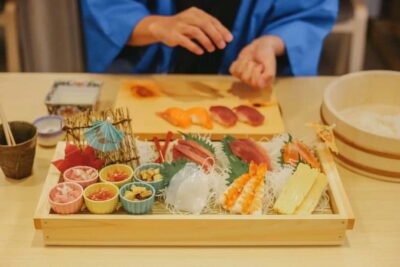
Sushi Making Class in a Happi Coat near a Famous Spot
Read our review →
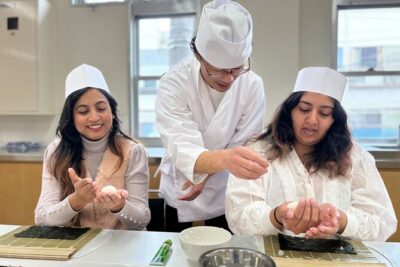
Tokyo Sushi Making Class in Tsukiji with Professional Chef
Read our review →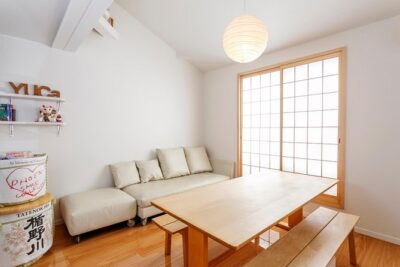
Ramen & Gyoza Cooking Class in Tokyo with Local Supermarket Visit
Read our review →
Matcha Making Class in Tokyo with Authentic Japanese Sweets Set
Read our review →Browse the lists this tour appears in