
Reviewed · SUMO EXPERIENCES
Seat B Ticket Tokyo Sumo Wrestling Tournament in Ryogoku
The best part of this experience is the short lesson before you enter Ryogoku Kokugikan, where sumo rituals, rankings, flags, and wrestler life begin to make sense. I like the small maximum of five people, and I like that guides such as Mark, Hina, Masao, Shogun, and Emmy bring different personal knowledge to the walk.
The main consideration is timing. The guided portion ends around 3pm, but the strongest bouts come later and the tournament may continue until about 6pm. You need to arrive on time at 1:30pm, and the roughly $117.61 price is worthwhile mainly if you plan to stay for the full tournament.
In This Review
- Key points before you book
- Why a short lesson changes the sumo experience
- Starting at Ryogoku Edo Noren
- Walking through Ryogoku’s sumo landmarks
- A 20-minute visit to Ekoin Temple
- Entering Ryogoku Kokugikan with a B-ranked seat
- What the guide adds inside and outside the hall
- Is $117.61 a fair price?
- Weather, comfort, and timing in Tokyo
- Who will enjoy this sumo experience most?
- Booking, cancellation, and practical details
- Should you book it?
- FAQ
- Where does the sumo tour start?
- What time does the tour begin?
- How long does the guided portion last?
- What kind of sumo seat is included?
- What does the price include?
- How many people can join the tour?
Key points before you book
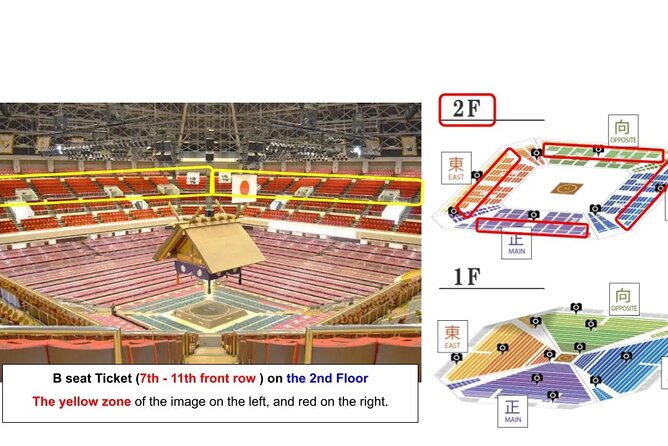
- B-ranked second-floor seat: Your ticket is in rows 7 through 11, giving you a useful view of the ring without paying for a premium seat.
- A practical sumo primer: The guide explains basic rules, ceremony, flags, rankings, and the connection between sumo and Ryogoku.
- Small group size: The tour allows a maximum of five people, making it easier to ask questions and hear the guide.
- Three cultural stops before the arena: Ryogoku Edo Noren, local sumo landmarks, and Ekoin Temple give the match a sense of place.
- The match continues after the walking tour: The tour ends near 3pm, while the tournament can run until roughly 6pm.
- Mobile ticket and free cancellation: Confirmation arrives at booking, and cancellation is free up to 24 hours before the start time.
Why a short lesson changes the sumo experience
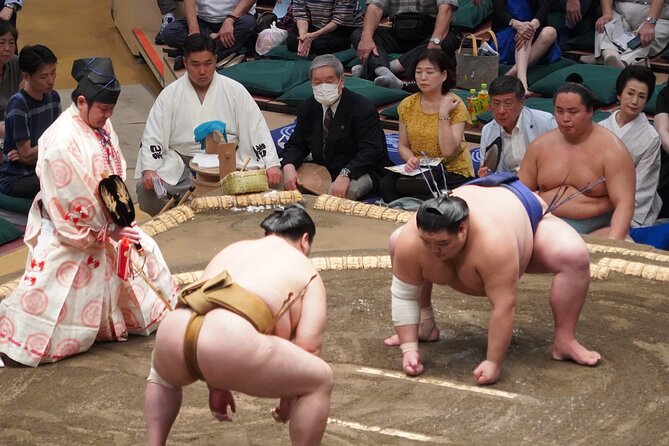
Sumo looks simple at first glance: two wrestlers, one ring, one quick contest. In practice, the ceremony, rules, rankings, symbols, and timing can be hard to follow if you have never seen a tournament.
That is where this experience earns its keep. Before you watch the bouts, your guide explains the basic structure of sumo and points out details you might otherwise miss. One especially useful subject is the meaning of the flags and other signs around the arena. Once you know what they indicate, the tournament feels less like a series of brief shoves and more like a sport with its own language.
The guides bring a personal connection to the subject. Mark has been praised for clear English and an engaging account of sumo’s origins. Hina is described as especially passionate about the sport and explains both its culture and the daily life of wrestlers. Masao’s enthusiasm is a plus for people who want more than a basic introduction, while Shogun is noted for his grasp of the professional wrestlers and tournament details. Emmy offers a friendly, conversational approach and makes time for questions.
Guides may vary, so you should not expect the exact same presentation every time. The common thread is preparation: you get context before entering the hall, which is the part of the experience that helps most if this is your first tournament.
More sumo mornings:
- Tokyo: Sumo Show Experience with Chicken Hot Pot and a Photo
★ 4.8 · 6,678 reviews - Tokyo: Sumo Show and Dining Experience
★ 4.8 · 2,742 reviews - the SUMO show
★ 5.0 · 1,960 reviews
Starting at Ryogoku Edo Noren
The meeting point is Ryogoku Edo Noren, at Ryōgoku Station in Sumida City. The tour starts at 1:30pm, and punctuality matters. If you arrive late and the group has left, you cannot join later, reschedule, or receive a refund.
The opening stop lasts about 20 minutes and does not require an admission fee. It is a sensible place to begin because you are already in the district most closely tied to modern sumo. The guide uses the area to explain what you are about to see and how to get more from the tournament.
This is not a long museum visit or a formal lecture. Think of it as a useful orientation. You learn the basic rules, get an introduction to sumo customs, and have a chance to ask the questions that often come up before the first match.
I like this opening because it tackles the biggest problem with watching an unfamiliar sport: not knowing what matters. You may still miss some details, but you will have a framework for watching. The drawback is that the stop is brief, so anyone hoping for a full lesson in Japanese wrestling history will need to do extra reading.
Walking through Ryogoku’s sumo landmarks
The next 15 minutes are spent walking around Ryogoku and visiting sumo-related historical spots. The pace is short and practical. You are not covering a large part of Tokyo, but you are seeing the neighborhood where the sport has its strongest local identity.
This walk gives the tournament a physical setting. Instead of treating Kokugikan as an isolated arena, you see it as part of a district shaped by sumo. The guide explains the long connection between Ryogoku and the sport, helping you understand why this is the right place to watch a major tournament.
For a first-time visitor, the walk is especially useful because it links cultural background with the event on your ticket. You are not only going to a match. You are learning why this neighborhood matters and how the sport fits into local life.
Do not expect a quiet stroll through a preserved old quarter. The supplied details describe historical sumo locations, but not a long list of named buildings or extensive sightseeing stops. The appeal is the guide’s explanation and the location itself, not a large number of attractions.
A 20-minute visit to Ekoin Temple
Ekoin Temple is the third stop and takes about 20 minutes. Admission is included at no extra charge, and the visit adds a religious and cultural layer to a sport often presented as pure competition.
The temple helps explain why sumo cannot be separated neatly from ceremony and tradition. The sport includes formal gestures, ritual movements, and strong links to Japanese religious practice. Your guide uses the stop to broaden the picture before you enter the arena.
This is one of the better features for anyone who wants more than a ticket with a seat. You get a short cultural visit before the noise and energy of the tournament. It also breaks up the route, giving you a quieter place to think about the customs you will soon see inside Kokugikan.
The limitation is time. Twenty minutes is enough for an introduction, but not enough for a detailed temple visit. If Ekoin is a major priority for you, plan to return on another day rather than expecting this tour to cover it fully.
A few more Tokyo bookings worth comparing
- Mt Fuji and Hakone 1-Day Bus Tour Return by Bullet Train
★ 5.0 · 26,383 reviews - 1-Day Tokyo Bus Tour
★ 5.0 · 14,250 reviews - Tokyo: TOKYO SKYTREE® Admission ticket
★ 4.5 · 11,192 reviews - Tokyo: teamLab Planets TOKYO Digital Art Museum Entry Ticket
★ 4.6 · 9,779 reviews
Entering Ryogoku Kokugikan with a B-ranked seat
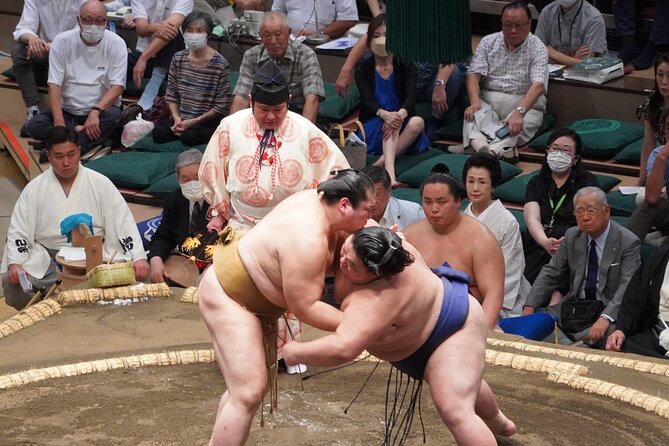
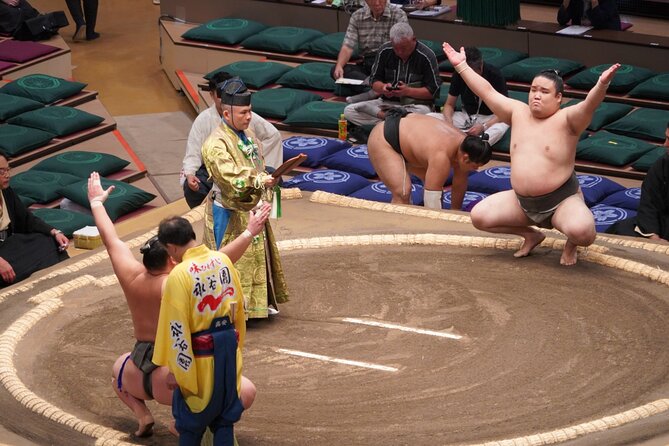
The final stop is Ryogoku Kokugikan, the main sumo hall in Ryogoku. About 30 minutes of the scheduled route is devoted to entering the arena, and your ticket is for a B-ranked second-floor seat in rows 7 through 11.
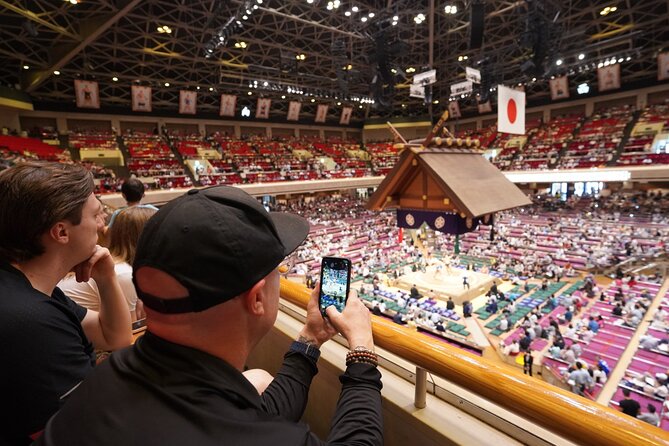
This is not a ringside seat. That matters if your main goal is to see every expression and impact at close range. A second-floor B seat gives you a broader view of the ring and the ceremonies, but you will be farther from the action than people in the lower sections.
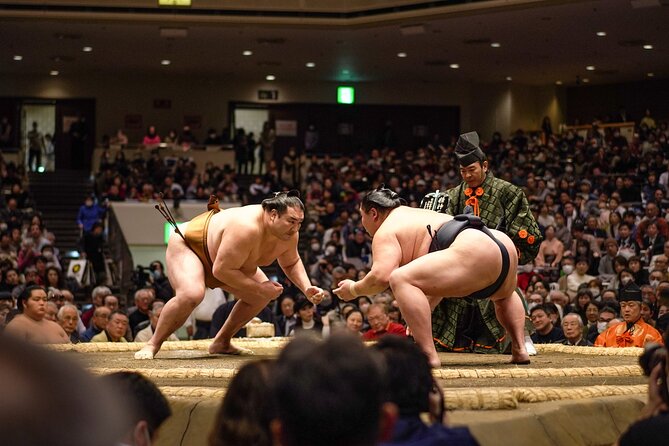
For many people, that trade-off makes sense. Sumo bouts are short, and a wider view helps you follow the complete ring and the buildup around each match. At a packed tournament, the hall’s scale also becomes part of the experience. The arena can hold an atmosphere of about 11,000 people when full, and the crowd response adds weight to every bout.
Your ticket is included in the price, which is important when judging value. Buying access to a major tournament separately can be difficult, especially during popular dates. Here, the ticket is paired with a guided introduction and a small neighborhood walk.
One point needs careful planning: the tour ends around 3pm, but your ticket allows you to continue watching the tournament. The later bouts are generally stronger because the top-ranked wrestlers compete later in the day. If you leave after the guided portion, you will miss the part many people consider the sporting highlight.
A review of the timing shows why this is closer to a half-day event than a 90-minute activity. The guided route is approximately one hour and 30 minutes, yet the full tournament may continue until 6pm. Set aside the entire afternoon if you want the ticket to reach its full value.
What the guide adds inside and outside the hall
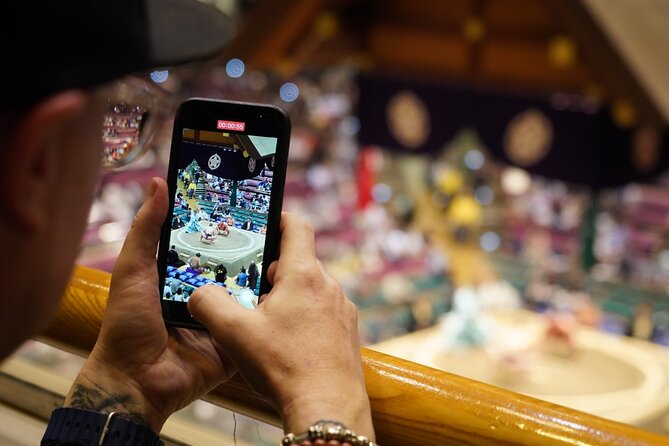
The guide’s main job is to prepare you before the match. That includes the history of sumo, the lives of wrestlers, the rules, and the customs that shape the event. Several guides have received particular praise for making the sport easier to follow in English.
You should also understand the limits of the guiding arrangement. One account describes the guide walking the group to the arena but not staying inside for the matches. The exact arrangement may depend on the guide and tour operations, so do not assume you will receive live commentary through every bout.
That is not necessarily a problem. The pre-match explanation is the part you can use throughout the afternoon. Once you know what to watch, you can follow the action on your own and enjoy the crowd without needing constant narration.
I especially like the focus on practical viewing tips. The guide does not only explain what sumo is. You learn how to watch it, what the symbols mean, and why the later matches matter. For a first visit, that can be the difference between confusion and real interest.
Is $117.61 a fair price?
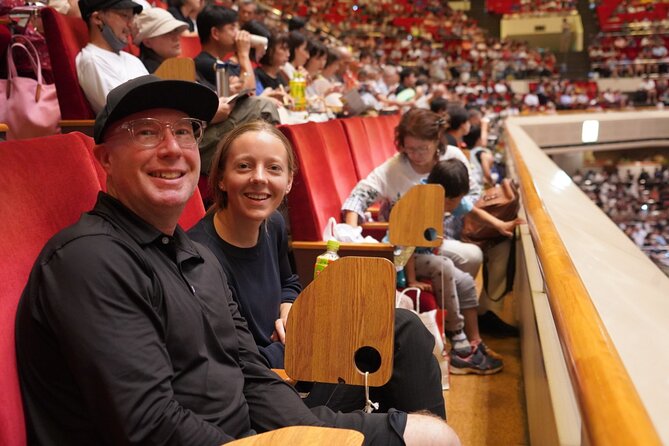
At approximately $117.61 per person, this is not a cheap ticket. The value depends on how much you want the guide and how difficult it would be for you to arrange a tournament ticket on your own.
The price includes:
- A B-ranked second-floor ticket in rows 7 through 11
- The guided walk through Ryogoku
- The visit to Ekoin Temple
- A local guide
- Tour photos
- A mobile ticket
Food and drinks are not included. You should also account for the fact that the price covers the event ticket and guided introduction, not a meal or a full day of sightseeing.
I see the strongest value in three areas. First, you avoid watching sumo without context. Second, the group is limited to five people, which is unusually small and useful for questions. Third, you have a ticket for a major tournament rather than simply a tour around the arena.
The weaker value is for someone already familiar with sumo or someone who only wants a premium seat. If you know the rankings, rules, ceremonies, and wrestler culture, the walking portion may feel short. And if seat position is your top concern, a B-ranked second-floor seat may not satisfy you.
The price makes more sense if you are new to sumo, value an English explanation, and intend to stay for the tournament’s strongest bouts.
Weather, comfort, and timing in Tokyo
The tour takes place outdoors for part of the route, so weather affects comfort. Tokyo’s climate can be severe, with summer highs listed around 40°C, or 110°F, and winter lows around -5°C, or 20°F. Dress for the season rather than assuming the short walking time will protect you from the weather.
The walking sections are not long, but you still need comfortable shoes. The route includes Ryogoku streets and a temple stop before you enter the hall. Bring water in hot weather, since food and drinks are not included.
The start time also shapes your day. You meet at 1:30pm, walk through the district, and reach the arena around the end of the guided portion. You then have the option of remaining for the rest of the tournament until about 6pm.
Do not schedule a distant attraction immediately after the tour. The walking program may end around 3pm, but the included ticket is best used for the later matches. I would treat the afternoon as reserved for sumo.
The average booking lead time is about 27 days. That is a useful planning clue, especially if your Tokyo dates are fixed. You do not need to book a year in advance based on the information provided, but waiting until the last moment may reduce your choices.
Who will enjoy this sumo experience most?
I would recommend this experience to a first-time sumo viewer who wants help reading the event. The guide’s explanation of rules, flags, ceremony, and wrestler life gives you tools you can use after the tour ends.
It also suits people who want a small group. With a maximum of five participants, you should have a better chance to ask about a wrestler, a custom, or something happening in the ring than you would on a large coach outing.
It is a good fit for sports fans in general. One participant who did not particularly enjoy sumo still found the guide friendly, patient, and informative. That is a fair warning and a useful sign: the cultural walk may still have value, but the tournament itself will not appeal to everyone.
I would hesitate to recommend it to someone who dislikes live sports, wants a luxury seat, or has only a short window in Ryogoku. The main event is central to the experience, and you should plan to stay through the later bouts to get the most from your ticket.
Booking, cancellation, and practical details
You receive confirmation at the time of booking, and the ticket is mobile. The meeting point is Ryogoku Edo Noren, while the tour ends at Ryogoku Kokugikan.
Free cancellation is available up to 24 hours before the experience begins. If you cancel inside that window, the payment is not refunded, and changes made during that period are not accepted.
The activity is listed as suitable for most people. No special accessibility details are provided, so you should contact the operator directly if you need specific assistance.
The tour is operated by MagicalTrip Inc. Its small-group design and local guide format make it feel more personal than a ticket-only purchase, but the exact guide may vary.
Should you book it?
Book this experience if you want to understand sumo as well as watch it. The strongest reasons are the small group, the local walk through Ryogoku, the Ekoin Temple visit, and the clear introduction to customs that are easy to miss. Guides including Mark, Hina, Masao, Shogun, and Emmy have each been praised for different strengths, from English explanations to personal enthusiasm.
The main caution is simple: do not treat it as a 90-minute event. The walking tour ends around 3pm, but the best use of the B-ranked ticket is to stay until the tournament ends near 6pm. At about $117.61, the experience makes the most sense when you want both the cultural preparation and the full afternoon of live sumo.
FAQ
Where does the sumo tour start?
The tour starts at Ryogoku Edo Noren, located at 1-chome 3-20 Yokoami, Sumida City, Tokyo 130-0015.
What time does the tour begin?
The start time is 1:30pm. You must arrive on time because late arrivals who miss the group cannot join, reschedule, or receive a refund.
How long does the guided portion last?
The guided portion lasts approximately one hour and 30 minutes. It ends around 3pm, although the tournament itself may continue until about 6pm.
What kind of sumo seat is included?
The ticket is for a B-ranked seat on the second floor, in the seventh through eleventh rows.
What does the price include?
The price includes the Tokyo Grand Sumo Tournament ticket, the guided Ryogoku walk, the Ekoin Temple visit, and tour photos. Food and drinks are not included.
How many people can join the tour?
The activity has a maximum of five participants.
New on our Tokyo list
- Sumi-e Experience in a relaxing green tea shop in Tokyo★ 5.0 · 3 reviews
- Tokyo : Kamikaze Street Drift Ride★ 5.0 · 3 reviews
- Private Zen Meditation in English in Shinjuku, Tokyo★ 5.0 · 3 reviews
- Onsen Spa in Tokyo and Asakusa Bar Hopping with Local Guide★ 5.0 · 3 reviews
- Easy for everyone! Now you can play handmade mini shamisen and show off to everyone! Musical instruments, sweets and live music★ 5.0 · 3 reviews
- Tokyo: Private Tsukiji Street Food & Sake with Local Guide★ 5.0 · 3 reviews
- Mt Fuji Exploration Tour with Free Japanese Kusa Mochi from Tokyo★ 4.5 · 3 reviews
- Tokyo Tsukiji Fish Market Walking and Exploring Hidden Gems Tour★ 5.0 · 3 reviews
Sumo Experiences, compared.
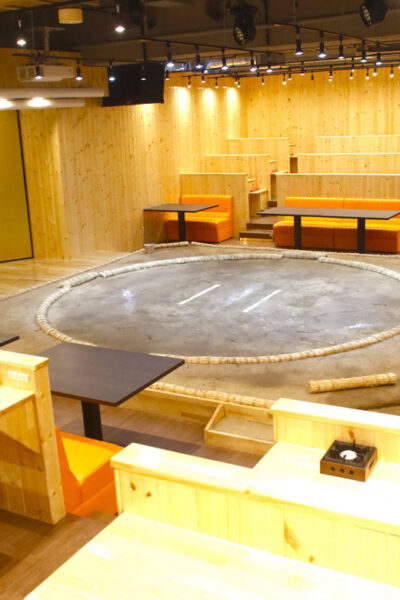
Sumo Show Experience with Chicken Hot Pot and a Photo
Read our review →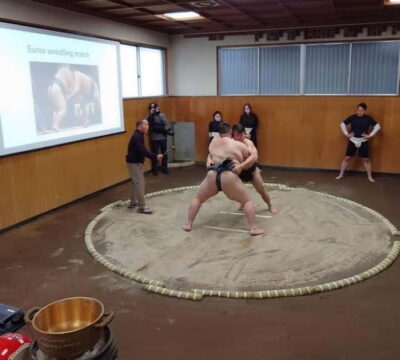
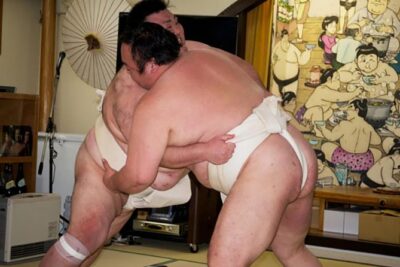
Tokyo Shinjuku Sumo Show & Experience with Photo
Read our review →

Authentic Sumo Experience in Tokyo: Enter the Sanctuary
Read our review →
Luxury Sumo Show Experience & Japanese cuisine & Drink
Read our review →
Browse the lists this tour appears in