
Reviewed · SUMO EXPERIENCES
Sumo Practice Viewing Guided Tour and Photo with Sumo Wrestlers
The rare treat here is not a staged show. You enter Tatsunami-beya, a working sumo stable where wrestlers live and train, then watch morning practice from a few feet away. The room is treated as sacred, so silence is part of the experience. If an active Yokozuna trains that morning, you may see sumo’s highest-ranked wrestler at work, though his appearance is not guaranteed.
I like the honest access to daily training and the clear structure: a licensed English guide prepares you, an audio guide explains what you are seeing, and a commemorative photo follows. I also like the chance to see the wrestlers’ personal belongings and ask questions after practice. The main drawback is simple: this is quiet observation, not a lively performance. If you expect a tournament bout, you may find the session slow.
In This Review
- Key points to know before booking
- What you are really seeing at Tatsunami-beya
- The 8:30 am start and getting to the stable
- The 10-minute introduction makes the silence easier
- Forty-five minutes of practice, viewed in near silence
- Why the active Yokozuna detail matters
- The photo and question period after practice
- The real value at $118.60 per person
- Etiquette that protects the experience
- Who will enjoy this, and who should skip it
- Cancellation and simple booking advice
- Should you book the Tatsunami-beya visit?
- FAQ
- Where does the sumo practice tour meet?
- What time does the tour begin?
- How long does the experience last?
- Is an English guide included?
- Can I talk during the practice?
- Will I definitely see a Yokozuna?
- Can I take a photo with a sumo wrestler?
- Is seating provided on chairs?
Key points to know before booking
- Watch real morning practice: You sit inside a working sumo stable while wrestlers train for the six annual Grand Sumo Tournaments.
- Silence is required: Talking, whispering, standing, eating, drinking, flash photography, and unnecessary movement are prohibited during practice.
- A Yokozuna may be present: Tatsunami-beya currently houses an active wrestler at sumo’s highest rank, but he does not attend every session.
- The tour includes a photo: After practice, you can take a commemorative picture with the wrestlers, subject to the stable’s instructions.
- Plan for floor seating: Cushions are provided on tatami flooring. Chairs are available if you request them in advance.
- Allow up to two hours: The advertised practice viewing lasts about 45 minutes, but the total visit can be shorter or longer depending on the day.
What you are really seeing at Tatsunami-beya
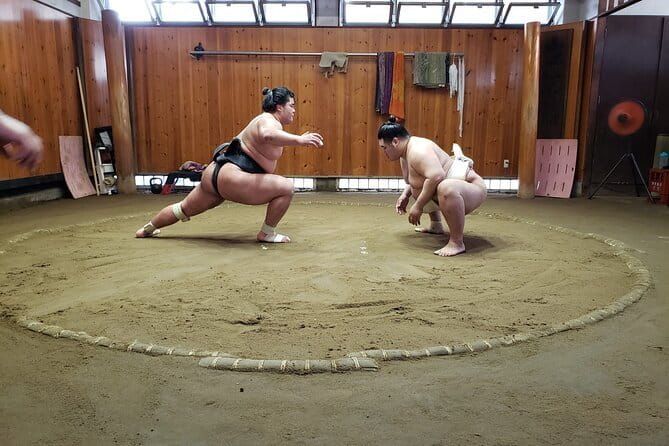
Sumo is often presented through tournament bouts, formal ceremonies, and packed arenas. This visit offers something quieter and less polished: the daily work behind the sport. You watch wrestlers repeat exercises, stretches, and practice movements as they prepare for competition.
That difference matters. A tournament is a finished product. At the stable, you see the discipline that produces it. The close range also changes your sense of scale. Sumo wrestlers are not distant figures in a ring. They train in the same room where you sit, and every movement takes place under strict rules of respect and concentration.
The stable is a sacred training hall, not a tourist attraction built for casual drop-ins. You must follow the instructions carefully. Keep your phone silent or switched off, do not use flash, and do not step onto the ring or touch a wrestler without permission.
The etiquette is not a nuisance added to the tour. It is the price of admission to an active workplace. Your silence lets the wrestlers train without distraction and shows respect for the customs of the stable.
More sumo mornings:
- Tokyo: Sumo Show Experience with Chicken Hot Pot and a Photo
★ 4.8 · 6,678 reviews - Tokyo: Sumo Show and Dining Experience
★ 4.8 · 2,742 reviews - the SUMO show
★ 5.0 · 1,960 reviews
The 8:30 am start and getting to the stable
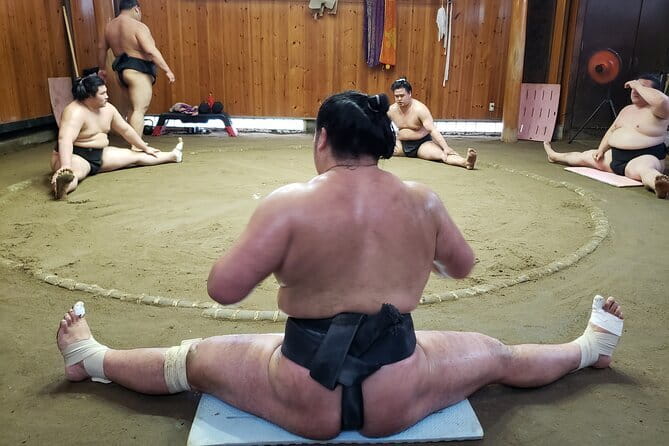
The meeting point is Tatsunami-beya, at 1-chōme-16-5 Hashiba in Taito City. The tour begins at 8:30 am, so you will need to plan your morning carefully. The entrance is about a 30-minute walk from Asakusa Station on the Toei, Tokyo Metro, and Tobu railway lines.
You can also reach the area by the Toei Bus East 42-Ko route or the Taito Ward Kita-Megurin loop bus. The stable is near public transport, but this is not a place where you should arrive at the last second. Give yourself time to find the entrance, use a restroom, and settle in before the group enters.
The early start is practical rather than glamorous. Sumo training takes place in the morning, and the timing gives you a chance to continue sightseeing afterward. Asakusa is close enough to make a useful pairing for the rest of your day, although the tour itself ends back at the stable.
Large luggage and suitcases are not allowed inside. Strollers also cannot be brought in, so pack lightly. You will remove your shoes before entering and should place them neatly with the others.
The 10-minute introduction makes the silence easier
The first part lasts about 10 minutes. A National Government Licensed English Guide Interpreter explains basic sumo customs and tells you how to behave during practice.
This briefing is important. Without it, the quiet room can feel puzzling. With it, you know why you cannot whisper, move around, stretch your legs toward the ring, or leave midway through the session. Showing the soles of your feet toward the wrestlers is considered impolite, so sit with care.
The guide also gives you a way to watch with more purpose. Instead of seeing a series of powerful men exercising, you can pay attention to the rhythm of the training and the details of the stable’s routine.
The quality of spoken English may vary. One account of the experience found the guide’s English and audio equipment difficult to follow. That is worth taking seriously if you depend on detailed verbal explanation. The audio guide is meant to help, but you should not assume every explanation will come through perfectly in every session.
Forty-five minutes of practice, viewed in near silence
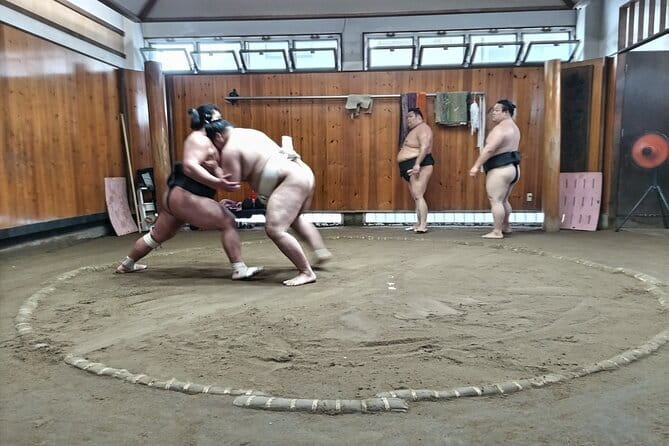
The main viewing period lasts about 45 minutes. You sit on the wooden floor with a cushion on tatami mat flooring and watch the wrestlers train for the Grand Sumo Tournament.
This is an intimate position, but it is not especially relaxed for everyone. Sitting on the floor can be difficult if you have stiff knees or hips. Chairs are available for people who have trouble sitting on the tatami, but you need to request one in the remarks section when booking.
The no-talking rule shapes the entire visit. You cannot ask questions as the practice unfolds, and you should not react loudly to an impressive movement. Keep your phone out of use, avoid flash photography, and do not stand to get a better view.
The audio guide lets you listen to explanations without breaking the rule. That helps turn a silent exercise session into a more informed look at sumo training. Still, the audio service is not the same as live commentary. If you want constant narration or a dramatic presentation, this format may feel spare.
Practice length can also change. The listed 45 minutes is an estimate. If fewer wrestlers are training, the viewing period may be shorter and the tour may finish early without a refund. If more wrestlers are present, practice may last longer and the visit may run past the expected end time.
This is one reason to keep your later plans flexible. The full activity is described as lasting from about 1 hour 20 minutes to two hours, but the stable’s schedule controls the pace.
A few more Tokyo bookings worth comparing
- Mt Fuji and Hakone 1-Day Bus Tour Return by Bullet Train
★ 5.0 · 26,383 reviews - 1-Day Tokyo Bus Tour
★ 5.0 · 14,250 reviews - Tokyo: TOKYO SKYTREE® Admission ticket
★ 4.5 · 11,192 reviews - Tokyo: teamLab Planets TOKYO Digital Art Museum Entry Ticket
★ 4.6 · 9,779 reviews
Why the active Yokozuna detail matters

Tatsunami-beya has a special connection to the top level of professional sumo because it currently houses an active Yokozuna. That gives the stable added interest for anyone who follows the sport.
The rank of Yokozuna is the highest in sumo. Seeing one train would be a memorable bonus, especially because you are watching practice rather than a public tournament. Yet the tour does not promise that the Yokozuna will appear. He may be absent, resting, or following a different schedule on the morning you visit.
Book this for access to the stable and its regular training, not as a guaranteed Yokozuna sighting. That expectation will keep the experience satisfying even if you see only lower-ranked wrestlers and trainees.
The close view remains valuable. You can watch the effort, repetition, and concentration that are easy to miss from the seats of a large arena. One especially strong part of the experience is simply seeing the wrestlers train at close range, without a stage or performance script between you and the action.
The photo and question period after practice
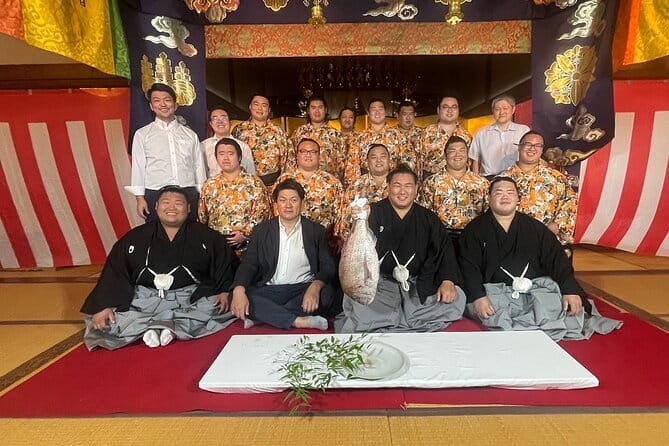
Once training ends, the mood changes. You can take a commemorative photo with the wrestlers, then look at personal belongings and take part in a question and answer period.
The photo is a nice finish because it gives the visit a clear personal memory. It also comes after you have respected the strict rules of the practice, rather than interrupting the training for pictures. Follow the staff’s directions about when and how to approach the wrestlers. The rules prohibit touching them without permission.
The belongings viewing adds a human detail to the visit. Sumo is easy to treat as a spectacle of size and strength, but personal items remind you that this is also a demanding way of life. The question period gives you the chance to ask what could not be discussed during practice.
JTB Sunrise Tours original merchandise is included, so you receive a small tour memento in addition to the photo. Food and drink are not included, and none may be taken into the stable.
The real value at $118.60 per person
At $118.60 per person, this is not a cheap way to fill an hour in Tokyo. The value comes from access, not duration. You are paying to enter a working stable, receive an English explanation of the customs, use an audio guide during the silent viewing, and take a photo with the wrestlers.
The visit lasts roughly 1 hour 20 minutes to two hours, with about 45 minutes devoted to practice. That makes the price easier to justify if sumo is high on your Tokyo list or if you want a cultural experience that reaches beyond a museum display.
The value is weaker if you are only mildly curious about sumo. You may spend much of the practice watching a small group perform repeated exercises in silence. One direct assessment of the experience found that only six to eight trainees were exercising and expected more activity. That is a useful warning. The tour does not promise a full tournament-style program or a large number of wrestlers.
I would compare the cost with your priorities. For a serious sumo fan, the chance to see training inside a stable can justify the fee. For someone seeking a fast, entertaining morning show, the same price may feel high.
Etiquette that protects the experience
The rules are strict because the stable is a place of work and training. Before you enter, use a restroom if possible. Facilities are limited, and leaving during practice is discouraged.
Keep these points in mind:
- Stay quiet. Whispering and talking are prohibited.
- Do not stand, shift around unnecessarily, or leave midway.
- Keep your legs positioned so the soles of your feet do not point toward the ring.
- Do not eat or drink inside.
- Turn off your phone or keep it on silent.
- Do not use flash photography.
- Remove sunglasses and hats indoors.
- Wear little or no perfume, and avoid strongly scented fabric softener.
- Take off your shoes before entering.
- Do not step onto the ring or touch a wrestler without permission.
These rules make the tour unsuitable for anyone who wants a casual, flexible visit. They also help preserve the concentration of the people you came to watch.
Children under four cannot join. Anyone under 18 needs written parental permission, and anyone under 15, or not yet enrolled in middle school, must attend with a parent or guardian. The group can include up to 45 people, so you should not expect a private visit.
Who will enjoy this, and who should skip it
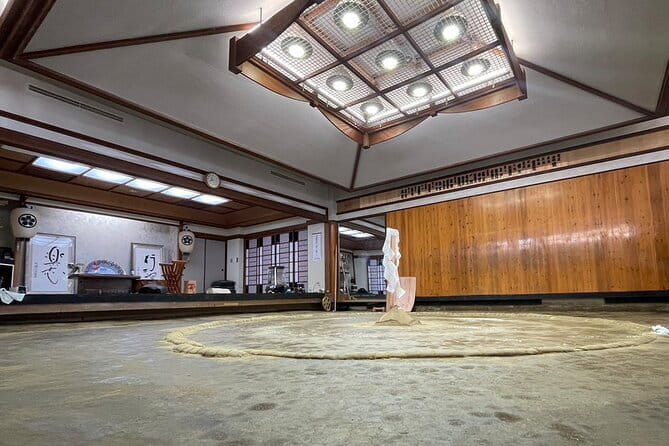
I would choose this tour if you want a close look at the working side of sumo. It suits you if you enjoy traditional customs, quiet observation, disciplined training, and access to places that are not normally open for casual visits.
It is also a good fit if you are visiting Tokyo outside the major tournament schedule. The six Grand Sumo Tournaments take place only six times a year, while this visit gives you a chance to see training during an ordinary morning.
You should think twice if you need a lively guide, constant movement, or a guaranteed famous wrestler. The English commentary and audio equipment may not be perfect, and the practice can be shorter than expected. Anyone who has trouble sitting on the floor should request a chair before arriving.
I also would not book it if you plan to eat breakfast inside or carry a large bag. The stable has firm rules about food, drink, baggage, clothing, and personal scents.
Cancellation and simple booking advice
You can cancel for a full refund up to 24 hours before the experience start time. Cancellations or changes made less than 24 hours before 8:30 am are not accepted for a refund, so check your Tokyo schedule before committing.
Confirmation is sent within 48 hours, subject to availability. Since this is a limited-access activity with a maximum of 45 people, it is sensible to book once your morning plans are settled. Add a note at booking if you need chair seating.
Should you book the Tatsunami-beya visit?
Book it if you want authentic sumo training rather than a staged show and you can accept the quiet rules. The strongest parts are the close view of the wrestlers, the chance of seeing a Yokozuna, the English introduction, and the photo after practice.
Skip it if you want bouts, cheering crowds, or a busy sightseeing format. You may see a modest number of wrestlers doing repetitive exercises, and the Yokozuna may not be there. At $118.60, the tour rewards genuine interest more than casual curiosity.
For the right visitor, this is a rare look at the work behind one of Japan’s oldest sports. Arrive early, pack light, use the restroom first, request a chair if needed, and treat the stable as a place of serious training. Those small preparations will make the experience much easier to appreciate.
FAQ
Where does the sumo practice tour meet?
The tour meets at Tatsunami-beya Sumo Stable, 1-chōme-16-5 Hashiba, Taito City, Tokyo 111-0023, Japan.
What time does the tour begin?
The start time is 8:30 am.
How long does the experience last?
The approximate duration is 1 hour 20 minutes to two hours. The practice viewing is scheduled for about 45 minutes, but the visit may end earlier or later depending on the number of wrestlers training.
Is an English guide included?
Yes. A National Government Licensed English Guide Interpreter provides the introduction and information about sumo customs. An audio guide service is also available during practice because talking is prohibited.
Can I talk during the practice?
No. Whispering and talking are strictly prohibited while you watch the wrestlers train. You must also keep your phone silent or turned off.
Will I definitely see a Yokozuna?
No. Tatsunami-beya houses an active Yokozuna, but he does not appear at every practice session.
Can I take a photo with a sumo wrestler?
Yes. A commemorative photo with the wrestlers is included after practice. Do not touch the wrestlers without permission and follow the stable’s instructions.
Is seating provided on chairs?
Cushions are provided on tatami mat flooring. Chairs are available for people who have difficulty sitting on the floor, but you should request one in advance when booking.
New on our Tokyo list
- From Tokyo: Mount Fuji & Hakone Full Day Private Tour★ 4.9 · 25 reviews
- Tokyo Spectacular View Day-Cruise in 90 Minutes★ 5.0 · 25 reviews
- 2.5 Hour-Guided Cycle Tour in the Central Tokyo★ 5.0 · 25 reviews
- Real Tokyo Runner Club : Daikoku Car Meet Night Tour with JDM Car★ 5.0 · 25 reviews
- Ramen Making from Scratch +Akihabara Tour –Cooking Class★ 5.0 · 25 reviews
- [Self-Drive] Tokyo & Daikoku Custom Car Driving Tour★ 4.9 · 25 reviews
- Tokyo: 2-Hour Night Bike Tour of the City’s Hidden Gems★ 4.9 · 25 reviews
- Samurai themed Entertainment show in Shinjuku★ 4.5 · 25 reviews
Sumo Experiences, compared.
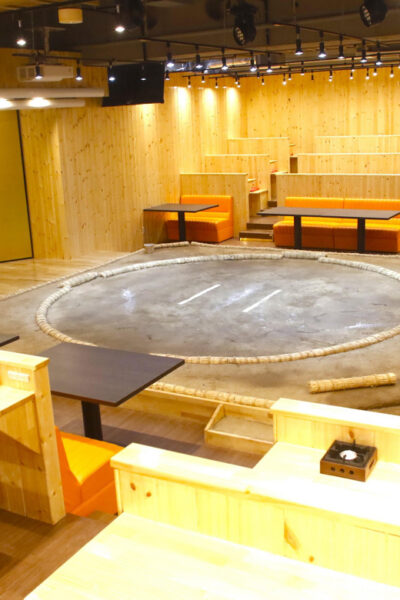
Sumo Show Experience with Chicken Hot Pot and a Photo
Read our review →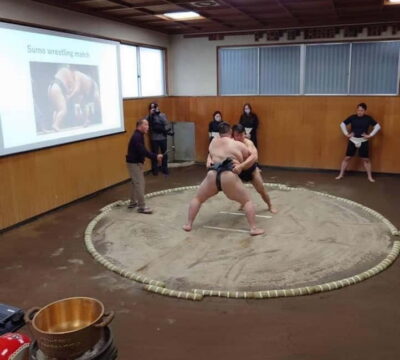
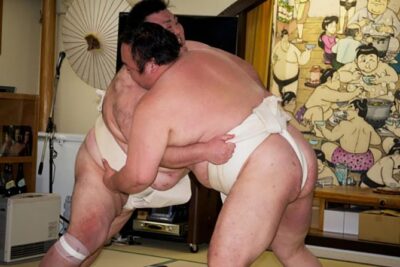
Tokyo Shinjuku Sumo Show & Experience with Photo
Read our review →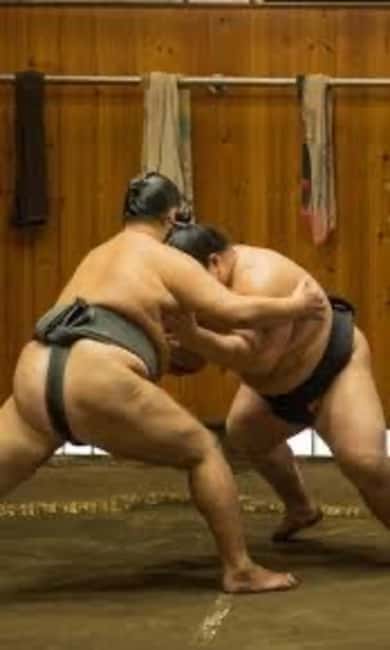

Authentic Sumo Experience in Tokyo: Enter the Sanctuary
Read our review →
Luxury Sumo Show Experience & Japanese cuisine & Drink
Read our review →
Browse the lists this tour appears in