
Reviewed · WALKING TOURS
Tokyo: Asakusa Walking Tour & Comedy Night
Asakusa is one of the few parts of central Tokyo where a temple visit can turn into a comedy night. This experience pairs the area’s major sights with an English walking tour led by Ryo, a Japanese comedian who later performs at the small Asakusa Smile Bar & Cafe.
I like the clear cultural focus, especially the explanation of Shinto and Buddhism and the correct ways to pray at each. I also like the unusual second half: you do not just look at Asakusa, you spend the evening with a local performer who uses Japanese culture as comedy material. The main consideration is time. At three and a half hours, this is not a quick sightseeing walk, and the comedy element may appeal less if you want a quiet temple tour.
In This Review
- Five things that make this Asakusa experience different
- Why this Asakusa tour works as an evening plan
- Starting above Asakusa with a Tokyo Skytree view
- Kaminarimon and the approach to Senso-ji
- Asakusa Shrine and the difference between shrine and temple
- Senso-ji Temple, the Bell of Time, and room to wander
- From temple district to Asakusa Smile Bar & Cafe
- What Ryo adds to the experience
- Is $43 a fair price?
- Who should book this Asakusa experience?
- Practical details before you go
- My recommendation
- FAQ
- Where does the Asakusa walking tour begin?
- Where does the experience finish?
- How long does the full experience last?
- How long is the walking tour?
- How much free time do I have in Asakusa?
- Which Asakusa sights are included?
- Who leads the tour and comedy show?
- How long is the comedy show?
- Is the comedy suitable for families?
- How many people can join the group?
- What language is the experience offered in?
- What does the $43 price include?
- Can I cancel for a refund?
- Can I reserve now and pay later?
Five things that make this Asakusa experience different
- Tokyo Skytree from the Tourist Information Center: Ryo begins with a useful city view before leading you into Asakusa’s older streets.
- Shinto and Buddhist customs explained on site: You learn how shrine and temple manners differ while standing at the places where they matter.
- A small group limited to 10 people: The size allows room for questions and conversation.
- One hour to explore Senso-ji independently: You are not marched from one sight to the next.
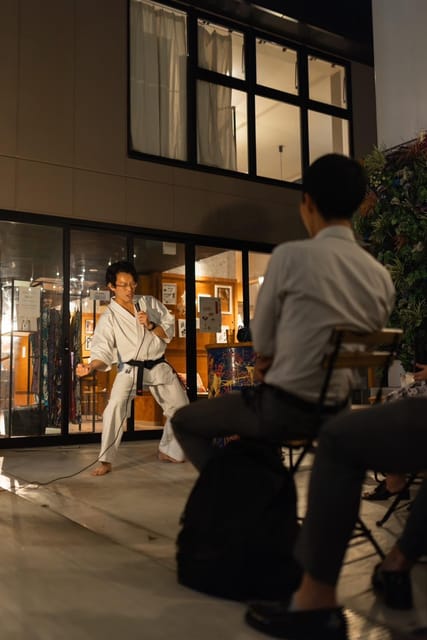
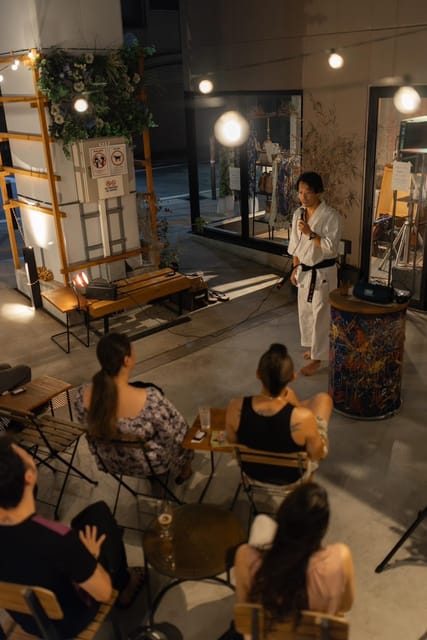
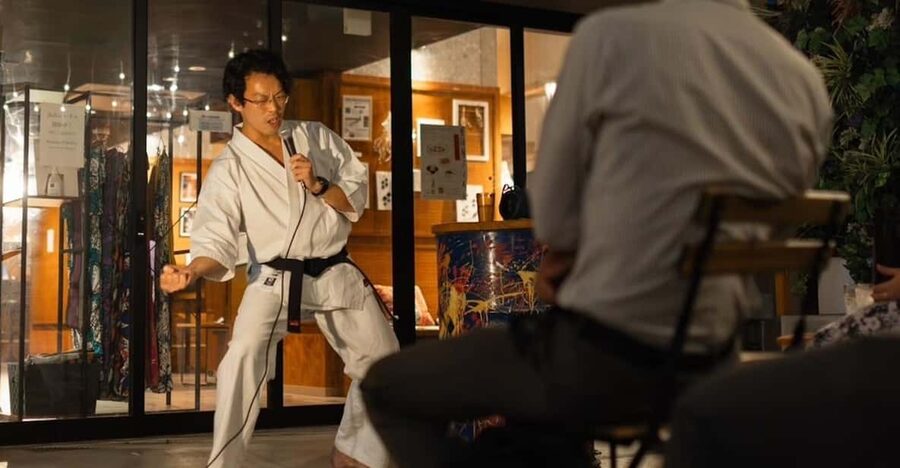
- A 45-minute comedy show by Ryo: The evening ends with clean cultural jokes in a casual bar and cafe.
Why this Asakusa tour works as an evening plan
I like the structure because it gives you two different ways to understand Asakusa. The first half uses streets, gates, shrines, and temples. The second half uses humor and conversation. That mix can make the area feel less like a checklist of famous names and more like a place with living customs.
The total duration is 210 minutes. The walking portion takes about 90 minutes, followed by 60 minutes of free time around Senso-ji. The comedy portion begins with a casual 30-minute meetup, then includes a 45-minute show. The schedule leaves room for the experience to feel social rather than tightly packed.
You meet in front of Tokyo Cruise, the water bus station, just one or two minutes from Asakusa Station on the Tokyo Metro Ginza Line. That is a handy starting point if you are arriving by subway. The tour finishes at Asakusa Smile Bar & Cafe, so you do not return to the original meeting point.
The group is limited to 10 people, which matters here. Asakusa can be crowded, and a small group is easier to keep together around Kaminarimon and Nakamise Shopping Street. It also gives you a better chance to ask Ryo about customs, religious details, or anything you notice along the way.
More Asakusa visits:
- Tokyo: Japanese Dance Cabaret Theater Asakusa-Kaguwa Ticket
★ 4.8 · 2,270 reviews - Tokyo: Meiji Shrine, Asakusa, Skytree Bus Tour and Cruise
★ 4.7 · 1,986 reviews - Tokyo: Roll and Authentic Sushi Making Class in Asakusa
★ 4.9 · 1,957 reviews
Starting above Asakusa with a Tokyo Skytree view
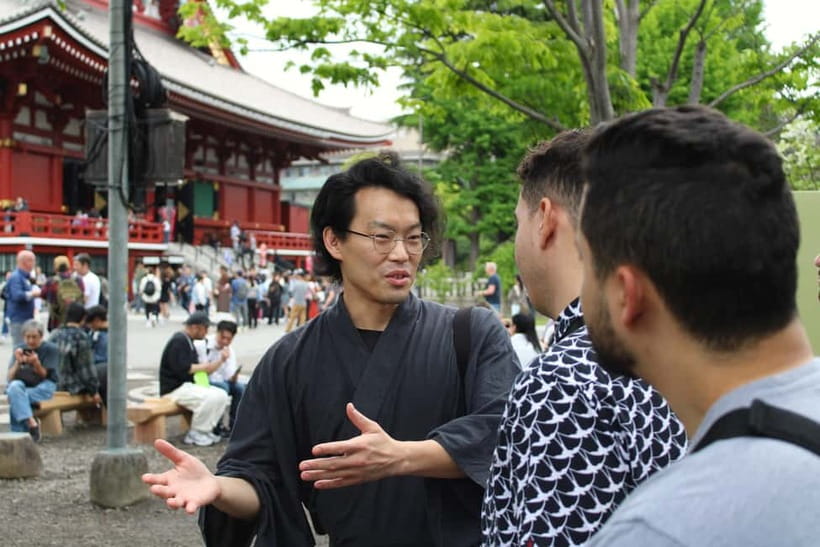
Ryo begins at the Tourist Information Center, where you can see Tokyo Skytree from above. This is a smart introduction to the neighborhood because it gives you a sense of where Asakusa sits in relation to one of Tokyo’s most recognizable modern landmarks.
I would pay attention here even if you have already seen Skytree from elsewhere. The view helps connect the modern city with the older temple district below. You get your bearings before entering the more traditional part of the walk.
The experience then moves toward Kaminarimon, the large entrance gate that most people associate with Asakusa. It is a photo stop, but it is also the first useful lesson in how this temple approach works. Ryo spends about 15 minutes here, explaining the setting rather than rushing you through for a single picture.
Kaminarimon and the approach to Senso-ji
Kaminarimon is the main gate of Senso-ji Temple. Its size and bright appearance make it one of Tokyo’s easiest landmarks to recognize, but the gate can be crowded. A guide is useful because you can hear the explanation while staying focused on the surrounding details instead of trying to make sense of the site alone.
From Kaminarimon, you walk along Nakamise Shopping Street. This approach leads toward the temple and is lined with shops selling souvenirs and traditional-style goods. The walk takes about 15 minutes, giving you time to look without making shopping the main purpose of the tour.
You should think of Nakamise as both a commercial street and part of the temple visit. It can be busy, and the shops may not interest everyone. Still, it helps explain how Senso-ji functions as a major public and religious place, not just a quiet monument.
Ryo’s role is especially useful here because he can put the shops and street into the wider setting of Asakusa. The experience is not built around shopping, so you can leave purchases for the one-hour break later.
Asakusa Shrine and the difference between shrine and temple
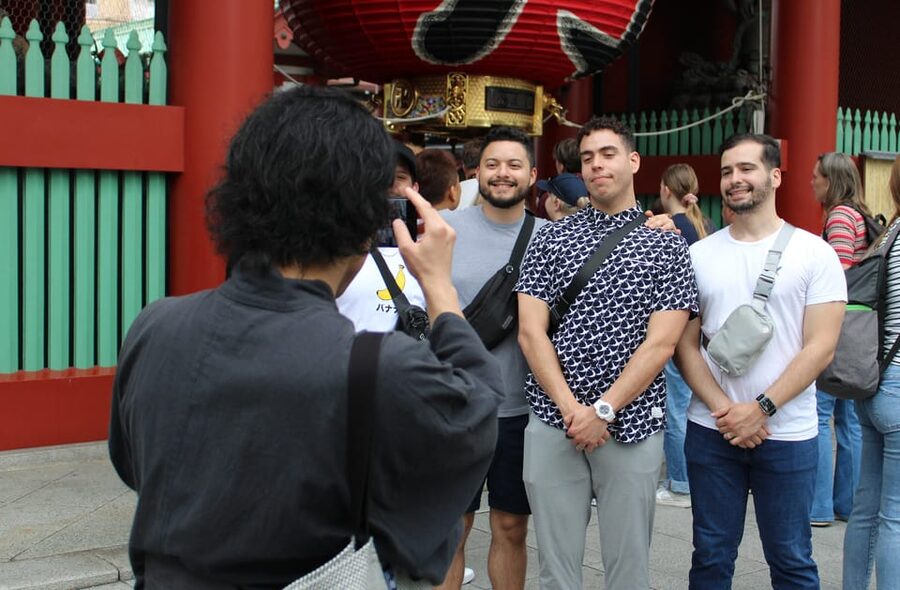
The walk continues to Asakusa Shrine, where Ryo explains Shinto customs and how to pray at a shrine. This is one of the strongest parts of the experience for anyone who has felt unsure about what to do at Japanese religious sites.
You receive practical instruction rather than a vague cultural lecture. Ryo explains different manners for praying at a Shinto shrine and a Buddhist temple, allowing you to see the difference in place. That is valuable because visitors often move between shrines and temples without realizing that the customs are not identical.
Asakusa Shrine also gives the tour a more detailed religious focus. Ryo explains the relationship between the shrine’s three deities and the principal image at Senso-ji Temple. The subject may be more detailed than a standard photo walk, but it gives you a clearer sense of why these nearby sites belong to the same cultural story while remaining separate religious spaces.
The shrine visit lasts about 30 minutes. That is enough time for questions and observation, though it may feel long if you are interested only in major landmarks. I see the time as worthwhile for first-time visitors who want to behave respectfully and understand what they are seeing.
More walking routes in Tokyo:
- Tokyo Tsukiji Fish Market Food and Culture Walking Tour
★ 5.0 · 3,184 reviews - Tokyo: Imperial Palace and Shogun Historical Walking Tour
★ 5.0 · 2,251 reviews - Tokyo: Shinjuku Local Bar and Izakaya Guided Walking Tour
★ 4.9 · 1,794 reviews - Tokyo: Tsukiji Fish Market Food and Walking tour
★ 5.0 · 1,724 reviews
Senso-ji Temple, the Bell of Time, and room to wander
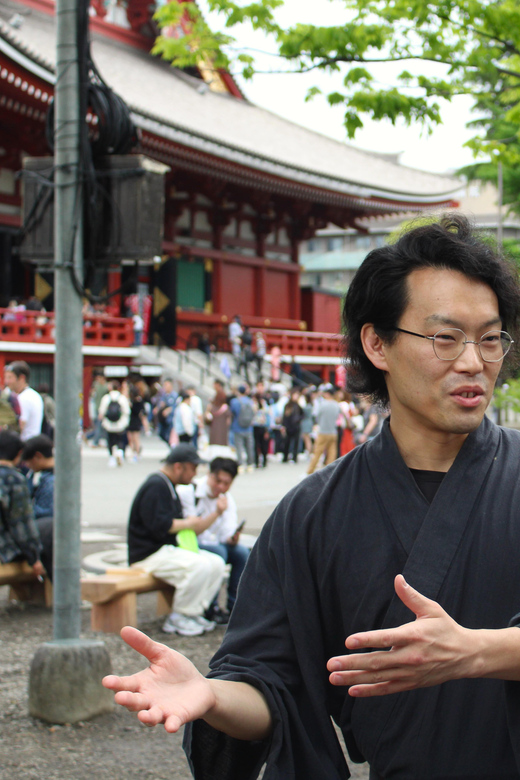
Another stop is the Bell of Time, a historical point that adds variety to the route. Instead of seeing only the most famous gate and temple hall, you get a smaller local reference that helps broaden your view of Asakusa.
The walk then reaches Senso-ji’s main hall. This is the center of the temple visit and one of the area’s essential sights. Ryo explains the principal image of Senso-ji and connects it with the nearby Asakusa Shrine, giving the earlier discussion a clear place to land.
The guided time at Senso-ji lasts about 30 minutes. After that, you have one full hour on your own in Asakusa. I particularly like this pause because many walking tours keep moving until the final stop. Here, you can look around the temple grounds at your own pace, take photographs, browse for souvenirs, or simply sit with what you have learned.
The free hour also makes the schedule more flexible. If you prefer a slower visit, you have space to do that. If the guided explanations are enough for you, you can use the break for shopping or a quiet look around the temple area. The tradeoff is that the group is no longer being guided during this time, so you need to keep track of where and when to meet for the comedy portion.
From temple district to Asakusa Smile Bar & Cafe
The second half begins with a 30-minute casual meetup at Asakusa Smile Bar & Cafe. This is not just filler between the walking tour and the show. It gives you time to chat with the other people in the group and settle into a more relaxed evening.
That change of pace is part of the appeal. The first half asks you to listen and observe. The bar portion gives you room to talk, have a drink, and meet new people before the performance begins.
The setting is a small, casual bar and cafe. You should not expect a large theater production or a formal stage show. The atmosphere is intended to be close and social, which suits standup comedy and makes the evening feel different from a standard guided excursion.
Ryo performs as the comedian, and the show lasts about 45 minutes. His material uses funny observations about Japanese history and culture, so the performance continues the cultural theme rather than appearing as an unrelated add-on.
The jokes are described as mostly clean, making this a reasonable choice for families and for anyone who prefers comedy without explicit material. The experience specifically excludes descriptive dirty jokes. Still, comedy is personal. If you prefer formal lectures or dislike audience interaction and casual bar settings, this may not be your ideal evening.
What Ryo adds to the experience
Ryo is the guide and performer, which creates a useful link between the two parts. He can explain a shrine custom during the walk, then use cultural observations in the show. That connection gives the experience a more personal feel than a sightseeing walk followed by an unrelated performance.
He is also described as attentive and willing to answer questions. That matters in Asakusa, where a short distance can take you from a major tourist sight to a place with specific religious meaning. You can ask about what you are seeing while standing in front of it, rather than trying to remember the question later.
A particularly good feature is the effort to show views away from the largest crowds. You will still be in one of Tokyo’s most popular sightseeing areas, and crowd levels can change. But a local guide who knows where to pause can make the walk less tiring and give you a better chance to look around.
The comedy show also benefits from Ryo’s dual role. He is not only presenting jokes about Japan to an outside audience. He is using his own experience as a Japanese comedian to explain the culture in a lighter way. That will appeal most to you if you enjoy learning through conversation and humor.
Is $43 a fair price?
At $43 per person, the price is reasonable if you value both parts of the evening. You are paying for a 90-minute guided walk, cultural explanations, an hour of independent time, a 30-minute social meetup, and a 45-minute live comedy show. The small group size adds value because the experience depends on questions and personal interaction.
The price is less attractive if you want only a temple walk. In that case, you are also paying for the bar meetup and comedy show, which are central to the design. It is best understood as a combined cultural outing, not as a basic guided visit to Senso-ji.
Drinks are not listed as included, so plan to pay for anything you order at the bar. Souvenirs and shopping during the free hour are also your responsibility. The included elements are the cultural jokes and insights on Japanese culture, while the experience does not include descriptive dirty jokes.
Free cancellation is available up to 24 hours before the start for a full refund. You can also reserve and pay later, which helps if your Tokyo schedule is still shifting.
Who should book this Asakusa experience?
I would recommend it to first-time visitors who want context at Senso-ji rather than a quick photograph. It also suits solo visitors and couples who like small groups, local conversation, and an evening plan that does not end when the walking route does.
Families may appreciate the clean comedy format, although the total three-and-a-half-hour duration is worth considering with young children. The walk includes several religious and historical stops, followed by a late social portion, so the pace may not suit everyone.
This is also a good choice if you have already visited major Tokyo sights and want something more personal. You get famous Asakusa landmarks, but the experience adds shrine and temple manners, relationships between local deities, a free hour, and a live performance by your guide.
I would be more cautious if you want a deeply specialized temple tour, a large professional comedy theater, or a fully private experience. The tour is limited to 10 people, not a private booking, and its charm comes from the combination of sightseeing and social entertainment.
Practical details before you go
The listed language is English, and Ryo leads the experience in English. Meet in front of Tokyo Cruise, the water bus station, which is one or two minutes from Asakusa Station on the Tokyo Metro Ginza Line.
Wear shoes suitable for a 90-minute city walk. The route includes several sightseeing stops and time on shopping streets and temple grounds. You should also leave room in your schedule after the official finish if you want to stay for a drink at Asakusa Smile Bar & Cafe.
The experience begins with the walking tour and ends at the bar. Since you receive one hour of free time in Asakusa, listen carefully for the meeting details before separating from the group.
My recommendation
I would book this if you want Asakusa explained by someone who can move naturally between religious customs, local landmarks, and Japanese comedy. The best parts are Ryo’s personal connection to the area, the practical shrine and temple guidance, the time away from the most crowded viewpoints, and the small-bar performance.
Skip it if you want a short sightseeing loop or if comedy is not part of your idea of a cultural evening. For everyone else, $43 buys a well-shaped night in Asakusa: major sights first, free time in the middle, and a friendly live show to finish.
FAQ
Where does the Asakusa walking tour begin?
It begins in front of Tokyo Cruise, the water bus station. The meeting point is one or two minutes from Asakusa Station on the Tokyo Metro Ginza Line.
Where does the experience finish?
It finishes at Asakusa Smile Bar & Cafe.
How long does the full experience last?
The total duration is 210 minutes, or three and a half hours.
How long is the walking tour?
The walking portion lasts about 90 minutes.
How much free time do I have in Asakusa?
You have one hour of free time after the guided visit to Senso-ji Temple.
Which Asakusa sights are included?
The route includes Kaminarimon Gate, Nakamise Shopping Street, Asakusa Shrine, Senso-ji Temple, and the Bell of Time. It also includes a view of Tokyo Skytree from the Tourist Information Center.
Who leads the tour and comedy show?
Ryo leads the walking tour and performs the comedy show. The experience provider is Karate Comic Ryo.
How long is the comedy show?
The comedy performance lasts 45 minutes. Before it, there is a casual 30-minute meetup at Asakusa Smile Bar & Cafe.
Is the comedy suitable for families?
The show is mostly made up of clean jokes. Descriptive dirty jokes are not included.
How many people can join the group?
The group is limited to 10 participants.
What language is the experience offered in?
The listed language is English.
What does the $43 price include?
The price includes the guided cultural experience, cultural jokes about Japan, and insights into Japanese culture. Drinks and souvenirs are not listed as included.
Can I cancel for a refund?
You can cancel up to 24 hours in advance for a full refund.
Can I reserve now and pay later?
Yes. The experience allows you to reserve your place and pay later.
More Evening Experiences in Tokyo
- Tokyo Night Foodie Tour in Shinjuku – Seasonal Sushi, Wagyu Beef
★ 5.0 · 1,161 reviews - Tokyo: Daikoku JDM Car Meet & Night Car Culture Tour
★ 4.8 · 626 reviews - Tokyo After 5: Authentic Japanese Food & Drink Night Tour
★ 4.5 · 560 reviews - EVO, WRX, Skyline – JDM Night Run to Daikoku Car Meet
★ 4.9 · 478 reviews
New on our Tokyo list
- Sumi-e Experience in a relaxing green tea shop in Tokyo★ 5.0 · 3 reviews
- Tokyo : Kamikaze Street Drift Ride★ 5.0 · 3 reviews
- Private Zen Meditation in English in Shinjuku, Tokyo★ 5.0 · 3 reviews
- Onsen Spa in Tokyo and Asakusa Bar Hopping with Local Guide★ 5.0 · 3 reviews
- Easy for everyone! Now you can play handmade mini shamisen and show off to everyone! Musical instruments, sweets and live music★ 5.0 · 3 reviews
- Tokyo: Private Tsukiji Street Food & Sake with Local Guide★ 5.0 · 3 reviews
- Mt Fuji Exploration Tour with Free Japanese Kusa Mochi from Tokyo★ 4.5 · 3 reviews
- Tokyo Tsukiji Fish Market Walking and Exploring Hidden Gems Tour★ 5.0 · 3 reviews
Walking Tours, compared.
Tokyo Tsukiji Fish Market Food and Culture Walking Tour
Read our review →
Imperial Palace and Shogun Historical Walking Tour
Read our review →
Shinjuku Local Bar and Izakaya Guided Walking Tour
Read our review →
Asakusa Walking Tour with Sensoji Temple Visit
Read our review →
Tokyo Castle & Imperial PalaceーShogun Walking Tour
Read our review →
Browse the lists this tour appears in