
Reviewed · SUMO EXPERIENCES
Tokyo: Challenge Sumo Wrestlers and Enjoy Meal
Tokyo’s sumo experience puts you close to the action without asking you to understand a full tournament first. Former professional wrestlers explain the sport, perform a demonstration, and invite willing visitors into the ring for a friendly test of strength.
I like the mix of clear English commentary and hands-on fun, especially if you are new to sumo. I also like that the meal is part of the booking, so you get a cultural lesson, a show, and lunch or dinner in one stop. The main drawback is that the 1.5-hour schedule can feel tight, and seats are assigned in booking order, so late bookers may not get the best position.
In This Review
- Key points to know before booking
- Why this Tokyo sumo experience works so well
- Arriving at the restaurant near Kikukawa Station
- The explanation makes the sport easier to follow
- Watching former wrestlers in the dohyo
- Trying sumo yourself in a costume
- Tonkatsu lunch or sukiyaki dinner
- Photos and the final question period
- Is $117 a fair price?
- Who should book this experience?
- Getting the most from your 1.5 hours
- Should you book this Tokyo sumo experience?
- FAQ
- Where does the sumo experience begin?
- How long does the activity last?
- What meal is included?
- Is the explanation available in English?
- Can I try sumo myself?
- Do I have to wrestle?
- Is transportation included?
- Can I request a dietary adjustment?
- Is the booking refundable?
Key points to know before booking
- Former professional wrestlers lead the show: You see experienced athletes perform and explain basic sumo terms and techniques.
- You can enter the dohyo: Put on a sumo costume and try a bout against one of the wrestlers if you wish.
- The meal depends on your booking: Choose tonkatsu for lunch or sukiyaki for dinner.
- The experience suits families: Children have taken part, and the interactive format gives younger visitors something to do beyond sitting and watching.
- Sit near the front if you can: The view may be fine farther back, but hearing the commentary and questions is easier near the ring.
- Kikukawa Station is the practical starting point: The venue is about a five to eight-minute walk from Exit A1 on the Shinjuku Line.
Why this Tokyo sumo experience works so well
Sumo can look simple from a distance: two large men push, slap, and try to force one another out of a small ring. Watch closely, though, and you see a sport built on balance, timing, ritual, and explosive movement.
This experience gives you a friendly introduction before asking you to make sense of a formal tournament. The wrestlers explain the sport in English and Japanese, then show you what the movements look like at close range. You are not just watching a staged cultural display. You are seeing former competitors use the skills they developed in professional sumo.
I especially like the tone. The demonstration is serious enough to show the athletes’ power, but light enough for families and first-time visitors. Humor helps keep the session moving, and the question-and-answer period gives you a chance to ask about the parts of sumo that are hard to understand from a television screen.
The format also helps if a grand tournament is not running during your Tokyo stay. You will not see a full official competition here, but you will get a useful look at the sport and a chance to meet retired wrestlers directly.
More sumo mornings:
- Tokyo: Sumo Show Experience with Chicken Hot Pot and a Photo
★ 4.8 · 6,678 reviews - Tokyo: Sumo Show and Dining Experience
★ 4.8 · 2,742 reviews - the SUMO show
★ 5.0 · 1,960 reviews
Arriving at the restaurant near Kikukawa Station
The meeting point is near Kikukawa Station on the Toei Shinjuku Line. From Exit A1, allow roughly five to eight minutes on foot. The activity ends back at the same meeting point, which keeps the logistics simple.
You must arrange your own transportation to the venue. There is no hotel pickup or drop-off, so check the route before leaving your hotel and allow enough time to find the restaurant. The start time varies, and you need to check availability when booking.
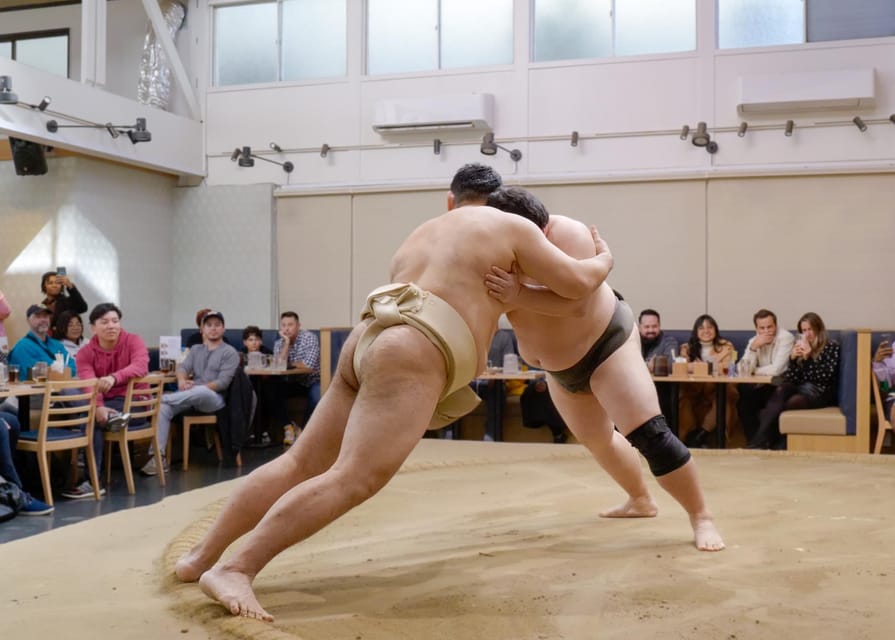
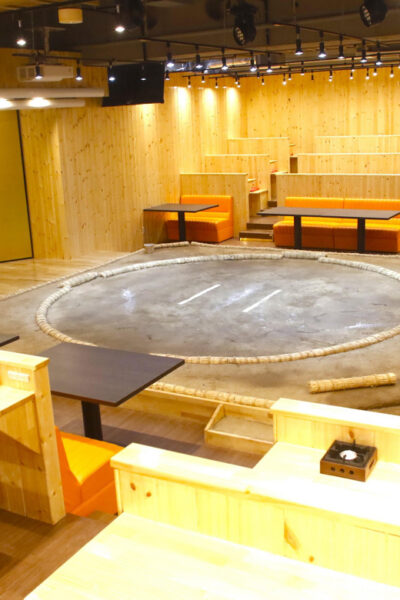
The venue is part of the experience. This is not a large arena with a distant stage. The restaurant setting puts you close to the dohyo, or sumo ring, and makes the demonstrations feel more personal. That closeness is useful when you want to see footwork, hand placement, and the quick burst that ends a bout.
Seats are assigned according to booking order. If you care about hearing every explanation, booking early is sensible. A seat farther from the front may still give you a good view, but it can be harder to hear if people nearby are talking during the commentary.
If your group is large, the supplier may place you at separate tables. That is worth keeping in mind for families or groups who expect to sit together throughout the meal.
The explanation makes the sport easier to follow
The opening section introduces sumo and its place in Japanese culture. You learn common terminology as you watch the wrestlers demonstrate the sport, so the words have an immediate use rather than feeling like a vocabulary lesson.
That context matters. Sumo is not only a contest of strength. The ring, the movements, and the formal behavior around a bout all carry meaning. You will not receive a full academic study of sumo in 1.5 hours, but you will leave with a better sense of why the sport is treated as an important part of Japanese tradition.
The English explanation is a major advantage for international visitors. The presenter’s English has been praised for making the material easy to follow, and the session includes humor as well as instruction. Japanese is also available, so the activity works for mixed-language groups.
The question-and-answer session adds another useful layer. You can ask about the wrestlers, their daily lives, or the techniques you have just seen. Since the athletes themselves are present, the answers feel more direct than information read from a sign or brochure.
Watching former wrestlers in the dohyo
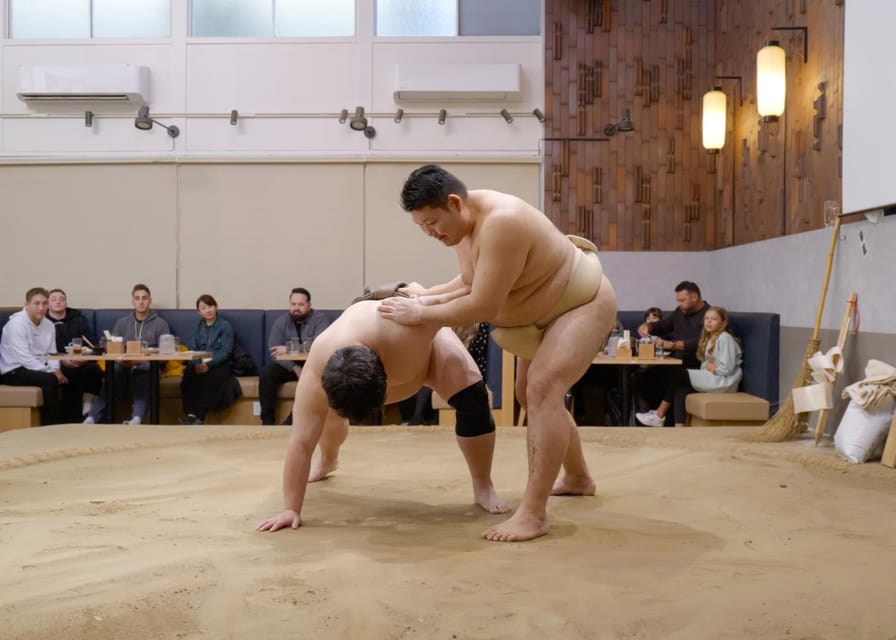
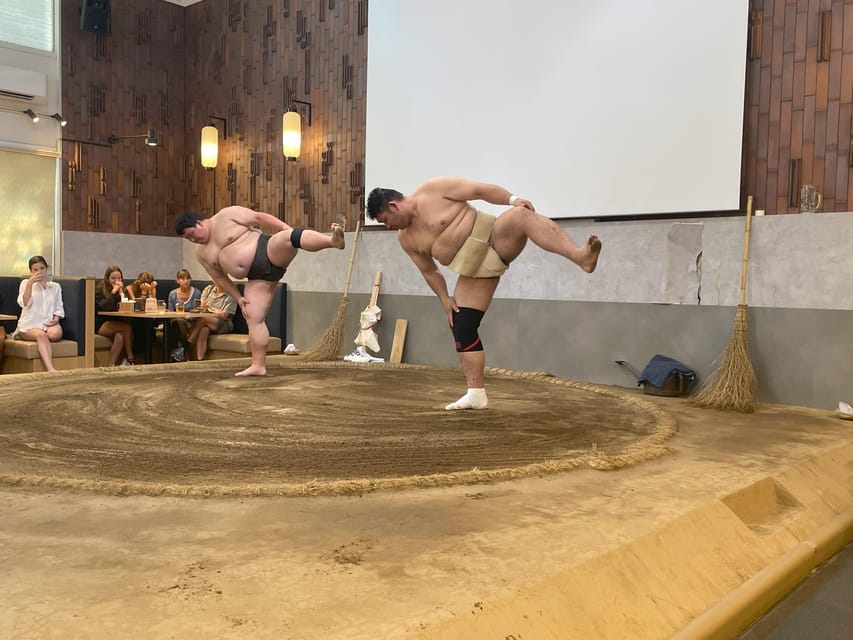
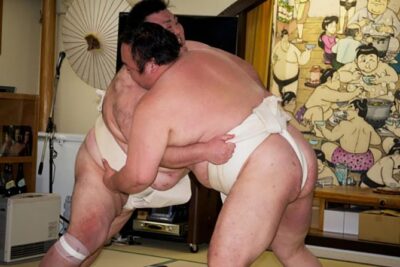
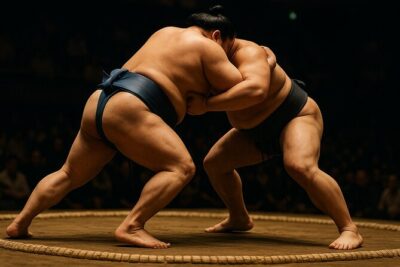
The demonstration is the heart of the visit. Two former sumo wrestlers face one another in the ring and show you how the sport works. Their size is impressive, but the real pleasure comes from seeing how quickly they move and how much control they have.
A bout can end in seconds. That short burst is part of sumo’s appeal. The wrestlers must read one another, find balance, and use the right push or maneuver before the other person gains control.
You should expect a demonstration rather than a formal tournament match. The purpose is to teach and entertain, and the wrestlers also make time for questions and photographs. That makes this a good choice if you want personal contact and a clear introduction, but less suitable if your main goal is to watch a long series of official bouts in silence.
The audience atmosphere is generally playful. Still, you will get more from the explanation if you pay attention and keep conversations low. This is particularly important if you sit farther back, where sound may already be less clear.
A few more Tokyo bookings worth comparing
- Mt Fuji and Hakone 1-Day Bus Tour Return by Bullet Train
★ 5.0 · 26,383 reviews - 1-Day Tokyo Bus Tour
★ 5.0 · 14,250 reviews - Tokyo: TOKYO SKYTREE® Admission ticket
★ 4.5 · 11,192 reviews - Tokyo: teamLab Planets TOKYO Digital Art Museum Entry Ticket
★ 4.6 · 9,779 reviews
Trying sumo yourself in a costume
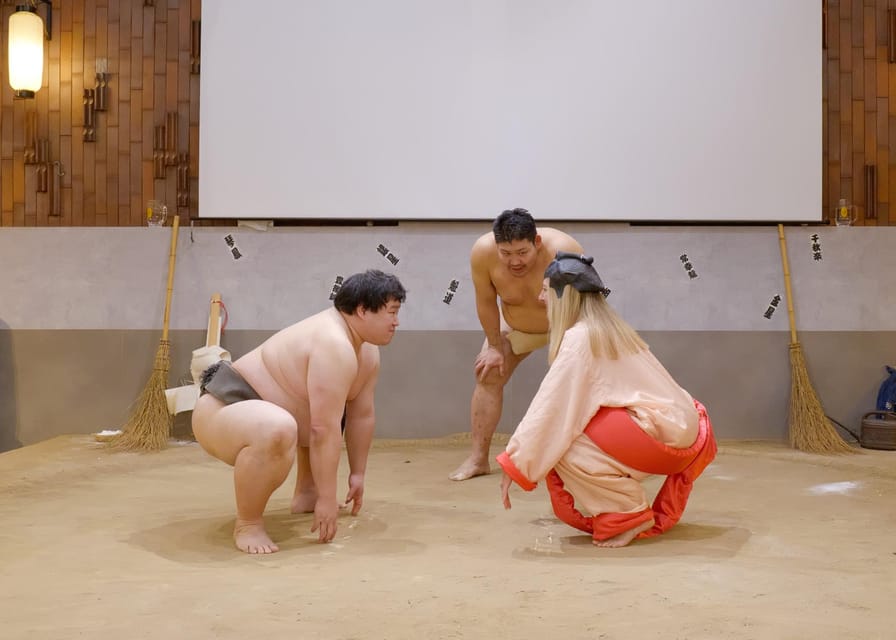
After watching the professionals, you can put on a sumo costume and step into the ring. This is the part many families remember most, since it changes you from an observer into part of the demonstration.
You can test your strength against one of the wrestlers in a friendly bout. The point is not to defeat a professional athlete. It is to feel how difficult it is to move someone who knows how to plant their feet, control balance, and use the ring.
The activity is optional in spirit, even though the highlight description presents it as a central feature. If you do not want to wrestle, you can still watch the demonstration and take part in the photograph at the end. You do not need to wrestle simply to have a picture with the athletes.
That distinction is helpful for mixed groups. One person may want the full challenge, while another prefers to watch. Children can enjoy the spectacle and, depending on staff instructions, may take part in the interactive elements. Staff instructions matter here. You are expected to act sensibly and follow directions, and disruptive behavior can lead to removal without a refund.
Tonkatsu lunch or sukiyaki dinner
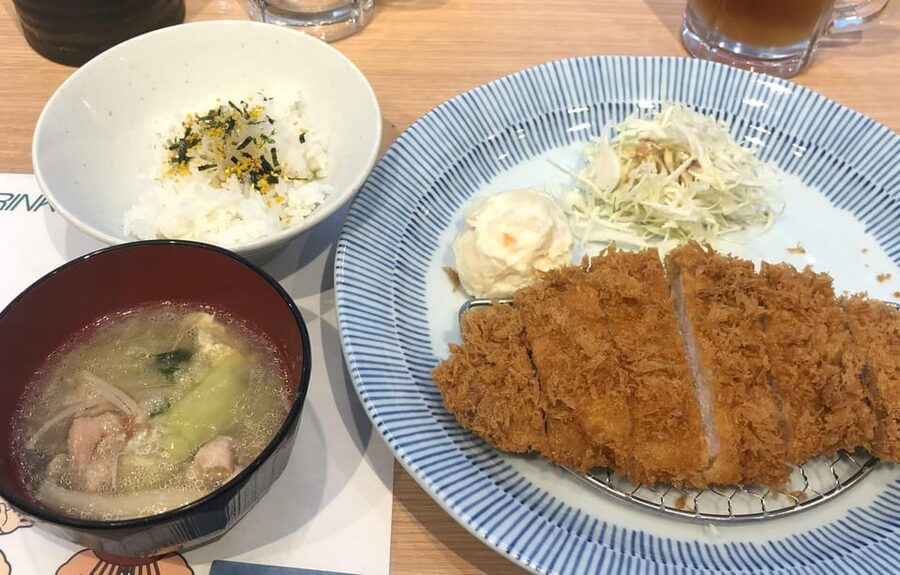
Food is included, with the meal depending on the option you select. The lunch choice is tonkatsu, a deep-fried pork cutlet. Dinner is sukiyaki, a hot pot of beef and vegetables cooked in a sweetened soy broth.
The meal makes the experience easier to fit into a busy Tokyo day. Instead of leaving the venue to find lunch or dinner, you can stay with the group and continue the conversation after the demonstration. It also gives you a chance to try familiar Japanese dishes in a setting linked to sumo.
Food and drinks beyond the included meal cost extra. You can bring your own food and drink, and you should advise the supplier about specific dietary needs when booking. The supplied information does not promise that every dietary request can be met, so ask early rather than waiting until the day.
Meal details can vary by session. Some visitors have received a Genghis Khan lunchbox or a meal that included chanko-ba, the hearty style of food associated with sumo wrestlers, while the stated booking choices are tonkatsu lunch and sukiyaki dinner. Check the exact option you select so you know what is included.
Infant meals are not included. An infant rate applies only when the infant does not occupy a seat, so families should check the booking conditions carefully.
Photos and the final question period
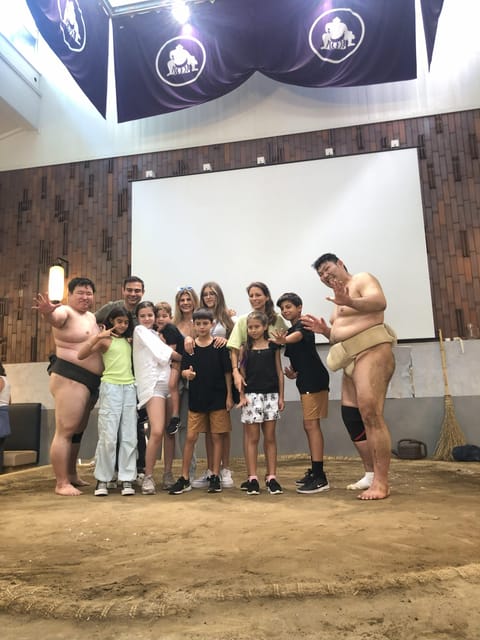
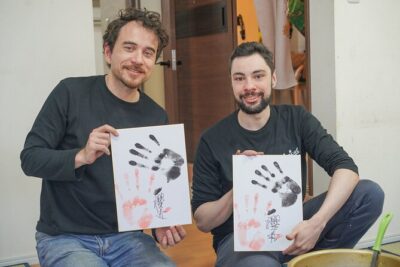
The photo opportunity comes after the hands-on portion. You can stand beside the wrestlers and capture the scale difference, the costume, and the ring in one picture.
This is not a rushed souvenir stop. The wrestlers make time for photographs and questions, which helps the experience feel personal. If someone in your group does not want to wrestle, the photo still gives them a way to take part.
The session may run closer to two hours in practice, depending on the day’s pacing. The official duration is 1.5 hours, but the demonstration, costume activity, photographs, meal, and questions can stretch the visit. Avoid booking a train, dinner reservation, or airport transfer immediately afterward.
Is $117 a fair price?
At $117 per person, this is not a cheap meal. You are paying for a structured cultural experience, the presence of retired professional wrestlers, English explanation, the demonstration, the costume activity, and lunch or dinner.
I think the value is strongest if you want more than a photograph outside a sumo venue. A tournament ticket gives you real competition, but it does not necessarily give you a personal explanation or a chance to enter the ring. A stable visit may offer a look at training, but age restrictions can rule it out for younger children. This experience fills that gap.
Families may find the price easier to justify because everyone has something to do. Children can watch the wrestlers, ask questions, and see an adult in a sumo suit try the ring. Adults who enjoy Japanese food and traditional sports also get a full meal as part of the visit.
The value is weaker if you only want to eat tonkatsu or sukiyaki, or if you dislike staged demonstrations and audience participation. In that case, the cost may feel high for a short meal and show.
Who should book this experience?
I would recommend it for first-time visitors who want a friendly introduction to sumo. It also works well for families with children, especially if a stable training visit is not possible because of age limits.
It suits you if you enjoy activities that combine watching, learning, eating, and trying something yourself. The English explanation is useful for visitors who know little about sumo, while the question period gives more curious fans a chance to ask specific questions.
You should think twice if you need a quiet, formal sports event. The atmosphere is social, and the costume bout can become lively. Seating also matters, so book early if hearing the commentary is important to you.
The experience is also a practical choice when no grand tournament is taking place. It cannot replace the tension of official competition, but it gives you a close look at the wrestlers’ movement and the customs around the sport.
Getting the most from your 1.5 hours
Book as early as possible if you want the best chance of a front seat. The view may remain fine from other tables, but the commentary and questions are easier to follow near the ring.
Wear clothing that lets you sit comfortably and move if you decide to try the costume activity. The provided information does not set out a special dress code, so you should follow the staff’s instructions at the venue.
Tell the supplier about dietary needs when you book. Confirm whether you selected the tonkatsu lunch or sukiyaki dinner, and remember that extra food and drinks are not included.
Plan the rest of your day with some breathing room. The listed duration is 1.5 hours, but the actual visit can last longer when the question period, meal, and photos run at a relaxed pace.
Should you book this Tokyo sumo experience?
I would book it if you want an accessible, family-friendly look at sumo with real former wrestlers, a meal, and a chance to enter the ring. The best parts are the close-up demonstration, the clear English explanation, and the friendly photo and question time.
I would skip it if you are seeking a full official tournament or a low-cost lunch. At $117, the price makes sense because of the athletes and interactive format, not because of the food alone.
For most first-time visitors, especially those with children or a short Tokyo schedule, this is a practical way to meet Japan’s national sport up close. Just book early, aim for a seat near the front, and leave extra time after the scheduled finish.
FAQ
Where does the sumo experience begin?
It begins near Kikukawa Station on the Shinjuku Line. From Exit A1, the venue is about a five to eight-minute walk.
How long does the activity last?
The stated duration is 1.5 hours. Some sessions may run closer to two hours because they include the explanation, demonstration, costume activity, photos, meal, and questions.
What meal is included?
The lunch option includes tonkatsu, a deep-fried pork cutlet. The dinner option includes sukiyaki, beef and vegetables cooked in a sweetened soy broth.
Is the explanation available in English?
Yes. The activity includes an English explanation, and the host or greeter languages are English and Japanese.
Can I try sumo myself?
Yes. You can put on a sumo costume, enter the ring, and test your strength against one of the former wrestlers in a friendly bout.
Do I have to wrestle?
No specific requirement says that you must wrestle. You can still watch the demonstration and take part in the photo opportunity without trying the bout.
Is transportation included?
No. Hotel pickup, hotel drop-off, and transportation to and from the restaurant are not included.
Can I request a dietary adjustment?
You should advise the supplier of specific dietary requirements when booking. Extra food and drinks are not included, and the information provided does not guarantee that every request can be accommodated.
Is the booking refundable?
No. The activity is non-refundable, and you will receive confirmation within 24 hours of booking, subject to availability.
New on our Tokyo list
- From Tokyo: Mount Fuji & Hakone Full Day Private Tour★ 4.9 · 25 reviews
- Tokyo Spectacular View Day-Cruise in 90 Minutes★ 5.0 · 25 reviews
- Real Tokyo Runner Club : Daikoku Car Meet Night Tour with JDM Car★ 5.0 · 25 reviews
- 2.5 Hour-Guided Cycle Tour in the Central Tokyo★ 5.0 · 25 reviews
- Ramen Making from Scratch +Akihabara Tour –Cooking Class★ 5.0 · 25 reviews
- [Self-Drive] Tokyo & Daikoku Custom Car Driving Tour★ 4.9 · 25 reviews
- Tokyo: 2-Hour Night Bike Tour of the City’s Hidden Gems★ 4.9 · 25 reviews
- Buddha, Bamboo & Zen – Bespoke Kamakura Private Walking Tours★ 5.0 · 25 reviews
Sumo Experiences, compared.
Sumo Show Experience with Chicken Hot Pot and a Photo
Read our review →
Tokyo Shinjuku Sumo Show & Experience with Photo
Read our review →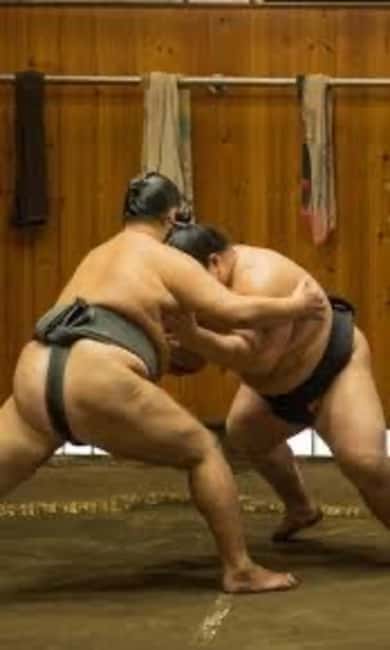
Authentic Sumo Experience in Tokyo: Enter the Sanctuary
Read our review →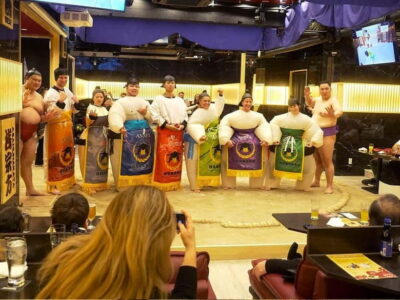
Luxury Sumo Show Experience & Japanese cuisine & Drink
Read our review →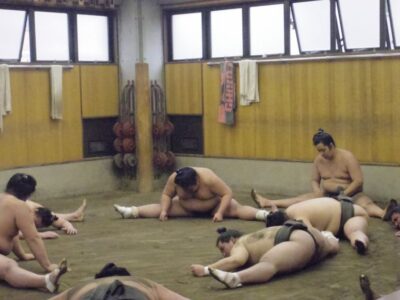
Browse the lists this tour appears in