
Reviewed · WORKSHOPS
Tokyo Chopstick Making Workshop with Artisan
Making chopsticks by hand turns an ordinary Japanese object into a souvenir with a story. At this small workshop in Tokyo’s Taito City, you shape the wood yourself, smooth it with traditional tools, and leave with a usable pair wrapped for home or gifting.
I like the hands-on work and the fact that your finished chopsticks are ready the same day. I also like the small group size, capped at 10, which gives you room to ask for help. The main catch is that the listed price may not be the cheapest way in: walk-ins may be accepted, and premium wood or engraving costs extra.
In This Review
- Key points to know
- Why Making Chopsticks Beats Buying Another Souvenir
- Finding the Workshop in Taito City
- Choosing Wood Before You Start
- Shaping the Pair With Traditional Tools
- Smoothing the Wood Takes Patience
- Finishing, Engraving, and Wrapping the Chopsticks
- What You Learn About Japanese Chopsticks
- Small Groups Make a Difference
- Is $26.53 a Good Value?
- Who Will Enjoy This Workshop Most?
- Timing, Cancellation, and Practical Planning
- Should You Book the Chopstick Workshop?
- FAQ
- Where does the chopstick-making workshop begin?
- Where does the activity end?
- How long does the workshop last?
- How many people can join the workshop?
- Are premium woods included in the price?
- Can I add engraving to my chopsticks?
- Can I cancel for a full refund?
Key points to know
- You make the chopsticks yourself: Shape, plane, smooth, and finish the wood rather than simply watching a demonstration.
- The workshop is in Taito City: The meeting point is 1-chōme-7-1 Misuji, near public transportation and within walking distance of the Ryogoku Kokugikan.
- The basic session costs $26.53: This covers the core activity, while certain woods and engraving require an additional payment.
- The work can be physical: Planing the wood takes repeated effort, especially if you are new to woodworking.
- The finished pair comes home with you: Chopsticks are wrapped and can be used as a gift or personal souvenir.
- The setting is small and relaxed: A maximum of 10 people allows for direct help, including assistance from guides such as Angie, Kaana, Rasmus, or Sakura when scheduled.
Why Making Chopsticks Beats Buying Another Souvenir
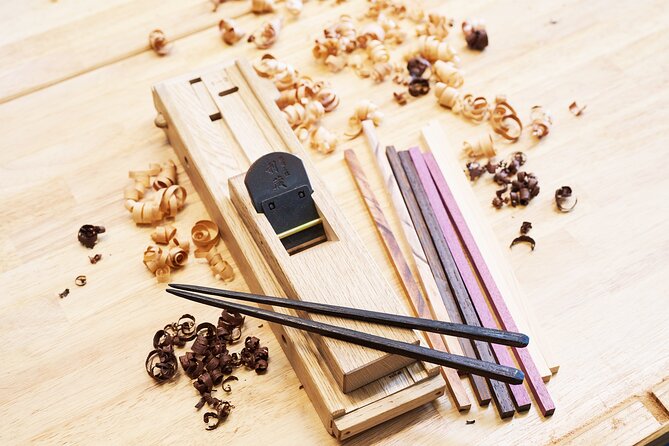
Tokyo gives you no shortage of souvenirs. You can buy sweets, ceramics, kitchen tools, character goods, and polished crafts in a single afternoon. Most are easy to pack, but few carry your own fingerprints in quite the same way as a pair of chopsticks you shaped by hand.
This workshop works because the object is simple. You are not trying to build a complicated piece of furniture or master a full day of traditional craft. You are making something useful, familiar, and distinctly tied to Japanese daily life.
The process also slows you down. You leave the bright signs and crowded shopping streets behind and spend about an hour focusing on the grain of the wood and the feel of a hand tool. That change of pace can be welcome during a busy Tokyo itinerary.
The cultural side is present, though it is not the main event. You learn about the importance of chopsticks in Japan and gain a better sense of the care behind a common household item. If you want a long historical lecture on Japanese woodworking, this is probably not the right choice. If you want a practical introduction with something to show for it, it fits well.
A few more Tokyo bookings worth comparing
- Sushi Making Tokyo Roll and Authentic Japanese Sushi Class
★ 5.0 · 3,971 reviews - Tokyo: Roll and Authentic Sushi Making Class in Asakusa
★ 4.9 · 1,957 reviews - Tokyo Shinjuku Chopsticks Making Class
★ 5.0 · 1,763 reviews
Finding the Workshop in Taito City
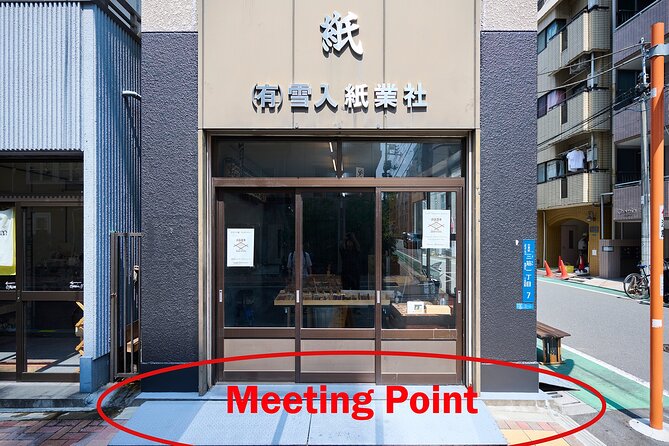
The workshop begins at 1-chōme-7-1 Misuji in Taito City, Tokyo. The area is described as one of Tokyo’s older craft neighborhoods, which gives the activity a more grounded setting than a class inside a large shopping complex.
The location is near public transportation, so you should be able to reach it without much trouble. Still, Tokyo addresses can be confusing when you are following a map, and the meeting point uses a Japanese block address rather than a familiar attraction name. Give yourself enough time to find the correct entrance.
One useful pairing is Ryogoku. The workshop is within walking distance of the Ryogoku Kokugikan, the famous sumo venue. You can place this activity before or after seeing the area, though the workshop itself is the reason to come. It is not simply a stop attached to a major sightseeing ticket.
The neighborhood matters because craft is part of its identity. You are not making chopsticks in an abstract tourist bubble. You are working in a part of Tokyo associated with small-scale making and practical goods.
Choosing Wood Before You Start
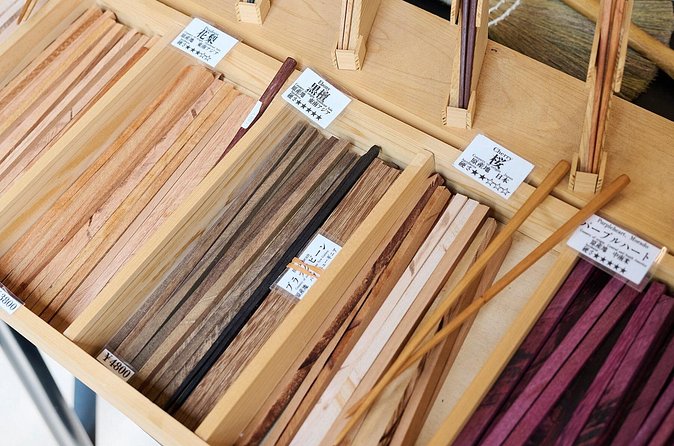
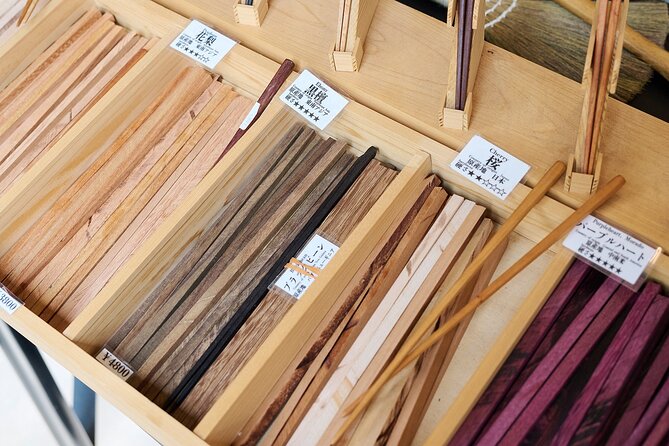
At the beginning, you choose the wood for your chopsticks. Several kinds are available, but the price is not the same for all of them. Basic wood is included in the stated workshop cost, while more desirable or less common woods may require an upcharge.
Ask about the extra cost before you settle on your choice. The added fee can be worthwhile if you care about the grain, color, or feel of the finished chopsticks, but you do not need premium wood to enjoy the activity.
Your choice also affects the difficulty. If you have never planed wood, an easier wood is the sensible pick. A harder or more demanding piece may produce a lovely final result, but it can turn the shaping stage into an unexpected arm workout.
That is one of the most useful practical points here. This is not a craft where you merely decorate a ready-made item. You remove material and refine the shape. Your hands do real work.
Shaping the Pair With Traditional Tools
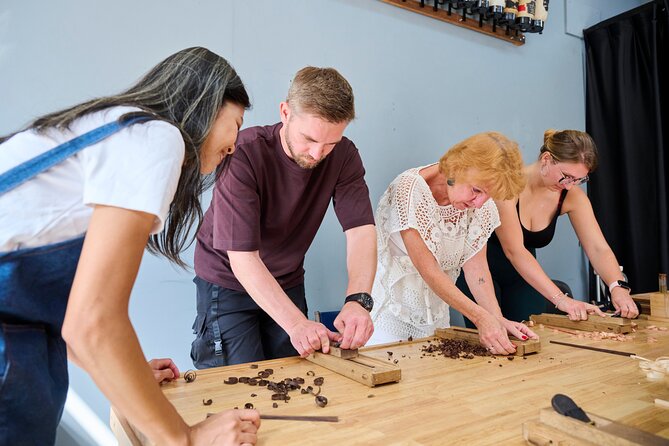
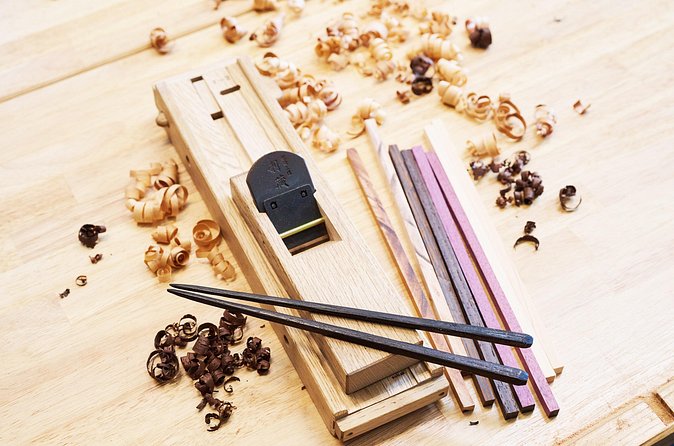
Once you have selected the wood, the artisan shows you how to shape it. You work toward the long, narrow form of a chopstick, gradually removing rough material and bringing the two pieces into balance.
The tools and techniques are traditional rather than fully industrial. That gives the session its character, but it also means the pace depends partly on you. Some people may finish close to the advertised one-hour duration. Others may need longer, with one detailed account taking about two hours from start to finish.
You should not feel pressure to rush. The goal is not to produce factory-perfect chopsticks in record time. It is to learn the motions, improve the shape, and leave with something you made yourself.
Guidance is available throughout the process. Angie has been praised for making the steps easy to follow and for welcoming people who arrived early. Kaana has also been singled out for making the workshop especially enjoyable for a family group. Other sessions have included Rasmus and Sakura, who helped explain the work and guided participants through the process.
Staff support is especially useful if you choose a more difficult wood or are unsure how much material to remove. Ask for help early. A quick correction can save you from creating an uneven pair later.
Same corner of Tokyo, a completely different plan:
- Mt Fuji and Hakone 1-Day Bus Tour Return by Bullet Train
★ 5.0 · 26,383 reviews - 1-Day Tokyo Bus Tour
★ 5.0 · 14,250 reviews - Tokyo: TOKYO SKYTREE® Admission ticket
★ 4.5 · 11,192 reviews - Tokyo: teamLab Planets TOKYO Digital Art Museum Entry Ticket
★ 4.6 · 9,779 reviews
Smoothing the Wood Takes Patience
After the rough shaping comes the smoothing stage. This is where the chopsticks begin to look and feel like finished tableware rather than pieces of wood.
You work over the surface, remove rough spots, and refine the taper. The task rewards patience. If you rush, you may leave scratches or small uneven areas. If you take your time, you get a smoother final product and a better feel for the craft.
The repeated motion is part of the appeal, but it may not suit everyone. People unused to planing or sanding should expect some physical effort. One of the clearest cautions is that the workshop can be an arm workout, especially with a demanding wood.
That does not make the activity strenuous in the usual sightseeing sense. You are not running or climbing. It is simply focused hand work that uses muscles you may not expect to use on a Tokyo vacation.
For children, the small-group format helps. The activity has worked well for children around 10 and 12 years old, with parents joining in. Younger children may need more direct assistance, but the supplied information specifically supports the idea that older children can enjoy the session.
Finishing, Engraving, and Wrapping the Chopsticks
The final stage brings the personal touch. You finish the surface, inspect the shape, and prepare the pair to take home. Engraving is available for an added charge if you want names or another personal mark.
Engraving is not required, and the basic pair is already a complete souvenir. Still, it can make the chopsticks feel more personal, especially if you are making them for a partner, child, friend, or family member.
The completed chopsticks are wrapped beautifully. That makes them easy to carry and gives you a ready-made gift without needing to find separate packaging in Tokyo.
The practical value is good. You are not leaving with a fragile ornament that sits on a shelf. You are taking home a utensil you can use, provided you follow any care guidance given at the workshop. The personal connection may also make you more likely to remember the neighborhood, the tools, and the work involved every time you use them.
What You Learn About Japanese Chopsticks
The workshop includes an explanation of the cultural significance of chopsticks in Japan. This adds context to the craft and helps you see why shape, finish, and daily use matter.
The amount of historical information may vary by instructor and by how much time your group spends on the making itself. If learning about chopstick-making history is your main goal, ask questions while you work. One session was considered enjoyable but light on historical detail.
That limitation is worth keeping in mind. The experience is best understood as a craft lesson with cultural context, not as a formal museum presentation. The artisan’s practical guidance takes priority.
I like that balance. You learn through your hands rather than sitting through a long talk. You also get a chance to ask about the wood and technique in the moment, when the information connects directly to what you are doing.
Small Groups Make a Difference
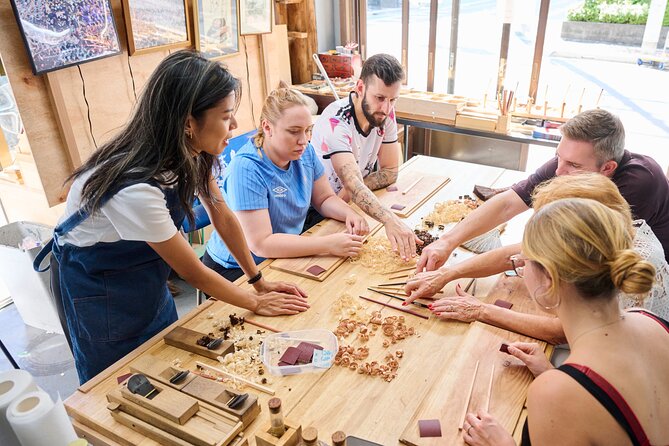
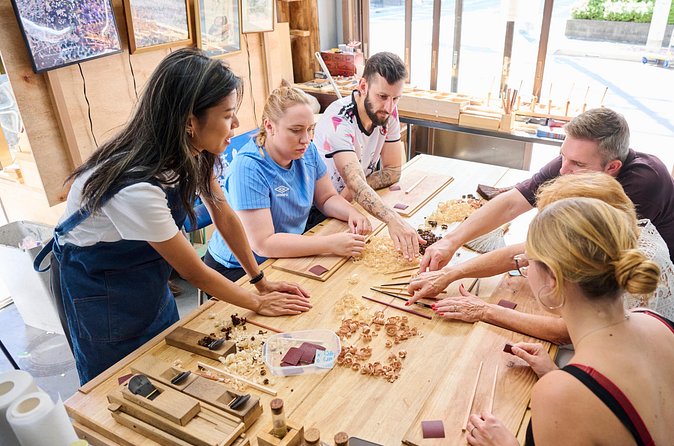
The maximum group size is 10 people. That is small enough for the instructor to give practical help, especially when several people are at different stages of shaping and smoothing.
A workshop of this size also suits families and friends. You can work side by side without feeling lost in a crowd. Solo visitors should fit in comfortably as well, since the activity does not depend on arriving with a large group.
The atmosphere is described as fun and relaxed. Staff have helped people who arrived early, and instructors have been called kind, helpful, and pleasant. Those details matter in a hands-on class. Clear guidance can be the difference between an enjoyable challenge and frustration.
Do keep in mind that the workshop may not feel like a fully guided group tour with constant narration. One account expected more of a group experience and found a more independent workshop, with written instructions available. If you want a continuous presentation from an expert, you may find the format quieter and more self-directed than expected.
Is $26.53 a Good Value?
At $26.53 per person, the basic price is reasonable for a short Tokyo activity that includes materials and a handmade item to take home. You are paying for the instruction, the workspace, the wood, the tools, and the chance to make the object rather than buy it.
The value improves if you care about doing something different from standard sightseeing. A purchased pair of chopsticks may cost less, but it will not include the memory of shaping and finishing them yourself.
The calculation changes if you select premium wood or add engraving. Those extras can make the final pair more special, but they raise the total. Decide before you begin how much you want to spend, particularly if you are traveling with several people.
There is also a booking-price issue. Walk-ins may be welcome and may pay less than the online price. That creates a possible saving, but it also removes the reassurance of a confirmed place. The listed booking includes confirmation at the time of purchase and a mobile ticket, which may be worth paying for during a tightly scheduled Tokyo trip.
The experience has been booked more than 10 times in a recent week, and 99 percent recommendation with a 5.0 rating from 466 ratings suggests strong demand. Those figures do not remove the need to check the price and workshop format for your own date, but they show that this is not an obscure activity with little interest.
Who Will Enjoy This Workshop Most?
I would choose this for several kinds of visitors:
- Families with older children: Kids around 10 and 12 have enjoyed the mix of hand work and a take-home result.
- Couples and friends: You can make matching or personalized chopsticks and add engraving if desired.
- Solo visitors: The small setting offers enough support without requiring a private group.
- Craft lovers: If you enjoy artisan classes, this gives you a practical project without taking a full day.
- Repeat Tokyo visitors: It offers a quieter change from temples, shopping, and major sights.
- Rainy-day planners: The short indoor format works well when the weather changes your plans.
I would be more cautious if you dislike repetitive hand work or expect a polished museum-style talk. The shaping stage takes effort, and the amount of cultural explanation may be modest.
The activity is also not ideal if you have only a few minutes between major reservations. Although the official duration is about one hour, some people have needed closer to two hours. Allow a generous buffer before your next appointment.
Timing, Cancellation, and Practical Planning
The listed duration is approximately one hour, but your own pace and wood choice can stretch the session. Plan for extra time if you want careful smoothing or engraving.
The activity begins and ends at the same meeting point. That makes it easy to fit into a half-day plan around Taito City or Ryogoku, since you do not need to arrange a separate return transfer.
Confirmation is provided when you book, and the mobile ticket is useful for keeping the details on your phone. Most people can participate, and the activity is near public transportation.
Free cancellation is available if you cancel at least 24 hours before the local start time. Cancellations or changes made inside that 24-hour window are not accepted for a refund, so check your Tokyo schedule before making a firm booking.
Should You Book the Chopstick Workshop?
Book it if you want a small, useful souvenir and enjoy learning by doing. The best parts are the personal result, the artisan guidance, the manageable group size, and the chance to spend time in a craft-focused corner of Tokyo.
Before paying, compare the booking price with the possibility of a walk-in. If you need a guaranteed place, prefer a mobile ticket, or have a fixed schedule, the advance booking has practical value. If your plans are loose and you are watching every yen, asking about walk-in availability may make sense.
Choose a simpler wood if you are new to planing. Add engraving only if the extra cost fits your budget. Allow more than an hour if you want to work carefully.
For most visitors, this is a worthwhile short activity that produces more than a souvenir. You leave with a pair of chopsticks, but also with a better feel for the patience behind Japanese craft.
FAQ
Where does the chopstick-making workshop begin?
The meeting point is 1-chōme-7-1 Misuji, Taito City, Tokyo 111-0055, Japan.
Where does the activity end?
The workshop ends back at the meeting point.
How long does the workshop last?
The stated duration is approximately one hour, though some participants have taken closer to two hours to finish.
How many people can join the workshop?
The activity has a maximum of 10 participants.
Are premium woods included in the price?
The basic price is $26.53 per person, but some types of wood cost extra.
Can I add engraving to my chopsticks?
Yes. Engraving is available for an additional cost.
Can I cancel for a full refund?
Yes, if you cancel at least 24 hours before the experience start time. Cancellations or changes made less than 24 hours in advance are not refunded or accepted.
New on our Tokyo list
- From Tokyo: Mount Fuji & Hakone Full Day Private Tour★ 4.9 · 25 reviews
- Tokyo Spectacular View Day-Cruise in 90 Minutes★ 5.0 · 25 reviews
- Real Tokyo Runner Club : Daikoku Car Meet Night Tour with JDM Car★ 5.0 · 25 reviews
- 2.5 Hour-Guided Cycle Tour in the Central Tokyo★ 5.0 · 25 reviews
- [Self-Drive] Tokyo & Daikoku Custom Car Driving Tour★ 4.9 · 25 reviews
- Tokyo: 2-Hour Night Bike Tour of the City’s Hidden Gems★ 4.9 · 25 reviews
- Ramen Making from Scratch +Akihabara Tour –Cooking Class★ 5.0 · 25 reviews
- Samurai themed Entertainment show in Shinjuku★ 4.5 · 25 reviews
Workshops, compared.
Sushi Making Tokyo Roll and Authentic Japanese Sushi Class
Read our review →
Roll and Authentic Sushi Making Class in Asakusa
Read our review →
Sushi Making Class in a Happi Coat near a Famous Spot
Read our review →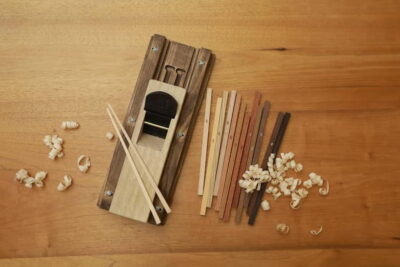
Tokyo Sushi Making Class in Tsukiji with Professional Chef
Read our review →
Ramen & Gyoza Cooking Class in Tokyo with Local Supermarket Visit
Read our review →
Matcha Making Class in Tokyo with Authentic Japanese Sweets Set
Read our review →Browse the lists this tour appears in