

Reviewed · WORKSHOPS
Tokyo: Edo Kiriko Traditional Glass Carving Class
Edo Kiriko turns a simple glass into a patterned work of art using careful hand-cutting. In this 90-minute class near Asakusa, you choose your glass, study dozens of patterns, practice on spare pieces, and then work on the item you will take home. The craft has more than 180 years of history, yet the class feels friendly rather than formal.
I like the patient, hands-on instruction, especially the chance to practice before touching your chosen glass. I also like the useful location, only about 30 seconds from Asakusa Station and close to Senso-ji. The main consideration is that accurate carving is harder than it looks. Your finished glass may not be perfect, though the instructor can help correct rough cuts.
In This Review
- Key points to know before you book
- Turning a plain glass into Edo Kiriko
- Finding Sokichi near Asakusa Station
- Practicing before you touch the final glass
- Choosing a pattern from dozens of samples
- Working with an English-speaking instructor
- The final 90 minutes and the finished keepsake
- What $30 buys you in Tokyo
- Who will enjoy this class most
- Small details that make the visit easier
- Should you book the Edo Kiriko class?
- FAQ
- Where does the Edo Kiriko class meet?
- How long does the class last?
- Is the class offered in English?
- What kinds of glass can I choose?
- Can beginners join the class?
- What do I take home?
- What should I bring?
Key points to know before you book

- Choose from more than 20 glass styles: Clear, blue, pink, and yellow options give you room to match the glass to your preferred pattern.
- Practice before the final piece: You can try cutting stars and other shapes before working on the glass you keep.
- English instruction is available: Instructors explain the process in English and Japanese, with Ze especially praised for calm, clear guidance.
- A practical Asakusa location: Sokichi is a short walk from Asakusa Station, with Senso-ji about five minutes away.
- A 90-minute creative break: The class fits neatly into a day of sightseeing and gives you a physical souvenir, not just another photograph.
- Good value at $30: The fee includes the class, lecturer, and colored glass, making it a reasonably priced craft activity in central Tokyo.
Turning a plain glass into Edo Kiriko
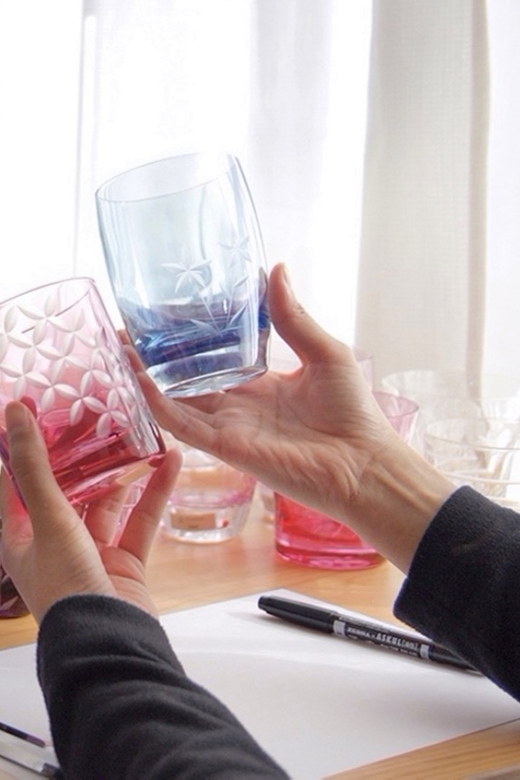
Edo Kiriko is a traditional Japanese glass-carving craft that began more than 180 years ago. The basic idea is simple: a colored layer of glass is cut to reveal the clear glass beneath it, creating lines, stars, flowers, geometric shapes, and other patterns.
The difficulty is in control. You guide the glass against a cutting tool, but even a small change in pressure or angle can make a line crooked. That is why this class works best when you approach it as a craft lesson, not as a quick souvenir factory.
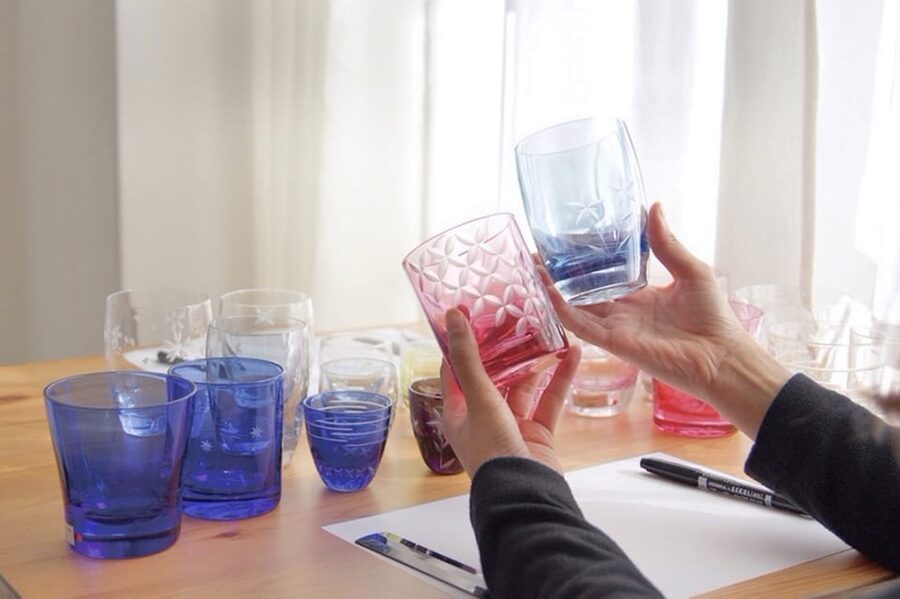
You choose a glass and a pattern from a large selection. The class offers more than 20 kinds of glasses and dozens of pattern samples. Six types of clear and colored glass are available, including blue, pink, and yellow choices.
The color matters. A strong blue or pink layer can make the cut pattern easy to see, while a clear glass gives you a subtler result. The instructor can explain how different designs will look on different glasses, so ask before you commit to a combination.
A few more Tokyo bookings worth comparing
- Sushi Making Tokyo Roll and Authentic Japanese Sushi Class
★ 5.0 · 3,971 reviews - Tokyo: Roll and Authentic Sushi Making Class in Asakusa
★ 4.9 · 1,957 reviews - Tokyo Shinjuku Chopsticks Making Class
★ 5.0 · 1,763 reviews
Finding Sokichi near Asakusa Station
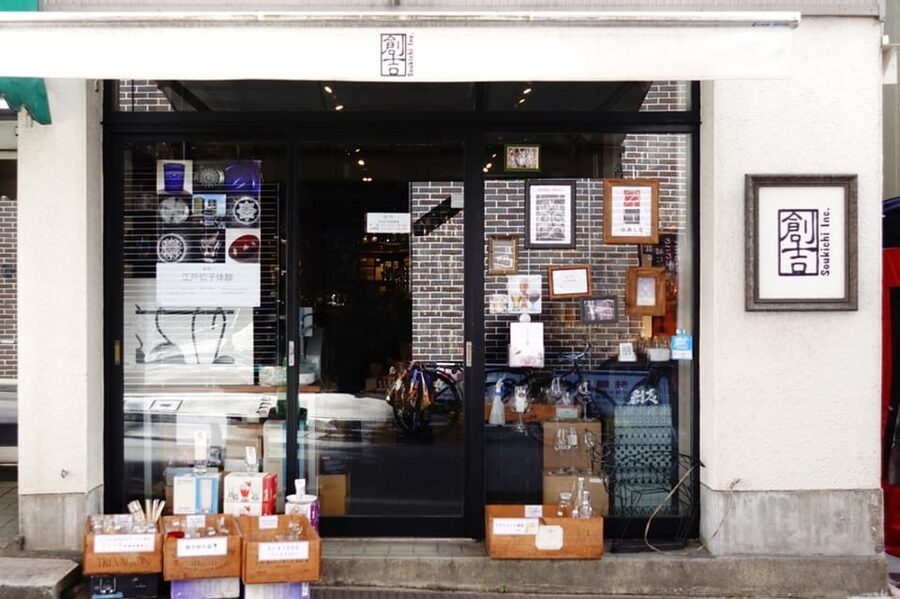
The meeting point is Sokichi, a shop only about 30 seconds from Asakusa Station. You speak with a staff member at the shop, and they escort you to the room used for the class.
That arrangement is useful because the workshop room may not be obvious from the main street. One participant described it as being on a small side street directly above a glassware shop. Someone was waiting outside the door on arrival, which helped make the meeting process simple.
The location also makes this easy to pair with other Asakusa plans. Senso-ji is about five minutes away, and Tokyo Skytree is roughly 15 minutes away. You can schedule the class before or after sightseeing without building a separate cross-town trip into your day.
Bring a hair tie if you have long hair. It is the only specific item requested for the activity. Transportation to the meeting point is not included, so you handle your own way to Sokichi.
Practicing before you touch the final glass

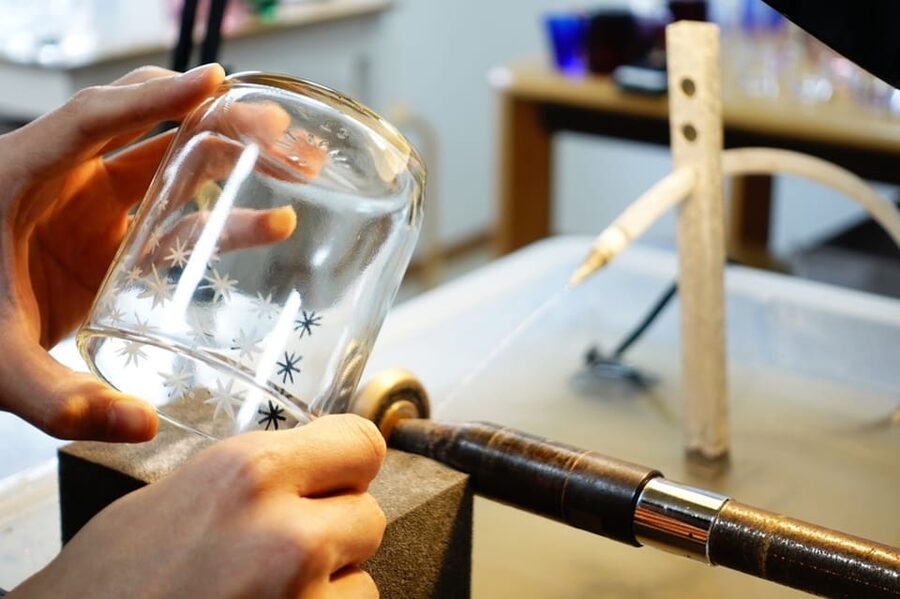
The class begins with instruction and practice. You learn how the cutting process works and get a chance to make test marks before starting your own design.
This practice period is one of the best features of the experience. Cutting a line is straightforward. Cutting a clean line in the exact place you intended is much harder. One useful exercise described by a participant involved making practice stars, a simple way to learn how the tool responds before moving to the final piece.
You should use this time fully. Try the pressure the instructor recommends, ask how quickly to move, and check your hand position. The point is not to produce a beautiful practice piece. The point is to understand how much control the glass requires.
The class is beginner-friendly, but beginner-friendly does not mean effortless. The instructor can teach you the basic method, yet you still need patience and a steady hand. That balance makes the activity satisfying for adults and older children who like making things with their hands.
Choosing a pattern from dozens of samples
After practice, you select the design for your own glass. This is where the activity becomes personal rather than just instructional.
The pattern samples let you compare simple and more detailed designs. You can choose something manageable if you want a clean first attempt, or try a more ambitious layout if you enjoy careful work. The available levels range from beginner to expert, although all are presented as suitable for beginners.
Do not feel pressured to select the most complicated design. A simple pattern cut neatly can look better than an intricate pattern with uneven lines. The instructor can help you understand how a design will fit the shape and color of your chosen glass.
This is also a good point to ask how much of the surface you should cover. A few well-placed cuts may give the glass a stronger look than filling every available space. The instructor’s advice matters because the finished design depends on both the pattern and the way light passes through the glass.
Same corner of Tokyo, a completely different plan:
- Mt Fuji and Hakone 1-Day Bus Tour Return by Bullet Train
★ 5.0 · 26,383 reviews - 1-Day Tokyo Bus Tour
★ 5.0 · 14,250 reviews - Tokyo: TOKYO SKYTREE® Admission ticket
★ 4.5 · 11,192 reviews - Tokyo: teamLab Planets TOKYO Digital Art Museum Entry Ticket
★ 4.6 · 9,779 reviews
Working with an English-speaking instructor
The teaching is available in English and Japanese. English communication is an important advantage here because the craft depends on small technical details.
Instructor Ze received particular praise for being kind, patient, and thorough. His explanations and critiques were described as clear and supportive, and he encouraged students through rough early attempts. Another instructor was also described as friendly, helpful, and fluent in English, with useful guidance about how patterns would appear on different glasses.
Expect close help rather than a long lecture. The instructor stays nearby, watches your technique, and gives advice when a line begins to wander. If part of your design needs repair, the instructor may refine or correct it. That means the final object is not always made by your hand alone, but it also means you are more likely to leave with something you are proud to use.
The instruction style suits people who want room to work independently but do not want to be left guessing. A small class can make a real difference here. One class had four participants, allowing everyone time with the instructor. Group size can vary, so do not assume every session will have exactly four people.
The final 90 minutes and the finished keepsake
The full experience lasts 90 minutes. That is long enough to practice, choose a design, and complete a glass without taking over your whole day in Tokyo.
The time may feel short once you begin. First you are learning the tool, then comparing patterns, then trying to keep your lines steady. The work requires concentration, so this is a peaceful change from sightseeing and city traffic.
At the end, you take your finished glass home. The instructor may smooth or refine parts of the work, especially if an etching is crooked. You still create the design and do the main cutting yourself, so the piece has more meaning than a shop-bought souvenir.
Keep your expectations realistic. Your glass probably will not look like the instructor’s work. The instructor’s carved examples can be remarkably precise because the technique takes years to master. Your own piece may have small uneven marks, and that is part of its character.
For many people, that is the point. You leave with an object connected to a specific afternoon in Tokyo, along with a better understanding of how traditional glass carving works.
What $30 buys you in Tokyo
At $30 per person, this is a strong value for a hands-on activity in central Tokyo. The price includes the glass-carving class, an instructor, and colored glass. You do not need to purchase a separate material kit.
The value comes from the combination of instruction and a take-home object. A standard museum visit may cost less, but it gives you an experience to remember rather than something you made yourself. Many souvenirs cost more than $30 and carry less personal meaning.
The class is not the right choice if you want a polished professional piece with no visible mistakes. It is a good choice if you want to learn a traditional technique and accept that your first attempt will show your learning process.
The class also makes practical use of time. At 90 minutes, it fits around a morning at Senso-ji or an afternoon near Tokyo Skytree. Since the meeting point is so close to Asakusa Station, you are not paying for a long ride to reach a distant workshop.
Who will enjoy this class most
I would recommend this for couples, families with older children, solo visitors, and anyone who prefers an activity over another observation deck or shopping stop. It is especially suitable if you want a souvenir that you made yourself.
It also works well for repeat visitors to Tokyo. If you have already seen the major Asakusa sights, Edo Kiriko gives you a different way to connect with the neighborhood and Japanese craft traditions.
You should have enough patience to work slowly. The cutting process is not described as physically demanding, but it does require focus and some hand control. If you dislike detailed tasks or want a completely passive activity, this may feel more like work than relaxation.
The class suits mixed skill levels. You can select a beginner pattern or attempt something more advanced, and the instructor remains available for advice. People who enjoy drawing, model-making, craftwork, or careful decoration will likely feel at home.
Small details that make the visit easier
Arrive at Sokichi with enough time to identify the shop and speak with the staff member. The room is close to the shop, but it may be up a side street rather than in an obvious tourist venue.
Tie back long hair before you arrive. It keeps your hair away from the work area and is the only item specifically requested.
Ask questions about the craft’s history if you want more cultural context. A short pamphlet may be available on request, and you can also ask the instructor about the patterns and techniques. The class gives you a practical introduction, but the historical explanation may not be presented at length unless you ask.
Plan your nearby sightseeing with care. Senso-ji is close, and Skytree is also within the area, but you should allow time for your class itself rather than rushing through the carving. The 90 minutes is a fixed creative session, not a drop-in demonstration.
Cancellation is free up to 24 hours in advance for a full refund. You can also reserve and pay later, which helps if your Tokyo schedule is still changing.
Should you book the Edo Kiriko class?
Book it if you want a reasonably priced, personal souvenir and enjoy learning by doing. The short walk from Asakusa Station, English instruction, forgiving beginner setup, and patient guidance from instructors such as Ze make this an easy addition to a Tokyo sightseeing day.
You should choose a simpler pattern if this is your first attempt at glass carving. Use the practice time, listen closely to the instructor, and accept that a few crooked lines may remain. The finished glass is valuable because it shows your effort, not because it looks factory-perfect.
Skip it if you want a quick photo stop, a polished luxury craft session, or a completely passive cultural presentation. For everyone else, this is a thoughtful way to spend 90 minutes in Asakusa and take home a small piece of Japanese tradition that you helped create.
FAQ
Where does the Edo Kiriko class meet?
The experience starts at Sokichi, which is about a 30-second walk from Asakusa Station. Speak with a staff member at the shop, and they will escort you to the class room.
How long does the class last?
The class lasts 90 minutes. Starting times depend on availability.
Is the class offered in English?
Yes. Instruction is available in English and Japanese.
What kinds of glass can I choose?
The course includes six types of clear and colored glass. Colored options include blue, pink, and yellow, and you can choose from more than 20 kinds of glasses.
Can beginners join the class?
Yes. You can choose beginner-level or expert-level designs, and all options are described as beginner-friendly. You also practice before working on your final glass.
What do I take home?
You make an original Edo Kiriko glass artwork during the class and take it home afterward.
What should I bring?
Bring a hair tie, especially if you have long hair. Transportation to the meeting point is not included.
New on our Tokyo list
- From Tokyo: Mount Fuji & Hakone Full Day Private Tour★ 4.9 · 25 reviews
- Tokyo Spectacular View Day-Cruise in 90 Minutes★ 5.0 · 25 reviews
- Real Tokyo Runner Club : Daikoku Car Meet Night Tour with JDM Car★ 5.0 · 25 reviews
- 2.5 Hour-Guided Cycle Tour in the Central Tokyo★ 5.0 · 25 reviews
- Ramen Making from Scratch +Akihabara Tour –Cooking Class★ 5.0 · 25 reviews
- [Self-Drive] Tokyo & Daikoku Custom Car Driving Tour★ 4.9 · 25 reviews
- Tokyo: 2-Hour Night Bike Tour of the City’s Hidden Gems★ 4.9 · 25 reviews
- Samurai themed Entertainment show in Shinjuku★ 4.5 · 25 reviews
Workshops, compared.
Sushi Making Tokyo Roll and Authentic Japanese Sushi Class
Read our review →
Roll and Authentic Sushi Making Class in Asakusa
Read our review →
Sushi Making Class in a Happi Coat near a Famous Spot
Read our review →
Tokyo Sushi Making Class in Tsukiji with Professional Chef
Read our review →
Ramen & Gyoza Cooking Class in Tokyo with Local Supermarket Visit
Read our review →
Matcha Making Class in Tokyo with Authentic Japanese Sweets Set
Read our review →Browse the lists this tour appears in