
Reviewed · WORKSHOPS
Tokyo Keen Japanese Knife and Sashimi Workshop
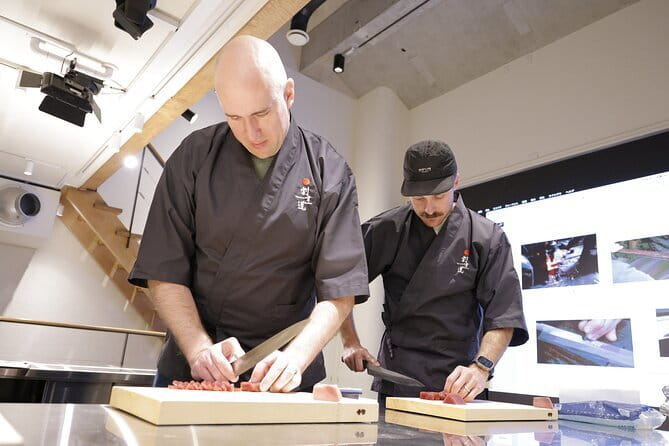
Japanese knives are made for precision, and this two-hour Tokyo workshop lets you feel that precision in your own hands. You watch chef Naoya demonstrate sashimi cutting, then practice it yourself before preparing a tuna zuke-don bowl for lunch. Interpreter Hiromi helps make the instruction clear and friendly for English-speaking visitors.
I like the balance here: knife craft and food preparation share equal billing, so the class never feels like a lecture. I also like the practical whetstone lesson, since sharpening is the skill most home cooks skip. The main consideration is the price, $130.78 per person, which is fair for a small group of up to eight but high if you only want a quick cooking class.
In This Review
- Key points at a glance
- What the Tokyo knife workshop is really about
- Starting with Japanese knife culture and construction
- Watching Naoya cut sashimi, then trying it yourself
- Whetstone sharpening while the fish marinates
- Making tuna zuke-don for a proper lunch
- Sake, tea, and the pleasure of eating what you made
- Is $130.78 a fair price?
- Who will get the most from this class?
- Practical details before you book
- Should you book the Tokyo knife and sashimi workshop?
- FAQ
- How long does the Japanese knife and sashimi workshop last?
- Where does the workshop begin?
- Where does the activity end?
- How many people can join the class?
- Is lunch included?
- Is sake included?
- Do I need experience sharpening knives?
- Are tools and aprons provided?
- Can I cancel for a full refund?
Key points at a glance
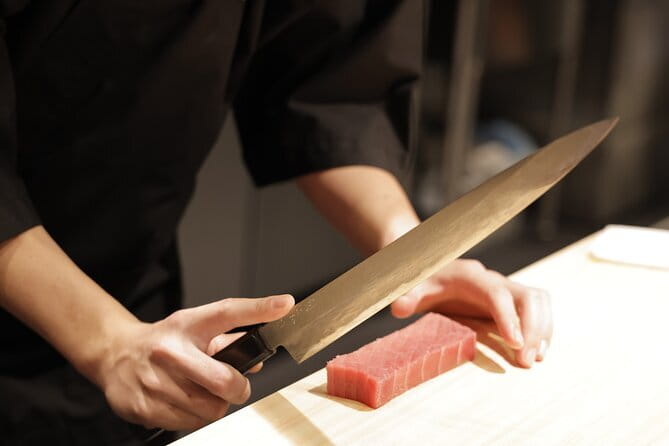
- Use a Japanese knife yourself: Watch the cutting method, then handle the knife and slice sashimi under instruction.
- Learn whetstone sharpening: The class explains how to sharpen a Japanese knife, even if this is your first attempt.
- Make zuke-don for lunch: Marinated sashimi is served over rice with miso soup.
- Meet a professional teaching team: Chef Naoya leads the knife work, with Hiromi providing interpretation.
- Taste original sake: A small sake tasting is included, along with tea and the meal.
- Keep shopping after class: Your participation certificate and a 10% discount at the first-floor shop add value for knife shoppers.
What the Tokyo knife workshop is really about
This is not simply a demonstration where you sit back and watch an expert work. You begin with the background of Japanese knives, then move into handling one, cutting sashimi, sharpening with a whetstone, and cooking a complete rice bowl.
That order makes sense. Before you cut fish, you learn why the knife is shaped and used in a particular way. Before you sharpen it, you have already felt how a properly honed blade moves through sashimi. The lesson links the tool to the food instead of treating knife care as a separate chore.
The class takes place at Kappodo H.Q., also identified as Tokyo D Kitchen Studio, in Nishiazabu, Minato City. The meeting point is at 2-chome 21-12, DK Building, Tokyo 106-0031. The activity returns to the same location, so you do not need to arrange a separate ride at the end.
The group is capped at eight people. That number matters for a hands-on lesson. You should have a chance to practice rather than merely watch someone at the front of a crowded room, although the exact amount of individual attention will depend on the group and the pace of the session.
A few more Tokyo bookings worth comparing
- Sushi Making Tokyo Roll and Authentic Japanese Sushi Class
★ 5.0 · 3,971 reviews - Tokyo: Roll and Authentic Sushi Making Class in Asakusa
★ 4.9 · 1,957 reviews - Tokyo Shinjuku Chopsticks Making Class
★ 5.0 · 1,763 reviews
Starting with Japanese knife culture and construction
The opening explanation covers how a Japanese knife is made and the customs and culture connected with Japanese knives. This gives the class a useful frame. A Japanese kitchen knife is not just a souvenir with a sharp edge. Its care, handling, and intended use are part of the lesson.
You will also learn about different knife types. One of the practical benefits is that you can start thinking about why a knife feels different from the Western-style blade you may use at home. The cutting style taught here is different from what many home cooks are used to, so expect to adjust your posture, grip, and movement.
This portion is especially useful if you are considering buying a Japanese knife in Tokyo. You can ask questions before spending money, and you will have a better sense of how sharpening and maintenance fit into ownership. The same-day 10% discount at the first-floor shop may help if you decide to purchase something after the lesson.
Still, keep your expectations sensible. The class teaches the basics of knife making, culture, cutting, and sharpening in about two hours. It is a practical introduction, not a full apprenticeship in Japanese blade craft.
Watching Naoya cut sashimi, then trying it yourself
Chef Naoya demonstrates knife work before you take your turn. The demonstration is important because sashimi cutting is not the same as chopping vegetables or sawing through meat. The goal is a clean, controlled cut that respects the texture of the fish.
You then use a Japanese knife to slice sashimi yourself. This is the point where the lesson becomes more than a cultural talk. You can feel how sharp the blade is and begin to understand why technique matters. The instructors allow repeated practice, which helps you correct your movement instead of making one attempt and moving on.
Hiromi provides interpretation during the session, helping English-speaking participants follow the instruction and ask questions. The teaching style is described as patient and comfortable for foreign visitors, a useful point if you are worried about technical language or unfamiliar customs.
You should pay close attention during the demonstration. A sharp knife rewards light, controlled movement. It also requires care. The class supplies the tools and aprons, so you do not need to bring your own equipment, but you should still treat the practice seriously.
Whetstone sharpening while the fish marinates
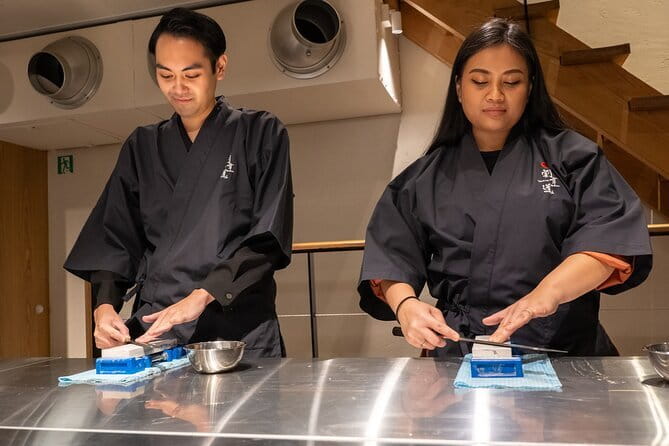
Once the sashimi work is underway, you learn to sharpen a Japanese knife with a whetstone. The timing is smart because the tuna needs time to marinate for the zuke-don. Instead of leaving you idle, the workshop uses that pause for one of the most useful skills in the program.
If you have never used a whetstone, you will receive help from the instructor. The process can feel intimidating at first, especially when you are trying to maintain the correct angle and pressure. The class gives you a chance to practice with guidance, which is far more useful than simply being told to buy a stone and watch a video later.
I consider this one of the strongest reasons to book. Many knife demonstrations focus on cutting and ignore maintenance. Here, you learn that a good knife stays useful only when it is treated properly.
Do not expect to leave as a sharpening expert after one session. You will gain a working introduction and a better sense of what the task involves. Continued practice at home will still be needed, particularly if you purchase a knife afterward.
Same corner of Tokyo, a completely different plan:
- Mt Fuji and Hakone 1-Day Bus Tour Return by Bullet Train
★ 5.0 · 26,383 reviews - 1-Day Tokyo Bus Tour
★ 5.0 · 14,250 reviews - Tokyo: TOKYO SKYTREE® Admission ticket
★ 4.5 · 11,192 reviews - Tokyo: teamLab Planets TOKYO Digital Art Museum Entry Ticket
★ 4.6 · 9,779 reviews
Making tuna zuke-don for a proper lunch
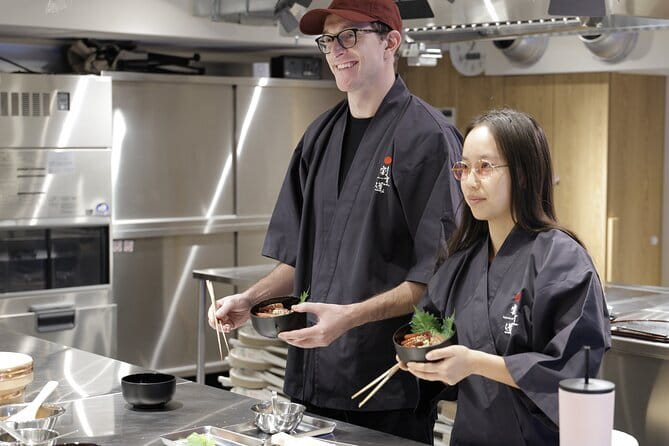
The cooking section centers on zuke-don, a Japanese rice bowl topped with marinated sashimi. Tuna is normally used, though the fish can change depending on availability. That small qualification is worth noting if you are booking with your heart set on a specific fish.
You prepare the bowl yourself after learning how the sashimi is cut and marinated. The meal includes the tuna bowl you make, plus miso soup. Because you have handled the fish and prepared the dish, lunch becomes part of the lesson rather than a separate restaurant stop.
The format also makes the two-hour schedule feel worthwhile. You are not paying only for an instructor’s demonstration. Your fee covers instruction, tool use, a cooking class, lunch, drinks, and a sake tasting.
A bowl of zuke-don may look simple, but the class helps you understand the work behind it. The knife cut affects the bite. The marinade adds flavor while the fish rests. The rice gives the dish its base. You get to see how a few careful steps can produce a polished Japanese meal.
Sake, tea, and the pleasure of eating what you made
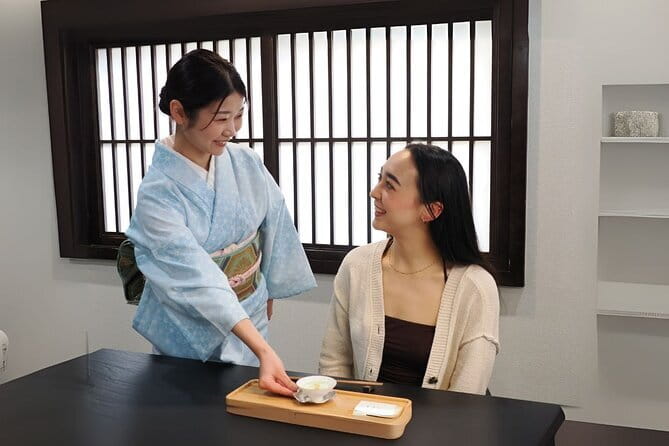
Original sake from Kappodo is included for tasting. Tea is also served, according to the experience details and participant feedback. This is a small part of the class, but it rounds out the meal and gives the workshop a social finish.
The sake tasting is not described as a full beverage lesson, so you should treat it as an included taste rather than a dedicated sake seminar. If you do not drink alcohol, the main value of the activity remains the knife lesson and cooking class, but the information does not specify a nonalcoholic substitute.
The meal is a welcome reward after the practical work. I like this structure because food provides a clear finish to the class. You learn a technique, use it to prepare lunch, and then sit down with the result.
You also receive a certificate of participation. It will not turn you into a professional chef, but it is a pleasant keepsake and a reminder of the skills you practiced in Tokyo.
Is $130.78 a fair price?
At $130.78 per person, this is not a budget cooking activity. The value depends on what you want from your Tokyo schedule.
The price includes all tools and aprons, a guide, the full instruction, the tuna bowl, miso soup, original sake tasting, tea, and the certificate. You also get a 10% discount on items at the first-floor shop on the day of your workshop. For someone already interested in buying a Japanese knife, that discount may reduce the effective cost.
The small group helps justify the fee. With a maximum of eight participants, the class has room for hands-on practice and questions. A larger demonstration could be cheaper, but it would likely offer less time with the knife.
I would book this if you are interested in Japanese food, cooking technique, or kitchen tools. I would skip it if you want a broad Tokyo sightseeing activity, a long meal, or a low-cost introductory class. This is a focused workshop, and its value comes from the instruction rather than from seeing many places.
The activity is usually booked 46 days ahead, so plan early if your Tokyo dates are fixed. Confirmation is provided at booking, and mobile tickets are supported. Public transportation is nearby, but private transportation is not included.
Who will get the most from this class?
This workshop suits adults and older children who are curious about Japanese cooking and comfortable following hands-on instruction. You do not need prior knife-sharpening experience. In fact, first-timers may get the most from the whetstone section because the instructor can correct basic mistakes early.
It is also a good match for someone shopping for a Japanese knife. You will learn about knife types, feel the edge in use, and receive a same-day shop discount. That combination can help you avoid buying a blade based only on appearance.
Food-focused visitors will appreciate the sashimi and zuke-don portions. The class gives you more than a tasting, but less than a full professional cooking course. You should expect a compact lesson with several connected skills.
English-speaking visitors can follow the class with Hiromi’s interpretation. The teaching team uses Japanese and English, and the atmosphere is intended to be welcoming to visitors from abroad.
Practical details before you book
Allow about two hours for the full activity. You start and finish at the Kappodo location in Nishiazabu, and the meeting point is close to public transportation. Since no private transfer is provided, plan your route before the start time.
Wear something suitable for a cooking class. Aprons are supplied, along with the tools used in the lesson. The information does not specify clothing rules, footwear requirements, or dietary substitutions, so contact the provider directly if those points matter to you.
The booking has free cancellation up to 24 hours before the local start time. Canceling or changing the reservation less than 24 hours ahead is not refundable. The activity also requires a minimum number of participants, and if that minimum is not reached, you will be offered another date or experience, or a full refund.
Should you book the Tokyo knife and sashimi workshop?
Book it if you want a focused, personal look at Japanese knife culture and a chance to practice real techniques. The strongest parts are the small group, repeated sashimi practice, patient instruction from Naoya and Hiromi, and the whetstone lesson that many cooking classes leave out.
The price is the chief hurdle. You are paying for a specialized class, not simply lunch. If you value the tools, instruction, sake tasting, certificate, and shop discount, the package is solid. If you only want to eat a tuna bowl, spend that money at a restaurant instead.
For cooks, food lovers, and anyone thinking about bringing a Japanese knife home, I would book ahead. The workshop gives you useful skills, a meal you helped prepare, and a better understanding of why Japanese knives demand careful handling.
FAQ
How long does the Japanese knife and sashimi workshop last?
The experience lasts approximately two hours.
Where does the workshop begin?
It begins at Kappodo H.Q., also called Tokyo D Kitchen Studio, at 2-chome 21-12, DK Building, Nishiazabu, Minato City, Tokyo 106-0031.
Where does the activity end?
The workshop ends back at the meeting point.
How many people can join the class?
The activity has a maximum of eight participants.
Is lunch included?
Yes. You make a zuke-don bowl topped with marinated sashimi, and miso soup is included.
Is sake included?
Yes. Participants can taste Kappodo’s original sake. Tea is also served.
Do I need experience sharpening knives?
No prior experience is stated as a requirement. The instructor helps participants learn how to sharpen a Japanese knife with a whetstone, including first-time users.
Are tools and aprons provided?
Yes. All tools and aprons used during the lessons are included.
Can I cancel for a full refund?
Yes, if you cancel at least 24 hours before the experience start time. Cancellations or changes made less than 24 hours in advance are not refundable.
New on our Tokyo list
- From Tokyo: Mount Fuji & Hakone Full Day Private Tour★ 4.9 · 25 reviews
- Tokyo Spectacular View Day-Cruise in 90 Minutes★ 5.0 · 25 reviews
- Real Tokyo Runner Club : Daikoku Car Meet Night Tour with JDM Car★ 5.0 · 25 reviews
- 2.5 Hour-Guided Cycle Tour in the Central Tokyo★ 5.0 · 25 reviews
- Ramen Making from Scratch +Akihabara Tour –Cooking Class★ 5.0 · 25 reviews
- [Self-Drive] Tokyo & Daikoku Custom Car Driving Tour★ 4.9 · 25 reviews
- Tokyo: 2-Hour Night Bike Tour of the City’s Hidden Gems★ 4.9 · 25 reviews
- Samurai themed Entertainment show in Shinjuku★ 4.5 · 25 reviews
Workshops, compared.
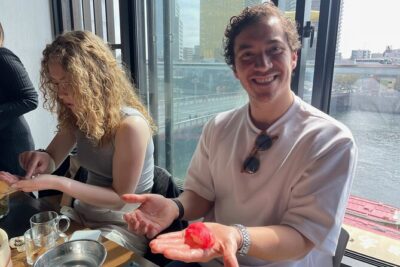
Sushi Making Tokyo Roll and Authentic Japanese Sushi Class
Read our review →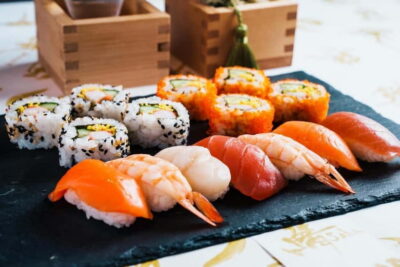
Roll and Authentic Sushi Making Class in Asakusa
Read our review →
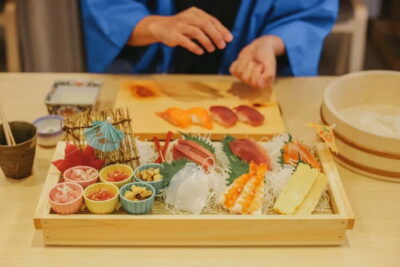
Sushi Making Class in a Happi Coat near a Famous Spot
Read our review →
Tokyo Sushi Making Class in Tsukiji with Professional Chef
Read our review →
Ramen & Gyoza Cooking Class in Tokyo with Local Supermarket Visit
Read our review →
Matcha Making Class in Tokyo with Authentic Japanese Sweets Set
Read our review →Browse the lists this tour appears in