
Reviewed · WORKSHOPS
Tokyo: Knife Making Workshop (Sharpening, Engraving)
A Japanese knife workshop turns a useful kitchen tool into a personal Tokyo souvenir. At BUB Activity Center in Asakusa, you’ll sharpen a blade by hand, attach the handle with a traditional hammer, and engrave your name in Japanese. The process is tactile, focused, and more satisfying than simply buying a knife in a shop.
I like the patient English-speaking instruction, especially when the guides correct your sharpening angle without taking over. I also like the choice of up to five knife types, plus the chance to learn enough about Japanese kitchen knives to make a smarter purchase later in Tokyo’s Kappabashi kitchen district.
The main consideration is that this is hands-on work, not a quick demonstration. Sharpening takes concentration and some effort, and larger knife styles cost extra. The standard knife is the practical choice, but the handle quality and engraving finish may feel more basic than the price suggests.
In This Review
- Key points to know before booking
- What happens at the Asakusa knife workshop
- Choosing between five Japanese knife styles
- Sharpening the blade, slowly and by hand
- Engraving your name and attaching the handle
- Tea, snacks, and the human side of the class
- Is $161 a fair price?
- Packing and getting your knife home
- Who will enjoy this 90-minute activity?
- My call: book it if you want a souvenir with a story
- FAQ
- Where does the knife-making workshop take place?
- How long does the activity last?
- Do I need previous knife-sharpening experience?
- What knife is included in the price?
- Can a friend or family member watch without making a knife?
- How should I take the finished knife on my flight?
Key points to know before booking
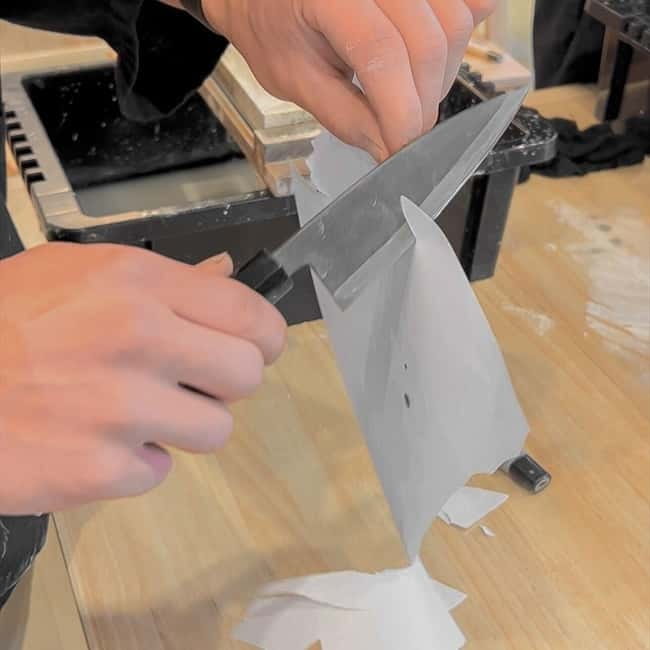
- You make a real working souvenir: Sharpen the blade, attach the handle, and take home a customized kitchen knife.
- Five knife styles may be available: The standard multitasking knife is included, while usuba, deba, and petit yanagiba styles require an additional fee.
- The sharpening is the heart of the workshop: You work slowly with guidance, building a useful skill rather than watching a staged show.
- Your name is engraved in Japanese: Staff provide a badge with your name in Japanese letters and help with the handle engraving.
- The mood is friendly and relaxed: Tea, juice, snacks, jokes, and clear English keep the workshop approachable for beginners.
- Plan your flight luggage carefully: Put the knife box in checked luggage or ask the staff about shipping it.
What happens at the Asakusa knife workshop
The workshop takes place at BUB Activity Center, at 2 Chome 6-11 in Asakusa’s Heiwa Building. Take the elevator to the fifth floor. The activity is in a central part of Tokyo and is easy to reach by public transport, though the building entrance may not look like a traditional crafts studio. If you have trouble finding it, contact the provider rather than wandering around the block.
At the start, you put on a light haori, a short Japanese kimono-style jacket supplied by the staff. It protects your clothes from stains and sets the tone for the session without requiring you to dress up. You also receive a small badge with your name written in Japanese letters. That name becomes useful later when you personalize the knife handle.
You then sit down with tea, juice, or another soft drink while the instructor explains the background of Japanese knives and swords. The opening talk gives you a reason for the techniques you are about to practice. You’ll hear about the differences between Japanese katanas and Western swords, along with the role of different kitchen knives.
This introduction is brief, but it helps you choose a blade with some purpose. If you know little about Japanese knives, it prevents you from selecting a shape simply because it looks dramatic. If you already cook, you can ask which style makes sense for the kind of food you prepare.
A few more Tokyo bookings worth comparing
- Sushi Making Tokyo Roll and Authentic Japanese Sushi Class
★ 5.0 · 3,971 reviews - Tokyo: Roll and Authentic Sushi Making Class in Asakusa
★ 4.9 · 1,957 reviews - Tokyo Shinjuku Chopsticks Making Class
★ 5.0 · 1,763 reviews
Choosing between five Japanese knife styles
The included option is a standard-size, multitasking knife. It is the safest pick if you want a useful tool for everyday cooking and do not want to pay more than the advertised $161 price.
Depending on availability, you can choose from as many as five knife types. Larger or more specialized options cost extra. The named upgrade choices include:
- Usuba
- Deba
- Petit yanagiba
The activity information does not specify every available model or the exact surcharge for each one, so ask about the current choices before you commit. This is one of the few points where the advertised price does not tell the whole story.
An upgrade can make sense if you already know what you want. A deba, for example, has a more specialized purpose than a general kitchen knife, while an usuba or petit yanagiba may appeal to someone interested in Japanese culinary technique. If you simply want a handsome, usable reminder of Tokyo, the included standard knife keeps the cost under control.
The choice also adds a small lesson in Japanese food culture. You are not only picking a blade size. You are learning that knife shapes reflect particular tasks, ingredients, and cutting methods. That context gives the souvenir more meaning than a mass-produced item from a tourist shop.
Sharpening the blade, slowly and by hand
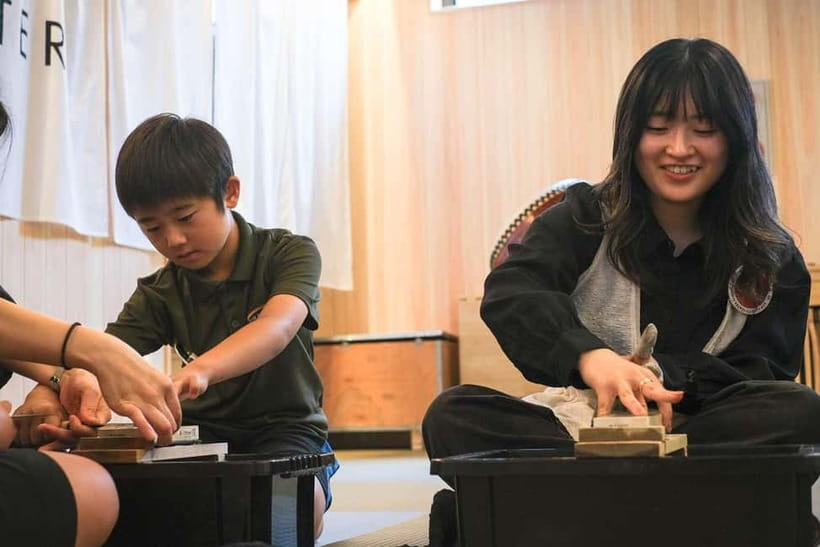
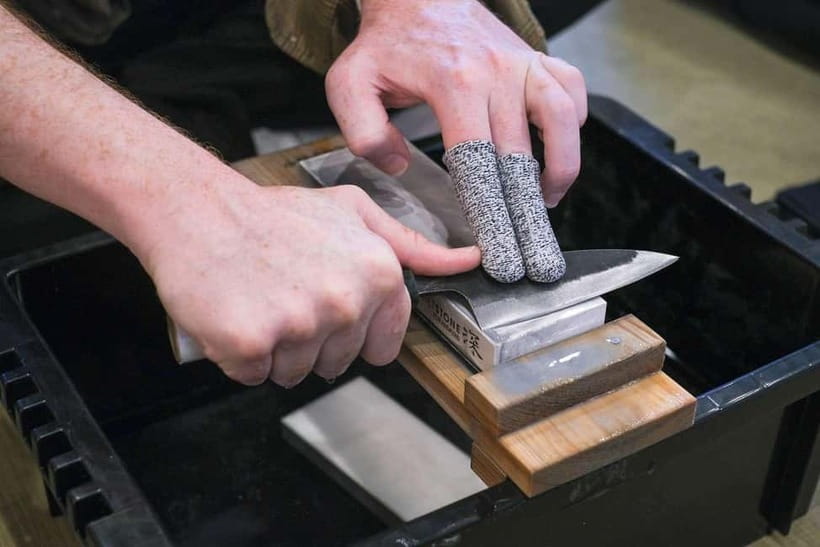
Once you choose your knife, the main work begins. You sharpen the blade yourself, following the instructor’s movement and pressure. This is not a polished performance where you watch an artisan do everything while you pose for photos. Your hands do the work.
The motion is repetitive and requires attention. You need to keep your movements controlled while the English-speaking staff watch and offer corrections. The guides are especially helpful here. Mori and Agata have been praised for clear English and lively instruction, while Lisa and Joe are also named as especially helpful teachers.
The workshop suits beginners because you do not need prior sharpening experience. Still, do not expect to produce a perfect edge immediately. Several people found the work harder than expected, and that is part of the value. You feel the difference between careless movement and a steady technique.
I like this section because it gives you a skill you can use after the trip. The lesson is not only about a souvenir. You leave with a better sense of how to care for a Japanese kitchen knife, and you can apply the basic idea to other blades at home.
The pace can feel meditative, but it is not passive. You need concentration, and your arms and hands may get tired. If you arrive hoping for a fast craft activity with little effort, this may seem demanding. If you enjoy practical work, the slow pace is one of the best parts.
The staff continue checking your progress and help finish the knife if you have to leave early for another appointment. I would still avoid scheduling a tight connection immediately afterward. The official duration is about 90 minutes, but some sessions have run longer when the staff were helping participants complete their work.
Engraving your name and attaching the handle
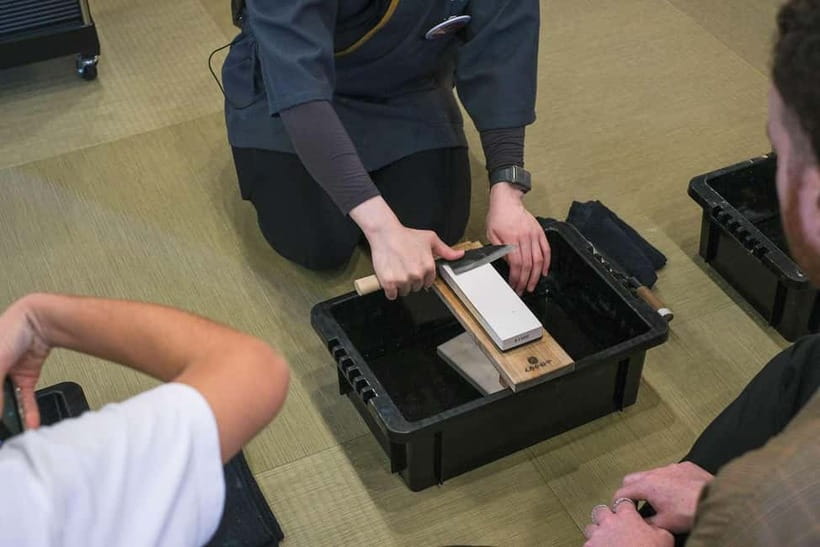
After sharpening, you personalize the handle. The badge you received at the beginning gives you your name in Japanese letters, and staff can help you understand the basics if you want to know what you are writing.
You can engrave your name, a picture, or another simple design. The engraving is done by hand, so do not expect a factory-perfect result. The handmade quality is the point, but it also means your lines may be uneven. One useful detail is that the engraving method and handle finish may feel fairly basic. If you care most about a refined presentation piece, ask the staff what options are available before starting.
The handle is attached with a traditional hammer. Hearing and feeling the force of the work gives this stage a satisfying finish. You are not simply collecting a knife with your name printed on it. You have sharpened the blade, marked the handle, and helped assemble the finished object.
For families, this part gives younger participants a clear task after the more repetitive sharpening section. A 10-year-old has enjoyed the workshop with a parent, and the instructors keep checking in and making the activity fun. Adult supervision is still sensible around any sharp blade and hammer.
Same corner of Tokyo, a completely different plan:
- Mt Fuji and Hakone 1-Day Bus Tour Return by Bullet Train
★ 5.0 · 26,383 reviews - 1-Day Tokyo Bus Tour
★ 5.0 · 14,250 reviews - Tokyo: TOKYO SKYTREE® Admission ticket
★ 4.5 · 11,192 reviews - Tokyo: teamLab Planets TOKYO Digital Art Museum Entry Ticket
★ 4.6 · 9,779 reviews
Tea, snacks, and the human side of the class
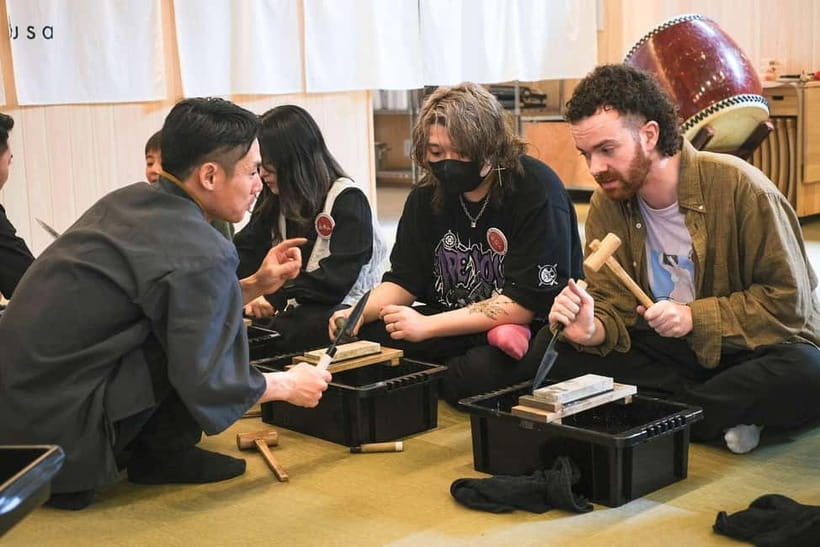
The drinks and snacks are modest, but they matter. Tea, juice, and Japanese treats create pauses between the technical steps and make the room feel social rather than formal.
The staff are a major part of the experience. Mori, Agata, Lisa, and Joe are among the guides praised for their energy, patience, humor, and fluent English. The bilingual team adjusts explanations to your level, so you can ask basic questions without feeling lost.
That language support is important for a workshop based on hand position and movement. A vague explanation can leave you guessing, but the instructors demonstrate, watch your technique, and correct you politely. You also get a chance to chat with Japanese staff about knives, swords, and everyday culture.
The class is friendly rather than solemn. You should expect conversation and jokes along with the instruction. That makes it a good choice if you want contact with local people but do not speak much Japanese.
Is $161 a fair price?
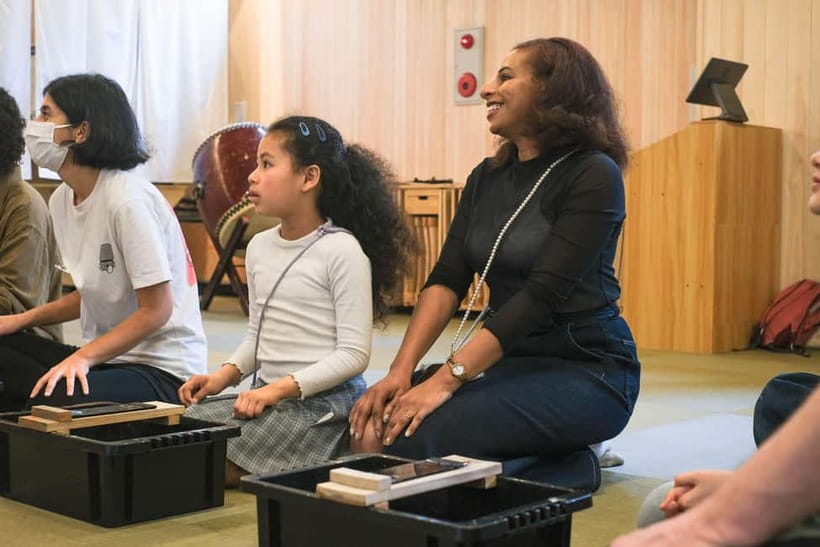
At $161 per person, this is not a budget activity. The price includes a standard multitasking knife, the instruction, drinks and snacks, aesthetic packaging, and a customized key holder with a unique design.
The value depends on what you want from a souvenir. If your goal is simply to buy a Japanese kitchen knife, you can likely compare more products in Tokyo’s kitchen district without paying for a 90-minute class. The workshop makes more sense if you value the lesson, the personal engraving, and the memory of making the item yourself.
The included knife keeps the base price clear, but upgrades add to the total. Usuba, deba, and petit yanagiba knives cost extra, and the exact amounts are not provided here. Ask before selecting a larger blade so you are not surprised at the end.
For two people who want to share the activity but do not need two knives, an observation ticket may help. One person can participate while the other watches, though the observer fee is paid on site. Confirm the current fee when booking or contacting the provider.
The complimentary key holder is a nice extra, but it should not be the reason you book. The real value is the practical instruction and the customized knife. If you are interested in cooking, Japanese craft, or hands-on activities, the price is easier to justify.
Packing and getting your knife home
The finished knife comes in aesthetic packaging, which makes it ready to carry as a souvenir. The important travel detail is your flight luggage. Put the knife box in checked baggage, or ask the staff to ship it.
Do not plan to carry it through airport security in your hand luggage. This is easy to overlook after a pleasant workshop, especially if you continue sightseeing in Asakusa. If you are flying soon, confirm your shipping or luggage plan before leaving the center.
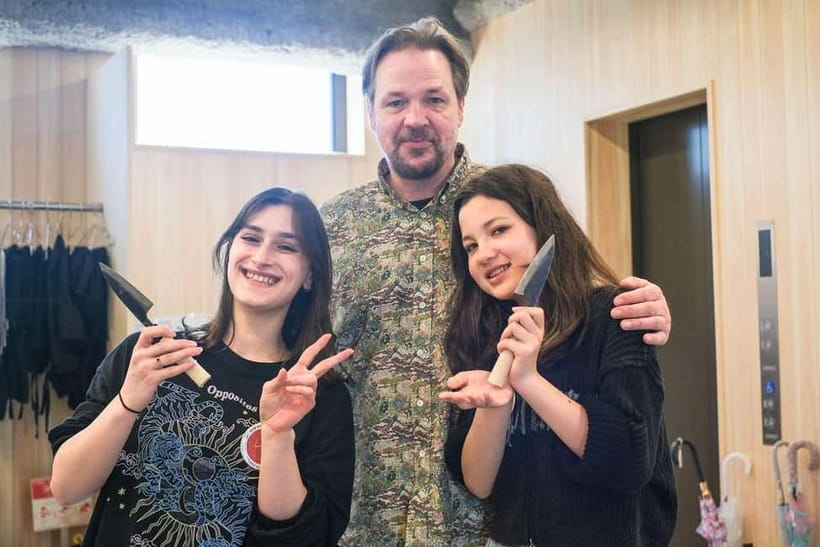
The knife is a practical object, but it is also a personal craft piece. Some people may want to use it in the kitchen, while others may display it in a shadow box. Your engraving and sharpening work give it a story that a shop-bought knife does not have.
Who will enjoy this 90-minute activity?
I would recommend the workshop to you if you:
- Like cooking or want to learn basic knife care
- Prefer making a souvenir to buying one
- Enjoy patient, hands-on work
- Want a cultural activity with English instruction
- Are interested in Japanese knives, swords, or craft traditions
- Are visiting Asakusa and want an indoor activity
It also works well for couples and families. An observer option is useful when two people want to share the occasion but only one needs a knife. Children can enjoy the tactile work, but adults should judge the child’s comfort with sharpening tools and a hammer.
This is less suitable if you want a short photo stop, a quiet lecture, or a fully finished premium knife. You will spend much of the session doing repetitive work, and the final engraving may look homemade. That is not a flaw for everyone, but you should know what you are paying for.
The activity is wheelchair accessible, and the center is reached by elevator to the fifth floor. Alcohol and drugs are not allowed. Free cancellation is available up to 24 hours before the activity, and you can reserve now and pay later, which helps if your Tokyo schedule is still changing.
My call: book it if you want a souvenir with a story
I would book this workshop if you want to bring home something you made rather than something you merely purchased. The combination of Japanese knife and sword background, careful sharpening, name engraving, and friendly English instruction gives the 90 minutes a clear purpose.
Choose the standard knife if you want to keep the cost predictable. Upgrade only when you understand the shape and plan to use it. Most of all, leave enough time in your schedule, wear clothes you do not mind protecting with the provided haori, and arrange checked luggage or shipping before you travel onward.
For cooks and craft-minded visitors, this is one of the more useful souvenirs you can make in Tokyo. For shoppers seeking the widest knife selection, visit the kitchen district separately. The workshop is best when you want the skill, the conversation, and the memory attached to the blade.
FAQ
Where does the knife-making workshop take place?
It takes place at BUB Activity Center in the Heiwa Building at 2 Chome 6-11, Asakusa, Tokyo. Take the elevator to the fifth floor.
How long does the activity last?
The workshop lasts approximately 90 minutes, or about 1.5 hours. Some sessions may take longer if extra help is needed to finish the knife.
Do I need previous knife-sharpening experience?
No. The activity is suitable for beginners, and English-speaking staff demonstrate the process, watch your movements, and offer corrections.
What knife is included in the price?
The $161 price includes a standard-size multitasking knife to sharpen, customize, and take home. Usuba, deba, and petit yanagiba knives require an additional fee.
Can a friend or family member watch without making a knife?
Yes. An observer option is available, but the observer fee is paid on site. Ask the provider about the current fee.
How should I take the finished knife on my flight?
Put the knife box in your checked luggage, or ask the staff about shipping it. Do not plan to carry the knife through airport security in hand luggage.
New on our Tokyo list
- From Tokyo: Mount Fuji & Hakone Full Day Private Tour★ 4.9 · 25 reviews
- Tokyo Spectacular View Day-Cruise in 90 Minutes★ 5.0 · 25 reviews
- Real Tokyo Runner Club : Daikoku Car Meet Night Tour with JDM Car★ 5.0 · 25 reviews
- 2.5 Hour-Guided Cycle Tour in the Central Tokyo★ 5.0 · 25 reviews
- Ramen Making from Scratch +Akihabara Tour –Cooking Class★ 5.0 · 25 reviews
- [Self-Drive] Tokyo & Daikoku Custom Car Driving Tour★ 4.9 · 25 reviews
- Tokyo: 2-Hour Night Bike Tour of the City’s Hidden Gems★ 4.9 · 25 reviews
- Samurai themed Entertainment show in Shinjuku★ 4.5 · 25 reviews
Workshops, compared.
Sushi Making Tokyo Roll and Authentic Japanese Sushi Class
Read our review →
Roll and Authentic Sushi Making Class in Asakusa
Read our review →
Sushi Making Class in a Happi Coat near a Famous Spot
Read our review →
Tokyo Sushi Making Class in Tsukiji with Professional Chef
Read our review →
Ramen & Gyoza Cooking Class in Tokyo with Local Supermarket Visit
Read our review →
Matcha Making Class in Tokyo with Authentic Japanese Sweets Set
Read our review →Browse the lists this tour appears in