
Reviewed · WORKSHOPS
Tokyo: Making a Lantern Workshop in Asakusa with a Craftsman
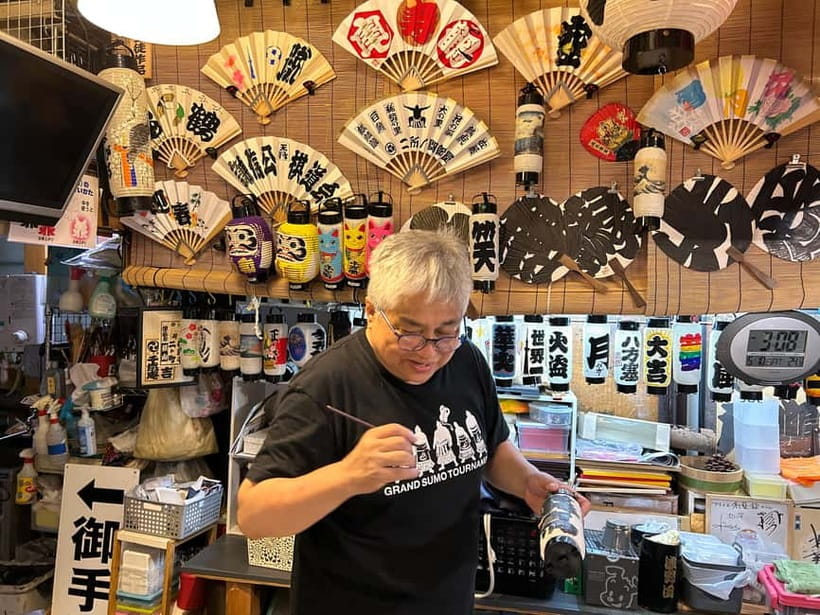
The best part of this two-hour workshop is that you do not just look at a Japanese craft behind glass. You sit down with washi paper, bamboo, glue, and brushes and make a chochin lantern of your own in a traditional atelier that has been operating for more than a century. Colorful lanterns fill the room, so even the setting becomes part of the lesson.
I like the personal scale and the useful souvenir. Guides such as Rinka and Noriko help with English, while the craftsmen explain the work and assist with the decoration. The main consideration is the price: at $96 per person, this is not a cheap craft class. You are paying for expert instruction, materials, interpretation, and a handmade object you can carry home.
In This Review
- Key points
- Inside a traditional chochin atelier near Tokyo Skytree
- Your two hours, from craft lesson to finished lantern
- What makes the craftsman-led format worthwhile
- A creative stop for families, couples, and solo visitors
- The $96 price: fair for a hands-on Tokyo souvenir?
- Planning around Skytree and the sumo tournament dates
- What to wear and what to bring home
- Who should book this workshop?
- Final call: book it for the process, not just the souvenir
- FAQ
- How long does the Tokyo lantern workshop last?
- What age is the workshop suitable for?
- What materials are included?
- Is English available during the class?
- Where does the workshop take place?
- What should I bring?
Key points
- Make a real chochin lantern: Use traditional bamboo and washi paper rather than assembling a generic tourist craft.
- Learn inside a century-old atelier: The workshop gives you a close look at a family craft business near Tokyo Skytree.
- English help is available: Guides including Rinka, Noriko, and David Park have helped participants communicate with the Japanese artisans.
- Plan enough time for decoration: Calligraphy and hand-painted details can take much of the two-hour session.
- Take home a practical keepsake: Finished lanterns are packaged for the journey, and professionally made lanterns may also be available to buy.
- Check the venue carefully: The workshop moves to the Ryogoku Kokugikan area during the January, May, and September 2026 sumo tournaments.
Inside a traditional chochin atelier near Tokyo Skytree
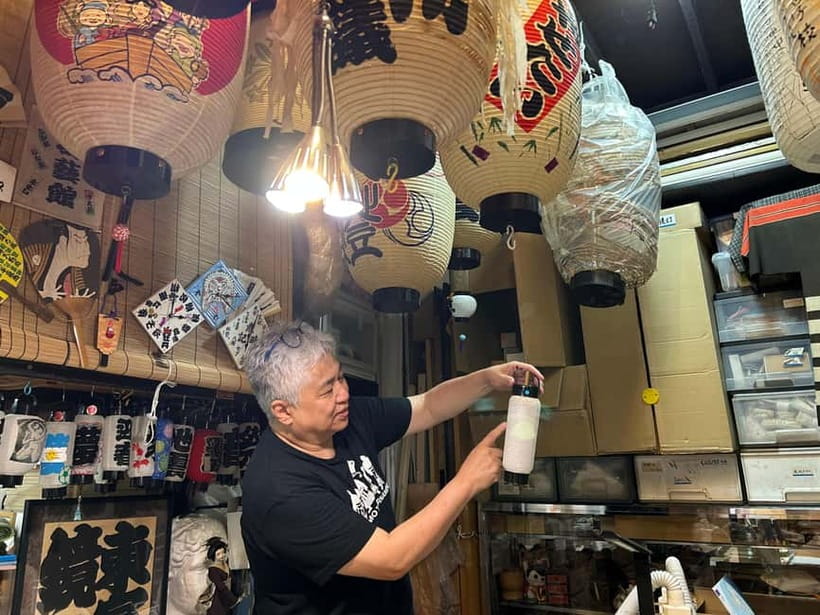
A chochin is a Japanese paper lantern made with a lightweight bamboo frame and paper covering. It is a familiar sight at temples, festivals, restaurants, and neighborhood events, but the finished object can look deceptively simple. The workshop shows you how much careful work goes into it.
The regular venue is at 2-10-8 Yokokawa in Sumida City, on the Tokyo Skytree side of the city. It is described as a traditional workshop and family business, not a polished museum display. That distinction matters. You are visiting a working craft space, where lanterns hang around you and the tools and materials have a practical purpose.
The room itself helps set the tone. The walls and ceiling are filled with lanterns in different shapes and colors, making it a natural place for photographs. You can take pictures during the activity, though your main focus will be on keeping paper, glue, paint, and your own design under control.
The atmosphere is personal rather than grand. The master craftsman, referred to as Master Oyakata, works with assistants and interpreters to explain the process. That makes this a good choice if you want a local cultural activity that gives you direct contact with a small traditional business.
More Asakusa visits:
- Tokyo: Japanese Dance Cabaret Theater Asakusa-Kaguwa Ticket
★ 4.8 · 2,270 reviews - Tokyo: Meiji Shrine, Asakusa, Skytree Bus Tour and Cruise
★ 4.7 · 1,986 reviews - Tokyo: Roll and Authentic Sushi Making Class in Asakusa
★ 4.9 · 1,957 reviews
Your two hours, from craft lesson to finished lantern
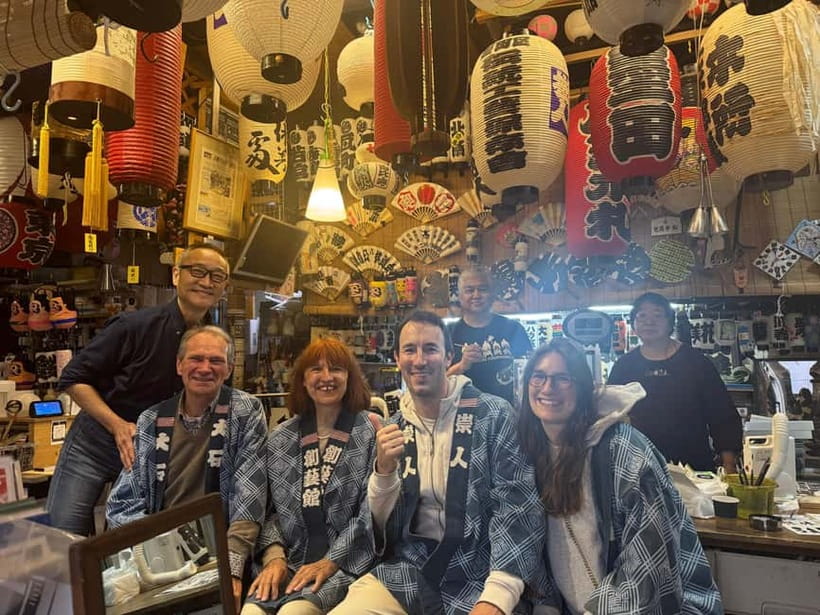
The experience begins with an introduction to chochin lanterns, including their origins and place in Japanese culture. The English-speaking guide or interpreter helps explain the details, and the craftsman demonstrates how the materials fit together.
You then work with authentic materials, including bamboo and washi paper. The workshop is suitable for beginners, so you do not need artistic training or previous experience. Children aged six and older can join, although younger children may need close help with careful gluing and painting.
The lantern-making process is hands-on, but it is not a race. The bamboo gives the lantern its shape, while the washi paper forms the outer surface. You may use brushes, glue, ink, or paint as you build and decorate your piece. Since the work can involve ink and paint, wear clothes that can survive a stray mark.
The decoration is where your lantern becomes personal. Calligraphy or hand-painted work can take longer than expected, especially if you want neat lettering or a careful design. A two-hour session is useful here. It gives you time to listen, work slowly, ask for help, and finish the details without turning the activity into a rushed photo stop.
The artisans and guides assist throughout the process. A participant who arrived early was accommodated without trouble, and solo participants have found the setting easy to join without feeling awkward. That is useful to know if you are visiting Tokyo alone or booking this as a quiet break after a full day of sightseeing.
At the end, you take your completed lantern home. Finished pieces can be packaged carefully for the trip, which is important because washi paper is light but not indestructible. You may also have the option to buy a professionally made lantern on-site if you want a more polished piece or a gift.
What makes the craftsman-led format worthwhile
A craft class can be satisfying even when the finished product is modest. Here, the stronger value is understanding the labor behind an everyday Japanese object.
You get to see how the bamboo frame and paper covering work together, then try part of the process yourself. That changes the way you look at lanterns later in your trip. A lantern outside a restaurant or at a festival is no longer just decoration. You have handled the materials and learned how much patience goes into the small details.
The direct instruction also helps. Master Oyakata and the other artisans are not simply giving you a kit and pointing to a table. They show the process and offer tips while you work. Reports from the class repeatedly praise the kindness and patience of the craftspeople, along with the warm help provided by the interpreters.
The language support is an important part of the experience. Rinka has helped participants with the class as well as Tokyo suggestions. Noriko has been praised for helping communicate with the master and explaining the activity. David Park has also interpreted for participants working with Master Oyakata and co-master Uehala.
The exact guide may depend on the date, so you should not book expecting one particular interpreter. The key point is that English support is included, with Japanese and English listed as the available languages.
A creative stop for families, couples, and solo visitors
This workshop has a broad appeal because the activity is active without being physically demanding. Families can work side by side, couples can create matching or contrasting designs, and solo visitors can focus on the craft while still having conversation with the guide and artisans.
Children must be at least six years old. The work is simple enough for beginners, but it still involves materials that require care. If you are bringing a young child, expect to provide some help with glue, brushes, and paper rather than treating the session as fully hands-off childcare.
I see this as a particularly good choice for a child who enjoys making things more than visiting another museum. The colorful workshop and the promise of taking home a real lantern give the lesson a clear purpose. It also offers a calmer change of pace after busy streets and crowded sightseeing areas.
Couples may appreciate the shared project. Instead of buying the same souvenir from a shop, you can create something connected to your time in Tokyo. Solo visitors should feel comfortable here as well. The class has enough structure to keep you occupied, and the guides can help with conversation and communication.
The experience is also a good fit for creative adults who do not think of themselves as artists. The instructions are designed for beginners, and the value comes from trying the process, not producing a perfect museum-quality lantern.
A few more Tokyo bookings worth comparing
- Sushi Making Tokyo Roll and Authentic Japanese Sushi Class
★ 5.0 · 3,971 reviews - Tokyo Shinjuku Chopsticks Making Class
★ 5.0 · 1,763 reviews - Tokyo: Sushi Making Class in a Happi Coat near a Famous Spot
★ 4.9 · 1,377 reviews - Chopstick Making Workshop in Ginza
★ 4.8 · 1,366 reviews
The $96 price: fair for a hands-on Tokyo souvenir?
At $96 per person, this workshop sits firmly in the special-experience category. You are not paying only for two hours of entertainment. The fee includes the guided class, all materials, English interpretation, and the lantern you make.
That package makes the price easier to understand. Bamboo, washi paper, tools, paints, and workshop space all have a cost. You also receive instruction from a traditional artisan rather than following a mass-produced craft kit. The finished lantern is a souvenir with a story, and it may have more meaning than a standard Tokyo trinket.
Still, I would not recommend it to someone mainly seeking the cheapest activity near Skytree. You could see lanterns elsewhere for free or buy a simple souvenir for much less. This class makes sense when you want time with a craft, personal instruction, and an object you helped create.
The class can also be good value for a family or pair that wants one focused cultural activity rather than several short attractions. Two hours is long enough to feel substantial, but short enough to fit around other plans in eastern Tokyo.
The consistently perfect rating shown for the activity reflects several themes: friendly staff, clear instruction, a pleasant family-business atmosphere, and lanterns that are carefully packaged for the journey home. You should still set your expectations correctly. Your finished work is handmade by a beginner, not by the master, and the pleasure comes from the making as much as the appearance.
Planning around Skytree and the sumo tournament dates
The regular workshop location is in Sumida City near Tokyo Skytree and Oshiage Station. The exact transport instructions are not included here, so allow time to find the address and arrive prepared. Transportation to and from the venue is not included in the price.
There is an important date issue for 2026. During the official Grand Sumo Tournament periods, the class moves to the Ryogoku Kokugikan area:
- January 11 to 25, 2026
- May 10 to 24, 2026
- September 13 to 27, 2026
During those dates, the special venue is listed at 1-3-20 Yokoami, Sumida City, at Ryogoku Kokugikan on the first floor. Outside those periods, the regular venue is 2-10-8 Yokokawa, Sumida City.
This is not a minor detail. Ryogoku and the Skytree area are both in eastern Tokyo, but they are different neighborhoods and offer different surroundings. Check the location attached to your booking date before setting out, especially if you are combining the workshop with Skytree, Asakusa, or a sumo-related plan.
The special venue may also feel different from the regular atelier. The workshop description specifically notes that the atmosphere and setting can change during tournament periods. You will still be attending the lantern activity, but you should not assume you will see the same family workshop environment.
Bring your passport or another ID card. Pets, alcohol, and drugs are not allowed. The activity is listed as wheelchair accessible, but you should still confirm the meeting details when booking if you have specific mobility needs.
What to wear and what to bring home
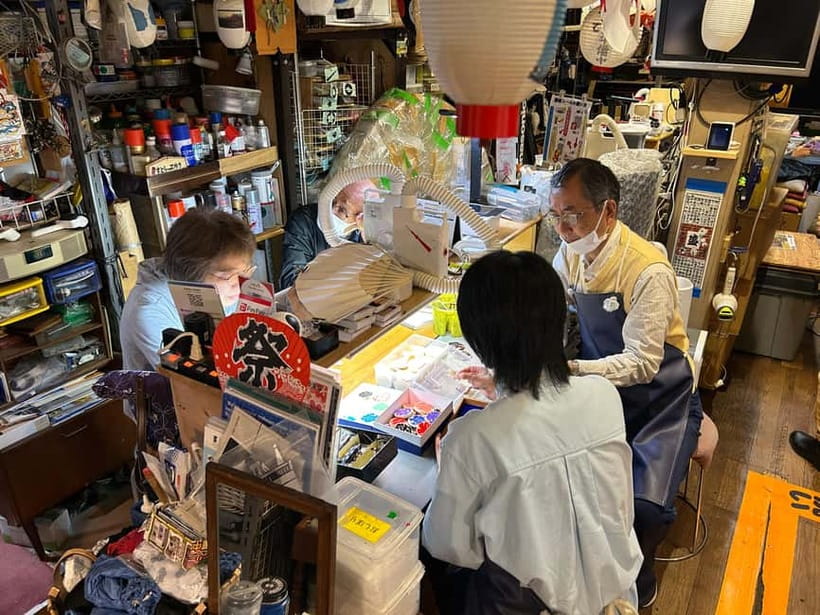
You need very little equipment because the materials are supplied. Bring your passport or ID, and wear clothes you do not mind getting stained. Ink and paint may be part of the decorating stage, and traditional paper is not the place to test your most delicate outfit.
Think about how you will transport the lantern before you book. The finished pieces can be packaged for the journey, but you will still need room in your luggage or a way to carry the package safely. Avoid packing it under heavy clothing or books.
The option to buy a professionally made lantern is useful if you want a gift or a more refined display piece. It is an additional personal expense, not part of the stated price. You can decide after seeing the workmanship up close, which is better than choosing from a shop shelf without understanding how the lantern was made.
Photography is welcome, and the room offers plenty to photograph. Take a few pictures of the surrounding lanterns and the making process, but keep your hands free when you are working with paper and paint. The best record of the activity will be the finished lantern itself.
Who should book this workshop?
I would put this high on the list for:
- Families with children aged six or older who enjoy hands-on activities
- Solo visitors looking for a friendly, structured cultural experience
- Couples who want to make a shared souvenir
- Art and design fans interested in Japanese materials and traditional tools
- Repeat visitors who have already seen the major Tokyo sights
- Anyone who prefers a meaningful object over a standard souvenir
I would think twice if you have a tight schedule, dislike crafts, or want a cheap activity. The class requires two hours plus transport, and the $96 price is hard to justify if you will not value the making process.
It is also not the best choice for children under six, who cannot join. If your group includes mixed ages, check the age rule before booking so nobody is disappointed.
Final call: book it for the process, not just the souvenir
Book this workshop if you want to slow down, meet a traditional artisan, and learn why a simple Japanese lantern takes skill to make. The strongest parts are the close setting, the patient instruction, the English help, and the chance to carry home something you made yourself.
The price is high for a two-hour activity, but the fee includes materials, guidance, interpretation, and a finished lantern. I would choose it over a generic souvenir hunt if you have room in your Tokyo budget and enjoy creative work.
Check the meeting point carefully, wear practical clothes, and leave enough luggage space for the finished piece. If those details suit your plans, this is a thoughtful eastern Tokyo experience with a real connection to Japanese craft.
FAQ
How long does the Tokyo lantern workshop last?
The workshop lasts two hours.
What age is the workshop suitable for?
The activity is suitable for participants aged six and older. Children under six cannot join.
What materials are included?
The workshop includes bamboo, washi paper, glue, and brushes, along with the other materials needed for the activity.
Is English available during the class?
Yes. English-speaking guide or interpreter support is included. The listed languages are Japanese and English.
Where does the workshop take place?
Outside the 2026 Grand Sumo Tournament periods, the regular venue is 2-10-8 Yokokawa, Sumida City, Tokyo. During the January 11 to 25, May 10 to 24, and September 13 to 27 tournaments, the workshop moves to Ryogoku Kokugikan at 1-3-20 Yokoami, Sumida City.
What should I bring?
Bring your passport or another ID card. Wear clothes you do not mind getting stained because the workshop may involve ink or paint. All lantern-making materials are provided.
New on our Tokyo list
- Sumi-e Experience in a relaxing green tea shop in Tokyo★ 5.0 · 3 reviews
- Tokyo : Kamikaze Street Drift Ride★ 5.0 · 3 reviews
- Private Zen Meditation in English in Shinjuku, Tokyo★ 5.0 · 3 reviews
- Easy for everyone! Now you can play handmade mini shamisen and show off to everyone! Musical instruments, sweets and live music★ 5.0 · 3 reviews
- Onsen Spa in Tokyo and Asakusa Bar Hopping with Local Guide★ 5.0 · 3 reviews
- Tokyo: Private Tsukiji Street Food & Sake with Local Guide★ 5.0 · 3 reviews
- Mt Fuji Exploration Tour with Free Japanese Kusa Mochi from Tokyo★ 4.5 · 3 reviews
- Tokyo Tsukiji Fish Market Walking and Exploring Hidden Gems Tour★ 5.0 · 3 reviews
Workshops, compared.
Sushi Making Tokyo Roll and Authentic Japanese Sushi Class
Read our review →
Roll and Authentic Sushi Making Class in Asakusa
Read our review →
Sushi Making Class in a Happi Coat near a Famous Spot
Read our review →
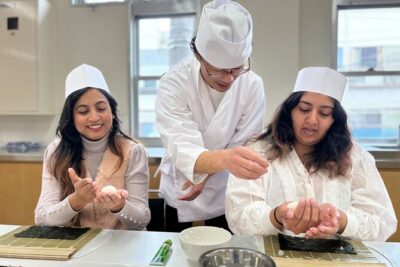
Tokyo Sushi Making Class in Tsukiji with Professional Chef
Read our review →
Ramen & Gyoza Cooking Class in Tokyo with Local Supermarket Visit
Read our review →
Matcha Making Class in Tokyo with Authentic Japanese Sweets Set
Read our review →Browse the lists this tour appears in