
Reviewed · JAPANESE CULTURE WORKSHOPS
Tokyo: Origami Fun for Families & Beginners in Asakusa
Asakusa gives you temples, shopping streets, and plenty of people-watching. This origami session offers a quieter change of pace: you sit down, choose a bright sheet of paper, and turn it into a crane, flower, animal, or vehicle in about 45 minutes. The tablet-guided format lets you work at your own level, while staff can step in when your fingers and the instructions stop agreeing.
I like the huge model choice, with more than 100 designs and 50 paper colors, and I like the small groups, limited to six people. A staff member once made a rose for a child, and instructor David gave one participant a personal lesson, but this is not a teacher-led class. The main drawback is the short session: if you are enjoying yourself, 45 minutes can pass quickly.
In This Review
- Key points for your 45 minutes
- A calm creative break in Asakusa
- Finding Taro’s Origami Studio in Asakusa
- How the tablet-guided session works
- What the staff support is really like
- How much can you make in 45 minutes?
- Choosing models, colors, and decorations
- Is $27 a fair price?
- Who will enjoy this most?
- Fitting origami into an Asakusa day
- Should you book this origami session?
- FAQ
- How long does the origami activity last?
- How much does the activity cost?
- How many people can join the group?
- Is the activity suitable for beginners?
- How many origami models can I choose from?
- How many paper colors are available?
- Are instructions available in English?
- Is this a private teacher-led lesson?
- What should I bring?
- Is the studio wheelchair accessible?
Key points for your 45 minutes
- Choose from over 100 models, including animals, flowers, and vehicles.
- Pick from 50 paper colors, then add stickers, stamps, and marker details.
- Use a tablet at your own pace, with the option to replay steps or return to earlier instructions.
- Work in a small group of up to six, with staff available for help rather than constant teaching.
- Bring socks, which are required in the studio, and remember that seating has no back support.
- Plan for stairs, since the facility has no ramps or lifts and is not wheelchair accessible.
A calm creative break in Asakusa
The appeal here is simple. You take an ordinary square of paper and make something recognizable with your own hands. In a district as busy as Asakusa, that pause can be welcome, especially for families who need an indoor activity between sightseeing stops.
You do not need previous origami skill. The tablet instructions take you through the folds from the beginning, so you can choose a basic model or try something at an intermediate level. If you make a mistake, you can replay a step or go back to an earlier part of the guide.
This setup works well for mixed groups. One person can choose a simple animal while another tries a more involved flower. Children can work beside parents or grandparents, and everyone can make a different object instead of following one fixed class project.
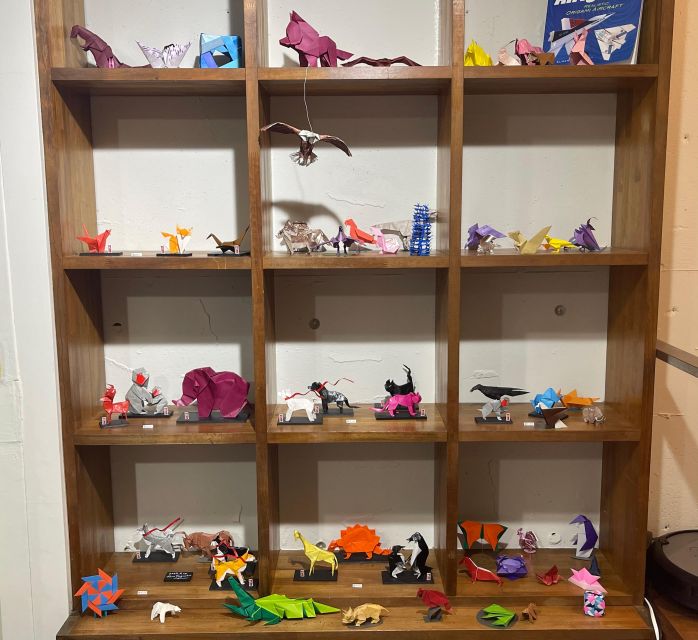
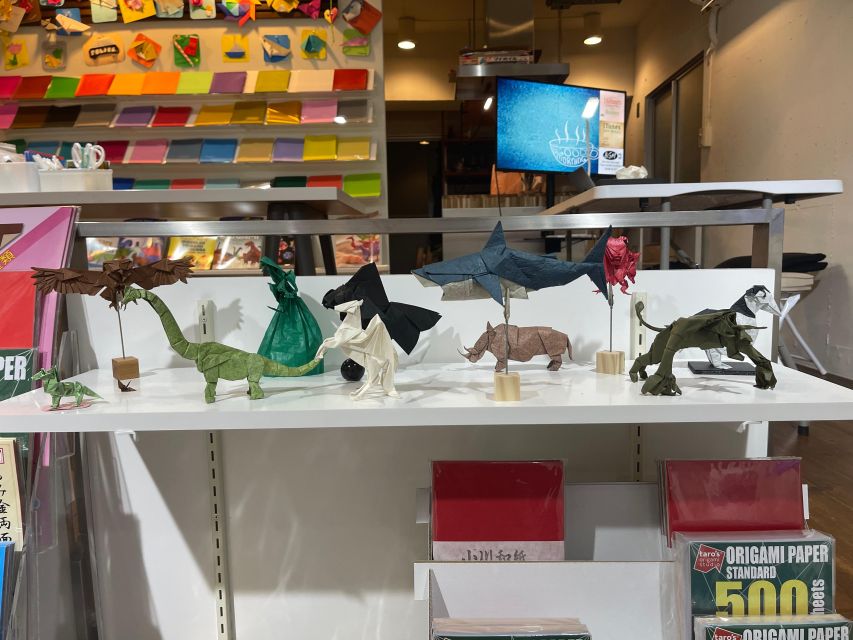
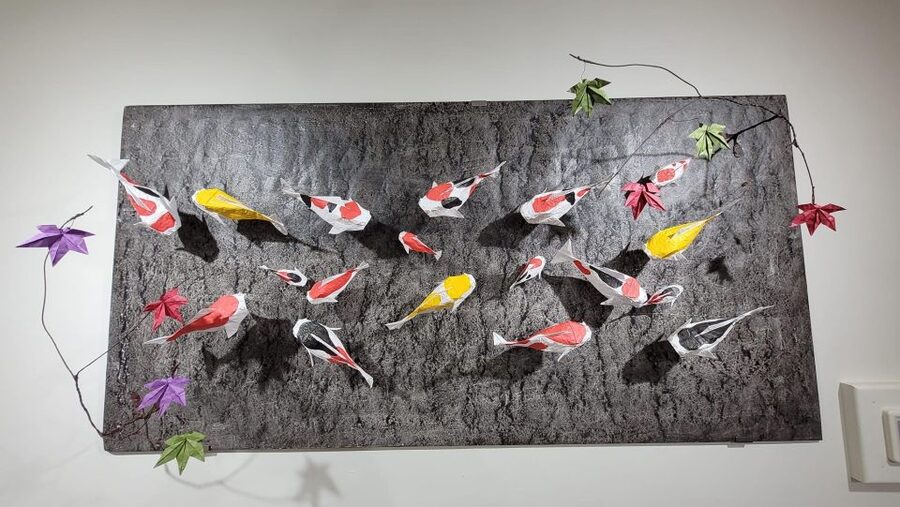
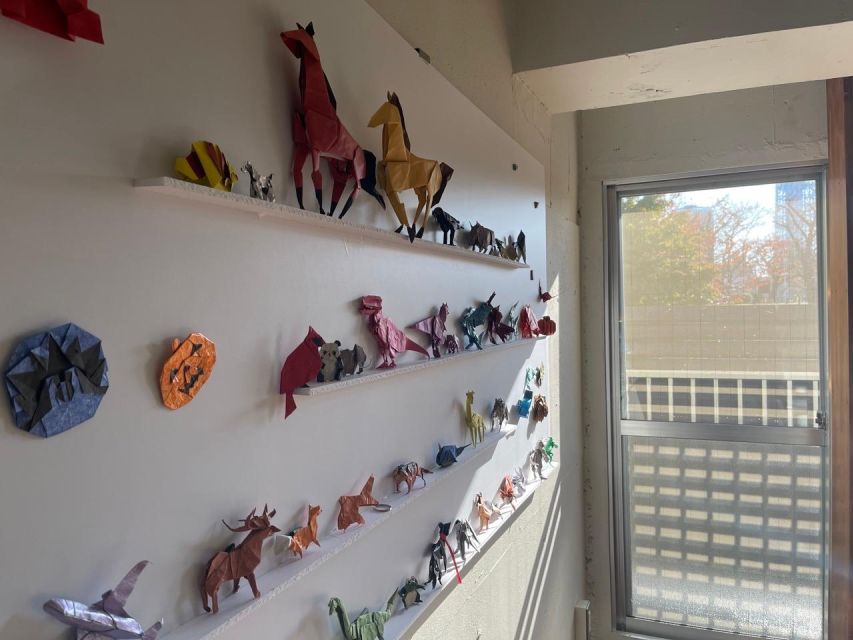
The atmosphere is designed to be relaxed and attractive, with origami displays to look at during or after your session. You can also take photos, buy items, and decorate your finished pieces with stickers, stamps, and markers.
More craft workshops in Tokyo:
- Tokyo Shinjuku Chopsticks Making Class
★ 5.0 · 1,763 reviews - Kintsugi Experience: Art of Golden Joinery in Tokyo
★ 5.0 · 467 reviews - Authentic Pure Gold Kintsugi Workshop with Master Taku in Tokyo
★ 5.0 · 217 reviews
Finding Taro’s Origami Studio in Asakusa
The entrance is on the main street side of the building. This detail matters because the building also faces a park on its rear side. If you arrive from the park, you are at the back and cannot enter there.
Look for company signage on the front of the building and a brown sea turtle attached to the wall below the window. That turtle is a useful landmark, especially if you are walking through Asakusa and the entrance is not immediately obvious.
The activity takes place in a studio rather than a large attraction hall. The small-group limit of six helps keep the room manageable, but it also means you should check the available starting times before setting your sightseeing schedule around it.
Wear socks or bring a pair with you. Socks are required for participation, and you may purchase them beforehand if needed. This is an easy detail to miss, and arriving without them can spoil a carefully planned family outing.
How the tablet-guided session works
The session follows a clear four-step rhythm. First, you use the touchscreen menu on a PC tablet to choose a model from the available categories. The selection covers more than 100 designs, so you can pick according to age, patience, or interest.
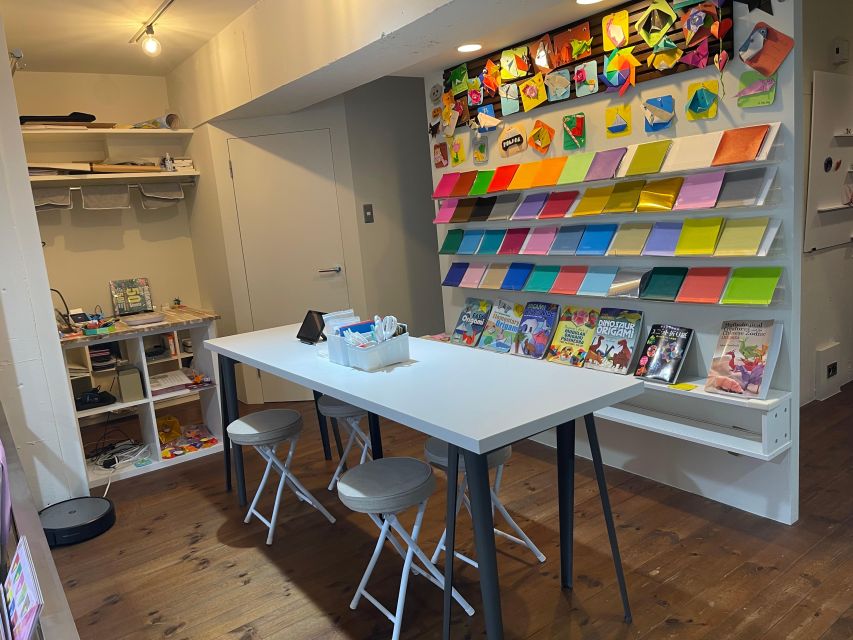
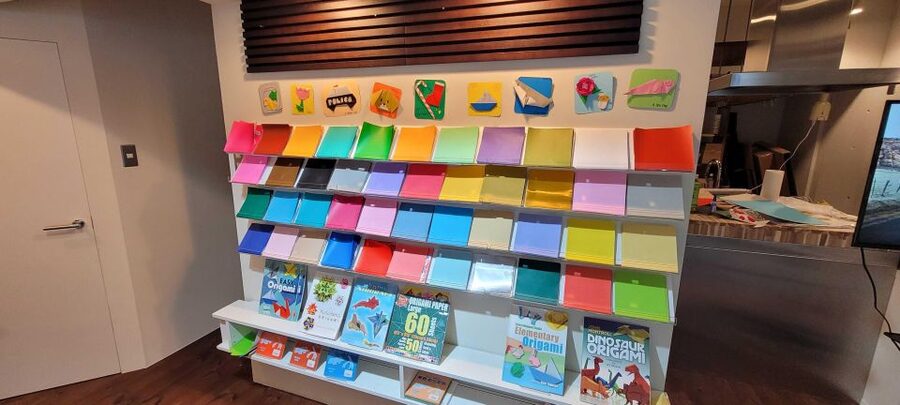
Next, you go to the origami paper wall and select your sheet. With 50 colors available, you can think about the finished design before choosing. A green sheet may suit an animal or plant, while a bright color can make a vehicle or decorative figure more playful.
Then you return to the tablet and press Play. The software guides you from the first square of paper through the folds. You can replay instructions or return to earlier steps, which is especially useful when a child loses track or a fold does not land correctly.
At the end, you can personalize the creation. Stickers, stamps, and markers let you add faces, patterns, or other small details. This final stage gives younger children something creative to do even if the folding itself takes concentration.
The process is self-guided, but you are not left entirely alone. Staff members are present to help with models from the tablet. The distinction is important: this is not a private teacher-guided lesson, and staff will not necessarily demonstrate every fold for the whole group.
What the staff support is really like
The best way to think of the support is helpful supervision. Staff keep an eye on the work and can assist when a fold becomes confusing, but the tablet remains your main instructor.
That arrangement suits independent beginners. You can work quietly without waiting for a teacher to finish explaining a model to everyone else. It also means the quality of your session depends partly on how well you follow visual instructions and how willing you are to ask for help.
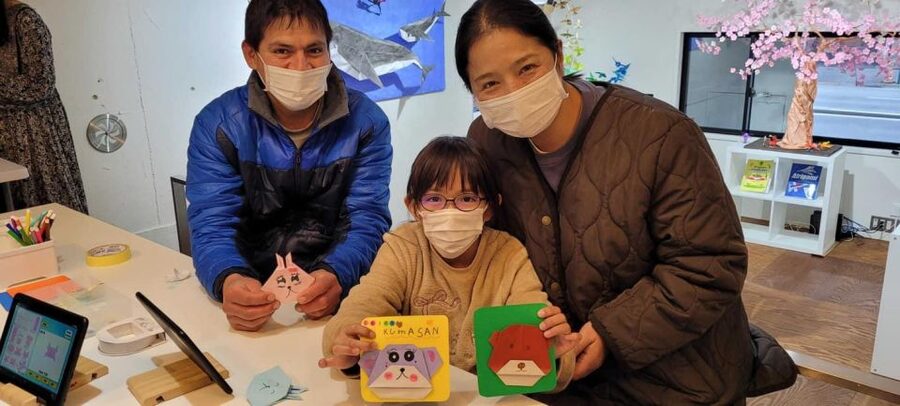
The available feedback points to a friendly, useful level of assistance. Instructor David provided one participant with a personal lesson and explained origami while they folded several figures together. In another family session, a staff member made a rose for a child, a small gesture that added a personal touch.
Still, you should not book this expecting a formal workshop with a named master teaching traditional techniques. If your goal is to learn advanced paper-folding theory or receive continuous one-on-one instruction, this format may feel limited. If your goal is to make several attractive pieces without prior experience, it is a better match.
More Asakusa visits:
- Tokyo: Japanese Dance Cabaret Theater Asakusa-Kaguwa Ticket
★ 4.8 · 2,270 reviews - Tokyo: Meiji Shrine, Asakusa, Skytree Bus Tour and Cruise
★ 4.7 · 1,986 reviews - Tokyo: Roll and Authentic Sushi Making Class in Asakusa
★ 4.9 · 1,957 reviews - Tokyo: Asakusa Walking Tour with Sensoji Temple Visit
★ 4.8 · 1,583 reviews
How much can you make in 45 minutes?
The exact number depends on the models you choose and how quickly you fold. One family of three made about four items per person during the allotted time. That gives you a useful idea of the pace, though a more detailed intermediate design will take longer than a basic animal or vehicle.
The 45-minute limit is both a strength and a weakness. It is short enough to fit into a busy Asakusa day and long enough to make several pieces. Families can add a creative stop without giving up half a day of sightseeing.
The drawback is that you may want more time once you have found a model you enjoy. One participant specifically wished for a longer session. If you are new to origami, allow yourself a moment at the start to understand the tablet and choose a design. Spending too long browsing the options will reduce your folding time.
I would choose one easy model first, then move to something more ambitious if time remains. That approach gives children an early success and keeps the session from turning into a race against the clock.
Choosing models, colors, and decorations
The selection of more than 100 models is one of the strongest reasons to book this activity. You are not limited to one souvenir figure, and the group does not need to make identical objects.
The categories include animals, flowers, and vehicles, with designs ranging from beginner to intermediate difficulty. That range makes the session suitable for a family with different ages and abilities. A younger child can work on a simple figure while an adult tries a more complex shape.
The paper wall adds a visual part to the activity. Choosing from 50 colors may sound like a small detail, but it changes the feel of the session. Selecting paper for a specific model helps you think about the finished object before you begin.
Decoration comes after the folding. Stickers, stamps, and markers are included, so you can turn a plain paper figure into something more personal. This is particularly useful if a child finishes early or wants to give the creation a face and character.
You can also take photos throughout the experience and enjoy the studio’s origami displays after folding. Purchases are available too, although food and drinks are not included.
Is $27 a fair price?
At $27 per person, the value depends on what you want from a short activity. You are paying for paper, supplies, instruction through the tablet system, staff support, taxes, and a small-group setting. You can also make multiple objects rather than taking home one pre-made souvenir.
For a family, the price can make sense if everyone participates. The activity gives children a hands-on task and adults a chance to slow down, and the paper creations provide inexpensive personal souvenirs. A family that only wants to watch a demonstration may not find the price as appealing, since this is built around active folding.
The small group is another part of the value. With a maximum of six participants, staff have a reasonable chance to notice when you need help. It is not guaranteed private instruction, but it is more personal than a large class.
You should also factor in the short duration. At 45 minutes, this is a compact add-on rather than a major Tokyo attraction. Its value is strongest when you are already spending time in Asakusa and want a focused activity nearby, not when you are crossing the city only for a brief craft session.
Free cancellation up to 24 hours before the start gives you some flexibility, and you can reserve now and pay later. Those terms are useful when you are building a Tokyo schedule around weather, children, or changing sightseeing plans.
Who will enjoy this most?
I would recommend this for beginners, families, and small groups looking for a calm activity with a clear finish. Children aged four and up are welcome, though the studio recommends at least age five for independent folding. Children under 13 need adult supervision throughout the session.
Younger children who cannot fold on their own will need an adult beside them. That supervision is not a minor point. The tablet can show the steps, but it cannot replace a parent helping with paper control and concentration.
The activity also suits adults who want to try origami without committing to a long class. You can choose a modest design, ask for help, and leave with several finished pieces. The session does not require you to know Japanese, since instruction is available in English and Japanese.
It is not suitable for children under four or for people with a cold. The studio is also not handicap accessible. There are stairs only, no ramps or lifts, and the seating has no back support. If you need accessible entry or supportive seating, this is not the right choice.
Fitting origami into an Asakusa day
The 45-minute format makes this easy to place between other Asakusa activities. You can schedule it as a break from walking, shopping, or visiting the area’s major sights. Because the session is fixed in length, you know roughly how much time to reserve.
Give yourself enough time to find the correct entrance. Remember the street side of the building, not the park side, and look for the sign and brown sea turtle. Bring socks, and keep in mind that the studio uses stairs.
The activity is best treated as a change of pace rather than a substitute for sightseeing. You will not spend the session touring Asakusa, but you will get a chance to focus on one traditional Japanese art in a modern, accessible format.
Should you book this origami session?
Book it if you want a hands-on Asakusa activity that works for beginners and mixed-age families. The large model selection, 50 paper colors, small groups, and helpful staff make it easy to participate without prior skill.
Think twice if you want a long lesson, constant personal instruction, accessible facilities, or a completely child-free craft class. The tablet leads the session, the clock is limited to 45 minutes, and the studio requires socks and stair access.
For most families and first-time folders, the price is reasonable when you value the process as much as the finished figures. Choose an easy model first, ask for help when needed, and save a few minutes for decorations and photos.
FAQ
How long does the origami activity last?
The session lasts 45 minutes.
How much does the activity cost?
The price is $27 per person.
How many people can join the group?
The group is limited to six participants.
Is the activity suitable for beginners?
Yes. The tablet-guided instructions are designed for people with no previous origami experience, and models range from beginner to intermediate difficulty.
How many origami models can I choose from?
You can choose from more than 100 models, including animals, flowers, and vehicles.
How many paper colors are available?
The studio offers 50 colors of origami paper.
Are instructions available in English?
Yes. The listed languages are English and Japanese.
Is this a private teacher-led lesson?
No. The activity uses tablet instructions. Staff members are present to help you with models, but it is not a private teacher-guided class.
What should I bring?
You should bring socks. Socks must be worn to take part in the studio activities.
Is the studio wheelchair accessible?
No. The facility has stairs only, with no ramps or lifts. The seating also has no back support.
New on our Tokyo list
- From Tokyo: Mount Fuji & Hakone Full Day Private Tour★ 4.9 · 25 reviews
- Tokyo Spectacular View Day-Cruise in 90 Minutes★ 5.0 · 25 reviews
- Real Tokyo Runner Club : Daikoku Car Meet Night Tour with JDM Car★ 5.0 · 25 reviews
- 2.5 Hour-Guided Cycle Tour in the Central Tokyo★ 5.0 · 25 reviews
- Ramen Making from Scratch +Akihabara Tour –Cooking Class★ 5.0 · 25 reviews
- [Self-Drive] Tokyo & Daikoku Custom Car Driving Tour★ 4.9 · 25 reviews
- Tokyo: 2-Hour Night Bike Tour of the City’s Hidden Gems★ 4.9 · 25 reviews
- Tokyo: Mt. Fuji, Owakudani, Hakone Shrine, & Open-Air Museum★ 4.7 · 25 reviews
Japanese Culture Workshops, compared.

Kintsugi Experience: Art of Golden Joinery in Tokyo
Read our review →
Authentic Pure Gold Kintsugi Workshop with Master Taku in Tokyo
Read our review →
KABUKI Show at Kabukiza Theatre Admission Ticket
Read our review →
KABUKI, BUNRAKU, etc. presented by National Theatre
Read our review →
Kintsugi Workshop Class in Shibuya, Tokyo with mon cadeau
Read our review →
Browse the lists this tour appears in