
Reviewed · WORKSHOPS
Tokyo: Rice Ball Making Class by an Expert
The best part of this Tokyo outing is its unusual mix: you make your own onigiri, eat them in a traditional garden, then cycle through neighborhoods most visitors only glimpse from a train window. It feels more personal than a standard sightseeing loop, with lunch built into the experience.
I like the small maximum of six people, which should make the cooking lesson and street ride easier to manage. I also like the practical value: at $39.19, you get the class, ingredients, bicycle, guide, and entrance to Hamarikyu Gardens in one three-hour outing.
The main consideration is physical. You need a moderate fitness level, and the activity depends on good weather. The cycling is not just a short transfer between sights, so this suits you best if you are comfortable spending part of the day on a bike.
In This Review
- Key points at a glance
- Why onigiri makes a smart Tokyo food lesson
- A small-group start near Tokyo Tower
- Hamarikyu Gardens turns lunch into a highlight
- Italian Town and the pleasure of a short detour
- Sumiyoshi Jinja and Tsukishima Monja Street
- Tsukiji Fish Market without a long market stop
- Cycling toward Tokyo Tower and Zojo-ji Temple
- What the three-hour timing really means
- Price and what you receive for $39.19
- Who should book this bike and food outing
- Practical details before you reserve
- Should you book it?
- FAQ
- How long does the Tokyo onigiri and bike experience last?
- Where does the experience start?
- What is included in the price?
- Is food and drink included beyond the handmade onigiri?
- How many people can join the tour?
- Do I need to be physically fit?
- What happens if the weather is poor?
Key points at a glance
- Make and eat your own onigiri: Learn the basics of Japan’s portable rice snack, choose fillings, and enjoy what you prepare.
- Small group of six or fewer: The limited group size should allow more direct help during the cooking lesson.
- Hamarikyu Gardens picnic: Your handmade rice balls become lunch in one of Tokyo’s classic Japanese gardens.
- A local neighborhood route: Cycle past Italian Town, Sumiyoshi Jinja, Tsukishima Monja Street, and Tsukiji Fish Market.
- Tokyo Tower and Zojo-ji Temple: Finish the sightseeing loop with one of the city’s most recognizable views.
- Useful all-in price: The bike, ingredients, guide, and garden admission are included, while extra drinks and snacks are not.
Why onigiri makes a smart Tokyo food lesson
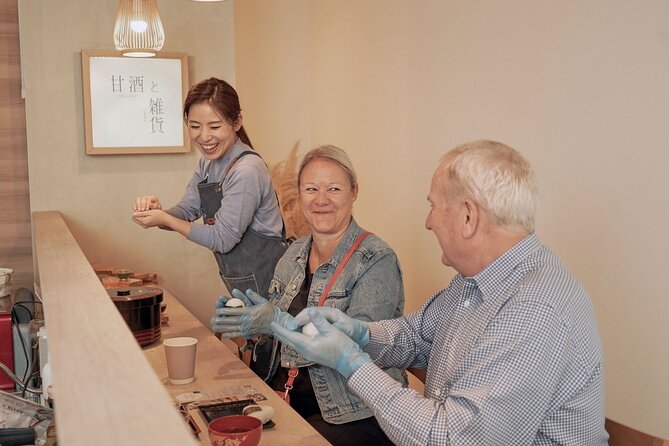
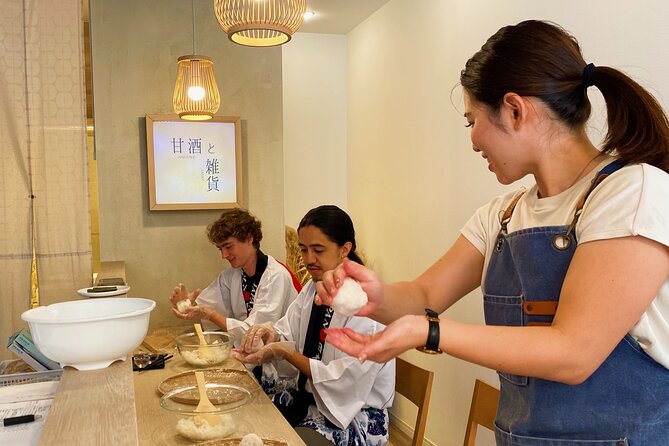
Onigiri is simple food, but that is exactly why it works well in a short class. It is rice shaped by hand around a filling, a familiar Japanese staple that you can find in convenience stores, markets, and lunch boxes across the country.
Here, you do not merely watch someone prepare it. You learn the basic method, add ingredients you like, shape the rice balls yourself, and eat them afterward. That hands-on step gives the class more value than a tasting alone. You leave with a small piece of practical food knowledge, not just a photograph.
The experience takes place at AMAZAKE CAFE KomeDreaming, a Japanese gift and souvenir shop near Tokyo Tower. The listed address is in Shibakoen, Minato City, at 1-chome 7-14 KS Hikari Building. Check the meeting details carefully before setting out, since arriving at a small shop in central Tokyo is different from meeting at a large station entrance.
The class itself is scheduled for about 30 minutes. That is enough time for a focused introduction and practice, but not a long cooking school. You should expect a compact lesson designed to get you eating and exploring rather than a detailed study of every regional onigiri style.
A few more Tokyo bookings worth comparing
- Sushi Making Tokyo Roll and Authentic Japanese Sushi Class
★ 5.0 · 3,971 reviews - Tokyo: Roll and Authentic Sushi Making Class in Asakusa
★ 4.9 · 1,957 reviews - Tokyo Shinjuku Chopsticks Making Class
★ 5.0 · 1,763 reviews
A small-group start near Tokyo Tower
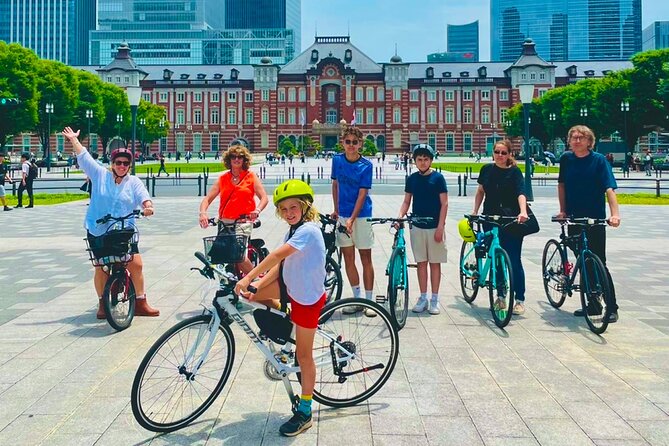
The activity begins at 11:00 a.m. and ends back at the same meeting point. The return to the start makes the outing easier to fit into a day of sightseeing, especially if you have evening plans elsewhere in Tokyo.
A group limit of six is one of the strongest practical features. In a larger class, the delicate business of shaping rice can become a queue for instructions. With fewer people, you should have a better chance to ask for help and see how the expert handles the rice.
The provider is Tokyo Rental Bicycle, and the experience includes a local bike guide. One guide named in the experience details is Sho. If Sho is leading your ride, you can expect a guide who has been specifically praised for taking the group around Tokyo by bicycle. Guide availability can change, so do not assume a particular person unless your confirmation says so.
You will receive the onigiri ingredients and use them during the class. Extra drinks and snacks from the shop cost extra, so plan accordingly. Since the rice balls form part of your lunch, you may not need a full meal before starting, but the information does not specify the number or size of rice balls provided.
Hamarikyu Gardens turns lunch into a highlight
After the class, you get on your bike and ride toward Hamarikyu Wharf and Hamarikyu Gardens. The listed garden stop lasts about 30 minutes and includes admission.
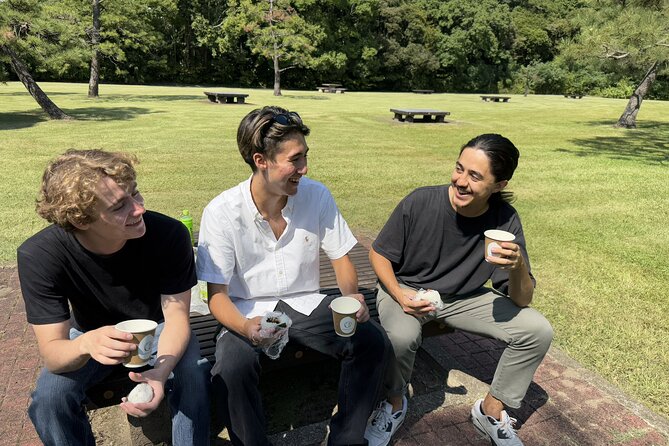
This is where the experience comes together. Instead of eating your freshly made food indoors and moving on, you carry it into a traditional Japanese garden and have a picnic there. The setting gives the onigiri lesson a clear purpose: you are making a portable Japanese lunch, then using it in a pleasant outdoor place.
Hamarikyu Gardens provides a change of pace from Tokyo’s roads and buildings. A half-hour is enough for a short walk, a garden look, and your meal, but it is not enough for a slow, detailed exploration of every corner. If gardens are your main interest, you may want to return on another day with more time.
The garden entrance fee is included, which matters because admission costs can quietly add up during a Tokyo sightseeing day. Here, it is already part of the $39.19 price. The tour does not include additional food or drinks, so bring or buy anything you need beyond the handmade rice balls.
Italian Town and the pleasure of a short detour
The ride continues through Italian Town, a stop listed at about 10 minutes. The name offers a bit of visual contrast within a distinctly Japanese day, and the short cycle-through keeps the route moving.
This is more of a quick neighborhood impression than a full attraction visit. You will not have time for a long meal or extensive sightseeing here. Its value is in seeing another side of central Tokyo and breaking up the larger stops with a short, easy-to-understand landmark.
That rhythm suits the tour. You make food, eat in a garden, and then keep moving through different parts of the city. The route is not built around long museum visits or formal explanations at every stop. It gives you a series of brief local views from the saddle.
Same corner of Tokyo, a completely different plan:
- Mt Fuji and Hakone 1-Day Bus Tour Return by Bullet Train
★ 5.0 · 26,383 reviews - 1-Day Tokyo Bus Tour
★ 5.0 · 14,250 reviews - Tokyo: TOKYO SKYTREE® Admission ticket
★ 4.5 · 11,192 reviews - Tokyo: teamLab Planets TOKYO Digital Art Museum Entry Ticket
★ 4.6 · 9,779 reviews
Sumiyoshi Jinja and Tsukishima Monja Street
The next short stop is Sumiyoshi Jinja, a local shrine in a traditional Japanese town. The visit is listed at about 10 minutes and has no separate admission charge.
A brief shrine stop can be valuable even when you are not studying religious architecture in detail. It gives you a look at a neighborhood place of worship rather than only the large, famous sites that fill guidebooks. Ten minutes will likely cover a quick visit and orientation, not a long cultural explanation.
You then cycle through Tsukishima Monja Street, also for about 10 minutes. Tsukishima is known for monjayaki, a savory dish cooked on a hot griddle, and the street gives the route a strong local-food connection even though a monja meal is not included.
This is an important distinction when judging the price. You are seeing the food district, not booking a separate tasting there. If monjayaki is high on your Tokyo list, note the location and return later for a dedicated meal. During this tour, the main food experience remains the onigiri you make yourself.
Tsukiji Fish Market without a long market stop
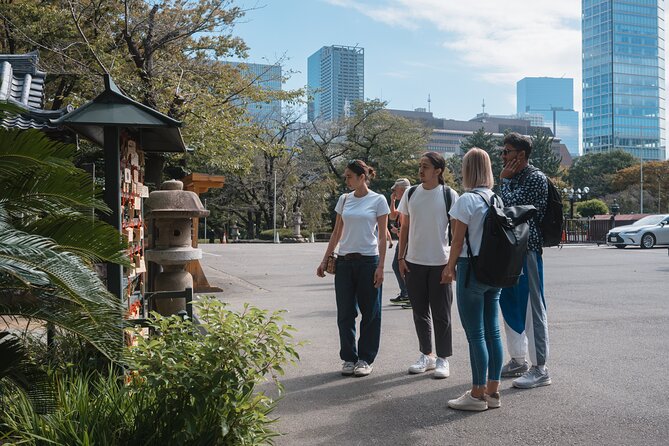
The cycling route includes a 15-minute visit to Tsukiji Fish Market. The market is one of Tokyo’s best-known food areas, but this experience gives you a short look rather than a full market morning.
Fifteen minutes can work well for a first orientation. You can see the atmosphere, notice the range of food shops, and get a sense of why Tsukiji remains such a useful stop for food-focused sightseeing. It will not allow time for extensive browsing, a relaxed breakfast, or a long line at a popular counter.
That short timing is worth keeping in mind. The tour’s purpose is to connect several areas by bicycle, not to give every stop equal weight. If you want to shop, eat, and examine the market carefully, plan a separate visit.
The market also fits the food theme of the day. Onigiri, monja, and fish market specialties are different expressions of everyday Japanese eating. You get a quick look at all three, with the rice ball class providing the only food activity that is fully included.
Cycling toward Tokyo Tower and Zojo-ji Temple
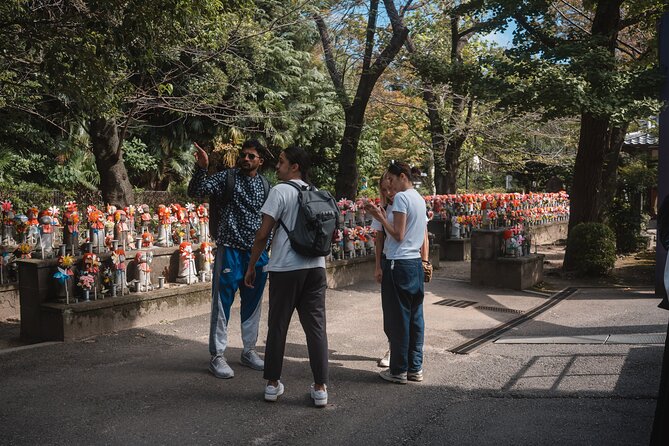
From the market area, the route heads back toward Tokyo Tower. The ride ends at Zojo-ji Temple, where you can see the temple with Tokyo Tower behind it.
Zojo-ji is one of the most rewarding visual pairings in this part of the city. The temple offers a traditional setting, while the tower provides the unmistakable modern Tokyo backdrop. The contrast makes this a strong final stop for a bicycle route through old and new neighborhoods.
The visit is listed at about 15 minutes, with no separate admission charge. That gives you time for the main view and a quick look around, though not a detailed temple tour. The experience does not promise a formal religious presentation, so think of this as a scenic and cultural stop within a broader ride.
The Tokyo Tower setting also makes the starting point feel purposeful. You begin near one major city icon, travel through gardens and older neighborhoods, and return to another memorable view of the same area. The route is less about collecting major attractions and more about seeing how different parts of central Tokyo sit close together.
What the three-hour timing really means
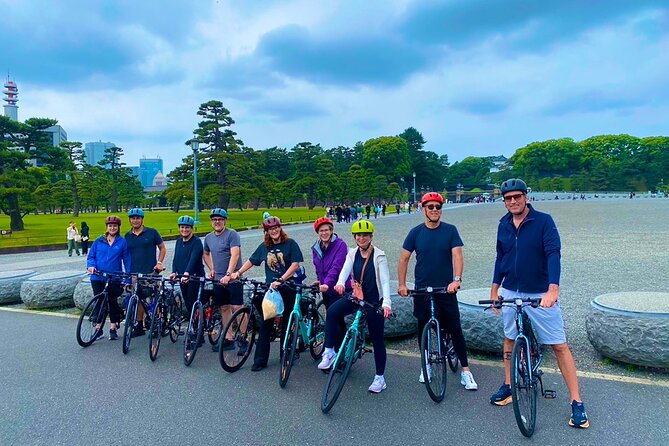
Three hours is a useful length for a first or middle-of-the-day activity. It is long enough to include a class, lunch, garden visit, and several neighborhood stops, but short enough to leave room for a museum, shopping, or an evening reservation.
The schedule also tells you what not to expect. The 30-minute class and 30-minute garden stop are the longest listed visits. Italian Town, Sumiyoshi Jinja, and Tsukishima Monja Street each receive about 10 minutes, while Tsukiji gets 15 minutes and Zojo-ji gets 15 minutes.
Some of the time between stops will naturally be spent riding. The exact cycling distance and road conditions are not provided, so you should not treat this as a purely casual sightseeing walk with a bicycle added. The operator asks for moderate physical fitness, which is the clearest guide to the activity level.
You should also be ready for a changing pace. The class is stationary and social. The picnic is relaxed. The bike portion requires attention and steady movement through Tokyo streets. That variety is appealing, but it means the outing is not ideal if you want a slow, seated food experience.
Price and what you receive for $39.19
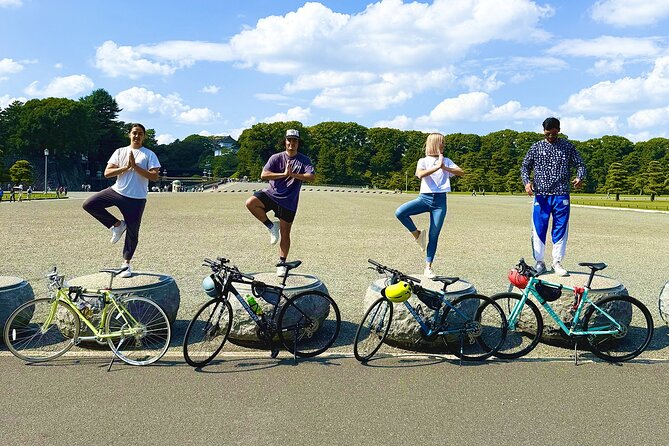
At $39.19 per person, the price is reasonable for the number of elements bundled together. You receive an expert-led onigiri class, ingredients, the handmade food, a bicycle, a local guide, and admission to Hamarikyu Gardens.
The value is strongest if you would otherwise pay separately for a food lesson and a guided cycle ride. You also avoid arranging a bicycle rental on your own, choosing a route, and figuring out how to connect the garden, market, shrine, and temple.
The price is less attractive if you mainly want a long cooking class or a substantial lunch. The lesson lasts about 30 minutes, and extra drinks and snacks are not included. Likewise, the short market and shrine visits are introductions rather than extended tours.
The small group improves the calculation. A maximum of six people gives the activity a more personal shape than a large bus tour, especially during food preparation. For a visitor who wants a few hours of guided structure without spending a full day or a large sum, the package is well balanced.
Who should book this bike and food outing
I would recommend it to you if you want a hands-on Japanese food activity but do not want to give up half a day for a formal cooking course. It also works well for couples, friends, and families who enjoy doing something together rather than simply following a guide from one landmark to the next.
Solo visitors can fit in comfortably. The limited group size gives you a natural setting for meeting a few other people, while the cooking task and cycling route provide easy shared activities. The experience details specifically indicate that solo participation is welcome.
It is also a good fit for repeat visitors to Tokyo. If you have already seen the major central sights, the neighborhood ride offers a different way to connect places such as Tsukishima, Tsukiji, and Shibakoen.
I would think twice if cycling in city streets makes you uneasy, if you have limited mobility, or if you need a fully indoor plan. The activity requires moderate fitness and can be canceled or rescheduled for poor weather. There is no detailed accessibility information, so contact the provider before booking if you have specific mobility needs.
Practical details before you reserve
You receive booking confirmation at the time of reservation, and the activity is near public transportation. The exact route to AMAZAKE CAFE KomeDreaming should still be checked in advance, since the meeting point is given as a specific shop and building address rather than a major station.
Arrive ready for both food preparation and cycling. Comfortable clothing will make the three-hour mix easier, though no special equipment requirements are stated beyond the provided bicycle. The start time is 11:00 a.m., and the experience ends back at the meeting point.
The tour offers free cancellation if you cancel at least 24 hours before the local start time. Changes or cancellations inside that window are not accepted for a refund. Since good weather is required, the operator will offer another date or a full refund if poor conditions force cancellation.
Should you book it?
Book this experience if you want a modestly priced, small-group Tokyo outing that combines food, gardens, and local cycling. The handmade onigiri picnic is the heart of the day, while the route adds useful context through Tsukishima, Tsukiji, Sumiyoshi Jinja, and Zojo-ji Temple.
Skip it if your priority is a long market visit, an extensive garden tour, or a serious cooking course. For everyone else, this is a smart three-hour way to see central Tokyo at street level, eat something you prepared yourself, and finish with Tokyo Tower rising behind a historic temple.
FAQ
How long does the Tokyo onigiri and bike experience last?
The activity lasts approximately three hours, beginning at 11:00 a.m. and ending back at the meeting point.
Where does the experience start?
It starts at AMAZAKE CAFE KomeDreaming, a Japanese gift and souvenir shop at Japan, 105-0011 Tokyo, Minato City, Shibakoen, 1-chome 7-14 KS Hikari Building.
What is included in the price?
The price includes the onigiri-making class with an expert, onigiri ingredients, a local bike tour guide, a bicycle, and admission to Hamarikyu Gardens.
Is food and drink included beyond the handmade onigiri?
Extra snacks and drinks from the shop are not included. The onigiri ingredients and the rice balls you make during the class are included.
How many people can join the tour?
The experience has a maximum of six participants.
Do I need to be physically fit?
You should have a moderate level of physical fitness because the experience includes cycling through Tokyo. The exact cycling distance is not provided.
What happens if the weather is poor?
The experience requires good weather. If the operator cancels because of poor conditions, you will be offered a different date or a full refund. You can cancel for a full refund up to 24 hours before the local start time.
New on our Tokyo list
- Sumi-e Experience in a relaxing green tea shop in Tokyo★ 5.0 · 3 reviews
- Tokyo : Kamikaze Street Drift Ride★ 5.0 · 3 reviews
- Private Zen Meditation in English in Shinjuku, Tokyo★ 5.0 · 3 reviews
- Onsen Spa in Tokyo and Asakusa Bar Hopping with Local Guide★ 5.0 · 3 reviews
- Easy for everyone! Now you can play handmade mini shamisen and show off to everyone! Musical instruments, sweets and live music★ 5.0 · 3 reviews
- Tokyo: Private Tsukiji Street Food & Sake with Local Guide★ 5.0 · 3 reviews
- Mt Fuji Exploration Tour with Free Japanese Kusa Mochi from Tokyo★ 4.5 · 3 reviews
- Tokyo Tsukiji Fish Market Walking and Exploring Hidden Gems Tour★ 5.0 · 3 reviews
Workshops, compared.
Sushi Making Tokyo Roll and Authentic Japanese Sushi Class
Read our review →
Roll and Authentic Sushi Making Class in Asakusa
Read our review →
Sushi Making Class in a Happi Coat near a Famous Spot
Read our review →
Tokyo Sushi Making Class in Tsukiji with Professional Chef
Read our review →
Ramen & Gyoza Cooking Class in Tokyo with Local Supermarket Visit
Read our review →
Matcha Making Class in Tokyo with Authentic Japanese Sweets Set
Read our review →Browse the lists this tour appears in