
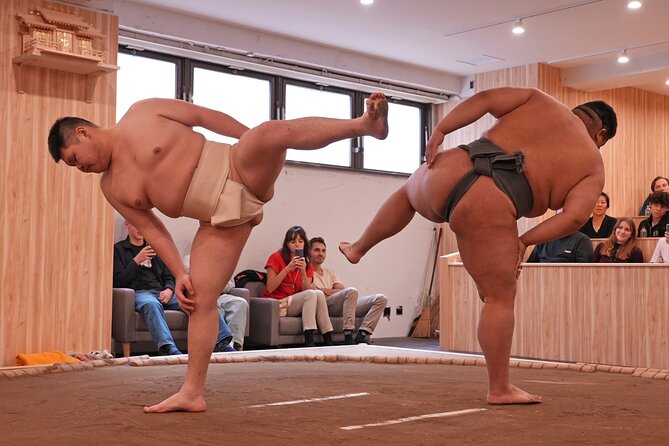
Reviewed · SUMO EXPERIENCES
Tokyo Shinjuku Sumo Show and Experience with Drinks and Photo
The best thing about this 90-minute Shinjuku show is the distance between you and the dohyo, the sumo ring. With only about 50 seats, you are close enough to see the salt-throwing ritual, hear the impact of each bout, and follow the wrestlers without arena binoculars.
I like the bilingual commentary, which turns unfamiliar customs into an easy lesson, and I like the personal finish: you can try the sumo challenge and take a photo with the wrestlers. The main catch is that this is a staged cultural show, not an official tournament or a real training session, so some visitors may find the short bouts too theatrical for the $70 price.
In This Review
- Key points at a glance
- What kind of sumo experience is this?
- A close seat around the small dohyo
- Salt, rituals, and sumo basics
- Demonstrations before the matches
- Short bouts in a tiny ring
- The Sumo Challenge puts you in the ring
- Photos and the included drink
- How much value do you get for $70?
- Who will enjoy the Shinjuku Sumo Club?
- The cultural question: real wrestlers, visitor-focused setting
- Booking, arrival, and cancellation
- Should you book this sumo show?
- FAQ
- Where does the Shinjuku Sumo Show take place?
- How long does the experience last?
- How many people can attend each show?
- Is the show suitable for people who know little about sumo?
- Do I get to enter the sumo ring?
- Can everyone take a photo with the wrestlers?
- Is a drink included in the ticket?
- Is the meeting point also the end point?
- Can I cancel for a full refund?
Key points at a glance
- About 50 seats: Every place gives you a close view of the dohyo and the action.
- Bilingual host: The MC explains sumo history, rituals, terms, and techniques in a way first-time visitors can follow.
- Three-part experience: Expect demonstrations, live-style bouts, and audience participation rather than a full tournament.
- Sumo challenge: Selected volunteers can test their strength against a wrestler, with a lottery used when more people want to participate.
- Photo with the wrestlers: Everyone gets a chance to pose with the performers at the end.
- Central Shinjuku setting: The club is near public transportation, at SEKISAKU BLDG. in Ōkubo.
What kind of sumo experience is this?
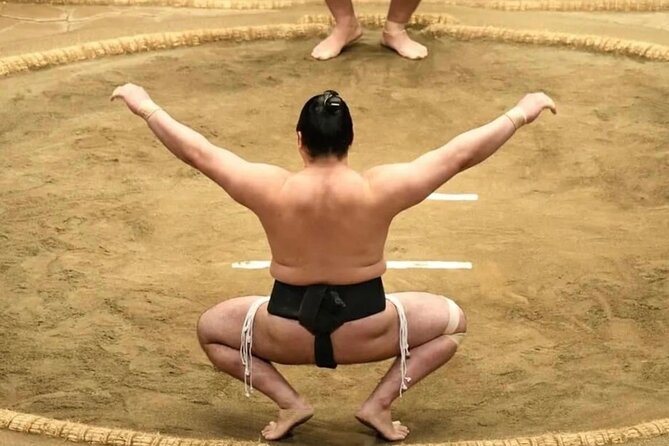
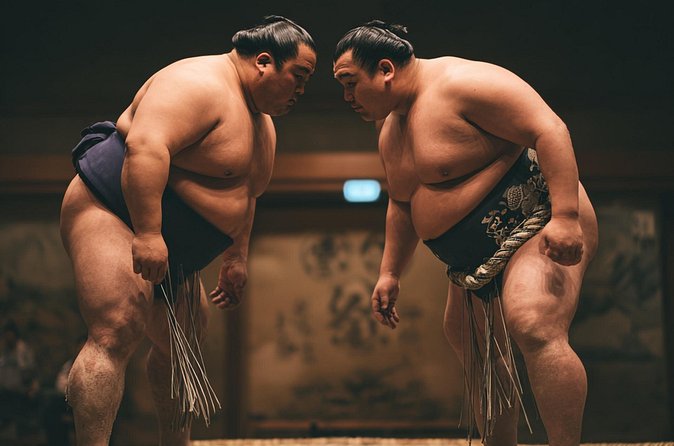
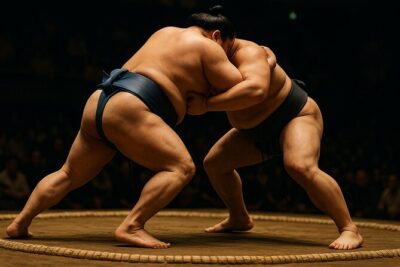
This is an introduction to sumo built for international visitors. You are not attending a professional tournament at Ryōgoku Kokugikan, and you are not watching a private practice session at a stable. Instead, you sit around a small dohyo while a bilingual MC explains what you are seeing, then professional wrestlers demonstrate the sport through short bouts, rituals, humor, and audience participation.
That difference matters. Official tournaments are serious sporting events with long stretches between matches, complex rankings, and limited chances to speak with wrestlers. Shinjuku Sumo Club gives you the parts most first-time visitors want right away: close viewing, simple explanations, a chance to step into the ring, and a final photograph.
The presentation is intentionally light. The wrestlers play to the room, encourage applause, and use comedy as part of the show. That makes the experience easy for families, groups, and anyone who knows little about sumo. It also means you should not book it expecting a quiet, formal study of the sport.
More sumo mornings:
- Tokyo: Sumo Show Experience with Chicken Hot Pot and a Photo
★ 4.8 · 6,678 reviews - Tokyo: Sumo Show and Dining Experience
★ 4.8 · 2,742 reviews - the SUMO show
★ 5.0 · 1,960 reviews
A close seat around the small dohyo
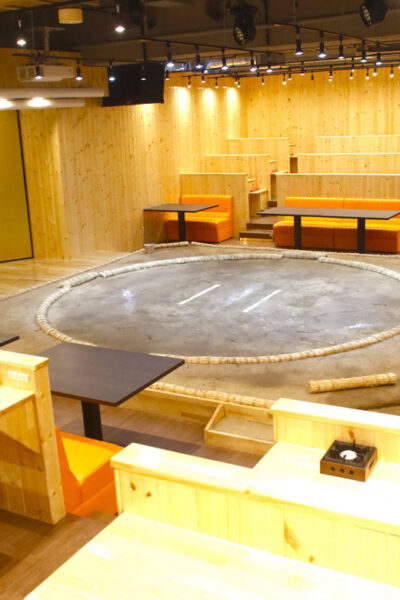
When you arrive, you take a seat around the ring. The room holds a maximum of 50 people, a useful limit because the show depends on seeing the wrestlers at close range. You are not looking past hundreds of heads or watching tiny figures on a screen.
The compact setting gives the bouts a physical quality. You can see the wrestlers prepare, watch their posture, and follow the movement of their feet. The scale also makes the photo session and audience activities feel more personal than they would at an arena.
There is one practical point to keep in mind. The meeting address is Japan, 169-0072 Tokyo, Shinjuku City, Ōkubo, 2-chōme 5-22, SEKISAKU BLDG. The show returns to this same location, and the venue is near public transportation. One helpful detail from the experience is that an elevator is available, although you might first notice the steep stairs. Look for the elevator rather than assuming the stairs are your only option.
Salt, rituals, and sumo basics
The MC begins with an explanation of sumo customs, including salt throwing and the rituals before a bout. These gestures can look mysterious if you encounter them without context. The commentary gives you a reason for each movement and helps you see that sumo is not simply two large men pushing each other out of a circle.
The program also introduces wrestler training, terminology, and basic rules. You learn why balance, timing, stance, and footwork matter. The information is presented in short sections, so the show does not become a lecture.
Manny is named in one account as the host, and his approach is described as funny, clear, and useful for visitors who do not know sumo. The bilingual format is especially valuable here. Even if you have watched sumo clips before, the live explanation helps you notice details that would otherwise pass quickly.
I would treat this part as a friendly first lesson, not a complete course in sumo. You will come away with a better grasp of the sport, but serious fans may want more detail about professional rankings, stable life, tournament structure, and the daily work of a rikishi.
Demonstrations before the matches
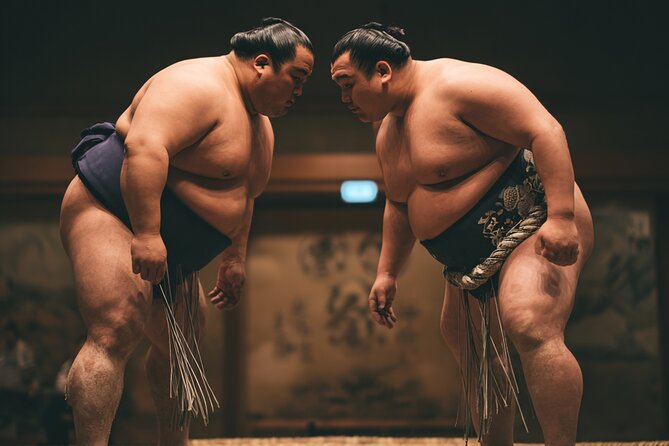
The wrestlers demonstrate techniques and explain how different moves work. This gives you time to understand the basic mechanics before the faster action begins. You see how a small shift in balance can decide a contest, which makes the later bouts easier to follow.
The demonstration section is also where the show feels most theatrical. The wrestlers are performing for an audience, and their comic timing is part of the appeal. They are described as engaging, friendly, and good sports, with plenty of interaction between them.
If you want a traditional sports broadcast brought to life, this may not be enough. The demonstrations are designed to entertain and teach rather than reproduce a full training session. One disappointed participant expected to watch wrestlers train, but found a staged presentation instead. That is a fair warning: book this as a cultural performance with real wrestlers, not as access to private practice.
More Shinjuku nights and walks:
- Tokyo: Shinjuku Food Tour (13 Dishes at 4 Local Eateries)
★ 5.0 · 6,603 reviews - Tokyo Bar Hopping Tour in Shinjuku (All-You-Can-Drink + Dinner)
★ 5.0 · 3,587 reviews - Tokyo: Shinjuku Food Tour (15 Dishes and 4 Eateries)
★ 4.9 · 2,033 reviews - Best of Shinjuku: Izakaya Food Tour (4 Stops, 14+ Tastings)
★ 5.0 · 1,863 reviews
Short bouts in a tiny ring
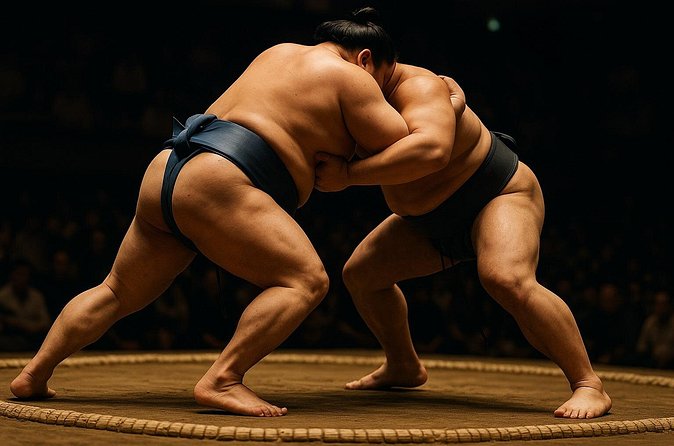
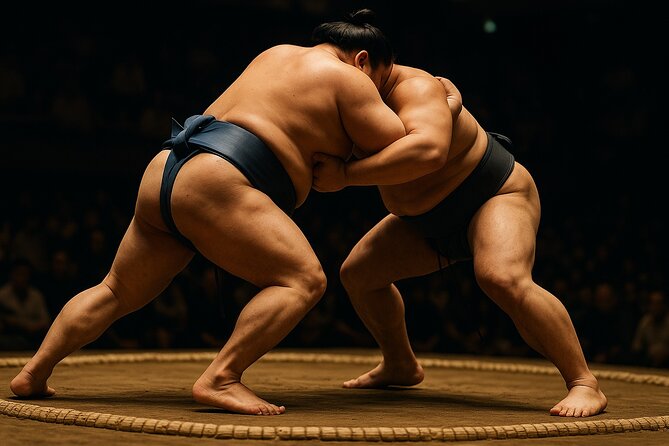
The show then moves into several quick sumo matches. The small ring keeps the action close, but it also limits the length and shape of each contest. You might see roughly three very brief bouts rather than a long sequence of tournament matches.
The wrestlers bring energy and humor to the contests. The host explains what is happening and encourages the audience to support the wrestlers, which helps maintain momentum between matches. For many people, the fun comes from the combination of physical force and comic performance.
This is also the biggest value question. Some people will love seeing the action from only a few feet away. Others will feel that the matches end too quickly, especially after paying $70. The price buys more than match time, since it includes the explanation, demonstrations, participation, and photo opportunity, but the show will not satisfy someone mainly seeking a serious exhibition of many full bouts.
The Sumo Challenge puts you in the ring
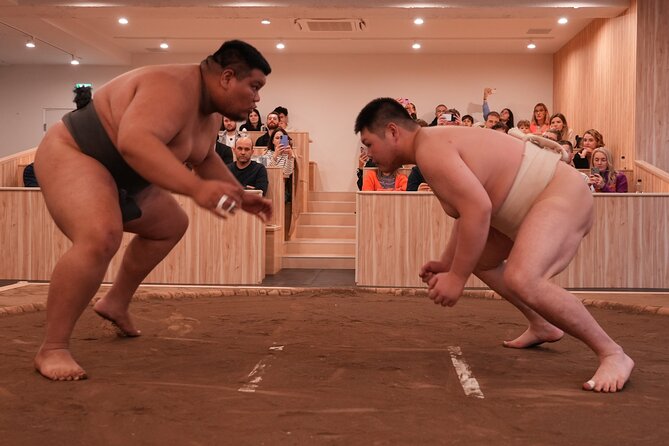
The most unusual part is the Sumo Challenge. You may be invited to step into the dohyo and test your strength against one of the wrestlers. This is not meant to be a fair athletic contest. It is a playful encounter, and the wrestlers help make it safe and amusing for the room.
Participation is not guaranteed for every person. When more people volunteer than there are places, the selection can be handled by lottery. One account notes that six volunteers were chosen, while everyone still had the chance to cheer and watch the challenge.
You do not need to be a sumo expert to enjoy this part. The host explains what to do, and the wrestlers are patient with participants. If you prefer to watch, you can simply stay seated. The activity is optional, which makes the show work for mixed groups where some people want the spotlight and others do not.
Photos and the included drink
The program ends with a photo session and meet-and-greet. Everyone is given the chance to take a picture with the wrestlers, not only those selected for the challenge. That is a strong feature for families and groups who want a clear souvenir of the evening.
The wrestlers are described as friendly and willing to pose. Since the room is small and the photo session is part of the program, you are not left trying to arrange a quick picture from far away.
The included drink needs a little explanation. The supplied details describe drinks as part of the experience, but several accounts clarify that the included item is a bottle of water. Other drinks are available for sale. If you are booking because you expect beer, sake, or a cocktail in the ticket price, adjust that expectation before you go.
That bottle of water is practical, especially during an active show, but it does not add much value to a $70 ticket. The photo, personal contact, and challenge are the stronger extras.
How much value do you get for $70?
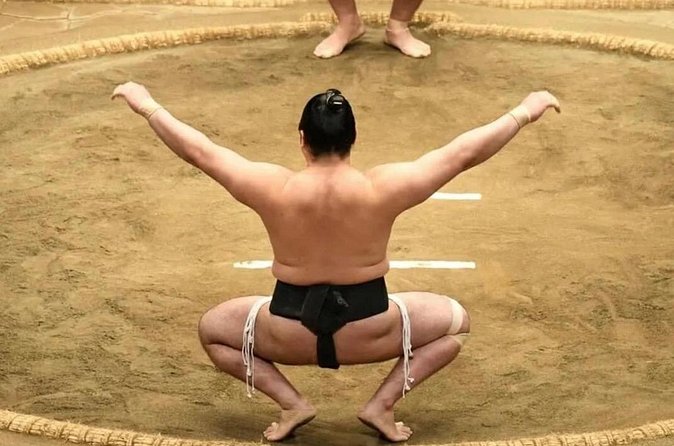
At $70 per person, this is not a bargain attraction. You are paying for a small room, professional wrestlers, a bilingual host, an organized performance, participation, and a photo opportunity. The limited seating is important because it gives you a clear view and makes the interaction possible.
I think the price is easier to justify if you have never seen sumo before, want a simple introduction, and value personal contact more than a long sporting program. It can also work well for a group of coworkers or family members who want something active and easy to understand.
The value is weaker if your main goal is an authentic training session, a full tournament atmosphere, or a large number of serious bouts. The show is openly designed for visitors, and the presentation has a polished, pantomime-like quality. One person called it a tourist trap, while another found it a fun and useful part of a first visit to Japan. Both reactions make sense.
I would compare it with the cost of attending an official tournament, but not as a substitute. Official sumo offers greater sporting authenticity, yet it requires the right tournament dates, tickets, and patience with a longer event. This show offers convenience and access in central Tokyo, with a predictable 90-minute schedule.
Who will enjoy the Shinjuku Sumo Club?
You are likely to enjoy this experience if you fit one or more of these groups:
- First-time sumo watchers: The host explains the basic customs and movement before asking you to follow a bout.
- Families and mixed-age groups: The humor, short matches, and optional challenge keep the pace moving.
- Small groups and coworkers: The shared cheering and photo session give everyone something to do together.
- Visitors with limited time: The show lasts about 90 minutes and ends where it begins.
- People who want a personal souvenir: Everyone gets a chance to pose with real wrestlers.
- Curious food and culture tourists: It adds a sports tradition to a Tokyo itinerary without requiring a tournament visit.
You might skip it if you want a silent, formal presentation or a genuine look at wrestler training. You should also think twice if $70 feels high for a short, staged show with a bottle of water as the included drink.
The cultural question: real wrestlers, visitor-focused setting
The wrestlers themselves are the strongest link to sumo culture. You see their size, balance, ritual movements, and physical skill at close range. Their willingness to joke with the audience and help during the challenge adds a human side that an arena seat cannot provide.
The surrounding presentation is less traditionally Japanese. One person felt that the staff and format made the event feel more like an American entertainment show than a local cultural experience. That criticism is worth considering. The bilingual MC and international format make the program accessible, but they also create distance from the daily world of Japanese sumo.
I would describe the show as a visitor-friendly interpretation of sumo, not a fully traditional setting. That is not automatically a flaw. It simply tells you what kind of cultural experience you are buying. You get context, access, and interaction, but within a carefully produced performance.
Booking, arrival, and cancellation
You receive confirmation when you book, and the ticket is mobile, so you can keep it on your phone. The meeting point is in Ōkubo, Shinjuku City, at SEKISAKU BLDG., and the activity ends there.
Most people can participate, and the maximum group size is 50. If you hope to join the Sumo Challenge, remember that selection may be limited and can be decided by lottery. Everyone can still watch the challenge and take a photo with the wrestlers.
Free cancellation is available if you cancel at least 24 hours before the start time. Cancellations made less than 24 hours before the local start time are not refunded, and late changes are not accepted.
Should you book this sumo show?
Book it if you want close seats, clear explanations, a playful challenge, and a photo with real wrestlers. It is an efficient way to add sumo to a Tokyo visit, especially when tournament tickets or dates do not fit your plans.
Skip it if you expect private training, long competitive matches, or a strictly traditional atmosphere. The best way to judge the $70 price is to ask what matters more to you: serious sport, or personal access and easy cultural entertainment.
For first-time visitors, families, and groups, I think the show offers a memorable introduction. Just arrive expecting a polished performance rather than an official tournament, and the experience is much more likely to land well.
FAQ
Where does the Shinjuku Sumo Show take place?
It takes place at Shinjuku Sumo Club, Japan, 169-0072 Tokyo, Shinjuku City, Ōkubo, 2-chōme 5-22, SEKISAKU BLDG.
How long does the experience last?
The program lasts approximately 1 hour and 30 minutes.
How many people can attend each show?
The maximum group size is 50 people, giving each seat a close view of the dohyo.
Is the show suitable for people who know little about sumo?
Yes. A bilingual MC explains the history, rituals, terms, techniques, and basic rules for first-time visitors.
Do I get to enter the sumo ring?
You may have the chance to enter the ring for the Sumo Challenge. Places can be limited, and selection may be handled by lottery.
Can everyone take a photo with the wrestlers?
The experience includes a photo session, and everyone is given the chance to take a photo with the wrestlers.
Is a drink included in the ticket?
An included bottle of water is provided. Other drinks are available for sale.
Is the meeting point also the end point?
Yes. The activity ends back at the Shinjuku Sumo Club meeting point.
Can I cancel for a full refund?
Yes, if you cancel at least 24 hours before the experience start time. Cancellations made less than 24 hours in advance are not refunded.
More Show in Tokyo
- Mt Fuji & Hakone Cruise, Drum Show Bullet Train 1 Day from Tokyo
★ 4.0 · 7,413 reviews - Tokyo Shinjuku Sumo Show & Experience with Photo
★ 5.0 · 1,750 reviews - Mt Fuji & Hakone Cruise, Drum Show Bus 1 Day from Tokyo
★ 4.0 · 1,287 reviews - Tokyo: Sumo Show and Experience in Shinjuku
★ 4.8 · 1,001 reviews
New on our Tokyo list
- Sumi-e Experience in a relaxing green tea shop in Tokyo★ 5.0 · 3 reviews
- Tokyo : Kamikaze Street Drift Ride★ 5.0 · 3 reviews
- Private Zen Meditation in English in Shinjuku, Tokyo★ 5.0 · 3 reviews
- Onsen Spa in Tokyo and Asakusa Bar Hopping with Local Guide★ 5.0 · 3 reviews
- Easy for everyone! Now you can play handmade mini shamisen and show off to everyone! Musical instruments, sweets and live music★ 5.0 · 3 reviews
- Tokyo: Private Tsukiji Street Food & Sake with Local Guide★ 5.0 · 3 reviews
- Mt Fuji Exploration Tour with Free Japanese Kusa Mochi from Tokyo★ 4.5 · 3 reviews
- Tokyo Tsukiji Fish Market Walking and Exploring Hidden Gems Tour★ 5.0 · 3 reviews
Sumo Experiences, compared.
Sumo Show Experience with Chicken Hot Pot and a Photo
Read our review →
Tokyo Shinjuku Sumo Show & Experience with Photo
Read our review →
Authentic Sumo Experience in Tokyo: Enter the Sanctuary
Read our review →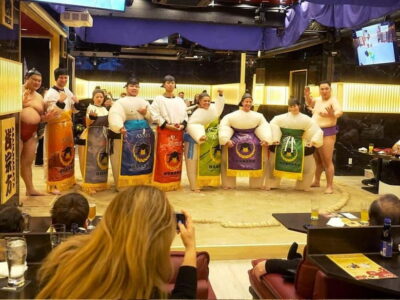
Luxury Sumo Show Experience & Japanese cuisine & Drink
Read our review →
Browse the lists this tour appears in