
Reviewed · SUMO EXPERIENCES
Tokyo Sumo Experience: Chanko & Mochi with a Former Pro
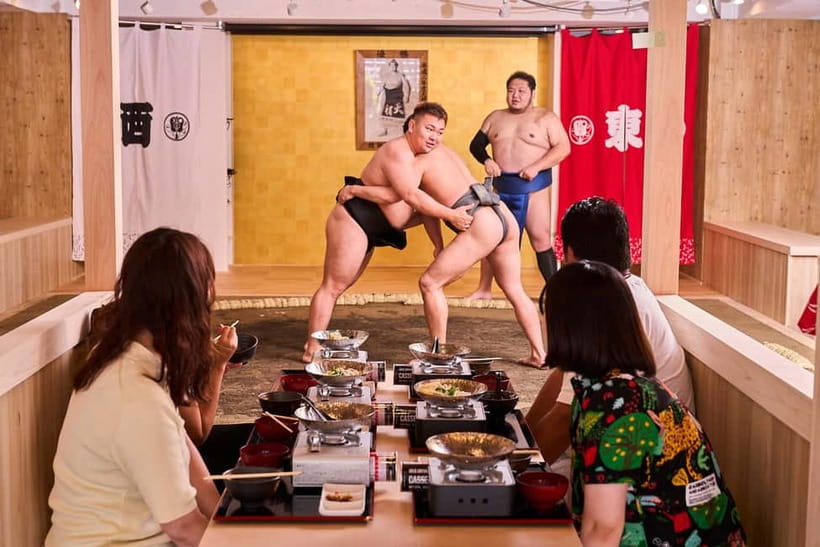
The best part of this Ryogoku sumo experience is the close-up action. You sit around the dohyo, watch former professional wrestlers demonstrate techniques and matches, then step onto the ring yourself if you are game. It is not a quiet morning practice session. It is a lively, family-friendly show built around participation.
I like two things especially: the chanko nabe, prepared under the wrestlers’ supervision, and the mochi session, where you help pound the rice before eating it sweet. The main consideration is that seats are assigned by the venue, so you cannot request a preferred spot. Standard seats also have a safety rule for children on laps.
In This Review
- Key points at a glance
- Why Ryogoku is the right place for a sumo experience
- Taking your seat around the dohyo
- Watching demonstrations and learning how sumo works
- Eating chanko nabe with the wrestlers nearby
- Pounding mochi, then eating it sweet
- Trying sumo on the dohyo yourself
- Who will get the most from the two-hour format
- Is $103 a fair price?
- Practical details before you book
- Should you book the Tokyo Sumo Experience?
- FAQ
- Where does the Tokyo Sumo Experience take place?
- How long does the experience last?
- What is included in the price?
- Can I try wrestling with a sumo wrestler?
- Do I have to participate in the wrestling?
- Is chanko nabe included?
- Can vegetarian or vegan meals be arranged?
- Can the venue provide halal food?
- Can I choose my seat?
- Is the activity suitable for wheelchair users?
Key points at a glance
- Former professionals explain sumo up close: Learn about training, diet, techniques, and the wrestlers’ lifestyle while watching demonstrations.
- Chanko nabe is part of the main event: Eat the hearty hot pot associated with sumo stables, not just a token snack.
- The dohyo is open to participation: Adults and children can try sumo techniques and, if selected or willing, wrestle with a pro.
- Mochi making adds a hands-on Japanese tradition: Pound mochi with the wrestlers, then enjoy a sweet serving for dessert.
- The format works well outside tournament season: You get sumo action in Ryogoku even when a major tournament is not taking place.
- The two-hour schedule is easy to fit into Tokyo plans: Ryogoku Station is nearby, with Asakusa, Akihabara, Nihonbashi, and Tokyo Skytree within reach for the rest of your day.
Why Ryogoku is the right place for a sumo experience
Ryogoku is Tokyo’s sumo district, and that setting gives this activity useful context before the show even begins. The meeting point is on the first floor, a short walk from Ryogoku Station. Look for the large sumo wrestler sign and flags.
You are not being taken to a distant entertainment venue with a sumo theme pasted on afterward. You are meeting in the neighborhood most closely linked with the sport. That matters because sumo is not only a contest between large athletes. It is a way of life built around the stable, the dohyo, training, food, ritual, and strict routine.
The location also makes this a smart add-on to a day of sightseeing. You can pair it with Asakusa, continue toward Tokyo Skytree, or head to Akihabara and Nihonbashi. The activity lasts two hours, so you do not have to surrender an entire day to it.
Give yourself enough time to find the storefront. One person specifically found it a little hard to locate, despite the clear sign and flags. Arriving early is a sensible move, especially if you have children or are traveling with a larger group.
More sumo mornings:
- Tokyo: Sumo Show Experience with Chicken Hot Pot and a Photo
★ 4.8 · 6,678 reviews - Tokyo: Sumo Show and Dining Experience
★ 4.8 · 2,742 reviews - the SUMO show
★ 5.0 · 1,960 reviews
Taking your seat around the dohyo
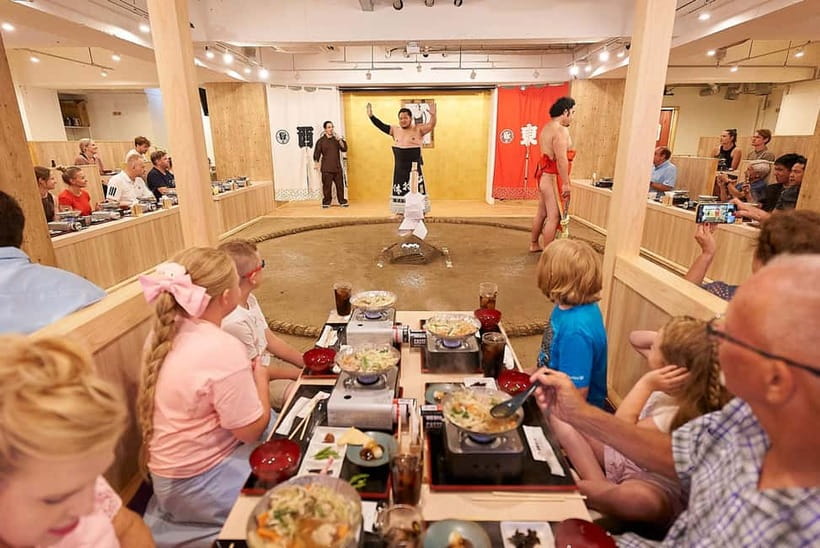
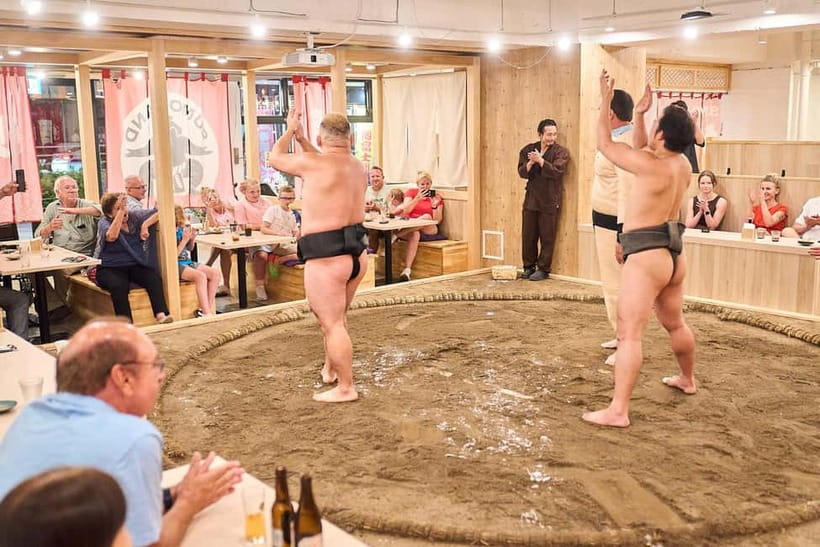
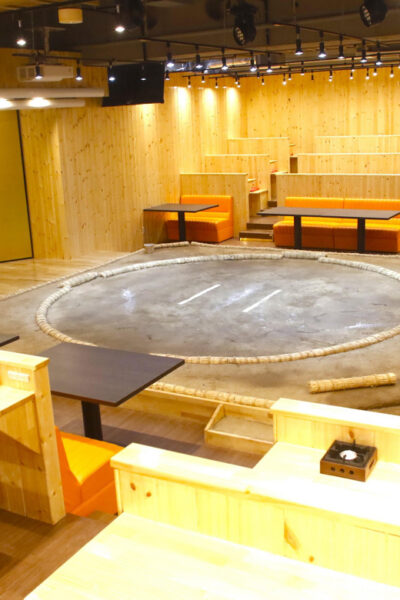
The event begins with you seated around the dohyo, the raised sumo ring. This arrangement puts the wrestlers close enough for you to see the footwork, balance, posture, and sudden force that can be lost from a distant arena seat.
The venue assigns seats. You cannot choose or request a particular location, so book this with the understanding that your group’s placement is decided for you. That is a minor loss of control, but the close seating still gives the event its main appeal.
Pay attention to the difference between this format and a serious morning training visit. The presentation is designed to entertain adults and children, with an MC and wrestlers encouraging participation. You will see real sumo techniques and demonstrations, but the tone is friendly and controlled rather than solemn.
That distinction is important. If you want to observe a silent, demanding training routine with no audience interaction, this is not the right product. If you want to understand the basics and laugh while trying them yourself, it fits much better.
Watching demonstrations and learning how sumo works
The demonstrations give you a practical introduction to sumo. You learn about training, techniques, diet, and the wrestlers’ daily lifestyle while watching the professionals show how movements work.
Sumo can look simple from a distance: two people push, pull, and try to force one another out of the ring. Up close, the demonstrations help you see the control behind it. Balance, timing, foot placement, and body position matter as much as raw strength.
The show includes several rounds of wrestling demonstrations. One detailed account described four different rounds, along with training and technique displays. The exact order can vary, but you should expect more than one brief bout followed by a photo opportunity.
The wrestlers are also part of the teaching. They interact with the room, invite people to participate, and keep the mood light. The English and Japanese instruction makes the event accessible to an international audience, although the available information does not provide the instructors’ personal names.
I particularly like this blend of explanation and action. You are not asked to absorb a long lecture about sumo rules before seeing anything. The sport is explained through demonstrations, then reinforced through the activities that follow.
Eating chanko nabe with the wrestlers nearby
Chanko nabe is the meal associated with sumo stables, where it is used as a substantial part of a wrestler’s diet. Here, you eat the hot pot while the sumo wrestlers supervise its preparation and presentation.
The dish has earned unusually strong praise for this type of activity. It is described as fresh, healthy, filling, and better than expected. One family found that even a six-year-old enjoyed it, while another group called the food excellent and unexpectedly satisfying.
That makes the meal more than a break between demonstrations. It gives you a direct connection to the sport’s food culture. You can ask questions or listen as the hosts explain how chanko relates to training and daily life.
The meal is also useful for families and mixed-age groups. You do not have to be a sumo expert to appreciate a warm, filling hot pot, and the food helps keep the two-hour program from feeling like a show you simply watch from a chair.
Dietary requests need advance notice. Vegetarian, vegan, and gluten-free meals can be provided if you notify the venue at least two days before your booking date. Halal meals cannot be provided, although you may bring your own food. If you have an alcohol allergy, ask about the complimentary sour plum drink, since it may contain alcohol.
A few more Tokyo bookings worth comparing
- Mt Fuji and Hakone 1-Day Bus Tour Return by Bullet Train
★ 5.0 · 26,383 reviews - 1-Day Tokyo Bus Tour
★ 5.0 · 14,250 reviews - Tokyo: TOKYO SKYTREE® Admission ticket
★ 4.5 · 11,192 reviews - Tokyo: teamLab Planets TOKYO Digital Art Museum Entry Ticket
★ 4.6 · 9,779 reviews
Pounding mochi, then eating it sweet
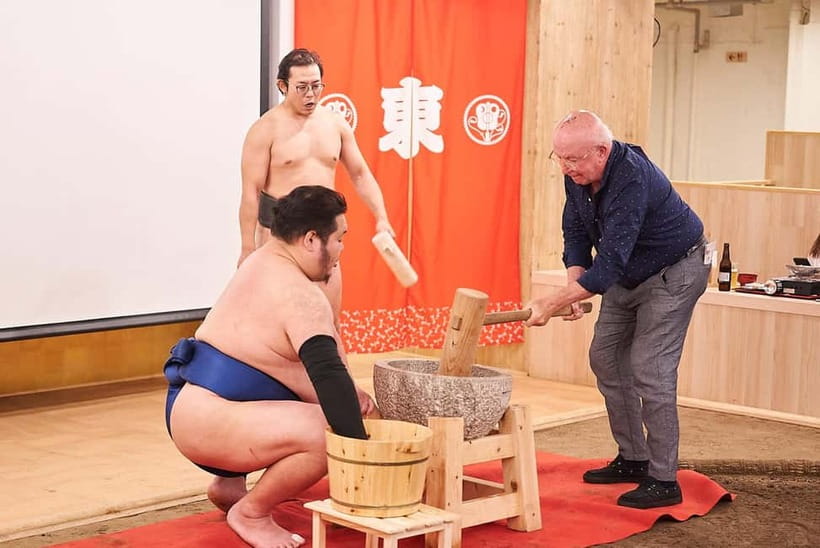
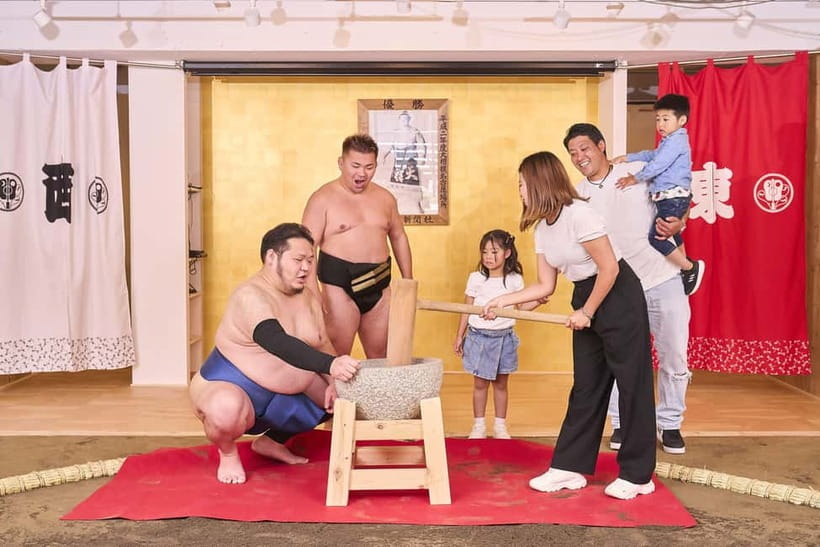
The mochi activity is one of the most appealing parts for families and anyone who wants a physical, hands-on introduction to Japanese food traditions. You help pound the sticky rice with the wrestlers while they demonstrate the traditional process.
Mochi pounding has a rhythm and a little theater to it. One person works the rice while another handles the wooden mallet, so it requires attention and cooperation. Here, the wrestlers guide the activity and keep it safe and entertaining.
Afterward, you eat sweet mochi for dessert. That simple finish gives the activity a satisfying shape: you see the process, help make the food, and then taste the result.
I would not book this solely as a cooking class. The emphasis is on shared participation and demonstration, not on a long lesson about ingredients or technique. Still, it is a memorable change of pace from the hot pot and the wrestling, and many people find the mochi pounding their favorite activity.
Bring a camera if you want photos. The wrestlers, the dohyo, and the mochi session create plenty of picture opportunities, though you should stay alert to instructions around the ring and mallet.
Trying sumo on the dohyo yourself
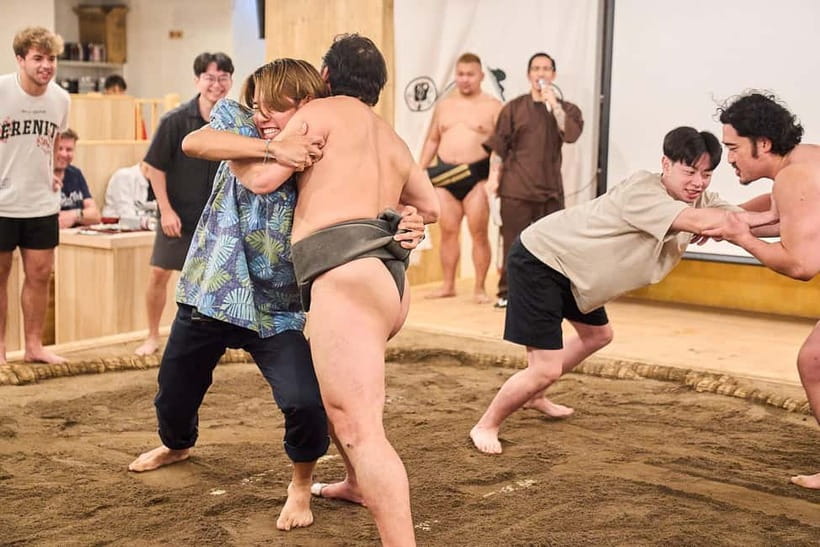
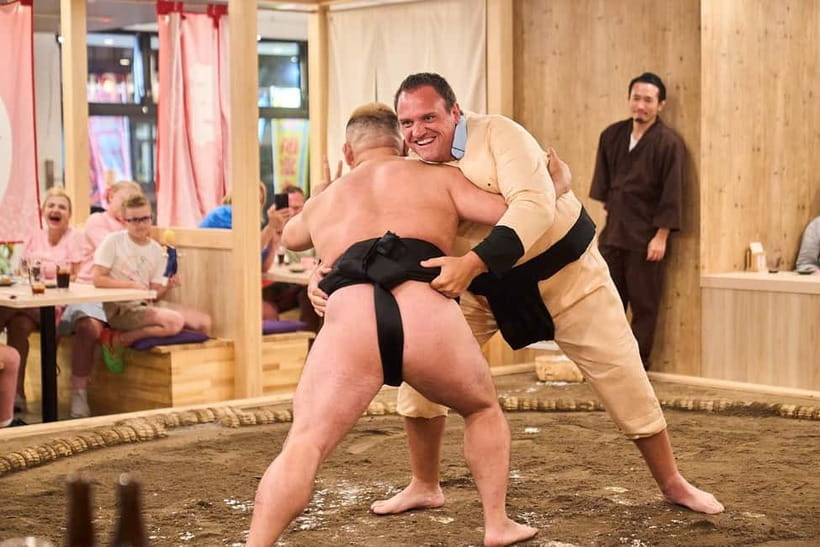
The most talked-about feature is the chance to try sumo with the wrestlers. You may practice basic techniques, step onto the dohyo, and test your strength against a professional.
This is the moment when the sport becomes much easier to understand. A wrestler’s size and stability feel very different when you are standing directly in front of one. Even a playful push can show why technique matters more than simply charging forward.
The activity is open to adults and children, and participation is encouraged rather than required. You can remain a spectator if you prefer. The hosts are described as inclusive and good at inviting people into the action without turning the experience into an uncomfortable dare.
The bouts are controlled and entertaining. Do not expect a genuine professional contest or a chance to defeat a trained wrestler. The point is to feel the movement, learn a few techniques, and share a funny moment with the room.
Wear comfortable clothes. You do not need special equipment, but restrictive clothing would make the wrestling and mochi activities less pleasant. If you are unsure about participating, watch the first demonstration and decide later.
Who will get the most from the two-hour format
This is a strong choice for families, first-time visitors to Japan, and groups that want an activity everyone can discuss afterward. Children can watch, eat, pound mochi, and possibly wrestle, while adults receive enough explanation to understand the sport beyond its surface spectacle.
It also suits visitors coming to Tokyo outside the main tournament periods. You get a sumo-focused activity without arranging a full tournament visit, and the two-hour length leaves room for other parts of the city.
I would also recommend it for work groups or friends. The activities create natural teamwork, especially during mochi pounding, and the playful wrestling tends to break down formality quickly.
The experience is less suitable if your main goal is serious sumo training. The atmosphere includes an MC, audience participation, humor, and staged demonstrations. That is not a weakness, but it is a different product from watching wrestlers train in the early morning under strict stable rules.
Wheelchair users cannot take part, so accessibility should be checked before booking. Standard seats are not safe for holding a child on your lap, and the venue asks you to reserve a place for every person. Box seats can hold up to six people and allow a child to sit on a parent’s lap.
Is $103 a fair price?
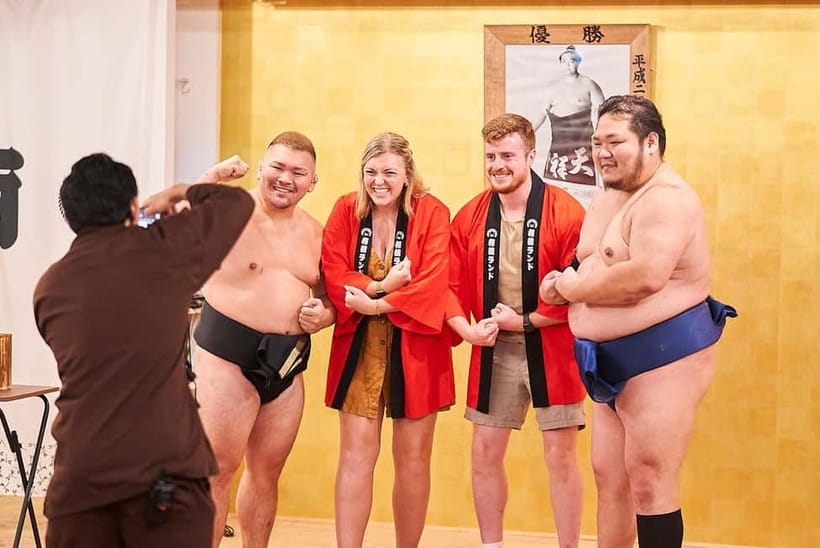
At $103 per person, this is not a budget meal or a quick photo stop. You are paying for a two-hour program that combines a live sumo presentation, instruction from former professionals, chanko nabe, mochi making, dessert, and the chance to participate on the dohyo.
The value is strongest if you take part. If you only watch the demonstrations and eat, you are receiving a pleasant meal and show, but not the full benefit of the format. The activity is designed around audience involvement, so come ready to raise your hand.
The price also makes more sense for families and small groups because one booking covers several kinds of entertainment. You do not need to arrange separate cultural activities for children and adults. The food is filling, and the program includes enough explanation to feel like more than a staged performance.
It may feel expensive if you are a dedicated sumo follower who wants a formal tournament seat or a true training observation. Those are different experiences with different goals. For a first introduction that is easy to understand and fun to share, the price is reasonable.
Practical details before you book
The experience lasts two hours, with starting times shown according to availability. Instructors speak English and Japanese.
Book the exact number of people in your party, especially if you are traveling with children. Seating is assigned, and you cannot ask for a particular place. Box seating is safer for lap-held children and can accommodate up to six people.
Smoking is not allowed. Bring comfortable clothing and a camera. The venue can arrange vegetarian, vegan, and gluten-free meals when told at least two days ahead. Halal food is unavailable, but bringing your own food is permitted.
Cancellation is flexible: you can cancel up to 24 hours before the activity for a full refund. You can also reserve now and pay later, which helps if your Tokyo schedule is still taking shape.
Should you book the Tokyo Sumo Experience?
Book it if you want approachable, interactive sumo rather than a formal training visit. The combination of close demonstrations, chanko nabe, mochi pounding, and supervised wrestling gives you several ways to connect with Japanese culture in one compact outing.
Families should pay close attention to the seating rules and reserve for every child. Food-sensitive diners should send requests at least two days in advance, and anyone needing wheelchair access should choose another activity.
For most visitors, the strongest reason to book is the balance: you learn how sumo works, eat the food linked with its training culture, and then get a chance to feel the sport for yourself. It is lively rather than solemn, but that is exactly why it works so well for a first sumo encounter.
FAQ
Where does the Tokyo Sumo Experience take place?
It takes place in Ryogoku on Honshu, Japan. The venue is on the first floor, a short walk from Ryogoku Station, and is marked by a large sumo wrestler sign and flags.
How long does the experience last?
The activity lasts two hours. Starting times depend on availability.
What is included in the price?
The experience includes the sumo presentation, a chanko nabe meal, mochi making, and a sumo wrestling experience.
Can I try wrestling with a sumo wrestler?
Yes. You can step onto the dohyo and try sumo with the wrestlers. Participation is designed for both adults and children.
Do I have to participate in the wrestling?
The program encourages audience participation, but the supplied information does not state that wrestling is compulsory. You can watch the demonstrations and take part in other activities.
Is chanko nabe included?
Yes. Chanko nabe is included as part of the meal, with its flavor supervised by sumo wrestlers from an actual stable.
Can vegetarian or vegan meals be arranged?
Yes. Vegetarian, vegan, and gluten-free meals can be provided if you notify the venue at least two days before the reservation date.
Can the venue provide halal food?
No. Halal meals cannot be provided, but you are allowed to bring your own food.
Can I choose my seat?
No. The venue assigns seats, and you cannot request a specific location.
Is the activity suitable for wheelchair users?
No. The experience is not suitable for wheelchair users.
New on our Tokyo list
- From Tokyo: Mount Fuji & Hakone Full Day Private Tour★ 4.9 · 25 reviews
- Tokyo Spectacular View Day-Cruise in 90 Minutes★ 5.0 · 25 reviews
- Real Tokyo Runner Club : Daikoku Car Meet Night Tour with JDM Car★ 5.0 · 25 reviews
- 2.5 Hour-Guided Cycle Tour in the Central Tokyo★ 5.0 · 25 reviews
- Ramen Making from Scratch +Akihabara Tour –Cooking Class★ 5.0 · 25 reviews
- [Self-Drive] Tokyo & Daikoku Custom Car Driving Tour★ 4.9 · 25 reviews
- Tokyo: 2-Hour Night Bike Tour of the City’s Hidden Gems★ 4.9 · 25 reviews
- Samurai themed Entertainment show in Shinjuku★ 4.5 · 25 reviews
Sumo Experiences, compared.
Sumo Show Experience with Chicken Hot Pot and a Photo
Read our review →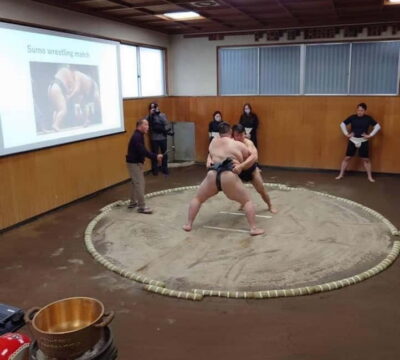
Tokyo Shinjuku Sumo Show & Experience with Photo
Read our review →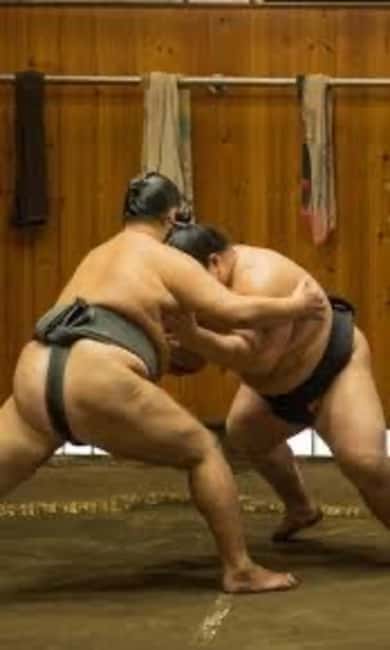
Authentic Sumo Experience in Tokyo: Enter the Sanctuary
Read our review →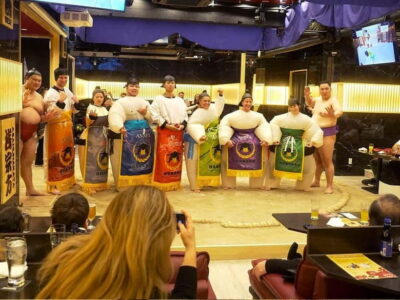
Luxury Sumo Show Experience & Japanese cuisine & Drink
Read our review →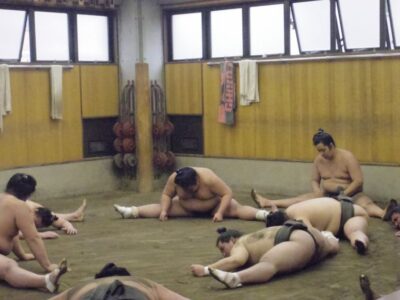
Browse the lists this tour appears in