
Reviewed · WORKSHOPS
Traditional Japanese Knife Sharpening Class
A dull kitchen knife becomes the lesson, the tool, and the souvenir in this two-hour Tokyo class. You learn how Japanese blades are made and sharpened, then put whetstone theory into practice under close instruction. I like the hands-on format and the fact that all equipment is supplied. I also like that the class ends with a useful knife, not just a demonstration.
The small limit of six people should give you room to ask questions, and instructors Charlie and Timothy are praised for clear English explanations. The main drawback is simple: at $98.53 per person, this costs more than a casual Tokyo activity, and you will get the most from it if you genuinely care about cooking, tools, or Japanese craft.
In This Review
- Key points before you book
- What the two-hour class is really about
- Starting at Nishiasakusa near Tokyo Skytree
- Learning the difference between steel and sharpening
- Working through whetstones of different grits
- Why the small class size matters
- The knife you take home
- Is $98.53 good value?
- Who will enjoy this most
- Practical planning for your Tokyo day
- The strongest part of the experience
- What to keep in mind before booking
- Should you book the Japanese knife sharpening class?
- FAQ
- Where does the knife sharpening class start?
- Where does the activity end?
- How long does the class last?
- How many people can join the class?
- Is equipment provided?
- Do I take home the knife I sharpen?
- Who teaches the class?
- Can I cancel for a full refund?
Key points before you book
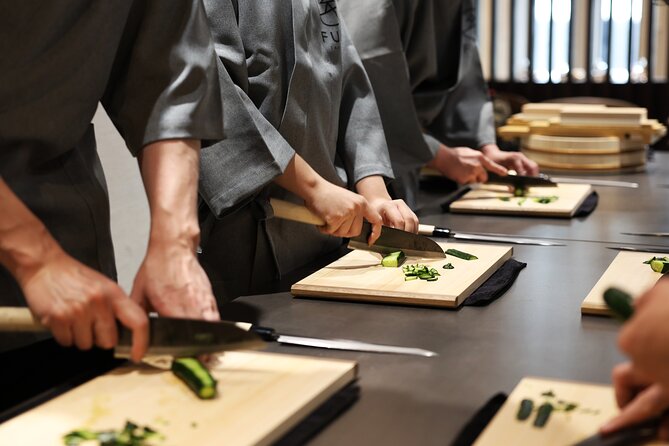
- You sharpen a genuinely dull knife: The lesson takes you from a blade that can barely cut paper to one that can slice through a standing rolled paper tube.
- Several whetstone grits are used: You learn why sharpening is done in stages rather than with one stone and one quick pass.
- Charlie and Timothy teach the class: Both instructors receive strong praise for patient explanations, clear communication, and answering questions.
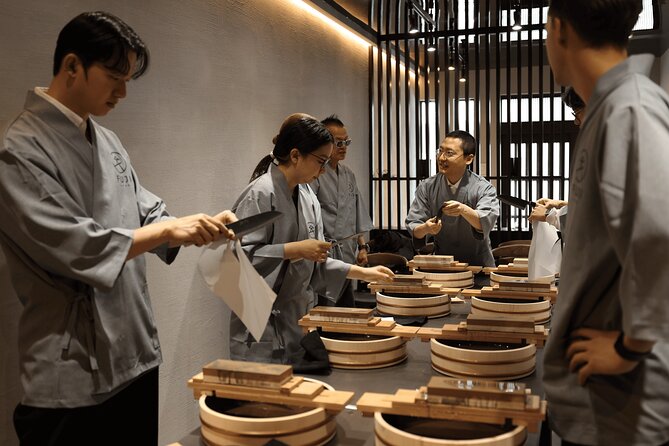
- The group has a maximum of six people: This is a personal workshop rather than a large demonstration.
- You take home the knife you sharpen: Your finished blade becomes a practical souvenir and a reminder of the skill.
- The meeting point is in Nishiasakusa: The class begins and ends at 1-chōme-9-8 Nishiasakusa, with Tokyo Skytree listed in the itinerary.
What the two-hour class is really about
This is not a knife-buying presentation with a few minutes of polishing added on. The point is to understand how a Japanese knife edge works, then learn enough technique to maintain it at home.
The class covers knife history, types of steel, Japanese sharpening ideas, and the role of different whetstones. That order matters. You first learn what you are looking at, then why the tools behave as they do, and only after that begin sharpening.
I find that approach more useful than a quick lesson that simply says, hold the knife at this angle. The angle still matters, of course, but it makes more sense when you understand that different steels and blade types respond differently to pressure, water, and stone grit.
You should expect to spend much of the session working with your hands. This is not a class where you sit back and watch an instructor perform the entire task. You sharpen the blade yourself, with guidance available as you work.
A few more Tokyo bookings worth comparing
- Sushi Making Tokyo Roll and Authentic Japanese Sushi Class
★ 5.0 · 3,971 reviews - Tokyo: Roll and Authentic Sushi Making Class in Asakusa
★ 4.9 · 1,957 reviews - Tokyo Shinjuku Chopsticks Making Class
★ 5.0 · 1,763 reviews
Starting at Nishiasakusa near Tokyo Skytree
The listed meeting point is 1-chōme-9-8 Nishiasakusa in Taito City, Tokyo 111-0035. The activity ends at the same meeting point, so you do not need to arrange a separate return transfer or figure out a new end point while planning the rest of your day.
Tokyo Skytree appears as the first itinerary stop, but the supplied details do not describe a separate Skytree tour or viewing period. Treat the Nishiasakusa address as the key arrival information and check your booking confirmation for the exact class time and meeting instructions.
The location is near public transportation, which helps if you are fitting the workshop between sightseeing stops. Nishiasakusa also makes sense as a base for a practical craft activity, since you are not being asked to travel far outside central Tokyo for a short class.
Allow enough time to find the address. Tokyo streets can be confusing, and a hands-on lesson is not the place to arrive flustered and late. Your mobile ticket is useful for keeping the confirmation close at hand.
Learning the difference between steel and sharpening
The opening explanation gives the class its backbone. You study different types of steel and the basic ideas behind Japanese sharpening before handling the stone.
For a cooking enthusiast, this is where the experience becomes more than a souvenir activity. Japanese knives are often discussed as if the blade alone creates the performance. In practice, maintenance matters just as much. A well-made knife that is poorly sharpened will not give you the clean cutting feel you expect.
The session also introduces traditional Japanese knife sharpening theory. The supplied details do not specify every technical point covered, so you should not expect a fixed masterclass in every Japanese blade style. You can expect a practical explanation of how the edge is shaped and refined using whetstones of different grits.
That foundation is especially helpful if you have bought, or plan to buy, a Japanese kitchen knife. You leave with a better sense of why a stone is used, why stages matter, and why rushing the process can spoil the edge.
Working through whetstones of different grits
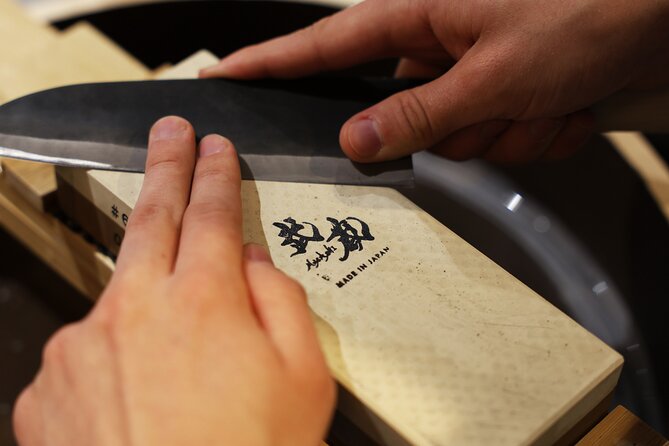
The heart of the class is the whetstone practice. You work with stones of varying grits, moving through the process under instruction rather than guessing at home with an expensive knife.
A dull starting blade is a smart teaching choice. It gives you a clear before-and-after result and removes the worry that you might damage your favorite knife during your first attempt. One participant described beginning with a knife that could barely cut paper and ending with a blade capable of slicing through a rolled paper tube standing on its own.
That kind of test is easy to understand. You do not need specialist equipment to see that the edge has improved. It also gives you a practical target for future sharpening at home.
Expect the work to reward patience. The class lasts about two hours, which is long enough for a proper introduction but not long enough to turn you into a professional sharpener. You are learning a repeatable household skill, not completing an apprenticeship.
The instructors can correct your hand position, pressure, and movement as you go. Charlie is praised for explaining the process in detail, while Timothy is noted for teaching clearly and showing how to reach a razor-sharp edge. The names matter because they give you a sense of the teaching style: direct, patient, and focused on communication rather than showmanship.
Same corner of Tokyo, a completely different plan:
- Mt Fuji and Hakone 1-Day Bus Tour Return by Bullet Train
★ 5.0 · 26,383 reviews - 1-Day Tokyo Bus Tour
★ 5.0 · 14,250 reviews - Tokyo: TOKYO SKYTREE® Admission ticket
★ 4.5 · 11,192 reviews - Tokyo: teamLab Planets TOKYO Digital Art Museum Entry Ticket
★ 4.6 · 9,779 reviews
Why the small class size matters
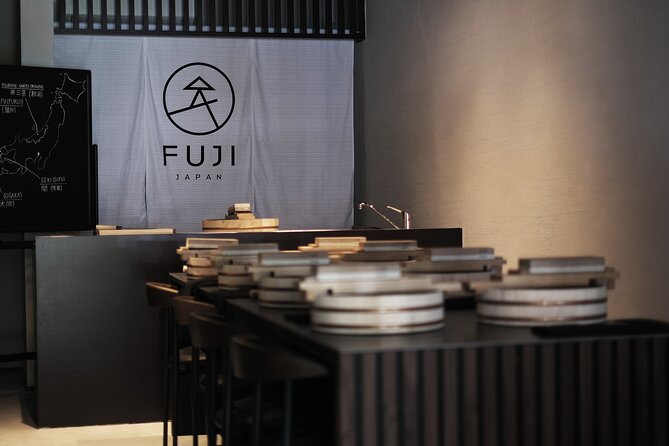
The maximum group size is six. That is one of the strongest practical features here.
Knife sharpening is a physical skill. You need to see the stone, feel the movement, and ask questions at the moment a problem appears. In a large group, you might watch an instructor demonstrate from a distance and then struggle through the same movement on your own.
With six or fewer people, you have a better chance of receiving individual correction. The activity details do not promise a one-to-one lesson, so do not book it expecting private instruction. Still, this is a far more suitable format for hands-on learning than a crowded room.
The instructors are also praised for their English communication. Charlie is described as having perfect English and as being accommodating with questions. That is useful if you want to understand the reason behind each step rather than copy a movement without context.
The atmosphere is described as pleasant, which matters more than it sounds. Sharpening is quiet, careful work. A calm room makes it easier to concentrate on the blade and avoid treating the stone like a piece of sandpaper.
The knife you take home

At the end, you take home the knife you sharpened yourself. This is the experience’s clearest value beyond the lesson.
A Tokyo souvenir can be decorative, edible, or quickly forgotten. A sharpened kitchen knife is different. You can use it, maintain it, and remember the class each time you prepare food. The object carries a record of your effort, even if your first edge is not perfect.
The supplied details do not identify the exact knife model, size, or steel that you take home. Do not book this expecting a named premium knife unless your confirmation says so. The important promise is that you finish with a freshly sharpened knife, not that you select from a retail display.
You may also leave with enough confidence to buy a whetstone for home use. One class participant picked up a sharpening stone from a nearby recommended shop after the lesson. That purchase is not included in the $98.53 price, but the class can help you understand what you are buying.
Is $98.53 good value?
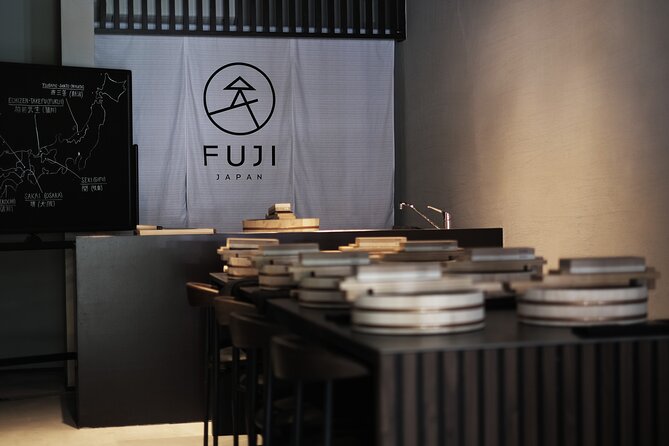
At $98.53 per person, this is not a budget activity. Tokyo offers plenty of low-cost sightseeing, and you could easily spend two hours walking around a neighborhood for much less.
The price makes more sense when you count what is included: instruction, equipment, access to several whetstones, a small group, and a knife to take home. You are paying for both a physical item and a skill you can repeat.
I would call it good value for someone who cooks regularly or already cares about Japanese knives. The knife alone gives the activity a practical finish, while the lesson helps you avoid damaging it later. For a person with no interest in cooking, the price will feel harder to justify.
This is also a stronger choice for a couple or small group with a shared interest. A birthday celebration, for example, can turn the class into a joint activity rather than another meal or sightseeing stop. The experience has enough substance to feel like an occasion without taking up half a day.
Who will enjoy this most
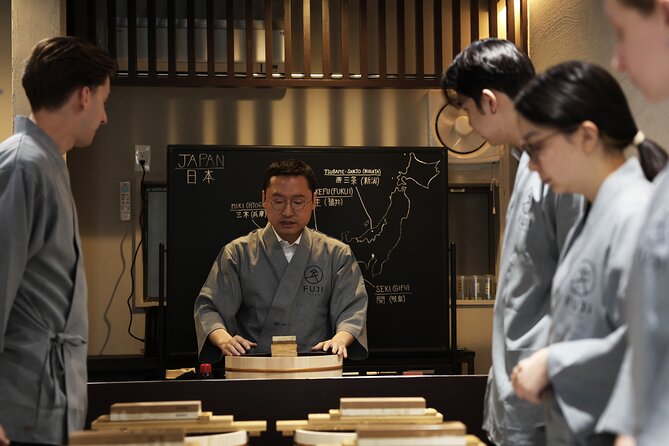
You are a good match for this class if you fall into one of these groups:
- You cook often and want to maintain your knives properly.
- You are considering buying a Japanese knife and want to understand sharpening first.
- You enjoy craft workshops where the finished item is useful.
- You collect or appreciate kitchen tools.
- You want a Tokyo activity with a strong cultural and practical angle.
- You prefer small classes to large demonstrations.
You do not need to be an expert. In fact, a beginner may benefit most because the class starts with the basic theory and a dull blade. You also do not need to source stones or other equipment before arriving.
The class may be less suitable if you want a fast sightseeing stop, a cooking lesson, or a tour centered on Tokyo landmarks. Tokyo Skytree is listed in the itinerary, but the core activity is knife sharpening, not a Skytree visit.
Practical planning for your Tokyo day
The class takes about two hours and returns you to the starting point. That makes it fairly easy to pair with other plans in Taito City or nearby parts of Tokyo, provided you leave sensible travel time on both sides.
Wear clothing that lets you work comfortably. The supplied information does not specify a dress code, protective equipment, or whether you should bring anything, so rely on the booking instructions for those details. The key point is that the necessary sharpening equipment is provided.
Most people can participate, according to the activity information. Since this is a hands-on class involving a knife and whetstones, anyone with concerns about handling tools should check the details before booking.
The mobile ticket helps with arrival, and confirmation is issued when you book. Keep the address and start time easy to find. The class is small, so arriving late could affect your own practice time more than it would on a standard sightseeing tour.
Cancellation is free if you cancel at least 24 hours before the local start time. Cancellations or changes made inside that window are not accepted for a refund. That policy is fairly flexible for a planned Tokyo day, but do not leave the decision until the last morning.
The strongest part of the experience
The best feature is the teaching. Charlie and Timothy are repeatedly praised for explaining the process clearly, answering questions, and making the technique understandable in English.
That praise is important because knife sharpening can be hard to learn from written instructions alone. You need someone to explain how much pressure to use, how to keep the blade steady, and how to tell when one stage is complete. A patient instructor can save you from building bad habits.
The second strong point is the visible result. A dull knife that becomes sharp during the session gives you proof that you learned something real. The rolled-paper test is a simple but memorable way to demonstrate the change.
The class also has a pleasant balance of theory and practice. You get context about knife history and steel, but you are not left listening to a lecture for two hours. You spend the session doing the work.
What to keep in mind before booking
Do not confuse this with a full Japanese cooking course. You learn about knives and sharpening, not recipes, food preparation, or a complete kitchen curriculum.
Also, two hours has limits. You can learn the basic process and sharpen one knife, but you will still need practice at home to become comfortable. The class gives you a starting point, not instant mastery.
The knife itself is another point to clarify if that matters to you. The information promises a knife to take home but does not give its brand, blade style, dimensions, or steel type. If you are particular about the knife, ask the provider before booking.
Finally, the price reflects a specialist workshop. If you only want a souvenir, you might prefer buying a knife. If you want to understand how to care for that knife and enjoy working with your hands, the class offers more lasting value.
Should you book the Japanese knife sharpening class?
Book it if you want a useful souvenir, a small class, and a skill you can continue using after Tokyo. The combination of a dull starting blade, several whetstones, clear English instruction, and a sharpened knife to take home gives the experience a real purpose.
I would especially recommend it to cooks, couples celebrating a special occasion, and anyone planning to buy a Japanese knife. I would skip it if your Tokyo schedule is tight or your main goal is sightseeing around Skytree.
For the right person, $98.53 is a fair price for two hours of focused instruction plus a practical keepsake. You leave with more than a sharp blade. You leave knowing why it became sharp and what to do next time.
FAQ
Where does the knife sharpening class start?
The class starts at 1-chōme-9-8 Nishiasakusa, Taito City, Tokyo 111-0035, Japan.
Where does the activity end?
The activity ends back at the meeting point in Nishiasakusa.
How long does the class last?
The class lasts approximately two hours.
How many people can join the class?
The maximum group size is six people.
Is equipment provided?
Yes. The class provides the equipment needed for the sharpening activity, including whetstones of varying grits.
Do I take home the knife I sharpen?
Yes. You can take home the freshly sharpened knife at the end of the class.
Who teaches the class?
The instructors named in the available information are Charlie and Timothy. Charlie is noted for clear English explanations, and Timothy is noted for teaching the steps needed to create a sharp edge.
Can I cancel for a full refund?
Yes. You can cancel at least 24 hours before the experience start time for a full refund. Cancellations or changes made less than 24 hours before the start time are not accepted for a refund.
New on our Tokyo list
- Tokyo : Kamikaze Street Drift Ride★ 5.0 · 3 reviews
- Private Zen Meditation in English in Shinjuku, Tokyo★ 5.0 · 3 reviews
- Sumi-e Experience in a relaxing green tea shop in Tokyo★ 5.0 · 3 reviews
- Onsen Spa in Tokyo and Asakusa Bar Hopping with Local Guide★ 5.0 · 3 reviews
- Easy for everyone! Now you can play handmade mini shamisen and show off to everyone! Musical instruments, sweets and live music★ 5.0 · 3 reviews
- Tokyo: Private Tsukiji Street Food & Sake with Local Guide★ 5.0 · 3 reviews
- Mt Fuji Exploration Tour with Free Japanese Kusa Mochi from Tokyo★ 4.5 · 3 reviews
- Tokyo Tsukiji Fish Market Walking and Exploring Hidden Gems Tour★ 5.0 · 3 reviews
Workshops, compared.
Sushi Making Tokyo Roll and Authentic Japanese Sushi Class
Read our review →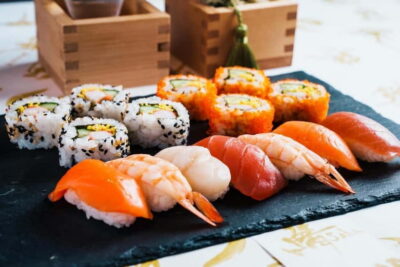
Roll and Authentic Sushi Making Class in Asakusa
Read our review →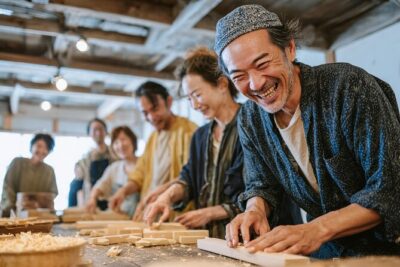
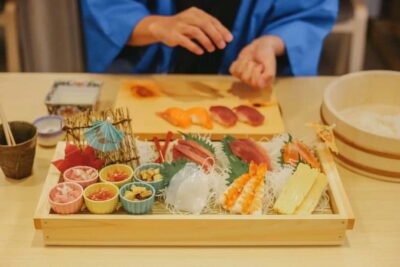
Sushi Making Class in a Happi Coat near a Famous Spot
Read our review →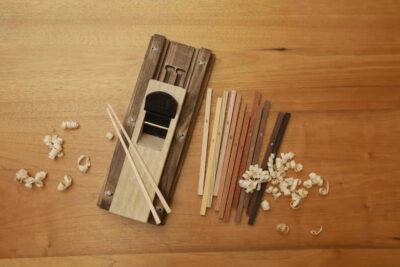
Tokyo Sushi Making Class in Tsukiji with Professional Chef
Read our review →
Ramen & Gyoza Cooking Class in Tokyo with Local Supermarket Visit
Read our review →
Matcha Making Class in Tokyo with Authentic Japanese Sweets Set
Read our review →Browse the lists this tour appears in