
Reviewed · SUMO EXPERIENCES
Ultimate Sumo Tournament: Tokyo, Osaka, Nagoya, Fukuoka
The best part of this experience is simple: you get to watch an official Japanese sumo tournament while someone explains what is happening. Sumo can look baffling at first, but a guide such as Hiro, Myoko, Yumi, or Taku can point out the rankings, rituals, techniques, and rivalries that give each bout meaning. The headset matters, since the arena gets loud.
I like the reserved seat, especially because tournament tickets can sell out quickly. I also like the choice of a chanko hot pot dinner, which gives the afternoon a tasty link to sumo life. The main consideration is price: at about $184.38 per person, you are paying for access, ticket handling, and expert help, not just a seat.
In This Review
- Key points to know before booking
- Why a sumo tournament is worth your afternoon
- The tournament calendar shapes your Japan trip
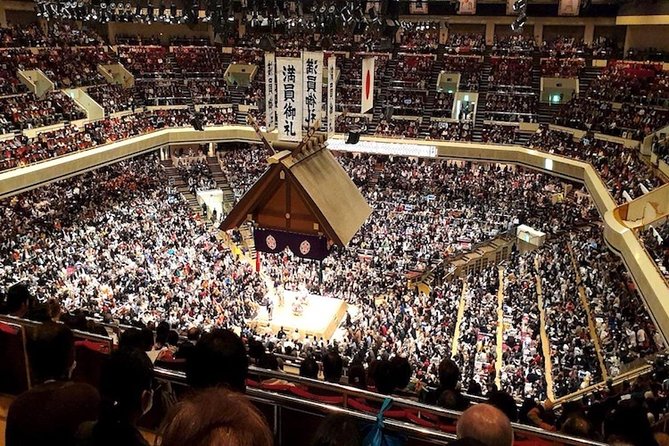
- Entering Ryogoku Kokugikan in Tokyo
- Osaka, Nagoya, and Fukuoka bring the same sport to different halls
- What you actually watch during the four hours
- The chanko dinner adds a fitting second act
- The off-season stable visit is not a tournament ticket
- Is $184.38 good value?
- Booking timing and important limits
- Who should book this sumo experience?
- Should you book it?
- FAQ
- When do the official sumo tournaments take place?
- What is included in the tournament tour?
- Where are the standard seats?
- Is dinner included?
- What happens during the off-season?
- Can I cancel or change my booking?
Key points to know before booking
- Official tournaments happen only six times a year: Tokyo in January, May, and September; Osaka in March; Nagoya in July; and Fukuoka in November.
- The guided visit lasts about four hours: You receive a reserved seat, an English-speaking guide, an information pamphlet, a ranking chart, and an audio headset.
- Standard seats are on the second floor: Expect B or C chair seats, with B seats generally in rows 7 to 11. Private tours offer closer S or A seats.
- The optional dinner is chanko nabe: This sumo-style hot pot normally uses chicken or pork broth, with a vegetarian option available if requested in advance.
- The off-season option is a different experience: You visit a stable near Warabi Station for morning practice and chanko lunch, but you do not attend a tournament.
- Book early and plan carefully: Ticket availability is not guaranteed until group tickets are released, and the booking is normally non-refundable.
Why a sumo tournament is worth your afternoon
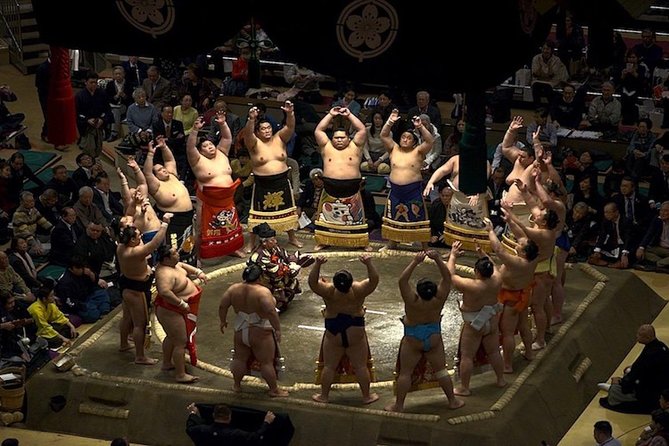
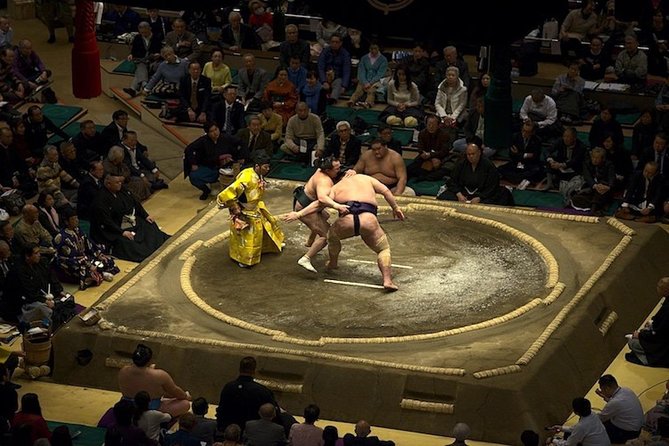
Sumo is much more than two large athletes pushing each other out of a ring. The match may last only seconds, yet the ceremony around it is slow, formal, and full of meaning. Wrestlers enter, stamp, clap, scatter salt, and face each other with an intensity that makes the short bout feel like the final scene of a long drama.
If you know nothing about sumo, the guide gives you a way into that world. You receive a banzuke-hyo, the official ranking table, so you can follow who is competing and where each wrestler sits in the hierarchy. The guide also explains famous wrestlers, basic techniques, and the customs that shape the sport.
I especially value the live commentary. A bout can be hard to follow when the action starts and ends in a flash. Guides such as Hiro, Junka, Izumi, Shunsuke, and Seizo have been praised for explaining wrestler form, age, rank, style, and the small details around each match. The audio receiver lets you hear the guide over the crowd, though one person found the headset too loud even at its lowest setting. Bring earplugs or volume-dampening earbuds if you are sensitive to sound.
You are not locked into a lecture for four hours. The format includes time to watch the action, buy food and drinks inside the arena, use the facilities, or look around. That balance works well. You get help when you need it, then space to enjoy the crowd and the spectacle on your own.
More sumo mornings:
- Tokyo: Sumo Show Experience with Chicken Hot Pot and a Photo
★ 4.8 · 6,678 reviews - Tokyo: Sumo Show and Dining Experience
★ 4.8 · 2,742 reviews - the SUMO show
★ 5.0 · 1,960 reviews
The tournament calendar shapes your Japan trip
The official basho take place six times each year, and each lasts 15 days. The tournament opening and closing dates fall on Sundays, but the exact dates change from year to year.
The schedule is:
- January, Tokyo
- March, Osaka
- May, Tokyo
- July, Nagoya
- September, Tokyo
- November, Fukuoka
This is important because you cannot simply choose any date during an ordinary Japan visit and expect a grand tournament to be running. Check the basho dates before building your itinerary. If your trip does not overlap with one, the stable practice option may fill the gap, but it is not a substitute for tournament day.
The city also changes the flavor of the outing. Tokyo’s Ryogoku Kokugikan is the natural setting for a sumo visit, with the sport closely tied to the Ryogoku district. Osaka uses EDION Arena Osaka, Nagoya uses IG Arena, and Fukuoka uses the Fukuoka Kokusai Center. Each location hosts its seasonal tournament, so the city choice is usually determined by your travel dates.
Entering Ryogoku Kokugikan in Tokyo
The Tokyo option takes place at Ryogoku Kokugikan, Japan’s official sumo hall. The meeting time is listed as 2:00 pm, with the exact meeting point sent in the tour details at least one week before the date. You arrange your own transport, so leave enough time to reach the area and find the meeting spot.
The guide first helps you get your bearings. Depending on crowd conditions, this can include a short arena orientation and time near the Sumo Museum. The museum may be crowded, and a large group may be asked to visit it independently rather than move through together. That is a practical choice, not a major flaw, but it means you should not expect a fully guided museum walk.
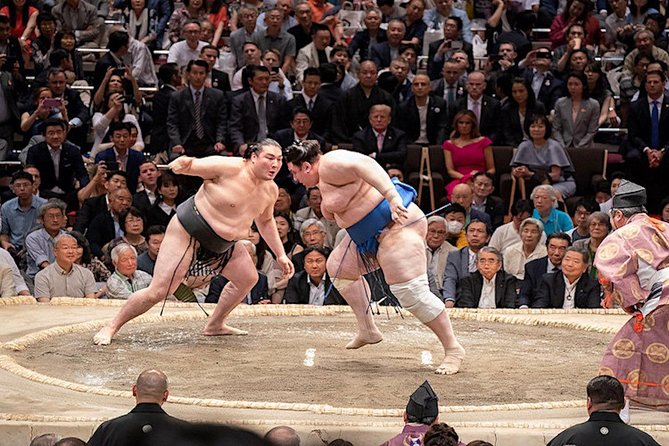
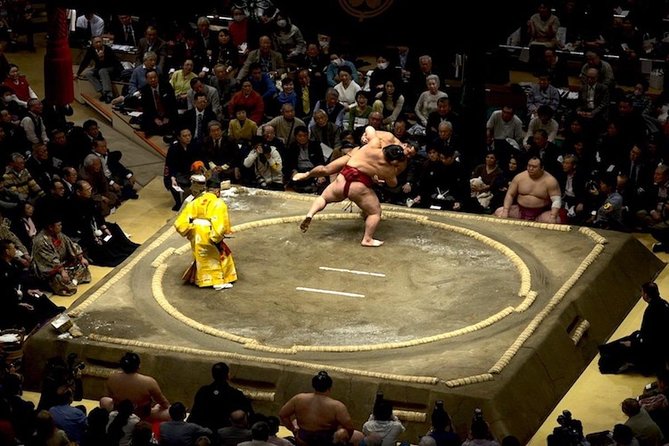
After the introductory portion, you are taken to the reserved seats. The standard group option seats up to 20 people in the same area, with B-class or C-class chair seats on the second floor. B seats are generally in rows 7 to 11. These are not ringside seats, but they give you a broad view of the dohyo and the ceremonies around it.
The private option uses S-class or A-class seats, closer to the ring. That upgrade may suit serious sumo fans, families wanting a more personal guide, or anyone who values proximity over price. The standard seats are the better value for most first-time visitors, especially since the headset commentary adds much of the experience.
Ryogoku Kokugikan can run warm, so dress lightly. Food and drinks are sold inside, but outside food and beverages are not allowed. The arena soft-serve ice cream has earned special praise, and it makes a pleasant break between bouts.
Osaka, Nagoya, and Fukuoka bring the same sport to different halls
The Osaka tournament takes place at EDION Arena Osaka during the March basho. The guided visit lasts about four hours, and the reserved tournament ticket is part of the experience. The setting is different from Tokyo, but the basic value remains the same: you get into an official event and have an English-speaking guide to explain the sport.
Nagoya hosts the July tournament at IG Arena. Summer conditions may make light clothing useful, though the supplied information does not specify the indoor temperature. As with the other cities, you should treat the meeting point as date-specific and wait for the final details sent by email.
The Fukuoka tournament takes place at Fukuoka Kokusai Center in November. This is the year-end basho, and it can fit nicely into a Kyushu itinerary if your dates line up. The tour brings you into the tournament for about four hours, with the guide helping you follow the bouts and traditions.
Do not expect the same seat category in every city unless your booking confirmation says so. The standard description covers B or C seats, while private bookings use S or A seating. Ask about the exact location if the view is important to you.
A few more Tokyo bookings worth comparing
- Mt Fuji and Hakone 1-Day Bus Tour Return by Bullet Train
★ 5.0 · 26,383 reviews - 1-Day Tokyo Bus Tour
★ 5.0 · 14,250 reviews - Tokyo: TOKYO SKYTREE® Admission ticket
★ 4.5 · 11,192 reviews - Tokyo: teamLab Planets TOKYO Digital Art Museum Entry Ticket
★ 4.6 · 9,779 reviews
What you actually watch during the four hours
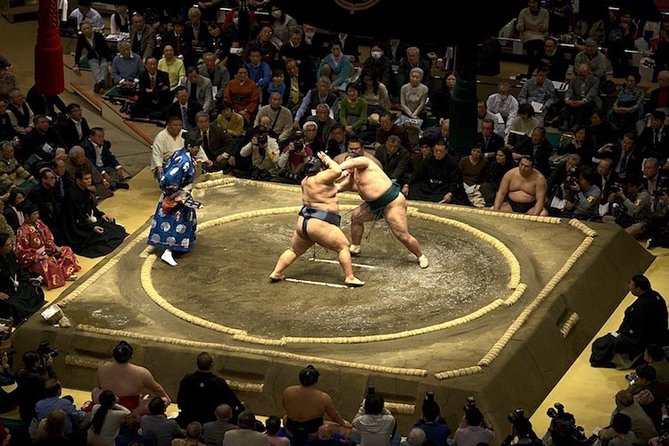
The tournament day is not just the top matches. You can see the pageantry, the wrestlers’ preparation, the formal ring rituals, and the bouts themselves. The guide helps you understand the structure instead of leaving you to guess why wrestlers are throwing salt or why a match has not started yet.
One useful point from the experience is that the schedule may include all of the top division bouts and about half of the second division bouts. This gives you a substantial look at the day’s competition, though the exact flow depends on the tournament schedule and the time you enter.
The matches are fast. That is why the guide’s comments before each bout are useful. You might learn which wrestler has a particular style, where an athlete sits in the rankings, or how one technique differs from another. The explanations also help you notice how much of sumo is position and timing rather than raw size.
The guide will not necessarily speak continuously through every moment. One lower-rated experience found the explanations too limited, while most of the feedback praised the guides for clear commentary and useful background. I would view this as a guided introduction rather than a private, nonstop lesson. If you want constant personal attention, choose the private option and clarify the format before booking.
The chanko dinner adds a fitting second act
You can add dinner at a local chanko hot pot restaurant. Chanko nabe is associated with sumo stables and is designed to feed many hungry people at once. The broth usually contains chicken or pork, along with vegetables and other ingredients, and it is served as a communal hot pot.
The dinner does not include drinks unless the booking says otherwise. Vegetarian meals are possible, but you need to request one in the special requirements field. Traditional broth often uses chicken or pork, and the restaurant may substitute a vegetarian broth. Once the dinner request is accepted, changes cannot be made within one week of the tour date.
I like this add-on because it connects the sport to daily sumo culture. It is not just an extra meal after an event. It gives you a chance to understand why chanko has such a strong place in the life of wrestlers, who need large, nourishing meals after training.
The meal can also be useful if you want the day to feel neatly organized. You watch the tournament, then sit down for a local meal rather than figuring out dinner in a crowded neighborhood. Still, compare the added cost at checkout and make sure the menu suits your group.
The off-season stable visit is not a tournament ticket
On dates outside the six official basho, the experience may switch to a morning practice visit at a sumo stable near Warabi Station. Warabi is about 30 minutes from Tokyo Station. The practice runs from 8:00 am to noon, with a join-in group of about 8 to 16 people.
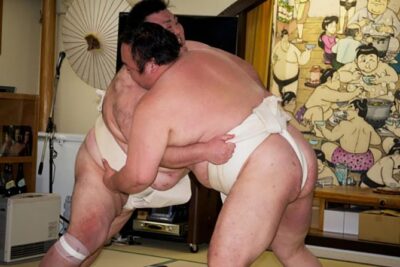
This is a quieter and more intimate way to see sumo. You watch wrestlers train at an authentic stable while an expert guide explains what is happening through an audio headset. The visit includes chanko lunch after the practice.
Pay close attention to the wording when booking. The stable option does not include a tournament seat because no tournament is taking place on those dates. You are watching training, not competition. That may be a better fit if you care about daily discipline and close observation, but it will disappoint you if your main goal is the roar of a tournament crowd.
The meeting directions for the stable are sent one week before the date. Transportation is not included, so you make your own way to the meeting point near Warabi Station.
Is $184.38 good value?
At about $184.38 per person, this is not a cheap afternoon. The price makes more sense when you separate the parts: a reserved tournament ticket, ticket arrangement and seating service, an English-speaking local expert, a ranking chart, an information pamphlet, and an audio headset.
The ticket service may be the biggest practical benefit. Official tickets can sell out very quickly, sometimes within minutes of release. If you are trying to attend on a short trip, paying for a reliable route into the arena may be worth more than spending time trying to secure a ticket yourself.
The standard group option is the sensible choice for most people. You share the experience with up to about 20 people and sit on the second floor, but you still receive commentary and a reserved place. The private option costs more, yet it gives you closer S or A seats and a more personal format.
The dinner is an extra value decision. Add it if you want a sumo-themed meal and help with the evening. Skip it if you prefer to choose your own restaurant or need a highly specific diet.
Booking timing and important limits
Book ideally three months before your travel date, or at least one month ahead. Group tickets are released by the Sumo Association about four to seven weeks before the tournament date. If tickets cannot be obtained, you should be notified within four weeks before the tour and offered another date or a full refund.
The experience is normally non-refundable and cannot be changed after booking. That is a serious point for a trip with uncertain plans. Check your Japan schedule, basho date, city, and dinner choice before paying.
Poor weather or failure to reach the minimum group size can lead to cancellation. In those cases, an alternative date or experience, or a full refund, is offered. Hotel pickup and transportation are not included, so you need to handle the journey to the meeting point yourself.
Who should book this sumo experience?
I would choose this for a first visit to Japan when sumo is on your dates but you do not know the sport well. The guide turns a fast and unfamiliar event into something you can follow. It is also a strong choice for families, couples, and small groups who want one distinctly Japanese activity rather than another sightseeing stop.
It suits you especially well if you value access and explanation. The reserved seat removes some ticket stress, and the headset means you can hear the guide even when the arena gets noisy. Guides including Hiro, Myoko, Yumi, Shunsuke, Taku, Junka, and Izumi have been singled out for clear, enthusiastic help, though the quality of commentary can vary by guide and group.
You may want to skip it if you dislike fixed schedules, non-refundable bookings, or group activities. You should also think twice if you expect ringside seats at the standard price. Standard seating is on the second floor, while closer S or A seats belong to the private option.
Should you book it?
Book this tour if an official basho matches your Japan itinerary and you want more than a ticket. The strongest reasons are the difficult-to-get entry, the seat reservation, and the guide’s explanations of rankings, rituals, and techniques.
Choose the standard tour for the best balance of cost and help. Choose private seating if closeness to the ring matters greatly. Add chanko dinner for a full cultural outing, and choose the stable practice option only if you understand that it replaces the tournament rather than supplementing it.
For a first-time visitor, this is a practical way to make sense of sumo and enjoy the arena atmosphere without studying the sport beforehand. It is a special event, but the price and strict cancellation terms mean you should book with firm dates and realistic expectations.
FAQ
When do the official sumo tournaments take place?
Official basho take place six times each year: Tokyo in January, May, and September; Osaka in March; Nagoya in July; and Fukuoka in November. Each tournament lasts 15 days.
What is included in the tournament tour?
The experience includes a reserved sumo seat, an English-speaking guide, a sumo information pamphlet, a banzuke ranking chart, an audio headset, and the ticket arrangement and seating service. Dinner and transportation are not included unless selected or arranged separately.
Where are the standard seats?
Standard group seats are B-class or C-class chair seats on the second floor. B seats are generally in rows 7 to 11. Private tours use S-class or A-class seats closer to the ring.
Is dinner included?
Dinner is optional. If selected, it is normally a chanko nabe hot pot meal without drinks. Vegetarian meals can be requested in advance through the special requirements field.
What happens during the off-season?
The off-season option visits a sumo stable near Warabi Station, about 30 minutes from Tokyo Station. You watch morning practice, hear explanations through an audio headset, and have chanko lunch. This option does not include a tournament ticket.
Can I cancel or change my booking?
The experience is non-refundable and cannot normally be changed. If the tour is canceled because of poor weather or because the minimum group size is not reached, you will be offered another date or experience, or a full refund.
New on our Tokyo list
- From Tokyo: Mount Fuji & Hakone Full Day Private Tour★ 4.9 · 25 reviews
- Tokyo Spectacular View Day-Cruise in 90 Minutes★ 5.0 · 25 reviews
- Real Tokyo Runner Club : Daikoku Car Meet Night Tour with JDM Car★ 5.0 · 25 reviews
- 2.5 Hour-Guided Cycle Tour in the Central Tokyo★ 5.0 · 25 reviews
- Ramen Making from Scratch +Akihabara Tour –Cooking Class★ 5.0 · 25 reviews
- [Self-Drive] Tokyo & Daikoku Custom Car Driving Tour★ 4.9 · 25 reviews
- Tokyo: 2-Hour Night Bike Tour of the City’s Hidden Gems★ 4.9 · 25 reviews
- Samurai themed Entertainment show in Shinjuku★ 4.5 · 25 reviews
Sumo Experiences, compared.
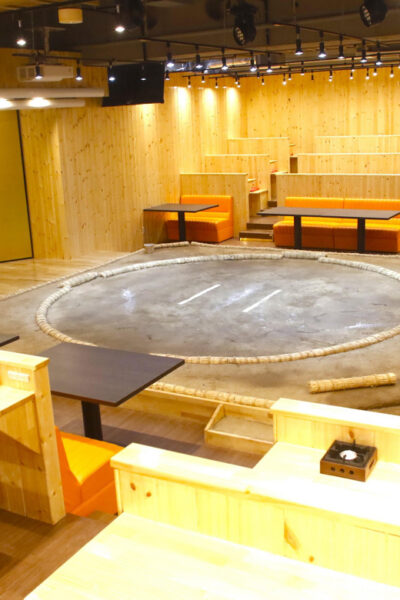
Sumo Show Experience with Chicken Hot Pot and a Photo
Read our review →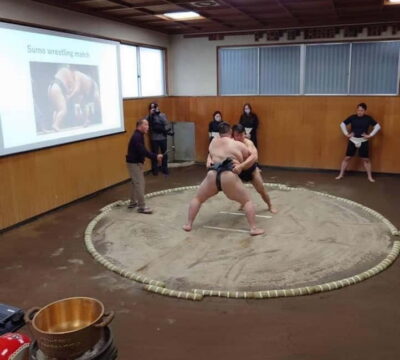
Tokyo Shinjuku Sumo Show & Experience with Photo
Read our review →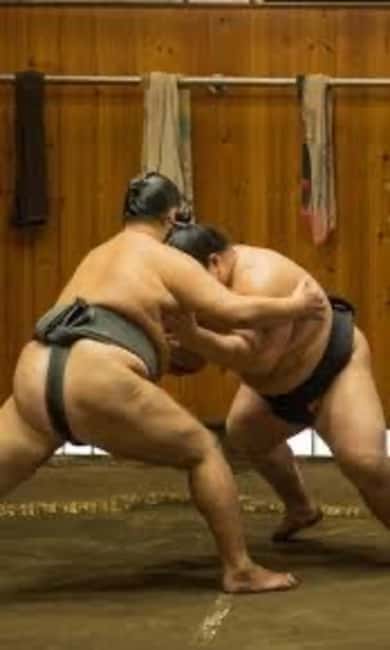

Authentic Sumo Experience in Tokyo: Enter the Sanctuary
Read our review →
Luxury Sumo Show Experience & Japanese cuisine & Drink
Read our review →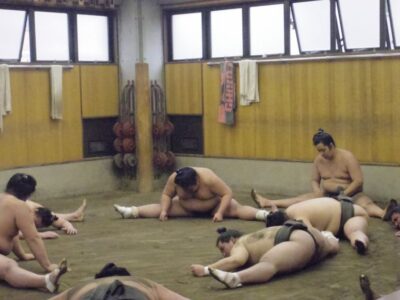
Browse the lists this tour appears in