
Reviewed · SUSHI EXPERIENCES
3-Hour Small-Group Sushi Making Class in Tokyo
Tokyo’s sushi counters can be intimidating. This three-hour Cooking Sun class gives you a friendlier way in: you make several sushi styles, learn the role of rice and seasonings, then sit down to eat what you prepared. The class covers nigiri, inari, hosomaki, California rolls, tamagoyaki, miso soup, and dashi.
I like the small maximum of nine people, which leaves room for hands-on help, and I like that the English-speaking instructors, including Yuki, Yuko, Aya, and Yuma, explain both technique and Japanese food customs. The main limitation is clear: fish comes pre-sliced, so this is a sushi assembly and cooking class, not a lesson in cutting whole fish.
In This Review
- Key points at a glance
- A quiet Shinjuku setting for a hands-on lesson
- Starting with dashi, miso, and Japanese seasonings
- Making tamagoyaki before the sushi
- Learning sushi rice, the part that matters most
- Four styles, four different skills
- The meal at the end is part of the lesson
- Friendly instruction for children and first-time cooks
- What the three hours really give you
- Is $72.67 a fair price?
- Who should book this Cooking Sun class?
- Should you book it?
- FAQ
- Where does the sushi-making class meet?
- What time does the class begin?
- How long does the experience last?
- What sushi styles will I make?
- Does the class include raw fish cutting?
- Is the class suitable for children?
- Is a vegetarian option available?
Key points at a glance
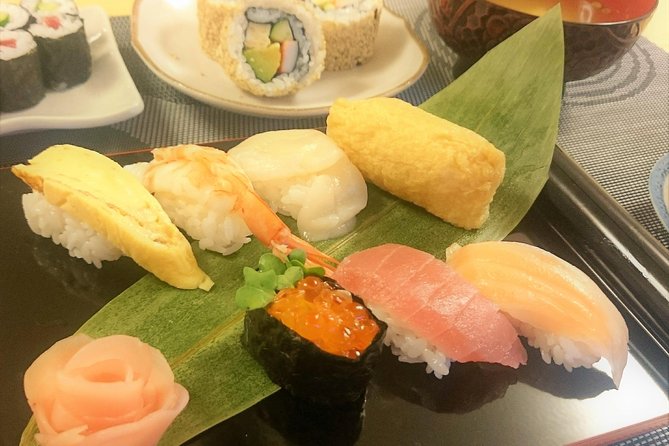
- Four sushi styles in one class: Make nigiri, inari, hosomaki, and California rolls rather than focusing on only one format.
- A full Japanese meal: Your work includes sushi, miso soup, tamagoyaki, fresh wasabi, and pickled ginger.
- Small class size: No more than nine people means you can ask questions and get help shaping rice and rolls.
- Good for beginners and families: The minimum age is six, and the instructors are used to helping children and first-time cooks.
- English-friendly instruction: The lesson is taught by local English-speaking cooking instructors.
- Home kitchen value: You receive recipes and learn basic methods you can repeat after returning home.
A quiet Shinjuku setting for a hands-on lesson
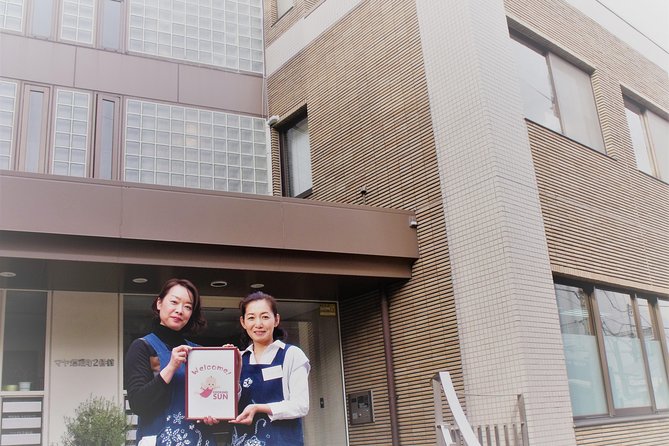
The class meets at Cooking Sun Tokyo, at 18-39 Shinanomachi in Shinjuku City. The studio is near public transportation, but the setting is described as a quiet residential area away from the main roads. That matters in Tokyo, where a calm cooking room can feel like a welcome break from packed streets and constant noise.
You meet at 1:30 pm and finish back at the same location about three hours later. This makes the class easy to fit into an afternoon, though you should leave enough time to find the address without rushing. Hotel pickup and drop-off are not included, so you handle your own transport to and from Shinanomachi.
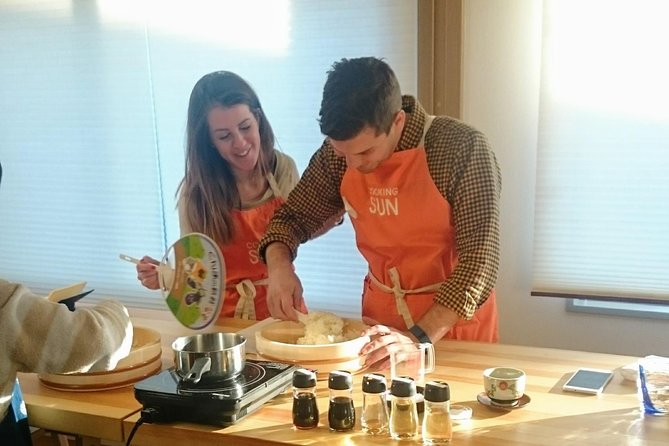
The cooking room is equipped for a small group and kept comfortably cool, an especially useful detail during Tokyo’s hot summer months. Aprons and towels are provided, so you do not need to pack special clothing or equipment. Just arrive ready to work with food and eat a substantial meal.
More sushi mornings and classes:
- Sushi Making Tokyo Roll and Authentic Japanese Sushi Class
★ 5.0 · 3,971 reviews - Tokyo: Roll and Authentic Sushi Making Class in Asakusa
★ 4.9 · 1,957 reviews - Make Sushi and Create Unforgettable Memories in Tokyo
★ 5.0 · 1,413 reviews
Starting with dashi, miso, and Japanese seasonings
The lesson begins with an introduction to basic Japanese ingredients. You learn about dashi, miso, and traditional seasonings before moving into the cooking. This opening gives the class more substance than a simple roll-making demonstration.
Dashi is a foundation for many Japanese dishes, and miso soup gives you a practical example of how seasoning and broth work together. You also get a better sense of how Japanese cooking often depends on balance rather than a long list of ingredients. For a first visit to Japan, this context helps connect sushi to the wider food culture.
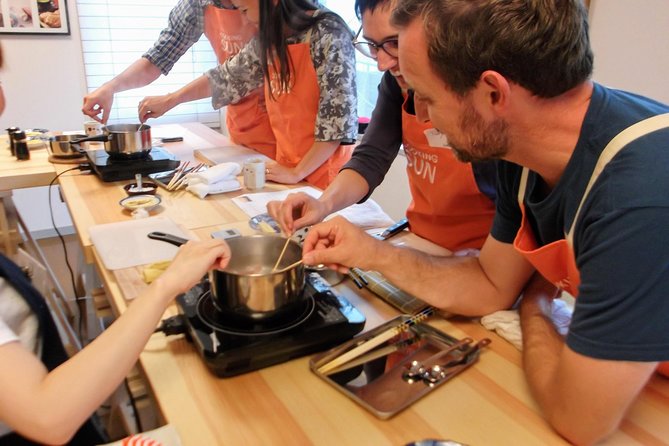
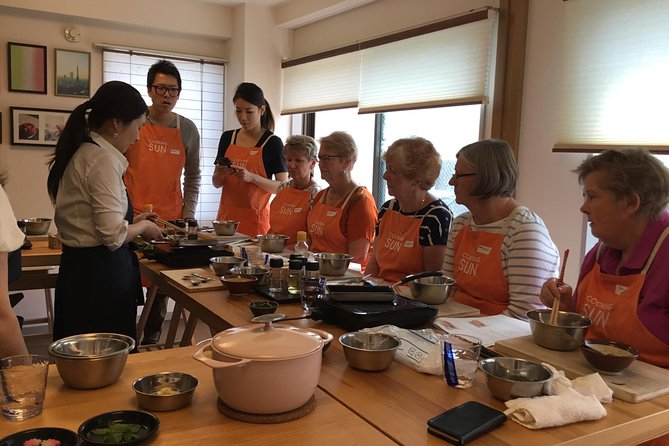
The instructors explain the steps in English and demonstrate before you begin. That sequence is useful for beginners. You can watch the movement first, then copy it with someone nearby to correct your technique. You do not need prior cooking experience, and the class is designed so that even people who rarely cook can follow along.
The small format is important here. With nine people or fewer, the instructors can move around the room, check your work, and answer questions. You are not simply standing at the back of a large demonstration kitchen.
Making tamagoyaki before the sushi
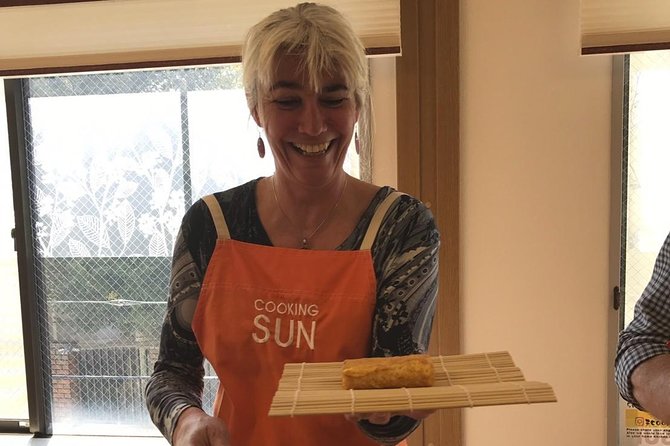
One of the more interesting parts of the class is tamagoyaki, the Japanese rolled omelet. You prepare it before assembling the sushi, then use it as a filling and topping.
Tamagoyaki can look simple, but rolling the egg into neat layers takes some care. It is often the moment when you realize that Japanese cooking rewards patience and controlled movement. Your first omelet may not look perfect. That is fine. The point is learning how the layers form and how the finished egg can be cut for sushi.
This step also keeps the class from becoming a narrow lesson in handling rice. You cook an actual Japanese dish, then use it in several preparations. Families may especially enjoy this part because it feels like a small kitchen challenge without requiring advanced equipment.
The class also prepares shrimp and other toppings. The ingredients are supplied, and you do not need to shop or measure everything at home before arrival. That makes the experience simple to book during a busy Tokyo trip.
Learning sushi rice, the part that matters most
Sushi rice is the base of almost every item you make. You prepare it as part of the lesson, rather than receiving a finished bowl and skipping the most important foundation.
The instructors show you how the rice fits into each style. A roll needs an even layer. Nigiri requires a compact but gentle hand shape. Too much pressure produces a dense piece, while too little leaves the rice falling apart. These small differences are easier to understand when you are making the food yourself.
You also learn that sushi is not just about placing fish on rice. Rice texture, seasoning, portion size, and shape all affect how the finished piece feels and tastes. That is useful knowledge to take home, even if your homemade sushi never looks quite as neat as the instructor’s version.
The recipes and ingredients are included. You do not leave with a professional sushi chef’s full training, but you do leave with a workable set of techniques for a home sushi night.
A few more Tokyo bookings worth comparing
- Tokyo Shinjuku Chopsticks Making Class
★ 5.0 · 1,763 reviews - Tokyo: Sushi Making Class in a Happi Coat near a Famous Spot
★ 4.9 · 1,377 reviews - Chopstick Making Workshop in Ginza
★ 4.8 · 1,366 reviews - Tokyo Sushi Making Class in Tsukiji with Professional Chef
★ 5.0 · 1,177 reviews
Four styles, four different skills
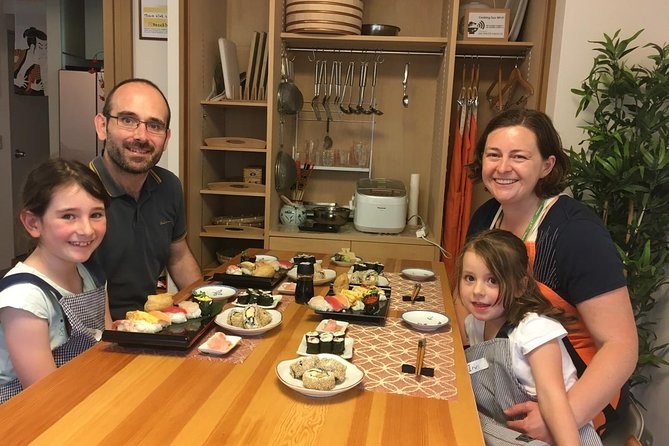
The class covers four main sushi forms. Each one teaches a different motion and gives you a different way to use the prepared ingredients.
Nigiri is hand-pressed sushi, with a small mound of rice and a topping placed over it. This is the style most likely to expose uneven shaping, since the rice must hold together without becoming hard. You learn to work with your hands and to keep each portion manageable.
Inari uses a sweet tofu pouch filled with sushi rice. It is less demanding than some other forms, but it shows how texture and flavor can come from the wrapper as well as the filling. The sweet pouch also provides a pleasant contrast to soy, wasabi, and savory toppings.
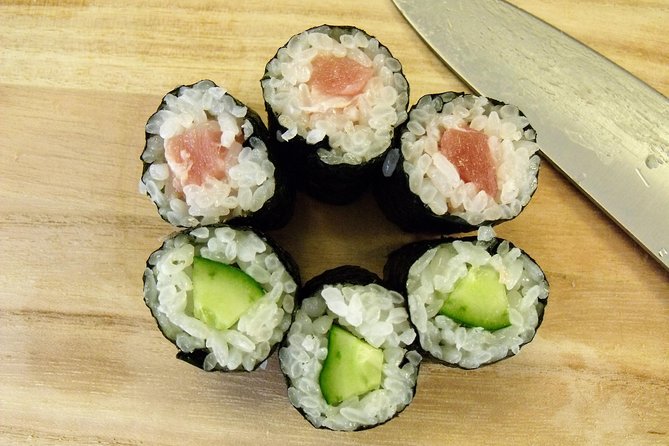
Hosomaki is a thin roll. You spread rice, add filling, and roll it with care so the center stays in place. This is a good introduction to the basic rolling motion because the shape is smaller and less bulky than a large roll.
California roll adds a familiar style to the lesson. It is not a traditional Japanese sushi form, but it is useful for learning how ingredients, rice, and nori work together in a larger roll. Including it makes the class accessible to people who already know sushi mainly through menus outside Japan.
The class can produce a large amount of food. Plan to arrive hungry, but do not assume you need to eat beforehand. The meal at the end includes the sushi you prepare, along with miso soup, fresh wasabi, and pickled ginger.
The meal at the end is part of the lesson
Once the cooking is finished, you sit down and eat your work. This is more than a reward for getting through the instructions. It gives you a chance to compare the different sushi styles and notice how the rice, fillings, and toppings work together.
The food is described as plentiful, with some people finding it difficult to finish everything. That is a real value point at $72.67 per person. You are not paying only for a short demonstration. The price includes the instructor, ingredients, recipes, apron and towel rental, instruction, and a full meal.
Do not book this expecting the rarest fish in Tokyo. The fish is pre-sliced, and the class does not teach fish cutting. One useful assessment is that the food can still be delicious while the lesson focuses on technique rather than luxury ingredients. If your priority is a high-end sushi tasting, choose a sushi restaurant instead. If your priority is understanding how sushi is put together, this class offers more lasting value.
The meal also creates an easy social finish. The class attracts solo participants, couples, and families, and the small room supports conversation without turning the afternoon into a loud group event.
Friendly instruction for children and first-time cooks
The minimum age is six, making this a practical family activity. Children can take part in the rolling, shaping, and assembly, while adults may appreciate the explanations of rice, dashi, and Japanese cooking methods.
The instructors are patient with fumbling hands and uneven sushi. Their role is not to make every piece look identical. They guide you through the process so you can understand what you are doing and improve as you go.
English is used throughout the class. That removes one of the main worries for international visitors, especially when instructions involve pressure, timing, or delicate shaping. You can ask questions as you work rather than trying to follow a silent demonstration.
Vegetarian preparation is available, but you need to request it when booking. You should also give the provider any other dietary requirements at that time. Do not wait until you arrive, since ingredient planning is part of the preparation.
What the three hours really give you
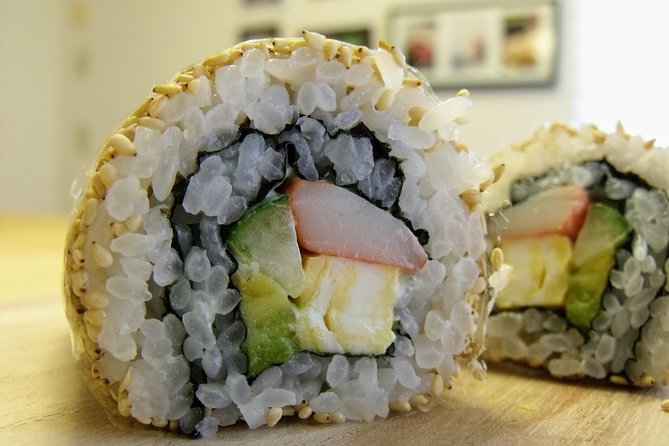
Three hours is enough for a substantial introduction, but not enough to turn you into a sushi professional. You learn the basic methods, make several styles, cook tamagoyaki, prepare sushi rice, and work with soup and seasonings.
The pace is likely to feel active without being rushed. There is a demonstration, preparation, assembly, and a meal. Because the menu includes several components, you should expect to spend much of the session standing or working at the counter, though the exact layout and rhythm may vary.
The class also offers a useful contrast to restaurant sushi. At a restaurant, you see the finished piece. Here, you learn how much work sits behind the neat appearance of even a simple roll. You begin to notice the difference between hand-pressed rice, rolled sushi, and inari after making each one yourself.
That is the strongest reason to choose this activity. It changes the way you look at sushi for the rest of your trip, and the recipes give you something practical to try at home.
Is $72.67 a fair price?
For Tokyo, $72.67 is not a budget meal, but the comparison should not be made against the cost of buying a few sushi plates. This is a three-hour activity with a local instructor, food, equipment, recipes, and a meal included.
The value improves if you want an activity rather than another restaurant stop. You receive personal guidance, learn several techniques, and eat a generous selection at the end. Families also get a shared project, which can be more memorable than a quick meal.
The price is less attractive if you want premium seafood, an advanced chef lesson, or instruction in cutting fish. Those are not part of the class. The focus is approachable home-style sushi preparation with pre-sliced fish and several accessible formats.
The fact that the class is often booked 53 days ahead is a good reason to plan early, especially if you need a particular date or a vegetarian option. Confirmation arrives at booking, and free cancellation is available up to 24 hours before the start time. Cancellations or changes inside that window are not refunded or accepted. The activity also has a weather-related cancellation rule, with another date or a full refund offered if poor weather forces cancellation.
Who should book this Cooking Sun class?
I would put this high on the list for first-time visitors who want an activity tied closely to Japanese food. It suits families with children six and older, couples, solo participants, and anyone who likes to learn by doing.
It is also a smart choice if you enjoy sushi but do not know how the rice, omelet, fillings, and wrappers come together. You do not need polished cooking skills. In fact, the class works best when you are willing to laugh at a crooked roll and try again.
You may want to skip it if you have already taken several sushi-making courses, want to cut whole fish, or are mainly searching for an elite tasting experience. The class teaches foundations, not professional knife work or high-end seafood selection.
Should you book it?
Book this class if you want a friendly, useful afternoon and a meal you helped create. The small group, English instruction, patient teaching, and broad menu give you more than a single recipe. You learn enough to try sushi at home, while also gaining a clearer sense of Japanese ingredients and technique.
The best booking tip is simple: reserve early, state dietary needs in advance, and arrive hungry. If you accept that the fish is pre-sliced and the goal is basic preparation rather than chef-level training, this is a well-priced and satisfying way to spend three hours in Tokyo.
FAQ
Where does the sushi-making class meet?
The class meets at Cooking Sun Tokyo, located at 18-39 Shinanomachi, Shinjuku City, Tokyo 160-0016, Japan.
What time does the class begin?
The scheduled start time is 1:30 pm.
How long does the experience last?
The class lasts approximately three hours and ends back at the meeting point.
What sushi styles will I make?
You will learn to make nigiri, inari, hosomaki, and California rolls.
Does the class include raw fish cutting?
No. The fish is pre-sliced, so the class does not include instruction in cutting raw fish.
Is the class suitable for children?
Yes. The minimum age is six years.
Is a vegetarian option available?
Yes. A vegetarian option is available, but you must request it when booking and provide details of any dietary requirements.
More 3-Hour Experiences in Tokyo
- Tokyo Top Highlights 3h Guided E-bike Tour
★ 5.0 · 714 reviews - 3h Tokyo E-Bike Tour: Hidden Gems, and Local Life with guide
★ 5.0 · 670 reviews - Tokyo: 3-Hour Bike or E-Bike City Highlights Tour
★ 4.8 · 435 reviews - Tokyo: 3-hour Guided E-Bike Tour of the City’s Hidden Gems
★ 4.8 · 251 reviews
New on our Tokyo list
- From Tokyo: Mount Fuji & Hakone Full Day Private Tour★ 4.9 · 25 reviews
- Tokyo Spectacular View Day-Cruise in 90 Minutes★ 5.0 · 25 reviews
- 2.5 Hour-Guided Cycle Tour in the Central Tokyo★ 5.0 · 25 reviews
- Real Tokyo Runner Club : Daikoku Car Meet Night Tour with JDM Car★ 5.0 · 25 reviews
- Ramen Making from Scratch +Akihabara Tour –Cooking Class★ 5.0 · 25 reviews
- [Self-Drive] Tokyo & Daikoku Custom Car Driving Tour★ 4.9 · 25 reviews
- Tokyo: 2-Hour Night Bike Tour of the City’s Hidden Gems★ 4.9 · 25 reviews
- Samurai themed Entertainment show in Shinjuku★ 4.5 · 25 reviews
Sushi Experiences, compared.
Sushi Making Tokyo Roll and Authentic Japanese Sushi Class
Read our review →
Roll and Authentic Sushi Making Class in Asakusa
Read our review →
Make Sushi and Create Unforgettable Memories in Tokyo
Read our review →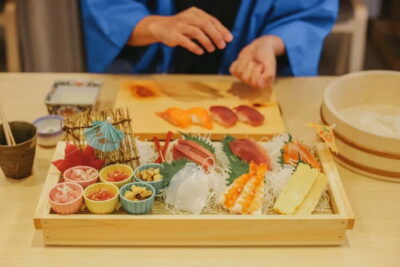
Sushi Making Class in a Happi Coat near a Famous Spot
Read our review →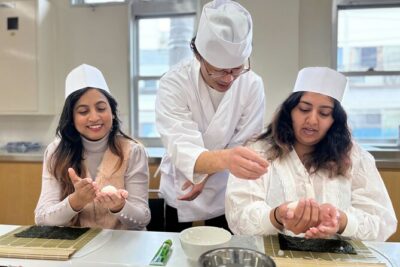
Tokyo Sushi Making Class in Tsukiji with Professional Chef
Read our review →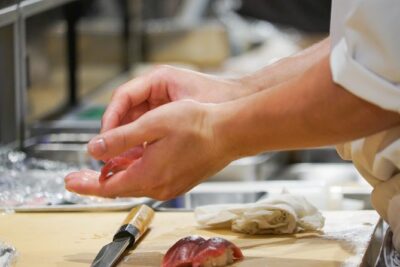
Tokyo Night Foodie Tour in Shinjuku – Seasonal Sushi, Wagyu Beef
Read our review →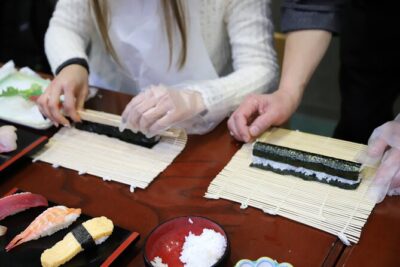
Tsukiji Fish Market Guided Tour and Sushi Making with Pro Chef
Read our review →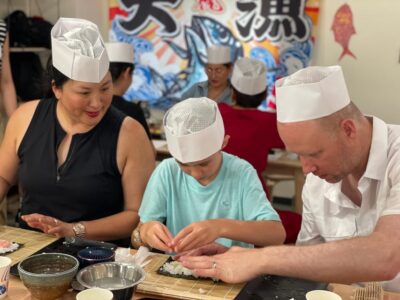
Tsukiji Fish Market Sushi Making Class with Pro Chef
Read our review →Browse the lists this tour appears in