
Reviewed · SHOPPING TOURS
Asakusa: Japanese kitchen knife store visits after history tour
Asakusa’s best souvenir may not be a folding fan or a packet of sweets. This tour takes you from the Sumida River and Senso-ji Temple to Kappabashi Street, Tokyo’s practical shopping district for restaurant supplies and Japanese kitchen knives. It gives you a reason to look beyond the usual temple route.
I like the mix of local history and useful shopping, and I like that the knife stop comes with guidance rather than leaving you to guess among dozens of specialist shops. Guides including Akiko, Kay, Sue, and Amy have helped guests tailor the pace and choose knives. The drawback is simple: if you only want to buy a knife, going straight to Kappabashi will save time.
In This Review
- Key points at a glance
- Why Asakusa and kitchen knives make a smart pairing
- Starting beside the Sumida River
- Seeing Asakusa from the Tourist Information Center
- From Kaminarimon to Nakamise Street
- Senso-ji, Hozomon, and Asakusa Shrine
- A quieter turn through Denboin and Rokku
- Choosing a Japanese knife in Kappabashi
- What the guides add to the morning
- How the timing affects your day
- Is $78.18 a fair price?
- Who should book this experience?
- Should you book the Asakusa knife tour?
- FAQ
- How long does the experience last?
- What time does the tour start?
- Where does the tour begin?
- Where does the tour end?
- Does the tour return to the starting point?
- How many people can join the tour?
- Are headsets provided?
- What places are included in the walking route?
- Is knife shopping included?
- Is hotel transportation included?
- Can I cancel for a full refund?
Key points at a glance
- A temple walk with a purpose: Learn how Senso-ji, Asakusa Shrine, and the Sumida River fit together before shopping.
- Kappabashi is the finale: Spend about an hour among shops selling knives and other restaurant equipment.
- Small groups matter: The maximum is eight people, with headsets supplied for groups of three or more.
- A flexible morning: Guides may adjust the balance between history and shopping, especially with a private-feeling small group.
- A good gift-buying stop: The knife visit works well if you want presents for cooks or a serious tool for your own kitchen.
- One-way sightseeing: You start near Kaminarimon and finish in Kappabashi, without hotel pickup or drop-off.
Why Asakusa and kitchen knives make a smart pairing
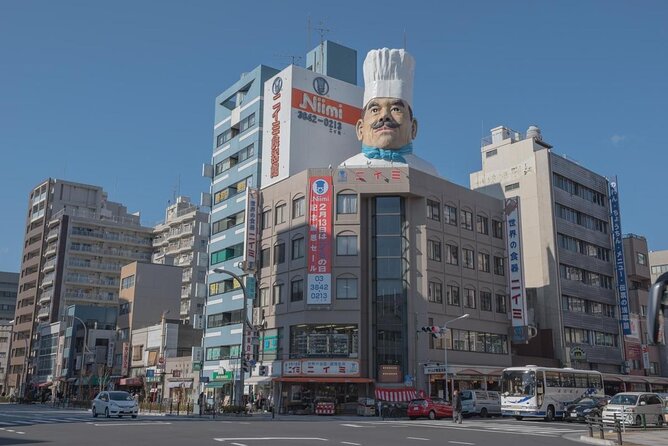
Many Asakusa walks end after the big red lantern at Kaminarimon, a quick look at Senso-ji, and perhaps a snack along Nakamise. This experience keeps going. It uses the temple district as a starting point, then leads you into Kappabashi, where the focus shifts from sacred buildings to the tools used in Japanese restaurants.
That change of subject is the appeal. You get enough context to understand why Asakusa matters, then time to browse a shopping street that serves working kitchens. I find this more useful than a standard shopping excursion because you are not simply pointed toward a store and left alone.
The tour lasts about three and a half hours and starts at 9:30 a.m. The group limit of eight should make it easier to ask questions, compare knives, and tell the guide what you want. For a group of three or more, headsets are included so you can hear the guide even when the street is crowded or the group spreads out.
The experience costs $78.18 per person. That is more than the price of a basic walking tour, so the value depends on your plans. If you want both an introduction to Asakusa and help with a potentially expensive purchase, the combined format can make sense. If your only goal is to buy one knife, the tour is likely too much time and money.
More Asakusa visits:
- Tokyo: Japanese Dance Cabaret Theater Asakusa-Kaguwa Ticket
★ 4.8 · 2,270 reviews - Tokyo: Meiji Shrine, Asakusa, Skytree Bus Tour and Cruise
★ 4.7 · 1,986 reviews - Tokyo: Roll and Authentic Sushi Making Class in Asakusa
★ 4.9 · 1,957 reviews
Starting beside the Sumida River
The meeting point is at 2-chōme-20-6 Kaminarimon in Taito City. From there, the walk begins around Sumida Park and the river. The guide connects the waterway with the origin story of Senso-ji, which reaches back about 1,400 years.
The Sumida River is not just a pleasant backdrop. It has long been one of Tokyo’s important routes and public spaces, and it gives you a wider view of Asakusa before you enter the temple lanes. Allow about 15 minutes here. Admission is not included for this stop, so check the exact meeting instructions and any local arrangements before setting out.
This is a short opening, not a long riverside outing. I would treat it as a scene setter. If you arrive early, the area gives you a useful first look at the contrast between modern Tokyo and old Asakusa.
Seeing Asakusa from the Tourist Information Center
The Asakusa Culture Tourist Information Center is a newer addition to the district, and the tour includes a visit to its open terrace observation deck. You get about 30 minutes here, with no admission fee listed.
The terrace is useful because Asakusa can feel like a maze at street level. From above, you can better place the temple, shopping streets, river, and surrounding city. This stop also breaks up the walking before the group moves into the main temple approach.
It is worth remembering that the view is part of a guided route rather than a separate observation attraction. The time may pass quickly if the guide is explaining the district, but that is exactly what makes the stop useful for a first visit.
From Kaminarimon to Nakamise Street
Kaminarimon, or Thunder Gate, marks the entrance to the religious area. Its huge red lantern is one of Tokyo’s most familiar sights, but the guide adds context that a quick photograph cannot provide.
The gate is a natural place to hear how Buddhist and Shinto sites developed side by side in Japan. You spend about 15 minutes here, then continue along Nakamise Shopping Street.
Nakamise leads toward Senso-ji and has a friendly commercial feel. That may surprise you if you expect a quiet, solemn approach to a temple. Shops line the route, and the street functions as part of the sightseeing experience as much as a path to the main hall.
You have another 15 minutes here. That is enough for an introduction and a look around, but not a long shopping session. I would save serious browsing for Kappabashi later, where the shopping is the main event.
A few more Tokyo bookings worth comparing
- Tokyo Tsukiji Fish Market Food and Culture Walking Tour
★ 5.0 · 3,184 reviews - Tokyo: Tsukiji Fish Market Food and Walking tour
★ 5.0 · 1,724 reviews - Tokyo: Tsukiji Fish Market Guided Walking Tour
★ 4.9 · 1,397 reviews - Tsukiji Fish Market Guided Tour and Sushi Making with Pro Chef
★ 5.0 · 775 reviews
Senso-ji, Hozomon, and Asakusa Shrine
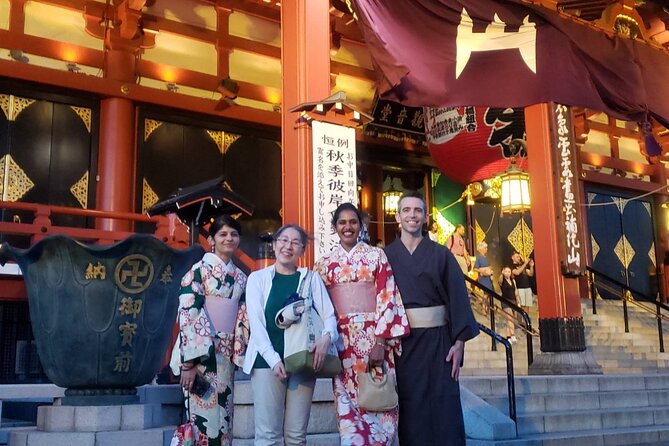
Hozomon is the inner of the two large gates leading toward Senso-ji. Its second story holds Buddhist treasures, and the two-level structure gives the approach a grand sense of arrival.
The tour allows 15 minutes at Hozomon, followed by about 15 minutes at Senso-ji itself. Senso-ji is Tokyo’s oldest temple and one of the city’s major religious sites. A five-story pagoda stands nearby, and the guide explains its place in the temple grounds and the significance of the Buddha’s ashes associated with it.
This is the part of the walk where a guide earns the fee. The buildings are easy to photograph, but their connections are less obvious. A clear explanation helps you see the site as more than a chain of gates, lanterns, and souvenir shops.
Next comes Asakusa Shrine, a Shinto shrine beside the Buddhist temple. The two religions sharing one compound can seem puzzling at first, especially if you are new to Japanese religious history. The guide explains how these traditions can exist together rather than treating the arrangement as a strange exception.
You do not need specialist knowledge to enjoy this section. The route is designed to give you a basic framework, and the short stops keep the morning moving.
A quieter turn through Denboin and Rokku
After the main temple area, the route moves toward Sensō-ji Denboin Garden and the Rokku area. The listed time is about 30 minutes, making this one of the longer history stops before Kappabashi.
Denboin provides a change from the formal temple approach. The walk then reaches Asakusa’s traditional entertainment quarter, where the guide traces the district from the Meiji period into the present. This part helps explain why Asakusa feels different from Tokyo’s office districts and newer shopping zones.
There is a practical limit here. The garden and some sections of the route may be viewed from outside or along public paths rather than experienced as a long garden visit. Still, the area gives the tour a better sense of Asakusa’s daily character and past amusements.
If you prefer nonstop shopping, this half hour may feel like a delay. If you want the knife purchase to come with a sense of place, it earns its time.
Choosing a Japanese knife in Kappabashi
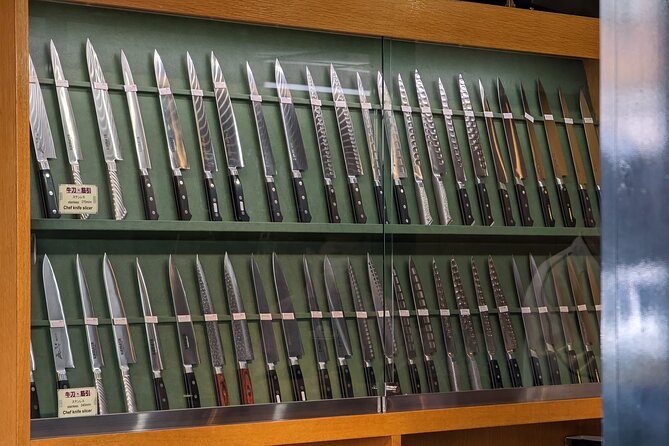
The final stop is Kappabashi Street, also called Kappabashi Dogugai. The tour allows about one hour here, and this is where the experience becomes especially practical for cooks.
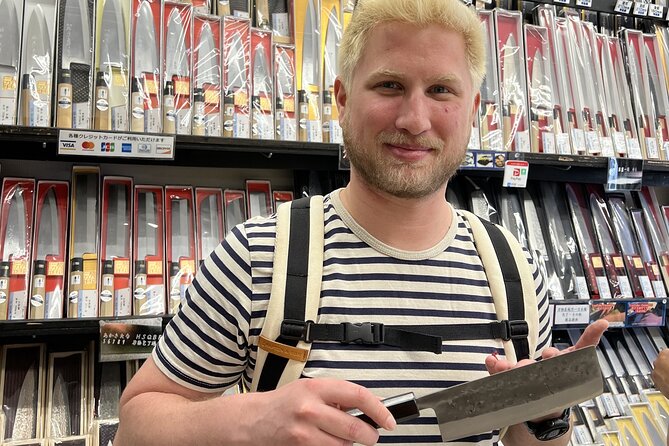
Kappabashi is adjacent to Asakusa and is lined with shops selling supplies for restaurant operators, including kitchen knives. The point is not simply to admire Japanese craftsmanship. You can compare tools, explain what you cook, and get help selecting a knife that suits your needs.
The supplied details do not specify particular brands, blade materials, prices, or shops, so you should not book expecting a fixed product demonstration or a guaranteed discount. The benefit is the guide’s assistance while you shop. That can be useful when labels, sharpening terms, and blade styles are unfamiliar.
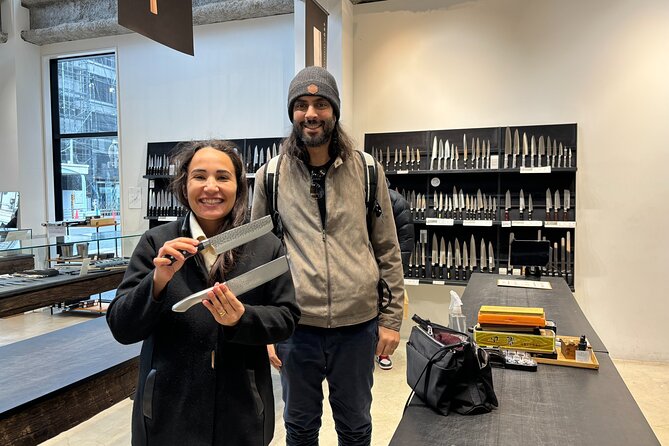
Guests have bought several knives as gifts for chef friends, which tells you something about the stop’s flexibility. You might shop for a professional cook, a home chef, or yourself. A guide can also help keep the purchase focused if the number of choices becomes confusing.
The tour ends in Kappabashi at 3-chōme-18-2 Matsugaya, rather than returning to the Kaminarimon meeting point. That is convenient if you want to keep shopping, but you need to plan your own onward journey. There is no hotel pickup or drop-off.
What the guides add to the morning
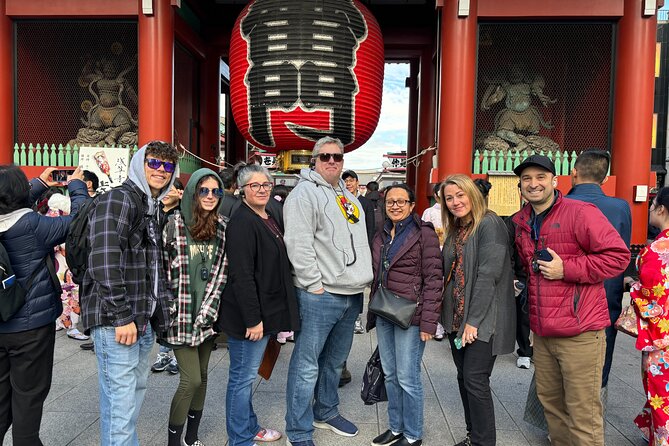
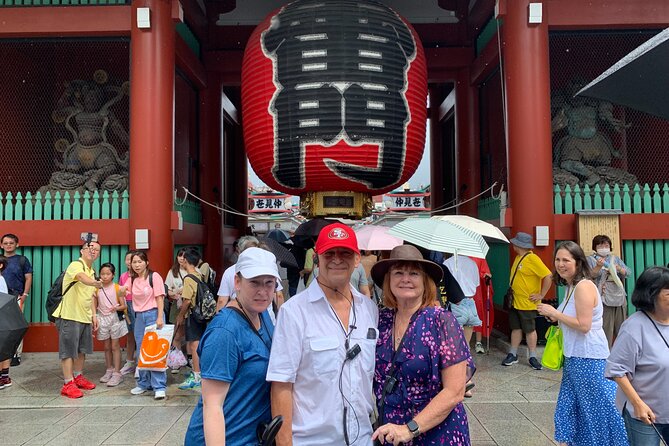
The guide is central to the experience because the route contains two different kinds of information. The first is cultural: temple origins, Buddhist and Shinto customs, and the changing role of Asakusa. The second is practical: how to approach a specialist knife purchase.
Akiko adjusted the tour for a couple who cared more about knives than a long history walk. Kay helped with knife selection after a strong neighborhood history tour. Sue was praised for clear stories about Asakusa, while Amy helped explain Senso-ji before taking the group to the knife street.
Those examples suggest a useful question to ask yourself before booking: do you want a fixed sightseeing lecture, or do you want a guide who can respond to your interests? With a maximum of eight people, the format has a better chance of feeling personal than a large city tour.
The itinerary is fairly specific, but the balance can change. If you want full time at every temple stop, say so. If you already know Asakusa and want more help with knives, say that too. The small group gives you a reasonable chance to shape the morning.
How the timing affects your day
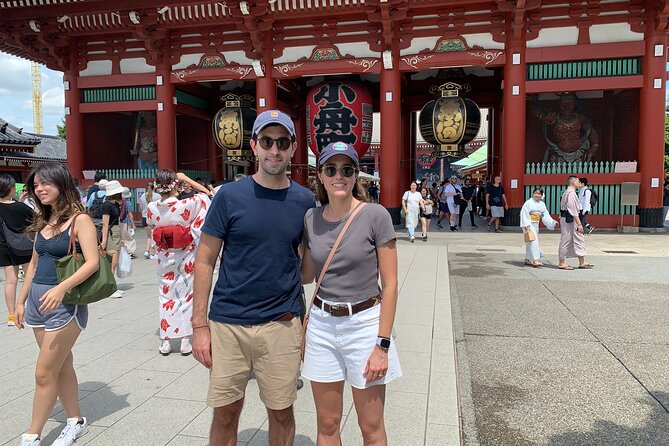
At 9:30 a.m., the tour uses the morning well. You visit the river, observation deck, gates, temple, shrine, garden area, and Kappabashi before lunch. The total time is about three hours and 30 minutes, though walking and shopping can make the pace feel different from a simple point-to-point tour.
The route is one-way. You begin near Kaminarimon and finish near Kappabashi, so do not leave luggage or other plans based on returning to your starting point. Both meeting and ending points are near public transportation, which makes the layout manageable.
The group size is capped at eight. For groups of three or more, each person receives a headset. That detail matters in Asakusa, where street noise and distance can make a soft-spoken guide hard to hear.
Most people can take part, according to the supplied participation information. No separate accessibility details are provided, so you should contact the provider if you have specific mobility needs.
Is $78.18 a fair price?
At $78.18 per person, you are paying for more than a shopping escort. The fee covers a guided Asakusa walk, historical explanations at several major sites, and assistance in Kappabashi. The listed admission costs are generally free, though admission is not included for the Sumida Park stop, so the main value lies in the guide’s time and expertise rather than entrance tickets.
I see good value for a first-time visitor who wants an organized introduction to Asakusa and expects to buy a quality knife. You avoid spending your first hour in Kappabashi trying to understand where to start, and you get a cultural orientation before shopping.
The value is weaker for an experienced Asakusa visitor or a confident shopper. Kappabashi can be visited independently, and the tour spends roughly two and a half hours on the district before reaching the knives. If you want only a purchase, go directly to Kappabashi.
There are group discounts, though no discount amount is provided. For a small party, check the final booking price carefully and compare it with the cost of a separate Asakusa walk plus an independent shopping visit.
Who should book this experience?
I would recommend it to food-focused visitors, home cooks, professional chefs, and gift buyers who want help choosing Japanese kitchen knives. It also suits first-time visitors who want to see the essential Asakusa sights without giving up an hour for practical shopping.
It is less suitable if you dislike shopping, already know the temples well, or need a hotel-to-hotel tour. The experience ends in Kappabashi and does not include transportation to or from your hotel.
You should also consider how much detail you want from the history portion. The route gives each major stop a short visit, rather than turning any one temple into a long study session. That keeps the morning varied, but it may feel rushed if you want extended time for photographs or quiet observation.
Should you book the Asakusa knife tour?
Book it if you want the combination of place and purchase. The temples, river, and old entertainment quarter give meaning to the neighborhood, while Kappabashi gives you a useful reason to keep walking. The small group and flexible guides are strong points, especially if you have a clear interest in cooking.
Skip it if the knife is the only goal. Going directly to Kappabashi will be faster and likely cheaper. For everyone else, this is a well-shaped morning that turns a common Asakusa sightseeing route into something you can use at home long after your Tokyo visit.
FAQ
How long does the experience last?
The tour lasts approximately three hours and 30 minutes.
What time does the tour start?
It starts at 9:30 a.m.
Where does the tour begin?
The meeting point is 2-chōme-20-6 Kaminarimon, Taito City, Tokyo 111-0034, Japan.
Where does the tour end?
The tour ends at Kappabashi Dougugai Kitchen Town, 3-chōme-18-2 Matsugaya, Taito City, Tokyo 110-0036, Japan.
Does the tour return to the starting point?
No. The tour ends in Kappabashi, adjacent to Asakusa, and does not include hotel pickup or drop-off.
How many people can join the tour?
The maximum group size is eight travelers.
Are headsets provided?
For a group of three or more, headsets are provided so each person can hear the guide clearly, even from a distance.
What places are included in the walking route?
The route includes Sumida Park, the Asakusa Culture Tourist Information Center, Kaminarimon, Nakamise Shopping Street, Hozomon, Senso-ji Temple, Asakusa Shrine, Sensō-ji Denboin Garden, and Kappabashi Street.
Is knife shopping included?
The tour includes a visit to Kappabashi Street and assistance while shopping for Japanese kitchen knives. The supplied information does not state that the knives themselves are included in the tour price.
Is hotel transportation included?
No. Hotel pickup and drop-off are not included.
Can I cancel for a full refund?
Yes. You can cancel at least 24 hours before the experience start time for a full refund. Cancellations or changes made less than 24 hours before the start time are not accepted for a refund.
More Historical Tours in Tokyo
- Tokyo: Imperial Palace and Shogun Historical Walking Tour
★ 5.0 · 2,251 reviews - Tokyo: Imperial Palace Japanese History Walking Tour
★ 4.9 · 987 reviews - Tokyo: Shinjuku Historical Walking Tour & Secret Backstreets
★ 5.0 · 530 reviews - Yanaka Walking Tour: Historic and Traditional District of Tokyo
★ 5.0 · 530 reviews
New on our Tokyo list
- Sumi-e Experience in a relaxing green tea shop in Tokyo★ 5.0 · 3 reviews
- Tokyo : Kamikaze Street Drift Ride★ 5.0 · 3 reviews
- Private Zen Meditation in English in Shinjuku, Tokyo★ 5.0 · 3 reviews
- Onsen Spa in Tokyo and Asakusa Bar Hopping with Local Guide★ 5.0 · 3 reviews
- Easy for everyone! Now you can play handmade mini shamisen and show off to everyone! Musical instruments, sweets and live music★ 5.0 · 3 reviews
- Tokyo: Private Tsukiji Street Food & Sake with Local Guide★ 5.0 · 3 reviews
- Mt Fuji Exploration Tour with Free Japanese Kusa Mochi from Tokyo★ 4.5 · 3 reviews
- Tokyo Tsukiji Fish Market Walking and Exploring Hidden Gems Tour★ 5.0 · 3 reviews
Shopping Tours, compared.
Tokyo Tsukiji Fish Market Food and Culture Walking Tour
Read our review →
Tsukiji Fish Market Guided Tour and Sushi Making with Pro Chef
Read our review →Tsukiji Fish Market Food and Culture Walking Tour
Read our review →
Tsukiji Fish Market: Street Food & Culture Walking Tour
Read our review →
Tsukiji Fish Market Small-Group Food Walking Tour
Read our review →
Tsukiji Fish Market Sushi Making Class with Pro Chef
Read our review →Browse the lists this tour appears in