
Reviewed · SHOPPING TOURS
Asakusa: Kitchen knife store visits after history tour
Asakusa’s old temples and Kappabashi’s knife shops make an excellent pair. You get the story of one of Tokyo’s best-known districts first, then finish with a practical shopping stop where an English-speaking guide can help you sort useful knives from an expensive sales pitch. I especially like the small group size, capped at eight, and the fact that you go directly to suitable stores instead of spending half your afternoon wandering.
I also like that the tour includes Japanese sweet snacks and gives you a proper look at Sensō-ji, Tokyo’s oldest temple. The main consideration is time: one hour is set aside for Kappabashi, so serious knife shoppers may want more time afterward to browse and compare.
In This Review
- Key points to know before booking
- Why the Asakusa and knife-shopping combination works
- Starting beside Asakusa Station
- Tokyo Cruise Asakusa Pier and the city around it
- Getting oriented at the Asakusa Culture Tourist Information Center
- Kaminarimon, the famous entrance to Sensō-ji
- Nakamise Shopping Street and the approach to the temple
- Hōzōmon Gate and Sensō-ji Temple
- Walking to Kappabashi Street
- What makes the knife stop useful
- Small-group listening and guide support
- Is $77 a fair price?
- Who should book this experience?
- The final call
- FAQ
- Where does the tour meet?
- Does the tour provide hotel pickup or drop-off?
- How long does the experience last?
- Is the tour conducted in English?
- How large is the group?
- Are headsets provided?
- Does the tour visit Sensō-ji Temple?
- How much time is spent at Kappabashi Street?
- Can I cancel for a refund?
Key points to know before booking
- Kappabashi comes after the history walk: You learn the setting before shopping for knives and restaurant supplies.
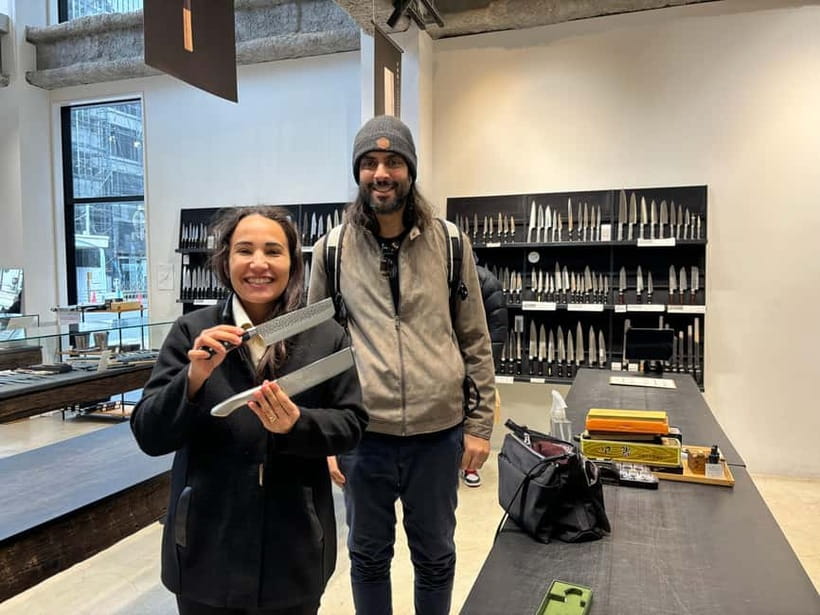
- Machiko may be your guide: Her English, translation help, and extra assistance with purchases received especially strong praise.
- The group is limited to eight people: Groups of three or more use headsets, so you can hear the guide while walking.
- The route covers Asakusa’s major sights: Expect the Tokyo Cruise Asakusa Pier, Kaminarimon, Nakamise Shopping Street, Hōzōmon Gate, and Sensō-ji Temple.
- The price is $77 per person: That is fair if you want both a guided Asakusa visit and focused knife-shopping help.
- The tour runs in all weather: Wear comfortable shoes and bring rain protection when the forecast looks uncertain.
Why the Asakusa and knife-shopping combination works
Many Tokyo tours stop at Asakusa, point out the large red lantern at Kaminarimon, and move on. This experience gives the district more purpose. You spend the first part learning how the streets and temple gates fit together, then walk to Kappabashi Street, where restaurants and home cooks shop for kitchen equipment.
That change of pace is the appeal. Asakusa offers temples, gates, snack stalls, and old Tokyo atmosphere. Kappabashi is more practical. Its shops sell the tools needed to run a restaurant, including a broad range of Japanese kitchen knives. I like that the tour does not treat the knife stop as an unrelated shopping detour.
You also avoid the homework involved in finding suitable stores. Kappabashi has many knife sellers, and the full selection can be confusing if you do not know what you want. A guide can help you listen to store staff, ask questions, and compare choices without simply accepting the first recommendation.
The guide’s role matters here. Sales clerks know their products, but they are also selling them. The stated aim of the tour is to give you candid, neutral help as you hear the sales pitch. That is particularly useful if you are unsure about blade styles, intended use, or how much to spend.
More Asakusa visits:
- Tokyo: Japanese Dance Cabaret Theater Asakusa-Kaguwa Ticket
★ 4.8 · 2,270 reviews - Tokyo: Meiji Shrine, Asakusa, Skytree Bus Tour and Cruise
★ 4.7 · 1,986 reviews - Tokyo: Roll and Authentic Sushi Making Class in Asakusa
★ 4.9 · 1,957 reviews
Starting beside Asakusa Station
The meeting point is in front of the Burger King next to Exit 4 of Asakusa subway station on the Ginza Line, station G19. Step outside Exit 4 and meet the guide there. Hotel pickup and drop-off are not included, so plan your own route to the station.
This is a sensible starting point for a walking tour, but allow enough time to find the correct exit. Asakusa has several rail and subway connections, and the Tokyo Cruise Asakusa Pier is close to the opening part of the route. If you arrive by another line, check the station signs rather than assuming every exit leads to the same place.
The tour lasts 210 minutes, or three and a half hours. The listed walking and sightseeing stops add up to about two hours and 45 minutes, with the remaining time allowing for transitions, explanations, shopping, and the included sweet snacks. It is a substantial half-day activity, not a quick temple visit.
Tokyo Cruise Asakusa Pier and the city around it

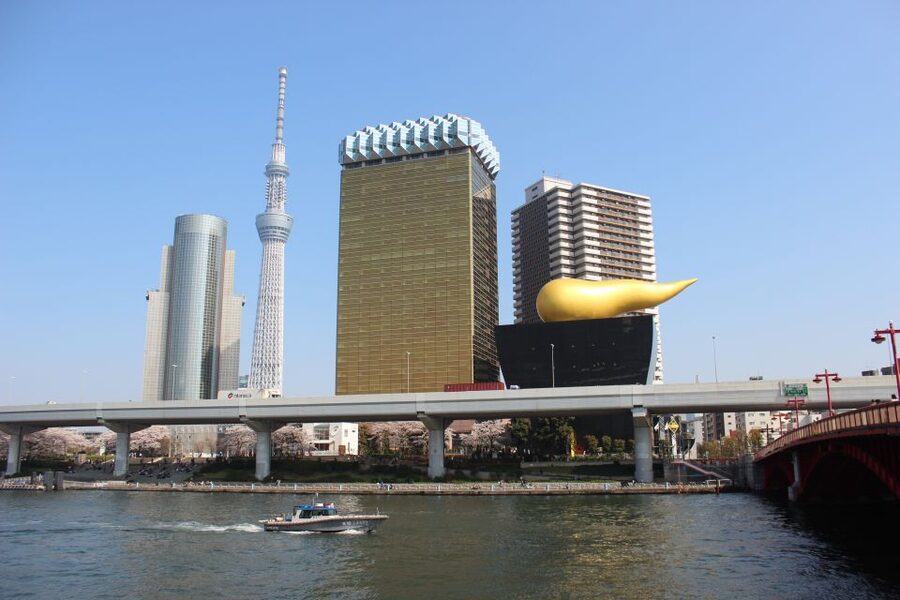
The first stop is the Tokyo Cruise Asakusa Pier, with about 15 minutes for guided sightseeing and walking. The pier helps place Asakusa within the wider city. It is also a useful visual change from the temple streets, giving the tour a starting point near the Sumida River before it heads toward the district’s famous gates and shopping road.
Do not expect a boat ride. The activity lists the pier as a sightseeing stop, not a cruise. That distinction matters if you are comparing this with a river excursion.
Getting oriented at the Asakusa Culture Tourist Information Center
The route then reaches the Asakusa Culture Tourist Information Center for another 15-minute guided stop. This part of the walk gives you a chance to understand the district before the crowds and shops take over your attention.
The value here comes from having a guide explain what you are seeing as you move through the area. A short orientation can make the later streets easier to follow, especially if Asakusa is your first major sightseeing area in Tokyo.
A few more Tokyo bookings worth comparing
- Tokyo Tsukiji Fish Market Food and Culture Walking Tour
★ 5.0 · 3,184 reviews - Tokyo: Tsukiji Fish Market Food and Walking tour
★ 5.0 · 1,724 reviews - Tokyo: Tsukiji Fish Market Guided Walking Tour
★ 4.9 · 1,397 reviews - Tsukiji Fish Market Guided Tour and Sushi Making with Pro Chef
★ 5.0 · 775 reviews
Kaminarimon, the famous entrance to Sensō-ji
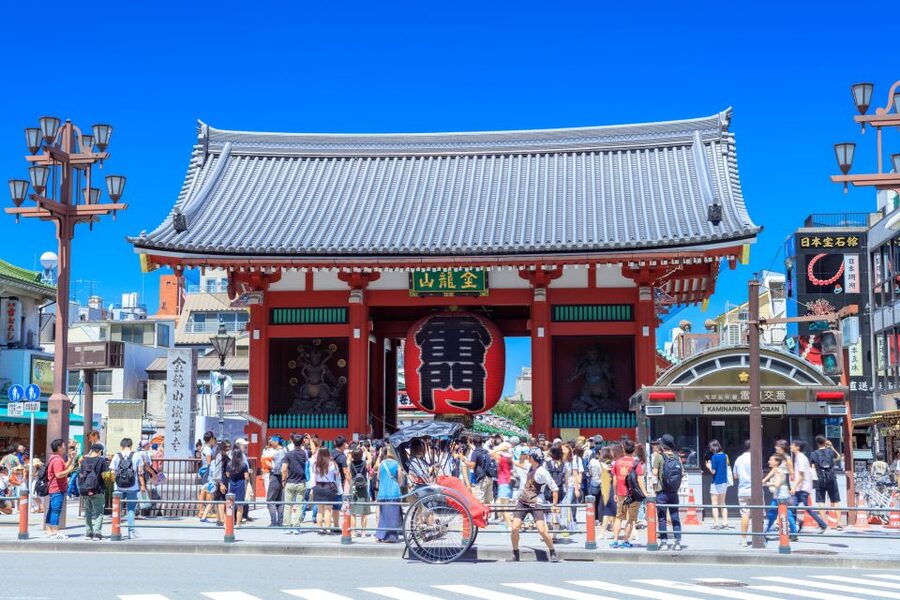
Kaminarimon receives another 15 minutes. The gate is one of Asakusa’s best-known sights, marked by its huge lantern and imposing entrance. It is a natural place to pause, take photographs, and hear the story behind the temple approach.
I appreciate the scheduled time here because the gate is easy to treat as a photo stop only. With a guide, you get more context before walking onward. Still, this is a popular area, so the pace may feel less relaxed at busy times. Keep your belongings close and stay aware of the group as you move through the entrance.
Nakamise Shopping Street and the approach to the temple
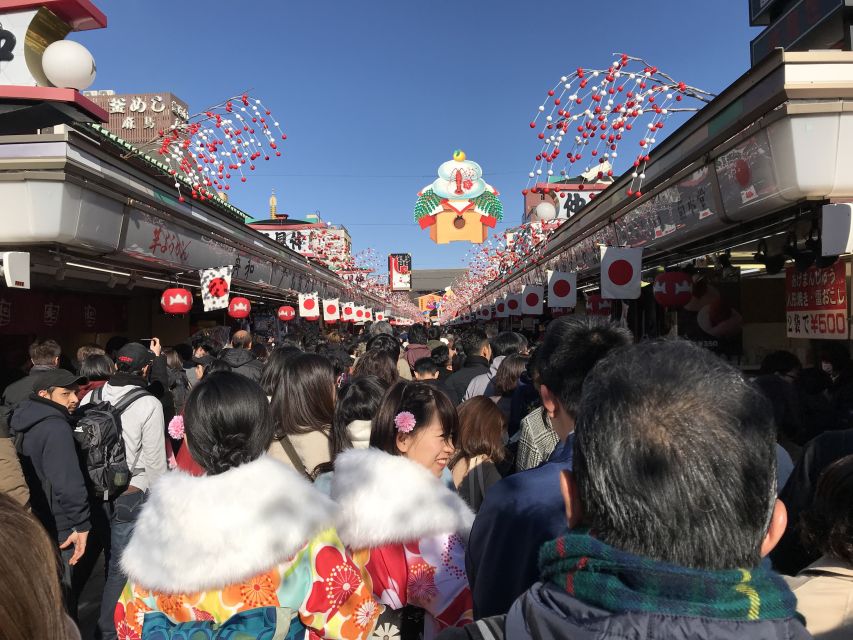
The tour spends about 30 minutes on Nakamise Shopping Street, the long approach between Kaminarimon and the temple grounds. This is the most shop-filled part of the Asakusa walk, with traditional snacks and souvenirs along the route.
The included Japanese sweet snacks fit naturally here, although the exact snack and timing are not specified. Think of them as a small taste of the district rather than a full food tour. You will have time to look, but you should not expect an extended shopping session at Nakamise.
The half-hour allocation gives the guide room to explain the street and lets you walk at a reasonable pace. If you see a souvenir you want, ask about the time available before stopping to shop. The main purchase focus comes later at Kappabashi, so I would save serious browsing for that section.
Hōzōmon Gate and Sensō-ji Temple
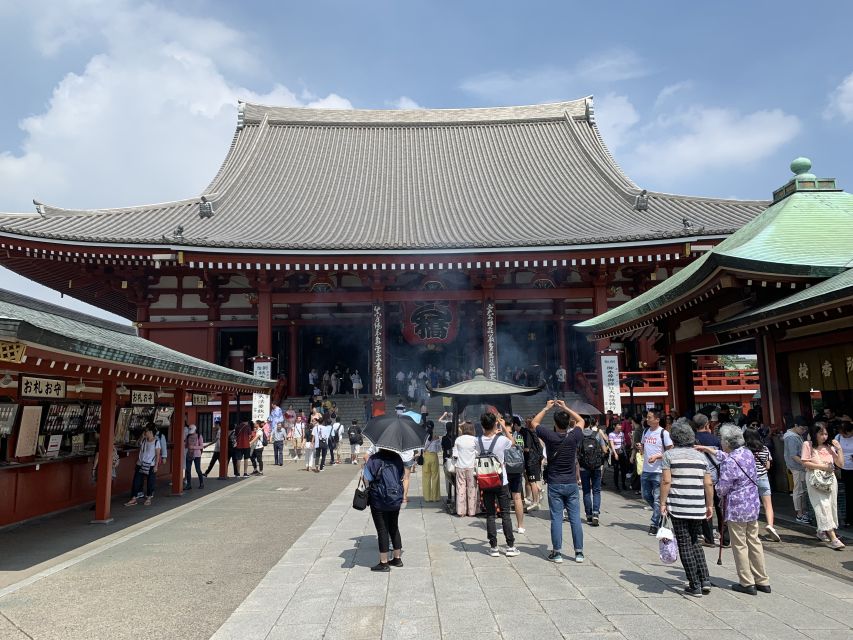
Hōzōmon Gate follows Nakamise, with around 15 minutes of guided sightseeing. This gate is closer to the temple’s main hall and offers another look at the scale of the Sensō-ji approach.
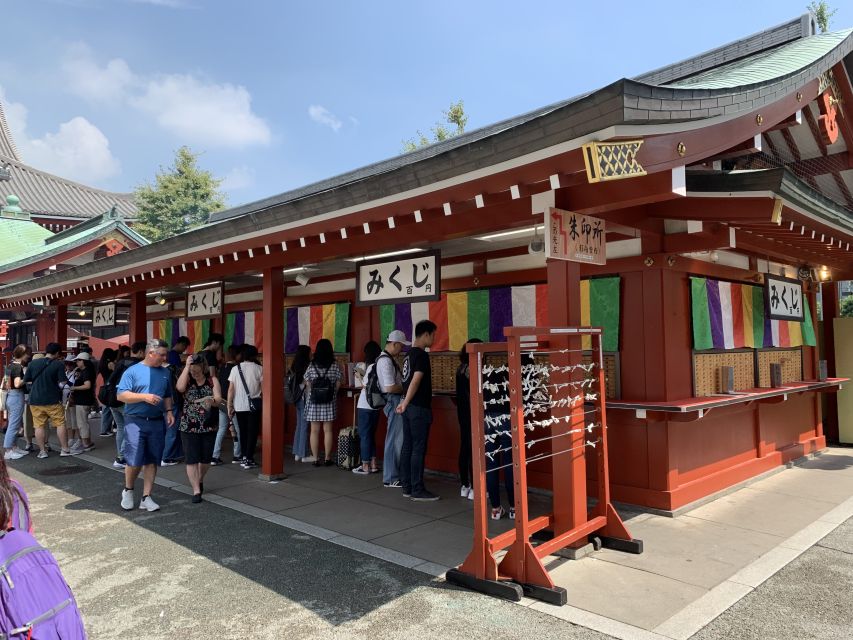
The final Asakusa stop is Sensō-ji Temple, with a further 15 minutes. Sensō-ji is described as Tokyo’s oldest temple, and it is the historical anchor of the experience. The guide’s explanations are meant to give you more than a quick photograph and a name to remember.
Fifteen minutes is enough for an introduction, but not for a long, quiet temple visit. If you want time for personal prayer, detailed photography, or a slower look around the grounds, plan to return independently. This tour gives you the framework; it does not replace a full afternoon at Sensō-ji.
The history portion is one of the tour’s strongest features. The guide, Machiko, has been praised for making the area’s past interesting and for speaking excellent English. That combination is useful in Asakusa, where a casual walk can otherwise blur into a series of attractive gates and crowded streets.
Walking to Kappabashi Street
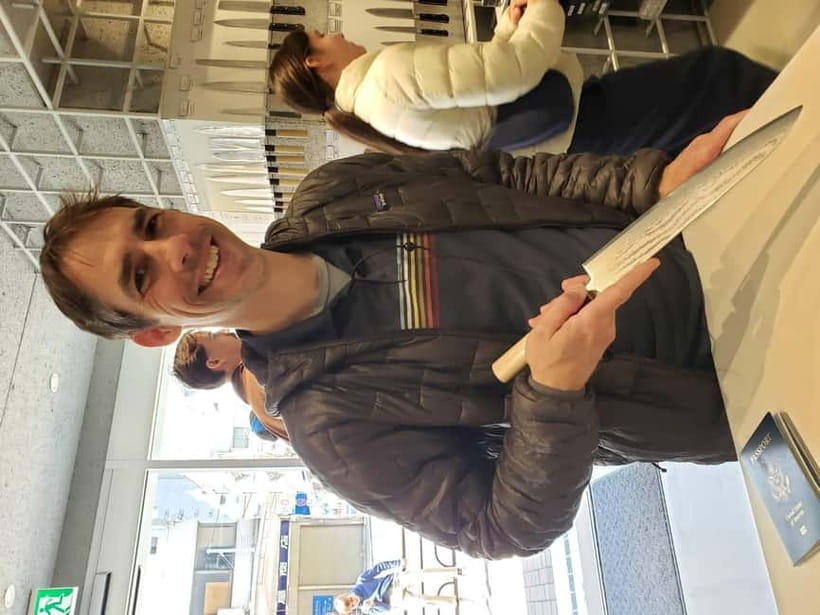
After the temple visit, the group heads toward Kappabashi Street, the shopping road next to Asakusa that serves restaurant operators and kitchen enthusiasts. The tour allows about one hour here.
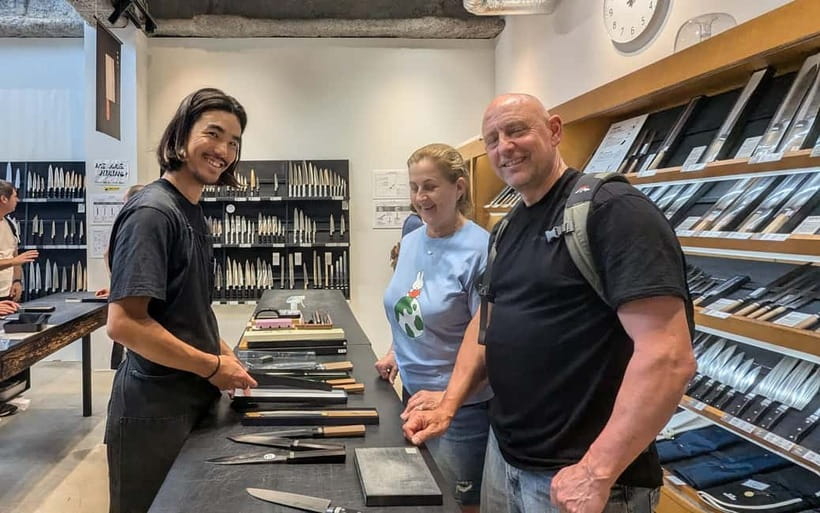
Kappabashi is not a single department store. It is a street lined with many specialist shops selling cookware, restaurant supplies, and food-service equipment. Japanese kitchen knives are a major part of the shopping area, and the range can be much broader than what you find in a typical tourist shop.
This is where the guide saves you time. You go to suitable stores without prior research, then receive help as you compare products. If you already know the kind of knife you want, the visit can be focused. If you are still deciding, use the guide to explain your intended use and budget before you commit to anything.
The guide can also help with translation. Machiko’s assistance has included translating for shoppers and helping them complete purchases. That does not mean the guide chooses for you. The better use of the service is to ask clear questions, listen to the shop staff, and then get a neutral second view.
What makes the knife stop useful
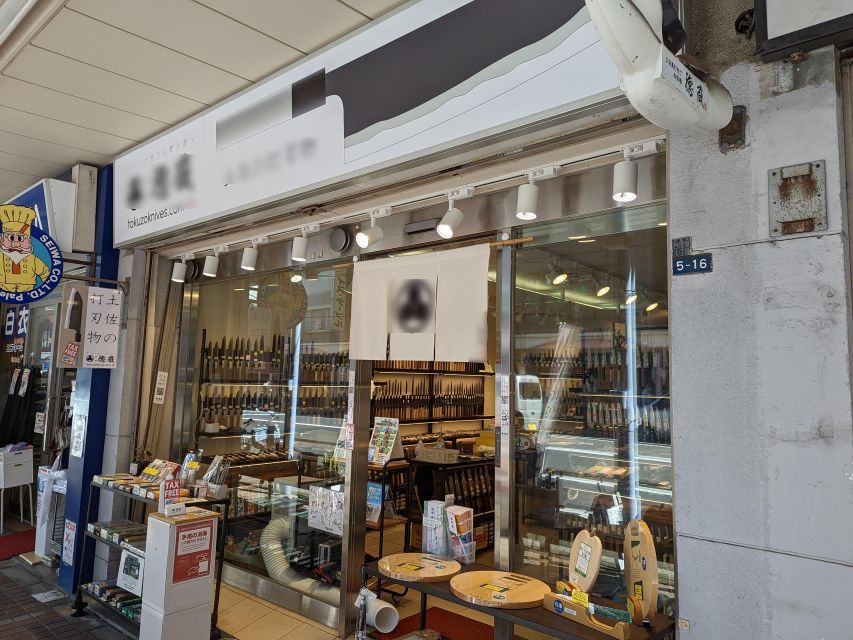
A Japanese kitchen knife is not automatically a good purchase for every cook. The right choice depends on what you plan to prepare, how often you cook, and how much care you want to give the blade. Since the supplied details do not identify specific brands, blade types, or stores, you should treat the visit as guided comparison rather than a promise of one particular knife.
Before you arrive, think about:
- What food you usually prepare
- Whether the knife is for everyday use or a special gift
- How much you want to spend
- Whether you need one general-purpose knife or a more specialized style
- How you will transport it home
You should also ask about care, sharpening, and safe packing before paying. The guide can help with communication, but product choice remains yours.
The one-hour window is enough to visit selected stores and make a purchase, especially with a small group. It may not satisfy someone who wants to inspect every shop on Kappabashi Street. If knives are your main reason for visiting Tokyo, return later with extra time. This tour is best for getting oriented and making a confident first purchase, not for exhaustive research.
Small-group listening and guide support
The group is limited to eight participants. That is a useful size for narrow shopping streets and busy temple areas. You are less likely to lose the guide in the crowds, and there is a better chance to ask questions during the knife stop.
For groups of three or more, the tour uses an earphone guide system. You can hear the guide from a distance while walking, which is helpful near Kaminarimon, Nakamise, and Sensō-ji, where street noise can make ordinary conversation difficult.
The tour is conducted in English, with an English-speaking certified guide. Machiko is the guide specifically named in the supplied information. Her strengths are clear English, strong knowledge of local history, translation help, and willingness to assist with purchases. One especially notable detail is that she stayed beyond the planned tour time to help with shopping. You should not assume extra time is guaranteed, but her practical support is a real benefit.
Is $77 a fair price?
At $77 per person, this is not the cheapest way to see Sensō-ji. You can visit the temple and walk Nakamise Street without paying a guide. The price makes more sense when you value the combination of three and a half hours, a certified English-speaking guide, a focused history walk, sweet snacks, and help at specialist knife stores.
I consider the value strongest for first-time visitors to Asakusa who also want a Japanese kitchen knife. You are paying for direction and translation, not just admission to a sight. There is no separate temple admission listed, and hotel transportation is not included, so the price should be judged as a guided walking and shopping service.
For a group of three or more, the headset system adds comfort, but the price remains per person. Someone interested only in temple photography may find the cost high. Someone who has already researched Kappabashi and knows exactly which store to visit may also prefer to go alone.
The free cancellation policy allows cancellation up to 24 hours in advance for a full refund. You can also reserve now and pay later, which helps if your Tokyo schedule is still shifting.
Who should book this experience?
I would recommend it to you if you want:
- A clear introduction to Asakusa rather than an unstructured walk
- Historical explanations in English
- A small group with room for questions
- Help comparing Japanese kitchen knives
- Assistance translating with shop staff
- A practical shopping stop after sightseeing
- A half-day activity that combines culture and shopping
It suits cooks, food enthusiasts, serious home chefs, and gift buyers. It is also a good choice if you are uneasy about buying an expensive knife in a shop where you do not speak Japanese.
I would be more cautious if your priority is a long, slow temple visit or an entire day of shopping. The sightseeing stops are fairly short, and Kappabashi gets only about an hour. You may enjoy the tour and still want to return to both areas on your own.
Wear comfortable shoes. The experience is a walking tour, and it runs rain or shine. Bring a small amount of flexibility to your schedule, especially if you hope to buy a knife and need help deciding.
The final call
Book this tour if the combination of Asakusa history and guided knife shopping appeals to you. Its best feature is the practical connection between the two: you learn the district’s story, then receive help in a shopping area that can be confusing on your own.
Skip it if you want only a temple tour, already know Kappabashi well, or need several hours to compare knives. For everyone else, $77 is a reasonable price for a small-group English tour, local context, sweet snacks, and hands-on shopping support, especially when Machiko is leading.
FAQ
Where does the tour meet?
Meet in front of the Burger King next to Exit 4 of Asakusa subway station on the Ginza Line, station G19.
Does the tour provide hotel pickup or drop-off?
No. Hotel pickup and drop-off are not included.
How long does the experience last?
The tour lasts 210 minutes, or three and a half hours.
Is the tour conducted in English?
Yes. The tour has a live English-speaking certified guide, and an English audio system is included.
How large is the group?
The small group is limited to eight participants.
Are headsets provided?
Yes. Groups of three or more use an earphone guide system so you can hear the guide from a distance.
Does the tour visit Sensō-ji Temple?
Yes. The route includes Sensō-ji, described as Tokyo’s oldest temple, along with Kaminarimon and Hōzōmon Gate.
How much time is spent at Kappabashi Street?
About one hour is allocated to guided sightseeing and shopping on Kappabashi Street.
Can I cancel for a refund?
Yes. You can cancel up to 24 hours in advance for a full refund. You can also reserve now and pay later.
More Historical Tours in Tokyo
- Tokyo: Imperial Palace and Shogun Historical Walking Tour
★ 5.0 · 2,251 reviews - Tokyo: Imperial Palace Japanese History Walking Tour
★ 4.9 · 987 reviews - Tokyo: Shinjuku Historical Walking Tour & Secret Backstreets
★ 5.0 · 530 reviews - Yanaka Walking Tour: Historic and Traditional District of Tokyo
★ 5.0 · 530 reviews
New on our Tokyo list
- Sumi-e Experience in a relaxing green tea shop in Tokyo★ 5.0 · 3 reviews
- Tokyo : Kamikaze Street Drift Ride★ 5.0 · 3 reviews
- Private Zen Meditation in English in Shinjuku, Tokyo★ 5.0 · 3 reviews
- Onsen Spa in Tokyo and Asakusa Bar Hopping with Local Guide★ 5.0 · 3 reviews
- Easy for everyone! Now you can play handmade mini shamisen and show off to everyone! Musical instruments, sweets and live music★ 5.0 · 3 reviews
- Tokyo: Private Tsukiji Street Food & Sake with Local Guide★ 5.0 · 3 reviews
- Mt Fuji Exploration Tour with Free Japanese Kusa Mochi from Tokyo★ 4.5 · 3 reviews
- Tokyo Tsukiji Fish Market Walking and Exploring Hidden Gems Tour★ 5.0 · 3 reviews
Shopping Tours, compared.
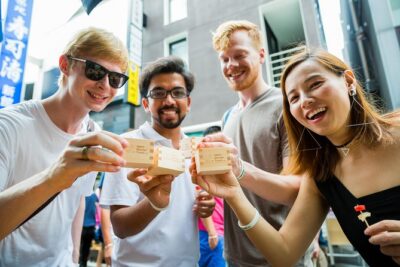
Tokyo Tsukiji Fish Market Food and Culture Walking Tour
Read our review →
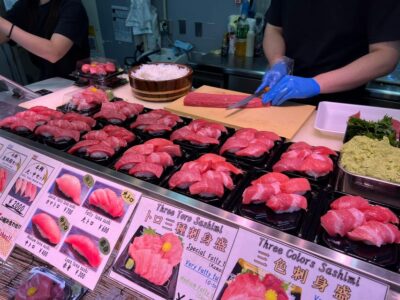
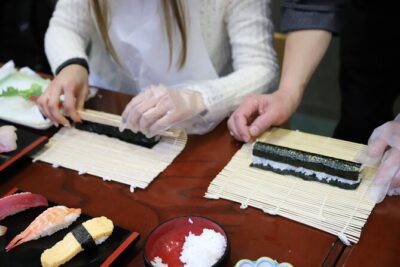
Tsukiji Fish Market Guided Tour and Sushi Making with Pro Chef
Read our review →Tsukiji Fish Market Food and Culture Walking Tour
Read our review →
Tsukiji Fish Market: Street Food & Culture Walking Tour
Read our review →
Tsukiji Fish Market Small-Group Food Walking Tour
Read our review →
Tsukiji Fish Market Sushi Making Class with Pro Chef
Read our review →Browse the lists this tour appears in