
Reviewed · TEMPLE & SHRINE TOURS
Historic Temple・traditional Japanese garden& Eating around at a shopping strip
Tokyo can feel like a city built entirely from train stations, towers, and crowds. This tour gives you a quieter view. You begin at Ikegami Honmonji Temple, a hilltop complex dating from the late 13th century, then walk through Ikegami Baien, a traditional Japanese strolling garden, before taking a short train ride to Togoshi Ginza.
I like the gentle change of pace and the useful mix of places. You get a historic religious site, a seasonal garden, and a working shopping street where food and daily life matter more than famous sights. The main drawback is that the tour lasts about four to six hours, with roughly two hours on foot at Togoshi Ginza, so it is not a good pick if you want a quick, sit-down sightseeing outing.
In This Review
- Key points at a glance
- Why this route makes sense in Tokyo
- Starting at Ikegami Honmonji Temple
- Walking five minutes to Ikegami Baien
- Taking the train to Togoshi Ginza
- Spending two hours on Togoshi Ginza
- What the private guide adds
- Walking requirements and practical comfort
- Who will enjoy this half-day outing
- Should you book the Ikegami and Togoshi Ginza tour?
- FAQ
- How long does the tour last?
- Where does the tour begin?
- Where does the tour end?
- Is the tour private?
- Is the tour conducted in English?
- Is transportation included?
- Are admission fees included?
- Are lunch and drinks included?
- What happens if the weather is poor?
Key points at a glance
- A quiet start near Ikegami Station: Honmonji Temple is about a ten-minute walk from the station, yet its hilltop grounds feel far removed from central Tokyo traffic.
- A garden named for apricots: Ikegami Baien contains about 370 Japanese apricot trees and sits only five minutes from the temple.
- A local shopping street with room to eat: Togoshi Ginza gives you two hours to browse narrow streets and stop for food or drinks at your own expense.
- A private English-language tour: Only your group takes part, with guided tours in English. Guide Miyuki is named in the available guest feedback.
- Train fare and admissions are covered: Transportation between Ikegami and Togoshi is included, as are the listed admission fees.
- A practical half-day choice: The tour starts and ends at Ikegami Station, making it easier to fit into a Tokyo day without crossing the entire city.
Why this route makes sense in Tokyo
The clever part of this experience is its order. You begin with calm temple grounds, continue to a garden, and finish among shops and food stalls. The day gradually shifts from quiet contemplation to ordinary neighborhood life.
That mix helps you see Tokyo as more than a collection of famous districts. The temple shows an older spiritual side of the city. The garden gives you a close look at Japanese planting and walking-garden design. Togoshi Ginza then brings you back to the present, with small shops and the easygoing rhythm of a local commercial street.
You should also expect a walking tour rather than a bus tour. The time is spent moving through real neighborhoods, not simply being driven between photo stops. Wear comfortable shoes and leave room in your schedule. The stated duration is four to six hours, so the exact pace may depend on your group, the guide, and how much time you spend at the shops.
More temples and shrines near Tokyo:
- Tokyo: Meiji Shrine, Asakusa, Skytree Bus Tour and Cruise
★ 4.7 · 1,986 reviews - Tokyo: Asakusa Walking Tour with Sensoji Temple Visit
★ 4.8 · 1,583 reviews - Nikko: Kegon Falls, Lake Chuzenji & Toshogu Temple
★ 4.6 · 1,577 reviews
Starting at Ikegami Honmonji Temple
Meet at Ikegami Station in Ota City. From there, it is about a ten-minute walk to Ikegami Honmonji Temple. The approach includes a hill, so you should be comfortable with moderate walking and some uphill movement.
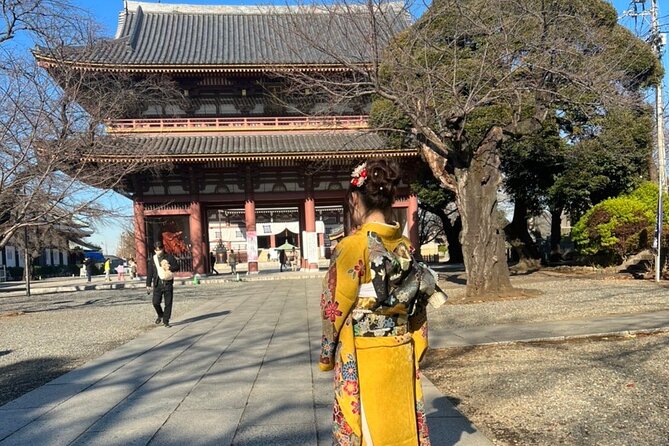
The temple complex dates from the end of the 13th century. That gives the first stop a genuine sense of age, but the appeal is not just the date. The temple grounds offer a quiet contrast to the sound and density usually associated with Tokyo. The description of rustling leaves says a great deal about the mood you can expect.
Plan on about one hour here. The admission fee is free, and your guide can give the setting context in English. This is where a private tour can be especially useful. Instead of following a fixed group pace, you can ask about the temple, Japanese religious customs, or the way this site fits into local life.
I like the fact that the temple is not treated as a stand-alone photo stop. It is the first part of a neighborhood walk. You get time to notice the grounds and town around them rather than rushing in, taking a picture, and heading back to a major station.
Still, this is not a full temple-focused day. If you want an extended study of religious architecture, art, or Buddhist practice, the one-hour visit may feel brief. The value lies in the atmosphere and the guide’s explanation, not in a long list of formal exhibits.
Walking five minutes to Ikegami Baien
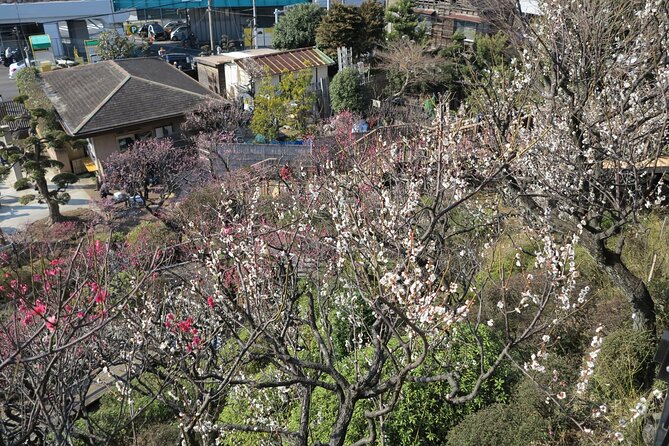
Ikegami Baien is about a five-minute walk from Honmonji Temple. The name is useful: Ikegami refers to the area, while baien means apricot garden. About 370 Japanese apricot trees grow here.
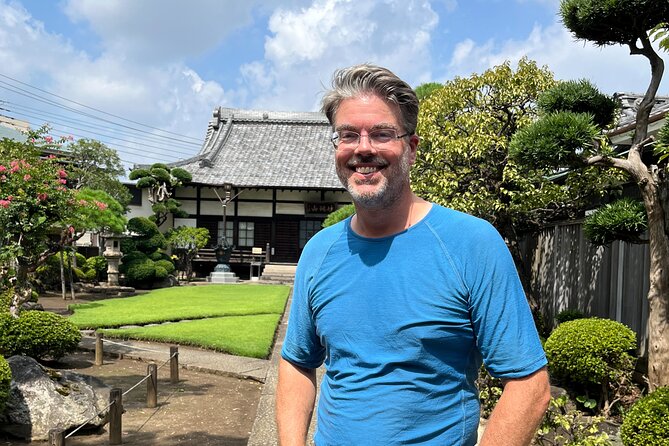
This is a traditional Japanese strolling garden, so you are meant to move through it at an easy pace. The garden is a pleasant counterpoint to the temple. At Honmonji, the focus is the religious site and its stillness. At Baien, your attention shifts to paths, trees, seasonal changes, and the shape of the garden itself.
The tour allots about one hour, with admission included. That is enough time to walk without treating the garden as a ten-minute add-on. The exact display changes with the season, so you should not assume the same experience at every time of year. The apricot trees are the defining feature, but the wider pleasure is the garden’s slower rhythm.
A guide can help you notice details you might otherwise pass over. You may learn why the garden is associated with apricots or how a Japanese strolling garden is intended to be viewed. The supplied details do not promise a specific bloom season, so it is best to think of this as a garden visit with seasonal character rather than a guaranteed flower show.
The included admission keeps the tour simple. You do not need to manage separate tickets during the visit, and the short walk from the temple makes the two stops feel like one connected area.
Taking the train to Togoshi Ginza
After the temple and garden, the tour uses a short train ride to reach Togoshi Ginza. The transportation cost between Ikegami and Togoshi is included, which is a small but meaningful benefit in Tokyo. You can focus on the neighborhood instead of sorting out the fare or route yourself.
This transfer also gives the day a clear change of scene. The first two stops are quiet and historic. Togoshi Ginza is more social and practical, built around shopping, eating, and everyday errands.
The tour is private, so only your group takes part. That matters here because the best part of a shopping-street visit is often the freedom to pause. You can ask the guide about a shop, take a closer look at local food, or keep walking if something does not interest you.
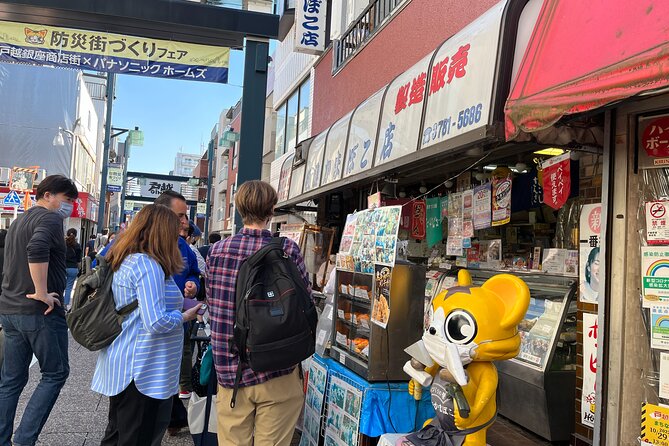
Do not expect a polished department-store district. Togoshi Ginza is described as having a working-class character, with narrow streets and a neighborhood feel. That is the point. It gives you a look at Tokyo away from the city’s major shopping names and tourist zones.
A few more Tokyo bookings worth comparing
- Tokyo Tsukiji Fish Market Food and Culture Walking Tour
★ 5.0 · 3,184 reviews - Tokyo: Tsukiji Fish Market Food and Walking tour
★ 5.0 · 1,724 reviews - Tokyo: Tsukiji Fish Market Guided Walking Tour
★ 4.9 · 1,397 reviews - Tsukiji Fish Market Guided Tour and Sushi Making with Pro Chef
★ 5.0 · 775 reviews
Spending two hours on Togoshi Ginza
The tour allows about two hours to walk through Togoshi Ginza Shopping Street. This is the longest stop, and it is where the experience becomes most flexible.
You can browse small stores, watch the flow of local business, and choose what to eat. Lunch and drinks are not included, so bring a payment method and budget for food. That may sound like a minor detail, but it gives you control over the final part of the day. You are not locked into a set meal or a restaurant chosen for a large group.
One especially memorable possibility comes from the neighborhood’s informal food culture: a stop at a local butcher shop for a beer. That kind of moment captures why the shopping street works so well as the final stop. It is not a grand attraction. It is an ordinary place made interesting by the way you experience it with a guide who can explain the setting.
You should keep your expectations practical. The provided information does not identify specific shops, dishes, or a fixed lunch venue. The route may depend on what is open and on your group’s interests. If you have dietary restrictions or a particular food goal, tell the guide early and understand that food purchases remain your responsibility.
Two hours is generous enough for a proper walk, but it may feel long if you are not interested in shopping or eating. On the other hand, food lovers and visitors looking for daily Tokyo life may wish the tour offered even more time here.
What the private guide adds

The guide is a major part of this experience. Miyuki is named in the available feedback, and her role is described as friendly, professional, open, and able to answer questions about Tokyo, Japan, and everyday Japanese life.
Those qualities suit this route. None of the three stops needs a theatrical presentation. The temple benefits from clear context. The garden benefits from help with what to notice. The shopping street benefits from a guide who can explain local habits without turning the neighborhood into a stage set.
Because the tour is private, you can shape the conversation. Ask about Japanese daily life, the temple’s role, garden traditions, or food culture. A private format is also useful if your group has mixed interests. One person can ask questions while another takes time with the scenery.
The tradeoff is price. At $52.02 per person, the cost is reasonable for a private four to six hour experience that includes an English guide, admission, and the train fare between the two areas. It is not the cheapest way to see a temple and shopping street, especially if you are traveling alone. But for two or more people, the private format adds value because you are not paying for a large, fixed group outing.
Since the food is extra, allow for lunch and drinks when comparing the total cost. The tour price covers the structure of the day, not your purchases along Togoshi Ginza.
Walking requirements and practical comfort
You need a moderate level of physical fitness. The route includes the walk from Ikegami Station to the temple, movement around the temple grounds, a walk to the garden, train connections, and about two hours on foot at Togoshi Ginza.
There is no stated accessibility rating beyond the fact that the tour is near public transportation and service animals are allowed. If you have mobility concerns, ask before booking about the hill at Honmonji, the garden paths, and the exact walking conditions.
The mobile ticket is convenient. Confirmation is normally received at booking, though reservations made within two days of the start may be confirmed within 48 hours and remain subject to availability.
The tour requires good weather. If poor weather causes cancellation, you will be offered another date or a full refund. You can cancel for a full refund up to 24 hours before the start time. Changes or cancellations made inside that 24-hour window are not accepted for a refund.
Who will enjoy this half-day outing
I would choose this tour if you have already seen the major central Tokyo sights and want a calmer neighborhood day. It also works well near the beginning of a Japan trip, when you want a guide to help you understand local routines before setting off on your own.
It suits you best if you:
- Like temples but do not need a full day of formal sightseeing
- Enjoy gardens and seasonal scenery
- Want a local shopping street rather than a major tourist district
- Prefer a private tour with room for questions
- Are happy to buy your own lunch and drinks
- Can walk for several hours at a moderate pace
It may not suit you if you want guaranteed flower viewing, extensive indoor sightseeing, or a tour with every meal included. It is also less appealing if your Tokyo schedule is tight and you need a short, central activity with little walking.
Should you book the Ikegami and Togoshi Ginza tour?
Book it if you want to see a quieter, more everyday side of Tokyo without giving up the help of an English-speaking guide. The route is well balanced: an old temple, a Japanese garden with about 370 apricot trees, and a shopping street where you can eat and browse at your own pace.
The strongest reason to choose it is the combination of places. Honmonji alone might feel too quiet for some visitors, while Togoshi Ginza alone might lack historical context. Together, they show three useful sides of the city.
Skip it if your priority is famous Tokyo landmarks, major museums, or a short itinerary with minimal walking. For everyone else, especially couples, families, and small private groups, the $52.02 price offers a sensible way to spend half a day beyond the usual city-center circuit.
FAQ
How long does the tour last?
The experience lasts approximately four to six hours.
Where does the tour begin?
It begins at Ikegami Station in Ota City, Tokyo. The temple is about a ten-minute walk from the station.
Where does the tour end?
The activity ends back at the meeting point at Ikegami Station.
Is the tour private?
Yes. Only your group participates in this private tour.
Is the tour conducted in English?
Yes. Guided tours in English are included.
Is transportation included?
The transportation cost between Ikegami and Togoshi is included. This covers the short train ride between the temple and shopping-street areas.
Are admission fees included?
Yes. The listed admission fee is included. Ikegami Honmonji Temple itself has free admission.
Are lunch and drinks included?
No. Lunch, food, and drinks are not included. You pay for your own purchases at Togoshi Ginza.
What happens if the weather is poor?
The experience requires good weather. If it is canceled because of poor weather, you will be offered a different date or a full refund.
More Historical Tours in Tokyo
- Tokyo: Imperial Palace and Shogun Historical Walking Tour
★ 5.0 · 2,251 reviews - Tokyo: Imperial Palace Japanese History Walking Tour
★ 4.9 · 987 reviews - Yanaka Walking Tour: Historic and Traditional District of Tokyo
★ 5.0 · 530 reviews - Tokyo: Shinjuku Historical Walking Tour & Secret Backstreets
★ 5.0 · 530 reviews
New on our Tokyo list
- Sumi-e Experience in a relaxing green tea shop in Tokyo★ 5.0 · 3 reviews
- Tokyo : Kamikaze Street Drift Ride★ 5.0 · 3 reviews
- Private Zen Meditation in English in Shinjuku, Tokyo★ 5.0 · 3 reviews
- Onsen Spa in Tokyo and Asakusa Bar Hopping with Local Guide★ 5.0 · 3 reviews
- Easy for everyone! Now you can play handmade mini shamisen and show off to everyone! Musical instruments, sweets and live music★ 5.0 · 3 reviews
- Tokyo: Private Tsukiji Street Food & Sake with Local Guide★ 5.0 · 3 reviews
- Mt Fuji Exploration Tour with Free Japanese Kusa Mochi from Tokyo★ 4.5 · 3 reviews
- Tokyo Tsukiji Fish Market Walking and Exploring Hidden Gems Tour★ 5.0 · 3 reviews
Temple & Shrine Tours, compared.
Meiji Shrine, Asakusa, Skytree Bus Tour and Cruise
Read our review →
Asakusa Walking Tour with Sensoji Temple Visit
Read our review →

Kamakura & Enoshima Day Trip including Temple Tickets
Read our review →
Nikko Toshogu Shrine and Kegon Waterfall Tour
Read our review →
Tokyo Panoramic 1 Day: Meiji Shrine, Asakusa, Odaiba and SKYTREE®
Read our review →
Mt. Fuji Heritage Tour: Traditional Villages, Lakes & Shrine
Read our review →Browse the lists this tour appears in