
Reviewed · JAPANESE CULTURE WORKSHOPS
Japanaese tradtional Tsugaru Shamisen music lesson in Tokyo
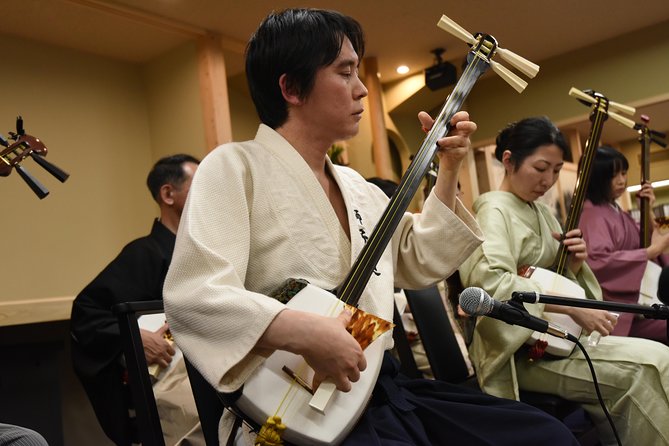
The most unusual part of this Tokyo activity is that you do not just watch a shamisen performance. You sit down with the instrument yourself. In about an hour, you hear a professional musician who has won a Tsugaru Shamisen World Tournament group championship, then learn to hold the shamisen, use the bachi pick, and play a simple piece.
I like the way the lesson combines a serious live performance with gentle beginner instruction. I also like the personal format: this is a private activity for your group, not a large class where you spend half the time watching someone else struggle with a rental instrument.
The main consideration is the price, $77.26 per person for roughly one hour. That is fair if you want an active cultural experience and a memorable skill, but it is not a casual drop-in music demonstration. The lesson is also in Shinjuku City rather than at a major sightseeing landmark, so you will need to make your own way there.
In This Review
- Key points to know before booking
- Hearing the Tsugaru shamisen in Shinjuku
- Why Tsugaru shamisen is worth your time
- Holding the instrument and using the bachi
- Learning a simple song in one hour
- The advanced techniques and live performance
- Photos, video, and a personal souvenir
- What the $77.26 price includes
- Language, families, and group suitability
- Practical details for planning your visit
- What the early feedback tells me
- Should you book this shamisen lesson?
- FAQ
- How long does the Tsugaru shamisen lesson last?
- What is included in the price?
- Do I need previous musical experience?
- Is the activity private?
- Can children and families join?
- Is instruction available in English?
- Where does the activity take place?
- Can I cancel for a full refund?
Key points to know before booking
- You play the Tsugaru shamisen yourself, rather than only listening to a concert.
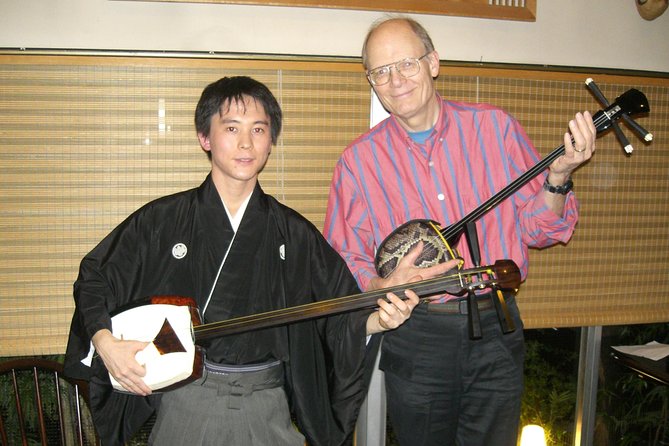
- A tournament-winning musician performs first, giving you a proper introduction to the instrument’s powerful sound.
- The lesson covers one simple song, plus holding technique, bachi use, and a few more advanced ideas.
- Your group has private instruction, with licensed guides available in English and other languages by request.
- Families and children are welcome, and the format can also suit school, language, academic, or corporate programs.
- The experience lasts about one hour, with shamisen rental, instruction, and photo or video time included.
Hearing the Tsugaru shamisen in Shinjuku
The activity begins at 14-28 Yochōmachi in Shinjuku City, Tokyo. The location is near public transportation, but transportation to and from the venue is not included, so allow time to reach the meeting point on your own.
That address matters because this is a neighborhood-based cultural activity, not a performance inside a major tourist theater. You are going to a dedicated lesson near Shinjuku, where the focus stays on the musician and the instrument. It is a useful choice if you want to fit something hands-on between visits to Shinjuku’s larger attractions.
The experience is listed as a private activity. Only your own group participates, which should make it easier to ask questions and get direct help with the instrument. The information does not give a fixed maximum group size, so if you are booking for a larger party, confirm how many people can take part comfortably.
The session is offered during the stated operating period from January 5, 2026, through January 19, 2027, with Monday hours shown as 9 a.m. to 6 p.m. Availability is confirmed after booking, usually within 48 hours. Since the published schedule is limited, check the date carefully before building your day around the lesson.
More craft workshops in Tokyo:
- Tokyo Shinjuku Chopsticks Making Class
★ 5.0 · 1,763 reviews - Kintsugi Experience: Art of Golden Joinery in Tokyo
★ 5.0 · 467 reviews - Authentic Pure Gold Kintsugi Workshop with Master Taku in Tokyo
★ 5.0 · 217 reviews
Why Tsugaru shamisen is worth your time
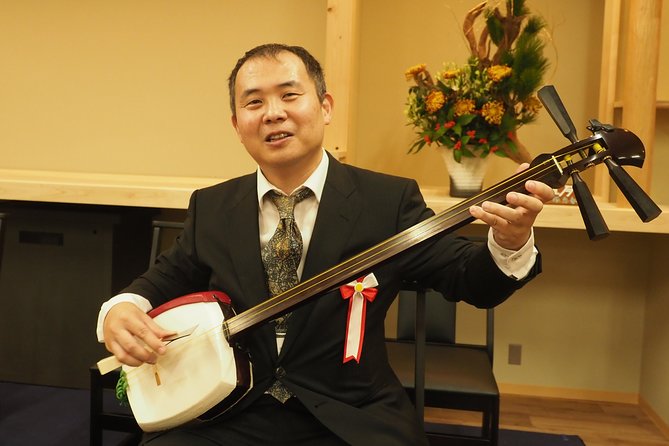
The shamisen is a three-stringed Japanese instrument played with a large pick called a bachi. The Tsugaru style is known for a forceful, resonant sound, and the program uses the Tsugaru shamisen, the best-known and most powerful-sounding form of the instrument.
That sound is what makes the opening performance important. If you began by simply being handed the instrument, you might not understand what it can do. Hearing an accomplished player first gives you a useful target. You will hear the instrument handled with speed and confidence, then experience the contrast when you make your first careful sounds.
The performer has won the group championship at the Tsugaru Shamisen World Tournament. That does not turn your one-hour lesson into a concert evening, but it does add real musical weight to the introduction. You are not being shown a souvenir version of Japanese culture. You are being taught on an instrument associated with a demanding performance tradition.
I also appreciate that the lesson includes an explanation of the shamisen’s structure. This helps you understand what you are holding, rather than treating it as an anonymous prop. The session is short, but the structure connects the instrument’s design, sound, technique, and place in Japanese music.
Holding the instrument and using the bachi
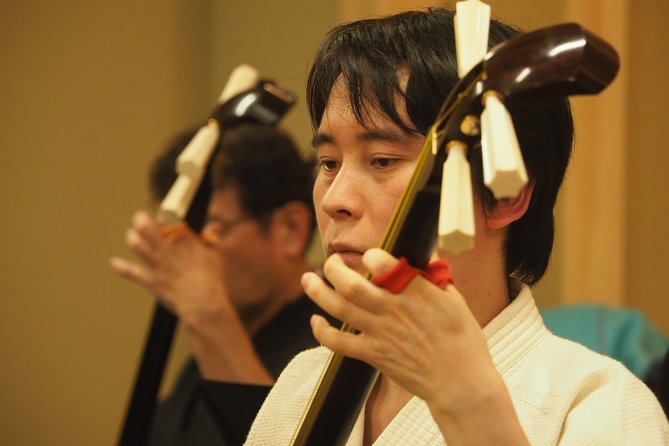
The first practical step is learning how to hold the shamisen. This can look simple until you try to balance an unfamiliar three-stringed instrument and coordinate both hands. The instructor provides gentle guidance, making the lesson suitable for complete beginners.
Next comes the bachi. Unlike picking a guitar with a tiny plastic pick, the bachi is a central part of shamisen technique and changes how you approach the strings. You will learn the basic way to use it before moving toward the song.
This early instruction is where the private format earns its keep. Your instructor can watch your grip and movement, then correct you directly. The reviews praise the teacher’s patience, and that quality matters here. You are likely to make awkward sounds at first, so a calm instructor is far more useful than a rushed demonstration.
The program does not promise that you will master the instrument in an hour. It does promise a realistic first step: learn the basic handling, play an easy song, and receive an introduction to advanced techniques. Keep that expectation in mind and the lesson should feel satisfying rather than pressured.
Learning a simple song in one hour
The heart of the activity is learning one song and playing it with the teacher. You are not expected to become a shamisen performer in sixty minutes. Instead, the lesson gives you a small, clear goal that you can reach during the session.
I like this approach because a song provides shape to the lesson. You are not just practicing isolated movements. You can connect the holding position, bachi technique, and string work to an actual piece of music.
The instructor first breaks down the process, then helps you play along. One review describes a family learning a simple song and also trying some harder techniques. That suggests the teacher can adjust the level when a group includes mixed ages or different levels of confidence.
Children and families are welcome, and most people can participate. The activity can also be used for students, schools, language programs, academic institutions, and corporate training. For a family, it offers a shared activity that does not depend on everyone having the same interest in museums or shopping. For a school or company, the private format allows the lesson to fit a specific group rather than a general public class.
A few more Tokyo bookings worth comparing
- Sushi Making Tokyo Roll and Authentic Japanese Sushi Class
★ 5.0 · 3,971 reviews - Tokyo: Roll and Authentic Sushi Making Class in Asakusa
★ 4.9 · 1,957 reviews - Tokyo: Sushi Making Class in a Happi Coat near a Famous Spot
★ 4.9 · 1,377 reviews - Chopstick Making Workshop in Ginza
★ 4.8 · 1,366 reviews
The advanced techniques and live performance
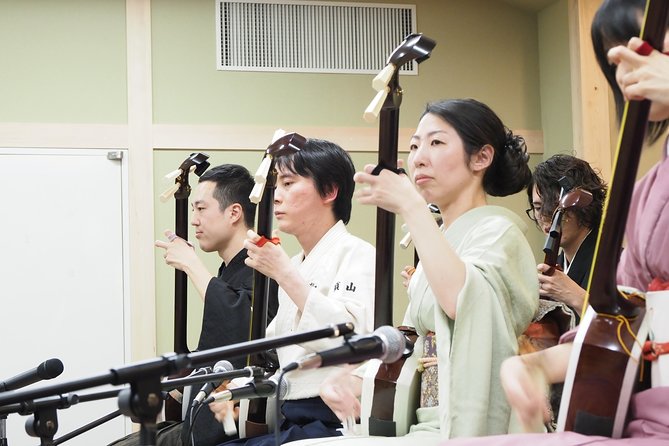
After the basic song, the program introduces advanced techniques. The details are not specified, so you should treat this as an overview rather than a full technical course. Still, this section gives you a glimpse of the gap between making a few controlled notes and performing the instrument at a high level.
The live music is not just decoration between teaching steps. It shows why the Tsugaru shamisen deserves attention. The instrument can sound bold and forceful, and the professional demonstration lets you hear its range before and after your own practice.
The schedule also includes a further shamisen performance and an explanation of the instrument’s structure. The order may vary, but the basic flow moves from orientation to technique, then to music and group playing. That is a sensible design for beginners. You receive context first, a chance to practice, and then a musical payoff.
Do not book this expecting a long concert. The entire activity lasts about one hour, and teaching takes up much of that time. If your priority is hearing an extended professional recital, look for a dedicated performance instead. If you want to understand the instrument by trying it, this balance is more useful.
Photos, video, and a personal souvenir
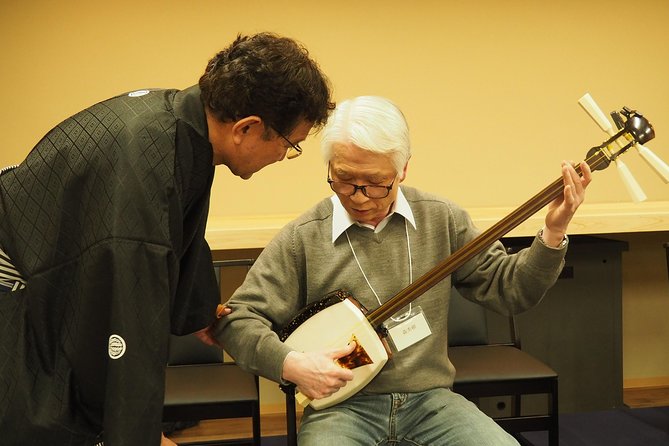
The program includes time for photos and video during your performance. You can share the results on social networking sites, which makes the experience easy to remember and gives children a concrete record of what they learned.
This is also a practical benefit for families and groups. A short music lesson can blur together with other Tokyo activities, but a photo of your group holding the shamisen or a short clip of the song gives the day a clear memory.
You should still be considerate about when you record. The activity specifically allows photos and videos, but follow the instructor’s directions during the performance and lesson. Since the program includes a professional presentation, it is sensible to give the music your attention before reaching for your phone.
What the $77.26 price includes
At $77.26 per person, the cost covers a nationally accredited tour guide-interpreter, shamisen rental, and the shamisen playing lesson. It does not include transport, food, or drinks.
The value depends on what you compare it with. This is not the cheapest way to spend an hour in Tokyo, but the fee covers both a professional performance and equipment that would otherwise be difficult to access. You also receive direct instruction in a private group setting, rather than paying only for a seat in an audience.
I think the price makes the most sense for a small group that will take advantage of the personal attention. It is also easier to justify if you value cultural activities that let you do something rather than simply take pictures. For a larger family, group discounts may be available, so ask about that when booking.
The timing is another part of the value. A one-hour session is easy to add to a Tokyo itinerary, but it is short enough that the cost per minute may feel high if you want a full afternoon activity. Plan it as a focused cultural appointment, not as your main event for the day.
Language, families, and group suitability
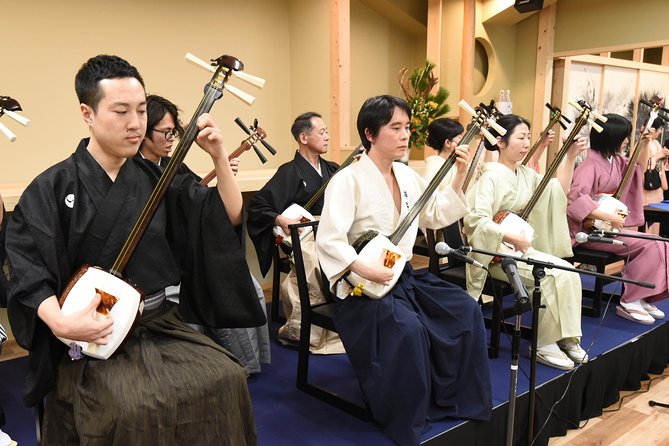
English instruction is available, and licensed instructors can also teach in French and Spanish upon request. Make the language request when you book, since it may depend on instructor availability.
The activity suits beginners because the lesson starts with the basics and uses gentle instruction. You do not need prior shamisen experience. The program also welcomes children and families, though very young children may need help staying focused during the performance and practice portion.
A private group can make this a good fit for:
- Families looking for a shared activity in Tokyo
- Couples who want a cultural experience with a performance element
- Students studying Japanese culture or language
- School and academic groups
- Corporate teams seeking a short hands-on activity
- Music lovers curious about an unfamiliar instrument
Private lessons are also available for an additional charge. If you want more time, a slower pace, or more individual coaching, that option may be worth asking about.
Practical details for planning your visit
The meeting point is in Shinjuku City, near Shinjuku, and the activity ends back at the same location. You arrange your own transportation, so check the route before leaving your hotel and allow a little extra time for finding the exact address.
The experience is listed for Monday availability during the published operating period, from 9 a.m. to 6 p.m. Because the booking is subject to availability and confirmation can take up to 48 hours, do not assume every Monday time is open. Confirm your appointment before making nonrefundable plans around it.
Most people can participate, and service animals are allowed. The supplied information does not provide detailed mobility guidance, so contact the provider if you have specific access needs.
Free cancellation is available if you cancel at least 24 hours before the local start time. Cancellations or changes made inside that window are not accepted for a refund. That is generous enough for normal itinerary changes, but keep the cutoff in mind if your Tokyo schedule is still unsettled.
What the early feedback tells me
The strongest praise centers on the instructor’s patience, the quality of the performance, and the chance to play a simple song. One family experience included both the basic piece and harder techniques, which is a good sign for groups with varied confidence levels.
The lesson is also praised for its close, friendly teaching style and clear explanations. Those are not small details in a short workshop. A complicated instrument can become frustrating quickly if the instructor rushes through the first steps.
The small sample of ratings gives the activity a 4.7 out of 5, with three reviews shown. That is encouraging, but it is not a large enough number to treat as a guarantee. I would focus less on the score and more on whether the format suits you: one hour, beginner instruction, private group setting, and a professional performance.
Should you book this shamisen lesson?
Book it if you want a hands-on Tokyo cultural activity and like the idea of leaving with a simple song under your fingers. It is especially well suited to families, couples, school groups, and anyone who would rather try an instrument than sit through a standard cultural talk.
Skip it if you want a long concert, a full-day activity, or a lesson with enough time for serious musical progress. The price is reasonable for a private introduction with a tournament-winning performer, but the short duration means you are paying for an experience, not mastery.
For most curious beginners, I would consider it a good use of one hour in Shinjuku. Hear the powerful sound, accept that your first notes may be rough, and enjoy the small victory of playing a Japanese song yourself.
FAQ
How long does the Tsugaru shamisen lesson last?
The activity lasts approximately one hour.
What is included in the price?
The price includes a nationally accredited tour guide-interpreter, shamisen rental, and the shamisen playing lesson.
Do I need previous musical experience?
No. The program provides gentle beginner instruction, starting with how to hold the shamisen and use the bachi pick.
Is the activity private?
Yes. This is a private activity, and only your group participates.
Can children and families join?
Yes. Children and families are welcome. The program is also suitable for educational groups, language programs, schools, academic institutions, and corporate training.
Is instruction available in English?
Yes. Licensed instructors are available in English. French and Spanish are available upon request.
Where does the activity take place?
The meeting point is 14-28 Yochōmachi, Shinjuku City, Tokyo 162-0055, Japan. The activity ends at the same meeting point.
Can I cancel for a full refund?
Yes, if you cancel at least 24 hours before the local start time. Cancellations or changes made less than 24 hours before the start are not accepted for a refund.
New on our Tokyo list
- Sumi-e Experience in a relaxing green tea shop in Tokyo★ 5.0 · 3 reviews
- Tokyo : Kamikaze Street Drift Ride★ 5.0 · 3 reviews
- Private Zen Meditation in English in Shinjuku, Tokyo★ 5.0 · 3 reviews
- Onsen Spa in Tokyo and Asakusa Bar Hopping with Local Guide★ 5.0 · 3 reviews
- Easy for everyone! Now you can play handmade mini shamisen and show off to everyone! Musical instruments, sweets and live music★ 5.0 · 3 reviews
- Tokyo: Private Tsukiji Street Food & Sake with Local Guide★ 5.0 · 3 reviews
- Mt Fuji Exploration Tour with Free Japanese Kusa Mochi from Tokyo★ 4.5 · 3 reviews
- Tokyo Tsukiji Fish Market Walking and Exploring Hidden Gems Tour★ 5.0 · 3 reviews
Japanese Culture Workshops, compared.
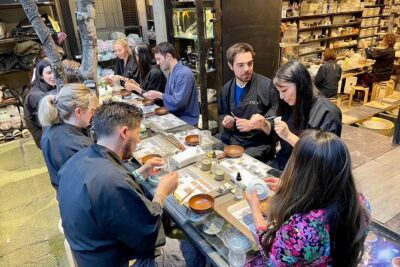
Kintsugi Experience: Art of Golden Joinery in Tokyo
Read our review →
Authentic Pure Gold Kintsugi Workshop with Master Taku in Tokyo
Read our review →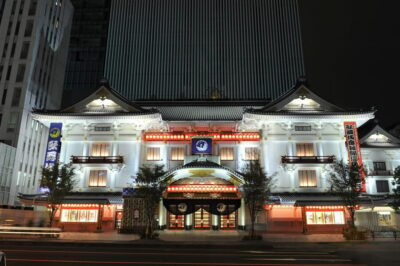
KABUKI Show at Kabukiza Theatre Admission Ticket
Read our review →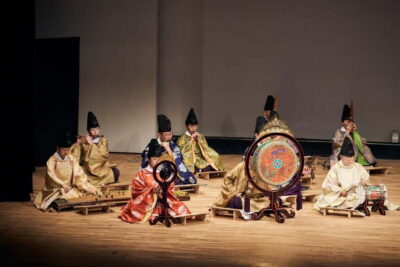
KABUKI, BUNRAKU, etc. presented by National Theatre
Read our review →
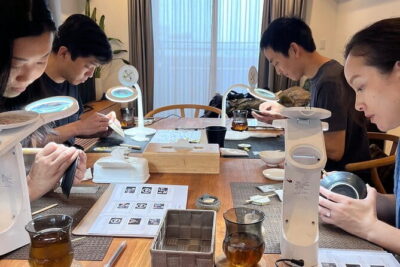
Kintsugi Workshop Class in Shibuya, Tokyo with mon cadeau
Read our review →
Browse the lists this tour appears in