
Reviewed · JAPANESE CULTURE WORKSHOPS
Japanese flower arranging (Ikebana) Experience/Workshop in Tokyo
Ikebana here is less about obeying a long list of rules and more about discovering how a few flowers, branches, and empty spaces can express your own eye. At Hanadouraku florist in Tokyo, you’ll learn the background of Japanese flower arranging, then make your own design with guidance from Ruby or Aki.
I like the small-group instruction, which gives you room to ask questions and adjust your arrangement without feeling rushed. I also like the playful approach: you can work with asymmetry, flower symbolism, and natural shapes without needing prior experience. The one consideration is that the workshop lasts only about 90 minutes, so you’ll get a taste of ikebana rather than a full formal course.
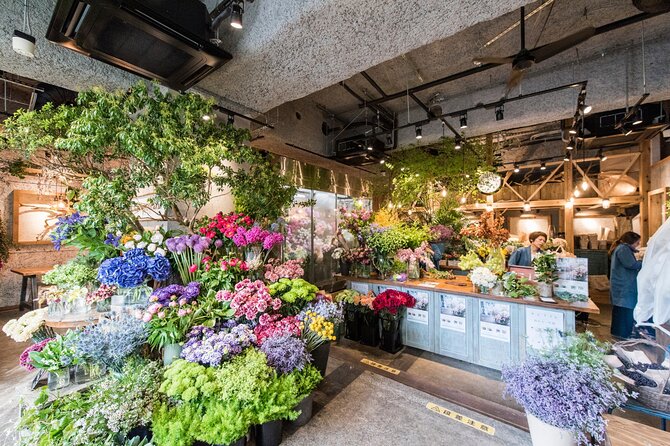
- Choose flowers and foliage in a working Tokyo florist surrounded by fresh blooms.
- Learn ikebana basics without being tied to strict, intimidating rules.
- Work directly with Ruby or Aki, who can explain technique, symbolism, and flower care.
- Use the supplied tools and flowers, with containers and kenzan available to buy separately.
- Receive photos of you and your group during the creative process.
- Return to the meeting point at the end, making this an easy short activity for a busy Tokyo day.
In This Review
- A Calm Hour at Hanadouraku Florist
- What You Learn Before Touching the Flowers
- Choosing Stems, Branches, and a Personal Shape
- The Kenzan and the Challenge of Making Stems Behave
- Making Your Arrangement With Ruby or Aki
- Photos and Taking the Memory Home
- Is $100 a Fair Price for 90 Minutes?
- Who Will Enjoy This Workshop Most
- Practical Details Before You Book
- My Take: Book It for Creative Calm
- FAQ
- How long does the ikebana workshop last?
- Where does the activity take place?
- Where does the activity finish?
- Who teaches the workshop?
- Is the workshop suitable for beginners?
- Are children and families allowed?
- Are flowers and tools included?
- Are the container and kenzan included?
- Can I cancel for a full refund?
A Calm Hour at Hanadouraku Florist
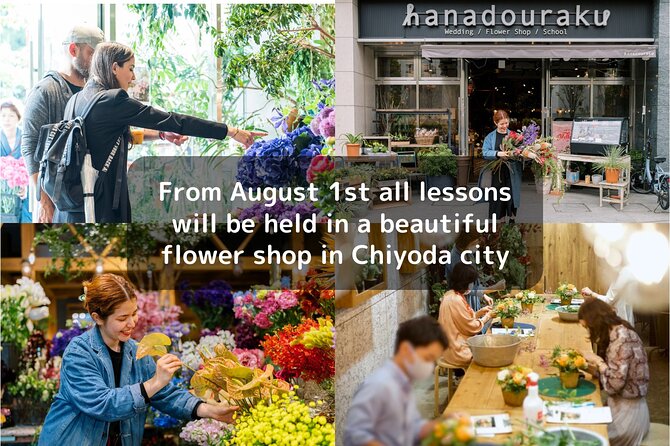
The workshop takes place at Hanadouraku, a flower shop in Tokyo’s Kōjimachi area. The meeting address is 6-chōme 46 Kōjimachi, Chiyoda City, Tokyo 102-0083, and the activity ends at the same place.
That setting matters. You are not arranging artificial stems in a plain classroom. You work among flowers and foliage in an active florist, where the materials themselves help explain why ikebana begins with careful observation. A bent stem, an uneven branch, or a single open bloom can become the main feature of the design.
You should expect a welcoming, relaxed room rather than a solemn art lesson. The workshop is suitable for beginners, and children and families are welcome. Pets are also allowed, which is an unusual and useful detail if your day in Tokyo includes a four-legged companion.
The group can hold up to 15 people. That is still small enough for personal help in many sessions, though the amount of individual attention can vary if the class is full. If you want the most one-to-one time, a smaller session will naturally give you more space to ask for advice.
What You Learn Before Touching the Flowers
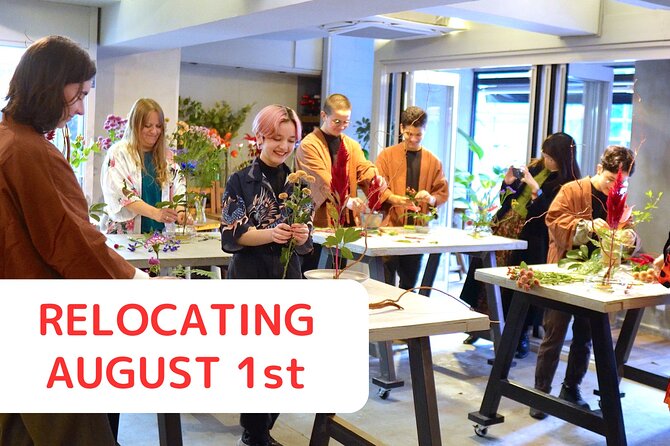
Your host begins with an introduction to ikebana and the importance of flowers in human life. This is not just a quick lesson in putting stems into a container. You’ll hear about the ideas behind the art and learn why the arrangement is shaped by balance, empty space, line, and natural form.
Flower symbolism is part of the experience too. A bloom is not chosen only for its color. Its shape, season, direction, and meaning can affect the feeling of the finished arrangement. This gives you something to think about as you work, especially if you are used to filling a vase as evenly as possible.
The class also introduces asymmetry. Western flower arrangements often aim for fullness and even distribution. Ikebana may instead leave open areas and place the tallest or most unusual element off center. That can feel strange at first, but it is one of the most useful lessons you take home: empty space is part of the design.
The teaching style is intentionally free and expressive. You are not expected to master a formal school of ikebana in one short visit. Instead, Ruby or Aki helps you use the tools and principles as a starting point for your own arrangement.
More craft workshops in Tokyo:
- Tokyo Shinjuku Chopsticks Making Class
★ 5.0 · 1,763 reviews - Kintsugi Experience: Art of Golden Joinery in Tokyo
★ 5.0 · 467 reviews - Authentic Pure Gold Kintsugi Workshop with Master Taku in Tokyo
★ 5.0 · 217 reviews
Choosing Stems, Branches, and a Personal Shape
Once the introduction is finished, you begin handling the flowers. The available materials can include flowers, branches, and foliage, with a broad selection inside the florist. The exact choice changes, so your arrangement will depend on what is fresh and available on the day.
This is where the workshop becomes hands-on. You look at each stem, decide which part deserves attention, and consider how it will move through the arrangement. The process can be harder than it looks. A flower that appears attractive on its own may not work in the same way once it is placed beside a branch or a large leaf.
Your instructor offers advice as you go. Ruby is described as an experienced florist who communicates clearly in English, while Aki is praised for explaining flowers, ikebana, and the meaning behind the materials. Both instructors encourage you to connect with each bloom rather than simply copy a model.
That distinction is important. If you want a precise lesson with one correct result, this may feel loose. If you want room to make choices, it is a strength. You can ask for help when a stem will not hold its position, or you can pause and see what your own arrangement needs.
The Kenzan and the Challenge of Making Stems Behave
The kenzan is the heavy metal pin holder that keeps stems in place. You use it to create the structure of the arrangement, placing flowers and branches at different angles rather than simply dropping them into water.
The tool looks simple, but it takes practice. You need to cut stems to useful lengths, push them firmly into the pins, and adjust their angles without damaging the flowers. This is one reason the class feels like an art lesson rather than a basic craft activity.
The kenzan used during the workshop is provided for the session. It is not included for you to keep, but you can purchase one if you want to continue practicing at home. Containers are also available for purchase, but they are not part of the $100 price.
That extra cost is worth considering before you book. If you want to recreate the arrangement after returning home, buying a container and kenzan gives you the basic equipment. If you are flying soon and prefer not to carry more items, you can treat the class as a one-time creative experience and simply enjoy the photos.
Making Your Arrangement With Ruby or Aki
The main creative session gives you time to form one or more arrangements with advice from your instructor. One participant completed two arrangements with Aki, while another had enough time to work carefully on a single design. The number you make depends on your pace, the size of the group, and how much time you spend refining your work.
Ruby’s teaching style appears well suited to people who want encouragement without constant correction. You can request coaching, but you are also free to find your own direction. That balance helps make the class approachable for a first attempt.
Aki focuses on flower types, ikebana history, and the way each piece can come together. Her advice is useful if you want to understand why a particular stem works in a certain position, rather than simply being told where to place it.
You may find yourself making several small changes: tilting a branch, shortening a stem, turning a bloom toward the light, or removing a piece that makes the arrangement feel crowded. Those small adjustments are the heart of the class. Ikebana asks you to notice relationships between objects, not just collect attractive flowers.
The atmosphere is also a welcome change after a day of Tokyo’s noise, crowds, and constant movement. For about an hour and a half, you have one focused task. The work is quiet without being dull, and the result gives you something physical to examine at the end.
A few more Tokyo bookings worth comparing
- Sushi Making Tokyo Roll and Authentic Japanese Sushi Class
★ 5.0 · 3,971 reviews - Tokyo: Roll and Authentic Sushi Making Class in Asakusa
★ 4.9 · 1,957 reviews - Tokyo: Sushi Making Class in a Happi Coat near a Famous Spot
★ 4.9 · 1,377 reviews - Chopstick Making Workshop in Ginza
★ 4.8 · 1,366 reviews
Photos and Taking the Memory Home
Photos taken during the activity are shared with you. This is a useful extra because the best moments are often not the final arrangement, but the process of choosing stems, working with the kenzan, and receiving a last bit of advice from the instructor.
If you buy a container, you may be able to take your arrangement back to your accommodation and enjoy it during the rest of your stay. One participant successfully transported purchased arrangements back to an Airbnb, but you should still handle them carefully. Fresh flowers are delicate, and the practical ease of carrying them will depend on the arrangement and your transport plans.
The flowers used in the class are included in the price. The container is not. Ask about purchasing one if you want a finished arrangement that can hold water immediately. A kenzan is another optional purchase for anyone hoping to practice later.
You should not expect a long-lasting souvenir in the same way you might get from a ceramics or textile class. The flowers will eventually fade. That is part of the appeal of ikebana, which pays attention to change and impermanence, but it also means the photographs may become your most durable reminder.
Is $100 a Fair Price for 90 Minutes?
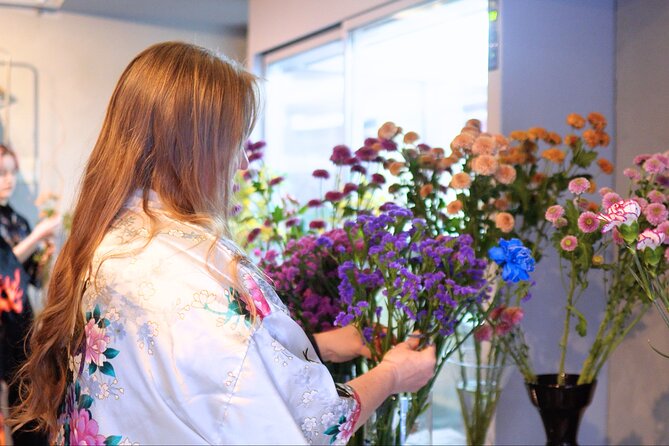
At $100 per person, this is not the cheapest short activity in Tokyo. You are paying for a private creative setting, a florist host, the flowers and tools used during the session, personal instruction, and shared photos.
The value improves if you want more than a quick demonstration. You are actively making an arrangement, learning the ideas behind it, and receiving help as you work. The price also includes the chance to use real florist materials rather than buying a few stems and attempting the process alone.
The value is less clear if you mainly want to see ikebana performed by an expert. This is a participation class, not a formal stage demonstration. You spend much of the time making decisions and handling flowers yourself.
I would see it as a good use of money for a short, distinctive cultural activity, especially if you are tired of standard sightseeing. It also works well for a special occasion, a family activity, or a first introduction to Japanese flower arranging. Add the possible cost of a vase or kenzan if you want to continue at home.
Who Will Enjoy This Workshop Most
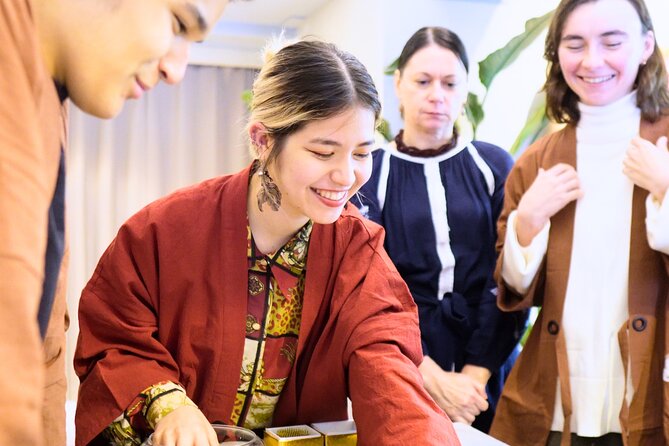
This class fits several kinds of Tokyo visitors:
- First-time ikebana students who want a friendly introduction without formal training.
- Families and children looking for a creative activity that is different from a museum or observation deck.
- Solo visitors who appreciate a quiet task and direct advice.
- Couples and friends who want photos and a shared souvenir that is more personal than a standard purchase.
- Flower lovers who want to learn about different stems and their symbolism.
- Busy visitors who can spare 90 minutes but do not want to commit to a full-day class.
It may not suit you if you want to take home every tool and material as part of the booking. The container and kenzan cost extra. It may also feel too short if your goal is to study a formal ikebana school in depth.
The class welcomes service animals, pets, and most participants can take part. It is near public transportation, though you should still allow time to find the exact meeting address in Kōjimachi.
Practical Details Before You Book
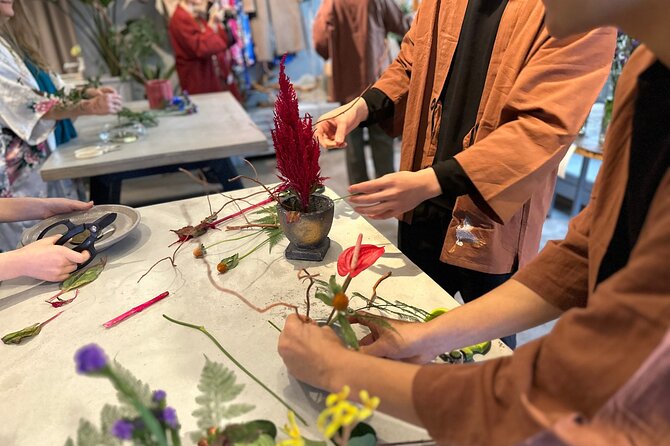
The experience runs for approximately one hour and 30 minutes. It starts and finishes at the florist, so you do not need to arrange separate transportation between different locations.
A mobile ticket is provided, and confirmation arrives when you book. The maximum group size is 15 people. Ruby and Aki are the named instructors connected with the workshop, and English communication is available based on the teaching experience described for both hosts.
The activity has free cancellation if you cancel at least 24 hours before the local start time. Cancellations or changes made less than 24 hours before the start are not refunded or accepted. A minimum number of participants is required, and if the session is canceled for that reason, you can receive a full refund or choose another date or experience.
Plan your clothing with flowers and water in mind. The activity is hands-on, and you will be cutting and positioning plant material. No special equipment is needed because the required tools are supplied.
My Take: Book It for Creative Calm
I recommend this workshop if you want a compact Tokyo activity with real participation and a clear cultural connection. The strongest reasons to book are the personal advice from Ruby or Aki, the freedom to make an arrangement in your own style, and the chance to work inside a florist surrounded by fresh material.
The $100 cost makes more sense when you value the instruction, flowers, tools, and photos together. If you want a lasting physical souvenir, budget extra for a container and kenzan. If you are happy with photos and the experience itself, the included materials are enough.
Book it when you need a quiet pause in a packed Tokyo schedule, or when you want a family-friendly activity that does not feel routine. Skip it if you are seeking a long technical course or a ready-made arrangement with every accessory included.
FAQ
How long does the ikebana workshop last?
The workshop lasts approximately one hour and 30 minutes.
Where does the activity take place?
It takes place at Hanadouraku florist in Kōjimachi, Chiyoda City, Tokyo. The meeting address is Japan, 102-0083 Tokyo, Chiyoda City, Kōjimachi, 6-chōme 46.
Where does the activity finish?
The experience ends back at the meeting point.
Who teaches the workshop?
The named instructors are Ruby and Aki. The experience is provided by Ruby.
Is the workshop suitable for beginners?
Yes. The class is designed as a relaxed introduction and focuses on free, playful self-expression rather than strict ikebana rules.
Are children and families allowed?
Yes. Children and families are welcome.
Are flowers and tools included?
Yes. Flowers used in the arrangement and the ikebana tools needed during the class are included.
Are the container and kenzan included?
No. Containers and kenzan are not included in the price, but both are available for purchase.
Can I cancel for a full refund?
Yes, if you cancel at least 24 hours before the experience start time. Cancellations or changes made less than 24 hours before the local start time are not refunded or accepted.
New on our Tokyo list
- From Tokyo: Mount Fuji & Hakone Full Day Private Tour★ 4.9 · 25 reviews
- Tokyo Spectacular View Day-Cruise in 90 Minutes★ 5.0 · 25 reviews
- Real Tokyo Runner Club : Daikoku Car Meet Night Tour with JDM Car★ 5.0 · 25 reviews
- 2.5 Hour-Guided Cycle Tour in the Central Tokyo★ 5.0 · 25 reviews
- Ramen Making from Scratch +Akihabara Tour –Cooking Class★ 5.0 · 25 reviews
- [Self-Drive] Tokyo & Daikoku Custom Car Driving Tour★ 4.9 · 25 reviews
- Tokyo: 2-Hour Night Bike Tour of the City’s Hidden Gems★ 4.9 · 25 reviews
- Buddha, Bamboo & Zen – Bespoke Kamakura Private Walking Tours★ 5.0 · 25 reviews
Japanese Culture Workshops, compared.
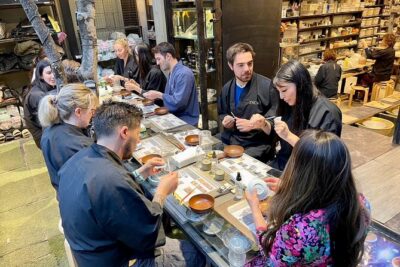
Kintsugi Experience: Art of Golden Joinery in Tokyo
Read our review →
Authentic Pure Gold Kintsugi Workshop with Master Taku in Tokyo
Read our review →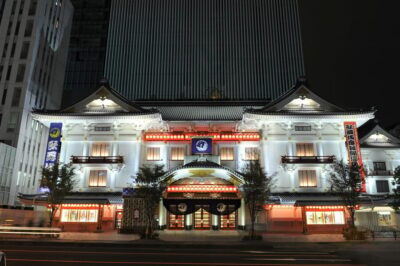
KABUKI Show at Kabukiza Theatre Admission Ticket
Read our review →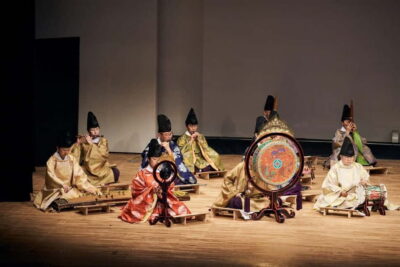
KABUKI, BUNRAKU, etc. presented by National Theatre
Read our review →
Kintsugi Workshop Class in Shibuya, Tokyo with mon cadeau
Read our review →
Browse the lists this tour appears in